


Search results
Search for "polycrystalline" in Full Text gives 259 result(s) in Beilstein Journal of Nanotechnology. Showing first 200.
The role of a tantalum interlayer in enhancing the properties of Fe3O4 thin films
Beilstein J. Nanotechnol. 2024, 15, 1253–1259, doi:10.3762/bjnano.15.101

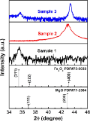
- morphological, structural, and magnetic properties of the deposited samples were characterized with atomic force microscopy, X-ray diffractometry, and vibrating sample magnetometry. The polycrystalline Fe3O4 film grown on MgO/Ta/SiO2/Si(100) presented very interesting morphology and structure characteristics
- in significant changes in the film’s characteristics [19][20]. Roy et al. conducted a study on polycrystalline Fe3O4 films on Si and SiO2/Si substrates. Their findings revealed that the value of the Gilbert damping parameter is significantly higher in Fe3O4/Si films compared to Fe3O4/SiO2/Si films
- and RMS roughness, and in the formation of a polycrystalline structure. Changes in grain size and structure have a strong impact on saturation magnetization and coercivity of the Fe3O4 thin films. Our results indicate that the combination of Ta and MgO buffer layers can influence the morphology and


Recent progress on field-effect transistor-based biosensors: device perspective
Beilstein J. Nanotechnol. 2024, 15, 977–994, doi:10.3762/bjnano.15.80
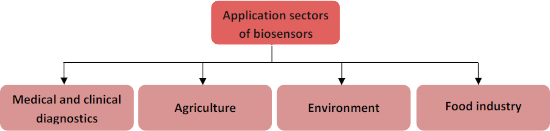
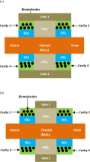
- biomolecule species. Wenga et al. [90] designed a step-gate polysilicon FET-based biosensor for the detection of DNA. An emerging step-gate polycrystalline silicon NW FET-based biosensor was fabricated to enable highly sensitive electrical biosensing for DNA hybridization detection with a low-cost and simple




Effects of cutting tool geometry on material removal of a gradient nanograined CoCrNi medium entropy alloy
Beilstein J. Nanotechnol. 2024, 15, 925–940, doi:10.3762/bjnano.15.76
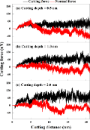
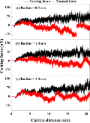
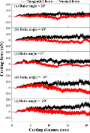
- transform into a mixed structure of face-centered cubic and hexagonally close-packed phases. The sliding and twisting of grain boundaries and the merging of grains are essential mechanisms for polycrystalline deformation. Regarding the cutting parameters, the average resultant force, the material
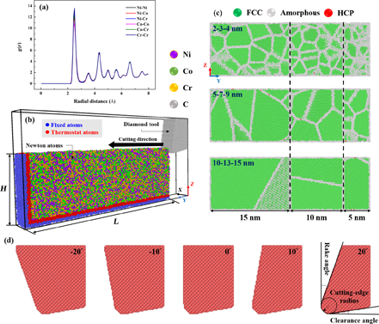
- MEA, as shown in Figure 1. FCC phase GNG CoCrNi MEA substrates with dimensions of 3 nm × 30 nm × 10 nm were used for all cases in this study. The polycrystalline samples consist of randomly oriented grains. The MEA substrates contain 25,952 Co atoms, 26,628 Cr, and 26,746 Ni atoms. Hence, the alloy
- simulation, as shown in Figure 1b. Figure 1c shows polycrystalline CoCrNi MEAs with different grain size gradient sizes, including 2-3-4 nm, 5-7-9 nm, and 10-13-15 nm. Figure 1d shows the simulated diamond cutting tool, a rigid body with various rake angles consisting of 14,287–39,156 C atoms. Periodic








Effect of repeating hydrothermal growth processes and rapid thermal annealing on CuO thin film properties
Beilstein J. Nanotechnol. 2024, 15, 743–754, doi:10.3762/bjnano.15.62
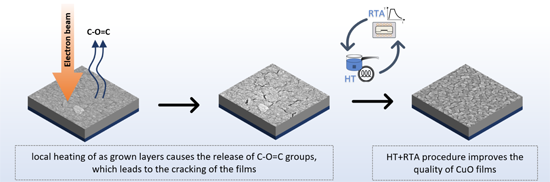
- nanocrystallites are not as clearly distinguishable. Under the influence of temperature, atoms can diffuse along the boundaries between particular crystallites, which leads to their coalescence. Moreover, annealing of polycrystalline films can lead to grain boundary migration to reduce the surface energy of the
- procedure. It demonstrates homogeneity without a notable dominance of hills or valleys. The structural properties of the CuO films were evaluated using XRD and Raman spectroscopy. The XRD diffractograms (Figure 4A) exhibit well-defined reflections that correspond to the polycrystalline monoclinic structure


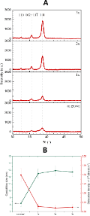


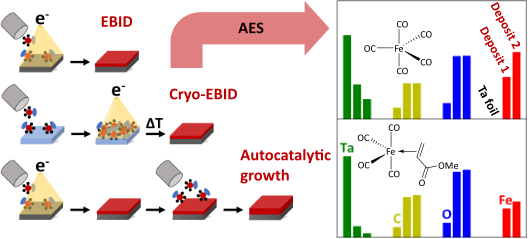
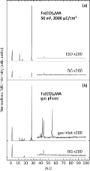
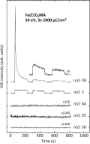
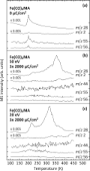
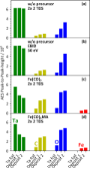
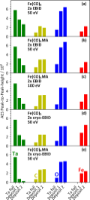
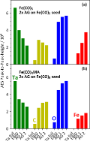
Electron-induced deposition using Fe(CO)4MA and Fe(CO)5 – effect of MA ligand and process conditions
Beilstein J. Nanotechnol. 2024, 15, 500–516, doi:10.3762/bjnano.15.45



Controllable physicochemical properties of WOx thin films grown under glancing angle
Beilstein J. Nanotechnol. 2024, 15, 350–359, doi:10.3762/bjnano.15.31
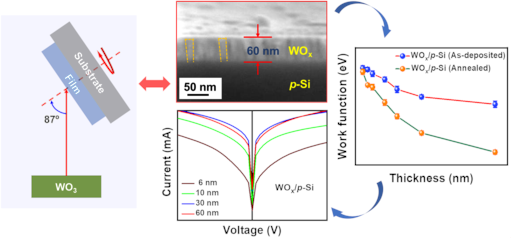
- nature of the as-deposited film, which transforms into a polycrystalline monoclinic structure after vacuum annealing. A similar observation is reported in literature where the as-deposited amorphous WOx films transformed into monoclinic structures after annealing at or above 673 K [2][12][46]. It is to
- K, 1 h) used in the present study may not be sufficient to induce crystallinity in the films. Usually, the work function of polycrystalline WOx films is reported to vary between 5.7 and 6.7 eV [49]. In the present work, no O2 partial pressure was used, so it is expected that all WOx films are


In situ optical sub-wavelength thickness control of porous anodic aluminum oxide
Beilstein J. Nanotechnol. 2024, 15, 126–133, doi:10.3762/bjnano.15.12
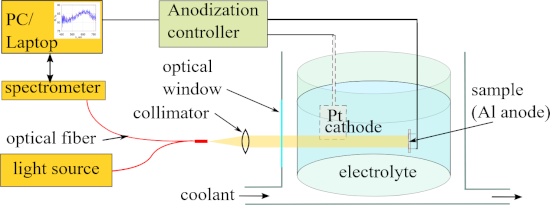
- absorption and photoluminescence characteristics of PAAO [38]. In order to achieve nanometer-scale thickness uniformity of the PAAO layers (Figure 4), it was necessary to use single-crystal aluminum substrates as starting material. In previous studies it was shown that anodization of polycrystalline aluminum


TEM sample preparation of lithographically patterned permalloy nanostructures on silicon nitride membranes
Beilstein J. Nanotechnol. 2024, 15, 1–12, doi:10.3762/bjnano.15.1
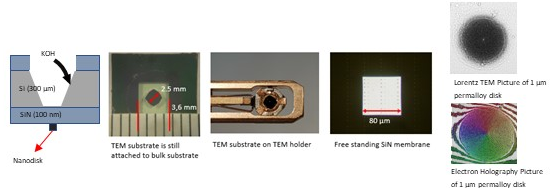
- target–substrate distance of around 8 cm. The sputtered film was investigated under HRTEM. It was revealed that the film is polycrystalline with a lattice spacing of 0.36 nm (Figure 4), which correlates to the lattice constant of Py. The lift-off technique allows for the fabrication of arrays of 220 nm


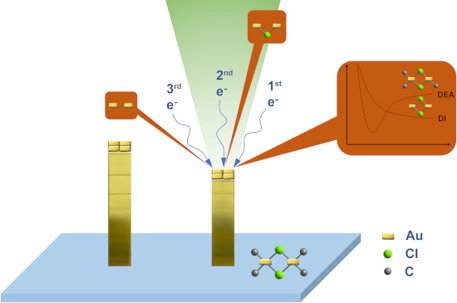
A combined gas-phase dissociative ionization, dissociative electron attachment and deposition study on the potential FEBID precursor [Au(CH3)2Cl]2
Beilstein J. Nanotechnol. 2023, 14, 1178–1199, doi:10.3762/bjnano.14.98



Properties of tin oxide films grown by atomic layer deposition from tin tetraiodide and ozone
Beilstein J. Nanotechnol. 2023, 14, 1085–1092, doi:10.3762/bjnano.14.89
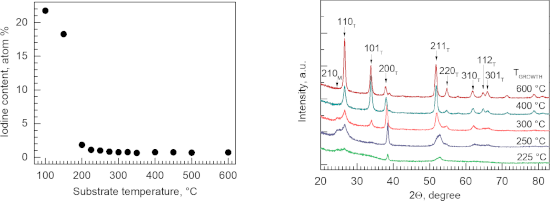
- Kristjan Kalam Peeter Ritslaid Tanel Kaambre Aile Tamm Kaupo Kukli Institute of Physics, University of Tartu, W. Ostwaldi 1, 50411 Tartu, Estonia 10.3762/bjnano.14.89 Abstract Polycrystalline SnO2 thin films were grown by atomic layer deposition (ALD) on SiO2/Si(100) substrates from SnI4 and O3


Isolation of cubic Si3P4 in the form of nanocrystals
Beilstein J. Nanotechnol. 2023, 14, 971–979, doi:10.3762/bjnano.14.80
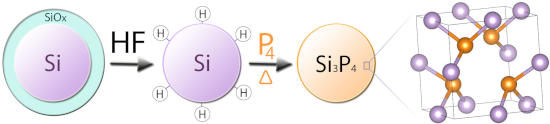
- determination; thus, the linear dimensions of the particles could only be estimated to be in the range of 10–50 nm. The particles are polycrystalline and highly defective as evident from the high-resolution image (Figure 7a). The size of the crystalline domains does not exceed 10 nm in its longest dimension
- obtained Si3P4 is 5.04 Å. The formation of the considered substance in the form of polycrystalline NPs occurs at 400 °C (further heating causes progressive decomposition). Vibrational spectra of a 3:4 binary compound with defective zinc blende structure were recorded and analyzed for the first time


Antimicrobial and mechanical properties of functionalized textile by nanoarchitectured photoinduced Ag@polymer coating
Beilstein J. Nanotechnol. 2023, 14, 95–109, doi:10.3762/bjnano.14.11
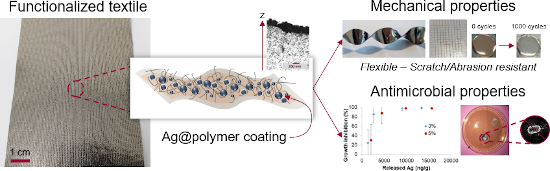
- high crystallinity of the synthesized NPs and the diffraction rings which indicate the polycrystalline nature of the AgNPs have been indexed to the (111), (200), (220) and (311) planes and correspond only to the face-centered cubic (fcc) crystal structure of metallic silver (JCPDS, No. 04-0783) (Figure



Upper critical magnetic field in NbRe and NbReN micrometric strips
Beilstein J. Nanotechnol. 2023, 14, 45–51, doi:10.3762/bjnano.14.5
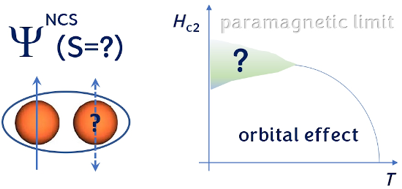
- the electrical resistivity [6]. This feature is related to the polycrystalline or amorphous nature of these materials when deposited in a thin-film form [4][7][8]. In addition to the applicative interest, the study of these materials is relevant from a fundamental point of view. NbxRe1−x (NbRe) for
- rotation and relaxation studies [13] and large values of the upper critical magnetic fields [11][14], which are above the Pauli paramagnetic limit [15][16]. In the case of thin films, the structure of NbRe is polycrystalline with grains of small dimensions, typically of the order of 2–3 nm [7][8][17
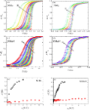
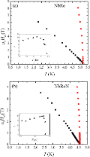
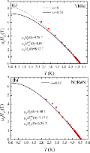
- ]. NbReN films also present a polycrystalline nature with a moderate texture. In this case, it was possible to interpret the results of the structural characterization only by assuming for NbReN the same unit cell as that of NbRe [4]. However, detailed knowledge of its structural and microscopic properties

Two-step single-reactor synthesis of oleic acid- or undecylenic acid-stabilized magnetic nanoparticles by thermal decomposition
Beilstein J. Nanotechnol. 2023, 14, 11–22, doi:10.3762/bjnano.14.2
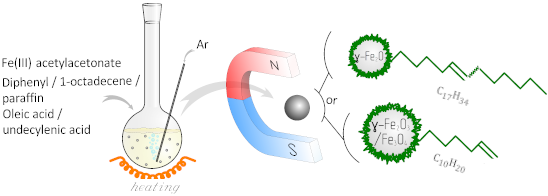
- same synthesis conditions, particles of larger sizes (11–16 nm) are formed. These particles are characterized by a significantly higher polycrystalline index (IPCR = 1.9–2.9) and it seems that they are aggregates of smaller crystallites. This result also correlates with a higher polydispersity index


Electrical and optical enhancement of ITO/Mo bilayer thin films via laser annealing
Beilstein J. Nanotechnol. 2022, 13, 1589–1595, doi:10.3762/bjnano.13.133
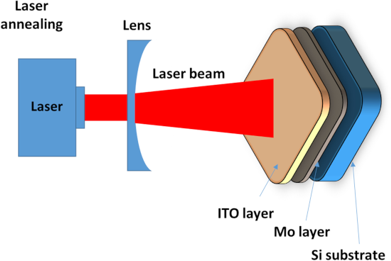
- structural results show that both the as-deposited and the annealed ITO/Mo thin films have a polycrystalline structure, and that the annealing treatment enhanced the crystallinity of samples. Moreover, the XRD patterns exhibited a cubic structure preferentially oriented along the (222) and (400) planes. The
- samples show a polycrystalline structure crystallized in a cubic structure (JCPDS:71-2194) [28]. However, the sample treated with 240 mJ shows an amorphous structure because of the high energy that diffuses gas atoms from the chamber into the surface [29]. The obtained peaks correspond to ITO. It can be
- analyses show that the ITO/Mo has a polycrystalline structure. As well, it can be seen from the grain size analysis that the energy of 120 mJ gives the highest grain size and good crystallinity because most of the orientation of the crystallites appears in the XRD results. Figure 5 shows the optical


Structural studies and selected physical investigations of LiCoO2 obtained by combustion synthesis
Beilstein J. Nanotechnol. 2022, 13, 1473–1482, doi:10.3762/bjnano.13.121
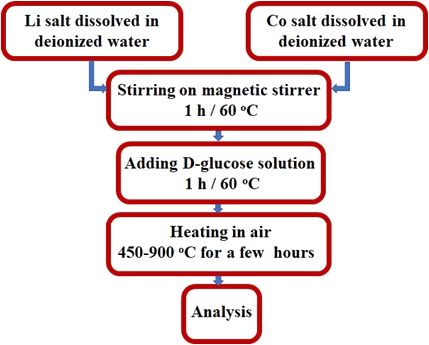
- the investigated LiCoO2 polycrystalline samples were studied using impedance spectroscopy. The measurements were performed for seven samples annealed at selected temperatures, that is, 450, 500, 550, 650, 700, 750, and 900 °C. The typical impedance response of the studied materials is presented in
- constants is related to the microstructure of the studied material as the sample is constructed from pressed powder material of different sizes. A response consisting of two semicircles is often observed in polycrystalline samples of ion conductors and ceramics [66][67]. It is related to two different




Enhanced electronic transport properties of Te roll-like nanostructures
Beilstein J. Nanotechnol. 2022, 13, 1284–1291, doi:10.3762/bjnano.13.106
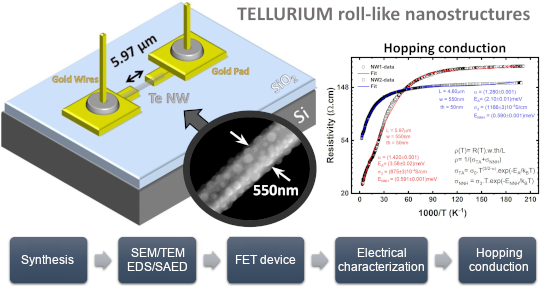
- under mild conditions. A large quantity of these polycrystalline nanostructures with a diameter between 100 and 900 nm and a wall thickness around 50 nm were synthesized and characterized by scanning electron microscopy (SEM), energy dispersive X-ray spectroscopy (EDS), transmission electron microscopy
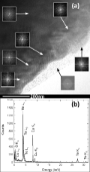
- the anisotropy of the Te crystal structure [20][21]. However, a fast Fourier transform (FFT) analysis of different areas of the HRTEM images (see Figure 3a) shows that the nanostructures are polycrystalline, with well-oriented large grains and rotated small grains at the edges. Small amorphous areas




A cantilever-based, ultrahigh-vacuum, low-temperature scanning probe instrument for multidimensional scanning force microscopy
Beilstein J. Nanotechnol. 2022, 13, 1120–1140, doi:10.3762/bjnano.13.95
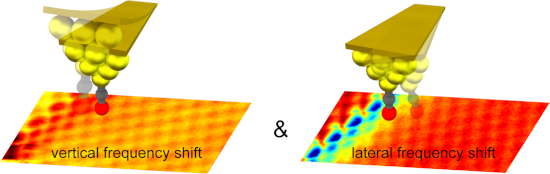
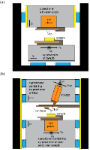
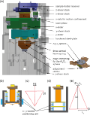
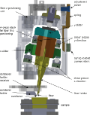
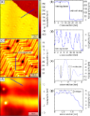
- for the coating of high-quality factor cantilevers for magnetic force microscopy [29]. In future work, much thinner coating thicknesses could be used, or the coating could be applied to the cantilever side to reduce energy dissipation processes arising from the grain boundaries of the polycrystalline






Investigation of electron-induced cross-linking of self-assembled monolayers by scanning tunneling microscopy
Beilstein J. Nanotechnol. 2022, 13, 462–471, doi:10.3762/bjnano.13.39
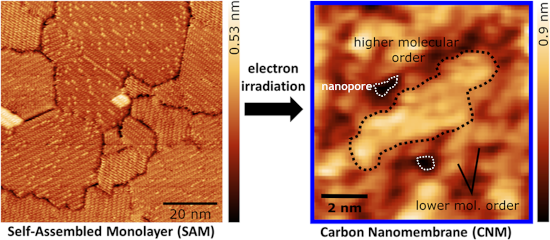
- V and +0.4 to +1.2 V. A z-resolution higher than 0.01 nm could be achieved. The STM tips were prepared from 0.375 mm polycrystalline tungsten wire (Alfa Aesar) by electrochemical etching in a 3 M NaOH solution. The instrument was calibrated by imaging HOPG with atomic resolution. The data was post


A non-enzymatic electrochemical hydrogen peroxide sensor based on copper oxide nanostructures
Beilstein J. Nanotechnol. 2022, 13, 424–436, doi:10.3762/bjnano.13.35
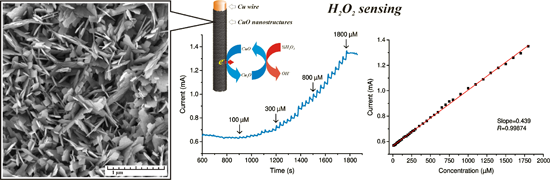
- ) shows the surface morphology of a thermally obtained copper oxide film. The resulting film is a homogeneous, polycrystalline oxide layer consisting of grains of arbitrary shape. In practice, this layer exhibits poor adhesion to the surface and can be easily damaged mechanically during post-processing




Electrostatic pull-in application in flexible devices: A review
Beilstein J. Nanotechnol. 2022, 13, 390–403, doi:10.3762/bjnano.13.32
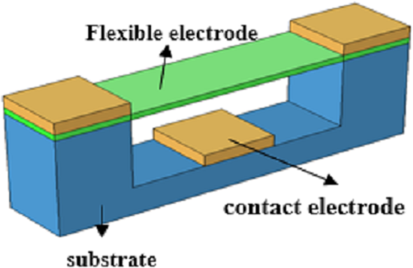
- structure. The bridge monolayer graphene electrode is 20 µm long and 3 µm wide, the electrode gap is 500 nm, and the pull-in voltage is less than 5 V. As the electrode material was polycrystalline graphene, fracture of the GR electrode was observed after 4–5 life cycles, resulting in device failure. In 2018
- to the removal of grain boundaries, the single-crystal GR devices are four times more capable of handling current than polycrystalline GR devices. Shen et al. [71] prepared GR ESD switches and analyzed their electrical characteristics and reliability. The switch did work only once. Therefore, ESD


Controllable two- and three-state magnetization switching in single-layer epitaxial Pd1−xFex films and an epitaxial Pd0.92Fe0.08/Ag/Pd0.96Fe0.04 heterostructure
Beilstein J. Nanotechnol. 2022, 13, 334–343, doi:10.3762/bjnano.13.28
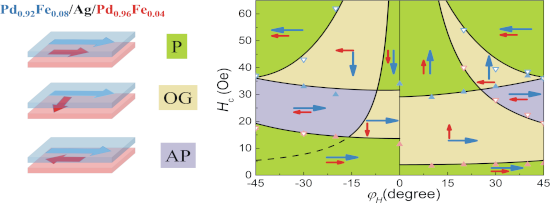
- ): 0 Oe → −36 Oe. In both cases, on a time scale of approx. 1000 s, there are no noticeable changes in the magnetic moment of the steady states of the heterostructure. This is fundamentally different from the dynamics of the magnetization of the polycrystalline Pd0.99Fe0.01 film, in which significant


Investigation of a memory effect in a Au/(Ti–Cu)Ox-gradient thin film/TiAlV structure
Beilstein J. Nanotechnol. 2022, 13, 265–273, doi:10.3762/bjnano.13.21
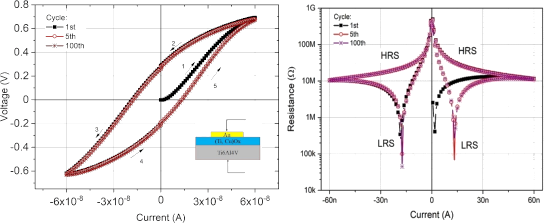
- three areas: (1) a polycrystalline area located from the surface to the near center of the structure, (2) an amorphous area located from the center to the near-substrate region, and (3) a void-rich area located from the near-substrate to the substrate region. In the middle of the structure there is a



Low-energy electron interaction and focused electron beam-induced deposition of molybdenum hexacarbonyl (Mo(CO)6)
Beilstein J. Nanotechnol. 2022, 13, 182–191, doi:10.3762/bjnano.13.13
- ®. Energy-dispersive X-ray analyses was done with a ZEISS Crossbeam system with an integrated Oxford EDX detector. Deposits for EDX analysis were prepared on a 100 nm thick polycrystalline gold substrate on a 4 inch silicon wafer, purchased from Georg Albert PVD. The Au-based substrate was chosen because of
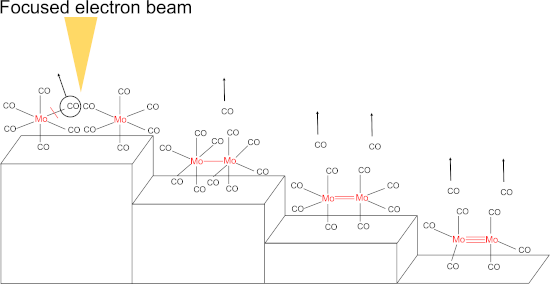
- sum of the relative contributions of all Mo-containing fragments. Using this approach, we found that DEA leads to an average weighted CO loss per incident of about 1.2 while DI leads to an average weighted CO loss of 3.7. For comparison FEBID deposits were created on a polycrystalline gold substrate
- . Elemental composition of Mo(CO)6 FEBID deposits obtained by EDX measurement of a 1 μm2 pad deposited on a 100 nm thick polycrystalline gold substrate on a 4 inch silicon wafer. Funding This project has received funding from the European Union’s Horizon 2020 research and innovation programme under the Marie


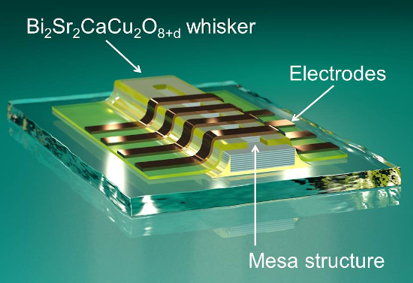
Design aspects of Bi2Sr2CaCu2O8+δ THz sources: optimization of thermal and radiative properties
Beilstein J. Nanotechnol. 2021, 12, 1392–1403, doi:10.3762/bjnano.12.103
- of the other two materials, namely Bi-2212 and polycrystalline gold electrodes. At low T both have linear κ(T). For Bi-2212 we assume κab(T) = 0.1 T(K) W·K−1·m−1 [45] with an anisotropy κab/κc = 8 [46]. For a polycrystalline gold thin film we use κ(T) = 3 T(K) W·K−1·m−1 [32]. The heat is produced in





