


Search results
Search for "sputtering" in Full Text gives 402 result(s) in Beilstein Journal of Nanotechnology. Showing first 200.
Ar+ implantation-induced tailoring of RF-sputtered ZnO films: structural, morphological, and optical properties
Beilstein J. Nanotechnol. 2025, 16, 872–886, doi:10.3762/bjnano.16.66
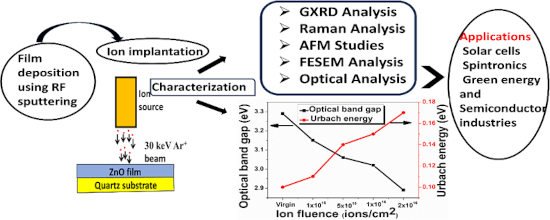
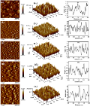
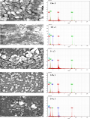
- displays [5], solar cells [6], and light-emitting diodes [7]. There are numerous methods for synthesizing ZnO films, including pulsed laser deposition, spray pyrolysis, radio frequency (RF) sputtering, and sol–gel techniques. Here RF sputtering is preferred over other methods because it provides high
- are versatile in developing high-performance electro-optical and spintronic devices [18]. Experimental ZnO films are grown on a quartz substrate (1 × 1 cm2) using a ZnO (99.99%) target (2″ diameter and 3 mm thickness) in a radio frequency (RF) sputtering system. The quartz substrate is ultrasonically
- cleaned using acetone and, finally, isopropyl alcohol before the experiment. The sputtering chamber is pumped to a base pressure of 1.2 × 10⁻⁶ Torr; then a mixture of nitrogen and argon gas is introduced into the sputtering chamber with flows of 1.8 and 10.0 sccm, respectively. When the pressure inside






Synchrotron X-ray photoelectron spectroscopy study of sodium adsorption on vertically arranged MoS2 layers coated with pyrolytic carbon
Beilstein J. Nanotechnol. 2025, 16, 847–859, doi:10.3762/bjnano.16.64
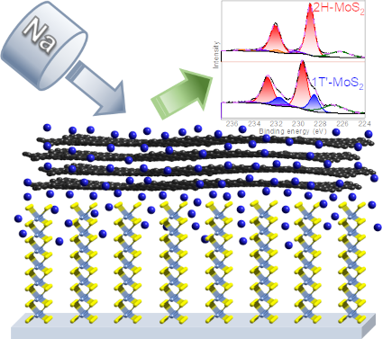
- decomposition residues. Results and Discussion Figure 1a shows the schematic diagram of the synthesis route of a hybrid film consisting of MoS2 coated with PyC. A molybdenum layer is deposited on a SiO2/Si substrate by magnetron sputtering for a short time of 10 s. This layer interacts with sulfur vapor at a
- deposited on a SiO2/Si substrate using magnetron sputtering. Raman spectroscopy and SEM revealed the vertical orientation of the MoS2 layers relative to the substrate surface. According to XPS data, the surface of the MoS2 film is enriched with sulfur even after its annealing at 1073 K in hydrogen. PyC
- 16 h to form a 250–300 nm thick surface oxidized layer. The substrates were thoroughly cleaned using hot mineral acids and placed in a magnetron sputtering system (OJSC Vacuum Systems). The substrates were annealed at 573 K for 30 min in a vacuum at a pressure of 2 × 10⁻² Pa. Immediately after this


Facile one-step radio frequency magnetron sputtering of Ni/NiO on stainless steel for an efficient electrode for hydrogen evolution reaction
Beilstein J. Nanotechnol. 2025, 16, 837–846, doi:10.3762/bjnano.16.63
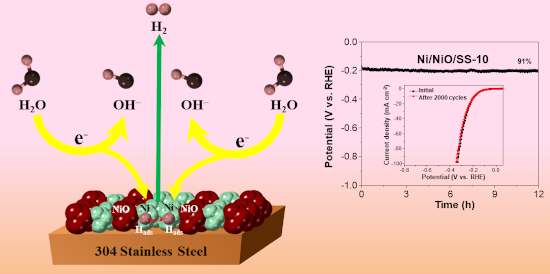
- . In this study, Ni/NiO nanolayers were prepared on stainless steel (SS) via a facile one-step radio frequency magnetron sputtering with various O2 flow rates. The O2 flow rate not only changed the crystal phase but also affected the morphology and atomic ratio of materials, leading to optimized HER
- may introduce a facile and eco-friendly strategy for fabricating noble metal-free, efficient nanomaterials for electrocatalytic HER. Keywords: electrocatalysts; magnetron sputtering; nickel; nickel oxide; water electrolysis; Introduction The world is facing a critical challenge through the
- synthesizing electrode materials in recent years because they offer a cleaner pathway than solution-based synthetic processes [20][21][22]. Among vacuum deposition methods, magnetron sputtering has been widely applied in industrial applications for fabricating thin films because of its advantages, such as good


Colloidal few layered graphene–tannic acid preserves the biocompatibility of periodontal ligament cells
Beilstein J. Nanotechnol. 2025, 16, 664–677, doi:10.3762/bjnano.16.51
- absolute ethanol. Finally, samples were dehydrated with hexamethylenedisilazane for 15 min and air-dried in a fume hood for 24 h and coated with a gold–palladium alloy using a Hummer JR sputtering device (Technics, CA, USA), creating a 12.5 nm thick gold layer (50 s at 20 mA sputter current). SEM




N2+-implantation-induced tailoring of structural, morphological, optical, and electrical characteristics of sputtered molybdenum thin films
Beilstein J. Nanotechnol. 2025, 16, 495–509, doi:10.3762/bjnano.16.38
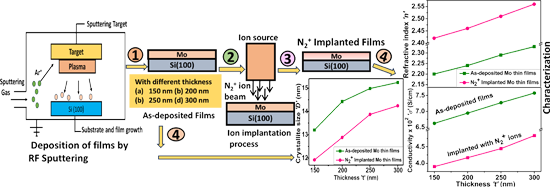
- remarkable thermal stability, high melting point, and chemical inertness. In the present study, Mo thin films of different thicknesses (150, 200, 250, and 300 nm) have been deposited on Si(100) substrates via radio frequency sputtering in an argon atmosphere at room temperature. Some of these films have been
- the same nominal film thickness after implantation. Keywords: atomic force microscopy; grazing angle X-ray diffractometer; Keithley parametric analyzer; Mo thin films; RF sputtering; spectroscopic ellipsometry; Introduction Molybdenum thin films have garnered significant attention in diverse
- substrates under suitable conditions lead to improvements in functionality and address the needs of various cutting-edge industries [6][7]. For the deposition of Mo thin films, various techniques such as chemical vapor deposition, physical vapor deposition (RF sputtering and DC sputtering) [1][8][9], and


Performance optimization of a microwave-coupled plasma-based ultralow-energy ECR ion source for silicon nanostructuring
Beilstein J. Nanotechnol. 2025, 16, 484–494, doi:10.3762/bjnano.16.37

- ° and 72.5°) sputtering of surface atoms and their consecutive redistribution [9][39][40]. During ion bombardment, the unequal radius of curvature of the surface leads to unequal deposition of energy at different points on the surface, which results in unequal sputtering at those points. This generates
- surface instabilities, and consequently, the surface atoms are redistributed to stabilize the surface. These two effects jointly trigger nanopattern formation on the surface. A first theoretical model was proposed by Bradley and Harper [41], based on curvature-dependent sputtering of surface and near
- -surface atoms. Later, Carter and Vishnyakov introduced the concept of redistribution of surface atoms [42]. Several experiments have been carried out to understand other factors that contribute to nanopattern formation, such as preferential and differential sputtering [6][43], the role of surface and beam


ReactorAFM/STM – dynamic reactions on surfaces at elevated temperature and atmospheric pressure
Beilstein J. Nanotechnol. 2025, 16, 397–406, doi:10.3762/bjnano.16.30
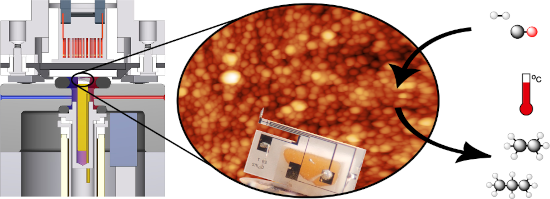
- sputtering (3 μA, 1 kV, 30 min) at room temperature followed by annealing at 1000 K for 5 min. In Figure 5a,c, taken at 450 K under UHV conditions, we recognize steps in the vertical direction, which correspond to the Pd(100) steps. In the current signal image, the same steps are visible and defined more
- hydrocarbons CnH2n+2, with water as byproduct [24]. We have investigated the reaction on Co nanoparticles deposited on an Al2O3 support, grown on a NiAl(110) single crystal. The NiAl(110) surface has been prepared by repeated cycles of Ar-ion sputtering (3 μA, 1 kV, 30 min) at room temperature followed by


Tailoring of physical properties of RF-sputtered ZnTe films: role of substrate temperature
Beilstein J. Nanotechnol. 2025, 16, 333–348, doi:10.3762/bjnano.16.25
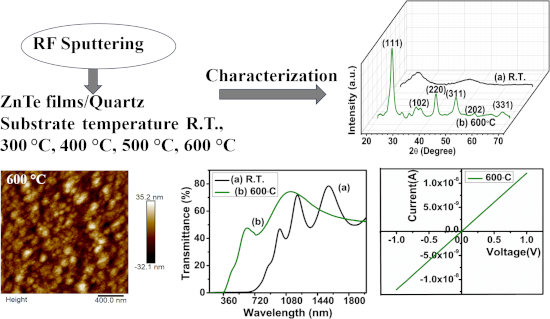
- °C, and 600 °C using RF sputtering. The thickness of the films has been found to decrease from 940 nm at room temperature to 200 nm at 600 °C with increasing substrate temperature. The structural investigation using grazing incidence angle X-ray diffraction revealed that films deposited at room
- crystallinity, high transmittance, and high conductivity of the ZnTe film produced at 600 °C make it a suitable candidate for use as a buffer layer in solar cell applications. Keywords: bandgap; physical properties; RF sputtering; substrate temperature; ZnTe; Introduction The industrialization and burning of
- physical and chemical methods such as molecular beam epitaxy [8], electron-beam evaporation [9], thermal evaporation [10], pulsed laser deposition (PLD) [11], and RF sputtering [12]. RF sputtering is a versatile technique because various process parameters such as RF power, deposition time, substrate




Heterogeneous reactions in a HFCVD reactor: simulation using a 2D model
Beilstein J. Nanotechnol. 2024, 15, 1627–1638, doi:10.3762/bjnano.15.128
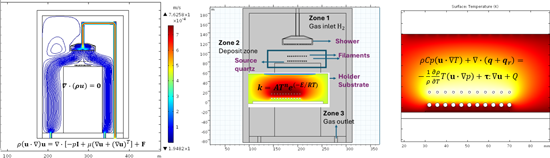
- by different CVD techniques, but also by sputtering and ion implantation, among others [4][5]. The key parameters are particular for each of these techniques. Hot filament chemical vapor deposition (HFCVD) is an excellent alternative for obtaining SRO films. It is also very versatile and economical


Ion-induced surface reactions and deposition from Pt(CO)2Cl2 and Pt(CO)2Br2
Beilstein J. Nanotechnol. 2024, 15, 1427–1439, doi:10.3762/bjnano.15.115

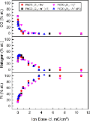
- ion irradiation these PtCl2 or PtBr2 species experience ion-induced sputtering. The difference between halogen and Pt sputter rates leads to a critical ion dose at which only Pt remains in the film. A comparison of the different ion/precursor combinations studied revealed that this sequence of
- elementary reaction steps is invariant, although the rates of CO desorption and subsequent physical sputtering were greatest for the heaviest (Ar+) ions. The ability of IBID to produce pure Pt films was confirmed by AES and XPS analysis of thin film deposits created by Ar+/Pt(CO)2Cl2, demonstrating the
- emission, and physical sputtering of adsorbed or substrate atoms [21][22][25][31][36][37][38][39][40]. Ion-induced deposition can occur via a momentum/energy transfer process [21][25][41][42] that results in the decomposition of the precursor to form volatile species and an involatile deposit containing



Various CVD-grown ZnO nanostructures for nanodevices and interdisciplinary applications
Beilstein J. Nanotechnol. 2024, 15, 1390–1399, doi:10.3762/bjnano.15.112
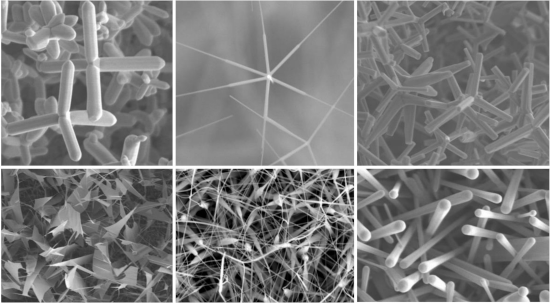
- ], radio-frequency magnetron sputtering [47], pulsed laser ablation [48], and electrodeposition methods [49]. They have many application potentials in dye-sensitized solar cells [46], self-powered energy-harvesting devices [47], photocatalysts [48], and turbid lenses [50]. It has been suggested that the

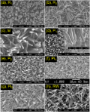


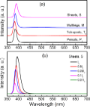
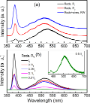
The role of a tantalum interlayer in enhancing the properties of Fe3O4 thin films
Beilstein J. Nanotechnol. 2024, 15, 1253–1259, doi:10.3762/bjnano.15.101

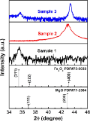
- promising applications. High-quality Fe3O4 thin films are a must to achieve the goals. In this report, Fe3O4 films on different substrates (SiO2/Si(100), MgO(100), and MgO/Ta/SiO2/Si(100)) were fabricated at room temperature with radio-frequency (RF) sputtering and annealed at 450 °C for 2 h. The
- sputtering; spintronic; Introduction Magnetite, also known as Fe3O4, has been extensively researched as one of the most common half-metallic materials in the field of spintronics for a considerable period of time. Magnetoelectronic devices are possible because of the material’s high Curie temperature of 860
- films [11][12][13]. The RF magnetron sputtering technique is extensively utilized because of its cost-effectiveness, simplicity, effectiveness, and capacity to produce Fe3O4 films with remarkable uniformity. The qualities of the films can be modified by manipulating parameters throughout the growth


A low-kiloelectronvolt focused ion beam strategy for processing low-thermal-conductance materials with nanoampere currents
Beilstein J. Nanotechnol. 2024, 15, 1197–1207, doi:10.3762/bjnano.15.97

- of energy loss to phonons and ionization and, therefore, heat is significantly (by a factor of six) lower for 5 keV ions than for 30 keV ion [17] as the incident ions have less initial energy to lose. The sputtering yield is reduced (by a factor of two) for 5 keV ions in comparison to 30 keV ions [17
- keV). By reducing the ion energy from 30 to 5 keV, the loss to heat can be reduced by a factor of six, while the sputtering speed is only reduced by a factor of two. The reduction in energy allows the operator to use nanoampere beam currents, which addresses the drawback of the previously reported
- program SRIM (Monte Carlo simulation) was used to determine the heat flux that 5 keV gallium ions (Ga+) induce in skin. 50000 ions were simulated for each incident ion energy. The methods “surface sputtering/monolayer collision steps” was selected as the calculation type. The plotting window size was




Local work function on graphene nanoribbons
Beilstein J. Nanotechnol. 2024, 15, 1125–1131, doi:10.3762/bjnano.15.91
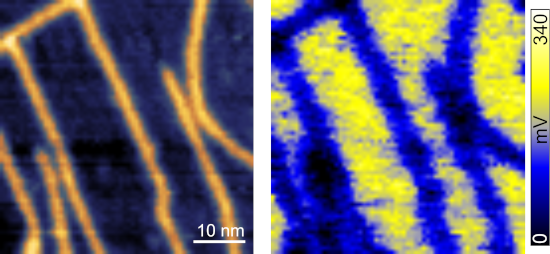
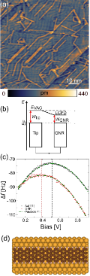
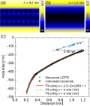
- -dependent measurements. Experimental The experiments were conducted in an Omicron VT-SFM system (base pressure 2 × 10⁻¹⁰ mbar). The Au(111) single crystal substrate (Mateck GmbH) was cleaned by repeated Ar ion sputtering–annealing cycles. The cleanliness of the samples was checked by SFM measurements. Then
- (f0 = 292 kHz, cL = 41 N/m) were used for imaging in the frequency modulation (FM) mode operated by a Nanonis electronic system. The tips were cleaned by sputtering (Ar pressure 5 × 10⁻³ Pa, energy 1 keV, 15 min) and annealing up to 375 K for 1–5 h (pressure below 1 × 10⁻⁷ Pa) prior to measurement

![[Graphic 1]](/bjnano/content/inline/2190-4286-15-91-i4.svg?max-width=637&scale=1.18182)
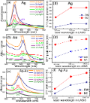
Effect of wavelength and liquid on formation of Ag, Au, Ag/Au nanoparticles via picosecond laser ablation and SERS-based detection of DMMP
Beilstein J. Nanotechnol. 2024, 15, 1054–1069, doi:10.3762/bjnano.15.86

- synthesis in solution (LASiS), and sputtering [1]. The LASiS technique has been proven to be cost-effective in producing various shapes of NPs with distinct size distributions in a short time (a few minutes). It offers many advantages including high purity, minimal contamination, and precise control over NP
- distribution of NPs on a FP was analyzed using the INCA software with a field-emission scanning electron microscope (FESEM, Carl Zeiss Ultra 55). Samples were prepared by drop casting 10 µL of NPs onto a FP, followed by sputtering a thin conductive layer of gold onto the FP to facilitate lower magnification


Interface properties of nanostructured carbon-coated biological implants: an overview
Beilstein J. Nanotechnol. 2024, 15, 1041–1053, doi:10.3762/bjnano.15.85
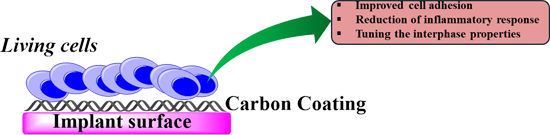
- which the deposition occurs. During electron beam evaporation, an electron beam is used to vaporize the target material, while during sputtering, a high-energy ion beam is used to bombard the target. In both cases, atoms are ejected from the target and subsequently condense onto the substrate. The



Bolometric IR photoresponse based on a 3D micro-nano integrated CNT architecture
Beilstein J. Nanotechnol. 2024, 15, 1030–1040, doi:10.3762/bjnano.15.84
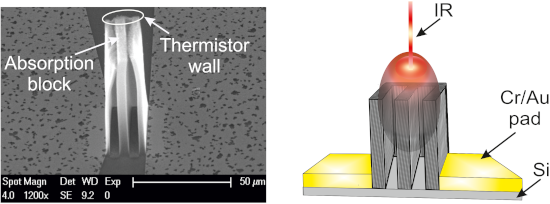
- 1c was defined by overlapping two tantalum-based growth stop strips (150 nm, sputtering) with a rectangular Fe layer (2 nm, e-beam) on the Si wafer. Only regions with direct Fe/AlOx contact were active for CNT growth. This combination allows for the definition of any shape, offering versatility for


Synthesis of silver–palladium Janus nanoparticles using co-sputtering of independent sources: experimental and theorical study
Beilstein J. Nanotechnol. 2024, 15, 808–816, doi:10.3762/bjnano.15.67
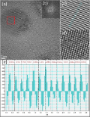
- sputtering Ag nanoparticles, only the second magnetron section working to confirm the sputtering of Pd nanoparticles, and both magnetrons working to obtain BNPs of the desired size. Figure 1 shows the nanoparticle size distribution for each experimental condition. The green color profile corresponds to the




Effect of repeating hydrothermal growth processes and rapid thermal annealing on CuO thin film properties
Beilstein J. Nanotechnol. 2024, 15, 743–754, doi:10.3762/bjnano.15.62
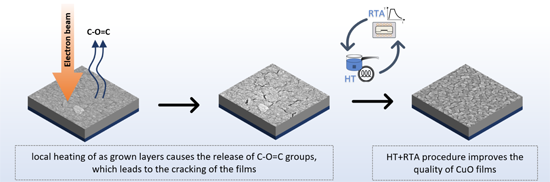
- literature. These encompass methods such as molecular beam epitaxy [17][18][19], direct current magnetron sputtering [4][20][21], and pulsed laser deposition [22][23][24]. Alternative approaches involve techniques such as chemical vapor deposition [25][26][27] and atomic layer deposition [28][29][30]. CuO




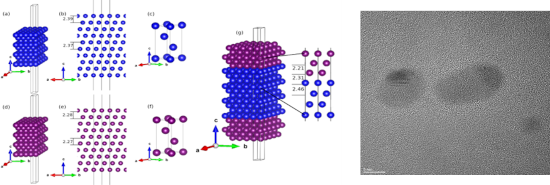
Level set simulation of focused ion beam sputtering of a multilayer substrate
Beilstein J. Nanotechnol. 2024, 15, 733–742, doi:10.3762/bjnano.15.61
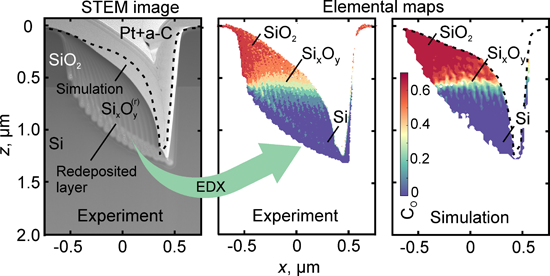
- understanding of the sputtering process, the distribution of oxygen atoms in the redeposited layer derived from the numerical data was compared with the corresponding elemental map acquired by energy-dispersive X-ray microanalysis. Keywords: electron microscopy; focused ion beam; level set simulation
- ; multilayer substrate; silicon; silicon dioxide; sputtering; Introduction The focused ion beam (FIB) technique is an effective method for surface nanostructuring. It is based on the local removal of material by sputtering with a narrow beam of, typically, gallium ions. This feature of the FIB method makes it
- , the desired properties are achieved by FIB processing of such substrates with different irradiation doses. A low-dose treatment is sufficient for cases that do not require sputtering of large amounts of material. Among such cases are the precise tuning of the magnetic characteristics of thin

![[Graphic 55]](/bjnano/content/inline/2190-4286-15-61-i68.svg?max-width=637&scale=1.18182)


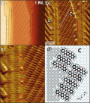
Directed growth of quinacridone chains on the vicinal Ag(35 1 1) surface
Beilstein J. Nanotechnol. 2024, 15, 556–568, doi:10.3762/bjnano.15.48
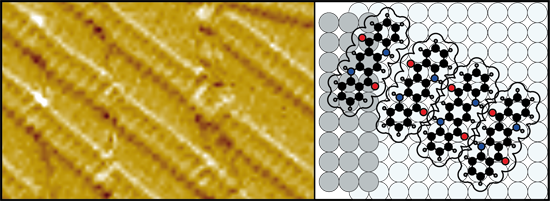
- from Pfeiffer Vacuum. The vicinal Ag(35 1 1) crystal was obtained from MaTecK and cleaned by repeated cycles of sputtering and subsequent annealing at 700 K for 45 min. We tested whether a variation of the annealing temperatures between 500 and 800 K has an influence on the step distribution of the


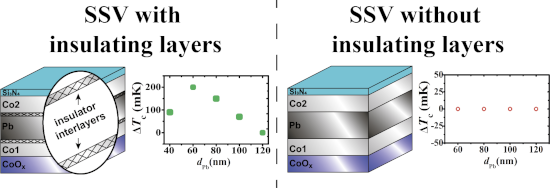
Superconducting spin valve effect in Co/Pb/Co heterostructures with insulating interlayers
Beilstein J. Nanotechnol. 2024, 15, 457–464, doi:10.3762/bjnano.15.41
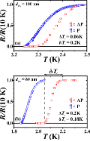
- the magnetization of the Co1 layer. The layers were deposited using electron beam evaporation (Co, Pb) and AC sputtering (Si3N4). The deposition setup had a load-lock station with vacuum shutters, allowing one to transfer the sample holder without breaking the ultrahigh vacuum in the deposition



![[Graphic 6]](/bjnano/content/inline/2190-4286-15-41-i6.svg?max-width=637&scale=1.18182)
Investigating ripple pattern formation and damage profiles in Si and Ge induced by 100 keV Ar+ ion beam: a comparative study
Beilstein J. Nanotechnol. 2024, 15, 367–375, doi:10.3762/bjnano.15.33
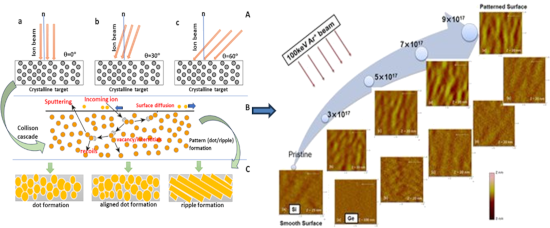
- structures. Although these structures may not be visible to the naked eye, they certainly have a visible impact on the mentioned applications. Nanopatterning is a very delicate procedure that is only possible with special techniques such as ion beam sputtering (IBS), with which one can achieve nanostructures
- understood. Despite controlled fabrication of patterns has been achieved, details that influence the process of self-assembly still remain open. Ion beam sputtering is an important method for inducing topographical changes in specific materials. For silicon, self-organized dots, ripples, and cones have been
- to knock them out of the surfaces through an outwardly directed momentum. This process is known as sputtering [26], and the number of ejected atoms per ion is given by the sputtering yield, Y(θ). It is clearly visible that Y is a function of the incident angle θ, and it maximizes around θ ≈ 60°. Ion


Controllable physicochemical properties of WOx thin films grown under glancing angle
Beilstein J. Nanotechnol. 2024, 15, 350–359, doi:10.3762/bjnano.15.31
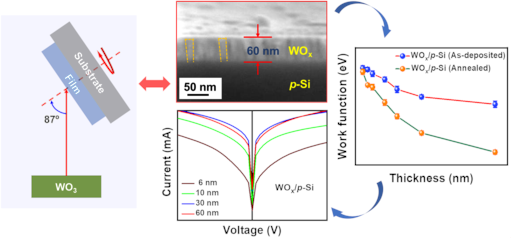
- sputtering for optoelectronic applications. A glancing angle of 87° is employed to grow films of different thicknesses, which are then exposed to post-growth annealing. Detailed local probe analyses in terms of morphology and work function of WOx films are carried out to investigate thickness-dependent
- structural, optical, and electrical properties of glancing angle-deposited NS-WOx thin films, where NS-WOx films of different thicknesses (6–60 nm) are prepared by rf sputtering and exposed to post-growth annealing at 673 K in vacuum (2 × 10⁻⁷ mbar). The role of increased oxygen vacancy concentration (OV) on
- thin films were deposited on ultrasonically cleaned p-Si (100) and soda lime glass substrates of 1 × 1 cm2 dimension using a rf magnetron sputtering setup (Excel Instruments). Trichloroethylene, propanol, acetone, and DI water were used to carry out ultrasonication of the substrates for removing


Ultrasensitive and ultrastretchable metal crack strain sensor based on helical polydimethylsiloxane
Beilstein J. Nanotechnol. 2024, 15, 270–278, doi:10.3762/bjnano.15.25
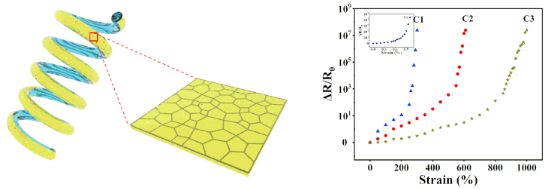
- ion beam sputtering was obtained from Fuzhou Yingfei Xun Photoelectric Tech Co., Ltd, China; it possessed a density of 19.3 g·cm−3 and a conductivity of 4.52 × 10⁷ S·m−1. Silver conductive adhesive, which was procured from Shenzhen Ausbond Co., LTD. (Guangdong, China), was employed to affix copper
- structured PDMS was initially cleansed through a 5 min Ar plasma sputtering and, subsequently, coated with a 10 nm thick Ti adhesion layer. After that, ion beam sputtering was utilized to deposit a 50 nm thick Au thin film onto the outer surface of the helically shaped PDMS. Then, a controlled pre-stretch





