Search results
Search for "supercapacitors" in Full Text gives 74 result(s) in Beilstein Journal of Nanotechnology.
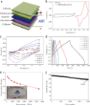
High-performance asymmetric supercapacitor made of NiMoO4 nanorods@Co3O4 on a cellulose-based carbon aerogel
Beilstein J. Nanotechnol. 2020, 11, 240–251, doi:10.3762/bjnano.11.18
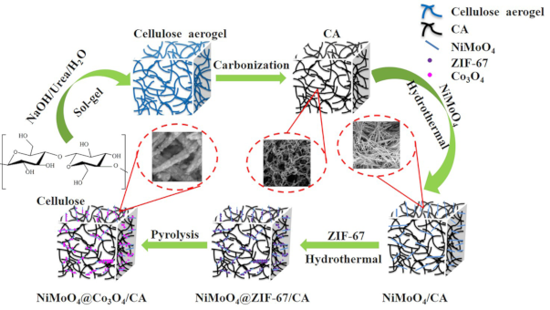
- 2000 cycles), indicating its wide applicability in energy storage. Finally, our results provide a general approach to the construction of CA and MOF-based composite materials with hierarchical porous structure for potential applications in supercapacitors. Keywords: carbon aerogel; hierarchically
- ]. Among them, supercapacitors are promising candidates for energy storage owing to their advanced charge/discharge properties, the high power density and their long life cycles [5][6]. Based on the charge storage mechanism, supercapacitors can be classified into electrical double layer capacitors (EDLCs
- conductivity of the Mo ion [17][18][19]. Unfortunately, despite the fact that NiMoO4 has a high theoretical capacitance, its widespread practical application in supercapacitors is still restricted due to its low practical capacitance as well as the poor rate performance and wettability. Therefore, the




Simple synthesis of nanosheets of rGO and nitrogenated rGO
Beilstein J. Nanotechnol. 2020, 11, 68–75, doi:10.3762/bjnano.11.7
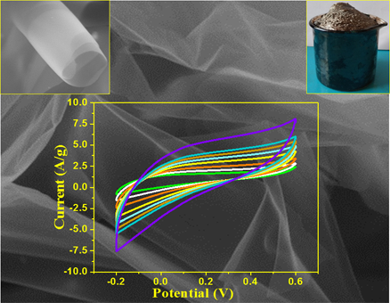
- hydrogen treated (H-rGO) samples. Keywords: nanosheets; nitrogenated reduced graphene oxide (N-rGO); reduced graphene oxide (rGO); supercapacitors; thermal decomposition; Introduction Graphene, the one atom thick two-dimensional material of sp2-hybridized carbon atoms has attracted much attention after


Ultrathin Ni1−xCoxS2 nanoflakes as high energy density electrode materials for asymmetric supercapacitors
Beilstein J. Nanotechnol. 2019, 10, 2207–2216, doi:10.3762/bjnano.10.213
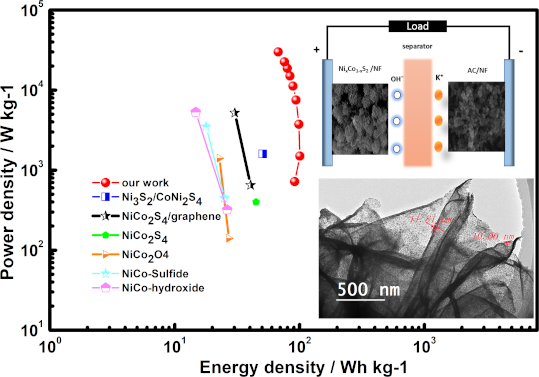
- Engineering, Zhejiang University of Technology, Hangzhou, China 10.3762/bjnano.10.213 Abstract Transition metal compounds such as nickel cobalt sulfides (Ni–Co–S) are promising electrode materials for energy storage devices such as supercapacitors owing to their high electrochemical performance and good
- energy density of 67.5 Wh·kg−1) and excellent cycling stability. This approach can be a low-cost way to mass-produce high-performance electrode materials for supercapacitors. Keywords: electrode materials; high energy density; in situ phase transformation; NiCo sulfide; supercapacitors; ultrathin
- nanoflakes; Introduction Supercapacitors (SCs) or electrochemical capacitors (ECs) are regarded as important energy storage devices that provide instantaneous power output to run cranes, subways or trains. They exhibit high power density, long cycling lifetime and fast charge/discharge rates [1][2


Facile synthesis of carbon nanotube-supported NiO//Fe2O3 for all-solid-state supercapacitors
Beilstein J. Nanotechnol. 2019, 10, 1923–1932, doi:10.3762/bjnano.10.188
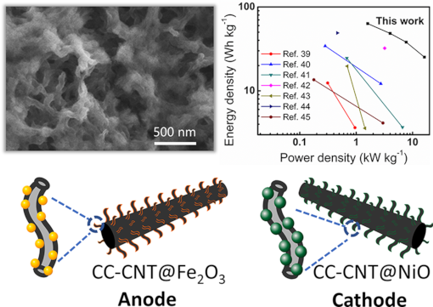
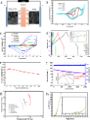
- Education, School of Physical Science and Technology, Lanzhou University, Lanzhou 730000, China 10.3762/bjnano.10.188 Abstract We have successfully prepared iron oxide and nickel oxide on carbon nanotubes on carbon cloth for the use in supercapacitors via a simple aqueous reduction method. The obtained
- supercapacitors. Keywords: aqueous reduction; carbon nanotubes; iron oxide; nickel oxide; supercapacitors; Introduction Supercapacitors offer long cycling life, superior charge–recharge ability, high power density, and wide operating temperature [1][2][3]. However, the low energy density limits their
- application in various energy-consuming devices. Many materials have been explored to be used in supercapacitors to increase their energy density [4][5]. Carbon materials, especially carbon nanotubes and graphene, endowed with good conductivity and high specific surface area, are ideal candidates, and they


High-tolerance crystalline hydrogels formed from self-assembling cyclic dipeptide
Beilstein J. Nanotechnol. 2019, 10, 1894–1901, doi:10.3762/bjnano.10.184
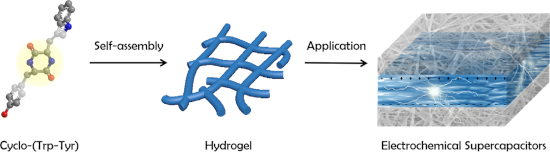
- -assembly of cyclic dipeptides results in highly robust hydrogels which can be applied for electrochemical applications such as electrochemical supercapacitors. Keywords: crystalline hydrogel; cyclic dipeptide; electrochemical supercapacitors; nanoarchitectonics; self-assembly; Introduction On account of
- applications in harsh environments, such as those of electrochemical supercapacitors. Application in electrochemical supercapacitors Inspired by the high stability in harsh environments, we next investigated the application of the C-WY hydrogel as a candidate material for electrochemical supercapacitors
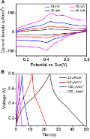
- voltammetry (CV) curves of the hydrogel at different scan rates ranging from 10 to 40 mV were studied (Figure 4A). Typical capacitor shapes were observed in the curves, indicating that the C-WY hydrogel can be applied for electrochemical supercapacitors. In addition, the capacitive charge–discharge curves


Charge-transfer interactions between fullerenes and a mesoporous tetrathiafulvalene-based metal–organic framework
Beilstein J. Nanotechnol. 2019, 10, 1883–1893, doi:10.3762/bjnano.10.183
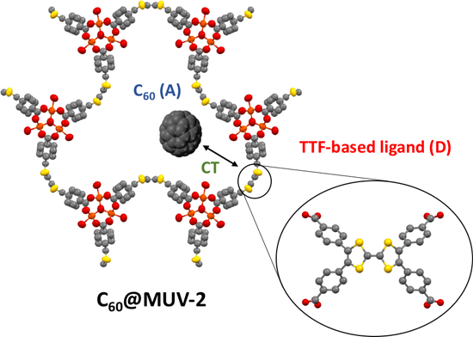
- catalysis [3][4][5]. In addition, electroactive MOFs combining porosity and electrical conductivity [6][7][8] have also attracted much attention during the last years in view of their potential application, for example as chemiresistive sensors [9], field-effect transistors [10] or supercapacitors [11




Layered double hydroxide/sepiolite hybrid nanoarchitectures for the controlled release of herbicides
Beilstein J. Nanotechnol. 2019, 10, 1679–1690, doi:10.3762/bjnano.10.163
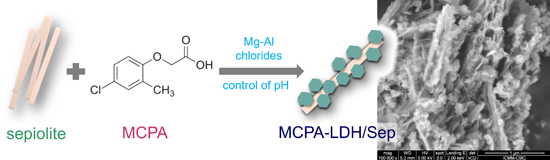
- components in diverse electrochemical devices (such as supercapacitors, sensors, and biosensors), in drug delivery and controlled-release formulations, or in non-viral gene transfection [21][22][23][24][25][26]. The fact that the stability of LDH varies with the pH value has proved advantageous in some of


Subsurface imaging of flexible circuits via contact resonance atomic force microscopy
Beilstein J. Nanotechnol. 2019, 10, 1636–1647, doi:10.3762/bjnano.10.159
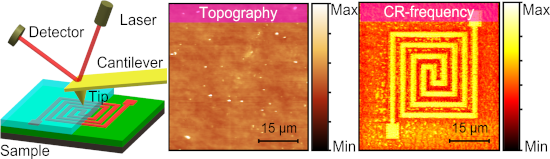
- force microscopy (AFM); contact resonance atomic force microscopy (CR-AFM); contact stiffness; defect detection; flexible circuits; subsurface imaging; Introduction With the rapid shrinkage of microelectronic devices, flexible circuits are intensively used while being functionalized as supercapacitors




Upcycling of polyurethane waste by mechanochemistry: synthesis of N-doped porous carbon materials for supercapacitor applications
Beilstein J. Nanotechnol. 2019, 10, 1618–1627, doi:10.3762/bjnano.10.157
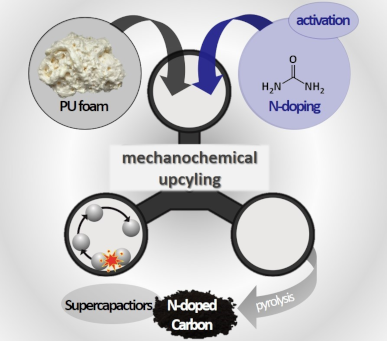
- values of 1–8 wt %, high specific surface area values of up to 2150 m2·g−1 (at a N content of 1.6 wt %) and large pore volume values of up to 0.9 cm3·g−1. The materials were tested as electrodes for supercapacitors in aqueous 1 M Li2SO4 electrolyte (100 F·g−1), organic 1 M TEA-BF4 (ACN, 83 F·g−1) and
- applications in catalysis [24][25][26], gas sorption/separation [27][28][29] and electrochemical energy storage/conversion. For the latter, porous carbon materials are established as electrode materials in fuel cells [30][31][32][33], Li–S cells [34][35][36][37], and supercapacitors [38]. In addition, these
- and a total pore volume of up to 0.9 cm3·g−1. In order to generate different nitrogen contents and to increase the porosity of the carbon material, we used different ratios of urea and K2CO3. Moreover, the N-doped carbon materials have been investigated as electrode material for supercapacitors in


Materials nanoarchitectonics at two-dimensional liquid interfaces
Beilstein J. Nanotechnol. 2019, 10, 1559–1587, doi:10.3762/bjnano.10.153
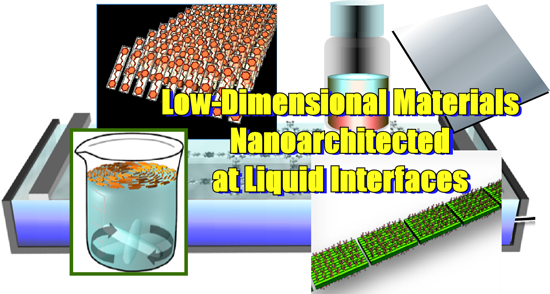
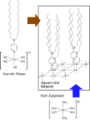
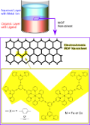
- . The nanoarchitecture materials can be used for various applications such as molecular recognition, sensors, photodetectors, supercapacitors, supramolecular differentiation, enzyme reactors, cell differentiation control, and hemodialysis. Keywords: film; interface; low-dimensional material
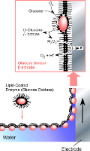
- reported. Jayavel, Shrestha, and co-workers demonstrated the enhanced performance of electrochemical supercapacitors using composites of cobalt oxide nanoparticles and reduced graphene oxide, which are zero-dimensional and two-dimensional nanomaterials, respectively [86]. Leong and co-workers reported a
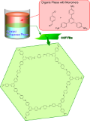
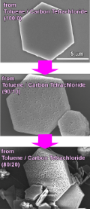
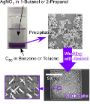
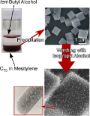
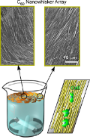
- supercapacitors. Shrestha, Acharya, and co-workers investigated the optoelectronic properties of one-dimensional C60 nanorods prepared in ultra-rapid (5 s) processes of liquid–liquid interfacial precipitation at room temperature [244]. Dominant excitonic charge transfer transitions within the nanorods was













Flexible freestanding MoS2-based composite paper for energy conversion and storage
Beilstein J. Nanotechnol. 2019, 10, 1488–1496, doi:10.3762/bjnano.10.147
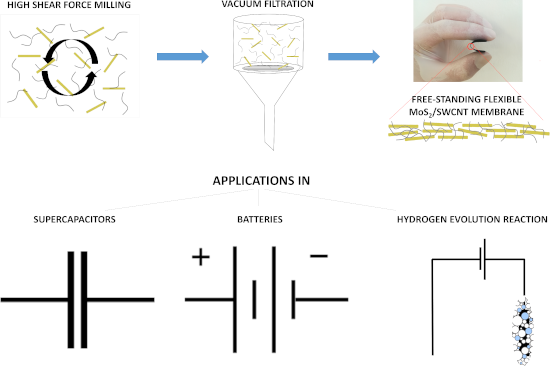
- material. The highest capacitance achieved was 33 mF·cm−2 at a current density of 1 mA·cm−2, demonstrating potential application in supercapacitors. We further used the material as a cathode for the hydrogen evolution reaction (HER) with an onset potential of approximately −0.2 V vs RHE. The onset
- devices where high flexibility and mechanical strength are desired. Keywords: flexible composites; hydrogen evolution reaction (HER); lithium ion batteries (LIBs); molybdenum disulfide; nanoarchitectonics; supercapacitors; Introduction The world’s growing population has a nearly ever-increasing demand
- LIBs, supercapacitors (SCs) are seen as next-generation energy storage devices having a high specific power, fast charge–discharge rate and excellent cycling stability [2]. Freestanding, binder-free electrodes are also of great interest, as they can be used in flexible SCs [26]. In this regard, two


An efficient electrode material for high performance solid-state hybrid supercapacitors based on a Cu/CuO/porous carbon nanofiber/TiO2 hybrid composite
Beilstein J. Nanotechnol. 2019, 10, 781–793, doi:10.3762/bjnano.10.78
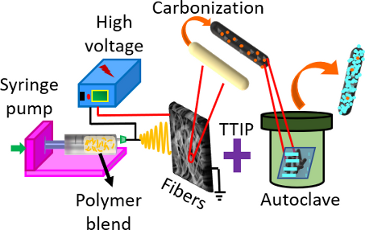
- density of 45.83 Wh kg−1 at a power density of 1.27 kW kg−1 was also realized. The developed electrode material provides new insight into ways to enhance the electrochemical properties of solid-state supercapacitors, based on the synergistic effect of porous carbon nanofibers, metal and metal oxide
- , more reliable, low cost, highly efficient and environmentally benign energy storage devices must be explored. Among many energy storage devices, supercapacitors are an ideal option for fast energy storage due to their high specific power (>10 kW kg−1), fast charge–discharge kinetics (in units of
- seconds), long cycle life (>105), wide working potential and broad temperature range of operation [1][2]. The higher energy density and power density of supercapacitors are an important advantage over conventional dielectric capacitors and batteries. Supercapacitors can combine the advantages of batteries


Widening of the electroactivity potential range by composite formation – capacitive properties of TiO2/BiVO4/PEDOT:PSS electrodes in contact with an aqueous electrolyte
Beilstein J. Nanotechnol. 2019, 10, 483–493, doi:10.3762/bjnano.10.49
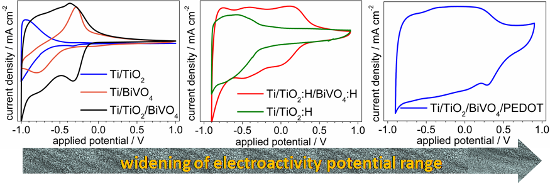
- . Capacitance values higher than 10 mF·cm−2 were maintained even after 10000 galvanostatic cycles (ic = ia = 0.5 mA·cm−2). Keywords: bismuth vanadate (BiVO4); electrochemical activity; PEDOT:PSS; supercapacitors; titania nanotubes; Introduction Energy-storage technologies and sustainable energy production are
- currently important challenges. There are many ways for energy storage, among them, electrical, chemical and electrochemical storage technologies are of great interest [1][2]. Among the various energy storage devices, such as batteries [3] and supercapacitors [4], supercapacitors are the most promising
- charged and discharged over a wide potential range. Both electrical double-layer capacitance and faradaic reactions can contribute to the final capacitance of an electrode. Many different materials have been tested as electrode materials for supercapacitors, such as metal oxides [6][7][8], carbon




Improving control of carbide-derived carbon microstructure by immobilization of a transition-metal catalyst within the shell of carbide/carbon core–shell structures
Beilstein J. Nanotechnol. 2019, 10, 419–427, doi:10.3762/bjnano.10.41
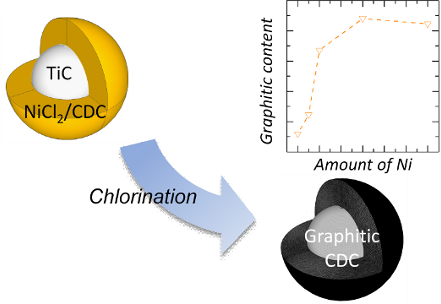
- large specific surface area and distinct pore character. For applications in which electrical conductivity plays an important role, e.g., battery electrodes, fuel-cell catalysts or supercapacitors [14][15][16], it is necessary for carbon to not only show porosity but also to feature a graphitic


A Ni(OH)2 nanopetals network for high-performance supercapacitors synthesized by immersing Ni nanofoam in water
Beilstein J. Nanotechnol. 2019, 10, 281–293, doi:10.3762/bjnano.10.27
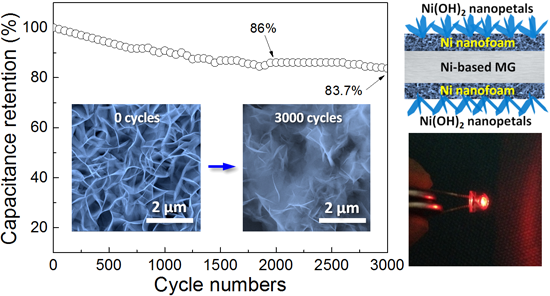
- Nowadays, environmental contamination and energy crisis require new energy storage devices. This leads to a considerable interest in the research of supercapacitors because of their higher power density, longer cycling stability and faster charge/discharge periods compared to batteries [1][2][3][4
- ]. Generally speaking, supercapacitors fall into two categories with different energy storage mechanisms. One is electrical double-layer supercapacitors (EDLCs) dominated by the electrostatic adsorption/desorption of electrolyte ions on the electrode surfaces. In EDLCs carbonaceous materials and their
- substrate for electroactive Ni(OH)2 in supercapacitors because of the large surface area, good conductivity and compatibility with nickel hydroxide. Yuan et al. synthesized porous Ni(OH)2/NiOOH net on Ni foam by a chemical bath deposition and the electrode showed good rate capability [24]. Ke et al




Zn/F-doped tin oxide nanoparticles synthesized by laser pyrolysis: structural and optical properties
Beilstein J. Nanotechnol. 2019, 10, 9–21, doi:10.3762/bjnano.10.2
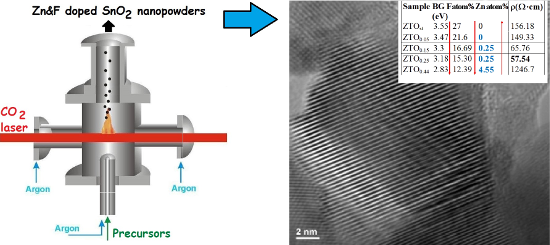
- -ion microbatteries [29], as photocatalysts for brilliant green dye degradation in solution under solar light [30] and even as a component for supercapacitors [31]. The in situ synthesis of SnO2-based nanoparticles co-doped with F and Zn is demonstrated in this work. For this purpose we use the



Ternary nanocomposites of reduced graphene oxide, polyaniline and hexaniobate: hierarchical architecture and high polaron formation
Beilstein J. Nanotechnol. 2018, 9, 2936–2946, doi:10.3762/bjnano.9.272
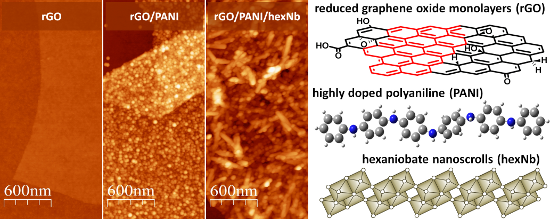
- applied, for instance, as supercapacitors, sensing materials, solar cells, electrochromic devices, anticorrosion coatings or as materials for carbon dioxide capture [8]. The layered inorganic phase offers a high surface area for PANI deposition and increases its thermal stability with regard to


Graphene-enhanced metal oxide gas sensors at room temperature: a review
Beilstein J. Nanotechnol. 2018, 9, 2832–2844, doi:10.3762/bjnano.9.264
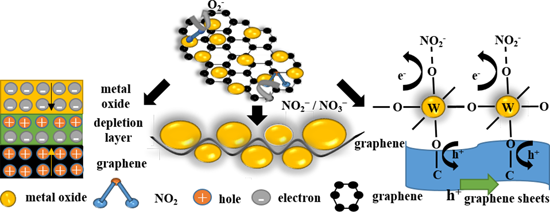
- ], graphene has been widely used in various fields such as photocatalysts, lithium battery electrodes, supercapacitors, gas sensors and electronic devices [2][3][4] due to its high specific surface area (2630 m2/g) and high carrier mobility at room temperature [5]. The electrical properties of graphene are



The electrical conductivity of CNT/graphene composites: a new method for accelerating transmission function calculations
Beilstein J. Nanotechnol. 2018, 9, 1254–1262, doi:10.3762/bjnano.9.117
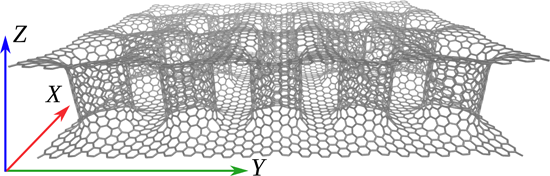
- promising as an electrode for storage batteries and supercapacitors [5][6][7]. There remain many questions about the conductive properties of pillared graphene and their dependence on the length and diameter of the nanotubes. At the moment, there is no experimental data on the conductivity of pillared


Electrodeposition of reduced graphene oxide with chitosan based on the coordination deposition method
Beilstein J. Nanotechnol. 2018, 9, 1200–1210, doi:10.3762/bjnano.9.111
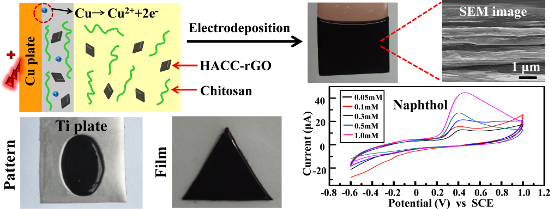
- attention due to its appealing applications for sensors, supercapacitors and lithium-ion batteries. However, there are still some limitations in the current electrodeposition methods for graphene. Here, we present a novel electrodeposition method for the direct deposition of reduced graphene oxide (rGO


Anchoring Fe3O4 nanoparticles in a reduced graphene oxide aerogel matrix via polydopamine coating
Beilstein J. Nanotechnol. 2018, 9, 591–601, doi:10.3762/bjnano.9.55
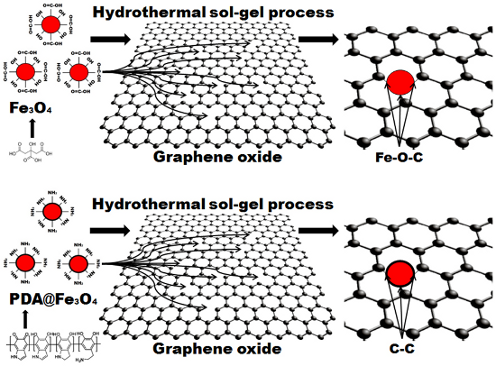
- batteries [8][9][10][11], supercapacitors [12][13][14][15][16]), sensors (gas sensors [17][18][19], biosensors [20][21]) and adsorbers (oil pollution [22][23], organic contaminants [24][25]). Moreover, the properties of GO-based aerogels can be modified by addition of various functional additives, e.g


Blister formation during graphite surface oxidation by Hummers’ method
Beilstein J. Nanotechnol. 2018, 9, 407–414, doi:10.3762/bjnano.9.40
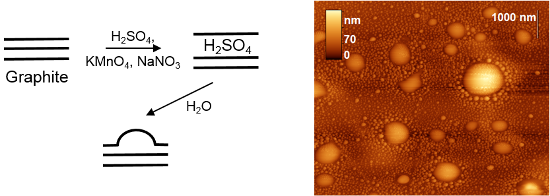
- microscopy (AFM); graphene; graphite intercalation compounds (GICs); graphite oxide (GO); highly annealed pyrolythic graphite (HAPG); Introduction Graphite oxide (GO) and its single-layer derivative, graphene oxide, are of great importance due to their potential applications as a part of supercapacitors


Synthesis and characterization of electrospun molybdenum dioxide–carbon nanofibers as sulfur matrix additives for rechargeable lithium–sulfur battery applications
Beilstein J. Nanotechnol. 2018, 9, 262–270, doi:10.3762/bjnano.9.28
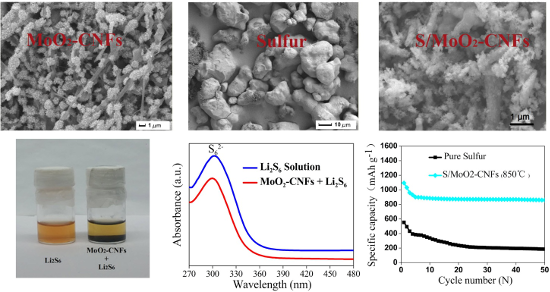
- , supercapacitors and as an anode material in lithium ion batteries due to its relatively large theoretical capacity [19][20][21]. Although numerous synthetic approaches have been reported for preparing MoO2 nanostructures with diverse morphologies, the fabrication, manipulation, and engineering of one-dimensional


One-step chemical vapor deposition synthesis and supercapacitor performance of nitrogen-doped porous carbon–carbon nanotube hybrids
Beilstein J. Nanotechnol. 2017, 8, 2669–2679, doi:10.3762/bjnano.8.267
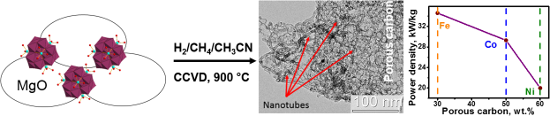
- nitrogen content and low surface area, the sample synthesized using the Ni/Mo catalyst exhibited a good capacitive behavior at scan rates below 100 mV/s (Figure 7b), which confirms a benefit of the addition of porous carbon for the development of effective carbon-based supercapacitors. Impedance
- high power densities of supercapacitors, which are equal to 34.6 kW/kg, 29.4 kW/kg, and 20 kW/kg for the CNx materials produced using Fe/Mo, Co/Mo, and Ni/Mo catalysts, respectively. These values are substantially higher than the best power density of 10 kW/kg found for supercapacitors with activated
- materials for supercapacitors and showed a good power density in a 1 M H2SO4 electrolyte. It is shown that the power density is improved with an increase in the fraction of MWCNTs and the porous carbon provides good capacitance for the electrode, while nitrogen atoms were found to decrease the charge


Fabrication of carbon nanospheres by the pyrolysis of polyacrylonitrile–poly(methyl methacrylate) core–shell composite nanoparticles
Beilstein J. Nanotechnol. 2017, 8, 1897–1908, doi:10.3762/bjnano.8.190

- batteries [3][4][5], fuel cells [6][7], supercapacitors [8][9], catalysis carriers [10][11], drug delivery [12][13] and adsorption [14][15]. Various techniques, including arc discharge [16], laser ablation [17], chemical vapor deposition [18], and solvothermal method [19], have been developed for the