Search results
Search for "tapping mode" in Full Text gives 188 result(s) in Beilstein Journal of Nanotechnology.
Optimizing PMMA solutions to suppress contamination in the transfer of CVD graphene for batch production
Beilstein J. Nanotechnol. 2022, 13, 796–806, doi:10.3762/bjnano.13.70
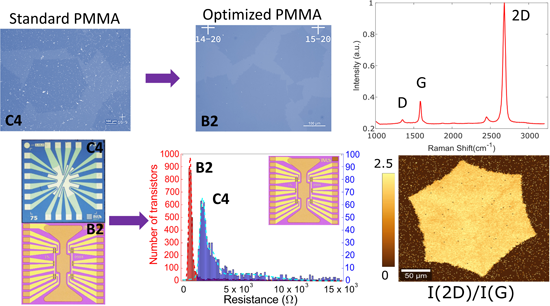
- frequency. The AFM measurement was carried out in tapping mode. A 633 nm laser light aimed at the back side of the cantilever tip was reflected toward a position-sensitive photodetector, which provides feedback signals to piezoelectric scanners that maintain the cantilever tip at constant height (force




Revealing local structural properties of an atomically thin MoSe2 surface using optical microscopy
Beilstein J. Nanotechnol. 2022, 13, 572–581, doi:10.3762/bjnano.13.49
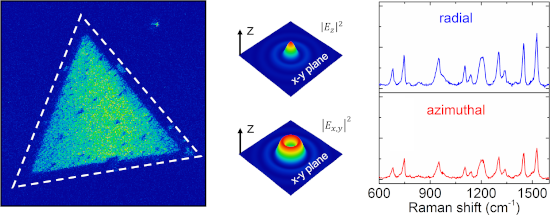
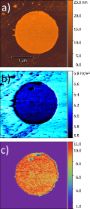
- images of CuPc/MoSe2. The topographic images of CuPc/MoSe2 are obtained with an atomic force microscope (Multimode 8-HR, Bruker) operated in peak force tapping mode using a SCANASYST-AIR probe (silicon tip on nitride lever, Bruker). Optical properties of a triangular MoSe2 flake covered with a thin film


Two dynamic modes to streamline challenging atomic force microscopy measurements
Beilstein J. Nanotechnol. 2021, 12, 1226–1236, doi:10.3762/bjnano.12.90
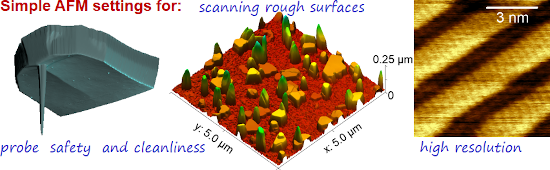
- 10.3762/bjnano.12.90 Abstract The quality of topographic images obtained using atomic force microscopy strongly depends on the accuracy of the choice of scanning parameters. When using the most common scanning method – semicontact amplitude modulation (tapping) mode, the choice of scanning parameters is
- -scanner vertically, maintains A = Asp. During scanning each line, lateral movement (in the X or Y direction) is performed at a constant speed V. This is the most common dynamic mode, which is called amplitude modulation (AM-AFM) [7] and has many other names (e.g., tapping mode or semi-contact mode). The


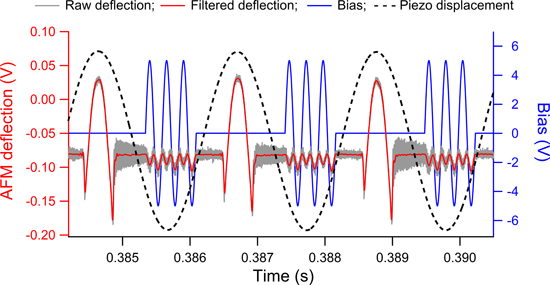
Open-loop amplitude-modulation Kelvin probe force microscopy operated in single-pass PeakForce tapping mode
Beilstein J. Nanotechnol. 2021, 12, 1115–1126, doi:10.3762/bjnano.12.83





A new method for obtaining model-free viscoelastic material properties from atomic force microscopy experiments using discrete integral transform techniques
Beilstein J. Nanotechnol. 2021, 12, 1063–1077, doi:10.3762/bjnano.12.79
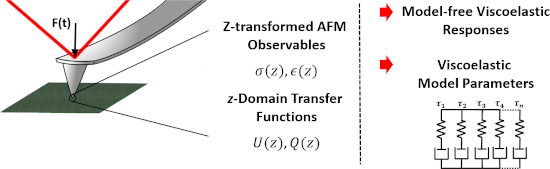
- force–distance curve, where the cantilever position above the sample follows a ramp function. In the case of intermittent-contact methods (e.g., tapping-mode AFM), the cantilever tip oscillates nearly sinusoidally, but since tip–sample contact is intermittent, the sample does not experience purely


Self-assembly of Eucalyptus gunnii wax tubules and pure ß-diketone on HOPG and glass
Beilstein J. Nanotechnol. 2021, 12, 939–949, doi:10.3762/bjnano.12.70
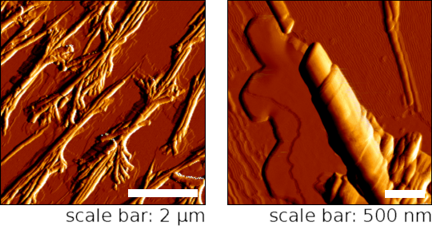
- solvent and were done in tapping mode with tapping-mode cantilevers (Tap300-G, Budget Sensors, Sofia, Bulgaria). The scan rates ranged from 0.7 to 2.3 Hz and the scan sizes from 3 × 3 to 10 × 10 µm. The maximum possible set point was used (approx. 60–70% of drive amplitude). Obtained topography and




Impact of GaAs(100) surface preparation on EQE of AZO/Al2O3/p-GaAs photovoltaic structures
Beilstein J. Nanotechnol. 2021, 12, 578–592, doi:10.3762/bjnano.12.48
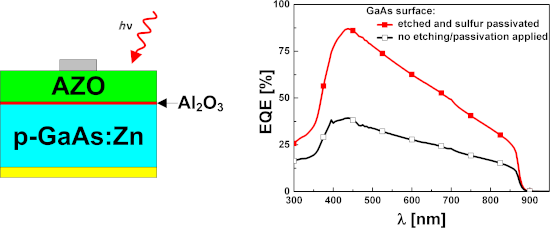
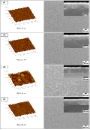
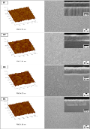
- analyzed using a scanning electron microscope (Hitachi SU-70) with a secondary electron detector operating at 15 kV. The topography of the surface of the layers was analyzed using an atomic force microscope (Bruker Dimension Icon) working in peak-force tapping mode using a ScanAsyst algorithm. A ScanAsyst




Mapping the local dielectric constant of a biological nanostructured system
Beilstein J. Nanotechnol. 2021, 12, 139–150, doi:10.3762/bjnano.12.11
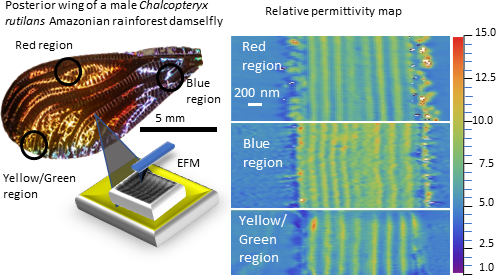
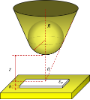
- double-pass mode, which means that the probe executes two scans. The first scan measures the sample topography in tapping mode and the second scan mimics the profile at a defined lift height Zlift applying a voltage VDC between the tip and the conductive substrate [21]. The tip is mechanically forced to




Numerical analysis of vibration modes of a qPlus sensor with a long tip
Beilstein J. Nanotechnol. 2021, 12, 82–92, doi:10.3762/bjnano.12.7
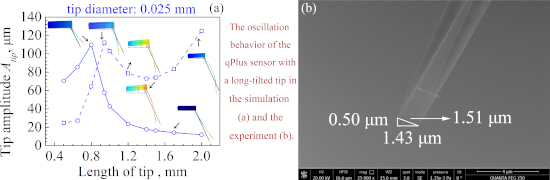
- eigenfrequencies are denoted by fq, ftf, and ftip, respectively. The values of fq and ftip are obtained by the simulation, and ftf is calculated by the method described in [27]. Since the oscillation of the tip is mainly in the tapping mode during scanning, we focus on the modes of the tuning fork prong and the
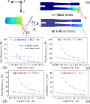
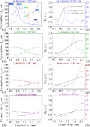
- higher ratio corresponds to a higher proportion of the oscillation parallel to the X direction. In contrast, a smaller ratio means the tip oscillation is close to the ideal tapping mode. In the in-phase mode, Ax/Az for all tip diameters increases with respect to the tip length. However, the increase of
- Ax/Az is smaller for 0.075 mm and 0.1 mm tips. When the tip gets thinner, the vibration tends to be parallel to the X direction. When the tip gets thicker, the oscillation behaves more like the tapping mode. The value of Atip is determined through the vibrations of the tuning fork prong and the tip






Bulk chemical composition contrast from attractive forces in AFM force spectroscopy
Beilstein J. Nanotechnol. 2021, 12, 58–71, doi:10.3762/bjnano.12.5
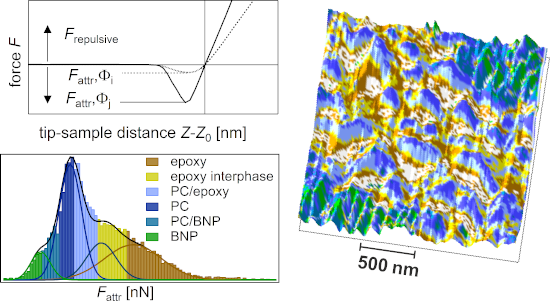
- for this task, a high-resolution method of AFM force spectroscopy was used, which is called intermodulation AFM. This dynamic method is able to scan the sample with a resolution comparable to the tapping-mode images, producing the equivalent of a FDC at each pixel. A 2 × 2 µm topography scan of the
- ) of bulk materials: PC (blue), epoxy (brown), and glass (grey). Top-left and bottom-right panels are histograms of kr and Fattr, respectively. The top-right panel is the keff/Fattr diagram for the structure–property correlation. The measurements were performed with the tip B. (a) AFM tapping-mode
- also the kr/Fattr diagram, top-right panel). (e) mPCA: results of the property domain are shown in the spatial domain. The measurements were performed with the tip B. (a) AFM tapping-mode topography. Epoxy and boehmite phases can be distinguished by features that varied in height. (b) kr and (c) Fattr


Atomic layer deposited films of Al2O3 on fluorine-doped tin oxide electrodes: stability and barrier properties
Beilstein J. Nanotechnol. 2021, 12, 24–34, doi:10.3762/bjnano.12.2
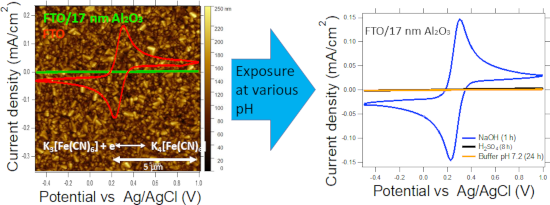
- 7.2). Chronoamperometric measurements were performed in buffered solution (pH 7.2) at −1.2 V (vs Ag/AgCl). The morphology of the films was characterized ex situ, under ambient conditions, by atomic force microscopy (AFM, Dimension Icon, Bruker, USA) in a semicontact (tapping) mode. A silicon


Application of contact-resonance AFM methods to polymer samples
Beilstein J. Nanotechnol. 2020, 11, 1714–1727, doi:10.3762/bjnano.11.154
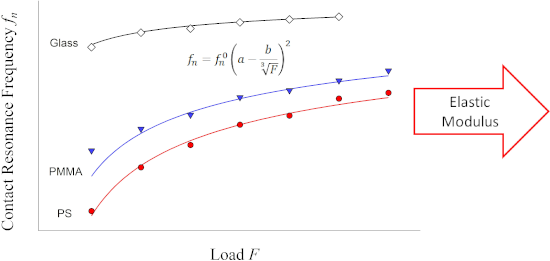
- curves in well-defined spatial intervals, can take several hours to complete. In order to overcome these drawbacks, dynamic scanning methods are a promising alternative to force–distance curves. For example, intermittent-contact (or tapping) mode AFM shows sensitivity to mechanical properties in the
- with decreasing scanning speed [35] and with increasing load, temperature, or number of scans [35][36]. Some works have shown that oscillations of the AFM tip with increasing amplitude lead to a reduction of the ripples and finally to their suppression [37]. As an example, Figure 4 shows a tapping-mode
- topography image of a 100 nm thick PnBMA film scanned with a PPP-FMAuD cantilever (kc = 2.74 N/m). The wave pattern was “engraved” into a smaller scan area of (15 µm)2 in DART mode previous to the scan in tapping mode. For the DART scan a static force of 308 nN, a frequency of ca. 320 kHz, and amplitudes of


Out-of-plane surface patterning by subsurface processing of polymer substrates with focused ion beams
Beilstein J. Nanotechnol. 2020, 11, 1693–1703, doi:10.3762/bjnano.11.151
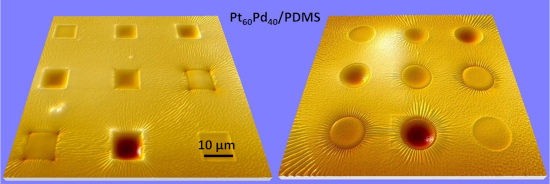
- to avoid possible interactions between the irradiated areas, such as the overlaps originating from transverse ion straggle. The samples were characterized with AFM and HIM. The measurements of the surface height were performed with a Veeco Dimension 3100 AFM instrument in the tapping mode. High


Design of V-shaped cantilevers for enhanced multifrequency AFM measurements
Beilstein J. Nanotechnol. 2020, 11, 1525–1541, doi:10.3762/bjnano.11.135
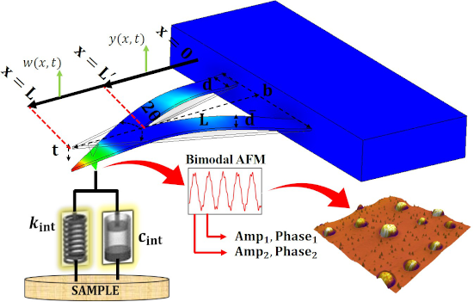
- ratio and spring constant ratio, which are important properties of the cantilever regarding tapping mode and multifrequency AFM. The last parameter that is optimized is the thickness. With the previously obtained optimum dimensions, Lopt = 90 µm, bopt = 254 µm, and = 32 µm, a thickness range from 0.3


![[Graphic 4]](/bjnano/content/inline/2190-4286-11-135-i26.svg?max-width=637&scale=1.18182) = 15 µm, bref = 8...
= 15 µm, bref = 8...


![[Graphic 17]](/bjnano/content/inline/2190-4286-11-135-i39.svg?max-width=637&scale=1.18182) ) of V-shaped cantilevers for...
) of V-shaped cantilevers for...


On the frequency dependence of viscoelastic material characterization with intermittent-contact dynamic atomic force microscopy: avoiding mischaracterization across large frequency ranges
Beilstein J. Nanotechnol. 2020, 11, 1409–1418, doi:10.3762/bjnano.11.125
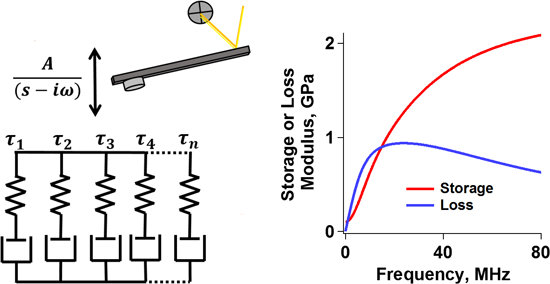
- material 1 has not yet peaked in the range of frequency shown in the graph – a similar plot over a wider frequency range is discussed in the Results and Discussion section). Although all of the above phenomena occur similarly within intermittent-contact dynamic AFM methods (such as tapping-mode AFM), the
- described in Figure 2 and Table 1, when imaged with a soft tapping-mode cantilever. For this we used a resonance frequency of 70 kHz, a relatively low force constant of 0.5 N/m, considering the softness of the materials under study, and a free oscillation amplitude of 50 nm (the Experimental section below
- case), but would at least be able to begin probing the corresponding types of behavior, say with multifrequency AFM [5][38][44] using a higher (i.e., the 3rd or 4th) eigenmode of a traditional tapping-mode cantilever at a frequency of about 5–10 MHz (or higher with an instrument that has a higher


An atomic force microscope integrated with a helium ion microscope for correlative nanoscale characterization
Beilstein J. Nanotechnol. 2020, 11, 1272–1279, doi:10.3762/bjnano.11.111
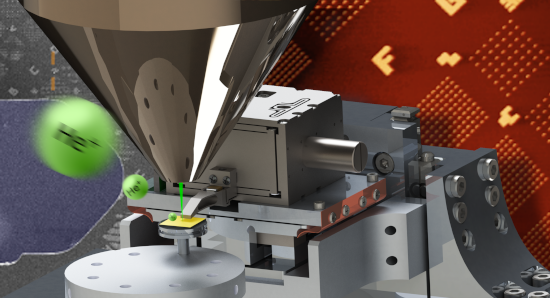
- the pole piece and the sample. b, c) The cantilever (colorized in purple on the HIM images) can be navigated by making use of the large FOV image provided by the HIM. d) AFM height image of Si nanopillars taken in off-resonance tapping mode. Scale bar 5 µm. AFM height images of poly(methyl
- methacrylate) after exposure to a) 1 × 10¹³ and b) 3 × 10¹³ He ion cm−2. The images were taken in contact mode, scale bar 4 µm. c) Silicon bubbles imaged with HIM (scale bar 1 µm) and d) AFM (off-resonance tapping mode). Acknowledgements The authors acknowledge the support of Jeff Markakis for the mechanical


Extracting viscoelastic material parameters using an atomic force microscope and static force spectroscopy
Beilstein J. Nanotechnol. 2020, 11, 922–937, doi:10.3762/bjnano.11.77
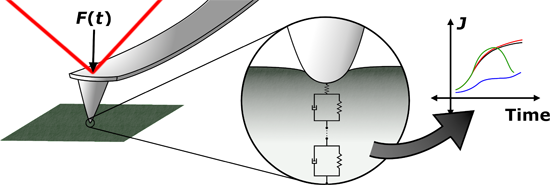
- choice between approaches usually depends upon the material and complexity of interactions being represented. In the case of AFM, many common problems involve nanoscale viscoelastic systems exposed either to intermittent probe contact (tapping mode) or a similar type of probe–sample interaction where the
- can be helpful when describing the relationship between external loads and the viscoelastic response, especially when the excitations are periodic. Within the context of AFM, both the storage modulus and the loss modulus are critical to evaluating the dissipated energy during tapping-mode analysis [24


Band tail state related photoluminescence and photoresponse of ZnMgO solid solution nanostructured films
Beilstein J. Nanotechnol. 2020, 11, 899–910, doi:10.3762/bjnano.11.75
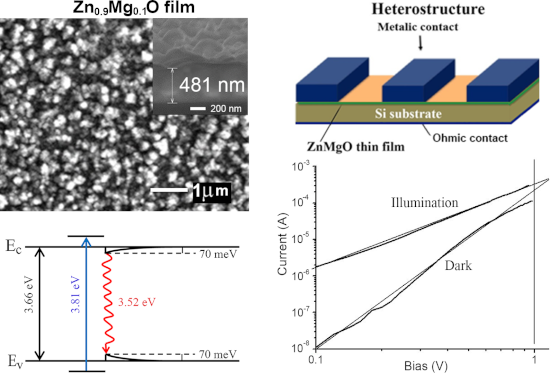
- tapping mode with a SOLVER Next (NT-MDT) instrument equipped with cone-shaped tips from monocrystalline silicon (tip radius ≈ 10 nm) on cantilevers with a stiffness of about 17 N/m. The root mean square (RMS) roughness parameters were calculated from the acquired topographic images using image processing

Structural optical and electrical properties of a transparent conductive ITO/Al–Ag/ITO multilayer contact
Beilstein J. Nanotechnol. 2020, 11, 695–702, doi:10.3762/bjnano.11.57
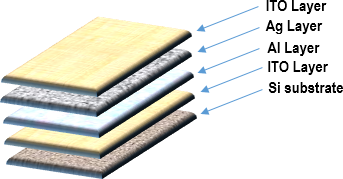
- , OXFORD X-MAX, Energy 200 premium was used. Morphological analyses by atomic force microscopic An AFM Standard Operation AFM5010 Hitachi model in tapping mode was used to examine the surface morphology of the films. Root mean square Rrms and average Ra roughness plus morphological grain size analyses were


Current measurements in the intermittent-contact mode of atomic force microscopy using the Fourier method: a feasibility analysis
Beilstein J. Nanotechnol. 2020, 11, 453–465, doi:10.3762/bjnano.11.37
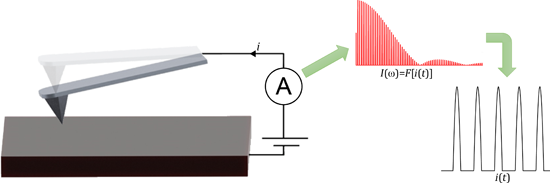
- ; intermittent contact; Fourier analysis; tapping-mode AFM; Introduction Conductive atomic force microscopy (C-AFM), a contact-mode technique, has been extensively utilized to investigate local electrical properties of nanoscale systems, such as organic solar cells [1][2][3][4][5][6][7], semiconductors [8][9




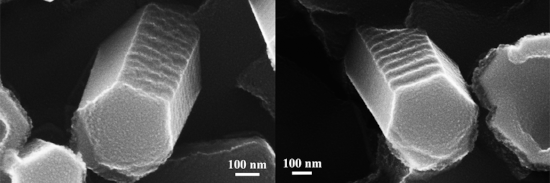
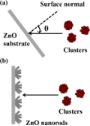
Formation of nanoripples on ZnO flat substrates and nanorods by gas cluster ion bombardment
Beilstein J. Nanotechnol. 2020, 11, 383–390, doi:10.3762/bjnano.11.29
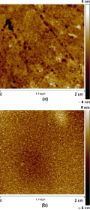
- . The AFM was operated in tapping mode with measuring areas of 2 × 2 and 5 × 5 µm. Results and Discussion Single crystal ZnO substrates First, we studied the influence of GCIB irradiation on flat ZnO single crystal samples. Their large flat surface allows to determine the main dependencies of ripple



The effect of heat treatment on the morphology and mobility of Au nanoparticles
Beilstein J. Nanotechnol. 2020, 11, 61–67, doi:10.3762/bjnano.11.6
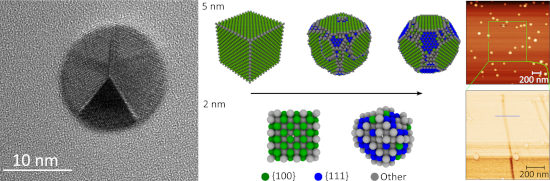
- manipulated on a silica substrate with an atomic force microscope (AFM) in tapping mode. Initially, the NPs were immovable by AFM energy dissipation. However, annealed NPs became movable, and less energy was required to displace the NPs annealed at higher temperature. However, after annealing at 800 °C, the
- were heated to 100 °C to remove excess water. An image was first taken in the high-resolution QNM mode to find the Au particles. Then, the operation mode was switched to tapping mode. The oscillation amplitude was kept constant with a feedback loop on, and the power dissipated during tapping was
- a silicon substrate. The phase values were extracted from the tapping mode phase images for each manipulated NP and processed using the Gwyddion software. The phase shift values were extracted from the profile of the trace on the phase shift image by averaging ten lines using the Gwyddion program


The different ways to chitosan/hyaluronic acid nanoparticles: templated vs direct complexation. Influence of particle preparation on morphology, cell uptake and silencing efficiency
Beilstein J. Nanotechnol. 2019, 10, 2594–2608, doi:10.3762/bjnano.10.250
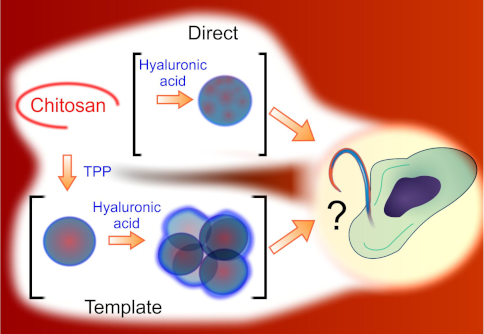
- , Abingdon, UK) equipped with an OTESPA-R3 cantilever (Bruker, Camarillo, CA, USA) was used to acquire AFM images in air at room temperature in tapping mode. Igor-Pro AFM software (Oxford Instrument, UK) was used to analyse the images. Nuclease protection assay. The protection effect against nuclease
- nanoparticle) relative to the total amount of HA in the nanoparticle feed (n = 3). Right: AFM amplitude images of (low-MW chitosan) nanoparticles after dialysis showing the complete removal of unbound HA (absence of “debris” material on the mica surface). Tapping-mode AFM height images of chitosan/HA dried on



Evaluation of click chemistry microarrays for immunosensing of alpha-fetoprotein (AFP)
Beilstein J. Nanotechnol. 2019, 10, 2505–2515, doi:10.3762/bjnano.10.241
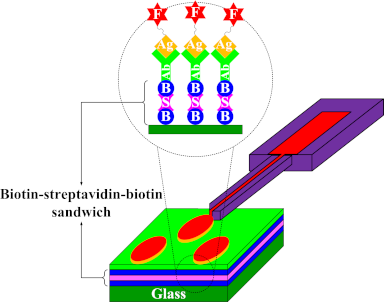
- bare and functionalized glasses was characterized using surface-sensitive techniques, including atomic force microscopy (AFM) and X-ray photoelectron spectroscopy (XPS). To map the surface roughness, AFM in tapping mode was conducted with a Dimension Icon (Bruker, Germany) device with HQ:NSC15/Al BS


Self-assembly of a terbium(III) 1D coordination polymer on mica
Beilstein J. Nanotechnol. 2019, 10, 2440–2448, doi:10.3762/bjnano.10.234
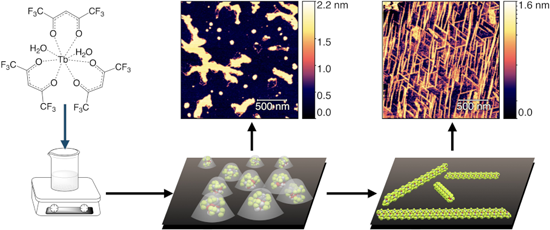
- surface gradually disappear even when operating in tapping mode (semi-contact mode). This indicates the labile nature of the obtained deposit. Magnetic characterization As a mineral, muscovite mica occurs with different chemical compositions. It can randomly host iron atoms by the replacement of SiO4