Search results
Search for "battery" in Full Text gives 114 result(s) in Beilstein Journal of Nanotechnology.
A porous 3D-RGO@MWCNT hybrid material as Li–S battery cathode
Beilstein J. Nanotechnol. 2019, 10, 514–521, doi:10.3762/bjnano.10.52
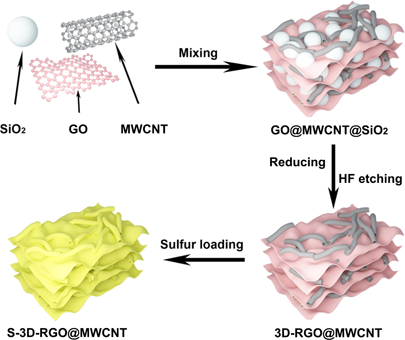
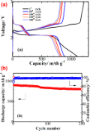
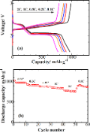
- battery technologies. The actual application of Li–S batteries, however, is hindered by several challenges, i.e., i) the poor conductivity of sulfur and ii) the “shuttle effect” of polysulfides (Li2Sx, 4 < x ≤ 8) [1][2][3][4]. To achieve a high specific capacity, a sulfur cathode with high electrical
- the shuttle effect by acting as a lithium polysulfide reservoir, and iii) additional empty spaces to buffer the volume expansion/shrinkage in the charge and discharge processes enhancing the cycling performance of the battery. The electrochemical performance of the S-3D-RGO@MWCNT composite will be
- the conductivity during cycling a Li–S battery equipped with the S-3D-RGO@MWCNT cathode, were investigated using electrochemical impedance spectroscopy (EIS). Figure 8 presents the Nyquist plots for the Li–S cell assessed before cycling, and after the 1st and the 4th cycle. In the high-frequency



Temperature-dependent Raman spectroscopy and sensor applications of PtSe2 nanosheets synthesized by wet chemistry
Beilstein J. Nanotechnol. 2019, 10, 467–474, doi:10.3762/bjnano.10.46
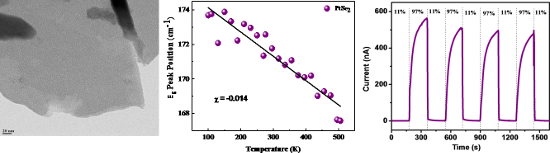
- , field emitters, battery materials, light harvesting and energy storage devices, catalyst for H2 generation, and drug delivery applications [7][8][9][10][11][12]. Most of the transition metal dichalcogenides (TMDCs) are semiconducting in nature with MX2 type – where M is a metal, M = W, Mo, Sn, Nb, V



Improving control of carbide-derived carbon microstructure by immobilization of a transition-metal catalyst within the shell of carbide/carbon core–shell structures
Beilstein J. Nanotechnol. 2019, 10, 419–427, doi:10.3762/bjnano.10.41
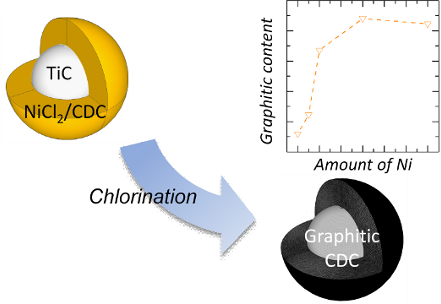
- 3, 91058 Erlangen, Germany Ernst-Berl-Institut für Technische und Makromolekulare Chemie, Technische Universität Darmstadt, Alarich-Weiss-Strasse 8, 64287 Darmstadt, Germany 10.3762/bjnano.10.41 Abstract Carbon materials for electrical energy devices, such as battery electrodes or fuel-cell
- large specific surface area and distinct pore character. For applications in which electrical conductivity plays an important role, e.g., battery electrodes, fuel-cell catalysts or supercapacitors [14][15][16], it is necessary for carbon to not only show porosity but also to feature a graphitic


A Ni(OH)2 nanopetals network for high-performance supercapacitors synthesized by immersing Ni nanofoam in water
Beilstein J. Nanotechnol. 2019, 10, 281–293, doi:10.3762/bjnano.10.27
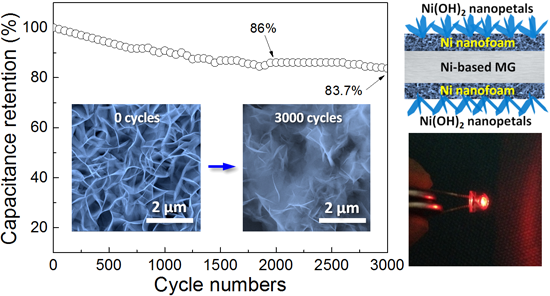
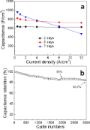
- energy density is approximately three times larger than that of a thin-film lithium ion battery (1–12 mW h/cm3, 4 V/500 μAh) [52] and far exceeds that of a MnO2-Ni(OH)2/AB//active carbon asymmetric supercapacitor (3.62 mWh/cm3 at 11 mW/cm3) [39] and a NiCo-LDH//AC asymmetric capacitor (7.4 mWh/cm3 at 103




Scanning probe microscopy for energy-related materials
Beilstein J. Nanotechnol. 2019, 10, 132–134, doi:10.3762/bjnano.10.12

- covalently grafted with a monolayer of poly(3-hexylthiophene) functionalized with carboxylic groups [8]. Their study unravels the physical mechanisms taking place locally during the photovoltaic process and its correlation to the nanoscale morphology. Electrochemical energy storage (i.e., in a battery) is a
- major topic in our daily life. Jonathan Op de Beeck and co-workers identify the ionic processes occurring inside Li-ion composites in order to understand the impact on the entire battery cell [9]. In particular, the authors combine cAFM and secondary-ion mass spectrometry to correlate the presence of
Hydrogen-induced plasticity in nanoporous palladium
Beilstein J. Nanotechnol. 2018, 9, 3013–3024, doi:10.3762/bjnano.9.280
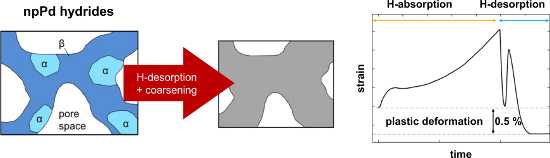
- )/constant-potential (grey bars) charging procedure, inspired by a typical battery charging process, was implemented. As soon as the potential monitored during the constant-current (2 mA) loading crossed −1 V, the potential was held constant at this value until the current dropped below 0.5 mA. For the


Graphene-enhanced metal oxide gas sensors at room temperature: a review
Beilstein J. Nanotechnol. 2018, 9, 2832–2844, doi:10.3762/bjnano.9.264
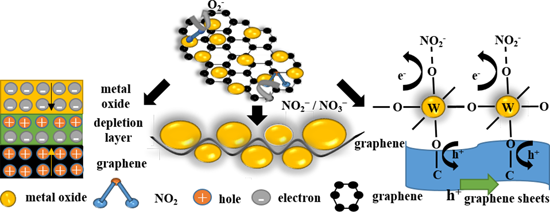
- ], graphene has been widely used in various fields such as photocatalysts, lithium battery electrodes, supercapacitors, gas sensors and electronic devices [2][3][4] due to its high specific surface area (2630 m2/g) and high carrier mobility at room temperature [5]. The electrical properties of graphene are



Hydrothermal-derived carbon as a stabilizing matrix for improved cycling performance of silicon-based anodes for lithium-ion full cells
Beilstein J. Nanotechnol. 2018, 9, 2381–2395, doi:10.3762/bjnano.9.223
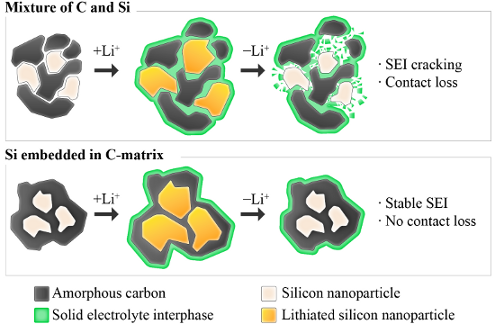
- Mirco Ruttert Florian Holtstiege Jessica Husker Markus Borner Martin Winter Tobias Placke University of Münster, MEET Battery Research Center, Institute of Physical Chemistry, Corrensstraße 46, 48149 Münster, Germany Helmholtz Institute Münster, IEK-12, Forschungszentrum Jülich GmbH, Corrensstraße


Synthesis of rare-earth metal and rare-earth metal-fluoride nanoparticles in ionic liquids and propylene carbonate
Beilstein J. Nanotechnol. 2018, 9, 1881–1894, doi:10.3762/bjnano.9.180
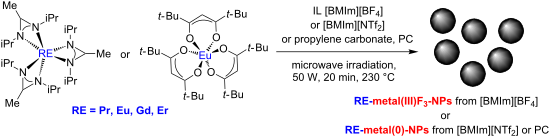
- ]. For EuF3, no oxygen peak was seen in the XPS analysis. Therefore, SAED and PXRD data in combination with HR-XPS exclude any contamination of the REF3-NPs with metal(III) oxides. Metal fluorides are used, for example, as cathode materials in lithium-ion batteries [6]. The lithium-ion battery is one of


Nitrogen-doped carbon nanotubes coated with zinc oxide nanoparticles as sulfur encapsulator for high-performance lithium/sulfur batteries
Beilstein J. Nanotechnol. 2018, 9, 1677–1685, doi:10.3762/bjnano.9.159
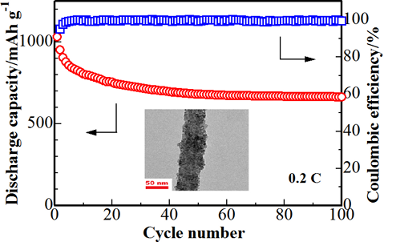
- lithium polysulfides (Li2Sn, 4 ≤ n ≤ 8) during battery operation [2]. This is one of the major challenges in the commercialization of Li/S batteries. To overcome this problem, a rational design of the sulfur-based cathode is required, such as the addition of porous conductive materials that could “attract
- conductivity and the ability of active nitrogen sites to enhance the electrochemical performances of Li/S batteries [13][16]. To the best of our knowledge, such uniquely structured S/ZnO@NCNT composites have been rarely reported as cathode material for Li/S battery in the literature. Here, we present a
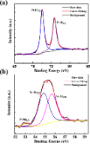
- a strong bonding capacity for S. This will reduce the S losses to the electrolyte, and thus improve the cycling performance of the Li/S battery. In fact, the S–Zn and S–O bonds were confirmed by X-ray photoelectron spectroscopy (XPS) of the as-obtained S/ZnO@NCNT composite (Figure 5). In the S 2p


Nanoscale electrochemical response of lithium-ion cathodes: a combined study using C-AFM and SIMS
Beilstein J. Nanotechnol. 2018, 9, 1623–1628, doi:10.3762/bjnano.9.154
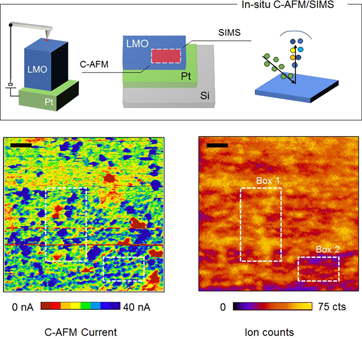
- KU Leuven, Department of Microbial and Molecular Systems, Celestijnenlaan 200D, B-3001 Leuven, Belgium 10.3762/bjnano.9.154 Abstract The continuous demand for improved performance in energy storage is driving the evolution of Li-ion battery technology toward emerging battery architectures such as 3D
- cathode materials, structural, electrical and chemical information must be probed at the nanoscale and in the same area, to identify the ionic processes occurring inside each individual layer and understand the impact on the entire battery cell. In this work, we pursue this objective by using two well
- indicated. Keywords: all-solid-state microbatteries (ASB); conductive atomic force microscopy (C-AFM); Li-ion kinetics; secondary ion mass spectrometry (SIMS); 3D thin-film batteries; Findings Conventional Li-ion battery technology is undergoing continuous improvements in order to fulfil the increasing


Correlative electrochemical strain and scanning electron microscopy for local characterization of the solid state electrolyte Li1.3Al0.3Ti1.7(PO4)3
Beilstein J. Nanotechnol. 2018, 9, 1564–1572, doi:10.3762/bjnano.9.148
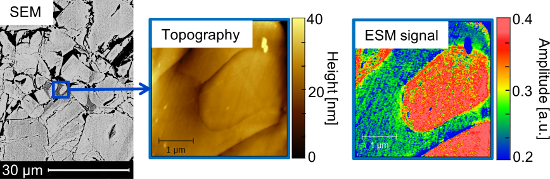
- an increased Li-ion mobility in the sample, as predicted for Li-ion battery electrodes [22], the conclusion drawn in this manuscript is that Li-ion conductivity through the grains is favorable [11]. We want to emphasize that additional effects, such as a change in tip contact radius as well as


Nanoscale mapping of dielectric properties based on surface adhesion force measurements
Beilstein J. Nanotechnol. 2018, 9, 900–906, doi:10.3762/bjnano.9.84
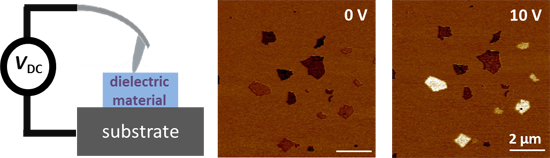
- properties [21]. This approach is expected to provide a simple and convenient method to characterize the dielectric distribution of graphene-based materials, and will further facilitate their application in energy generation and storage devices, i.e., super-capacitor, lithium ion battery, solar cells, and


Synthesis and characterization of electrospun molybdenum dioxide–carbon nanofibers as sulfur matrix additives for rechargeable lithium–sulfur battery applications
Beilstein J. Nanotechnol. 2018, 9, 262–270, doi:10.3762/bjnano.9.28
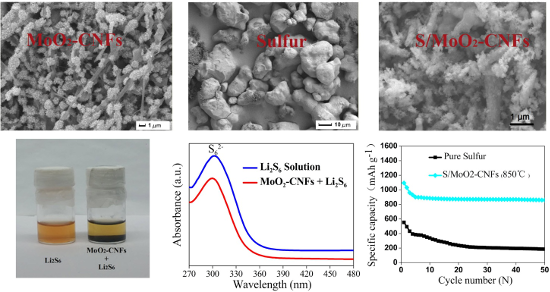
- Ruiyuan Zhuang Shanshan Yao Maoxiang Jing Xiangqian Shen Jun Xiang Tianbao Li Kesong Xiao Shibiao Qin Institute for Advanced Materials, College of Materials Science and Engineering, Jiangsu University, Zhenjiang, 212013, P. R. China Hunan Engineering Laboratory of Power Battery Cathode Materials


Dielectric properties of a bisimidazolium salt with dodecyl sulfate anion doped with carbon nanotubes
Beilstein J. Nanotechnol. 2018, 9, 164–174, doi:10.3762/bjnano.9.19
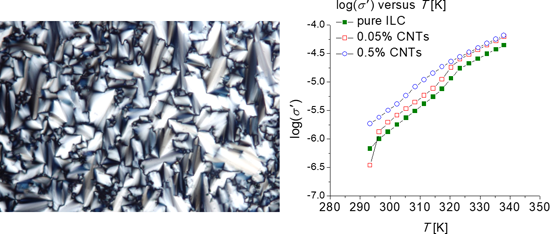
- -sensitized solar cells, battery materials, electrochemical sensors or energy storage devices. Their interesting properties result from the combination of liquid crystal (LC) and ionic liquid (IL) properties. The recent progress and development in the field of ILCs were reviewed in several publications [1][2


Advances in nanocarbon composite materials
Beilstein J. Nanotechnol. 2018, 9, 20–21, doi:10.3762/bjnano.9.3
- newer areas of nanocarbon materials for use in biomedicine and diagnostics. Energy transfer materials are also well represented with articles and reviews covering aspects of engineering, thermo-mechanical properties, photovoltaics and Li-ion battery materials. Last but not least, we would like to thank
Beyond Moore’s technologies: operation principles of a superconductor alternative
Beilstein J. Nanotechnol. 2017, 8, 2689–2710, doi:10.3762/bjnano.8.269



Synthesis of metal-fluoride nanoparticles supported on thermally reduced graphite oxide
Beilstein J. Nanotechnol. 2017, 8, 2474–2483, doi:10.3762/bjnano.8.247
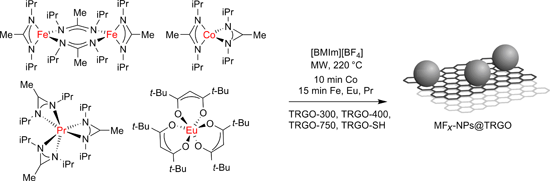
- /discharge profiles were collected on a Maccor battery cycler with cut-off potentials of 4.5 and 1.0 V vs Li+/Li. Example PXRD of 0.5 wt % PrF3@TRGO-SH in [BMIm][BF4] synthesized from [Pr(AMD)3]. PrF3 reference reflections in red from COD 1010984. For the diffractogram with indexed reflections see Figure S18


Systematic control of α-Fe2O3 crystal growth direction for improved electrochemical performance of lithium-ion battery anodes
Beilstein J. Nanotechnol. 2017, 8, 2032–2044, doi:10.3762/bjnano.8.204
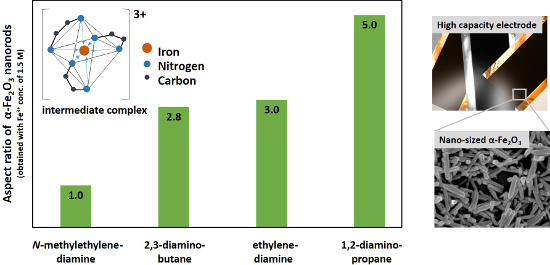
- ; ethylenediamine; lithium-ion battery; shape-controlled synthesis; Introduction Since conventional transportation is seen as problematic in terms of fossil fuel consumption and human-induced greenhouse gas emissions [1], battery electric vehicles (BEVs) have moved into the focus of the automotive industry. As
- power sources, lithium-ion batteries (LIBs) are considered as the most promising candidates, since LIBs offer the highest energy density of all known rechargeable battery systems [2][3][4]. In order to address today’s challenges of electromobility (e.g., customer acceptance of BEVs by extending driving
- as the separator. The cycling performance tests were conducted with a multichannel battery tester (Neware Technology Limited) with discharge and charge current density of 0.1 C (100 mAh g−1) at room temperature. Rate performance tests were conducted using the same instrument with charge current of


Freestanding graphene/MnO2 cathodes for Li-ion batteries
Beilstein J. Nanotechnol. 2017, 8, 1932–1938, doi:10.3762/bjnano.8.193
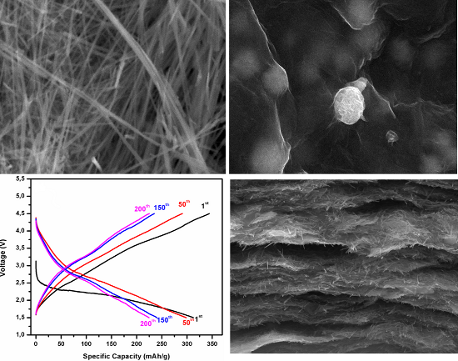
- electrochemical reaction behavior. Graphene/α-MnO2 freestanding cathodes exhibited a specific capacity of 229 mAhg−1 after 200 cycles with 72% capacity retention. Keywords: CR2016 coin cells; freestanding cathode; graphene; Li-ion battery; MnO2; Introduction Nowadays low cost, clean and sustainable energy


Optical techniques for cervical neoplasia detection
Beilstein J. Nanotechnol. 2017, 8, 1844–1862, doi:10.3762/bjnano.8.186




Adsorption and diffusion characteristics of lithium on hydrogenated α- and β-silicene
Beilstein J. Nanotechnol. 2017, 8, 1742–1748, doi:10.3762/bjnano.8.175

- candidates as electrode materials for Li-ion batteries [39]. For applications in Li-ion batteries, a high coverage of Li atoms on a material is required. Due to its buckled large surface area, silicene seems to be a good candidate for Li-ion battery applications. Li adsorption on pristine silicene has been


Oxidative stabilization of polyacrylonitrile nanofibers and carbon nanofibers containing graphene oxide (GO): a spectroscopic and electrochemical study
Beilstein J. Nanotechnol. 2017, 8, 1616–1628, doi:10.3762/bjnano.8.161
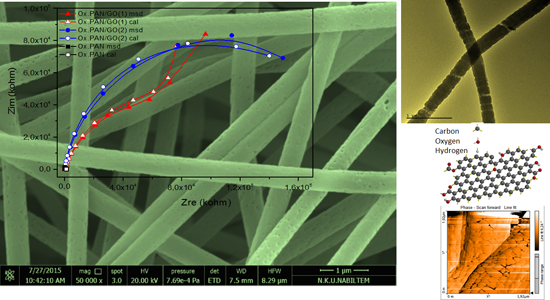
- mechanical properties and a potential for a variety of applications; such as supercapacitor applications, battery applications, and catalyst support materials. Polyacrylonitrile (PAN) is one of the well-known precursor for obtaining carbon nanofibers that have a diameter ranging between nanometers and


Fabrication of hierarchically porous TiO2 nanofibers by microemulsion electrospinning and their application as anode material for lithium-ion batteries
Beilstein J. Nanotechnol. 2017, 8, 1297–1306, doi:10.3762/bjnano.8.131
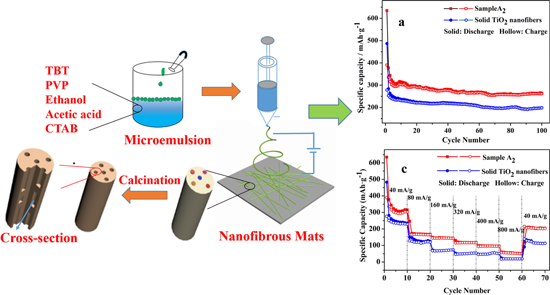
- batteries; microemulsion electrospinning (ME-ES); multichannel; Introduction The increasing demand for energy has heightened the need for the development of renewable resources because fossil fuels, which are currently the most common energy resources, are a finite resource [1][2][3][4]. Battery industry
- and nanorods are considered to be promising electrode materials for excellent lithium-ion battery performance. This is partly because of their small size enabling fast electron transport and decreasing retardation at the interface [21][22]. Electrospinning, a simple and versatile method, has been
- . The merits of porous nanofibers with a higher specific surface area lie in the higher lithium-ion flux across the interfaces and the larger contact area between the electrode and electrolyte [2][34][35]. Herein, sample A2 should have the best performances as the electrode of lithium-ion battery in




First examples of organosilica-based ionogels: synthesis and electrochemical behavior
Beilstein J. Nanotechnol. 2017, 8, 736–751, doi:10.3762/bjnano.8.77
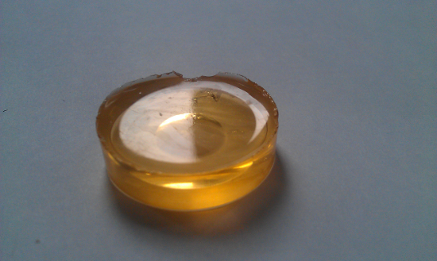
- : ionic liquids; ionogels; organosilica; proton conductivity; Introduction Ionic liquids (ILs), that is, substances solely composed of ionic species have been studied for virtually every application from organic synthesis to lubrication and battery technology [1][2][3][4]. A particularly promising field
- of IL-based materials is the general area of advanced energy technology, such as proton-exchange membrane (PEM) or alkaline fuel cells, solar cells, or various battery types [1][5][6][7]. ILs offer, unlike conventional solvents and substances, easy access to virtually unlimited structural diversity