


Search results
Search for "contacts" in Full Text gives 357 result(s) in Beilstein Journal of Nanotechnology. Showing first 200.
Biomimetic chitosan with biocomposite nanomaterials for bone tissue repair and regeneration
Beilstein J. Nanotechnol. 2022, 13, 1051–1067, doi:10.3762/bjnano.13.92
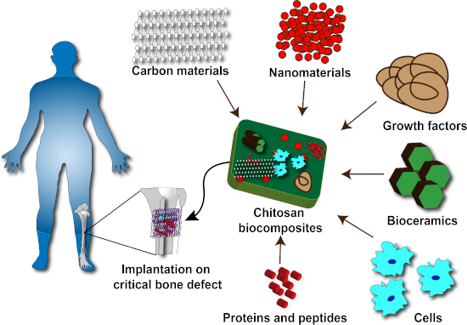
- fluids [117][118]. A recent study has proven that synthetic changes made to the surface of titanium oxide (TiO2) nanotubes can influence their characteristics, substantially impacting cell contacts and antibacterial activity. As a result, antibiotic drugs combined with a surface-modified TiO2-based drug
Bioselectivity of silk protein-based materials and their bio-inspired applications
Beilstein J. Nanotechnol. 2022, 13, 902–921, doi:10.3762/bjnano.13.81
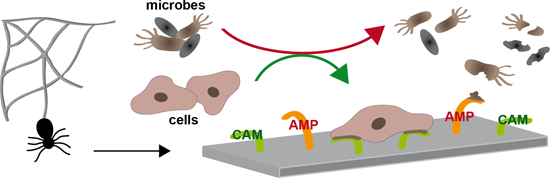
- adhesion. Selectins bind to carbohydrates based on calcium-dependent regulation, cadherins form mostly homotypic contacts also in a calcium-regulated manner, while the IgSF subfamily of nectins is able to form both homotypic and heterotypic interactions [10]. Comprehensive overviews of molecular structure
- formation in the nervous system [9]. The structural integrity of cadherin molecules is stabilized by calcium ions, and their essential role in proper adhesion contacts is reflected in the abbreviated protein family name “calcium-dependent adherent proteins” [14]. The N-terminal domain of cadherin dimers on
- one cell is responsible for mediating homotypic binding contacts with their homologues on an adjacent cell in an antiparallel manner. This region also defines binding specificity [15]. Some cadherin receptors are also able to bind to different cadherins. Classic cadherin function is involved in key


DNA aptamer selection and construction of an aptasensor based on graphene FETs for Zika virus NS1 protein detection
Beilstein J. Nanotechnol. 2022, 13, 873–881, doi:10.3762/bjnano.13.78
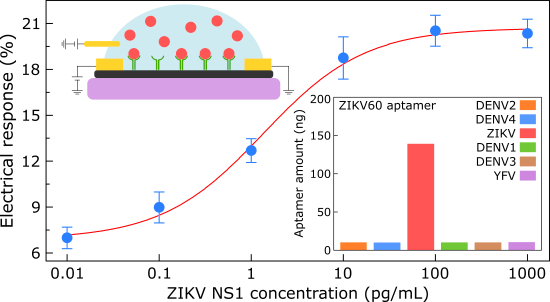
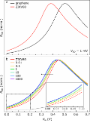
- previously described by our group elsewhere [24]. The dimensions of the sensing region (100 μm × 100 μm) were defined by O2 plasma etching. The source and drain electrodes were fabricated by electron-beam evaporation of 2 nm/100 nm of Ti/Au, and we covered the metal contacts with a 10 μm thick passivation



Optimizing PMMA solutions to suppress contamination in the transfer of CVD graphene for batch production
Beilstein J. Nanotechnol. 2022, 13, 796–806, doi:10.3762/bjnano.13.70
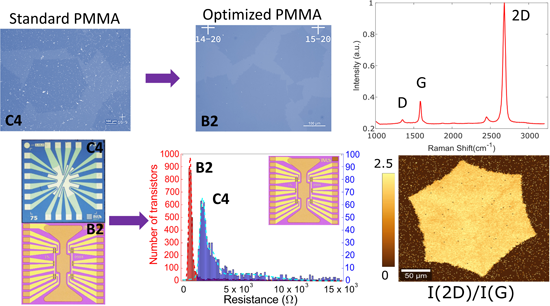
- : C4 PMMA; Wafer 2: B2 PMMA). Both wafers started with the patterning of Cr/Au contacts (deposited by magnetron sputtering) using direct-write laser lithography and ion milling. The fabrication of the two wafers followed slightly different steps, as described below. Wafer 1: A stopping layer (Al2O3




Design and selection of peptides to block the SARS-CoV-2 receptor binding domain by molecular docking
Beilstein J. Nanotechnol. 2022, 13, 699–711, doi:10.3762/bjnano.13.62
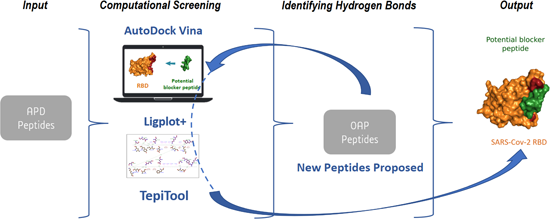
- of RBD–ligand by PRODIGY The protein binding energy prediction (PRODIGY) web server is an effective predictive model based on intermolecular contacts in protein–protein complexes based on their 3D structure [39]. This tool predicts the binding free energy between protein complexes with great accuracy



Alcohol-perturbed self-assembly of the tobacco mosaic virus coat protein
Beilstein J. Nanotechnol. 2022, 13, 355–362, doi:10.3762/bjnano.13.30
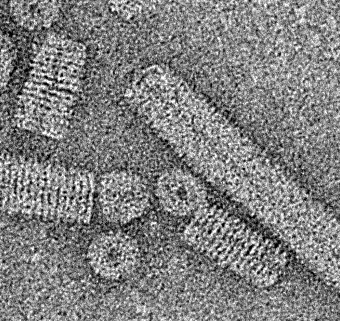
- that the hydrophobic alcohol molecules interact favourably with the hydrophobic regions on the faces of TMV-cp disks, thereby preventing the protein–protein contacts necessary for helical-rod formation and stabilizing the disk structure. Disks stack mainly through a solvent network, rather than direct


Controllable two- and three-state magnetization switching in single-layer epitaxial Pd1−xFex films and an epitaxial Pd0.92Fe0.08/Ag/Pd0.96Fe0.04 heterostructure
Beilstein J. Nanotechnol. 2022, 13, 334–343, doi:10.3762/bjnano.13.28
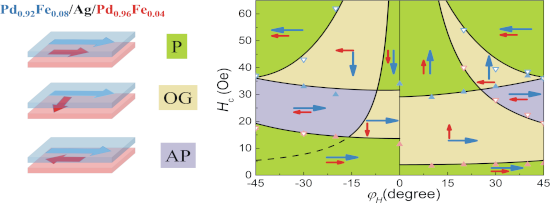
- ⟨100⟩ direction of the Pd0.92Fe0.08 film (sample S00), in the second sample at an angle of 25° with respect to the ⟨100⟩ direction (sample S25). The current contacts were ultrasonically welded at several locations in a line across the width of the sample to ensure a uniform current distribution


The effect of metal surface nanomorphology on the output performance of a TENG
Beilstein J. Nanotechnol. 2022, 13, 298–312, doi:10.3762/bjnano.13.25
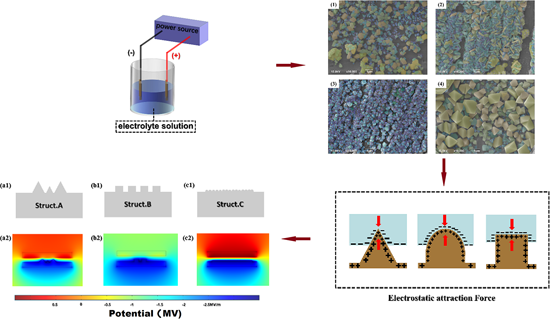
- positive, and that on PTFE is negative (Figure 3a). A separation is caused by the removal of the external force, and electrons flow from the PTFE electrode to the Cu electrode (Figure 3b). Then, charge exchange is carried out at the contacts. Electrical equilibrium is formed when the Cu and the PTFE are




Investigation of a memory effect in a Au/(Ti–Cu)Ox-gradient thin film/TiAlV structure
Beilstein J. Nanotechnol. 2022, 13, 265–273, doi:10.3762/bjnano.13.21
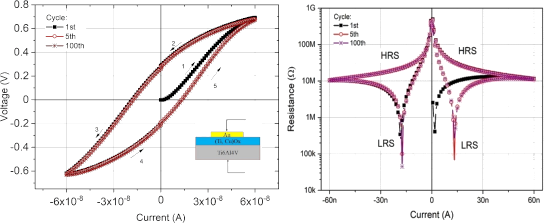
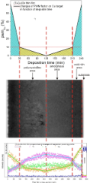
- resistive switching behavior. Results of optical, X-ray, and ultraviolet photoelectron spectroscopy measurements allowed us to elaborate the scheme of the bandgap alignment of the prepared thin films with respect to the Au and TiAlV electrical contacts. Detailed structure and elemental profile
- thermoelectrical voltage. The Seebeck coefficient measurements were made in the range from 25 to 125 °C. The thermoelectrical voltage as a function of the temperature difference measured between two opposite electrical contacts is shown in Figure 1. The Seebeck coefficient (+82.14 μV) testified the p-type
- created on the border of Au or Ti6Al4V and the deposited (Ti–Cu)Ox thin film were electrical ohmic contacts, because the value of the work function of Au (ΦAu = 5.3 eV) or (ΦTi6Al4V = 4.3 eV) is greater than the value of the work function of the layer (Φ(Ti–Cu)Ox = 4.01 eV). This conclusion is supported



Relationship between corrosion and nanoscale friction on a metallic glass
Beilstein J. Nanotechnol. 2022, 13, 236–244, doi:10.3762/bjnano.13.18
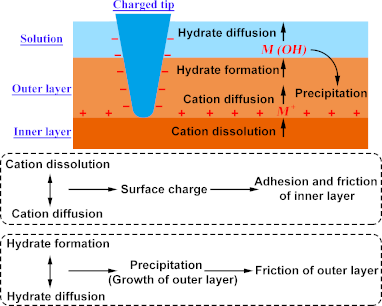
- surface dissolution at the interface of the two layers. The findings contribute to the understanding of mechanical contacts with metallic glasses under corrosive conditions by exploring the interrelation of microscopic corrosion mechanisms and nanoscale friction. Keywords: atomic force microscopy (AFM
- surface, and the competition between diffusion of hydrates into solution and their precipitation into a growing outer layer. Understanding the mechanisms of nanoscale friction on metallic glasses is a basis for applications involving mechanical contacts under corrosive conditions. Also, nanotribology


Measurement of polarization effects in dual-phase ceria-based oxygen permeation membranes using Kelvin probe force microscopy
Beilstein J. Nanotechnol. 2021, 12, 1380–1391, doi:10.3762/bjnano.12.102
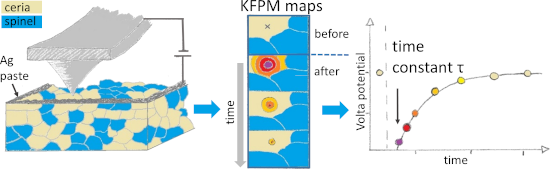
- small contacts are needed, where the electron and ion conducting phase can be addressed separately, making AFM-based electrochemical measurements predestined for detailed analyses of the constituents of composite materials. Theoretical Background Kelvin probe force microscopy The presented measurements
- electron conductor should lead to a very fast relaxation after a polarization, at least for measurements with macroscopic contacts. Fe and Co are both redox-active cations, though, and can be reduced or oxidized under relatively mild conditions. Therefore, it is possible, that applied potentials above a
- samples was around 50 nm. Electrical conductivity measurements The electrical conductivity was determined in a DC measurement where the sample was put between two Pt contacts, one made of a Pt wire with a contact diameter of 700 µm and one made of a Pt sheet with additional Pt resinate paste (RP 070107


Morphology-driven gas sensing by fabricated fractals: A review
Beilstein J. Nanotechnol. 2021, 12, 1187–1208, doi:10.3762/bjnano.12.88
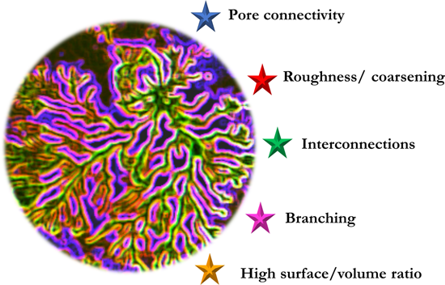
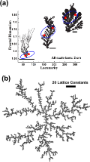
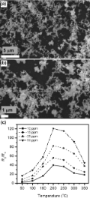
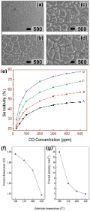
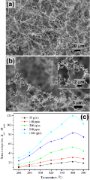
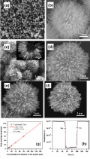
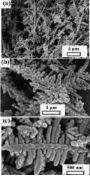
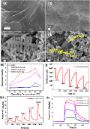
- were composed of many well aligned nanorods. The variations in potential barrier height at the contacts of the nanorods gave excellent gas sensing results towards hydrogen sulfide (H2S). The sensitivity response of the ZnO dendrite sensor at room temperature and the variation in sensitivity at










Open-loop amplitude-modulation Kelvin probe force microscopy operated in single-pass PeakForce tapping mode
Beilstein J. Nanotechnol. 2021, 12, 1115–1126, doi:10.3762/bjnano.12.83
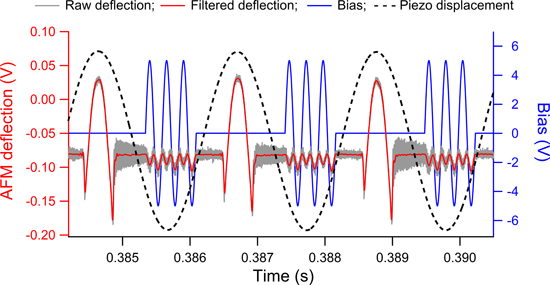
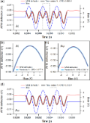
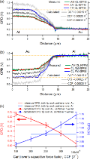
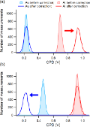
- (PFT) mode. The topographical and electrical components were combined in a single pass by applying the electrical modulation only in between the PFT tip–sample contacts, when the AFM probe separates from the sample. In this way, any contact and tunneling discharges are avoided and, yet, the location of
- ) highlights the deflection of the cantilever to the bias excitation and shows no perturbation of the PFT motion due to intertwining with the bias modulation. Because the bias voltage is applied only during the out-of-contact intervals, any electrical discharge at the contacts between the conductive tip and
- AM-KPFM operated on top of the PFT mode. The bias modulation (blue signal to the right axis) was applied only in between the PFT contacts (raw signal in gray and filtered signal in red to the left axis). The piezo motion (dashed curve) of the PFT was in the form of a sinusoidal oscillation of 50 nm





Criteria ruling particle agglomeration
Beilstein J. Nanotechnol. 2021, 12, 1093–1100, doi:10.3762/bjnano.12.81
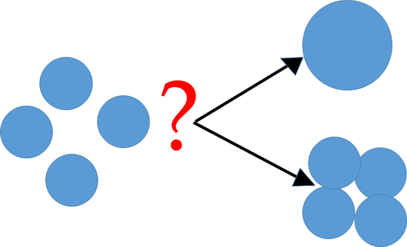
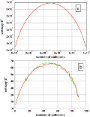
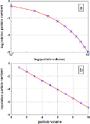
- Waals interaction, the approach given by Luo et al. [12] was applied. Since there is nothing known about the local arrangement and interaction of the particles within an agglomerate, only one interaction per particle was assumed. This is the smallest possible number of contacts. For comparison, the




A Au/CuNiCoS4/p-Si photodiode: electrical and morphological characterization
Beilstein J. Nanotechnol. 2021, 12, 984–994, doi:10.3762/bjnano.12.74
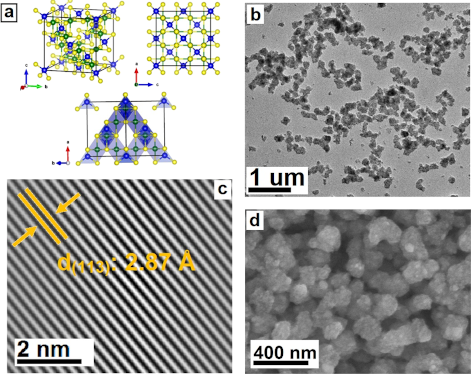
- thermal annealing at 400 °C for 2 min in N2 atmosphere. Top contacts were prepared on the film by evaporating gold with a thickness of 150 nm at 5 × 10⁻⁶ Torr through a metal shadow mask (Au, 99.99% from Kurt J. Lesker). High-purity Al and Au metal contacts were thermally evaporated from a tungsten filament



Molecular assemblies on surfaces: towards physical and electronic decoupling of organic molecules
Beilstein J. Nanotechnol. 2021, 12, 950–956, doi:10.3762/bjnano.12.71

- tip of a scanning probe microscope and mechanically lifted from the metallic surface such that they hang freely between metal contacts. This manipulation technique allows for measuring, amongst others, the electronic conductance, magnetic properties, reversible switching, and electroluminescence of
In situ transport characterization of magnetic states in Nb/Co superconductor/ferromagnet heterostructures
Beilstein J. Nanotechnol. 2021, 12, 913–923, doi:10.3762/bjnano.12.68
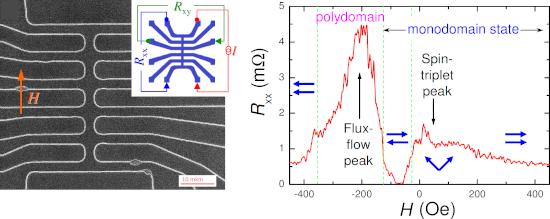
- were used for the calibration of the etching rates of the films. MLs are patterned into micrometer-scale bridges with multiple contacts using photolithography and reactive ion etching. A scanning electron microscopy (SEM) image of one of the studied samples is shown in Figure 1a. Control of the
- ) devices controllable and highly reversible operation can be achieved at fields between one of the P states down to the AP state without entering into the realm of the opposite P state. (a) SEM image of a micropatterned Nb/Co multilayer. The sample contains twelve contacts, six horizontal and one vertical


Modification of a SERS-active Ag surface to promote adsorption of charged analytes: effect of Cu2+ ions
Beilstein J. Nanotechnol. 2021, 12, 902–912, doi:10.3762/bjnano.12.67
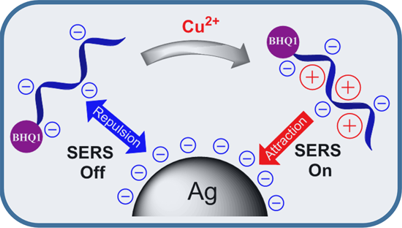
- corresponds to the highest reported values for this method [10][12][32]. Moreover, the SEM image demonstrates many interparticle contacts, which are potential “hot spots” in SERS analysis. Electrostatic effect on SERS signal for thiol-modified Ag NPs Despite the high NP packing density, about 42% of the


9.1% efficient zinc oxide/silicon solar cells on a 50 μm thick Si absorber
Beilstein J. Nanotechnol. 2021, 12, 766–774, doi:10.3762/bjnano.12.60
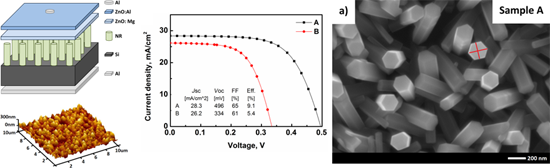
- hole of 0.1 cm in diameter was placed on the samples. Then, Al was deposited on top via sputtering. The simple point contact was used on top of the structure. To improve the light collection from full-size ZnO/Si SCs, grid-like contacts should be used. The resulting solar cell structures are shown in


Recent progress in magnetic applications for micro- and nanorobots
Beilstein J. Nanotechnol. 2021, 12, 744–755, doi:10.3762/bjnano.12.58
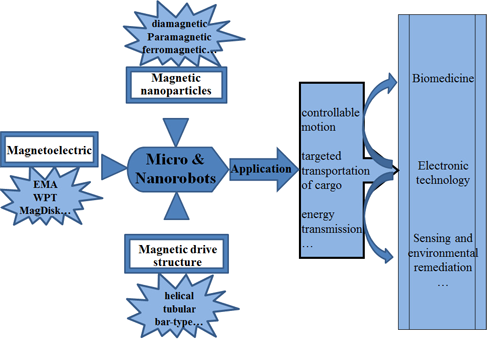
- advantages of electromagnetic drives as a power source are no heat, no electrical contacts, good controllability, and high durability. Through the coupling of magnetic and electric fields, motion control of the MNR could be realized. When studying the combination of magnetic and electrical systems of MNRs


Physical constraints lead to parallel evolution of micro- and nanostructures of animal adhesive pads: a review
Beilstein J. Nanotechnol. 2021, 12, 725–743, doi:10.3762/bjnano.12.57
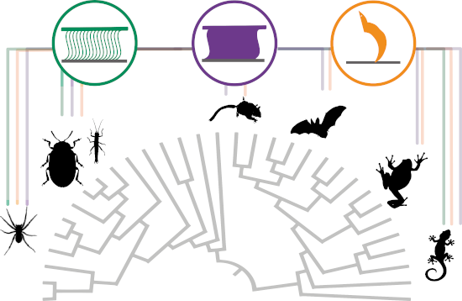
- , hairy systems increase the attachment strength by increasing the hair density and, consequently, increasing the amount of single contacts. This trend, however, differs for multiple reasons among different lineages in which hairy adhesive pads evolved in a convergent manner [250]. The small effective
- from Springer Nature from “Biological fibrillar adhesives: functional principles and biomimetic applications. In: Handbook of Adhesion Technology” by S. N. Gorb, Copyright 2011 Springer Nature. This content is not subject to CC BY 4.0). (C) Dependence of the contact density of terminal contacts on the


A review of defect engineering, ion implantation, and nanofabrication using the helium ion microscope
Beilstein J. Nanotechnol. 2021, 12, 633–664, doi:10.3762/bjnano.12.52
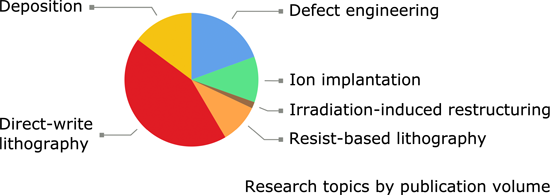
- irradiating just one side of a portion of WSe2 bridging two metal contacts to create semiconducting (pristine) and insulating (irradiated) halves contacted by the source and drain electrodes (Figure 2b). Direct-write of further logic circuits into single flakes of WSe2 and WS2 has also been demonstrated [26


A stretchable triboelectric nanogenerator made of silver-coated glass microspheres for human motion energy harvesting and self-powered sensing applications
Beilstein J. Nanotechnol. 2021, 12, 402–412, doi:10.3762/bjnano.12.32
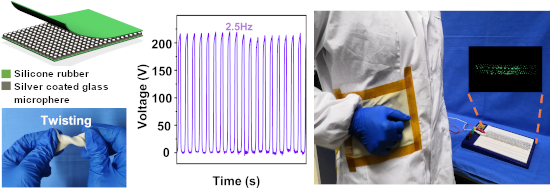
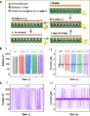
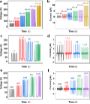
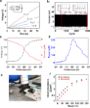
- state (Figure 2a-I), the frictional layer and the S-TENG are in balance without potential difference. When the frictional layer contacts the silicone rubber (Figure 2a-II), the positive charges in the frictional layer are equal to the negative charges in the silicone rubber. Once the surfaces of



Nickel nanoparticle-decorated reduced graphene oxide/WO3 nanocomposite – a promising candidate for gas sensing
Beilstein J. Nanotechnol. 2021, 12, 343–353, doi:10.3762/bjnano.12.28
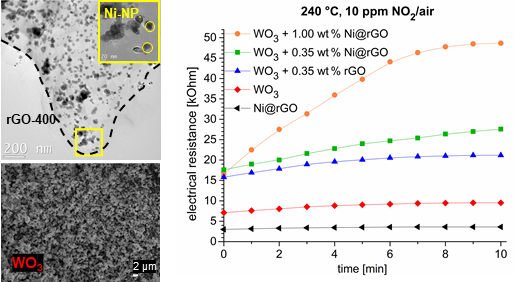
- composite create a hierarchical nanostructure and facilitate the diffusion of NO2 molecules, increasing the contacts and enhancing the chemisorption of the gas. rGO has large specific area and more active sites. Gas sensors of n-type semiconductors based on oxides exhibit resistance changes induced by


Mapping of integrated PIN diodes with a 3D architecture by scanning microwave impedance microscopy and dynamic spectroscopy
Beilstein J. Nanotechnol. 2020, 11, 1764–1775, doi:10.3762/bjnano.11.159
- ) have a slightly different polishing rate, which results in the observed topography. In the AFM topography image, one can localize the two deep trench isolation structures in the silicon wafer, as well as the anode and cathode contacts. It is important to note that a low roughness is required for a
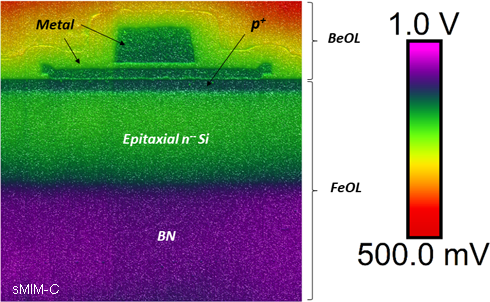
- vertical PIN diode with the associated metallic contacts of the anode. Although the sMIM-R signal shows a low signal-to-noise ratio, it is still possible to differentiate metallic materials from semiconductor layers. Also, the conductivity continuity between the metallic contact and the p+ anode can be
- that the depth profile has a good signal-to-noise ratio for the sMIM-C signal for each layer. This first analysis demonstrates the capability of the sMIM methodology to distinguish, localize, and determine both p-type and n-type semiconductors as well as lightly doped layers, metallic contacts, and





