Search results
Search for "cross section" in Full Text gives 525 result(s) in Beilstein Journal of Nanotechnology. Showing first 200.
Stiffness calibration of qPlus sensors at low temperature through thermal noise measurements
Beilstein J. Nanotechnol. 2024, 15, 580–602, doi:10.3762/bjnano.15.50
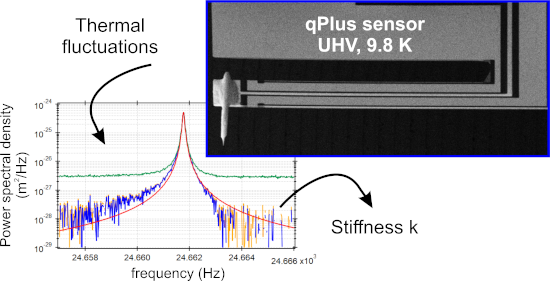
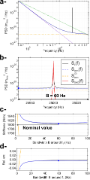
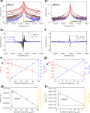
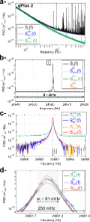
- qPlus sensor. The discussion is restricted to probes with a rectangular cross section (length l, thickness t, width w are such that l ≫ t and l ≫ w) treated in the Euler–Bernoulli model of the embedded beam, extensively detailed, for example, in [35] (cf. also Supporting Information File 1). The

Sidewall angle tuning in focused electron beam-induced processing
Beilstein J. Nanotechnol. 2024, 15, 447–456, doi:10.3762/bjnano.15.40
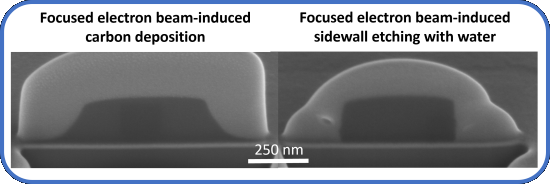
- ) or the removal of substrate material by reactive precursor fragments, that is, etching (focused electron beam-induced etching, FEBIE). For the interested reader, the literature contains a number of good reviews of the technique [1][2][3][4][5]. The cross section of a line patterned using FEBID
- ) and from the BSE (SE2) [6][7][8]. An example of a line deposited from a carbon precursor on a silicon substrate, coated with a 20 nm Au–Pd layer and a 5 nm Ti adhesion layer, is shown in Figure 1a, clearly showing the broad (black) tails on both sides of the line. The cross section of the line, made
- using focused ion beam (FIB) milling and shown as an electron tilt image in Figure 1b, clearly demonstrates the Gaussian shape. For lithography applications, however, both the long tails and the Gaussian cross section are highly undesirable. The tails may form interconnects to neighboring lines, and the




Heat-induced morphological changes in silver nanowires deposited on a patterned silicon substrate
Beilstein J. Nanotechnol. 2024, 15, 435–446, doi:10.3762/bjnano.15.39
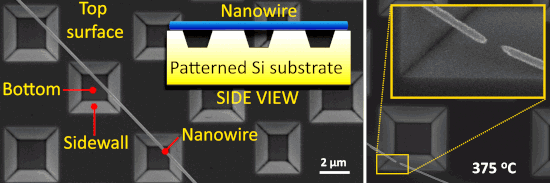
- Au NWs have a pentagonal cross-section, meaning that for NWs deposited on a flat substrate, 1/5 of the NW surface is in contact with the substrate [35]. This aspect should unavoidably have an influence on the total surface energy of NW. Therefore, in addition to parameters such as temperature, time
- a nominal diameter of 120 nm and length of tens of micrometers were purchased from Blue Nano, Inc. These NWs have a pentagonal cross-section and a five-fold twinned inner structure. More details on the structure and properties of these NWs can be found in our previous works [35][39]. The patterned
- NWs used in the present study have a five-fold twinned crystal structure resulting in a pentagonal cross-section. Since pentagonal symmetry is a “forbidden” symmetry in crystallography, five-fold twinned crystals unavoidably have inner strains [44]. This could potentially be one of the driving forces


Modulated critical currents of spin-transfer torque-induced resistance changes in NiCu/Cu multilayered nanowires
Beilstein J. Nanotechnol. 2024, 15, 360–366, doi:10.3762/bjnano.15.32
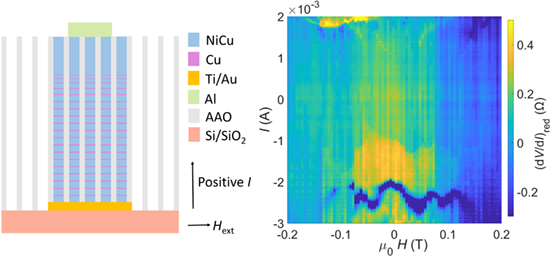
- which are near the surface of the AAO template. (b) SEM image of nanowire-based devices. The measured nanowire array was contacted by the patterned Au bottom electrode and the Al top electrode. (c) Sketch of the cross section of the device. (a) SEM image of nanowires after the AAO template was removed


Controllable physicochemical properties of WOx thin films grown under glancing angle
Beilstein J. Nanotechnol. 2024, 15, 350–359, doi:10.3762/bjnano.15.31
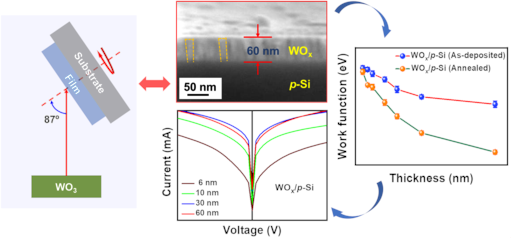
- films was studied in cross-section view mode using a field-emission scanning electron microscope (FESEM) (Carl Zeiss). The samples were cleaved using a diamond cutter and placed on the SEM sample holder with the cross-sectional area facing the electron beam. All SEM images were captured using 5 keV


Comparative electron microscopy particle sizing of TiO2 pigments: sample preparation and measurement
Beilstein J. Nanotechnol. 2024, 15, 317–332, doi:10.3762/bjnano.15.29
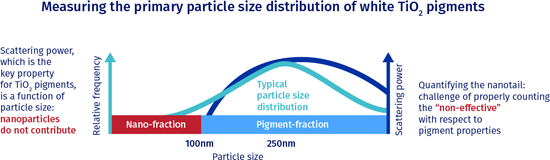
- , P6), and Figure 5 is a cross-section SEM image (KRONOS M1). The particle size distributions measured with each manufacturer’s method are remarkably similar, as shown in Figure 1. The D50n values are close, but the tails of the distributions vary slightly, especially in the cases where a small number
- sample preparation, measurement and data evaluation, including all relevant steps, are briefly described here, a more elaborate description of the cross section method (M1) can be found in literature [21]. Methods M2 and M3 used for sample preparation, image acquisition, and image processing are the same
- , calculations, and graphics were performed using the R software [24], the fitdistrplus package, [25] and the graphical package ggplot2 [26]. Comparison of cumulative distribution curves measured by three different manufacturers using three different methods (M1: cross section, M2: dry, and M3: sonicated


Quantitative wear evaluation of tips based on sharp structures
Beilstein J. Nanotechnol. 2024, 15, 230–241, doi:10.3762/bjnano.15.22
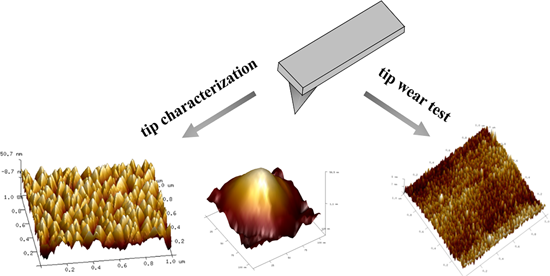
- tip has a circular cross section, the rearward extension forms a trapezoidal structure, and the two waists are tangent to the top circle. When simulating the scanning of the sample in tapping mode using the blunt tip, the height data graph of the sample forms a continuous arc (Figure 4e). The vertex




In situ optical sub-wavelength thickness control of porous anodic aluminum oxide
Beilstein J. Nanotechnol. 2024, 15, 126–133, doi:10.3762/bjnano.15.12
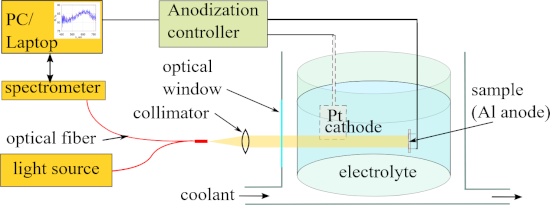
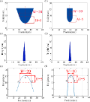
- view and cross section (inset, same scale) of a representative porous anodic aluminum oxide (PAAO) layer, produced through anodization at 40 V using 0.3 M oxalic acid electrolyte. (b) Diagram illustrating the PAAO structure. (c) Schematics of the optical model used in spectroscopic ellipsometry data


TEM sample preparation of lithographically patterned permalloy nanostructures on silicon nitride membranes
Beilstein J. Nanotechnol. 2024, 15, 1–12, doi:10.3762/bjnano.15.1
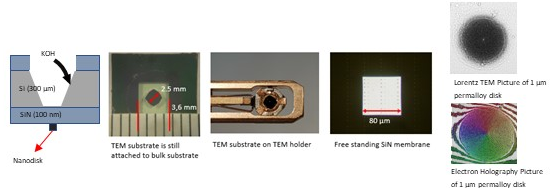
- lower dose than the main exposure so that it does not induce chain scission in the top resist layer, but only in the bottom resist layer, which is more sensitive. The result of the multi-dose exposure was controlled by observing a cross section of the developed bilayer resist using a SEM in snapshot
- of the 3 mm TEM window grid that provides nine windows of free-standing 50 nm thick SiN membrane. (a) Front side and (b) back side. (c) Spin coating adapter for the 3 mm TEM grid. (a) Electron beam exposure scheme. (b) Cross section of developed resist with multi-dose exposure on a bulk substrate


Determination of the radii of coated and uncoated silicon AFM sharp tips using a height calibration standard grating and a nonlinear regression function
Beilstein J. Nanotechnol. 2023, 14, 1200–1207, doi:10.3762/bjnano.14.99
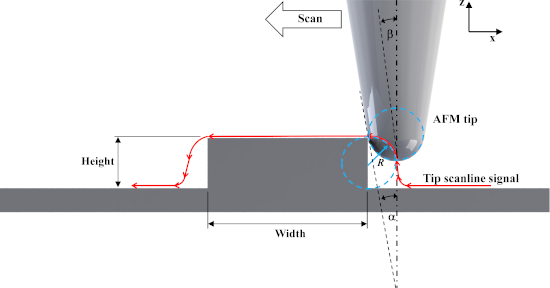
- the determined tip radius Scanned height images of the standard grating (uncoated Si tip, Pt-coated tip, and Cr/Au-coated tip) were taken to extract the cross section for fifteen profiles of the tip radius, which are the curved arc profiles over the corner edge of the grate (see Supporting Information
- the curvature radius of the AFM tip. The fifteen determined radius values of each tip (uncoated Si tip, Pt-coated tip, and Cr/Au-coated tip) obtained from independent cross-section profiles were plotted in distribution graphs (see Figure S4-5, Figure S4-6, and Figure S4-7 in Supporting Information


A combined gas-phase dissociative ionization, dissociative electron attachment and deposition study on the potential FEBID precursor [Au(CH3)2Cl]2
Beilstein J. Nanotechnol. 2023, 14, 1178–1199, doi:10.3762/bjnano.14.98
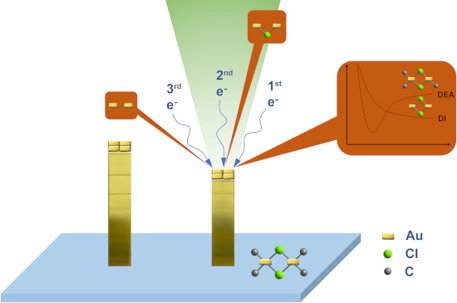
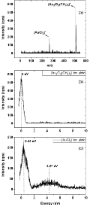
- the formation of AuCl2−, m/z 267, whose low energy contribution peaks at about 0.4 eV. In addition, a broader and lower intensity contribution to the AuCl2− signal is observed at approx. 4 eV. In DEA the cross section for the attachment process is inversely proportional to the square root of the
- of electrons that this volume has been exposed to is approx. 8 × 10¹². Respectively, a monolayer consists of 1.5 × 10⁷ molecules that has been exposed to 4 × 10¹¹ electrons. This corresponds to approx. 35,000 electrons per molecule. Assuming a generic cross section of 10−16 cm2, which is on the order
- of magnitude for DI and DEA of the FEBID precursor Co(CO)3(NO) [49][50] and Pt(PF3)4 [51], the reactive area of this monolayer is 0.15 μm2. Statistically, this implies approx. 300 reactive incidents per molecule if the cross section is assumed to stay unchanged. This is clearly not a quantitative



Density functional theory study of Au-fcc/Ge and Au-hcp/Ge interfaces
Beilstein J. Nanotechnol. 2023, 14, 1093–1105, doi:10.3762/bjnano.14.90
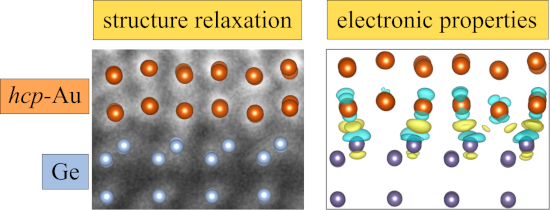
- ) grid for crystallographic cells of bulk crystal to a (4,4,4) grid for larger superlattices that model the Au-fcc(011)/Ge(001) and Au-hcp(010)/Ge(111) heterostructures. The slabs with vacuum were calculated using (8,8,2) or (4,4,2) k-points grids depending on the size of the cross section. A vacuum
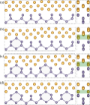
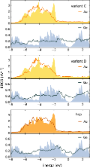
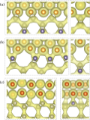
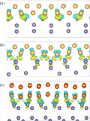
- a plane defined by three atoms inside the red frame in panel Figure 12a, that is, a cross section through both Au–Ge and Ge–Ge bonds, revealing their detailed structure. Perhaps unexpectedly, the charge density between the interface Au and Ge atoms reaches almost the same level as for Ge–Ge covalent





Dual-heterodyne Kelvin probe force microscopy
Beilstein J. Nanotechnol. 2023, 14, 1068–1084, doi:10.3762/bjnano.14.88




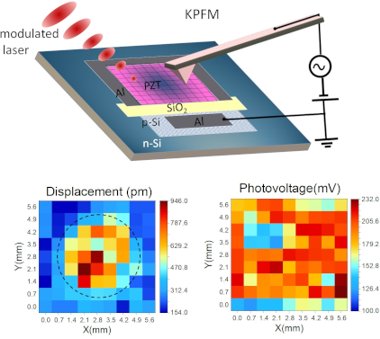
Spatial mapping of photovoltage and light-induced displacement of on-chip coupled piezo/photodiodes by Kelvin probe force microscopy under modulated illumination
Beilstein J. Nanotechnol. 2023, 14, 1059–1067, doi:10.3762/bjnano.14.87
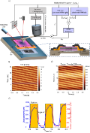
- -sectional scanning electron microscopy images can be found in [32]. The top view of the piezo/photodiode device is given in Figure 1a, where the inset represents the cross section of the device stack. Owing to the integration of PZT with silicon processing and operation at low voltages, this device can be
- inset represents the cross section of the device stack. (b) Time-dependent topography scan showing height variation under alternating illumination, and (c) corresponding time-dependent CPD under alternating illumination. (d) Temporal behavior of displacement and CPD obtained from averaging multiple


A visible-light photodetector based on heterojunctions between CuO nanoparticles and ZnO nanorods
Beilstein J. Nanotechnol. 2023, 14, 1018–1027, doi:10.3762/bjnano.14.84
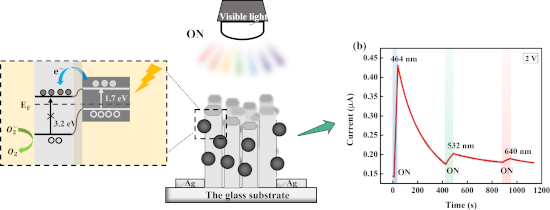
- -emission scanning electron microscopy (FESEM) image of ZnO NRs exhibits nanorods with hexagonal cross section, well aligned with the glass substrate (Figure 1a). Figure 1b indicates that many spherical nanoparticles are formed on the ZnO NRs after spraying the CuO NP solution with a concentration of 0.05 M


Exploring internal structures and properties of terpolymer fibers via real-space characterizations
Beilstein J. Nanotechnol. 2023, 14, 1004–1017, doi:10.3762/bjnano.14.83
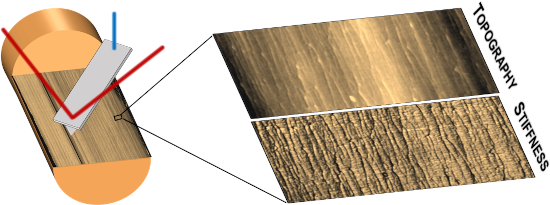
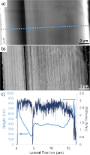
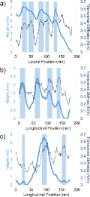
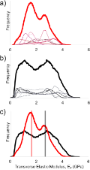
- across a full fiber cross section. The arrow (bottom left) denotes the longitudinal direction (i.e., fiber axis direction), while the lateral dashed line denotes the line profile in (c). (b) Stiffness map across a full fiber cross section. (c) Representative lateral topography and transverse stiffness






Nanoarchitectonics of photothermal materials to enhance the sensitivity of lateral flow assays
Beilstein J. Nanotechnol. 2023, 14, 988–1003, doi:10.3762/bjnano.14.82
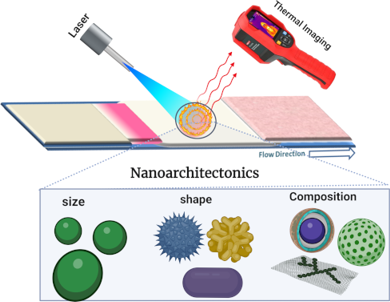
- application in photothermal LFA. Size-dependent photothermal properties Gold nanoparticles have benefits in the field of diagnostics because of their high absorption cross section, LSPR, ease of preparation, stability, and variable surface chemistry [48]. Most importantly, the high number of synthesis methods
- to CC BY 4.0.). Comparison of absorption spectra of different sizes Au-nanorods (C). Maximum temperature raising profile with respect to absorption cross-section of Au-nanorods (D). (Figure 5C and D was reproduced from [48] (© 2022 J.-P. Sun et al., published by Elsevier, distributed under the terms


Fragmentation of metal(II) bis(acetylacetonate) complexes induced by slow electrons
Beilstein J. Nanotechnol. 2023, 14, 980–987, doi:10.3762/bjnano.14.81
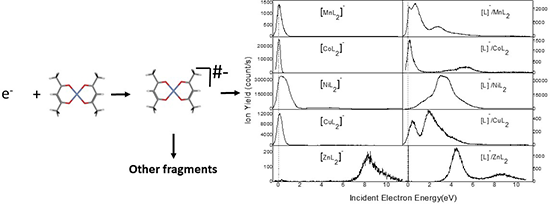
- Nneutral are the number of colliding electrons (intensity of the electron current) and the density of the neutral precursor targets, respectively, L is the collision length, and σion is the cross section for the ion production. The experimental estimate of NCoL2−/NMnL2− from Figure 1 is around 15. This


Cross-sectional Kelvin probe force microscopy on III–V epitaxial multilayer stacks: challenges and perspectives
Beilstein J. Nanotechnol. 2023, 14, 725–737, doi:10.3762/bjnano.14.59
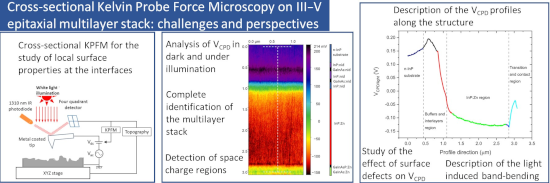
- measurements based on scanning probe microscopy (SPM) allow for the analysis of two-dimensional (2D) features at the surface and along a physical cross section of nanoscale semiconductor structures. Among the wide variety of SPM techniques available [3], Kelvin probe force microscopy (KPFM) is an application
- reach a higher doping level around 2.5 × 1019 cm−3. Before starting the KPFM analysis, the sample was cleaved, and a surface cleaning was carried out to expose a clean cross section. We performed a chemical treatment based on sequential ultrasonic baths of acetone, ethanol, and deionized water. The
- 5.75 eV. KPFM measurements were performed under dark conditions and under illumination on the cross section of the sample. The acquisition of VCPD/light enables the evaluation of the surface photovoltage (SPV), which is defined as the light-induced change of the contact potential difference at the


Thermal transport in kinked nanowires through simulation
Beilstein J. Nanotechnol. 2023, 14, 586–602, doi:10.3762/bjnano.14.49
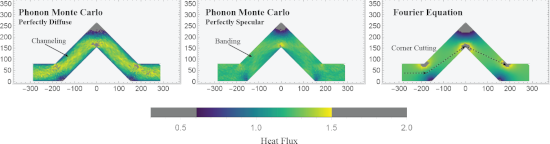
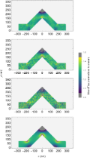
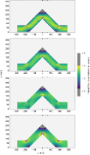
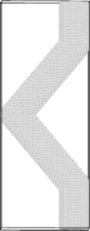
- each other. This results in an unusually large cross section at the knee and also aggravates potential sintering problems. This effect is related to wire length and radii as these factors determine when the wire will begin to merge onto itself at the knee. It is notable that the scale of the effects
- . The thermal conductance of these 2D systems was extrapolated to 3D by assuming a square cross section for the wire. In addition, we have varied the scattering rate to allow us to see how much ballistic transport impacts thermal conductance in the systems. The dashed purple line in Figure 5 shows the
- wider cross section at the knee. In the extreme cases towards 90° kink angle, the straight portions of the wire nearly contact each other and the result is a rather short, nearly straight wire with a large wire attached perpendicularly at the middle. As such, results for values above 65° of kink should




On the use of Raman spectroscopy to characterize mass-produced graphene nanoplatelets
Beilstein J. Nanotechnol. 2023, 14, 509–521, doi:10.3762/bjnano.14.42
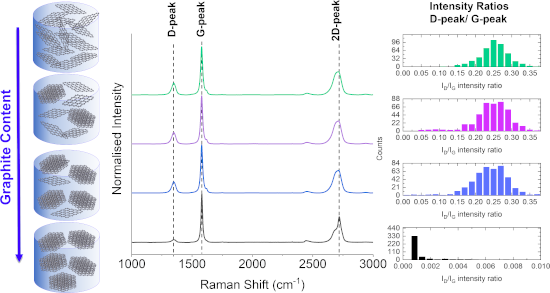
- application areas as an in-line process analysis and control method [9][10][11][12]. Raman spectroscopy is particularly suited to the analysis of graphitic materials because of the large scattering cross section of graphitic materials and the large amount of information obtainable from a single measurement


The origin of black and white coloration of the Asian tiger mosquito Aedes albopictus (Diptera: Culicidae)
Beilstein J. Nanotechnol. 2023, 14, 496–508, doi:10.3762/bjnano.14.41
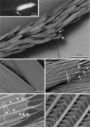
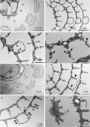
- ). Along the upper surface of the scale, the longitudinal ridges run orthogonal with respect to the herringbone pattern floor (Figure 4b,c,f,g). The cuticular microribs along the ridges appear in the cross section as small lateral globular bulges (Figure 4c,d,f,g). We did not observe any clear difference
- the rest of epidermal cells, are occasionally visible between them (arrows). The cuticular microribs (arrow heads) along the ridges (R) appear in the cross section as small lateral globular bulges. Tarsal black and white scales of Aedes albopictus female in a light microscope. (a) Dry white scales



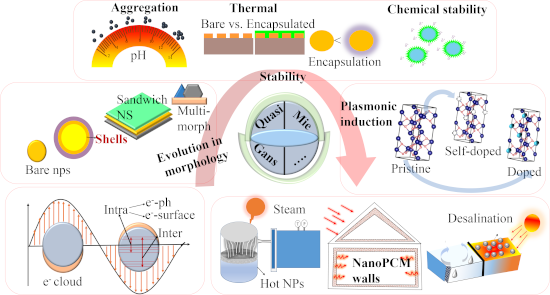
Plasmonic nanotechnology for photothermal applications – an evaluation
Beilstein J. Nanotechnol. 2023, 14, 380–419, doi:10.3762/bjnano.14.33
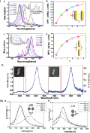
- of the absorbance of a plasmonic nanoparticle is done by calculation of its optical cross sections and specifically the extinction cross section, which includes the absorption as well as the scattering cross section. A few examples of the same will be discussed to compare the differences that need to
- where the incident electric field is assumed to be spatially uniform. This assumption is valid only for wavelengths much larger than the particle size. The extinction cross section, which is the result of this modelling and which is an expression summing up absorption and scattering of the incident
- coefficient (σext) is introduced as: where Cext is the extinction cross section. On substituting for the polarizability, the final expression for the extinction cross section [57] for a spherical particle interacting with light is arrived at as where a and εm are the particle size and dielectric constant of




Batch preparation of nanofibers containing nanoparticles by an electrospinning device with multiple air inlets
Beilstein J. Nanotechnol. 2023, 14, 141–150, doi:10.3762/bjnano.14.15
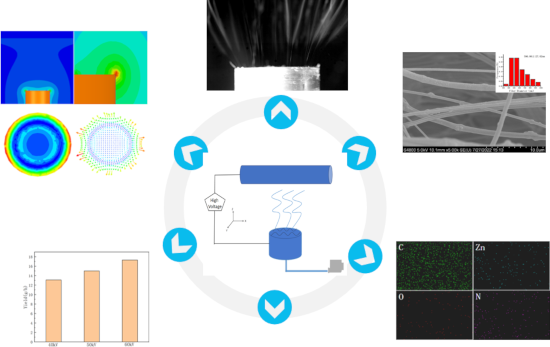
- expanding the practical application of functional nanofibers in the future. Diagram of EMAI (a); 3D diagram of the copper porous spinneret (b) and its corresponding longitudinal section (c) as well as cross section (d). EMAI spinning processes at different air flow rates (150 m3/h (a), 100 m3/h (b), 50 m3/h


Characterisation of a micrometer-scale active plasmonic element by means of complementary computational and experimental methods
Beilstein J. Nanotechnol. 2023, 14, 110–122, doi:10.3762/bjnano.14.12
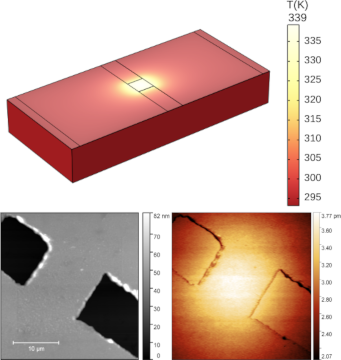
- layer of silver. Applying a current through the silver layer results in increased heating at the constriction due to the reduced cross section. Consequently, given the dependence of the materials electric permittivity on temperature, the optical response will change locally. In this work, we have