


Search results
Search for "hybridization" in Full Text gives 174 result(s) in Beilstein Journal of Nanotechnology.
Photoactive nanoarchitectures based on clays incorporating TiO2 and ZnO nanoparticles
Beilstein J. Nanotechnol. 2019, 10, 1140–1156, doi:10.3762/bjnano.10.114
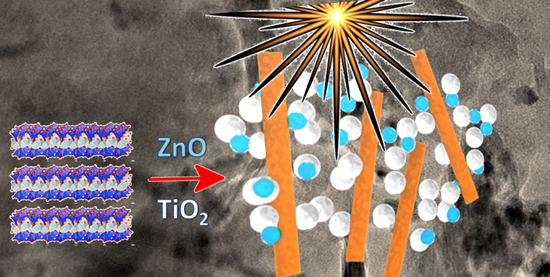
- than bare ZnO. This was attributed to the dissolution of ZnO in acidic solution, which is suppressed by the hybridization with smectites [46][92][93]. CTA-smectites treated with a hydrothermal solution intercalation method at 70 °C for 10 h lead to ZnO@CTA-montmorillonite where the ZnO NPs are either

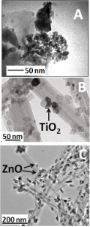


Synthesis of novel C-doped g-C3N4 nanosheets coupled with CdIn2S4 for enhanced photocatalytic hydrogen evolution
Beilstein J. Nanotechnol. 2019, 10, 912–921, doi:10.3762/bjnano.10.92
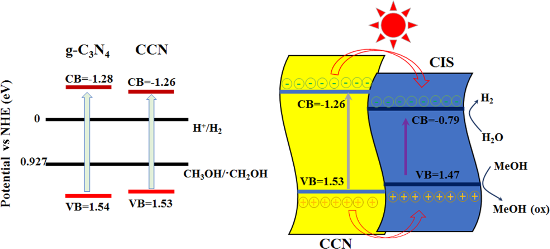
- ]. In addition, hierarchical CdIn2S4/graphene nano-heterostructures have been fabricated as efficient photocatalysts for solar H2 evolution [33]. In this study, synergy can be obtained by combining the two strategies, self-doped C-atom g-C3N4 (CCN) and hybridization with another semiconductor, to


Electronic properties of several two dimensional halides from ab initio calculations
Beilstein J. Nanotechnol. 2019, 10, 823–832, doi:10.3762/bjnano.10.82
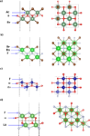
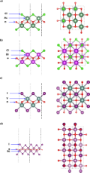
- the bottom of the conduction bands is a hybridization between the Cr (La, Ga or In) and the O atoms. We have performed a similar study in the case of the iodide monolayers. The corresponding DOSs and PDOSs of BiOI, LaOI, ScOI, and YOI are shown in Figure 6. For all the systems, we found that the


Topochemical engineering of composite hybrid fibers using layered double hydroxides and abietic acid
Beilstein J. Nanotechnol. 2019, 10, 589–605, doi:10.3762/bjnano.10.60
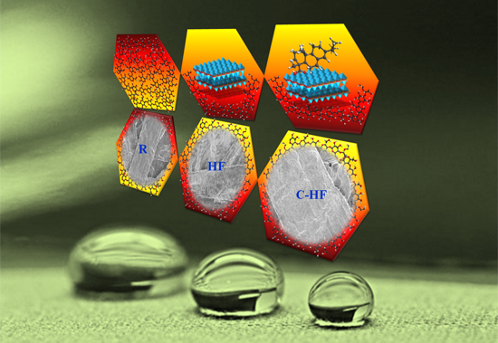
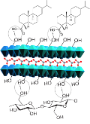
- -F, HF, and C-HF. Regarding a possible increased tensile strength, the treatments (LDH hybridization and AA modification) have positive effects only on unrefined fibers of bleached and unbleached pulp (C-HF of BKP, UBKP). The interaction with refined fibers of bleached and unbleached pulp (C-HF of
- : abietic acid). FTIR spectra of pulp fibers (filled circles: fibers, asterisks: LDH, filled diamonds: abietic acid). SEM images showing the hybridization of LDH particles on the fiber surfaces of (a) BKP, (b) BKPR, (c) UBKP and (d) UBKPR. SEM images of the BKP fibers: (a) REF (b) C-F (c) HF (d) C-HF (0.15




Quantification and coupling of the electromagnetic and chemical contributions in surface-enhanced Raman scattering
Beilstein J. Nanotechnol. 2019, 10, 549–556, doi:10.3762/bjnano.10.56
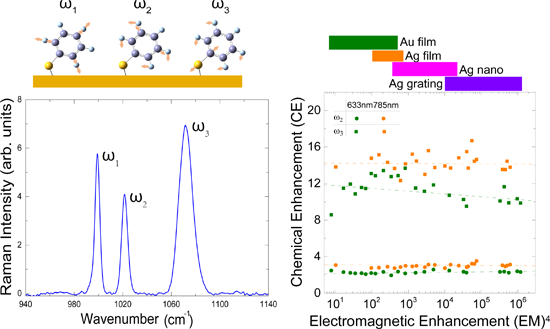
- plasmon resonances of the nanostructured metal surface when excited by incident light. The generally weaker chemical enhancement mechanism (CE) is thought to be associated with electronic interactions such as charge redistribution, hybridization, or other interactions between molecular adsorbate and the


Transport signatures of an Andreev molecule in a quantum dot–superconductor–quantum dot setup
Beilstein J. Nanotechnol. 2019, 10, 363–378, doi:10.3762/bjnano.10.36
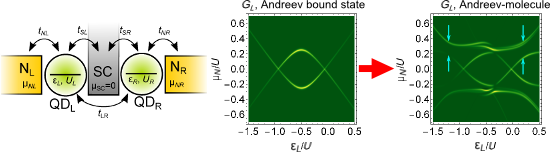
- are strongly suppressed. On the other hand, the two other states, and are coupled by LAR and EC in second order via intermediate states, by (cf. Figure 1b) which includes the matrix element, which is not suppressed. Hence, at the top right quadruple point, this second-order hybridization results
- future conventional and topological quantum-information schemes. Coherent hybridization between a superconductor and two quantum dots in a Cooper-pair splitter. a) Schematics of the Cooper-pair splitter setup. b) Two examples of the dependence of the EC matrix elements on the on-site energies of the QDs
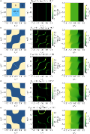
- , d) only IT, e) all three. Hybridization of the two quantum dots of the Cooper-pair splitter due to the non-local coupling mechanisms. Differential conductances GL and GR of the Cooper-pair splitter are shown in the left and right panels, respectively, for UL = UR = U, ΓLAR,L = ΓLAR,R = 0.25U, and



Electromagnetic analysis of the lasing thresholds of hybrid plasmon modes of a silver tube nanolaser with active core and active shell
Beilstein J. Nanotechnol. 2019, 10, 294–304, doi:10.3762/bjnano.10.28
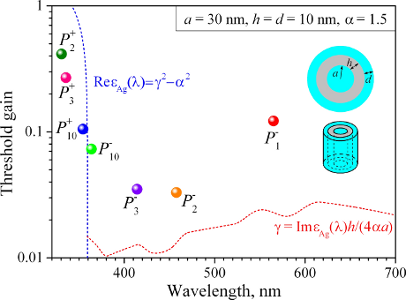
- core mode to the visible range. Making the nanotube wall thicker than 20 nm spoils the hybridization of the LSP modes and pushes all of them together, at blue and violet wavelengths, while selecting it much thinner than 10 nm may lead to the increment of losses due to non-local effects. Using the


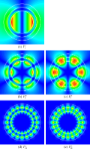
![[Graphic 29]](/bjnano/content/inline/2190-4286-10-28-i46.svg?max-width=637&scale=1.18182) λ = 565.03...
λ = 565.03...

![[Graphic 36]](/bjnano/content/inline/2190-4286-10-28-i53.svg?max-width=637&scale=1.18182) ...
...


Amorphous NixCoyP-supported TiO2 nanotube arrays as an efficient hydrogen evolution reaction electrocatalyst in acidic solution
Beilstein J. Nanotechnol. 2019, 10, 62–70, doi:10.3762/bjnano.10.6
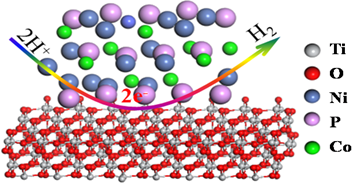
- −), suggesting a small electron density transfer from Ni and Co to P [37]. This charged structure is very beneficial for improving surface activity toward HER. A critical means to improve the charge transfer of HER is to enhance the conductivity of the electrocatalysts. Doping or hybridization to form a




Colloidal chemistry with patchy silica nanoparticles
Beilstein J. Nanotechnol. 2018, 9, 2989–2998, doi:10.3762/bjnano.9.278
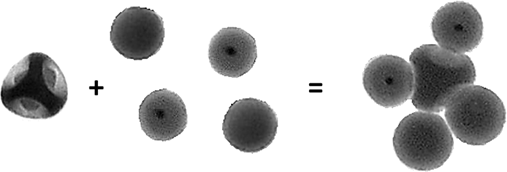
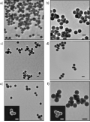
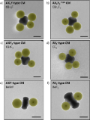
- sp3 hybridization and form equivalent bonds with two, three and four hydrogen atoms, respectively, well illustrate the great diversity of molecular structures that can be obtained. For the past two decades, this richness has been a great source of inspiration for designing colloidal analogues of


Disorder in H+-irradiated HOPG: effect of impinging energy and dose on Raman D-band splitting and surface topography
Beilstein J. Nanotechnol. 2018, 9, 2708–2717, doi:10.3762/bjnano.9.253
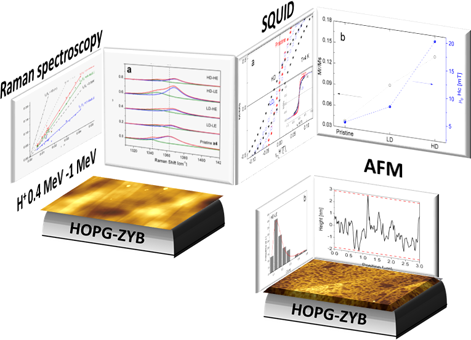
- of dose and energy. We do not observe a continuous evolution from low dose and low energy to high dose and high energy in our spectra, which may allow us to correlate changes in each component of the D band with a certain kind of defects or defect-like features, including changes in the hybridization


Silicene, germanene and other group IV 2D materials
Beilstein J. Nanotechnol. 2018, 9, 2665–2667, doi:10.3762/bjnano.9.248

- of the 2D layer. Secondly, of these materials, only graphene is fully flat, which results from the pure sp2 hybridization of its constituting carbon atoms. On the contrary, other group IV elements energetically prefer hybridization with an additional sp3 character when forming a 2D honeycomb layer
- , which increases with increasing atomic size. As a consequence of this mixed hybridization, the bonds between adjacent atoms of the lattice are buckled, resulting in a layer that is not completely flat. Such buckling within the layer is illustrated in Figure 1 for different elemental 2D materials. For

Polarization-dependent strong coupling between silver nanorods and photochromic molecules
Beilstein J. Nanotechnol. 2018, 9, 2657–2664, doi:10.3762/bjnano.9.247
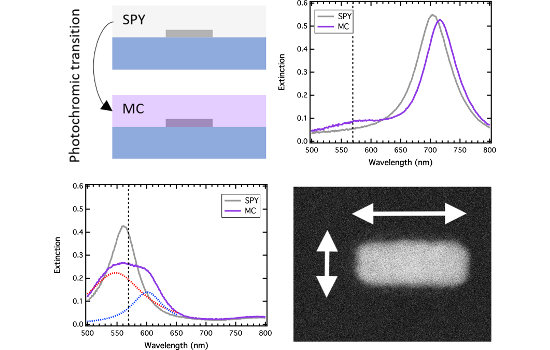
- were in good agreement with our observations. Thus, we proved that the incident polarization allows for control of the plasmonic hybridization and the spectral position of the nanorod plasmon modes. This plasmonic hybridization is known to be reversible and can be enhanced by application of better



Influence of the thickness of an antiferromagnetic IrMn layer on the static and dynamic magnetization of weakly coupled CoFeB/IrMn/CoFeB trilayers
Beilstein J. Nanotechnol. 2018, 9, 2198–2208, doi:10.3762/bjnano.9.206
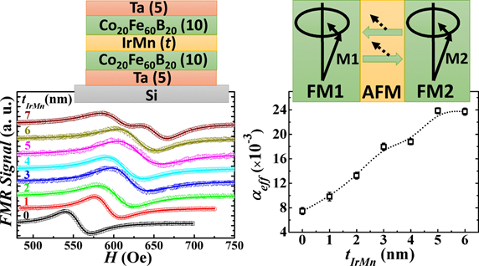
- obtained FMR spectra are the superposition of resonance peaks originating from the two CoFeB layers. This resonance mode hybridization does not result here in two resonance modes with different linewidth but could itself be a source of damping enhancement especially for higher tIrMn [53]. Also, in


A scanning probe microscopy study of nanostructured TiO2/poly(3-hexylthiophene) hybrid heterojunctions for photovoltaic applications
Beilstein J. Nanotechnol. 2018, 9, 2087–2096, doi:10.3762/bjnano.9.197
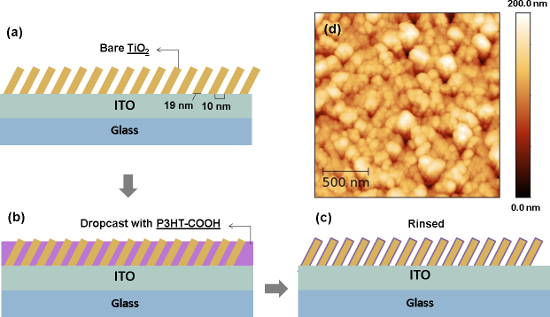
- covalent bonding between P3HT-COOH and TiO2 creates a dipole at the interface induced by: (i) the hybridization of the electronic orbitals of the two components, leading to a rearrangement of the charge density at the interface and (ii) the addition of a net dipole intrinsic to the P3HT-COOH molecule


Metal-free catalysis based on nitrogen-doped carbon nanomaterials: a photoelectron spectroscopy point of view
Beilstein J. Nanotechnol. 2018, 9, 2015–2031, doi:10.3762/bjnano.9.191
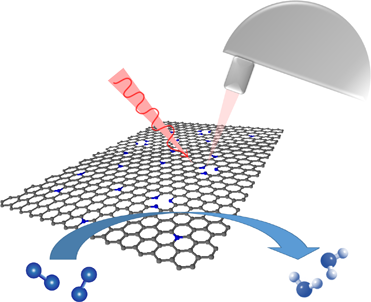
- to commercially available Pt-based electrodes. Nitrogen atoms can be incorporated in the hexagonal carbon lattice in different configurations depending on the number of bonding carbon atoms and to the type of hybridization. The role that the different nitrogen functionalities play in the catalytic




Synthesis of carbon nanowalls from a single-source metal-organic precursor
Beilstein J. Nanotechnol. 2018, 9, 1895–1905, doi:10.3762/bjnano.9.181
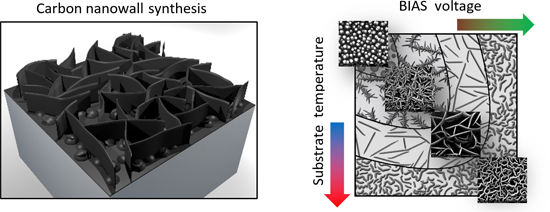
- between the nanorods and the straight CNWs. Chemical characterization Raman spectroscopy can give information about the hybridization and the defect density of the carbon material. All samples were measured at three different positions and the measured values were averaged for the interpretation. In


Improving the catalytic activity for hydrogen evolution of monolayered SnSe2(1−x)S2x by mechanical strain
Beilstein J. Nanotechnol. 2018, 9, 1820–1827, doi:10.3762/bjnano.9.173
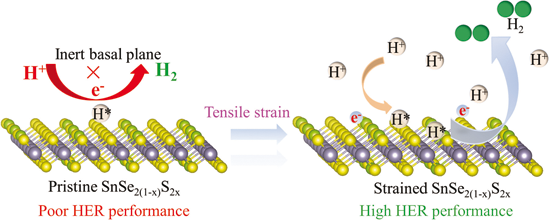
- , such as bandgap engineering and device structures. It was reported that the catalytic activity for HER of the monolayer 1T'-MX2 (M = Mo, W; X = S, Se, Te) can be enhanced by applying tensile strain [55][56]. For 1T'-MoS2, it was found that the strong hybridization between Mo d-orbitals and S p-orbitals


Josephson effect in junctions of conventional and topological superconductors
Beilstein J. Nanotechnol. 2018, 9, 1659–1676, doi:10.3762/bjnano.9.158
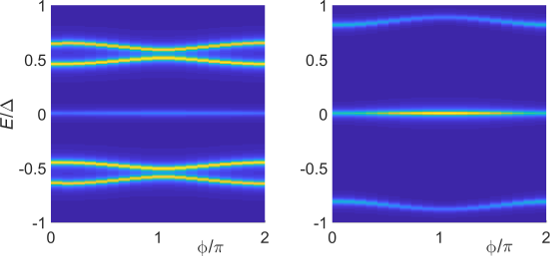
- with the hybridization parameters ΓS/TS = . The bGFs g(ω) and G(ω) have been defined in Equation 6 and Equation 7, respectively. Once a self-consistent solution to Equation 26 has been determined, which in general requires numerics, the Josephson current is obtained from Equation 5 as In what follows
- . Figure 1b, acts as tunable parity switch on the many-body ABS levels of the SAC. As we have discussed above, the supercurrent flowing directly between a given S lead and the TS wire is expected to be strongly suppressed. However, through the hybridization with the MBS, Andreev level configurations with
- with all other fermions. We may represent γ by an auxiliary fermion f↑, where the index reminds us that the MBS spin polarization points along , The other Majorana mode γ′ = which is localized at the opposite end of the TS wire, is assumed to have negligible hybridization with the ΨS,j spinors and


![[Graphic 75]](/bjnano/content/inline/2190-4286-9-158-i137.svg?max-width=637&scale=1.18182) = 1 in Figure 6, for different bulk Zeeman fields Vx (in meV) near the crit...
= 1 in Figure 6, for different bulk Zeeman fields Vx (in meV) near the crit...


Free-radical gases on two-dimensional transition-metal disulfides (XS2, X = Mo/W): robust half-metallicity for efficient nitrogen oxide sensors
Beilstein J. Nanotechnol. 2018, 9, 1641–1646, doi:10.3762/bjnano.9.156
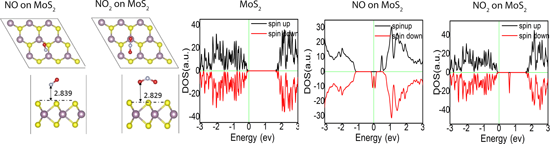
- eV above the Fermi level, respectively. Some impurity states of WS2 are pinned slightly below the Fermi level upon adsorption of NO2. These impurity states come from the hybridization of spin-up and spin-down orbitals of the W and S atoms (Figure 3c–e), which contribute to the current flow and fail


Sulfur-, nitrogen- and platinum-doped titania thin films with high catalytic efficiency under visible-light illumination
Beilstein J. Nanotechnol. 2018, 9, 1629–1640, doi:10.3762/bjnano.9.155
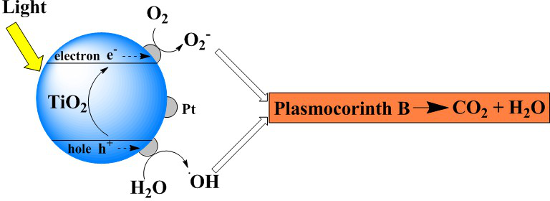
- illumination (k1 for S3_N0.5 is 0.30 h−1). The band gap width for this sample was shown to be narrowed (3.07 eV). Researchers attribute this to a synergetic effect between N 2p and S 3p orbitals, resulting in a hybridization of the two orbitals generated close to the valence band [31][49]. Furthermore, with


Robust midgap states in band-inverted junctions under electric and magnetic fields
Beilstein J. Nanotechnol. 2018, 9, 1405–1413, doi:10.3762/bjnano.9.133
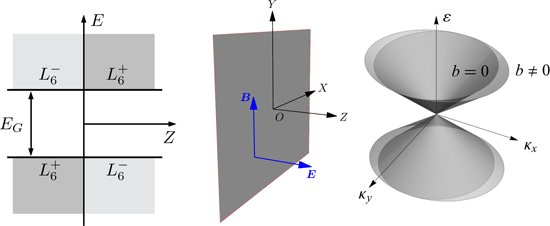
- could have an impact of the electronic levels [29][30]. However, the two-band model Hamiltonian (Equation 2) successfully describes the hybridization of interface states in band-inverted quantum wells [31], in perfect agreement with more elaborated models including quadratic momentum terms [30]. The

![[Graphic 1]](/bjnano/content/inline/2190-4286-9-133-i26.svg?max-width=637&scale=1.18182) and
and ![[Graphic 2]](/bjnano/content/inline/2190-4286-9-133-i27.svg?max-width=637&scale=1.18182) band-edge profile of an abrupt band-inverted junction with aligned and same-sized gaps, l...
band-edge profile of an abrupt band-inverted junction with aligned and same-sized gaps, l...


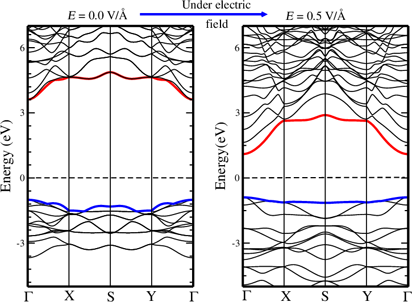
![[Graphic 35]](/bjnano/content/inline/2190-4286-9-133-i60.svg?max-width=637&scale=1.18182) and b = 0.5 as a function of the electric field. It is important...
and b = 0.5 as a function of the electric field. It is important...

Predicting the strain-mediated topological phase transition in 3D cubic ThTaN3
Beilstein J. Nanotechnol. 2018, 9, 1399–1404, doi:10.3762/bjnano.9.132
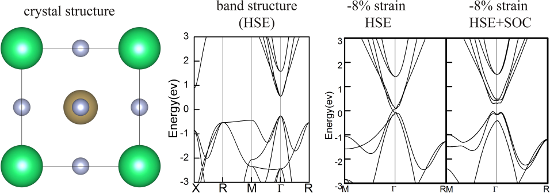
- ThTaN3 at a lower compressive strain (5%) as shown in Figure 4. The conduction band (CB) state mainly consisted of px, py and pz orbitals of the N atom, while the valence band (VB) state is comprised of the hybridization dxy, dxz, dyz orbitals of the Ta atom. When the SOC effect was incorporated, a p–d


Disorder-induced suppression of the zero-bias conductance peak splitting in topological superconducting nanowires
Beilstein J. Nanotechnol. 2018, 9, 1358–1369, doi:10.3762/bjnano.9.128
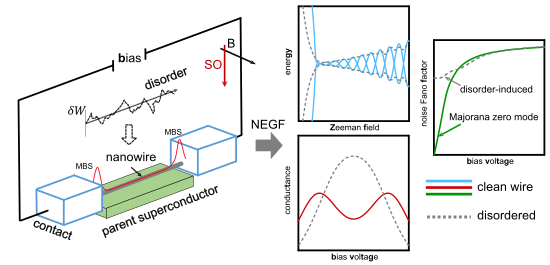
- ][24][25][26][27][28]. However, it is suggested that such zero-bias features could also be induced by non-topological physics such as Kondo effect [31], smooth confinement [32], or strong disorder [33][34][35]. In one-dimensional case, the hybridization of the pair of MBSs localized at the wire ends
- MBSs hybridization. To get a closer look into the effects of disorder on the Majorana energy splitting, it is beneficial to investigate the localization length that characterizes the hybridization between the pair of MBSs. In weak spin-orbit coupling regime, the localization length increases gradually
- is more evident compared with the limited effects induced by the pairing disorder. Here we choose a rather long wire of length L = 2.0 μm, where the two spatially separated MBSs are well localized at each end of the wire, thus the hybridization between the pair of MBSs is negligibly small. In our


![[Graphic 20]](/bjnano/content/inline/2190-4286-9-128-i39.svg?max-width=637&scale=1.18182) (das...
(das...


Ag2WO4 nanorods decorated with AgI nanoparticles: Novel and efficient visible-light-driven photocatalysts for the degradation of water pollutants
Beilstein J. Nanotechnol. 2018, 9, 1308–1316, doi:10.3762/bjnano.9.123
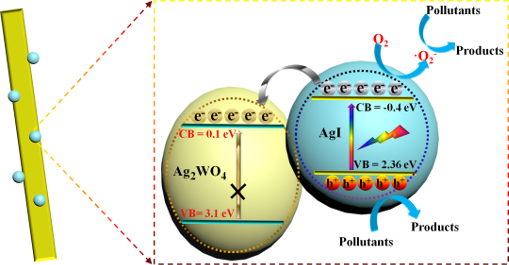
- -light photocatalytic activity with an RhB degradation rate of 16.2% after 60 min irradiation due to the unsatisfactory visible-light absorption and fast recombination of photoinduced charge carriers [31][38][44][45]. After hybridization of AgI, all AgI/Ag2WO4 heterojunctions (0.1AgI/Ag2WO4, 0.2AgI




Circular dichroism of chiral Majorana states
Beilstein J. Nanotechnol. 2018, 9, 1194–1199, doi:10.3762/bjnano.9.110
- (λ) is modeling a coupled bilayer system in which quasiparticles move. The set of Hamiltonian parameters is m0, m1, ΔB, μ, α, Δp and Δm. The latter two are given in terms of the pairing interaction in the two layers, Δt and Δb, by Hybridization of the two surfaces is represented by parameters m0 and


![[Graphic 14]](/bjnano/content/inline/2190-4286-9-110-i18.svg?max-width=637&scale=1.18182) . Panels a) and b) correspond to the phases in Figure 1d with one (ΔB = 2...
. Panels a) and b) correspond to the phases in Figure 1d with one (ΔB = 2...
![[Graphic 15]](/bjnano/content/inline/2190-4286-9-110-i19.svg?max-width=637&scale=1.18182) ,
, ![[Graphic 16]](/bjnano/content/inline/2190-4286-9-110-i20.svg?max-width=637&scale=1.18182) and
and ![[Graphic 17]](/bjnano/content/inline/2190-4286-9-110-i21.svg?max-width=637&scale=1.18182) defined in the main text. The shown results correspond to the spe...
defined in the main text. The shown results correspond to the spe...

![[Graphic 19]](/bjnano/content/inline/2190-4286-9-110-i23.svg?max-width=637&scale=1.18182) ,
, ![[Graphic 20]](/bjnano/content/inline/2190-4286-9-110-i24.svg?max-width=637&scale=1.18182) and
and ![[Graphic 21]](/bjnano/content/inline/2190-4286-9-110-i25.svg?max-width=637&scale=1.18182) for (a) a square of Lx = Ly = 20 LU), and for (b) a rectangle of L...
for (a) a square of Lx = Ly = 20 LU), and for (b) a rectangle of L...



