Search results
Search for "photocatalytic activity" in Full Text gives 139 result(s) in Beilstein Journal of Nanotechnology.
Effect of Ag loading position on the photocatalytic performance of TiO2 nanocolumn arrays
Beilstein J. Nanotechnol. 2020, 11, 717–728, doi:10.3762/bjnano.11.59
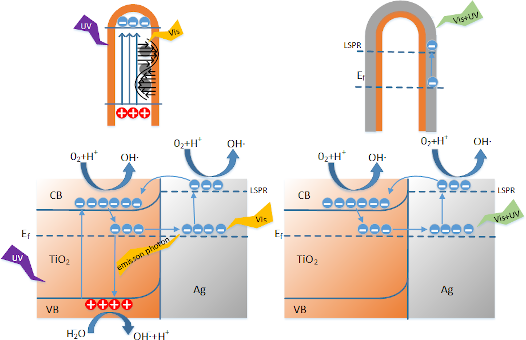
- ], and combination with metal elements or other metal oxides [10]. Compared with the bulk material, one-dimensional (1D) nanostructured TiO2 presents enhanced photocatalytic activity that depends on a variety of factors such as surface area, particle shape, crystalline structure, crystal size, and
- spectra and (c,d) bandgaps of the different samples. Photocatalytic activity for the degradation of MB: (a) UV–vis absorption spectra for the photocatalytic degradation of MB in the presence of AFT1 sample, (b) photocatalytic degradation rate of MB by different samples and pure MB under UV–vis light, (c


Preparation, characterization and photocatalytic performance of heterostructured CuO–ZnO-loaded composite nanofiber membranes
Beilstein J. Nanotechnol. 2020, 11, 631–650, doi:10.3762/bjnano.11.50
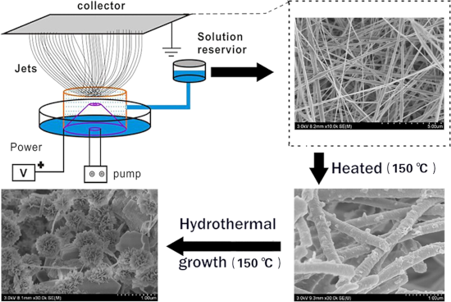
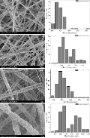
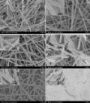
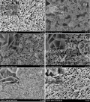
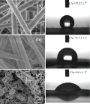
- narrow direct bandgap of 1.2–1.79 eV [14]. Because of that, CuO is usually used in combination with large-bandgap semiconductors, such as ZnO and TiO2, in order to improve their photocatalytic activity under solar light irradiation [15]. It was reported that the p–n heterojunction between ZnO and CuO has
- a high photocatalytic activity because of a better charge separation [16][17][18][19][20][21][22]. Liu et al. [23] prepared CuO/ZnO nanocomposites by homogeneous coprecipitation and used them for the photocatalytic degradation of methyl orange. Wei et al. [24] fabricated CuO/ZnO composite nanofilms
- number of photoexcited holes in the CuO–ZnO heterostructure increases [49], which leads to the higher photocatalytic activity. The results of three consecutive photocatalytic degradation experiments using the same sample D are given in Table 6. The degradation rates decrease, but remains above 90%. This











Correction: Photocatalytic antibacterial performance of TiO2 and Ag-doped TiO2 against S. aureus. P. aeruginosa and E. coli
Beilstein J. Nanotechnol. 2020, 11, 547–549, doi:10.3762/bjnano.11.43

- , complete rutile TiO2 phase was obtained [7]. It was previously reported that a mixture of anatase and rutile TiO2 nanoparticles has higher photocatalytic activity than pure anatase or pure rutile TiO2 nanoparticles under UV-light excitation [8]. Furthermore, it was shown that calcination of the
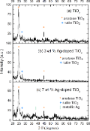
- nanoparticles could increase the crystallinity of TiO2, which leads to a decrease in the photo-excited e− –h+ recombination, and thus, to an increase in the photocatalytic activity of TiO2 [9]. XRD patterns of (a) TiO2 nanoparticles, (b) 3 wt % Ag-doped TiO2 nanoparticles and (c) 7 wt % Ag-doped TiO2
Synthesis and enhanced photocatalytic performance of 0D/2D CuO/tourmaline composite photocatalysts
Beilstein J. Nanotechnol. 2020, 11, 407–416, doi:10.3762/bjnano.11.31
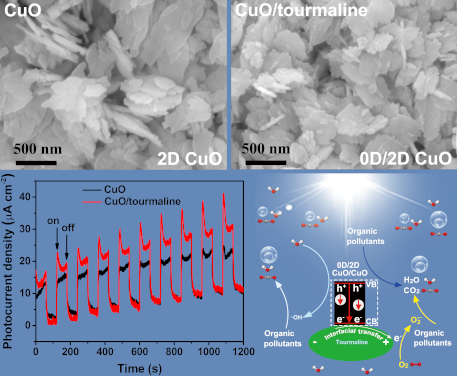
- nontoxic products. In this work, a CuO/tourmaline composite with zero-dimensional/two-dimensional (0D/2D) CuO architecture was successfully obtained via a facile hydrothermal process, and its photocatalytic activity was evaluated by the degradation of methylene blue (MB). Surface element valence state and
- photocatalytic activity for the degradation of MB, which was ascribed to the increase in the quantity of the adsorption-photoreactive sites and the efficient utilization of the photoinduced charge carriers. This study provides a facile strategy for the construction of 0D/2D CuO structures and the design of
- tourmaline-based functional composite photocatalysts for the treatment of organic contaminants in water. Keywords: 0D/2D CuO; organic contaminants; photocatalytic activity; photoinduced charge separation; tourmaline; Introduction Developing a novel semiconductor with excellent photoreactive activity toward


Fabrication of Ag-modified hollow titania spheres via controlled silver diffusion in Ag–TiO2 core–shell nanostructures
Beilstein J. Nanotechnol. 2020, 11, 141–146, doi:10.3762/bjnano.11.12
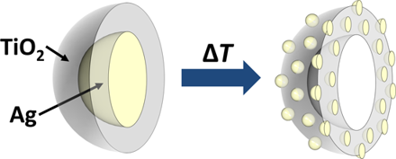
- photocatalytic properties of TiO2 and the optical properties of plasmonic NPs [2]. This combination has been shown to extent the photocatalytic activity of TiO2, which is initially limited to UV light [8], to the visible or even to the NIR range of radiation [9]. Recent examples of the fabrication of plasmonic



Air oxidation of sulfur mustard gas simulants using a pyrene-based metal–organic framework photocatalyst
Beilstein J. Nanotechnol. 2019, 10, 2422–2427, doi:10.3762/bjnano.10.232
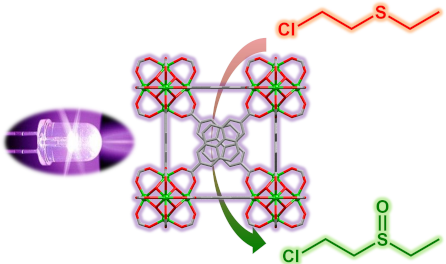
- , 3.4 mg) of the MOF, no conversion of CEES was detected (Figure 2), confirming the role of NU-400 as a photocatalyst. The photocatalytic activity of NU-400 in air, without oxygen presaturation, is significantly higher compared to the previously explored mesoporous NU-1000 MOF, which is based on a
- oxygen saturation. The photocatalytic activity of NU-400 enabled singlet oxygen-induced conversion of CEES to CEESO with a half-life of 13.5 minutes under air, a milestone in the development of MOFs as new, highly efficient catalysts for mustard gas degradation. NU-400 constituents: a) the pyrene-based




Improved adsorption and degradation performance by S-doping of (001)-TiO2
Beilstein J. Nanotechnol. 2019, 10, 2116–2127, doi:10.3762/bjnano.10.206
- high photocatalytic activity [10]. However, Yu et al. demonstrated that an appropriate proportion of exposed (001) and (101) crystal faces, which forms a “surface heterojunction”, facilitates the separation of photo-generated carriers [8]. Consequently, this improves the photocatalytic performance
- and B-doped (001)-TiO2 via a solvothermal method in order to improve the visible-light photocatalytic activity [15]. Cao et al. used first-principles simulations to study the electronic and optical properties of (001)-TiO2 and MoS2 composites. Their results suggested that the effective
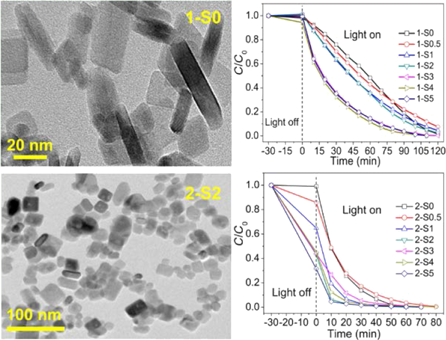
- photocatalytic activity was tested by the degradation of methylene blue (MB). For this, the samples were placed 20 cm away from a xenon lamp (300 W, 16 A). The experimental process was as follows: 50 mg of catalyst was added into a 100 mL MB solution with a concentration of 10 mg/L, and the samples were kept in




Novel hollow titanium dioxide nanospheres with antimicrobial activity against resistant bacteria
Beilstein J. Nanotechnol. 2019, 10, 1716–1725, doi:10.3762/bjnano.10.167
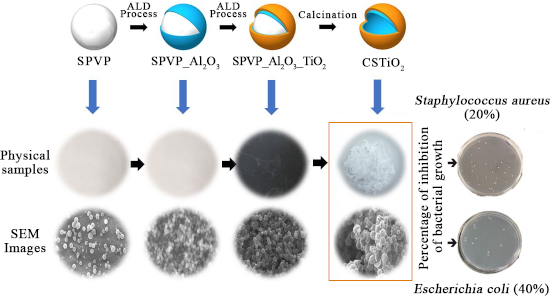
- their high stability, low cost, reusability, and high photocatalytic activity [6][7][8]. These excellent properties have been applied in many products such as foods, catalyst support, air purification, water disinfection, antibacterial, cosmetics and solar cells [9][10]. Photocatalytic TiO2 favors the
- to understand their effect on the antimicrobial activity of TiO2 nanostructures against S. aureus MRSA 97-7. The results shown in Table 2 validated that the antibacterial effect of CSTiO2 can be greatly increased due to the photocatalytic activity of these NPs in suspension. The antimicrobial


Kelvin probe force microscopy work function characterization of transition metal oxide crystals under ongoing reduction and oxidation
Beilstein J. Nanotechnol. 2019, 10, 1596–1607, doi:10.3762/bjnano.10.155
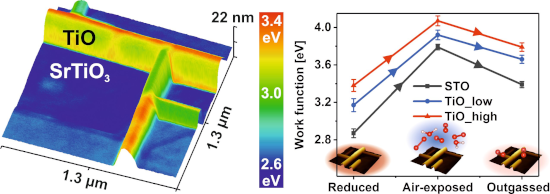
- strong response to gaseous pressures, especially oxygen and water [45]. The tool of choice that provides information on the subtle changes in the work function is KPFM, which has been employed for research on the photocatalytic activity of TiO2-based doped and undoped nanofibers [46][47] and for the


Direct observation of oxygen-vacancy formation and structural changes in Bi2WO6 nanoflakes induced by electron irradiation
Beilstein J. Nanotechnol. 2019, 10, 1434–1442, doi:10.3762/bjnano.10.141
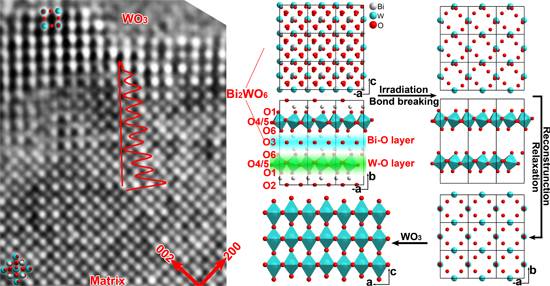
- be induced by chemical doping [18][19], hydrogen reduction [16] or ultra-thinning [14][20]. Surface oxygen vacancies can efficiently separate photogenerated electron–hole pairs, resulting in enhanced photocatalytic activity. Bismuth defects or dangling bonds of bismuth atoms resulting from oxygen
- Figure 1c) was frequently encountered and its intensity is enhanced during the routine TEM observation, accompanied by the appearance of dark precipitates on the surface of nanoflakes. This suggests that the as-synthesized Bi2WO6 nanoflakes are sensitive to the electron beam. The photocatalytic activity
- (condenser lens aperture) opening of 70 μm. Experiments of photocatalytic activity The photocatalytic activity of the samples was determined by measuring the degradation of methylene blue (MB) under visible-light irradiation using a 300 W Xe lamp with a 420 nm cut-off filter. In the experiment, 40 mg Bi2WO6


BiOCl/TiO2/diatomite composites with enhanced visible-light photocatalytic activity for the degradation of rhodamine B
Beilstein J. Nanotechnol. 2019, 10, 1412–1422, doi:10.3762/bjnano.10.139
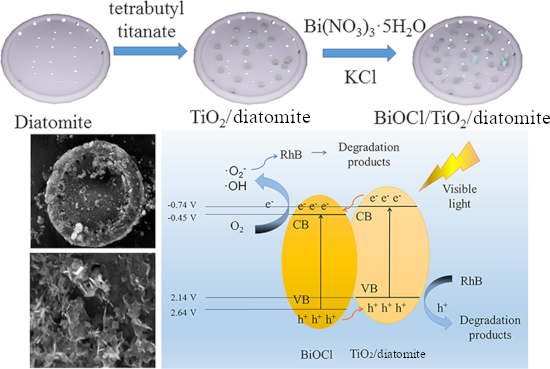
- alone. When the molar ratio of BiOCl to TiO2 is 1:1 and the calcination temperature is 400 °C, the composite was found to exhibit the best catalytic effect. Through the study of the photocatalytic mechanism, it is shown that the strong visible-light photocatalytic activity of the BTD composite results
- organic pollutant degradation [15]. However, according to previous studies, one limitation to its photocatalytic activity is that the photocatalytic process mainly occurs on the surface of the photocatalyst, which is a problem because the TiO2 nanoparticles readily agglomerate [10]. According to the
- it to respond mainly to ultraviolet light. Over decades, the BiOCl/TiO2 heterostructure has been studied successfully and shows higher photocatalytic activity [28], which inspired us to load BiOCl onto the well-dispersed TiO2 to improve the TiO2/diatomite composite. In this paper, we report a novel


Construction of a 0D/1D composite based on Au nanoparticles/CuBi2O4 microrods for efficient visible-light-driven photocatalytic activity
Beilstein J. Nanotechnol. 2019, 10, 1360–1367, doi:10.3762/bjnano.10.134
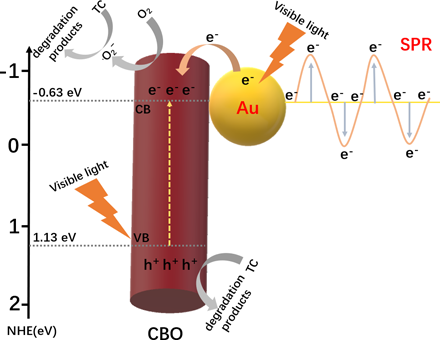
- materials promotes the dispersion and stability of 0D nanomaterials. Among the noble metal NPs, Au is considered to be one of the most promising materials because of its high photocatalytic activity, low toxicity and good biocompatibility [23][24][25]. In addition, size, shape and environment of the Au NPs
- rationally designed and prepared by a facile in situ thermal reduction–precipitation method. The fabricated Au/CBO composites showed a higher photocatalytic activity in the removal of a typical antibiotic (tetracycline, TC, 10 mg/L) under visible-light irradiation (λ > 420 nm) than pristine CBO. Furthermore
- , a series of characterizations were conducted to explore the enhanced photocatalytic activity of 0D/1D Au/CBO composites in detail. Experimental Rod-like CuBi2O4 (CBO) was synthesized through a hydrothermal route. Typically, Bi(NO3)3·5H2O (1.358 g), Cu(NO3)3·3H2O (0.668 g) and NaOH (1.68 g) were


A highly efficient porous rod-like Ce-doped ZnO photocatalyst for the degradation of dye contaminants in water
Beilstein J. Nanotechnol. 2019, 10, 1157–1165, doi:10.3762/bjnano.10.115
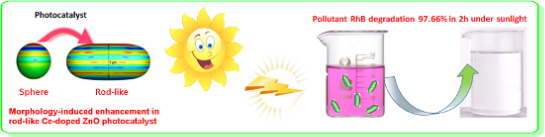
- rods and optimal synthesis conditions were determined by testing samples with different Ce/ZnO molar ratios calcined at 500 °C for 3 hours via a one-step pyrolysis method. The photocatalytic activity was assessed by the degradation of a common dye pollutant found in wastewater, rhodamine B (RhB), using
- to improve its photocatalytic activity by modifying its surface morphology [10][11]. Wang et al. [12] prepared Ce-doped ZnO with different doping levels by using a one-step solution method, using methylene blue as the target pollutant for photodegradation. After exposure to light for 200 minutes, the
- pure ZnO achieved a degradation rate of 48.36% whereas 1% Ce/ZnO exhibited the best activity among the as-synthesized products (96.11%). It was found that a moderate amount of cerium doping can significantly improve the photocatalytic activity of ZnO. It was hypothesized that when cerium is mixed with


Photoactive nanoarchitectures based on clays incorporating TiO2 and ZnO nanoparticles
Beilstein J. Nanotechnol. 2019, 10, 1140–1156, doi:10.3762/bjnano.10.114
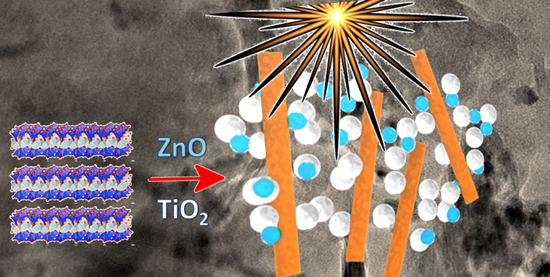
- work is to summarize and critically discuss the different experimental options in the use of TiO2 and ZnO NPs, assembled with clay minerals and related solids, emphasizing on their structural and textural characteristics in relation to their photocatalytic activity. Synthetic strategies for the
- [8][10][11]. A useful strategy to enhance the photocatalytic activity of metal-oxide NPs considered here consists in their distribution as homogenously as possible on the surface of clay minerals acting as supports and provided with large specific area and porosity. Among the clay materials (Figure 1
- ][105][106][107][108], as well as fibrous silicates such as sepiolite and palygorskite [109][110][111][112][113][114][115][116] have been also assembled with TiO2 NPs yielding various clay-based nanoarchitectures with photocatalytic activity (Table 1). For instance, a method to develop TiO2@hectorite as



Synthesis of novel C-doped g-C3N4 nanosheets coupled with CdIn2S4 for enhanced photocatalytic hydrogen evolution
Beilstein J. Nanotechnol. 2019, 10, 912–921, doi:10.3762/bjnano.10.92
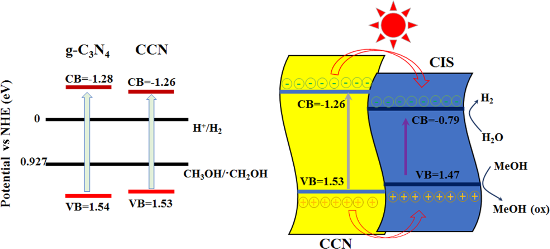
- photocatalytic activity of g-C3N4 is severely restricted by the inefficient separation of photogenerated electron–hole pairs and insufficient photon absorption. Up to now, a variety of strategies such as anion doping, novel metal deposition on surfaces and the design of heterojunctions/nanocomposites have been
- , Huang et al. fabricated self-doped C-atom g-C3N4 via self-assembly, which exhibited highly efficient photocatalytic activity of H2 evolution under visible-light irradiation [22]. Moreover, the construction of a heterojunction composite is an effective approach to facilitate the separation of
- transfer nanochannels [5]. The as-prepared g-C3N4 nanosheet@ZnIn2S4 nanoleaf structure displays an enhanced photocatalytic activity for H2 production without the addition of a Pt co-catalyst. As visible-light-active photocatalysts, ternary metal sulfide (e.g., ZnIn2S4 and CdIn2S4) have attracted great


Deposition of metal particles onto semiconductor nanorods using an ionic liquid
Beilstein J. Nanotechnol. 2019, 10, 718–724, doi:10.3762/bjnano.10.71
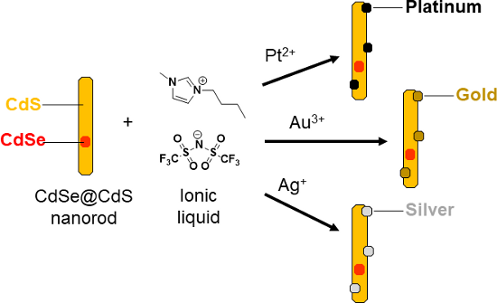
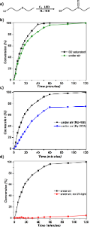
- photocatalytic activity for tol-NR and IL-NR. a) Dye degradation experiments conducted in chloroform. b) Dye degradation experiments conducted in [bmim][Tf2N]. The control in both cases shows dye degradation without a catalyst present. All data points have error bars representing the standard deviation of three


Impact of the anodization time on the photocatalytic activity of TiO2 nanotubes
Beilstein J. Nanotechnol. 2018, 9, 2628–2643, doi:10.3762/bjnano.9.244
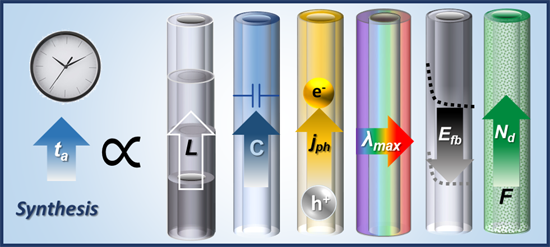
- length, fluorine content, and capacitance of the space charge region increased, affecting the opto-electronic properties (bandgap, bathochromic shift, band-edge position) and surface hydrophilicity of TiO2 NTs. These properties are at the origin of the photocatalytic activity (PCA), as proved with the
- photooxidation of methylene blue. Keywords: fluorine doping; nanotubes; photocatalytic activity; photoelectrochemistry; titanium(IV) oxide (TiO2); Introduction TiO2 started to attract great interest after Fujishima and Honda reported [1] on its photoelectrochemical (PEC) properties in 1972. Numerous features
- ] observed that a water-based electrolyte containing NH4F induced a co-doping with F and N in the TNTs. Their study suggested that a combination of applied potential and annealing temperature were responsible for the high photocatalytic activity (PCA) of their materials in the oxidation of methyl orange. In


Nanocellulose: Recent advances and its prospects in environmental remediation
Beilstein J. Nanotechnol. 2018, 9, 2479–2498, doi:10.3762/bjnano.9.232
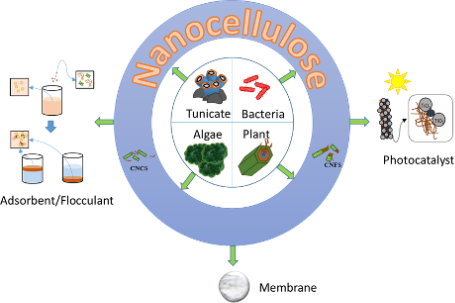
- ]. Although cellulose alone exhibits limited photocatalytic activity under UV or visible light irradiation, many semiconductor materials have been added to enhance the photocatalytic activity. Several research groups have demonstrated photocatalytic wastewater treatment using cellulose-based metal oxide


Hierarchical heterostructures of Bi2MoO6 microflowers decorated with Ag2CO3 nanoparticles for efficient visible-light-driven photocatalytic removal of toxic pollutants
Beilstein J. Nanotechnol. 2018, 9, 2297–2305, doi:10.3762/bjnano.9.214
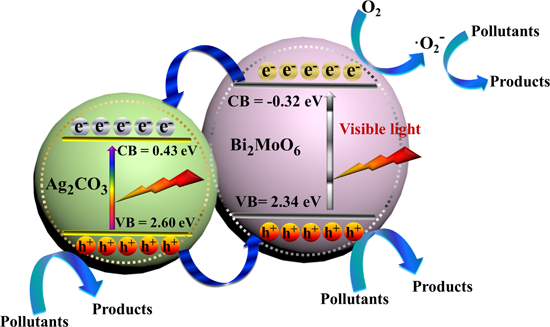
- photocatalytic activity [37]. However, it is unstable under illumination. Previous studies found that the good stability of Ag2CO3 could be achieved through the rational construction of heterojunctions, such as Ag2CO3/Bi2WO6 [37], Ag2O/Ag2CO3 [38], Ag2CO3/Bi2O2CO3 [39], Ag2CO3/C3N4 [40], Ag/Ag2CO3/BiVO4 [41
- ] Ag2CO3/AgBr/ZnO [42], and Ag/Ag2CO3/Bi2MoO6 [32]. The band structure of Ag2CO3 matches well with that of Bi2MoO6 [32]. Moreover, morphology modulation is another significant way to enhance photocatalytic activity. Three-dimensional nanostructures endow materials with unique physicochemical properties
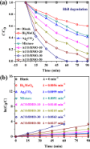
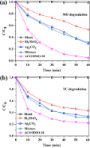
- as a function of the time. Again, ACO/BMO-30 displayed the highest activity, with degradation efficiencies of 94.9% for MO, 100% for MB, and 78.9% for TC. The photocatalytic activity in the degradation of TC of ACO/BMO-30 was further compared with that of Ag/Ag2CO3/Bi2MoO6 [32], and of Ag2MoO4


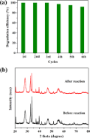


A visible-light-controlled platform for prolonged drug release based on Ag-doped TiO2 nanotubes with a hydrophobic layer
Beilstein J. Nanotechnol. 2018, 9, 1793–1801, doi:10.3762/bjnano.9.170
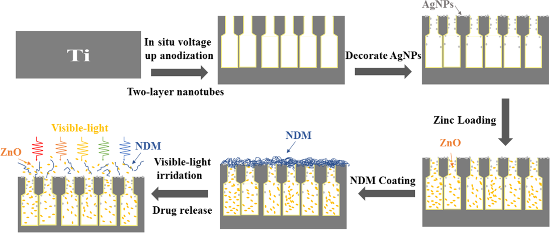
- -layer titania nanotubes (TNTs) fabricated using by an in situ voltage up-anodization process. The visible-light photocatalytic activity is improved by loading Ag onto the TNTs by NaBH4 reduction. Then, the TNTs containing Ag nanoparticles were modified with dodecanethiol (NDM) to create a hydrophobic





Controllable one-pot synthesis of uniform colloidal TiO2 particles in a mixed solvent solution for photocatalysis
Beilstein J. Nanotechnol. 2018, 9, 1715–1727, doi:10.3762/bjnano.9.163
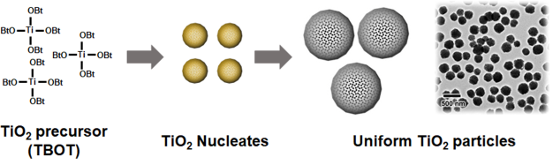
- phase or high crystallinity are essential. Highly crystallized TiO2 is generally considered to not only reduce the recombination of electron–hole pairs, but to also extend the lifetime of photogenerated charges that result in the enhancement of photocatalytic activity [7]. During photocatalysis, it is
- surface and prevent surface reactions, and in turn, hamper the photocatalytic activity [25]. In order to address the above issues, TiO2 photocatalysts are often synthesized in the form of a porous colloidal particle in sub-micrometer dimensions [8][26][27]. They can be calcined at high temperature, which
- , large surface area, uniform photocatalytic activity for each particle, and improved accessibility for the reactant molecules. To fabricate the uniform, colloidal TiO2 spheres, several synthetic methods have been reported including hydrothermal, solvothermal, and sol–gel processes [10][26][28][29




Sulfur-, nitrogen- and platinum-doped titania thin films with high catalytic efficiency under visible-light illumination
Beilstein J. Nanotechnol. 2018, 9, 1629–1640, doi:10.3762/bjnano.9.155
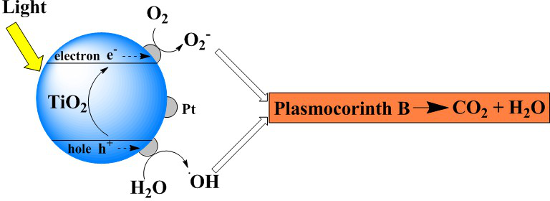
- , band gap measurements). The photocatalytic activity of the prepared thin films was determined by measuring the degradation rate of plasmocorinth B (PB), an organic pigment used in the textile industry, which can pose an environmental risk when expelled into wastewater. A kinetic model for adsorption
- and subsequent degradation was used to fit the experimental data. The results have shown an increase in photocatalytic activity under visible-light illumination of nonmetal and metal doped and co-doped titania thin films compared to an undoped sample. Keywords: doping; photocatalysis; sol–gel
- environmental applications, such as water treatment [9][10][11] and air purification [12]. One of the important factors affecting the photocatalytic activity of TiO2 is its specific surface area. By increasing the specific surface area (porosity) of TiO2, the photocatalytic activity can be increased. One of the


Sheet-on-belt branched TiO2(B)/rGO powders with enhanced photocatalytic activity
Beilstein J. Nanotechnol. 2018, 9, 1550–1557, doi:10.3762/bjnano.9.146
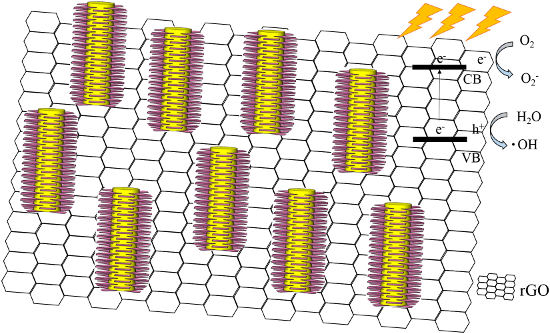
- TiO2(B) is usually adopted to construct phase junctions with anatase TiO2 for applications in photocatalysis to facilitate charge separation; its intrinsic photocatalytic activity, especially when in the form of one- or three-dimensional nanostructures, has been rarely reported. In this study, a sheet
- assist the photodegradation of phenol in water under UV light illumination. The enhanced photocatalytic activity can be attributed to the significantly increased surface area and enhanced charge separation. Keywords: branched nanostructure; photocatalysis; reduced graphene oxide; TiO2(B); Introduction
- safety and rate capability [11][17][18][19][20]. For photocatalytic applications, TiO2(B) is usually combined with anatase TiO2 to construct a multiphase heterostructure to enhance charge separation and in turn the photocatalytic activity [21][22][23][24][25]. For example, Yang et al. synthesized anatase


Cr(VI) remediation from aqueous environment through modified-TiO2-mediated photocatalytic reduction
Beilstein J. Nanotechnol. 2018, 9, 1448–1470, doi:10.3762/bjnano.9.137
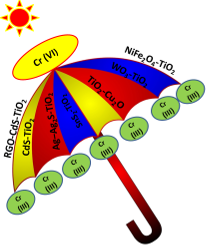
- TiO2 as a photocatalyst and the importance of its modification for photocatalytic reduction of Cr(VI) has also been addressed. In this review, the photocatalytic activity of TiO2 after modification with carbon-based advanced materials, metal oxides, metal sulfides and noble metals towards reduction of
- Cr(VI) was evaluated and compared with that of bare TiO2. The photoactivity of dye-sensitized TiO2 for reduction of Cr(VI) was also discussed. The mechanism for enhanced photocatalytic activity was highlighted and attributed to the resultant properties, namely, effective separation of photoinduced
- with carbon-based advanced materials, noble metals, oxides and sulfides of transition metals for enhanced photocatalytic activity towards degradation of Cr(VI). The photocatalytic reduction of Cr(VI) over dye-sensitized TiO2 is also briefly discussed. The present review article has been divided into


Ag2WO4 nanorods decorated with AgI nanoparticles: Novel and efficient visible-light-driven photocatalysts for the degradation of water pollutants
Beilstein J. Nanotechnol. 2018, 9, 1308–1316, doi:10.3762/bjnano.9.123
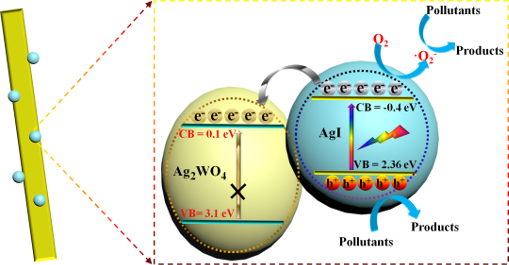
- photocatalytic performance for dye degradation under light irradiation [30][31][36][37]. Unfortunately, due to its wide bandgap of about 3.1 eV, Ag2WO4 has limited photocatalytic activity under sunlight, which severely limits its application and illustrates the urgency for optimization of Ag2WO4 to overcome
- nanorods as the Ag source. The as-prepared AgI/Ag2WO4 heterojunctions exhibited remarkably higher photocatalytic activity than pure Ag2WO4 toward the degradation of rhodamine B (RhB), methyl orange (MO) and para-chlorophenol (4-CP) under visible light. Based on a systematic characterization and study, a
- -light photocatalytic activity with an RhB degradation rate of 16.2% after 60 min irradiation due to the unsatisfactory visible-light absorption and fast recombination of photoinduced charge carriers [31][38][44][45]. After hybridization of AgI, all AgI/Ag2WO4 heterojunctions (0.1AgI/Ag2WO4, 0.2AgI