


Search results
Search for "simulation" in Full Text gives 559 result(s) in Beilstein Journal of Nanotechnology. Showing first 200.
Water-assisted purification during electron beam-induced deposition of platinum and gold
Beilstein J. Nanotechnol. 2024, 15, 884–896, doi:10.3762/bjnano.15.73
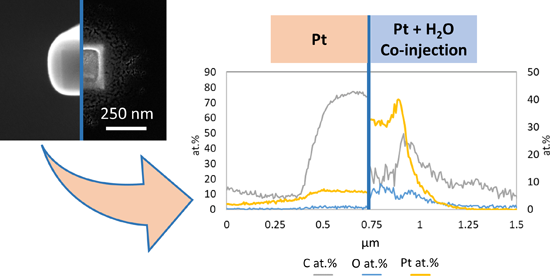
- each experiment at 5·10−5 mbar. A GIS simulation tool [55] was used to estimate the flux of the two precursors when purification was achieved. An injection flux of water 33 times higher than that of platinum precursor was calculated, which increases to 430 in the deposition area because of the





Investigation on drag reduction on rotating blade surfaces with microtextures
Beilstein J. Nanotechnol. 2024, 15, 833–853, doi:10.3762/bjnano.15.70
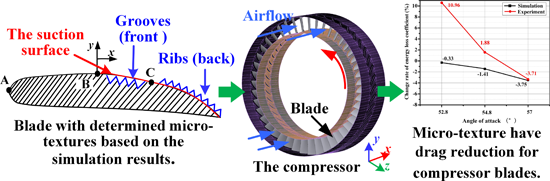
- microtextures to reduce the flow loss on the blade surfaces were carried out. First, based on the axisymmetric characteristics of the impeller, a new simulation method was proposed to determine the aerodynamic parameters of the blade model through the comparison of flow field characteristics and simulation
- results. Second, the placement position and geometrical parameters (height, width, and spacing) of microtextures with lower energy loss were determined by our simulation of microtextures on the blade surface, and the drag reduction mechanism was analyzed. Triangular ribs with a height of 0.2 mm, a width
- velocimetry. Xiao et al. [9] analyzed the drag reduction mechanism of bionic microtextures and constructed simplified V-shaped, trapezoidal, and wavy ribs by grinding. Experimental and simulation studies on aeroengine blades with such microtextures showed that the drag reduction performance of wavy ribs is


Synthesis of silver–palladium Janus nanoparticles using co-sputtering of independent sources: experimental and theorical study
Beilstein J. Nanotechnol. 2024, 15, 808–816, doi:10.3762/bjnano.15.67
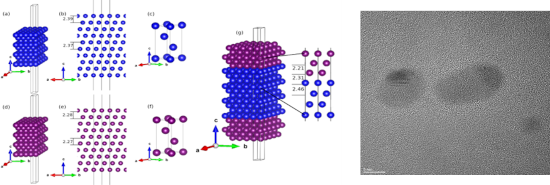
- K, using the DL_POLY 4 code [14]. The time step was set to 0.001 ps, for a total simulation time of 0.5 ns. The atomic interactions were modelled using the Sutton–Chen potential, with the parameters obtained by Çağin et al. [15], and the mixing rules of Rafii-Tabar and Sutton were used to define the
- complement the structural analysis of Janus BNPs, we performed a set of atomic-scale studies using density functional theory [19][20] as implemented in the Vienna Ab Initio Simulation (VASP) package [21][22]. VASP employs a plane wave basis set to represent the electronic states. We used the generalized




Level set simulation of focused ion beam sputtering of a multilayer substrate
Beilstein J. Nanotechnol. 2024, 15, 733–742, doi:10.3762/bjnano.15.61
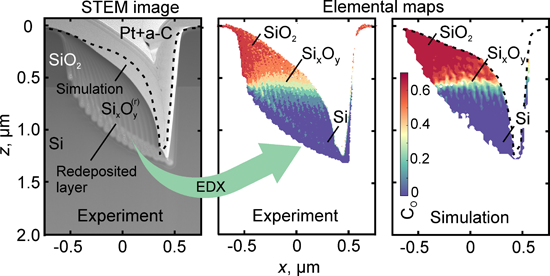
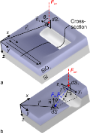
- processing was simulated using the level set method and experimentally studied by milling a silicon dioxide layer covering a crystalline silicon substrate. The simulation took into account the redeposition of atoms simultaneously sputtered from both layers of the sample as well as the influence of
- , and their cross sections were visualized in scanning transmission electron microscopy images. The superimposition of the calculated structure profiles onto the images showed a satisfactory agreement between simulation and experimental results. In the case of boxes that were prepared with an asymmetric
- cross section, the simulation can accurately predict the depth and shape of the structures, but there is some inaccuracy in reproducing the form of the left sidewall of the structure with a large amount of the redeposited material. To further validate the developed simulation approach and gain a better

![[Graphic 55]](/bjnano/content/inline/2190-4286-15-61-i68.svg?max-width=637&scale=1.18182)


Reduced subthreshold swing in a vertical tunnel FET using a low-work-function live metal strip and a low-k material at the drain
Beilstein J. Nanotechnol. 2024, 15, 713–718, doi:10.3762/bjnano.15.59
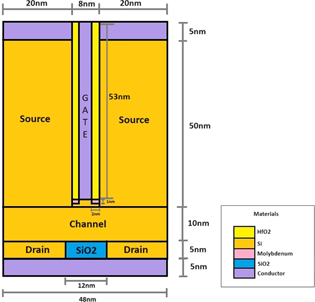
- in an increased flow of i(t) in the device. In the drain–channel region, low-k SiO2 is used. This not only reduces the drain region but also reduces the charge held in the parallel-plate capacitor (gate–drain). Hence, it reduces the undesirable Cgd. Device structure, parameters, and simulation models
- for the simulations. The same models and experimental data have been used for the simulation of proposed structure, and the results are compared. Results and Discussion Electron concentration and electric field The electron concentration for a VTFET with dual low-work-function live strip and a low-k


Enhancing higher-order modal response in multifrequency atomic force microscopy with a coupled cantilever system
Beilstein J. Nanotechnol. 2024, 15, 694–703, doi:10.3762/bjnano.15.57

- effect of higher-order modes has not been compared with traditional cantilever beams. Therefore, further simulation analyses and experiments are required to validate the practical application of this model. In this work, all research is based on an enlarged macroscale cantilever, which was proportionally
- the modal response of microscale cantilevers in real-world environments. Comprehensive and realistic simulation and experimentation were conducted to provide a more thorough investigation. Comparing the modal response capability with traditional cantilever beams confirmed the enhanced effect of higher
- the higher-order modal response of the coupled system gradually increases, which will improve the sensitivity of the detection and promote the development of multifrequency AFM utilizing higher-order modes of the cantilever to image sample properties. Finite element analysis Model size and simulation


Stiffness calibration of qPlus sensors at low temperature through thermal noise measurements
Beilstein J. Nanotechnol. 2024, 15, 580–602, doi:10.3762/bjnano.15.50
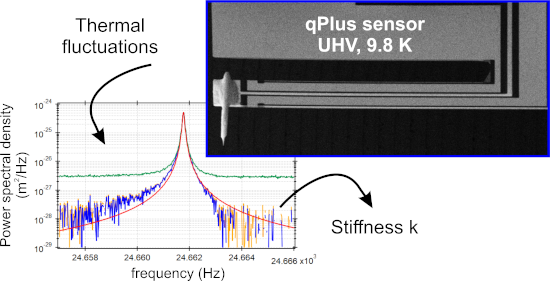
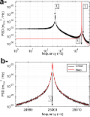
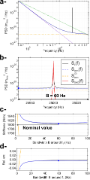
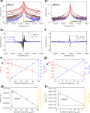
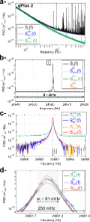
- sampling parameters of the discrete time signal of the thermal fluctuations are: Tw ≃ 53 s, fs = 156.250 kHz, Ts = 1/fs = 6.4 μs, δf ≃ 19 mHz, yielding a buffer of N ≃ 8.4 × 10⁶ samples. Numerical Simulations The simulation of AFM experiments affected by stochastic noise and its consequences on the

Directed growth of quinacridone chains on the vicinal Ag(35 1 1) surface
Beilstein J. Nanotechnol. 2024, 15, 556–568, doi:10.3762/bjnano.15.48
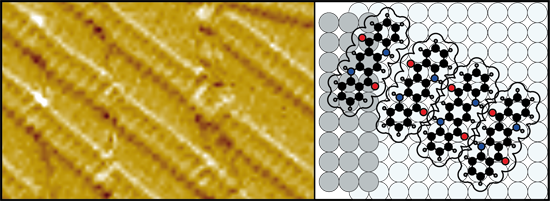
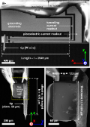
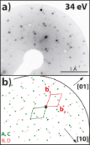
- -phase on Ag(35 1 1) will also be labeled A–D. A corresponding LEED image (θQA = 0.65 ML) and a simulation are displayed in Figure 5a and Figure 5b, respectively. The spot positions in the LEED image are identical to those of the LEED image of QA on Ag(100) and, in principle, all four domains are seen


On the additive artificial intelligence-based discovery of nanoparticle neurodegenerative disease drug delivery systems
Beilstein J. Nanotechnol. 2024, 15, 535–555, doi:10.3762/bjnano.15.47
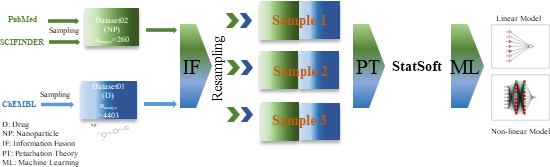
- 0.96–2.03. The MLP yielded the highest values of sensitivity between 1.13 and 2.57. IFPTML-LDA for N2D3S simulation In this section, we employed the IFPTML-LDA technique to calculate the probability values for some selected cases of N2D3Ss. The linear model was chosen for its simplicity and the slight
- improvement of the non-linear model. The value of probability p(N2D3Sin)cdj.cnj was obtained for N2D3Ss, created by the combination of the i-th ADi and the n-th NPn, which are likely to have a desired level of biological activity under both assay conditions cdj and cnj. This simulation experiment involved in
- assays. In addition, the simulation also contained cytotoxicity assays against multiple cell lines, the type of NPs, their coating, and the time of each assay. In this context, we calculated a total of Ntot = NNDDs·NNP = 22·218 = 4796 values of probability, which were able to predict successfully



Sidewall angle tuning in focused electron beam-induced processing
Beilstein J. Nanotechnol. 2024, 15, 447–456, doi:10.3762/bjnano.15.40
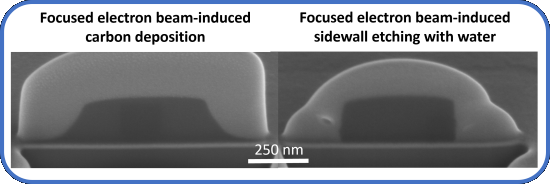
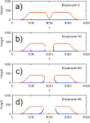
- explained, based on a simple model of the physics involved. Then experimental results are presented, which are quite surprising and call for an extension of the simple model. A more advanced model simulating the FEBIE-assisted sidewall modification is proposed. The simulation results are shown to be in good
- modification – proof of principle simulation Low-energy electrons are assumed to be most effective in the dissociation process. The reason is that low-energy electrons interact more efficiently with molecules than high-energy electrons. One dissociation channel is dissociative electron attachment (DEA), which
- , section S1 for more details on the simulation). Sidewall slope evolution under FEBIE To experimentally study the modification of the sidewalls of a FEBID structure, carbon structures were first deposited on a silicon substrate with a 20 nm gold–palladium layer and a 5 nm titanium adhesion layer. The




Heat-induced morphological changes in silver nanowires deposited on a patterned silicon substrate
Beilstein J. Nanotechnol. 2024, 15, 435–446, doi:10.3762/bjnano.15.39
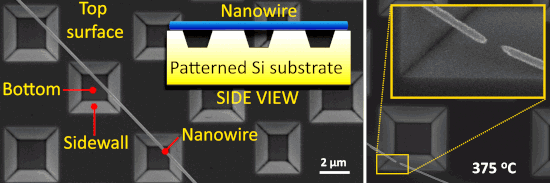
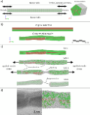
- fragmentation of NWs during the heat treatment. Molecular dynamics model of the NW: (a) initial conditions, (b) results of the compression cycle, (c) results of the tensile deformation; (d) amorphization of the central part of the NW as a result of heat-treatment cycles: TEM image (left) and MD simulation frame


Classification and application of metal-based nanoantioxidants in medicine and healthcare
Beilstein J. Nanotechnol. 2024, 15, 396–415, doi:10.3762/bjnano.15.36
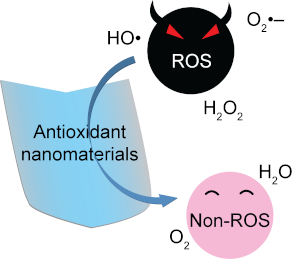
- ]. Pharmacokinetic analysis of curcumin-loaded polymeric nanoparticles after oral delivery in mice demonstrated a 20-fold decrease in dose requirement compared to natural curcumin [140]. Both experimental and molecular dynamics simulation studies suggested an optimal ferulic acid (an antioxidant in plants


On the mechanism of piezoresistance in nanocrystalline graphite
Beilstein J. Nanotechnol. 2024, 15, 376–384, doi:10.3762/bjnano.15.34
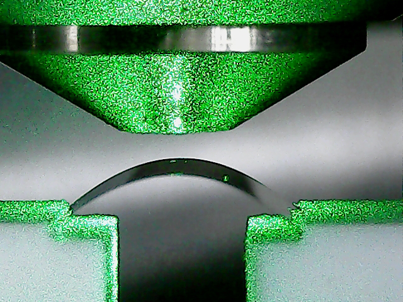
- kinetically favorable process occurs in alternating sequences related to thermal and stress fluctuations inducing nanocrack formation [37][44]. Yang et al. [45] have shown a simulation of the stress vs strain behavior in NCG films at different temperatures and strain rates. Interestingly, the curve looks


Investigating ripple pattern formation and damage profiles in Si and Ge induced by 100 keV Ar+ ion beam: a comparative study
Beilstein J. Nanotechnol. 2024, 15, 367–375, doi:10.3762/bjnano.15.33
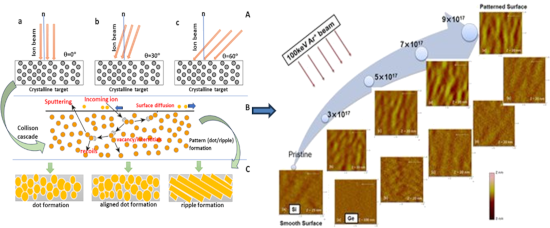
- disorder with ion irradiation conditions, the RBS-c data were analyzed and the damage depth distribution (i.e., finite-difference frequency-domain, FDFD, as a function of depth) was extracted by using the simulation code “De-channelling In Crystals And Defect Analysis (DICADA)” [35]. The RBS-c results show


Determining by Raman spectroscopy the average thickness and N-layer-specific surface coverages of MoS2 thin films with domains much smaller than the laser spot size
Beilstein J. Nanotechnol. 2024, 15, 279–296, doi:10.3762/bjnano.15.26


Design, fabrication, and characterization of kinetic-inductive force sensors for scanning probe applications
Beilstein J. Nanotechnol. 2024, 15, 242–255, doi:10.3762/bjnano.15.23
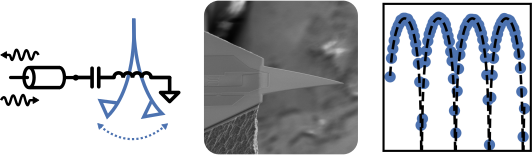
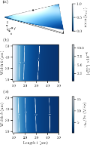
- typical inductor for all three nanowire widths at their lowest eigenfrequency in the range of 18–28 GHz, where we see the current node located in the center of the meander. Figure 3b shows the microwave simulation of the entire circuit, including the shunt inductance formed from a short nanowire. At the
- simulation and experiment. Electrical mode From the measured normal-state resistance of our nanowires and the measured thickness and width, we find a sheet resistance R□ = 243 Ω/□, corresponding to a resistivity of ρn = 365 μΩ cm. We monitor the microwave response during cool-down and estimate a critical
- Lk,□ = 36 pH/□, with the current node at the center of the nanowire. The frequencies land in the range of 18–28 GHz. (b) Simulation of the first resonant mode of the entire structure, using a nanowire width w = 200 nm. On resonance, the current density is uniformly distributed in the meandering



Quantitative wear evaluation of tips based on sharp structures
Beilstein J. Nanotechnol. 2024, 15, 230–241, doi:10.3762/bjnano.15.22
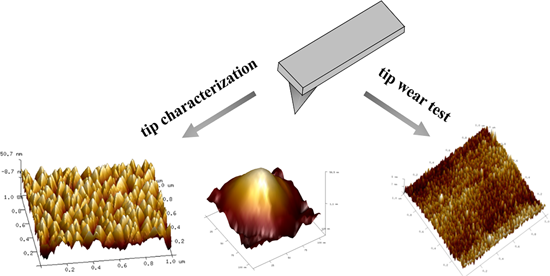
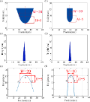
- sample matrix. This process was repeated until all points on the sample matrix had been scanned. The resulting image comprised the recorded height information of the tip apex. Figure 4 illustrates the two tip shapes used in the simulation, a blunt tip with a tip diameter of 20 nm at a distance of 5 nm
- , representing the vertex in the image. Additionally, we label the two data points located 5 nm vertically away from the highest point as points D and F. The distance between point D and point F is 10 nm, which matches the tip diameter of the sharp tip located 5 nm from the apex. The simulation results show that




Multiscale modelling of biomolecular corona formation on metallic surfaces
Beilstein J. Nanotechnol. 2024, 15, 215–229, doi:10.3762/bjnano.15.21
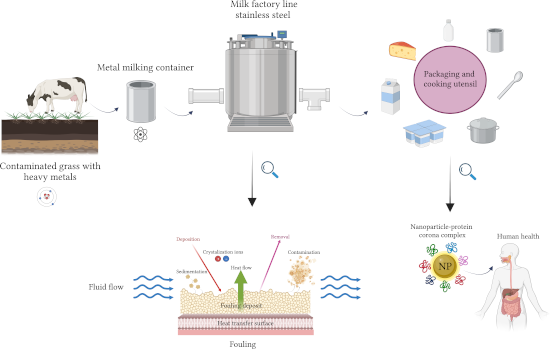
- explanation of the theoretical model developed to study the interaction between protein and lactose with metals, as well as the rationale behind the parameterization scheme used. Subsequently, we discuss the simulation results and analyze the individual adsorption affinities predicted for molecules
- level of description to the complete mesoscale model of the corona. Figure 3 shows the parameterization and simulation workflow, outlining different stages and components involved in the study. All-atoms short-range interaction modelling results All-atom metadynamics simulations were conducted using
- orientations of each protein treated as different potential adsorbates to allow for a more physically realistic model of corona formation for anisotropic proteins. In brief, a standard kinetic Monte Carlo routine is used to advance the simulation from one event, collision of an incoming adsorbate with the NP




Ferromagnetic resonance spectra of linear magnetosome chains
Beilstein J. Nanotechnol. 2024, 15, 157–167, doi:10.3762/bjnano.15.15
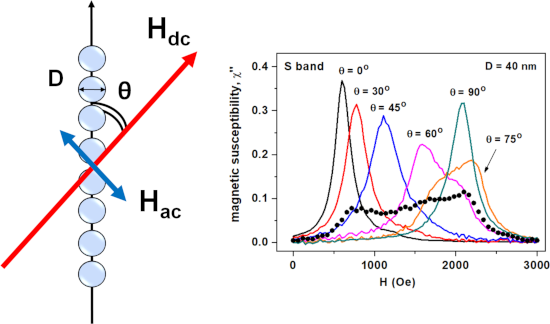
- nanoparticles; numerical simulation; Introduction Magnetotactic bacteria are living organisms that grow within themselves magnetite nanoparticles called magnetosomes [1][2][3][4]. In contrast to chemically synthesized magnetite nanoparticles [5][6], magnetosomes have a perfect crystal structure, a narrow size
- [1][2][3][4][7][8][9][16][17][18][19][20][21][22][23] accumulated to date for assemblies of magnetosome chains. Numerical Simulation Consider a dilute assembly of linear chains of magnetosomes consisting of Np spherical nanoparticles of average diameter D. Dynamics of the unit magnetization vector
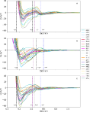
- resolved for angles θ ≥ 75°. To summarize the numerical simulation data obtained for oriented assemblies, in Figure 3a we show the angle dependence of the resonance FMR field, Hres(θ), for linear chains with various average particle diameters. It is interesting to note the noticeable dependence of the


Measurements of dichroic bow-tie antenna arrays with integrated cold-electron bolometers using YBCO oscillators
Beilstein J. Nanotechnol. 2024, 15, 26–36, doi:10.3762/bjnano.15.3
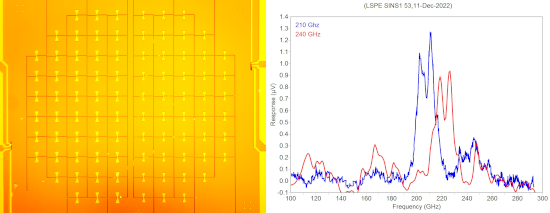
- efficient reduction of electron temperature down to 65 mK from a base temperature of 300 mK [22]. Here we present improved simulation results in comparison with [24] and the first results of fabrication and measurements, using YBa2Cu3O7 (YBCO) Josephson junction (JJ) oscillators, of a dichroic multiabsorber
- of numerical simulation. The aim of the optimization was to bring the absorption bandwidth in line with the current requirements for the LSPE receiving system. According to these requirements, the width of the absorption line should be 20% of the operating frequency for the 210 GHz channel and 10% of
- The results of measurements correspond to the simulation results rather well. There is a certain mismatch, which can be explained by the substrate thickness deviation from the desired value as well as improper barrier thickness due to variations in oxidation time, so the CEB SIN tunnel junction


A bifunctional superconducting cell as flux qubit and neuron
Beilstein J. Nanotechnol. 2023, 14, 1116–1126, doi:10.3762/bjnano.14.92
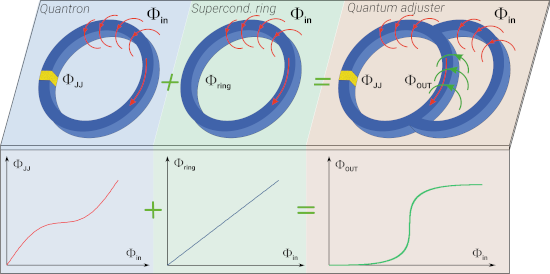
- ) = . Let us estimate the Landau–Zener transition probability at the moment of the first levels’ convergence, which corresponds to the time tLZ for diabatic dynamics (when Δ → 0) of level crossing (dashed lines in inserts in Figure 2a,b). As clearly seen from the simulation, the anticrossing effect occurs
- , respectively. (b) The region of parameters where the transfer characteristic is close to a sigmoidal shape with a standard deviation of SD < 10−4. In the white area, even at zero temperature, the standard deviation is larger then SD = 10−4. The system parameters used in the simulation were A = 4π, a coupling

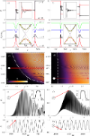


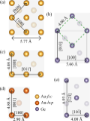
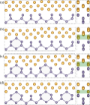
Density functional theory study of Au-fcc/Ge and Au-hcp/Ge interfaces
Beilstein J. Nanotechnol. 2023, 14, 1093–1105, doi:10.3762/bjnano.14.90
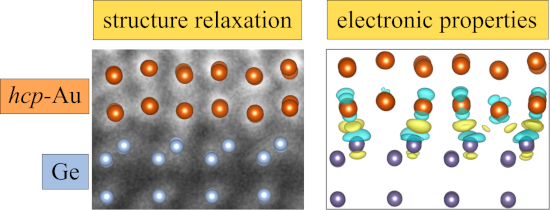
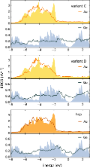
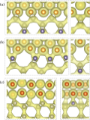
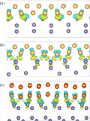
- tunnelling microscopy. However, experimental data provide only partial insight into the formation of interfaces, and the interpretation of microscopic images is often ambiguous. Various simulation techniques can be used to resolve the uncertainties and reveal mechanisms stabilizing the observed interfaces





Spatial mapping of photovoltage and light-induced displacement of on-chip coupled piezo/photodiodes by Kelvin probe force microscopy under modulated illumination
Beilstein J. Nanotechnol. 2023, 14, 1059–1067, doi:10.3762/bjnano.14.87
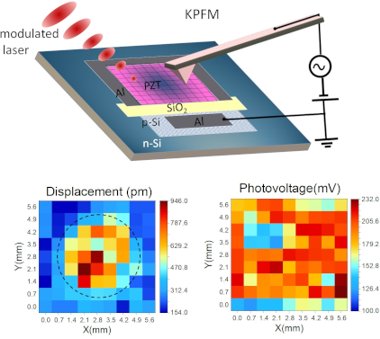
- to the flexible center of the membrane and clamped edges, and it is not attributed to the variation of induced photovoltage. The simulation results of the same device (Figure 3d) confirm the shape and range of displacement mapping over the active area. It is instructive to note that ideally the
- displacements of the light-driven membrane are in good agreement with the simulation results. Moreover, time-dependent AFM was used to investigate position-dependent and size-dependent displacement of piezoelectric actuators driven by an electrical bias. Deviations from the expected membrane behavior stress the
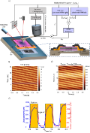
- 5.6 × 5.6 mm2 are mapped. The dashed black circle marks the hole etched on the backside of the silicon substrate. (b) The surface photovoltage of each measured point. (c) Displacement normalized to the corresponding photovoltage at each point. (d) Simulation results of the same sample. Color map of


Metal-organic framework-based nanomaterials for CO2 storage: A review
Beilstein J. Nanotechnol. 2023, 14, 964–970, doi:10.3762/bjnano.14.79
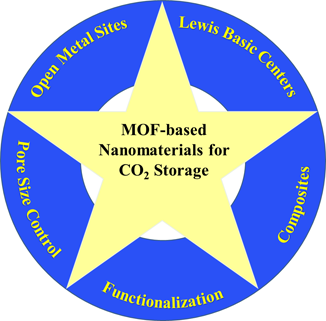
- amount of absorbed CO2 was significantly improved. Notably, the optimal Mg-MOF-74/graphene-based composite yielded a high CO2 adsorption capacity of 8.4 mmol·g−1 at 298 K and 1 bar. Grand canonical Monte Carlo simulation for CO2 storage prediction Grand canonical Monte Carlo (GCMC) simulation is an




Biomimetics on the micro- and nanoscale – The 25th anniversary of the lotus effect
Beilstein J. Nanotechnol. 2023, 14, 850–856, doi:10.3762/bjnano.14.69

- new research techniques and methodologies that enabled detailed investigation of biological archetypes. High-detail microscopy, analysis systems, and novel simulation tools helped to decode the secrets of nature, while new fabrication techniques helped to transfer these findings into technical
- suspension feeding in common Crustacea. The results show that a system combining long and short setae with different mechanical properties has the best performance. The numerical simulation can in future be easily adapted to other systems and therefore be used for biomimetic developments (e.g., in the field





