


Search results
Search for "temperature dependent" in Full Text gives 133 result(s) in Beilstein Journal of Nanotechnology.
On the transformation of “zincone”-like into porous ZnO thin films from sub-saturated plasma enhanced atomic layer deposition
Beilstein J. Nanotechnol. 2019, 10, 746–759, doi:10.3762/bjnano.10.74
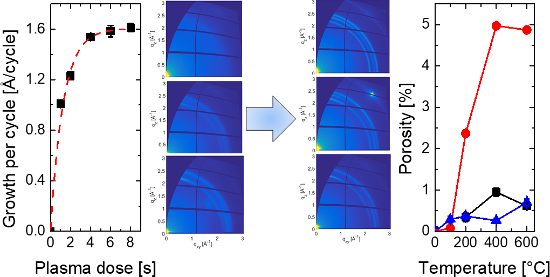
- A, B, and C are fit parameters. An Urbach tail was used to account for absorption at lower wavelength. For the in situ temperature-dependent studies, the system was equipped with a THMS600 temperature stage (Linkam, UK), equipped with a sealing capping chamber. The temperature was varied from room
- with a copper tube (λ = 1.5418 Å). The beam was further parallelized with a layered X-ray mirror and a PIXcel3D-detector that was operated in 1D-mode. A 1/8° divergence, a 10 mm mask, and a P7.5 anti-scatter slit were used in the setup. In situ temperature-dependent XRD studies were performed with a


Enhancement in thermoelectric properties due to Ag nanoparticles incorporated in Bi2Te3 matrix
Beilstein J. Nanotechnol. 2019, 10, 634–643, doi:10.3762/bjnano.10.63
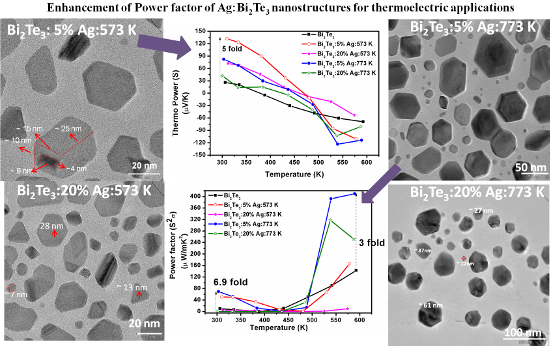
- for analysis of HRTEM images of samples. Scanning electron microscopy with energy-dispersive spectroscopy (SEM EDS) was performed using a field-emission scanning electron microscope (FE-SEM) [MIRA\\, TESCAN]. Temperature-dependent thermoelectric measurements were carried out for all samples with size
- systematic investigation of temperature-dependent thermoelectric properties. Transmission electron microscopy revealed circular, hexagonal, tube-like structures for samples annealed at 573 K, whereas only hexagonal structures were visible for samples annealed at 773 K. The size distribution is also affected
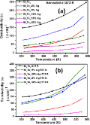
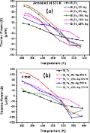
- 773 K. Electrical conductivity (σ) of (a) Bi2Te3 with (0, 2, 5, 10, 15 and 20%) Ag annealed at 573 K as a function of the temperature; (b) comparison of samples (0, 5, 20%) Ag annealed at 573 K with (5, 20%) Ag annealed at 773 K. Temperature dependent thermo power measurement (S) of (a) Bi2Te3 with (0



Temperature-dependent Raman spectroscopy and sensor applications of PtSe2 nanosheets synthesized by wet chemistry
Beilstein J. Nanotechnol. 2019, 10, 467–474, doi:10.3762/bjnano.10.46
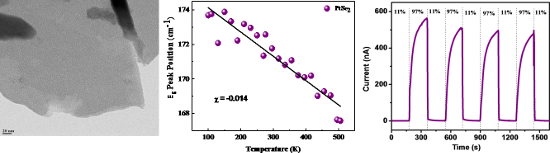
- method used to grow PtSe2 nanosheets followed by thermal annealing. The SEM and TEM analysis confirms the formation of PtSe2 nanosheets. Furthermore, XRD, Raman, XPS and SAED patterns were used to analyze the crystal structure and to confirm the formation of the PtSe2 phase. The temperature-dependent
- chemical method [25] at 90 °C using chloroplatinic acid (H2PtCl6) and Se powder as precursors followed by thermal annealing at 500 °C. Temperature-dependent Raman spectroscopic characterization was carried out on the materials. Materials and Methods All the chemicals such as chloroplatinic acid, Se powder
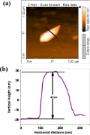
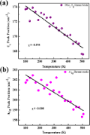
- corresponding height profile plot for the PtSe2 nanosheet with thickness found to be ≈47 nm. Temperature-dependent Raman spectroscopy of few-layer PtSe2 nanosheets The temperature-dependent Raman spectroscopy investigations of few-layer PtSe2 nanosheets were carried out between 100–506 K. The Raman spectra of



Reduced graphene oxide supported C3N4 nanoflakes and quantum dots as metal-free catalysts for visible light assisted CO2 reduction
Beilstein J. Nanotechnol. 2019, 10, 448–458, doi:10.3762/bjnano.10.44
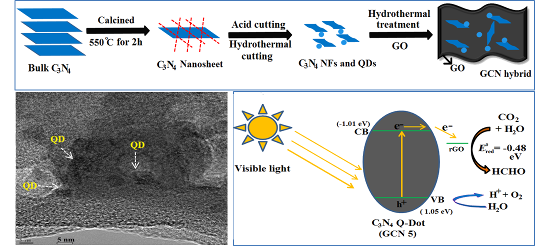
- TEM results suggest that the formation of QDs from g-C3N4 is temperature dependent. To further verify this, TEM images of the samples were taken at two different heating temperatures (150 and 170 °C) within the range 130 to 190 °C. The results confirm that the limiting temperature at which the



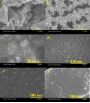


Sub-wavelength waveguide properties of 1D and surface-functionalized SnO2 nanostructures of various morphologies
Beilstein J. Nanotechnol. 2019, 10, 379–388, doi:10.3762/bjnano.10.37
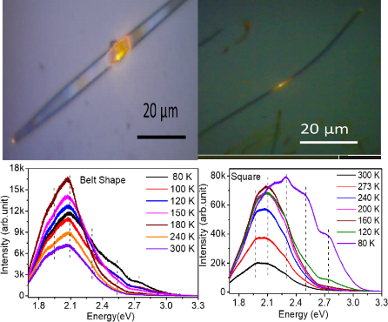
- behavior was also demonstrated in tapered and surface-functionalized SnO2 NWs. While the tapered waveguide can allow for easy focusing of light, the simple surface chemistry offers selective light propagation by tuning the luminescence. Defect-related PL in NWs is studied using temperature-dependent
- -functionalized NBs are also demonstrated. The emission from these NWs, upon excitation with a 325 nm laser, are shown to originate from the defect emission. Temperature-dependent PL studies were carried out to probe the nature of defects in these NWs. A possible band diagram for the SnO2 NWs is proposed
- thermoelectric cooled CCD detector in back-scattering mode was utilized to probe the spectroscopic information. Temperature-dependent PL spectra (InVia, Reinshaw) were acquired using a He–Cd laser at 325 nm (3.81 eV) as an excitation source along with the Linkam, UK adiabatic stage for temperature-dependent


Bidirectional biomimetic flow sensing with antiparallel and curved artificial hair sensors
Beilstein J. Nanotechnol. 2019, 10, 32–46, doi:10.3762/bjnano.10.4
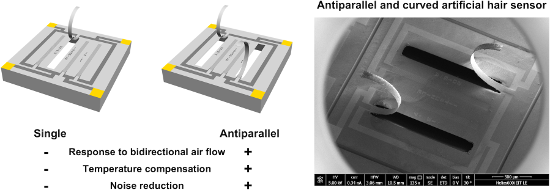
- circuit was excited with Vexc = +3.3 V DC, while its voltage output was connected to a benchtop digital multimeter (Agilent 34405A). Influence of temperature on micro strain gauges As electrical resistivity of metals is temperature-dependent, a drift in the offset voltage may occur while the flow sensor


Time-resolved universal temperature measurements using NaYF4:Er3+,Yb3+ upconverting nanoparticles in an electrospray jet
Beilstein J. Nanotechnol. 2018, 9, 2916–2924, doi:10.3762/bjnano.9.270
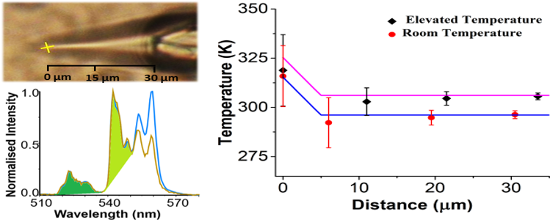
- understand temperature-dependent reactions such as protein unfolding inside microjet/microdroplets and microfluidic systems. Keywords: electrospray; microjet; nanothermometry; temperature measurement; time-resolved measurement; upconverting nanoparticles; Introduction There is need and interest to non
- depending upon the wavelength of the interrogating light. We have shown that the photoluminescence of erbium ions embedded in a wide-band-gap matrix is temperature-dependent [12] and have used the emission to determine the local temperature of optically excited gold nanostructures at an interface. The
- temperature is determined by measuring the ratio of two green photoluminescence bands where the relative intensities are temperature-dependent and related by a Boltzmann factor. We used this thermal sensor to probe the thermal properties at a solid–water interface and found that a nanoscale object optically


Nanoconjugates of a calixresorcinarene derivative with methoxy poly(ethylene glycol) fragments for drug encapsulation
Beilstein J. Nanotechnol. 2018, 9, 2057–2070, doi:10.3762/bjnano.9.195
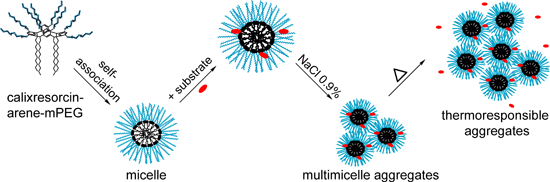
- binding of the dye in micelles of macrocycle 3. As shown above, micelles of 3 exhibit temperature-dependent behaviour in the presence of salts, in particular, in 0.9% NaCl solution. So, the change of fluorescence response of the substrate while changing the temperature of 3 + Dox micellar solutions in 0.9
- probe). A temperature-dependent release of substrates from 3 + Dox micelles at physiological temperature is demonstrated in 0.9% NaCl solution. Experimental Materials Calixresorcinarene 1 was synthesized according to a previously reported procedure [36]. mPEG-550 was purchased from Aldrich, pyrene
- ] software packages. DLS, SLS, and zeta-potential measurements were carried out by employing a Zetasizer nano ZS with Dispersion Technology Software 5.00. The measurements were carried out at 25 °C in polystyrene cells, for temperature-dependent DLS measurements (25–65 °C) and SLS measurement, a glass


Electromigrated electrical optical antennas for transducing electrons and photons at the nanoscale
Beilstein J. Nanotechnol. 2018, 9, 1964–1976, doi:10.3762/bjnano.9.187
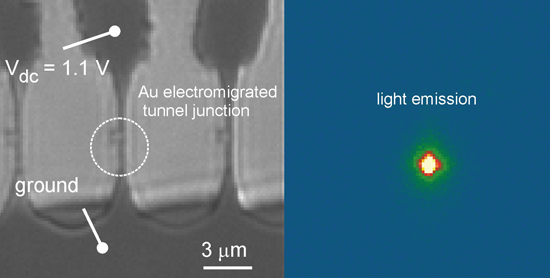
- fairly constant because Joule dissipation is not yet affecting the temperature-dependent resistivity of gold. On increasing Vdc, the temperature of the constriction grows and the conductance starts to fluctuate. The general trend is that G(t) decreases when stepping up Vdc. We also consistently observe a
- is illustrated at t = 200 s in Figure 2a. The applied bias is constant, but G(t) decays towards a stable value. This is understood from the temperature-dependent resistivity of the material: For a given Vdc the current flowing in the constriction dissipates heat and affects in return the temperature
- -dependent resistivity [35]. These conductance fluctuations are typically observed for Vdc ≤ 1.7 V and corresponds to the end of the first phase of voltage increments. When applying higher voltages, G(t) generally drops with a rate rapidly increasing with time. The process is entering a second phase. This


![[Graphic 32]](/bjnano/content/inline/2190-4286-9-187-i38.svg?max-width=637&scale=1.18182) and
and ![[Graphic 33]](/bjnano/content/inline/2190-4286-9-187-i39.svg?max-width=637&scale=1.18182) are...
are...


Induced smectic phase in binary mixtures of twist-bend nematogens
Beilstein J. Nanotechnol. 2018, 9, 1297–1307, doi:10.3762/bjnano.9.122
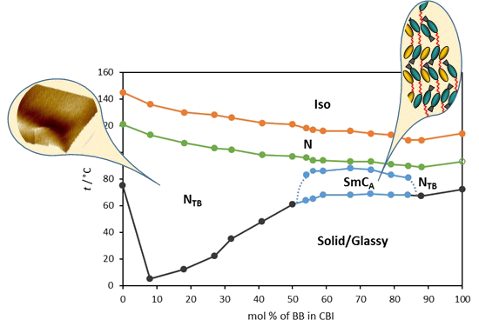
- in controlling the self-organizing processes. Keywords: binary mixture; liquid crystals; smectic phase induction; temperature-dependent FTIR; twist-bend nematogen; Introduction Nowadays liquid crystal (LC) substances possess a wide range of uses. However, it is rather rare that a single organic
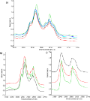
- technique for determining changes in chemical interactions and molecular geometry in LC phases [37][38][39][40], we investigated the 73 mol % BB mixture using temperature-dependent FTIR measurements. IR spectra were recorded using a KBr pastille method. Since in a binary mixture the cyano group of CBI may
- Information File 1) and temperature-dependent spectra of pure BB (Figure S5, Supporting Information File 1). The absence of new absorption bands in the wide spectral range in the mixture, compared to the spectra of the pure compounds, implicates that CT attraction or even dipole-induced dipole interaction is




Formation and development of nanometer-sized cybotactic clusters in bent-core nematic liquid crystalline compounds
Beilstein J. Nanotechnol. 2018, 9, 1288–1296, doi:10.3762/bjnano.9.121
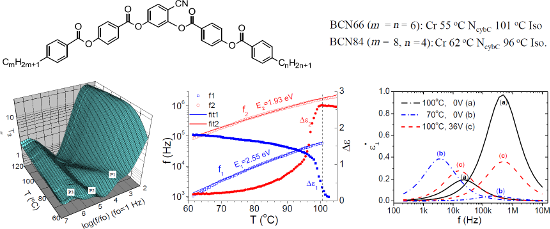
- other two peaks are strongly temperature dependent and consequently assigned to the relaxation processes associated with the sample in the cell. The existence of two dielectric relaxation modes in the bent-core nematic phase was previously observed in [54][55]. The higher frequency is assigned to the
- fits to the Arrhenius equation, f(T) = f0 exp(−EA / kBT), where EA is the activation energy. Temperature dependent cluster size (i.e., an average number of molecules involved in a cluster) (open red triangles), ratio of the dielectric strength, Δε1/Δε2 (open blue cirecles), the volume fraction of


Formation mechanisms of boron oxide films fabricated by large-area electron beam-induced deposition of trimethyl borate
Beilstein J. Nanotechnol. 2018, 9, 1282–1287, doi:10.3762/bjnano.9.120
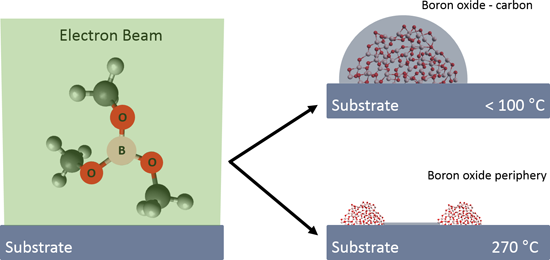
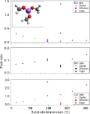
- , MTI Corporation) under electron beam conditions identical to the temperature-dependent irradiations with a processing time of 30 min. Results and Discussion The volumetric deposition rate of the entire deposit and the height of the deposit at the center of electron beam as functions of the substrate
- processing chamber or precursor material, which increasingly contribute to the EBID process when TMB undergoes rapid thermally stimulated desorption from the surface at higher temperature. The compound stoichiometry across the deposition profile was found to be temperature-dependent. The profile at 26 °C
- surface [14][31]. Consideration of the electron flux-dependent stoichiometry of the deposits must be taken into account to confirm the temperature-dependent mechanism [32]. The electron flux in the regions where diffusion of precursor is the dominant replenishment mechanism at 195 and 271 °C is



P3HT:PCBM blend films phase diagram on the base of variable-temperature spectroscopic ellipsometry
Beilstein J. Nanotechnol. 2018, 9, 1108–1115, doi:10.3762/bjnano.9.102
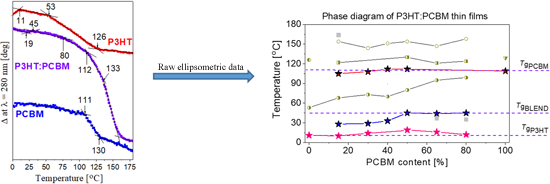
- optical model parametrizes the spectral dependence of the refractive index n and the extinction coefficient k on the wavelength λ by the following relations: where the temperature-dependent parameters ni and ki, with i = 0, 1 and 2, are the model (fitting) parameters and the coefficients C0 and C1 are the
- numerical constants. It follows from the relations presented above, that at sufficiently long wavelengths both n and k become only temperature-dependent. Additionally, by taking into account the results presented in Figure 2, we can safely assume that k0(T) = 0 for λ > 750 nm. In Figure 3, thicknesses d as


Synthesis and characterization of two new TiO2-containing benzothiazole-based imine composites for organic device applications
Beilstein J. Nanotechnol. 2018, 9, 721–739, doi:10.3762/bjnano.9.67
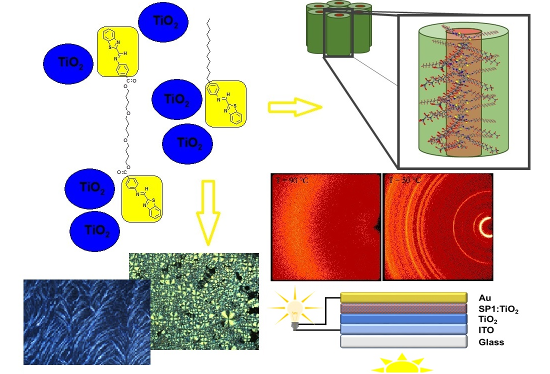
- heating stage. A Perkin Elmer DSC8000 calorimeter was used for calorimetric measurements. The temperature calibration procedure was done based on the onset of the melting point of water and indium. The sample was hermetically sealed in an aluminum pan of 30 μL. The temperature-dependent Fourier transform






Electron interactions with the heteronuclear carbonyl precursor H2FeRu3(CO)13 and comparison with HFeCo3(CO)12: from fundamental gas phase and surface science studies to focused electron beam induced deposition
Beilstein J. Nanotechnol. 2018, 9, 555–579, doi:10.3762/bjnano.9.53


Temperature-tunable lasing from dye-doped chiral microdroplets encapsulated in a thin polymeric film
Beilstein J. Nanotechnol. 2018, 9, 379–383, doi:10.3762/bjnano.9.37
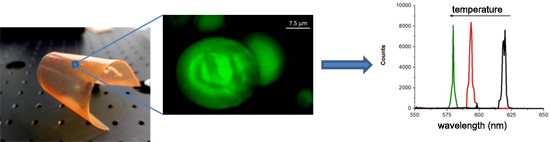
- film. Here, we report on the possibility to tune the laser emission as a function of temperature. Using a chiral dopant with temperature dependent solubility, the emitted laser wavelength can be tuned in a range of 40 nm by a temperature variation of 18 °C. The proposed device can have applications in
- systems [6][7][8]. Further, since the PBG spectral position can be shifted, also the laser emission wavelength can be tuned by using external factors as the temperature variations. CLCs are often mixtures of nematic liquid crystal and chiral dopant. A chiral dopant with temperature dependent solubility
- that the laser emission tuning can be obtained preparing the CLC mixture by using a chiral dopant with temperature-dependent solubility. For both emulsion and thin film form, the laser emission wavelength can be tuned. In particular, laser emission from the thin film is tuned over a range of about 40


Design of polar self-assembling lactic acid derivatives possessing submicrometre helical pitch
Beilstein J. Nanotechnol. 2018, 9, 333–341, doi:10.3762/bjnano.9.33
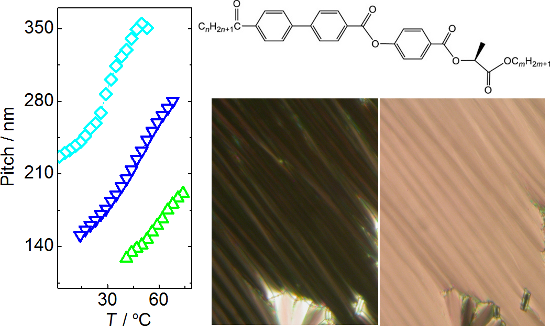
- attached to longer alkyl chains [20][37]. The electro-optic parameters of the studied compounds are temperature dependent, namely, the spontaneous polarisation and tilt angle, which are extremely important for practical applications [5][44]. However, these parameters can be stabilised by formulation of the


PTFE-based microreactor system for the continuous synthesis of full-visible-spectrum emitting cesium lead halide perovskite nanocrystals
Beilstein J. Nanotechnol. 2017, 8, 2521–2529, doi:10.3762/bjnano.8.252
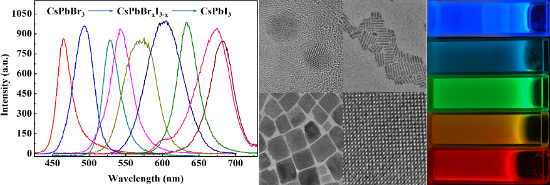
- . The red shift shown in Figure 5 suggests that the band gap of the prepared QDs is temperature dependent, which is similar to the behavior of IV, III–V, and II–VI semiconductors. According to the Varshni empirical relationship, Egap(T) = Egap(0) − αT2/(β + T) [38], (Egap(0) is the band gap at 0 K, α is


Alternating current magnetic susceptibility of a ferronematic
Beilstein J. Nanotechnol. 2017, 8, 2515–2520, doi:10.3762/bjnano.8.251
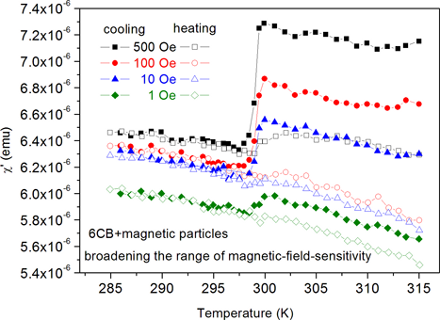
- higher concentration there is an enhanced tendency for the formation of such aggregates. (iv.) The value of the ac susceptibility in Figure 4 is temperature-dependent, while no such dependence was found for the lower concentration of = 10−4 (see Figures 3–5 of [27]). The fact the χ′ is independent of


![[Graphic 7]](/bjnano/content/inline/2190-4286-8-251-i7.svg?max-width=637&scale=1.18182) = 10−4 in the nematic phas...
= 10−4 in the nematic phas...


Changes of the absorption cross section of Si nanocrystals with temperature and distance
Beilstein J. Nanotechnol. 2017, 8, 2315–2323, doi:10.3762/bjnano.8.231
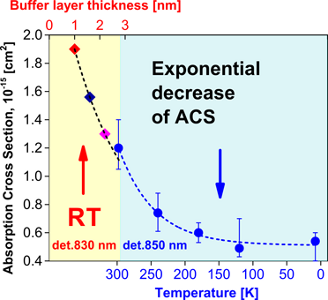
- the function presented in Equation 20 (Figure 4b) for our ML structures. Temperature dependence of the ACS Contrary to the common assumption, the ACS should be generally considered as temperature-dependent [5][29]. There are two mechanisms responsible for this dependence. First, for the phonon


Comprehensive investigation of the electronic excitation of W(CO)6 by photoabsorption and theoretical analysis in the energy region from 3.9 to 10.8 eV
Beilstein J. Nanotechnol. 2017, 8, 2208–2218, doi:10.3762/bjnano.8.220
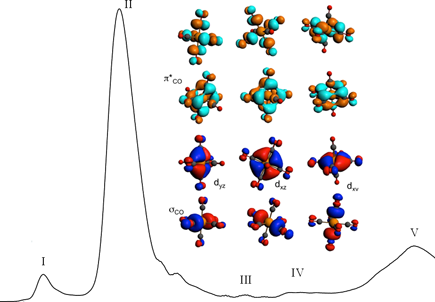
- further in the next sections. A. Low-lying electronic states (below 4.0 eV) The temperature-dependent absorption studies of Beach and Gray [2] of W(CO)6 in a solvent report a weak band at 3.794 eV, which was assigned to a spin-forbidden d→d transition. In contrast, our calculations do not provide evidence


Substrate and Mg doping effects in GaAs nanowires
Beilstein J. Nanotechnol. 2017, 8, 2126–2138, doi:10.3762/bjnano.8.212
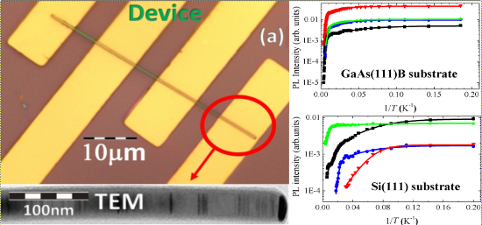
- level structure of the nanowires, a detailed investigation on the temperature-dependent PL is required. Before the presentation of the results, we will mention briefly the common temperature dependence of the bandgap in a semiconductor. As the temperature increases, the thermal expansion coefficient of


High-stress study of bioinspired multifunctional PEDOT:PSS/nanoclay nanocomposites using AFM, SEM and numerical simulation
Beilstein J. Nanotechnol. 2017, 8, 2069–2082, doi:10.3762/bjnano.8.207
- sensing humidity [21] and for temperature-dependent switching of electrochemical behavior using nanoclay substitutes [22]. Recently, nacre-mimetic electrically conductive nanocomposites have been reported, one of which exhibited good electrical conductivity and excellent mechanical properties [23] and the


Laser processing of thin-film multilayer structures: comparison between a 3D thermal model and experimental results
Beilstein J. Nanotechnol. 2017, 8, 1749–1759, doi:10.3762/bjnano.8.176
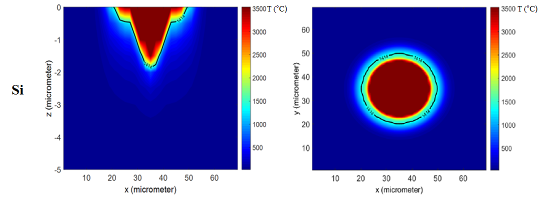
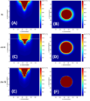
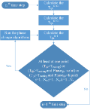
- Marla et al. who solved the 1D equation for temperature-dependent properties [20]. In this paper, a transient 3D model, which has been previously proven capable of precisely predicting the temperature and ablation zone for a bulk material [21], has been modified and used for a thin-film multilayer





Near-infrared-responsive, superparamagnetic Au@Co nanochains
Beilstein J. Nanotechnol. 2017, 8, 1680–1687, doi:10.3762/bjnano.8.168
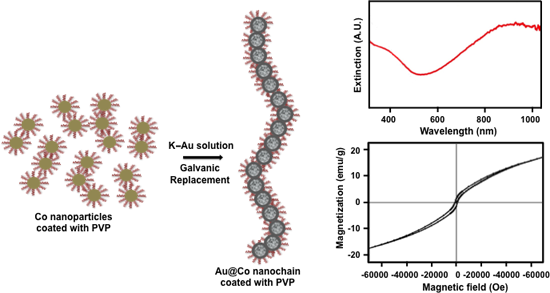
- SQUID magnetometer with fields up to 5 T. The temperature-dependent magnetization curves varying between 5 and 400 K were measured in an applied magnetic field of 100 Oe. SEM images of the Au@Co nanochains at (a) low magnification and (b) high magnification. TEM images of the Au@Co nanochains: (a,b) low





