


Search results
Search for "accelerating voltage" in Full Text gives 170 result(s) in Beilstein Journal of Nanotechnology.
Self-assembly and wetting properties of gold nanorod–CTAB molecules on HOPG
Beilstein J. Nanotechnol. 2019, 10, 696–705, doi:10.3762/bjnano.10.69
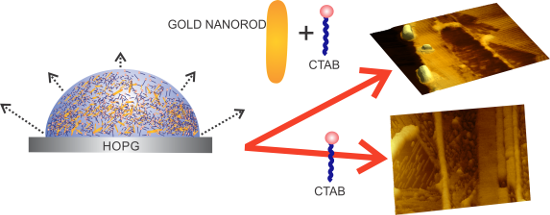
- centrifuge tube. Characterization techniques Scanning electron microscopy (SEM) imaging of the samples was undertaken with a Zeiss 1550 system (optimum resolution ≈1 nm at 2 kV accelerating voltage). Tapping-mode AFM imaging was carried out with an Agilent 5100 atomic force microscope using HQ:NSC35/Al


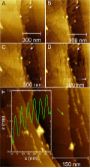
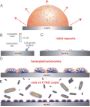
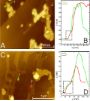
Ultrasonication-assisted synthesis of CsPbBr3 and Cs4PbBr6 perovskite nanocrystals and their reversible transformation
Beilstein J. Nanotechnol. 2019, 10, 666–676, doi:10.3762/bjnano.10.66
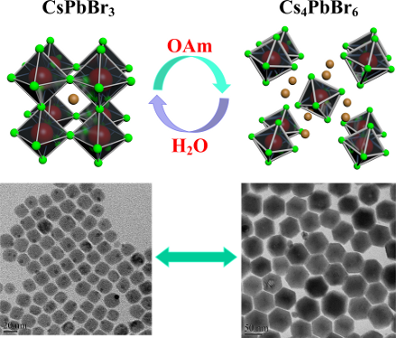
- , JEM-2100F, JEOL, Japan) with an accelerating voltage of 100 kV. High-resolution TEM (HRTEM) was carried out on a JEOL JEM-2100F instrument operating at 200 kV. The crystal phases of the products were measured using an X-ray diffractometer (XRD, D8-Advance, Bruker, Germany) with a Cu Kα radiation



Topochemical engineering of composite hybrid fibers using layered double hydroxides and abietic acid
Beilstein J. Nanotechnol. 2019, 10, 589–605, doi:10.3762/bjnano.10.60
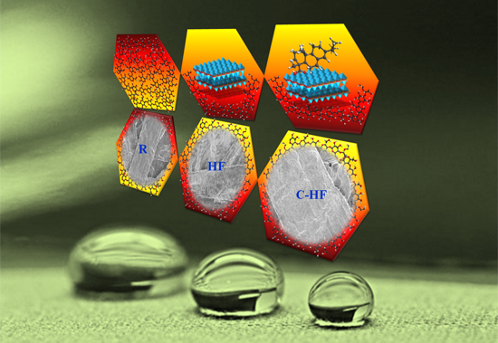
- characterization of fiber surfaces. The samples were coated with carbon in a Temcarb TB500 sputter coater (Emscope Laboratories, Ashford, UK), the optimum accelerating voltage was 2.70 kV. Material testing Water contact angle measurements The hydrophobicity of reference and modified cellulose handsheets was




Widening of the electroactivity potential range by composite formation – capacitive properties of TiO2/BiVO4/PEDOT:PSS electrodes in contact with an aqueous electrolyte
Beilstein J. Nanotechnol. 2019, 10, 483–493, doi:10.3762/bjnano.10.49
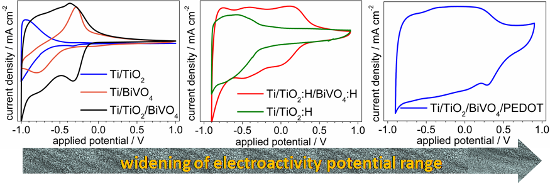
- microscopy (FEI Quanta FEG 250) with an ET secondary electron detector. The beam accelerating voltage was kept at 10 kV. Electrochemical measurements were recorded using the potentiostat–galvanostat system AutoLab PGStat204 under Nova 2.1 software control. The chemical composition measurements before and




Uniform Sb2S3 optical coatings by chemical spray method
Beilstein J. Nanotechnol. 2019, 10, 198–210, doi:10.3762/bjnano.10.18
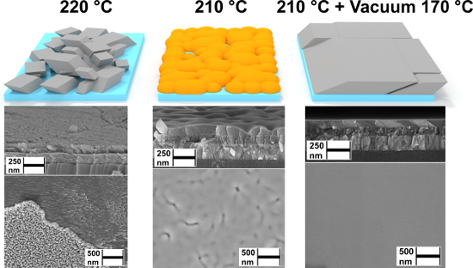
- spectrometer with ESPRIT 1.8 system at the Zeiss HR FESEM Ultra 55 scanning electron microscope (SEM) operating at an accelerating voltage of 7 kV. The surface and cross-sectional morphologies of the layers were recorded by the same SEM system at an electron beam accelerating voltage of 4 kV. Unpolarized micro




Sputtering of silicon nanopowders by an argon cluster ion beam
Beilstein J. Nanotechnol. 2019, 10, 135–143, doi:10.3762/bjnano.10.13
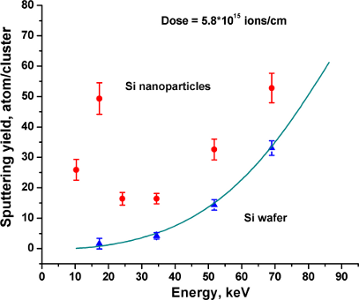
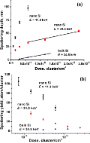
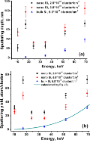
- , the pressure in the gas source is P = 10 bar, and the ionizing electron energy is 150 eV. The time and area averaged cluster current I in µA on the 5 × 5 mm2 target depends on the accelerating voltage U in kV and can be described by an empirical equation: I = –0.007U2 + 0.2U – 0.53. The gas pressure
- potential of Ar is 15.8 V) and an absence of cluster defragmentation, then at Ee = 150 eV we can estimate the effective charge qeff as Therefore, in our experiment “mean” clusters are employed. The multiple ionization influences the energy of the cluster ion, i.e., the cluster in the accelerating voltage
- mixing of the material at the surface, i.e., the formation of the dense layer, occurs only in the finite layer with the thickness, which is equal to the crater depth. The crater depth in the case of the nanopowder target was found to be 3–5 nm at the same accelerating voltage [28]. Such a value is almost





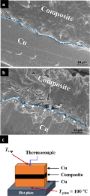
Graphene–graphite hybrid epoxy composites with controllable workability for thermal management
Beilstein J. Nanotechnol. 2019, 10, 95–104, doi:10.3762/bjnano.10.9
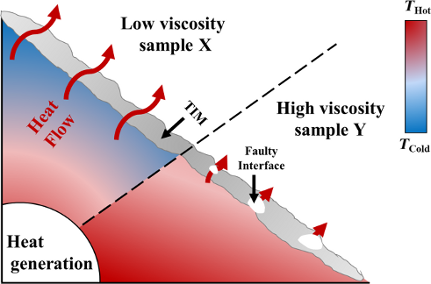
- mode at an accelerating voltage of 10 kV. EDS elemental analyses were performed on the same samples (Section S4 in Supporting Information File 1). Rheology The rheological properties of the epoxy resin (prior to addition of the hardener) were determined with a rheometer (TA instruments, AR2000



Surface plasmon resonance enhancement of photoluminescence intensity and bioimaging application of gold nanorod@CdSe/ZnS quantum dots
Beilstein J. Nanotechnol. 2019, 10, 22–31, doi:10.3762/bjnano.10.3
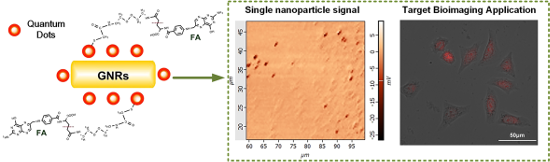
- measured with an FLS980 spectrometer (Edinburgh instruments, UK). The morphology and size of the GNRs and QDs were obtained with an FEI Tecnai G2 F20 S-TWIN TEM operating at an accelerating voltage of 200 kV, and the samples were loaded into a quartz cell for the measurements. The TEM specimens were


Characterization and influence of hydroxyapatite nanopowders on living cells
Beilstein J. Nanotechnol. 2018, 9, 3079–3094, doi:10.3762/bjnano.9.286
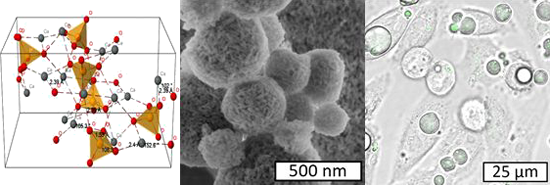
- JEM-2010, JEOL Ltd, Tokyo, Japan, JED 2300 series analyzer) was used to determine average size (AS) and the shape of the particles [33]. Hydroxyapatites were observed at an accelerating voltage of 100 kV with a LaB6 cathode. Samples were prepared by suspending a small quantity of nanopowder in ethanol
- were calculated from no less than 200 particles. Pixel size was 1.8 nm × 1.8 nm. Scanning electron microscopy Morphology and agglomeration state of the HAp samples were examined with a HITACHI S5500 for nonconductive materials (accelerating voltage = 3–5 kV). The samples were prepared by droplet
- representative SEM images using the ImageJ software [34]. SEM in combination with an X-ray microanalyser (EDS, energy dispersion spectroscopy) was used to carry out chemical pre-analysis. EDS was carried out in dark-field (accelerating voltage = 8 kV, 2 min scan, ca. 10,000 counts) and quantitative analysis was

![[Graphic 1]](/bjnano/content/inline/2190-4286-9-286-i2.svg?max-width=637&scale=1.18182) .
.



Variation of the photoluminescence spectrum of InAs/GaAs heterostructures grown by ion-beam deposition
Beilstein J. Nanotechnol. 2018, 9, 2794–2801, doi:10.3762/bjnano.9.261
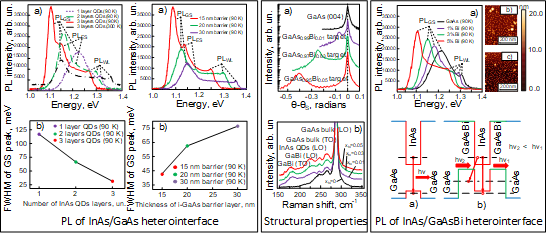
- type of samples (ST#2) contained three QD layers that were separated by GaAs barriers of 15, 20 and 30 nm. During the growth process, pressure in the vacuum chamber was 3.7 × 10⁻⁷ Pa. The 500 nm thick n+-GaAs buffer layer at T = 610 °C was grown first. The accelerating voltage of the ion beam was 450 V


Non-agglomerated silicon–organic nanoparticles and their nanocomplexes with oligonucleotides: synthesis and properties
Beilstein J. Nanotechnol. 2018, 9, 2516–2525, doi:10.3762/bjnano.9.234
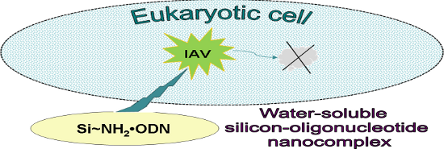
- . The values of particle size and zeta potential were averaged over those experiments. Transmission electron microscopy (TEM) images were taken on a JEM 1400 (Jeol, Japan) electron microscope at an accelerating voltage of 80 kV. We analyzed a 35 mM solution of Si–NH2 nanoparticles and Si–NH2·ODN


Nanoconjugates of a calixresorcinarene derivative with methoxy poly(ethylene glycol) fragments for drug encapsulation
Beilstein J. Nanotechnol. 2018, 9, 2057–2070, doi:10.3762/bjnano.9.195
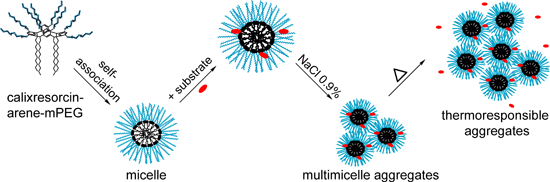
- of low ionic strength. TEM images were obtained in a Libra 120 (Carl Zeiss) microscope. The images were acquired at an accelerating voltage of 100 kV. Samples were dispersed on 300 mesh copper grids with continuous carbon-formvar support films. Determination of cac values The critical association


Synthesis of rare-earth metal and rare-earth metal-fluoride nanoparticles in ionic liquids and propylene carbonate
Beilstein J. Nanotechnol. 2018, 9, 1881–1894, doi:10.3762/bjnano.9.180
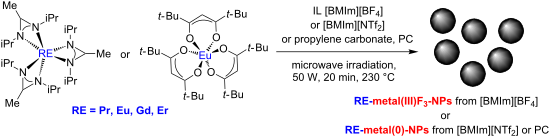
- crystalline domains being much smaller than the bulk reference material causing lattice contraction or expansion and strain [65][66][67][68][69]. Transmission electron microscopy: TEM was performed with a FEI Tecnai G2 F20 electron microscope operated at 200 kV accelerating voltage [70]. Conventional TEM
- an exposure time of 3 min. Selected area electron diffraction: SAED patterns (Figures S4 and S6, Supporting Information File 1) have been recorded with an FEI Titan 80-300 TEM [71], operated at 300 kV accelerating voltage. The area selection was achieved with a round aperture placed in the first


Interaction-tailored organization of large-area colloidal assemblies
Beilstein J. Nanotechnol. 2018, 9, 1582–1593, doi:10.3762/bjnano.9.150
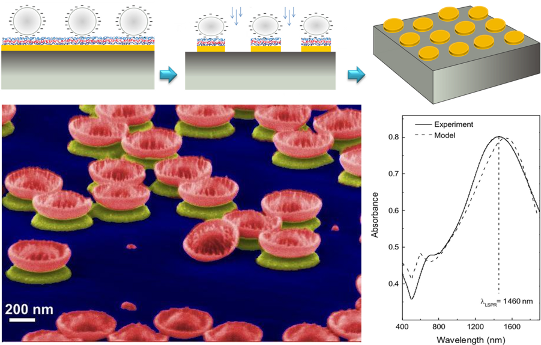
- treatment for 90 s, revealing the fabricated nanostructures on the substrates. The morphology of the obtained patterns was imaged by means of a scanning electron microscope (SEM, Carl Zeiss) at an accelerating voltage of 5 kV. SEM images were acquired through an in-lens detector for secondary electrons in


Cathodoluminescence as a probe of the optical properties of resonant apertures in a metallic film
Beilstein J. Nanotechnol. 2018, 9, 1491–1500, doi:10.3762/bjnano.9.140
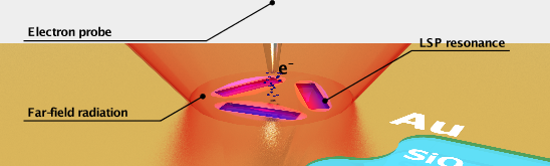
- different transverse parameters were milled using a helium ion microscope (Nanofab Orion, Zeiss) operating at an accelerating voltage of 30 kV and a beam current of 0.1 to 100 pA. A Fibics NPVE pattern generator was used to control the milling parameters such as dose, beam step size and dwell time. Test


Surface characterization of nanoparticles using near-field light scattering
Beilstein J. Nanotechnol. 2018, 9, 1228–1238, doi:10.3762/bjnano.9.114
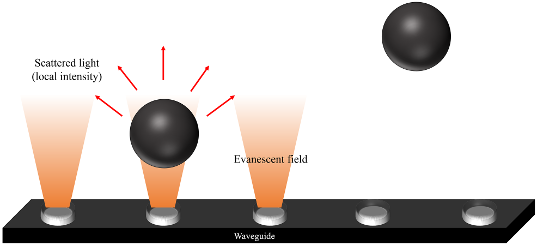
- Zeiss, Thornwood, NY) with an accelerating voltage of 2 kV. Each dried sample was placed on a metallic pin stub with adhesive and was coated with carbon (Cressington 208C High Vacuum Turbo Carbon Coater, Ted Pella Inc.). Dynamic light scattering and zeta potential The hydrodynamic diameter, size




A novel copper precursor for electron beam induced deposition
Beilstein J. Nanotechnol. 2018, 9, 1220–1227, doi:10.3762/bjnano.9.113
- accelerating voltage of 5 kV and 1 nA beam current. To avoid spurious signals from the substrate a deposit of 400 nm thickness onto silicon was used for quantification. Further EDX measurements were carried out on the optically characterized copper deposits on ITO coated glass (see Supporting Information File
- microscopy (TEM) images onto the nanostructures were acquired with a Gatan Orius CCD-Camera inside a CM12 (Phillips) at an accelerating voltage of 120 kV equipped with a EDAX Genesis silicon drift detector. For TEM investigations the nanostructures were directly deposited onto Omniprobe molybdenum TEM grids


Facile chemical routes to mesoporous silver substrates for SERS analysis
Beilstein J. Nanotechnol. 2018, 9, 880–889, doi:10.3762/bjnano.9.82
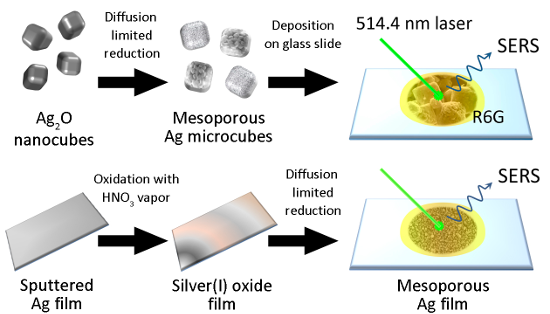
- washed with distilled water and dried in ambient conditions for 24 h. Scanning electron microscopy (SEM) was applied to characterize microstructure of the individual Ag or Ag2O nanostructures and films. The analysis was performed in using a NVision 40 microscope (Carl Zeiss) at 9 kV accelerating voltage


Comparative study of antibacterial properties of polystyrene films with TiOx and Cu nanoparticles fabricated using cluster beam technique
Beilstein J. Nanotechnol. 2018, 9, 861–869, doi:10.3762/bjnano.9.80
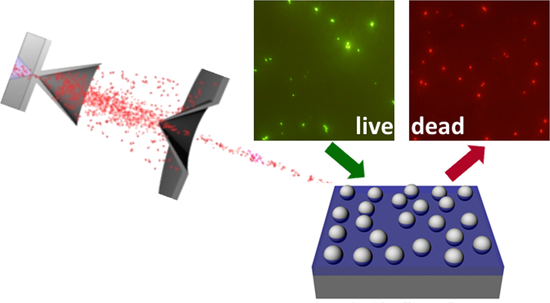
- studied by AFM in tapping mode using Ntegra Aura nanolaboratory (from NT-MDT). Commercial cantilevers with sharp silicon tips (radius of curvature <10 nm, force constant of 3.5–6.0 N/m) are used. SEM analysis is carried out by means of Mira3 (Tescan) microscope operated with accelerating voltage of 30 kV




Effect of microtrichia on the interlocking mechanism in the Asian ladybeetle, Harmonia axyridis (Coleoptera: Coccinellidae)
Beilstein J. Nanotechnol. 2018, 9, 812–823, doi:10.3762/bjnano.9.75
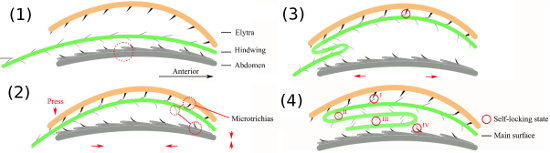
- wings were coated with gold and examined using ESEM at an accelerating voltage of 15 kV. Structures were determined from digital pictures by using image analysis software. The elytra were also removed fresh from the body and were cut into small sections and cleaned with anhydrous ethanol. Then, the


Facile synthesis of a ZnO–BiOI p–n nano-heterojunction with excellent visible-light photocatalytic activity
Beilstein J. Nanotechnol. 2018, 9, 789–800, doi:10.3762/bjnano.9.72
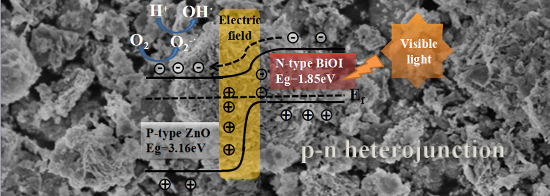
- scanning rate of 4°/min in the range of from 10 to 90°. A Hitachi S4800 scanning electron microscope (SEM) was used to investigate the morphology with an accelerating voltage of 15 kV. The elemental analysis was also performed on an energy-dispersive spectrometer (EDS) with the same instrument


Perovskite-structured CaTiO3 coupled with g-C3N4 as a heterojunction photocatalyst for organic pollutant degradation
Beilstein J. Nanotechnol. 2018, 9, 671–685, doi:10.3762/bjnano.9.62
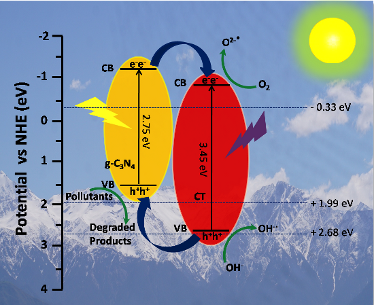
- -twin microscope operating at 200 kV (accelerating voltage). Elemental mapping was also carried out by using the same instrument in order to study the presence and spatial distribution of expected elements in all prepared samples. The light harvesting ability of the resultant samples as a dry-pressed


Optimisation of purification techniques for the preparation of large-volume aqueous solar nanoparticle inks for organic photovoltaics
Beilstein J. Nanotechnol. 2018, 9, 649–659, doi:10.3762/bjnano.9.60
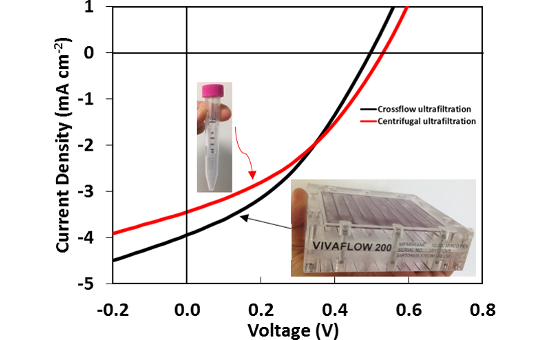
- accelerating voltage of 2 kV and magnification ranges of 10,000–100,000×), with concurrent energy dispersive X-ray spectroscopy (EDX) measurements. For SEM, NP films were coated on conductive silicon substrates by spin coating, where 2.5 µL of NP ink was diluted in 12.5 µL of water and spun at 3000 rpm speed


Synthesis and characterization of electrospun molybdenum dioxide–carbon nanofibers as sulfur matrix additives for rechargeable lithium–sulfur battery applications
Beilstein J. Nanotechnol. 2018, 9, 262–270, doi:10.3762/bjnano.9.28
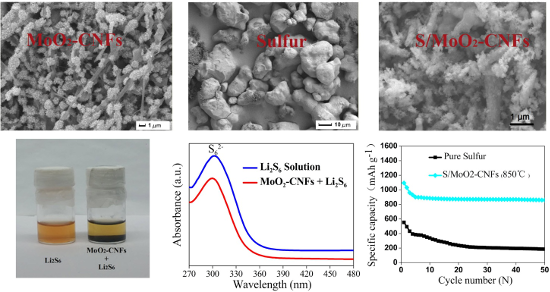
- and morphology of the fibers was determined by scanning electron microscopy (SEM, JSM-7001F). Details concerning the morphology and structure were examined by high-resolution transmission electron microscopy (HRTEM, Tecnai G2 F30), operated at an accelerating voltage of 200 kV. Selected specimens were


Co-reductive fabrication of carbon nanodots with high quantum yield for bioimaging of bacteria
Beilstein J. Nanotechnol. 2018, 9, 137–145, doi:10.3762/bjnano.9.16
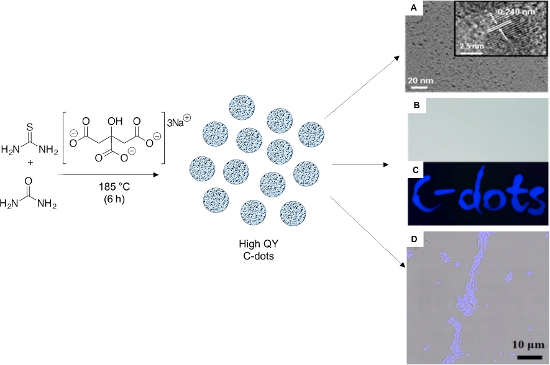
- different additives obtained and labeled as Sa, Sb, Sc, Sd, and Se, respectively. Carbon nanodot characterization The product morphology was assessed by TEM and HRTEM, which was performed on a JEOL-2100F instrument with an accelerating voltage of 200 kV. The XRD patterns of Sa, Sb, and Se were recorded on a





