Search results
Search for "binding energies" in Full Text gives 185 result(s) in Beilstein Journal of Nanotechnology.
Alloyed Pt3M (M = Co, Ni) nanoparticles supported on S- and N-doped carbon nanotubes for the oxygen reduction reaction
Beilstein J. Nanotechnol. 2019, 10, 1251–1269, doi:10.3762/bjnano.10.125
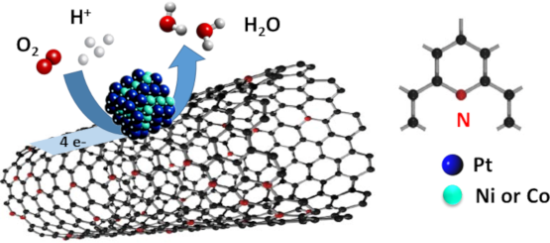
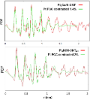
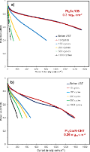
- the Pt3Ni series is also around 2 nm, highlighting the effectiveness of the synthetic procedure followed in this work. Moreover, these binding energies are also dependent on the nature of the metal. These observations could explain the strong differences between Pt3Co and Pt3Ni catalysts. In both
- -distributed NPs are the result of the good interaction between the transition metal and the nitrogen-doped CNT. It is known that high binding energies between the transition metal and the carbon support modify the electronic properties of the NPs and can facilitate the adsorption of the O2. However, XPS data








Playing with covalent triazine framework tiles for improved CO2 adsorption properties and catalytic performance
Beilstein J. Nanotechnol. 2019, 10, 1217–1227, doi:10.3762/bjnano.10.121
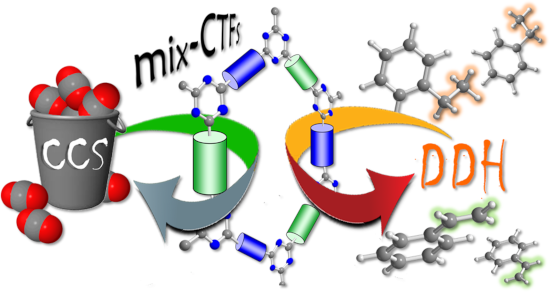
- Information File 1, Figures S2D–E and D′–E′). The N 1s XPS spectra recorded for all new CTF samples are fitted with two main components and a minor shoulder at binding energies (BE) between 398.5 ± 0.2, and 402.5 ± 0.5 eV. (see Supporting Information File 1, Figure S3A–E and Figure S4). While the former
- treatment [30][47][48][49]. Minor shoulders at higher binding energies for all N 1s profiles are finally attributed to a certain extent of N–O species in the samples [50] (Table 1). Notably, all materials prepared from the DCI (III) monomer as such (CTF3) or in mixture with p-DCB (I) (CTF4) or DCBP (II


Glucose-derived carbon materials with tailored properties as electrocatalysts for the oxygen reduction reaction
Beilstein J. Nanotechnol. 2019, 10, 1089–1102, doi:10.3762/bjnano.10.109
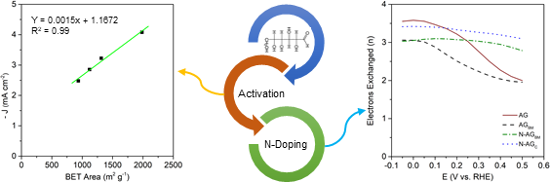
- * transitions in aromatic rings (peak V) at 290.6 ± 0.5 eV [43]. Carbon sp2 (peak I) is an asymmetric peak consisting of a tail towards higher binding energies that represents ≈80% of surface carbon, which does not show significant differences for activated and carbonized samples. However, noticeable
- detected for N-doped carbons prepared by the ball milling method, as an additional peak is detected at higher binding energies corresponding to N–O–C bonds (peak IV), which is in agreement with the oxidized nitrogen peak also shown in the N 1s spectra. In addition, different contributions of the oxygen
- the contribution of the various surface groups due to overlaps in their binding energies. Therefore, the contribution of oxygen-containing surface groups in undoped samples was further analysed by TPD. The CO and CO2 measurements obtained for undoped activated and carbonized samples are presented in


Structural and optical properties of penicillamine-protected gold nanocluster fractions separated by sequential size-selective fractionation
Beilstein J. Nanotechnol. 2019, 10, 955–966, doi:10.3762/bjnano.10.96
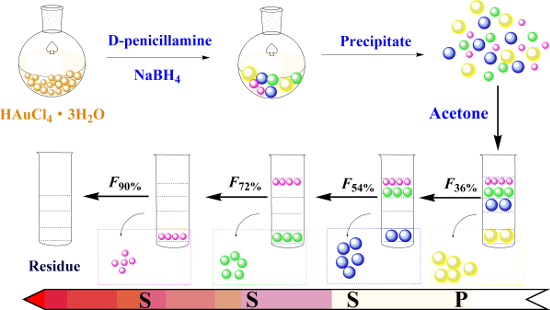
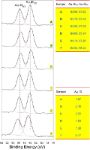
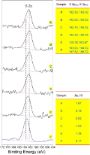
- very small particles and bulk materials, and that the dimensionally dependent changes in the electronic structure produce unusual characteristics [32]. The binding energies of the latter fraction are higher than those of the former fraction, further indicating that the gold cores of the latter were
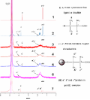
- -protected AuNC product and the sequential size-selected fractions (B) F36%, (C) F54%, (D) F72%, (E) F90%, and (F) F0%. The right panels display the Au 4f7/2 and Au 4f5/2 binding energies and Au/S ratio of the samples determined by XPS. XPS spectra in the S 2p region of the (A) crude penicillamine-protected
- AuNC product and the sequential size-selected fractions (B) F36%, (C) F54%, (D) F72%, (E) F90%, and (F) F0%. The right panel displays the S 2p3/2 and S 2p1/2 binding energies of the samples. (A) UV–visible absorption and (B) corrected photoluminescence spectra (excited at 380 nm) of the (0) crude



Synthesis of novel C-doped g-C3N4 nanosheets coupled with CdIn2S4 for enhanced photocatalytic hydrogen evolution
Beilstein J. Nanotechnol. 2019, 10, 912–921, doi:10.3762/bjnano.10.92
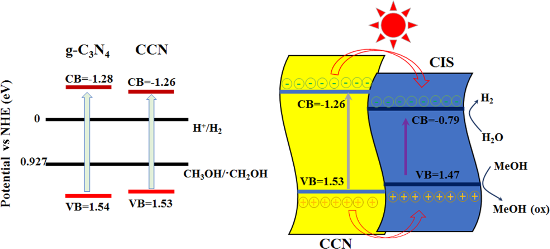
- , N, Cd, In, and S, also verifying the coexistence of CCN nanosheets and CdIn2S4 nanocrystals in the composite. The C 1s spectrum in Figure 5b shows some new peaks with binding energies at 284.8 eV, 286.0 eV and 288.1 eV. According to the reported literature, the peak located at 284.8 eV belongs to


Synthesis of MnO2–CuO–Fe2O3/CNTs catalysts: low-temperature SCR activity and formation mechanism
Beilstein J. Nanotechnol. 2019, 10, 848–855, doi:10.3762/bjnano.10.85
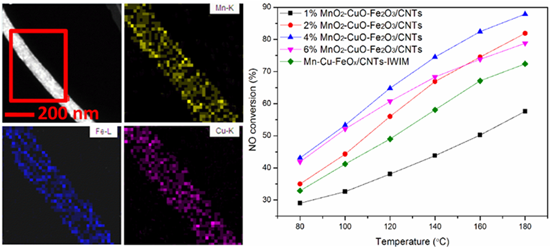
- results of XRD (Figure 2). X-ray photoelectron spectroscopy The XPS spectra of the as-prepared catalysts are given in Figure 4. The elements Mn, Cu, Fe, C, and O were detected in the XPS full-scan spectrum of Figure 4A. For the Mn 2p spectrum of 4% MnO2–CuO–Fe2O3/CNTs (Figure 4B), the binding energies at
- of XRD and NO conversion measurements. The binding energies of Cu 2p1/2 and Cu 2p3/2 of the 4% MnO2–CuO–Fe2O3/CNTs catalyst (Figure 4C) are located at 954.3 and 934.4 eV, respectively, along with satellites at higher energies, indicating the formation of CuO [28]. The energy separation between Cu 2p1
- 724.7 and 711.2 eV, respectively, can be attributed to Fe2O3 [32]. The energy separation of 13.5 eV is typical for Fe2O3 [33]. The two satellites at 732.7 and 718.4 eV also verify the formation of Fe2O3 [34]. In spectrum b of Figure 4E, the binding energies of Fe 2p1/2 and Fe 2p3/2 (724.4 and 711.0 eV




Trapping polysulfide on two-dimensional molybdenum disulfide for Li–S batteries through phase selection with optimized binding
Beilstein J. Nanotechnol. 2019, 10, 774–780, doi:10.3762/bjnano.10.77
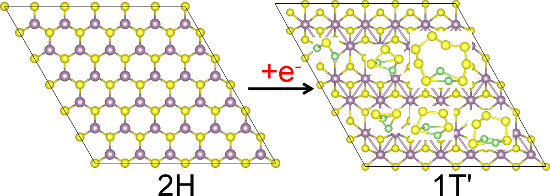
- '-MoS2 monolayer are lower in energy than the orbital of 2H-MoS2, thus leading to a stronger binding. Both 2H-MoS2 and 1T'-MoS2 monolayers show less trapping of S8 with a binding energy of 0.04 eV. The binding energies of Li2Sx on borophene are in the range from −1.00 to −3.00 eV [15] and on Ni-doped
- between the monolayer and the puckered ring structure S8, which is consistent with the corresponding small binding energies. The working mechanism of Li–S batteries includes the following steps, octasulfur is reduced to long chains of LPSs, Li2Sx (6 < x ≤ 8), and further to lower-order LPSs, Li2Sx (2 < x
- of Li–S batteries [7][8]. An ideal anchoring material with binding energies with LPSs in the range from 0.8 to 2.0 eV [15], and with good electrical and ionic conductivity is desirable for improving the electrochemical performance of Li–S batteries. Although the 2H-MoS2 monolayer shows good Li


The effect of translation on the binding energy for transition-metal porphyrines adsorbed on Ag(111) surface
Beilstein J. Nanotechnol. 2019, 10, 706–717, doi:10.3762/bjnano.10.70
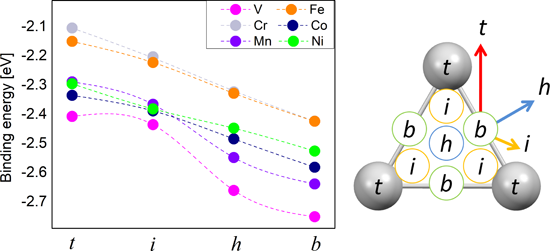
- (larger for nitrogen, intermediate for carbon and minimal for hydrogen). The results for the binding energies of TMPP and silver are summarized in Figure 2. Due to symmetry considerations, the four points investigated by us will cover most of the unit cell of the Ag(111) surface (see the right panel of
- in the paragraph above). Indeed, the two systems display the strongest binding energies among all systems. For all systems we found that the bridge configuration is the most stable. However, the maximum difference between the total energies of different configurations is around 0.25 eV, which is a
- relatively small values, close to the accuracy of DFT. The ordering of the binding energies is (from highest to lowest): VPP, MnPP, CoPP, NiPP, FePP and CrPP (the last two have identical binding energies). These close values may explain the complex geometries that were found in the experimental studies. For


![[Graphic 1]](/bjnano/content/inline/2190-4286-10-70-i1.svg?max-width=637&scale=1.18182) , for all systems and relative molecule–surface positions. Right: symm...
, for all systems and relative molecule–surface positions. Right: symm...


![[Graphic 7]](/bjnano/content/inline/2190-4286-10-70-i7.svg?max-width=637&scale=1.18182) for selected TMPP systems (M = V, Mn, Co; red: positive values, blue: negative value...
for selected TMPP systems (M = V, Mn, Co; red: positive values, blue: negative value...
Reduced graphene oxide supported C3N4 nanoflakes and quantum dots as metal-free catalysts for visible light assisted CO2 reduction
Beilstein J. Nanotechnol. 2019, 10, 448–458, doi:10.3762/bjnano.10.44
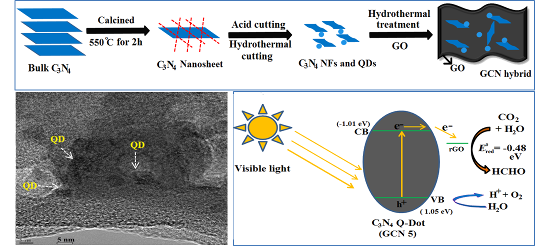
- impurity elements are found (Figure 3a). Figure 3b shows the fit to the C 1s peak of the GCN-5 hybrid. The fitting of the C 1s spectrum shows four major deconvoluted peaks related to the carbon states of rGO and g-C3N4. The sharp peaks at binding energies of 285.04, 287.03, 288.52, and 289.6 eV observed in
- the C 1s spectrum correspond to C–C bonds in rGO, N–C=N/C–O bonds in g-C3N4 and rGO, and C=O and O−C=O bonds in rGO, respectively [33][34]. The core-level N 1s profile shows (Figure 3c) three deconvoluted peaks at binding energies of 398.8, 400.6, and 401.8 eV, which are attributed to the sp2
- the breaking of most C–N bonds due to formation of NFs and QDs. Figure 3d shows a high-resolution XPS spectrum of O 1s present in the GCN-5 hybrid. The peaks at binding energies of 531.7 and 532.8 eV are attributed to carbonyl and epoxy C–O groups of rGO, respectively, which are still present in the





Nanoporous water oxidation electrodes with a low loading of laser-deposited Ru/C exhibit enhanced corrosion stability
Beilstein J. Nanotechnol. 2019, 10, 157–167, doi:10.3762/bjnano.10.15
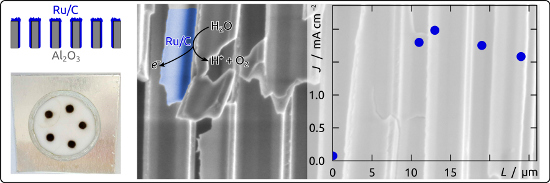
- ), which are due to the Ru/C layer and adventitious carbon. Argon ion sputtering results in a reduced carbon content (observable in both the C 1s and O 1s regions), as well as in a shift of the Ru 3d doublet of peaks to lower binding energies (Figure 8b and Figure S4, Supporting Information File 1). Thus




Zn/F-doped tin oxide nanoparticles synthesized by laser pyrolysis: structural and optical properties
Beilstein J. Nanotechnol. 2019, 10, 9–21, doi:10.3762/bjnano.10.2
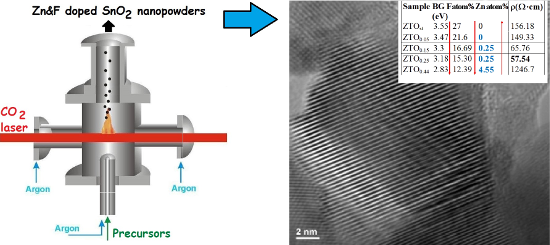
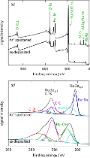
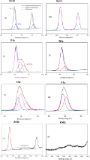
- ZTO0.44 sample and is directly dependent on the Zn/Sn vapor flow ratio. High-resolution XPS core level spectra of Sn3d, O1s, F1s and Zn2p were made for the highest Zn-doped sample (ZTO0.44) and the only the fluorine-doped sample (ZTOst). The binding energies were calibrated using the C1s peak at 284.4 eV



A novel polyhedral oligomeric silsesquioxane-modified layered double hydroxide: preparation, characterization and properties
Beilstein J. Nanotechnol. 2018, 9, 3053–3068, doi:10.3762/bjnano.9.284
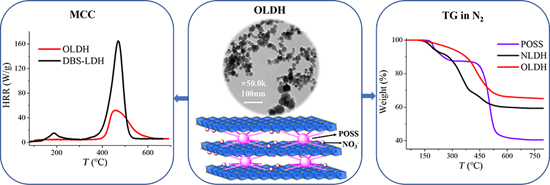
- , these peaks in the brucite-like lattice show a small shift toward higher binding energies, probably arising from the interferences of OCPS intercalators. A similar phenomenon has been reported before in the case of carbon black nanoparticles modified Ni–Fe LDH [31]. XRD The XRD patterns of NLDH and OLDH







Ternary nanocomposites of reduced graphene oxide, polyaniline and hexaniobate: hierarchical architecture and high polaron formation
Beilstein J. Nanotechnol. 2018, 9, 2936–2946, doi:10.3762/bjnano.9.272
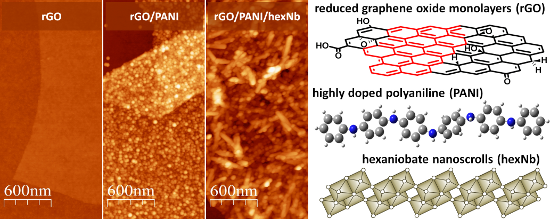
- level photoelectrons present slightly different binding energies depending on the environment of the carbon atoms. Figure 4 shows the high-resolution XPS spectra at the C 1s core level for GO and rGO samples prepared by reactions at 25 °C for 7 days and at 80 °C for 3 h (rGO-25 and rGO-80, respectively
- groups, since these groups induce different environments for the carbon atoms and, consequently, their corresponding C 1s photoelectrons present slightly different binding energies [34][39][40][42][43][44][45][46][47][48][49][50][51]. The comparison of the curve fitting for GO and rGO-25 shows the


Nanostructure-induced performance degradation of WO3·nH2O for energy conversion and storage devices
Beilstein J. Nanotechnol. 2018, 9, 2845–2854, doi:10.3762/bjnano.9.265
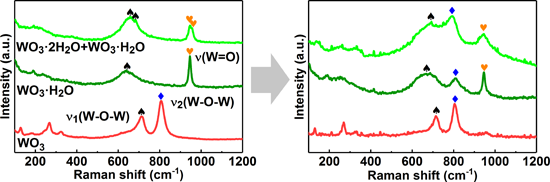
- temperature, the lattice oxygen in the three as-synthesized samples shifts to lower binding energies from 530.8 eV over 530.6 eV to 520.3 eV. The area of the OH2O peaks indicates the structural difference between layered WO3·2H2O, layered WO3·H2O and 3D WO3. The decreasing area of OH2O peaks with higher


Controlling surface morphology and sensitivity of granular and porous silver films for surface-enhanced Raman scattering, SERS
Beilstein J. Nanotechnol. 2018, 9, 2813–2831, doi:10.3762/bjnano.9.263
- shows that there is a slight broadening in the direction of lower binding energies for nitrogen plasma treated silver (Figure 4a and Figure S9a, Supporting Information File 1). Only for the nitrogen plasma treated silver film, a second small peak at 367.63 eV can be fitted besides the main peak at





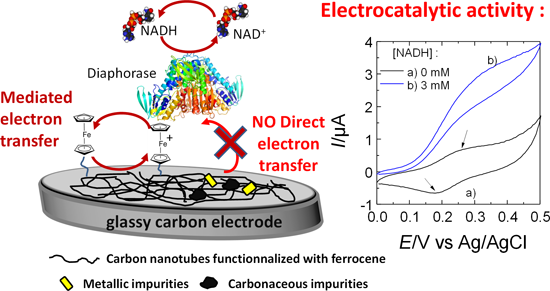
Accurate control of the covalent functionalization of single-walled carbon nanotubes for the electro-enzymatically controlled oxidation of biomolecules
Beilstein J. Nanotechnol. 2018, 9, 2750–2762, doi:10.3762/bjnano.9.257
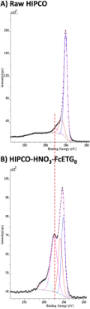
- essentially a surface-specific method. The clear Fe 2p signal obtained for functionalized samples and reported for instance in Figure S1B (Supporting Information File 1) for the HIPCO-FcETG2 sample arises exclusively from the grafted groups. The binding energies of the Fe 2p components were always at 720.4 eV
- . Three-step covalent functionalization of HIPCO SWCNTs using different acidic conditions for step 1. Ferrocene derivatives (FcAlkyl and FcETGn) with different linkers. Detailed C 1s spectra of A) raw HIPCO and B) HIPCO-HNO3-FcETG8. The binding energies of the Fe 2p components were always at 720.4 eV and






Two-dimensional semiconductors pave the way towards dopant-based quantum computing
Beilstein J. Nanotechnol. 2018, 9, 2668–2673, doi:10.3762/bjnano.9.249
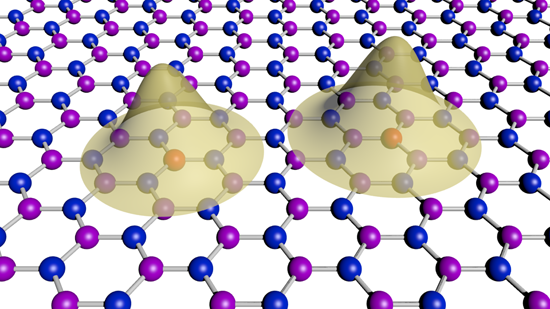
- binding energies of 51 transition-metal dichalcogenides. We follow the same approach here, taking a constant ε to estimate the binding energies. We adopt isotropic envelopes, simplifying the calculations while keeping the physical picture [37]. In this approximation, the 2D bound state of hydrogen is
- describe shallow states in semiconductors, thus the band gap energy of the considered material has to be much larger than the binding energies EB. In order to implement this condition, we consider the generally unknown dielectric constant as a free parameter and estimate its minimum value required for the
- small ε region is expanded. In general, in this yellow–orange–red region we find the first three materials in Table 1, and possibly silicene and germanene if their band gap energies were suitably enhanced. In order to estimate binding energies and Bohr radii, we assume ε ≈ 5 for the first three


![[Graphic 7]](/bjnano/content/inline/2190-4286-9-249-i7.svg?max-width=637&scale=1.18182) and energy for one electron bound to a donor pair
and energy for one electron bound to a donor pair ![[Graphic 8]](/bjnano/content/inline/2190-4286-9-249-i8.svg?max-width=637&scale=1.18182) as a function of R. For R = 2a*, ...
as a function of R. For R = 2a*, ...

Au–Si plasmonic platforms: synthesis, structure and FDTD simulations
Beilstein J. Nanotechnol. 2018, 9, 2599–2608, doi:10.3762/bjnano.9.241
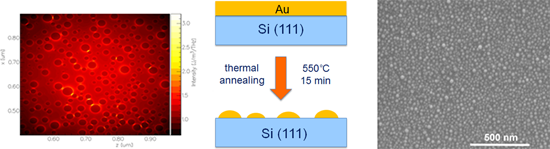
- photoelectrons were excited by an Mg Kα X-ray source. The X-ray anode was operated at 15 keV and 300 W. An Omicron Argus hemispherical electron analyzer with a round aperture of 4 mm was used for analyzing the emitted photoelectrons. The binding energies were corrected using the background C 1s line (285.0 eV
- 4f7/2 and 4f5/2 excitations differs from the statistical ratio of 4:3 and the linewidths (FWHM) are not equal. The size of the clusters can also affect the symmetry of the Au 4f7/2 peak on the side of higher binding energies, and the asymmetry increases with decreasing cluster size. In our



Surface energy of nanoparticles – influence of particle size and structure
Beilstein J. Nanotechnol. 2018, 9, 2265–2276, doi:10.3762/bjnano.9.211
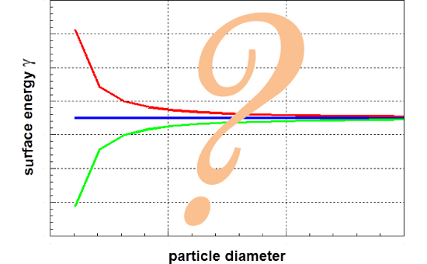
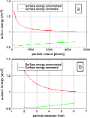
- estimate the surface energy, the binding energy of the atoms with the least coordination number must be selected. Since this is, to some extent, a random process, the scatter of these binding energies gives an indication for the scattering of the result. These considerations led to a value of 1.51 ± 0.68 J





Intrinsic ultrasmall nanoscale silicon turns n-/p-type with SiO2/Si3N4-coating
Beilstein J. Nanotechnol. 2018, 9, 2255–2264, doi:10.3762/bjnano.9.210
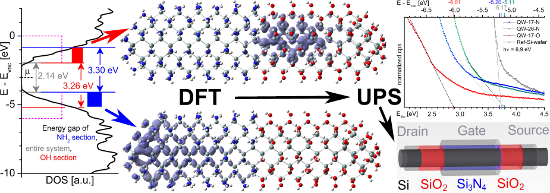
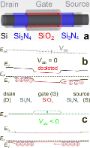
- ) [14]. A high ionicity of bond (IOB) and strong negative electron affinity (X) of O result in a strong localization of Si-NC valence electrons. This localization corresponds to increased binding energies – the ICT shifts all MOs away from Evac. N is the only anionic element with a positive X [29] which





Metal-free catalysis based on nitrogen-doped carbon nanomaterials: a photoelectron spectroscopy point of view
Beilstein J. Nanotechnol. 2018, 9, 2015–2031, doi:10.3762/bjnano.9.191
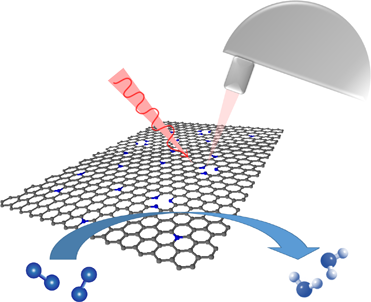
- the graphitic configuration at 400–401 eV [4][95][96]. At slightly higher binding energies with respect to graphitic N, the component was assigned to graphitic valley N [97], which means a graphitic configuration close to a vacancy or edge (N4 in Figure 6a). Nitrogen oxide is usually found at binding
- molecular oxygen, the N 1s core level spectrum changes its line shape. In particular, the side of higher binding energies (around 401 eV) is quenched. These changes indicate that graphitic nitrogen is involved in the observed mechanism. The adsorbed oxygen molecule is dissociated and the two O atoms
- energies higher than 402 eV [98]. Other C–N components, such as single bonds, N adatoms or Stone–Wales defects (three-fold coordinated N atoms comprised in two pairs of five-membered and seven-membered rings), may be found at the position corresponding to pyrrolic nitrogen. Hence, their precise




Defect formation in multiwalled carbon nanotubes under low-energy He and Ne ion irradiation
Beilstein J. Nanotechnol. 2018, 9, 1951–1963, doi:10.3762/bjnano.9.186
- calculated using sbeRG = qRG∙EsRG + qC∙0.5∙(EsRG + EsC) and the surface binding energy for carbon is calculated using sbeC = qRG∙0.5∙(EsRG + EsC) + qC∙EsC∙sbeRG and sbeC are the surface binding energy of noble gas and carbon atoms in the target, EsRG and EsC are the atomic surface binding energies for the



Synthesis of a MnO2/Fe3O4/diatomite nanocomposite as an efficient heterogeneous Fenton-like catalyst for methylene blue degradation
Beilstein J. Nanotechnol. 2018, 9, 1940–1950, doi:10.3762/bjnano.9.185
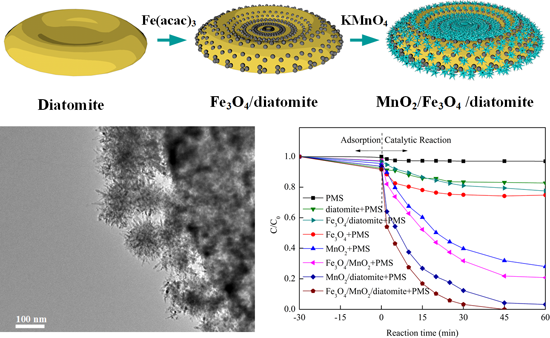
- 6b–d. In Figure 6b, two peaks with binding energies of 710.8 and 724.1 eV are assigned to Fe 2p3/2 and Fe 2p1/2 peaks, which are mainly due to the FeO and Fe2O3; moreover, satellite peaks at 719.32 eV and 732.8 eV can be observed. These are the typical characteristics of the Fe3O4 structure [32]. The
- Mn 2p region (Figure 6c) exhibits two individual peaks at 653.9 and 642.2 eV, attributed to the Mn 2p1/2 and Mn 2p3/2 binding energies, respectively. As a result, the spin energy separation of Mn 2p peaks can be calculated as 11.7 eV, which is well in agreement with reports for MnO2 [33]. In Figure


Synthesis of rare-earth metal and rare-earth metal-fluoride nanoparticles in ionic liquids and propylene carbonate
Beilstein J. Nanotechnol. 2018, 9, 1881–1894, doi:10.3762/bjnano.9.180
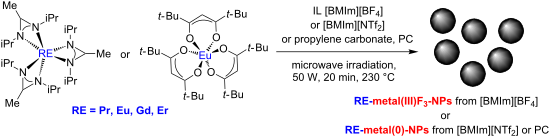
- not done, because matching of the F Kα1 binding energy against the Lα1 or Lβ1 binding energies for Eu, Gd and Er is not very accurate. The measured oxidation state 3+ of the rare-earth metals in the fluorides was corroborated by high-resolution X-ray photoelectron spectroscopy (HR-XPS) (Figure 4 and
- Figures S4c, S5c, S6d, Supporting Information File 1) through comparison to the reported binding energies of metal(III) fluorides/oxides, metal(0) and organic fluorine/oxygen (Table 2) [48][49]. The measured metal and fluorine XPS values are in good agreement with the values of metal(III) fluorides that
- are given in literature and thereby exclude the formation of metal(0) and the presence of organic fluoride (from residual IL). In addition, the formation of metal oxides can be excluded, since the measured binding energies of oxygen match very well with the literature values of organic oxygen [48][49


A visible-light-controlled platform for prolonged drug release based on Ag-doped TiO2 nanotubes with a hydrophobic layer
Beilstein J. Nanotechnol. 2018, 9, 1793–1801, doi:10.3762/bjnano.9.170
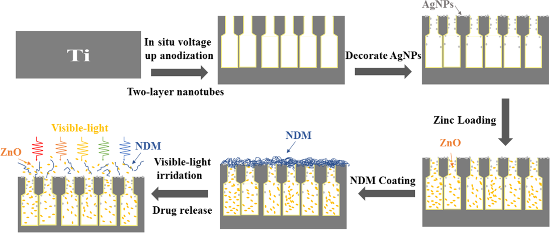
- 4b shows the Ag 3d doublets with binding energies of 368.1 eV and 374.1 eV, corresponding to Ag 3d5/2 and Ag 3d3/2, respectively. According to the literature [27][28], these peaks can be attributed to metallic silver (Ag0). Figure 4d and Figure 4h show the high-resolution XPS spectra of Ti 2p of Ag