


Search results
Search for "electrochemical" in Full Text gives 513 result(s) in Beilstein Journal of Nanotechnology. Showing first 200.
Near-infrared photoactive Ag-Zn-Ga-S-Se quantum dots for high-performance quantum dot-sensitized solar cells
Beilstein J. Nanotechnol. 2022, 13, 1337–1344, doi:10.3762/bjnano.13.110
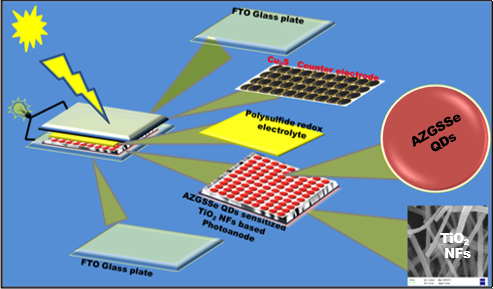
- nanocrystals. The X-ray diffraction pattern confirms the hexagonal structure. Due to the near-infrared light absorption capability, the synthesized QDs were used as the sensitizer to fabricate QDSCs. The fabricated QDSCs were characterized by using electrochemical impedance spectroscopy and photovoltaic
- performance studies. The fabricated QDSC have superior electrochemical activity with a photoconversion efficiency of 4.91%. Keywords: alloyed QDs; photoconversion efficiency; photovoltaic performance; quantum dots; Introduction Human life depends on various forms of energy. Approximately 13 terawatts of
- ) and a photoluminescence spectrofluorometer (Jobin Yvon Horiba Nanolog). Impedance analysis of the fabricated QDSCs was conducted by using a CH instruments 760 A electrochemical workstation at applied frequencies of 100 kHz to 1 MHz with 10 mV AC voltage recording the Nyquist plots. The J–V curves were


Recent trends in Bi-based nanomaterials: challenges, fabrication, enhancement techniques, and environmental applications
Beilstein J. Nanotechnol. 2022, 13, 1316–1336, doi:10.3762/bjnano.13.109
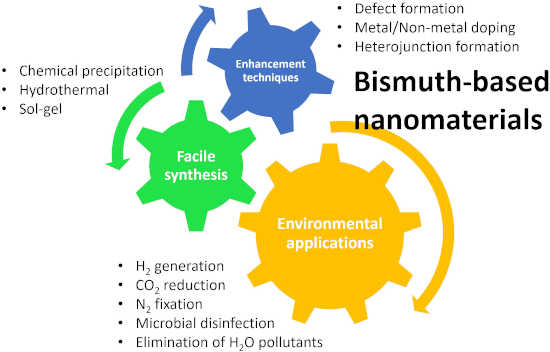
- , is more sensitive to photocurrent, and has a lower electrochemical impedance rate. This is because of surface plasmon resonances (SPRs) and the electron transport capabilities of Bi. The photocatalytic activity for the breakdown of phenol was significantly improved, compared to pristine Bi2WO6 under




Studies of probe tip materials by atomic force microscopy: a review
Beilstein J. Nanotechnol. 2022, 13, 1256–1267, doi:10.3762/bjnano.13.104
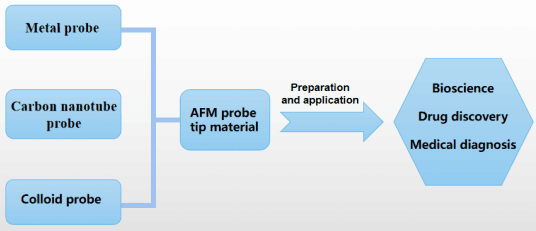
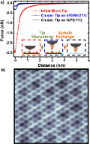
- interaction force between the particle and the surface. A new colloidal AFM probe was proposed by Daboss et al. [14]. These conductive spherical boron-doped diamond (BDD)-AFM probes allow electrochemical force spectroscopy. The physical robustness of these bifunctional probes and the excellent electrochemical
- . Karg et al. [50] proposed a method that could develop the colloidal probe technique in the direction of electrochemistry. This preparation method allows the selection of many colloidal particles containing electrochemical activity as probes. The colloidal gold particles in the experiments based on this
- , such as copper, silver, platinum, etc. Thus, it is also possible to prepare electrochemical colloidal probes (eCPs) with other metals. eCPs under electrochemical control of colloidal probes have potential in various research areas such as adhesion science, tribology or long-range interactions. eCPs
Role of titanium and organic precursors in molecular layer deposition of “titanicone” hybrid materials
Beilstein J. Nanotechnol. 2022, 13, 1240–1255, doi:10.3762/bjnano.13.103
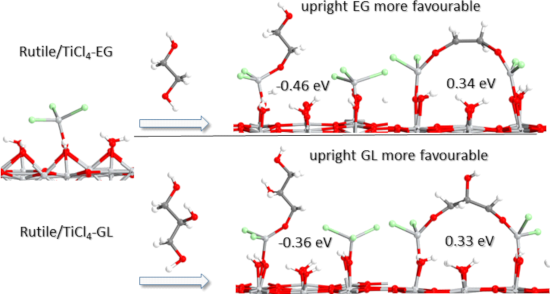
- catalytic and photocatalytic properties [46] porous TiO2 frameworks formed by the annealing of titanicone films may serve as catalytic supports [47]. Titanicone films can also be pyrolyzed under Ar to yield conducting TiO2/carbon composite films with important electrochemical applications as electrodes for


Roll-to-roll fabrication of superhydrophobic pads covered with nanofur for the efficient clean-up of oil spills
Beilstein J. Nanotechnol. 2022, 13, 1228–1239, doi:10.3762/bjnano.13.102
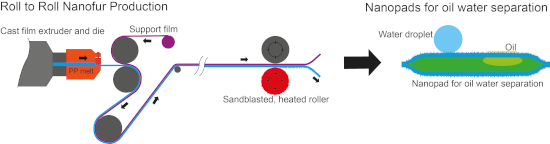
- using various dry/wet etching techniques including electrochemical HF etching, stain etching, metal-assisted etching, and reactive ion etching [9][11]. So-called “nanograss” or “black silicon” is a surface modification of silicon where the surface is covered with millions of tiny needle-like structures




Design of surface nanostructures for chirality sensing based on quartz crystal microbalance
Beilstein J. Nanotechnol. 2022, 13, 1201–1219, doi:10.3762/bjnano.13.100
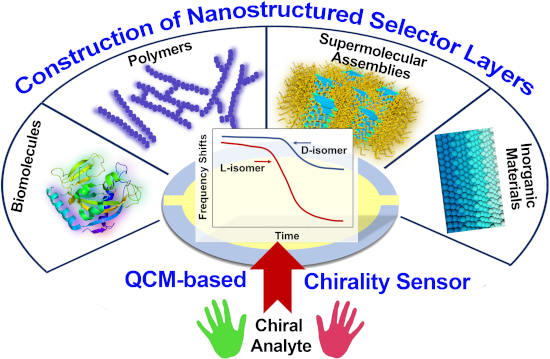
- resonance [10], Fourier transform infrared spectrometry (FTIR) [11], UV–vis absorption spectrometry [12], mass spectrometry (MS) [13], titration microcalorimetry [14], high-performance liquid chromatography (HPLC) [15], gas chromatography (GC), capillary electrophoresis (CE) [16], and electrochemical chiral
- ± 0.15, 1.81 ± 0.08, 1.37 ± 0.03, and 2.89 ± 0.09, respectively. Through further electrochemical tests, HPLC analysis, and theoretical calculations it was revealed that ʟ- and ᴅ-forms of SA-Cd exhibited mirror behaviors towards guest enantiomers, and HCP construction may enhance enantioselectivity. The
- chiral molecules may allow for the separation of enantiomers such as oligopeptides. Y. Lu et al. investigated the enantiospecific interaction between a magnetized surface and a chiral amino acid by using electrochemical quartz crystal microbalance (EQCM) and Cys as a chiral model [146]. The


Recent advances in green carbon dots (2015–2022): synthesis, metal ion sensing, and biological applications
Beilstein J. Nanotechnol. 2022, 13, 1068–1107, doi:10.3762/bjnano.13.93
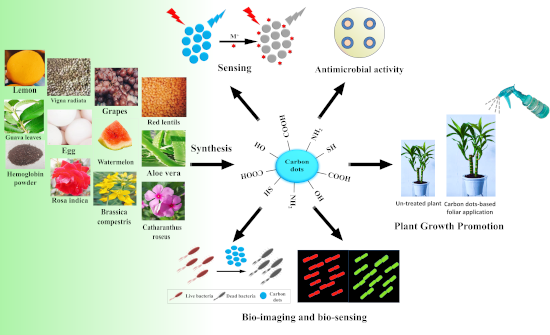
- synthetic pathways for the formation of CDs, that is, “top-down” and “bottom-up” methods. In the top-down method, large carbon structures (such as carbon nanotubes or graphite) are decomposed into CDs. The top-down methods include arc discharge, laser abrasion [24], chemical and electrochemical oxidation
- techniques for improving synthesis, characterization, yield, and applications of CDs There are several outstanding review articles on different applications, such as photochemical and electrochemical applications [32], photocatalysis [33], optoelectronics [34], wastewater treatment [35], food safety
- electrochemical properties. Lily bulbs as a green source to synthesize N,P-CDs via a facile, fast, and eco-friendly one-pot microwave-assisted method was reported by Gu et al. Lily bulbs rich in carbohydrates, proteins, lipids, and amino acids, can be easily used to prepare such CDs [108]. The microalgae




Biomimetic chitosan with biocomposite nanomaterials for bone tissue repair and regeneration
Beilstein J. Nanotechnol. 2022, 13, 1051–1067, doi:10.3762/bjnano.13.92
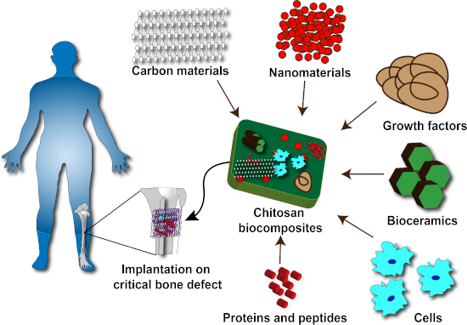
- delivery system in synthetic bone implants can stimulate bone regeneration while preventing bacterial infection. Furthermore, coating materials containing TiO2 can help drug stabilisation producing a long-term drug release profile [119]. The electrochemical anodization process was used by Lai et al. (2018
Spindle-like MIL101(Fe) decorated with Bi2O3 nanoparticles for enhanced degradation of chlortetracycline under visible-light irradiation
Beilstein J. Nanotechnol. 2022, 13, 1038–1050, doi:10.3762/bjnano.13.91
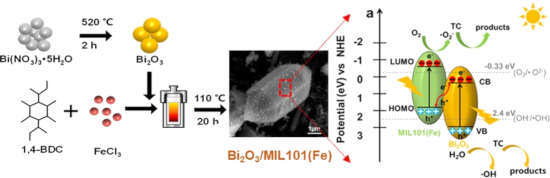
- ) with BaSO4 as a reference. The photoluminescence spectrum (PL) was obtained from a luminescence spectrometer at an excitation wavelength of 446 nm (RF-530IPC, Shimadzu, Japan). The photocurrent response and electrochemical impedance spectra (EIS) were measured by an electrochemical workstation


Electrocatalytic oxygen reduction activity of AgCoCu oxides on reduced graphene oxide in alkaline media
Beilstein J. Nanotechnol. 2022, 13, 1020–1029, doi:10.3762/bjnano.13.89
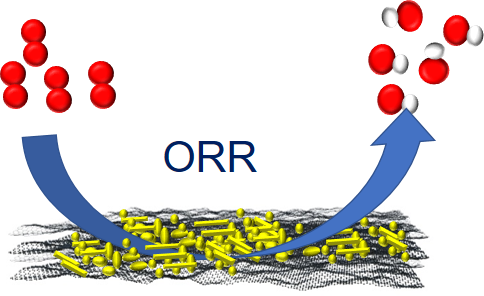
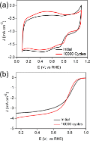
- 0.94 V vs RHE, 0.78 V, and 3.6 mA·cm−2, respectively, with an electrochemical active surface area of 66.92 m2·g−1 and a mass activity of 40.55 mA·mg−1. The optimum electrocatalyst shows considerable electrochemical stability over 10,000 cycles in 0.1 M KOH solution. Keywords: copper cobalt oxide NPs
- electrochemical active surface area (ECSA) of 66.92 m2·g−1 and a mass activity of 40.55 mA·mg−1. We investigated bonding nature, composition, and morphology of the ACC-2 sample using XPS and TEM. The material is electrochemically stable up to 10,000 potential cycles, highlighting the durability of the
- selection of Cu and Co is their similar crystal structure to that of silver, besides their catalytic oxidizing ability. Moreover, to date, there are no reports on the evaluation of the electrochemical ORR activity in alkaline media employing AgCuCo oxides supported on rGO. To identify the phase formation


Comparing the performance of single and multifrequency Kelvin probe force microscopy techniques in air and water
Beilstein J. Nanotechnol. 2022, 13, 922–943, doi:10.3762/bjnano.13.82
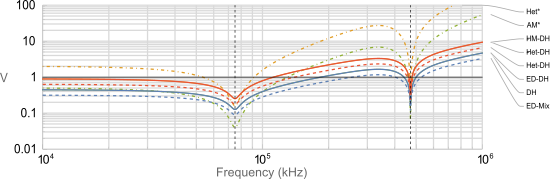
- that are most suitable for operation in liquid environments where bias application can lead to unwanted electrochemical reactions. We conclude that open-loop multifrequency KPFM modes operated with the first harmonic of the electrostatic response on the first eigenmode offer the best performance in
- currents and unwanted electrochemical reactions) [9][33][34][35]. OL techniques avoid the limitations and artefacts that can arise when using a feedback loop, for example, bandwidth limitations due to the time constant of the feedback loop [29], increased noise [36][37], and electrical crosstalk [38][39
- KPFM operation in liquid please see Collins et al. [9]. Our goal in this paper is to identify the OL techniques that provide the greatest performance with the smallest required VAC for operation in liquid environments, where bias application could lead to stray currents and unwanted electrochemical
Solar-light-driven LaFexNi1−xO3 perovskite oxides for photocatalytic Fenton-like reaction to degrade organic pollutants
Beilstein J. Nanotechnol. 2022, 13, 882–895, doi:10.3762/bjnano.13.79
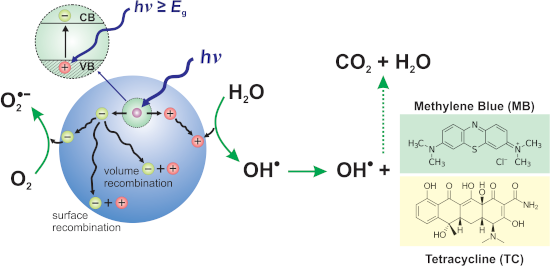
- methods to treat wastewater to purify water quality, such as electrochemical oxidation [12], Fenton method [13], ozonation [14], and photocatalysis [15]. They can achieve a fast reaction rate and extremely high organic removal ratio under average temperature and pressure to remove or decompose organic



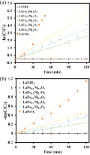
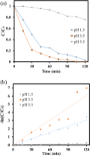
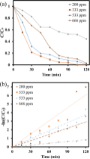
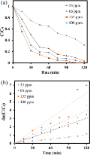
Recent advances in nanoarchitectures of monocrystalline coordination polymers through confined assembly
Beilstein J. Nanotechnol. 2022, 13, 763–777, doi:10.3762/bjnano.13.67

- core crystal [129]. After growing thicker, the interfacial stress forced the core crystal to yield to the shell crystal, making the whole composite present a single phase as the shell crystal [129]. The grown monocrystalline coordination polymer layer dominated the electrochemical behavior of the whole






Hierarchical Bi2WO6/TiO2-nanotube composites derived from natural cellulose for visible-light photocatalytic treatment of pollutants
Beilstein J. Nanotechnol. 2022, 13, 745–762, doi:10.3762/bjnano.13.66
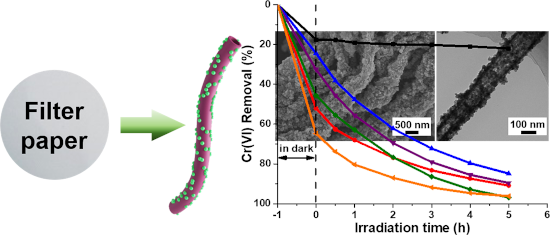
- , respectively. The transient photocurrent responses and electrochemical impedance spectroscopy (EIS) Nyquist plots (frequency: 0.01 Hz−100 kHz, alternate current: 5 mV) of a given sample were obtained on a CHI 760D (Shanghai, China) electrochemical workstation using a three-electrode system. The Pt plate (1.0


A nonenzymatic reduced graphene oxide-based nanosensor for parathion
Beilstein J. Nanotechnol. 2022, 13, 730–744, doi:10.3762/bjnano.13.65
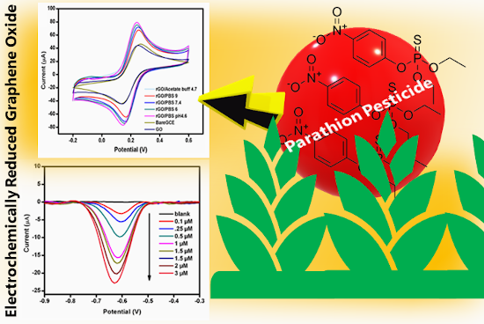
- the fabrication of a robust, nonenzymatic electrochemical-sensing electrode modified with electrochemically reduced graphene oxide (ERGO) to detect PT residues in environmental samples (e.g., soil, water) as well as in vegetables and cereals. The ERGO sensor shows a significantly affected
- stability (≈180 days), good reproducibility, and repeatability for interference-free detection of PT residues in actual samples. This electrochemical nanosensor is suitable for point-of-care detection of PT in a wide dynamic range of 3 × 10⁻¹¹–11 × 10−6 M with a lower detection limit of 10.9 pM. The
- performance of the nanosensor was validated by adding PT to natural samples and comparing the data via absorption spectroscopy. PT detection results encourage the design of easy-to-use nanosensor-based analytical tools for rapidly monitoring other environmental samples. Keywords: electrochemical nanosensor


Nanoarchitectonics of the cathode to improve the reversibility of Li–O2 batteries
Beilstein J. Nanotechnol. 2022, 13, 689–698, doi:10.3762/bjnano.13.61
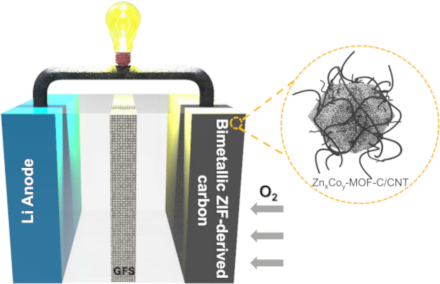
- metallic catalysts can also be obtained by adjusting metal ions for outstanding electrochemical reactions. In this study, various bimetallic zeolitic imidazolate framework (ZIF)-derived carbons were designed by varying the ratio of Zn to Co ions. Moreover, carbon nanotubes (CNTs) are added to improve the
- electrical conductivity further, ultimately leading to better electrochemical stability in the cathode. As a result, the optimized bimetallic ZIF–carbon/CNT composite exhibits a high discharge capacity of 16,000 mAh·g−1, with a stable cycling performance of up to 137 cycles. This feature is also beneficial
- containing a Li+-conductive aprotic electrolyte. In principle, electrochemical reactions between Li+ and O2 take place in the cathode to store and convert energy. During the discharge, the oxygen reduction reaction (ORR) occurs at the surface of the cathode, where O2 is spontaneously reduced by Li+ coming


Reliable fabrication of transparent conducting films by cascade centrifugation and Langmuir–Blodgett deposition of electrochemically exfoliated graphene
Beilstein J. Nanotechnol. 2022, 13, 666–674, doi:10.3762/bjnano.13.58
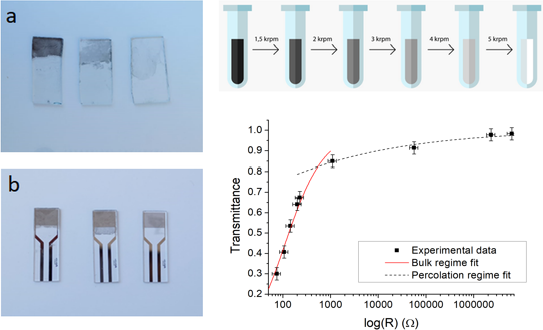
- Physics, University of Belgrade, Mike Petrovića Alasa 12–14, 11351 Belgrade, Serbia 10.3762/bjnano.13.58 Abstract Electrochemical exfoliation is an efficient and scalable method to obtain liquid-phase graphene. Graphene in solution, obtained through electrochemical exfoliation or other methods, is
- electrochemical exfoliation, whereby graphene is exfoliated in an electrolyte from an electrode made of graphite [19]. In electrochemical exfoliation, ions from the electrolyte flow towards the graphite electrode and intercalate between the graphene layers. The electrochemical reaction provides a driving force to
- break van der Waals forces, leading to exfoliation [20]. Electrochemical exfoliation offers an alternative to LPE that is both scalable and widely available. It has been used to make graphene for various applications, including energy storage [21][22]. Both ultrasound-assisted LPE and electrochemical


Revealing local structural properties of an atomically thin MoSe2 surface using optical microscopy
Beilstein J. Nanotechnol. 2022, 13, 572–581, doi:10.3762/bjnano.13.49
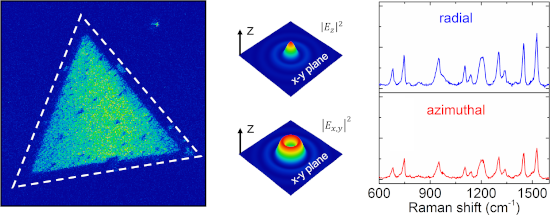
- dichalcogenide. Keywords: copper phthalocyanine; local structure; molybdenum diselenide; optical spectroscopy; surface-enhanced Raman spectroscopy; Introduction Two-dimensional (2D) materials have garnered interest for the next generation of optoelectronic and electrochemical devices, mainly owing to their


Influence of thickness and morphology of MoS2 on the performance of counter electrodes in dye-sensitized solar cells
Beilstein J. Nanotechnol. 2022, 13, 528–537, doi:10.3762/bjnano.13.44
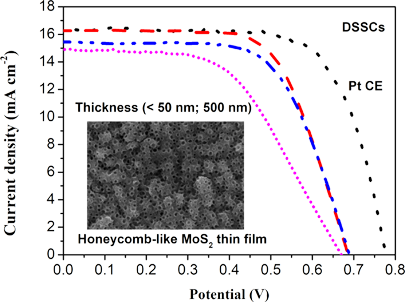
- solution containing (NH4)6Mo7O24·4H2O and Na2S by cyclic voltammetry (CV). Morphology and thickness of the MoS2 thin films were controlled by adjusting the concentration of the precursor solution. The electrochemical catalytic activity of the MoS2 thin films was investigated regarding the I3–/I–redox
- . This suggested that the MoS2-1.25/FTO CE has reversible redox activity and electrochemical stability. The electrochemical stability of the MoS2/FTO CE should provide long-term stability for solar cell devices. However, more work needs to be done to improve the efficiency of this DSSC device [36][37][38
- performed on a LabRAM HR 800 Raman Spectrometer (HORIBA Jobin Yvon) with an excitation laser source at 532 nm. The morphology of MoS2 thin films was analyzed by an ultrahigh-resolution field-emission scanning electron microscope (FE-SEM, Hitachi SU-8010, Japan). The electrochemical catalytic activity of the


Investigation of electron-induced cross-linking of self-assembled monolayers by scanning tunneling microscopy
Beilstein J. Nanotechnol. 2022, 13, 462–471, doi:10.3762/bjnano.13.39
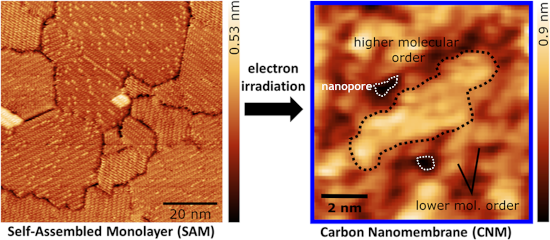
- V and +0.4 to +1.2 V. A z-resolution higher than 0.01 nm could be achieved. The STM tips were prepared from 0.375 mm polycrystalline tungsten wire (Alfa Aesar) by electrochemical etching in a 3 M NaOH solution. The instrument was calibrated by imaging HOPG with atomic resolution. The data was post


A non-enzymatic electrochemical hydrogen peroxide sensor based on copper oxide nanostructures
Beilstein J. Nanotechnol. 2022, 13, 424–436, doi:10.3762/bjnano.13.35
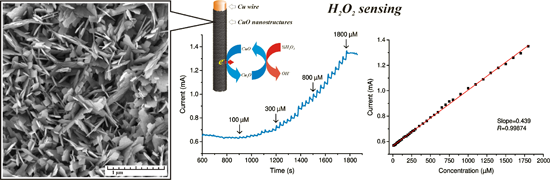
- spectroscopy and X-ray diffractometry. The resulting nanostructured samples were used for electrochemical determination of the H2O2 content in a 0.1 M NaOH buffer solution using cyclic voltammetry, differential pulse voltammetry, and i–t measurements. A good linear relationship between the peak current and the
- interfering substances, that is, ascorbic acid, uric acid, dopamine, NaCl, glucose, and acetaminophen, do not affect the electrochemical response. The real milk sample test showed a high recovery rate (more than 95%). According to the obtained results, this sensor is suitable for practical use for the
- qualitative detection of H2O2 in real samples, as well as for the quantitative determination of its concentration. Keywords: copper oxide; electrochemical sensor; hydrogen peroxide; nanostructures; Introduction Hydrogen peroxide, a strong oxidant and an essential intermediate product in many biomedical




The effect of metal surface nanomorphology on the output performance of a TENG
Beilstein J. Nanotechnol. 2022, 13, 298–312, doi:10.3762/bjnano.13.25
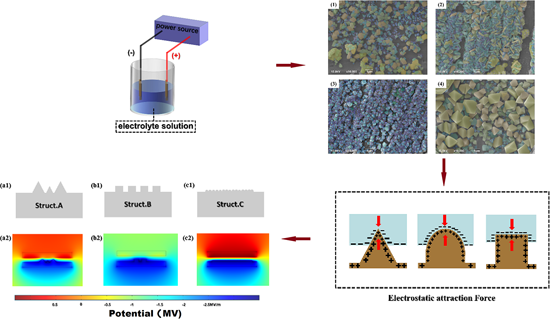
- was measured using an oscilloscope DS1102E (produced by Rigol). The short-circuit current was tested using an electrochemical workstation (CH, model CHI660E). The crystal structure of the samples was analyzed using a Bruker D8 Advance X-ray diffractometer. A scanning electron microscope (Coxem, model


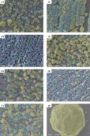
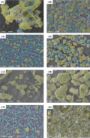
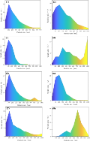
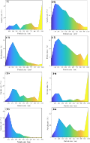


Relationship between corrosion and nanoscale friction on a metallic glass
Beilstein J. Nanotechnol. 2022, 13, 236–244, doi:10.3762/bjnano.13.18
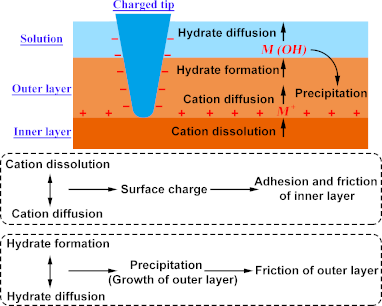
- electrochemical methods, often combined with surface analytical techniques [13][14][15]. Wang et al. [13] reported that the passive oxide films are grown as a double layer structure on MGs with a corrosion product layer underlying an inner barrier layer in NaCl and Na2SO4 solutions. Since most metals and alloys
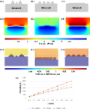
- corrosion conditions. Recently, we investigated nanoscale friction on a Zr63Ni22Ti15 (ZrNiTi) MG in phosphate buffer after electrochemical polarization [21]. Our results demonstrated a new method to investigate in situ the structure of surface oxide films grown upon polarization in aqueous solutions using
- polarization curves of ZrNiTi MGs in NaCl solution and phosphate buffer recorded in an electrochemical AFM cell. In NaCl solution, no passivity is observed during anodic polarization. The current density increases rapidly even at a low applied potential (approx. 0 V). In contrast, the ZrNiTi MG in phosphate


A comprehensive review on electrospun nanohybrid membranes for wastewater treatment
Beilstein J. Nanotechnol. 2022, 13, 137–159, doi:10.3762/bjnano.13.10
- predominant PEMs [13]. Zhang et al. developed nanohybrid PVDF membranes by incorporating zeolite with enhanced thermal and electrochemical performance for lithium-ion batteries [14]. ENHs have also been used as a heterogeneous catalyst in indole synthesis by Savva et al. by incorporating gold nanoparticles





Tin dioxide nanomaterial-based photocatalysts for nitrogen oxide oxidation: a review
Beilstein J. Nanotechnol. 2022, 13, 96–113, doi:10.3762/bjnano.13.7
- morphologies will affect the properties of SnO2 regarding gas sensor activity and optical, electrical, and electrochemical properties [60][61][62][63]. The typical properties of SnO2 are significantly affected by the effective surface area of different nanomaterial morphologies [63][64][65]. Wang et al. [66
- extending the light harvesting range and promoting the separation of photogenerated electrons. A considerable amount of reactive oxygen radicals was produced during the photocatalytic reaction, resulting from the large amount of free surface OH groups. PL, photocurrent response, electrochemical impedance





