


Search results
Search for "electrolyte" in Full Text gives 301 result(s) in Beilstein Journal of Nanotechnology. Showing first 200.
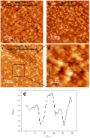
Electrochemical nanostructuring of (111) oriented GaAs crystals: from porous structures to nanowires
Beilstein J. Nanotechnol. 2020, 11, 966–975, doi:10.3762/bjnano.11.81
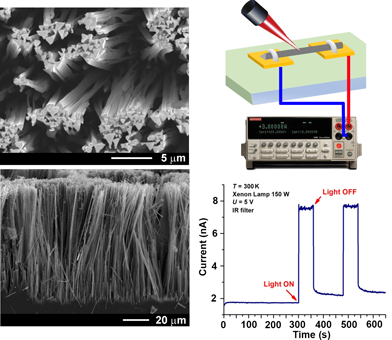
- . Possibilities to produce multilayer porous structures are demonstrated. At the same time, one-step anodization in a HNO3 electrolyte is shown to lead to the formation of GaAs triangular shape nanowires with high aspect ratio (400 nm in diameter and 100 µm in length). The new data are compared to those
- previously obtained through anodizing GaAs(100) wafers in alkaline KOH electrolyte. An IR photodetector based on the GaAs nanowires is demonstrated. Keywords: anodization; crystallographically oriented pores; gallium arsenide (GaAs); nanowires; neutral electrolyte; photocurrent; porous GaAs; Introduction
- porosification process of (111) oriented GaAs crystals, three different current densities and three different voltages were used for galvanostatic and potentiostatic modes, respectively. SEM images of a GaAs crystal anodized on both surfaces in 1.75 M NaCl electrolyte are given in Figure 1. The porous features





Atomic layer deposition for efficient oxygen evolution reaction at Pt/Ir catalyst layers
Beilstein J. Nanotechnol. 2020, 11, 952–959, doi:10.3762/bjnano.11.79
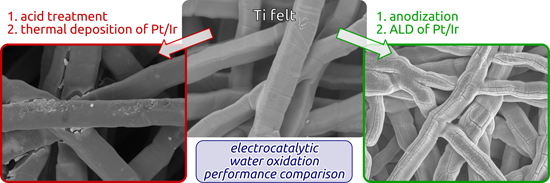
- of the salts followed by their thermal decomposition. In the alternative method, more academic in nature, atomic layer deposition (ALD) is applied to the felts after anodization. ALD allows for a controlled coating with ultralow noble-metal loadings in narrow pores. In acidic electrolyte, the ALD
- significant cost of theses noble metals renders it necessary to minimize their loading and maintain optimal access of the electrolyte to every active site of their surface. Numerous studies have been dedicated to the development of such bimetallic catalysts in various compositions [11], using various coating
- methods [12] as well as particles of various sizes [13] and shapes [14]. However, each study is presented as a self-sufficient piece of work with limited critical comparison to the state of the art. The conditions under which electrochemical performance is quantified (electrode substrate, electrolyte


A set of empirical equations describing the observed colours of metal–anodic aluminium oxide–Al nanostructures
Beilstein J. Nanotechnol. 2020, 11, 798–806, doi:10.3762/bjnano.11.64
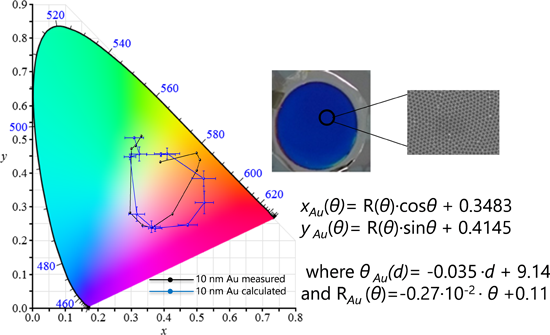
- anodization conditions used in this study were as follows: 0.3 M oxalic acid as electrolyte, an applied potential of 40 V and a temperature of 3 °C. Different thicknesses were obtained by applying different second anodization times. Different AAO films were anodized under the same conditions (same porosity


Nickel nanoparticles supported on a covalent triazine framework as electrocatalyst for oxygen evolution reaction and oxygen reduction reactions
Beilstein J. Nanotechnol. 2020, 11, 770–781, doi:10.3762/bjnano.11.62
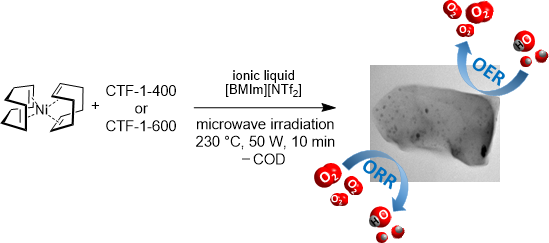
- all CTF species. ORR and OER are two reverse reaction sequences. In alkaline electrolyte, the mechanism of OER/ORR goes through the following elementary steps where S* is an active surface site or a surface-bound/adsorbed intermediate species, such as S–OH*, S–O* (in the literature often only * is


Effect of Ag loading position on the photocatalytic performance of TiO2 nanocolumn arrays
Beilstein J. Nanotechnol. 2020, 11, 717–728, doi:10.3762/bjnano.11.59
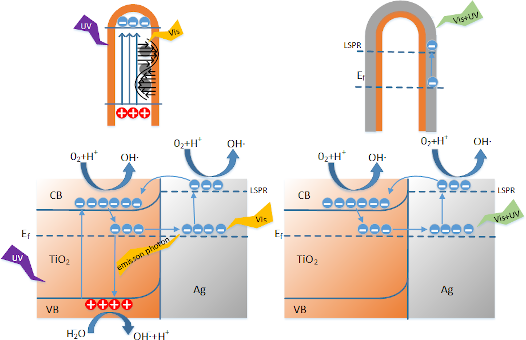
- alcohol. The anodized electrolyte solution was 0.2 M H2SO4, the oxidation voltage was 20 V, the ambient temperature was maintained at 0 °C, and the oxidation time was 6 h. After the oxidation was completed, the aluminum sheet was immersed in 1.8 wt % H2CrO4 to remove the first oxide layer. The sample was


Exfoliation in a low boiling point solvent and electrochemical applications of MoO3
Beilstein J. Nanotechnol. 2020, 11, 662–670, doi:10.3762/bjnano.11.52
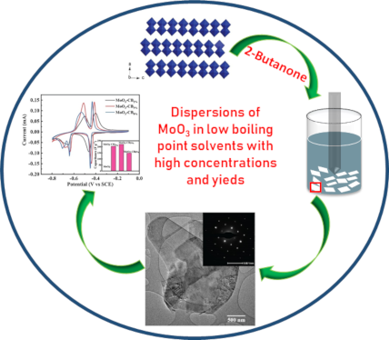
- were then dripped on the GCE. All electrochemical measurements were performed in 1 M H2SO4 electrolyte. Two-electrode system: The optimized ratio obtained from measurements of the three-electrode configuration were used to fabricate two-electrode devices. The respective amounts of MoO3 and carbon black
- steel current collectors, separated by filter paper dipped in 1 M H2SO4 electrolyte. Results and Discussion LPE assisted by tip sonication is an effective technique to peel off mono- and few-layers from layered bulk materials. In the crystal structure of α-MoO3 the atoms are connected to layers through
- response with a small iR drop. This can be attributed to the better conductivity after adding CB. To study the stability of the composite, cyclic voltammetry was carried out up to 2000 cycles. Initially, the capacitance increases, which may be attributed to the wetting of the electrode with the electrolyte

Comparison of fresh and aged lithium iron phosphate cathodes using a tailored electrochemical strain microscopy technique
Beilstein J. Nanotechnol. 2020, 11, 583–596, doi:10.3762/bjnano.11.46
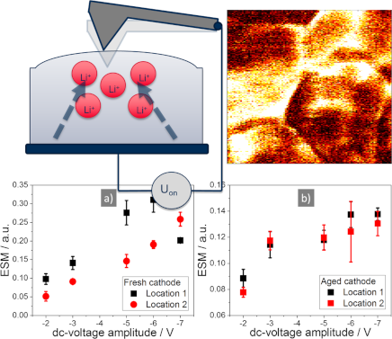
- solid electrolyte interface (SEI) on graphite anodes and HOPG [14][15][16], Li metal [17] and on cathode materials [18][19] as well as the changes in particle size during ageing [19][20]. Other AFM modes used for the analysis of ageing are, for example, Kelvin probe force microscopy (KPFM) and
- location. Additionally, since in a dry argon atmosphere no water meniscus is available to serve as electrolyte, side reactions are avoided. Further information of the non-Vegard expansion related influences is given in the supporting information in [34]. It is possible that the ESM signal is not solely
- capacity loss from first charge to first discharge is attributed to surface layer generation (anode: solid electrolyte interface, SEI; cathode: solid permeable interface, SPI) on both electrodes, since they were rinsed before the full-cell assembly. After the first cycle, the capacity stays constant (not



Preparation and in vivo evaluation of glyco-gold nanoparticles carrying synthetic mycobacterial hexaarabinofuranoside
Beilstein J. Nanotechnol. 2020, 11, 480–493, doi:10.3762/bjnano.11.39
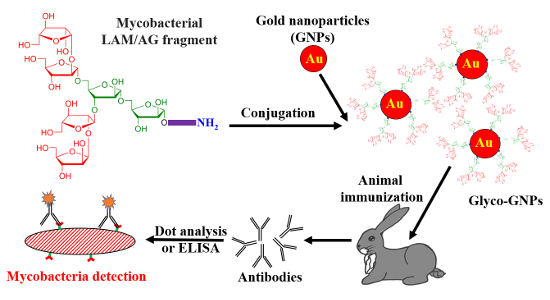
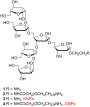
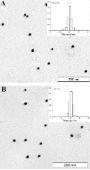
- thermodynamically unstable and require stabilization. The sol stability can be increased by coating the GNPs with a ligand layer. As a result, the particle surface acquires the properties of the stabilizing agent under use. These stabilized GNPs can be lyophilized and become much less sensitive to electrolyte


Electrochemically derived functionalized graphene for bulk production of hydrogen peroxide
Beilstein J. Nanotechnol. 2020, 11, 432–442, doi:10.3762/bjnano.11.34
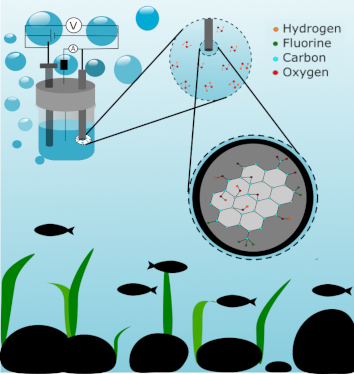
- decreases from G-M1 to G-M4 (where G refers to graphene and M1, M2, M3, and M4 refer to the respective molarity of the electrolyte used for the exfoliation), and the elemental composition calculated from the survey spectrum of the materials revealed that the degree of oxygen functionalization varies from
- its layered nature (Supporting Information File 1, Figure S2). Here the thickness variation is confirmed using atomic force microscopy (AFM), and the results are given in Figure S3. This indicates that with an increase in the concentration of the electrolyte, the thickness is increased from 40 nm to
- 140 nm (Figure S3), which corresponds with the TEM analysis [43] and BET-based surface area data. Hence from the TEM, BET, and AFM analysis, it can be concluded that the electrolyte concentration is important for the electrochemical exfoliation assisted synthesis of ultrathin graphene layers, and the


Synthesis and enhanced photocatalytic performance of 0D/2D CuO/tourmaline composite photocatalysts
Beilstein J. Nanotechnol. 2020, 11, 407–416, doi:10.3762/bjnano.11.31
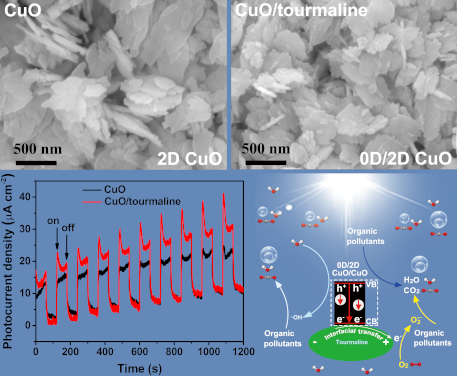
- . The transient photocurrent was measured with two Interface 1010E electrochemical workstations (Gamry, USA) using Na2SO3 (0.2 M) and Na2S (0.2 M) solutions with a volume ratio of 1:1 as electrolyte under LED lamp (λ = 470 nm) irradiation for 20 min. The samples were prepared as follows: Firstly, 10 mg


High-performance asymmetric supercapacitor made of NiMoO4 nanorods@Co3O4 on a cellulose-based carbon aerogel
Beilstein J. Nanotechnol. 2020, 11, 240–251, doi:10.3762/bjnano.11.18
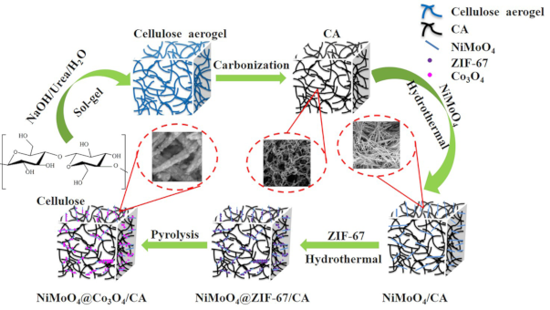
- ), the capacitance of which originates from the electrostatic adsorption of reversible ions at the electrode/electrolyte interface, and pseudocapacitors, for which the capacitance arises from reversible Faradaic reactions correlating with electroactive species [7][8]. Compared to EDLCs, pseudocapacitors
- but also provide 3D pathways for fast electrolyte ion diffusion and electron transport. To date, Ni foam [27], copper grid [28] and titanium mesh [29] have been mostly selected as collectors, whereas the high cost of these materials limited their practical application. Carbon aerogel (CA) has been
- nanofibers of CA, which could provide diffusion channels for electrolyte ions and could be a conductive substrate to serve as a backbone; the second consists of interlaced NiMoO4 nanorods and acts as a bridge in the ternary hierarchical structure, which offers a large surface area for loading of active




Simple synthesis of nanosheets of rGO and nitrogenated rGO
Beilstein J. Nanotechnol. 2020, 11, 68–75, doi:10.3762/bjnano.11.7
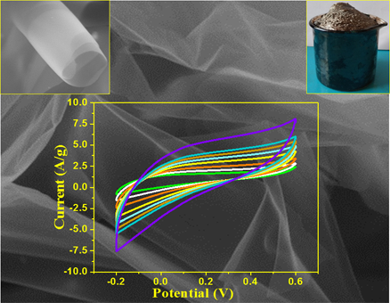
- voltammetry and CD experiments with three-electrode system using 1 M H2SO4 as electrolyte (Figure 8). CV curves of rGO and H-rGO at different scan rates from 5 to 200 mV·s−1 vs Hg/Hg2SO4 are shown in Figure 8a and Figure 8b, respectively. These curves show increase in current density with decreasing scan rate
- glassy carbon working electrode (3 mM), a platinum wire counter electrode and a Hg/Hg2SO4 reference electrode with 1 M H2SO4 electrolyte. The specific capacitance (SC) of rGO and H-rGO was calculated from CV curves, according to Equation 1: where ∫IdV is the area under the CV curve, m is the mass of the


Synthesis of amorphous and graphitized porous nitrogen-doped carbon spheres as oxygen reduction reaction catalysts
Beilstein J. Nanotechnol. 2020, 11, 1–15, doi:10.3762/bjnano.11.1
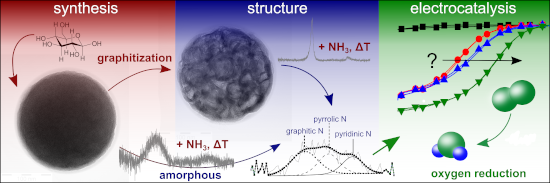
- measurements under controlled electrolyte transport, employing a rotating ring disk electrode (RRDE) setup (section 2 in “Results and Discussion”). We will compare the ORR performance with those of the previously reported TiON@NCS and TaON@NCS composite materials. A more detailed account of the electrochemical
- with higher reaction temperatures. 2 Electrochemical and electrocatalytic results The electrocatalytic ORR activities of the amorphous and graphitized N-doped carbon materials in acidic electrolyte (0.5 M H2SO4) are compiled in Figure 8, showing (Figure 8a,d) the ORR current densities, (Figure 8b,e
- frits from the main cell. The RHE itself consists of a Pt plate in a glass tube containing the respective electrolyte used for the measurement and a H2 bubbler. In the following, all potentials will be quoted versus that of the RHE. The potential was controlled by a bi-potentiostat (Pine Instruments




Antimony deposition onto Au(111) and insertion of Mg
Beilstein J. Nanotechnol. 2019, 10, 2541–2552, doi:10.3762/bjnano.10.245
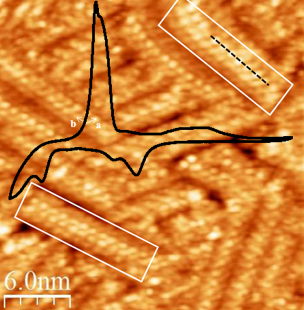
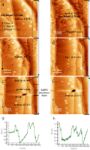
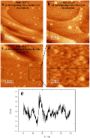
- ) electrolyte into/from a Sb-modified electrode shows a positive shift (400 mV) of the onset potential of Mg deposition compared to that of a bare Au electrode. From the charge of the Mg deposition, we find that the ratio of Mg to Sb is 1:1, which is somewhat less than expected for the Mg3Sb2 alloy. Keywords
- formation of a solid electrolyte interface (SEI) layer in Li systems. One of the main challenges in the commercialization of Mg-ion batteries is the incompatibility of the magnesium anode with the electrolytes because of the formation of this Mg2+ film. Recently, Sb has been suggested as an alternative
- electrodeposited Bi0.88Sb0.12 alloy by Arthur et al. [7]. However, the capacity declines to 215 mAh/g after 100 cycles with an electrolyte mixture of ethylmagnesium chloride, diethylaluminum chloride and anhydrous THF. A detailed, fundamental study of magnesium deposition/dissolution at a Sb-modified Au electrode






Polyvinylpyrrolidone as additive for perovskite solar cells with water and isopropanol as solvents
Beilstein J. Nanotechnol. 2019, 10, 2374–2382, doi:10.3762/bjnano.10.228
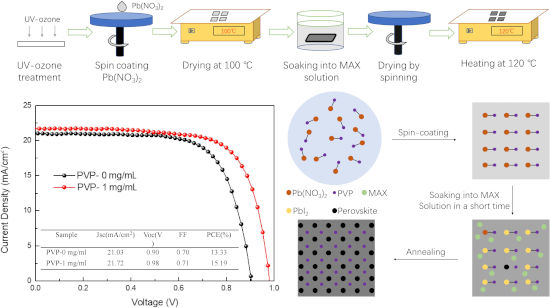
- photoanode and CH3NH3PbX3 (X = I, Br) as light absorbing material to derive perovskite dye-sensitized solar cells with conversion efficiencies of 3.81% (X = I) and 3.13% (X = Br). However, the corrosion of the perovskite material used in the electrolyte results in a poor stability of the devices [5]. In July




Adsorption and desorption of self-assembled L-cysteine monolayers on nanoporous gold monitored by in situ resistometry
Beilstein J. Nanotechnol. 2019, 10, 2275–2279, doi:10.3762/bjnano.10.219
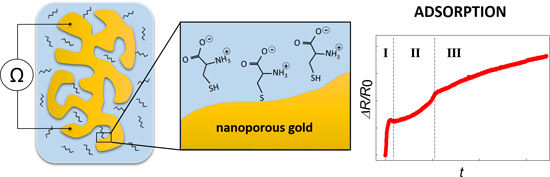
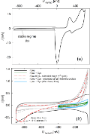
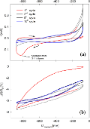
- commercial Ag/AgCl reference electrode (saturated KCl with a 3 M KNO3 salt bridge), relative to which all potentials will be stated in the following. Whenever the cell electrolyte was changed, the setup was immersed in distilled water for several hours for rinsing. Dealloying was performed in 0.1 M HClO4
- . After this desorption peak, significantly higher currents flow near the upper potential limit (Figure 2b, dashed red and grey curves), which are assigned to cysteine oxidation in the solution [18] as the desorbed cysteine is now dissolved in the electrolyte. The double-layer capacitance now amounts to

Design and facile synthesis of defect-rich C-MoS2/rGO nanosheets for enhanced lithium–sulfur battery performance
Beilstein J. Nanotechnol. 2019, 10, 2251–2260, doi:10.3762/bjnano.10.217
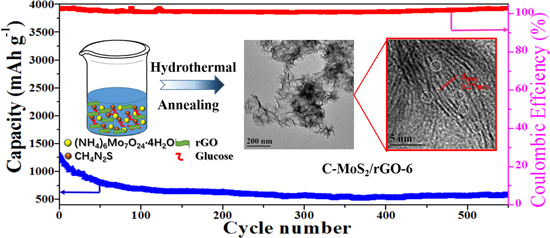
- discharge products (Li2S2 and Li2S) and sulfur result in a slow charge and discharge process and a low specific capacity [3]. Intermediate products of battery charge and discharge (Li2Sn, where 3 ≤ n ≤ 8) are soluble in the electrolyte and can also migrate to the lithium metal anode and precipitate there [4
- . However, the capacity of carbon and sulfur composite cathodes generally fades rapidly during long-term cycling, because the carbon materials can provide only inferior physical adsorption to the polar Li2Sn [16]. Once Li2Sn is solvated, it dissolves easily in the electrolyte from the electrode surface and
- -type cell (CR 2032) in an argon-filled glove box (O2 < 0.1 ppm, H2O < 0.1 ppm). The electrolyte was 1 M bis(trifluoromethane) sulfonimide lithium salt (LiTFSI) dissolved in a mixed solution of dimethyl ether (DME) and 1,3-dioxolane (DOL) (1:1, v/v) with 2 wt % LiNO3. The recharge properties and cyclic


Nontoxic pyrite iron sulfide nanocrystals as second electron acceptor in PTB7:PC71BM-based organic photovoltaic cells
Beilstein J. Nanotechnol. 2019, 10, 2238–2250, doi:10.3762/bjnano.10.216
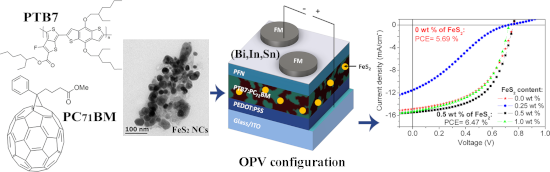
- acetonitrile using 0.1 M tetrabutylammonium hexafluorophosphate (TBAPF6) as the electrolyte at a scan rate of 100 mVs−1, and each solution was purged with N2 prior to measurement. UV–vis characterization was performed through thin films of the PTB7:PC71BM active layer with and without FeS2 NCs at different


A novel all-fiber-based LiFePO4/Li4Ti5O12 battery with self-standing nanofiber membrane electrodes
Beilstein J. Nanotechnol. 2019, 10, 2229–2237, doi:10.3762/bjnano.10.215
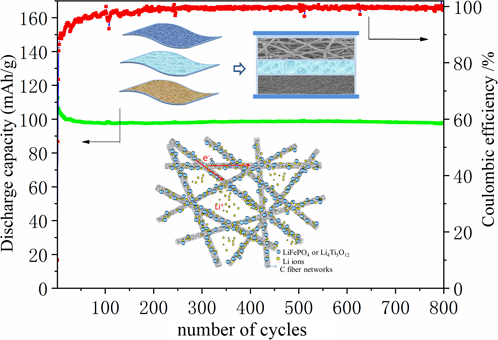
- growth of crystal grains on the surface of the fibers for both LiFePO4 and Li5Ti4O12. The fiber diameter is less than 1 μm, and the grain size is between 200 and 300 nm. There are numerous channels between the fibers. This structure is beneficial for the penetration of electrolyte and the contact between
- active substances and electrolyte. The resistance of Li+ during charging and discharging of the battery decreases, and the internal structure of the material cannot collapse of deform easily. Thus, the structure of the material remains unchanged even after many cycles [40][41]. TEM images of the LiFePO4
- and high charge–discharge reversibility. Battery performance The two free-standing electrodes were assembled to a full battery with the prepared electrolyte membrane (Figure S1, Supporting Information File 1), and the rate and the cycling performance of the battery were tested. From the charge


Ultrathin Ni1−xCoxS2 nanoflakes as high energy density electrode materials for asymmetric supercapacitors
Beilstein J. Nanotechnol. 2019, 10, 2207–2216, doi:10.3762/bjnano.10.213
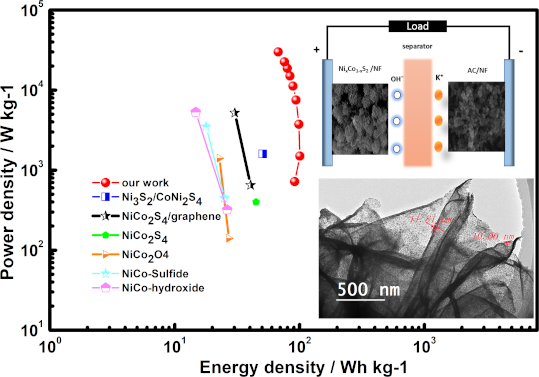
- electrical conductivity. Developing ultrathin nanostructured materials is critical to achieving high electrochemical performance, because they possess rich active sites for electrochemical reactions, shortening the transport path of ions in the electrolyte during the charge/discharge processes. This paper
- ]. Currently, carbon-based electrical double-layer capacitors (EDLCs) are commercially available, but they exhibit only a low energy density because of physical charge storage processes due to the adsorption/desorption of ions at the electrode–electrolyte interfaces [3]. These drawbacks have hindered further
- corresponding nickel–cobalt oxides with the same material morphology. The assembled ASC also exhibits a superior energy density and high rate capability in a 2 M KOH aqueous electrolyte, making it a promising electrode for SCs. Experimental Materials Nickel nitrate hexahydrate (Ni(NO3)2·6H2O), cobalt nitrate


Review of advanced sensor devices employing nanoarchitectonics concepts
Beilstein J. Nanotechnol. 2019, 10, 2014–2030, doi:10.3762/bjnano.10.198

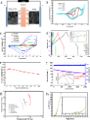
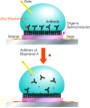
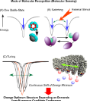
- to human life, medical, and health monitoring, the development of biosensors has received significant attention. For example, for the detection of bisphenol A, which is suspected as an endocrine disruptor, Piro et al. produced a nanoarchitectonic electrolyte-gated organic field-effect transistor with
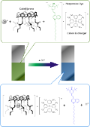
- moisture, which results in the generation of internal stress. An optode sensor to visually detect cesium ions in domestic water and seawater, comprised of a calix[6]arene derivative, responsive dye KD-M1337, and cation exchanger. An electrolyte-gated organic field-effect transistor with anti-bisphenol A





Gold-coated plant virus as computed tomography imaging contrast agent
Beilstein J. Nanotechnol. 2019, 10, 1983–1993, doi:10.3762/bjnano.10.195
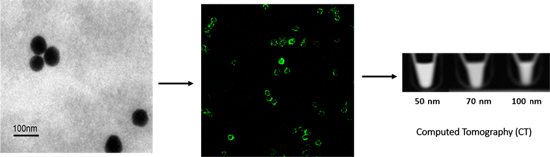
- computed tomography (CT) imaging in vitro. The gold-coated cowpea mosaic virus (Au-CPMV) particles were generated by the electrostatic adsorption of positively charged electrolyte on the virus capsid with the subsequent incubation and reduction of anionic gold complexes. Au-CPMV particles as a CT contrast




Facile synthesis of carbon nanotube-supported NiO//Fe2O3 for all-solid-state supercapacitors
Beilstein J. Nanotechnol. 2019, 10, 1923–1932, doi:10.3762/bjnano.10.188
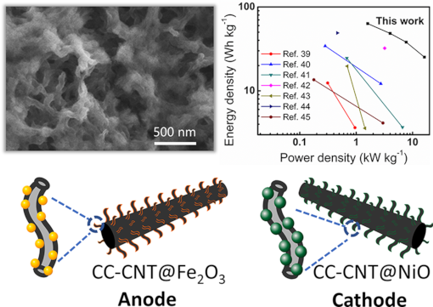
- carbon cloth (0.2 m2·g−1). The pore size distribution (Figure S4b, Supporting Information File 1) shows that most pores have a size of 40–50 nm. The high surface area, and the mesopores can help the ion diffusion between electrode and electrolyte. The morphologies of CNT@Fe2O3 were further examined by
- as a reference electrode, CC-CNT@Fe2O3 as the binder-free working electrode and 2 M KOH as the electrolyte. Figure 4a shows cyclic voltammetry (CV) curves of the CC-CNT@Fe2O3 electrode at scan rates of 2, 5, 10, 20, 50 and 100 mV·s−1, from which visible redox peaks can be seen. The reduction peak at
- ca. −1.1 V and the oxidation peak at ca. −0.7 V can be attributed to the reaction between Fe3+ and K+ in the electrolyte [21][31]. When plotting log i versus log v of the redox peaks according to the empirical Randles–Sevcik equation [32][33], the slope can be determined to be about 0.58, indicating


TiO2/GO-coated functional separator to suppress polysulfide migration in lithium–sulfur batteries
Beilstein J. Nanotechnol. 2019, 10, 1726–1736, doi:10.3762/bjnano.10.168
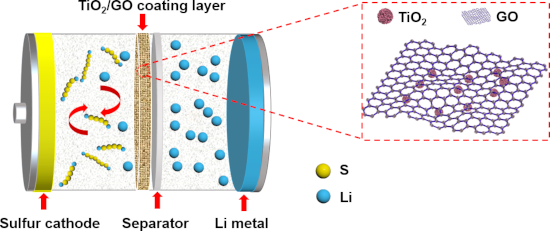
- and Li2S2 at the electrode/electrolyte interface, shortening the service life and rendering poor coulombic efficiency, and (iii) large volumetric changes during charge/discharge, destroying the conductive network of the electrode and causing capacity decay [11][12][13][14][15]. To overcome these
- issues, researchers have adopted various techniques, such as optimization of the cathode material [16][17][18], incorporation of electrolyte additives [19], and protection of the anode [20]. Recently, much attention has been directed to the development of a functional separator, which serves as an
- treated with a Li2S6 electrolyte (1.0 M/0.1 M LiTFSI/LiNO3 in DOL and DME (1:1 v/v)) via immersion for 12 h; the Li2S6-treated TiO2/GO material was then obtained after centrifugal separation and vacuum drying. Raman and FTIR studies of the Li2S6-treated TiO2/GO material clearly show the existence of an S


Tuning the performance of vanadium redox flow batteries by modifying the structural defects of the carbon felt electrode
Beilstein J. Nanotechnol. 2019, 10, 1698–1706, doi:10.3762/bjnano.10.165
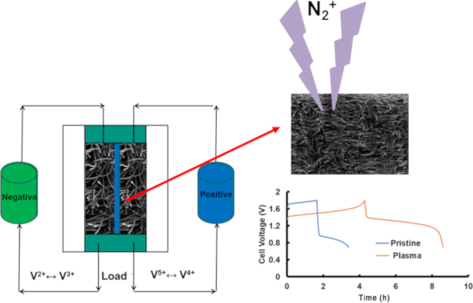
- flow batteries like zinc/bromine, the electrical energy in VRFBs is completely stored by the electrolyte in an external tank. Thus, in VRFB systems, the power and energy can be decoupled, that is, to store more energy, only the tank size needs to be increased. Moreover, since the system uses only a
- the HER taking place at the negative electrode due to the very low amount of oxygen functional groups. Moreover, the Nafion 117 membrane used for higher current density cycling leads to an electrolyte imbalance. A detailed investigation is still required to understand the overall mechanism of the
- molar sulfuric acid (Sigma Aldrich). In order to obtain the V3+ electrolyte for the negative half-cell reaction, both tanks were filled with the same volume of the V4+ electrolyte and then potentiostatically charged at 1.7 V in a 10 cm−2 flow cell. The reduction to V3+ was determined as complete when





