Search results
Search for "junction" in Full Text gives 316 result(s) in Beilstein Journal of Nanotechnology. Showing first 200.
Nickel nanoparticle-decorated reduced graphene oxide/WO3 nanocomposite – a promising candidate for gas sensing
Beilstein J. Nanotechnol. 2021, 12, 343–353, doi:10.3762/bjnano.12.28
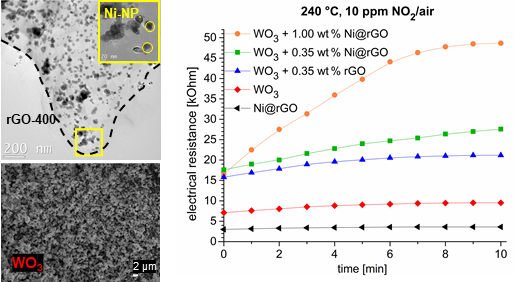
- charges (possibly, a p–n junction is formed). It was shown [59] that electrons that were transferred from the n-type semiconductor and stored in the rGO sheets are withdrawn upon exposure to gas, thereby restoring the hole concentration and p-type conductivity of rGO. This is made possible by the energy


Imaging of SARS-CoV-2 infected Vero E6 cells by helium ion microscopy
Beilstein J. Nanotechnol. 2021, 12, 172–179, doi:10.3762/bjnano.12.13
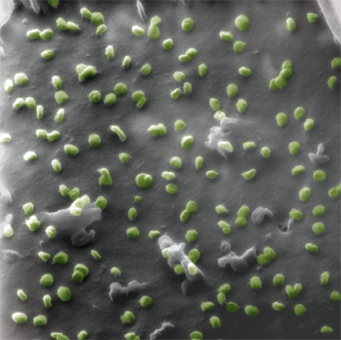
- interactions mediated through agglutinating BST-2 [40][41]. Some viral particles appear to be connected to the cell membrane by a continuous junction (arrowheads). Figure 3b shows another cell on the MOI 1 sample at different magnification levels. At the highest magnification shown in Figure 3b3 (FOV 850 nm


Towards 3D self-assembled rolled multiwall carbon nanotube structures by spontaneous peel off
Beilstein J. Nanotechnol. 2020, 11, 1865–1872, doi:10.3762/bjnano.11.168
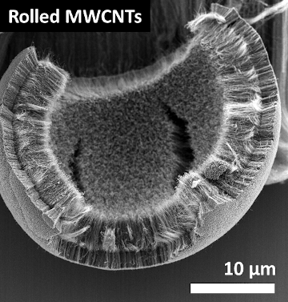
- in CNTs is achieved by tuning experimental parameters during CNT synthesis [16]. To date, CNTs with so-called intratubular junctions have been used exclusively for electronic applications due to their p–n junction behavior [17][18][19]. The potential of CNTs with junctions to serve as building blocks
- identified at the root of MWCNTs in N1/C2 junctions than larger nanoparticles at the root of MWCNT in C1/N2 junctions (Supporting Information File 1, Figure S1). A C1/N2 junction, therefore, requires a size increase of the nanocatalyst whereas an N1/C2 junction requires a size decrease of the nanocatalyst
- during sample preparation. Nevertheless, on MWCNT structures with only one junction a change in structure can still be related to the precursor used. In the case of N1/C2 junctions (Figure 4a and Figure 4b) the interface between the two expected sections is conveniently marked by darker features, which



Mapping of integrated PIN diodes with a 3D architecture by scanning microwave impedance microscopy and dynamic spectroscopy
Beilstein J. Nanotechnol. 2020, 11, 1764–1775, doi:10.3762/bjnano.11.159
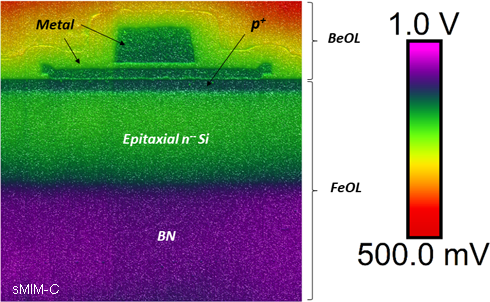
- the values of the ∂C/∂V amplitude are the strongest. The two signals localize the electrical junctions of the diode. The first signal is the signature of the pn junction, between the p+ implanted layer (anode) and the lightly doped n-type epitaxial silicon layer, and the second signal is the quasi
- -intrinsic/BN junction. Moreover, the amplitude of the local capacitance variation for the lightly doped n-type epitaxial silicon layer is close to zero (almost no signal). In the phase measurement, this layer has a value that is similar to the one obtained for the oxide, which explains the relatively poor
- applied voltage can be extracted. The availability of a C–V (sMIM-C as a function of V) spectrum in every pixel allows for the extraction of a high-resolution map of the flatband voltage and pn junction depletion zones. This illustrates the capability to reveal sample properties that are either not


High-responsivity hybrid α-Ag2S/Si photodetector prepared by pulsed laser ablation in liquid
Beilstein J. Nanotechnol. 2020, 11, 1596–1607, doi:10.3762/bjnano.11.142
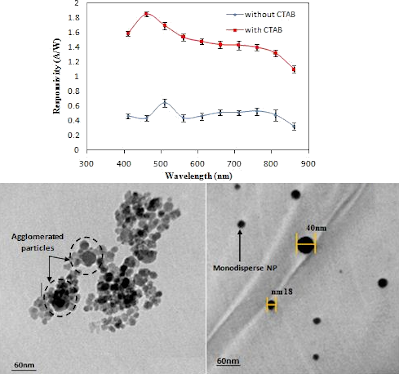
- Tu slightly increased with bias voltage, whereas the reverse current of the heterojunction prepared with CTAB did not depend on the bias voltage. These results indicated an enhancement of the junction properties. The ideality factor (n) of Ag2S/Si was estimated from the semi-logarithmic plot of the
- remarkable improvement in junction characteristics. The value of turn-on voltage of the heterojunctions was estimated and found to be 2.2 and 1.8 V for heterojunctions prepared in pure Tu and with CTAB surfactant, respectively. Decreasing the turn-on voltage after adding the CTAB can be ascribed to a




Optically and electrically driven nanoantennas
Beilstein J. Nanotechnol. 2020, 11, 1542–1545, doi:10.3762/bjnano.11.136

- spectroscopy (SERS); tip-enhanced Raman spectroscopy (TERS); tunnel junction; Editorial Optical antennas + serve to confine the energy of photons transported by a light wave to a tiny volume much smaller than the wavelength; or reversely, to convert the energy of an evanescent field that oscillates at optical
- low-background medical imaging or nanolasers [33]. Electrically driven optical antennas emit light when a bias voltage is applied to the contacted antenna arms that are forming a tunnel junction. Inelastic electron tunneling through the gap excites gap–plasmon oscillations leading to the emission of
- subject. Energy-level engineering in the gap by introducing molecules into the tunnel junction provides an additional handle to modulate photon emission from an electrically controlled optical antenna. Light emission by tunneling through a single molecule opens the door to combine electronics and quantum
Adsorption and self-assembly of porphyrins on ultrathin CoO films on Ir(100)
Beilstein J. Nanotechnol. 2020, 11, 1516–1524, doi:10.3762/bjnano.11.134
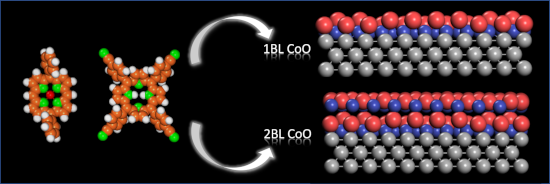
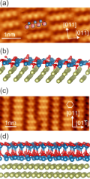
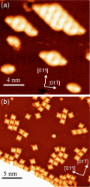
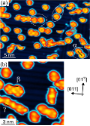
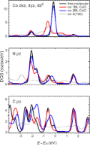
- imaged as a protrusion on CoO for tunneling bias voltages of ±2.0 V around the Fermi energy. In Figure 5 we analyze the behavior of 1 on the 2BL CoO film. Imaging of 1 proved difficult at liquid-nitrogen temperatures since the molecules are easily pulled by the STM tip even at junction resistances of RT




Atomic defect classification of the H–Si(100) surface through multi-mode scanning probe microscopy
Beilstein J. Nanotechnol. 2020, 11, 1346–1360, doi:10.3762/bjnano.11.119
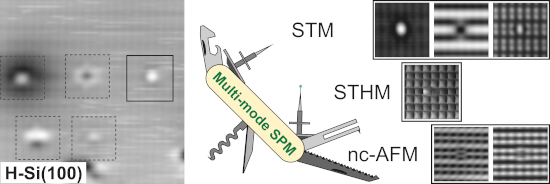
- tunnelling hydrogen microscopy (STHM) [35]. Rather than direct tip functionalization as done in nc-AFM, STHM in these original studies was achieved by leaking in a background of molecular hydrogen (≈10−9 Torr) until an H2 molecule became trapped in the tip–sample junction. Here, we achieve STHM-like
- for the unterminated portion (top). This demonstrates that the dark contrast is a result of the high reactivity between two different species – silicon and hydrogen – interacting with each other in the tip–sample junction, regardless of which species functionalizes the tip. The alternating asymmetry



Cryogenic low-noise amplifiers for measurements with superconducting detectors
Beilstein J. Nanotechnol. 2020, 11, 1316–1320, doi:10.3762/bjnano.11.115
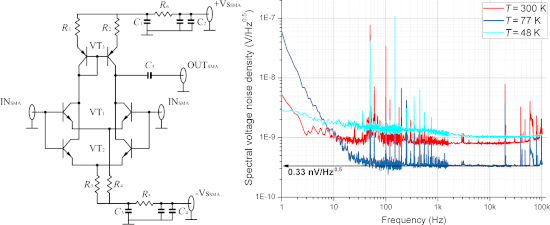
- bipolar junction transistor technology. The amplifiers show high gain values of more than 60 dB at 300, 77, and 48 K. The minimum voltage noise spectral density was achieved at 77 K and corresponded to 0.33 nV/Hz0.5 with a flicker noise of 20 Hz. The maximum voltage gain was 70 dB at 77 K for a frequency
- low-frequency and low-noise amplifiers are commonly based on Si bipolar junction transistor (BJT) technology and junction field-effect transistor (JFET) technology. Since external interferences can be compensated by differential input circuits, differential amplifier designs are used for these
- applicability of commercially available Si bipolar transistors for cryogenics. Design and preliminary performance of cryogenic low-noise differential amplifiers, based on matched parallel connected pairs of commercially available bipolar junction transistors, at temperatures of 77 and 50 K are presented. This


Role of redox-active axial ligands of metal porphyrins adsorbed at solid–liquid interfaces in a liquid-STM setup
Beilstein J. Nanotechnol. 2020, 11, 1264–1271, doi:10.3762/bjnano.11.110
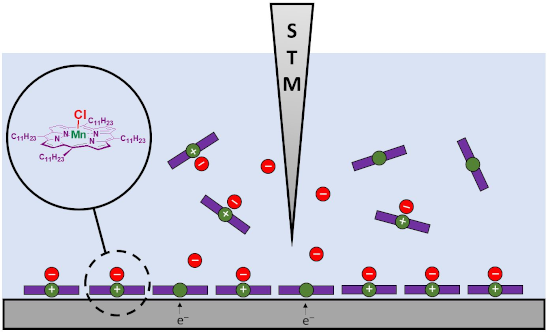
- likely. An enhanced solubility of the ions in the aromatic solvent 1-phenyloctane may be the result of attractive anion–π interactions [24]. Conclusion MnTUPCl dissolved in 1-phenyloctane and placed in a tunnel junction yields high additional currents. We attribute them to Faradaic currents and put


3D superconducting hollow nanowires with tailored diameters grown by focused He+ beam direct writing
Beilstein J. Nanotechnol. 2020, 11, 1198–1206, doi:10.3762/bjnano.11.104
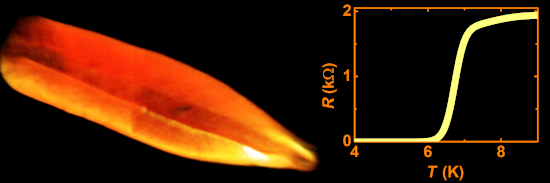
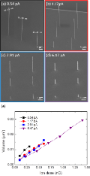
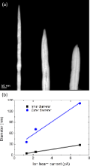
- for quantum computation. The behavior of nanosized superconductors as one-dimensional quantum oscillators [1], Josephson junction arrays [2], electronic transport devices [3][4][5][6][7], very small-scale devices [8][9], micrometer-scale coolers [10], or thermal and spin sensors [11][12] has been



Nonadiabatic superconductivity in a Li-intercalated hexagonal boron nitride bilayer
Beilstein J. Nanotechnol. 2020, 11, 1178–1189, doi:10.3762/bjnano.11.102
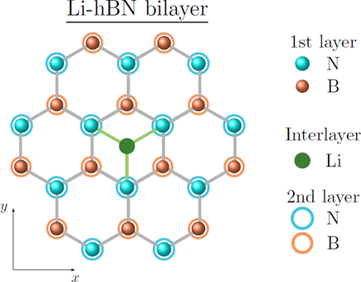
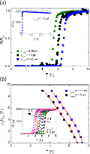
- obtained using the tunneling junction. Hence, any experimental results directly relate to the predictions of the Eliashberg formalism taking into account the effect of vertex corrections. Additionally, in Figure 3d–f we plotted the form of the order parameter on the real axis (T = 4 K). The real part of


![[Graphic 34]](/bjnano/content/inline/2190-4286-11-102-i54.svg?max-width=637&scale=1.18182) for Li-hBN. The results were obta...
for Li-hBN. The results were obta...
Revealing the local crystallinity of single silicon core–shell nanowires using tip-enhanced Raman spectroscopy
Beilstein J. Nanotechnol. 2020, 11, 1147–1156, doi:10.3762/bjnano.11.99
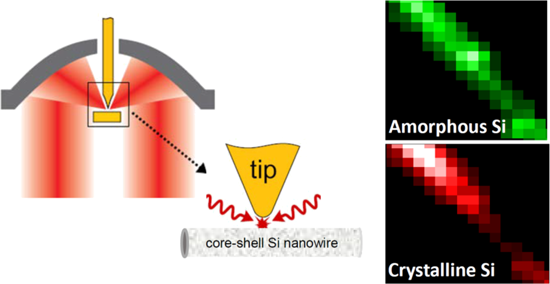
- oriented crystalline grains. b) The fast Fourier transformation image of the indicated area in panel a. c) TEM image showing a migrated metal particle on a SiNW. d) TEM image of a Pt-catalyzed core–shell SiNW showing the morphology of the junction between SiNW core and shell. e) Pt silicide catalyst and


Electrochemical nanostructuring of (111) oriented GaAs crystals: from porous structures to nanowires
Beilstein J. Nanotechnol. 2020, 11, 966–975, doi:10.3762/bjnano.11.81
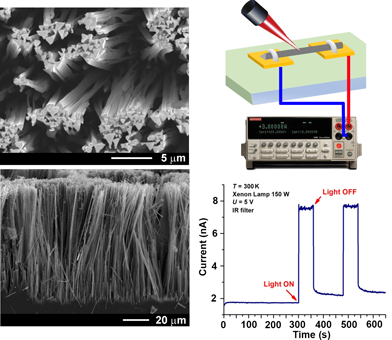
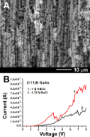
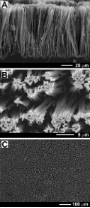
- decreasing diameter, but to a lesser extent. The obtained values of responsivity and detectivity are comparable with those previously reported for a graphene/GaAs NW photodetector with a Schottky junction working at 532 nm radiation [33]. The detectivity of our photodetector is better than that reported for





Microwave photon detection by an Al Josephson junction
Beilstein J. Nanotechnol. 2020, 11, 960–965, doi:10.3762/bjnano.11.80
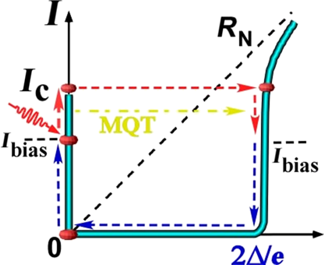
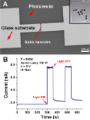
- Novgorod, Russia Lobachevsky State University of Nizhny Novgorod, Nizhny Novgorod, Russia Chalmers University of Technology, SE-41296 Gothenburg, Sweden 10.3762/bjnano.11.80 Abstract An aluminium Josephson junction (JJ), with a critical current suppressed by a factor of three compared with the maximal
- through the JJ is observed, which resembles the differentiation between N and N + 1 photon absorption. Keywords: aluminium; Josephson junction; microwaves; phase diffusion; photon counter; switching current distribution; Introduction Currently, an important problem is the creation of single-photon
- ]. For the lower-frequency range, a new class of single-microwave-photon detectors is needed. With regard to this, a current-biased Josephson junction (JJ) is of particular interest for applications as a threshold detector since its phase dynamics is altered even by a weak probe field. Rich dynamics of


Band tail state related photoluminescence and photoresponse of ZnMgO solid solution nanostructured films
Beilstein J. Nanotechnol. 2020, 11, 899–910, doi:10.3762/bjnano.11.75
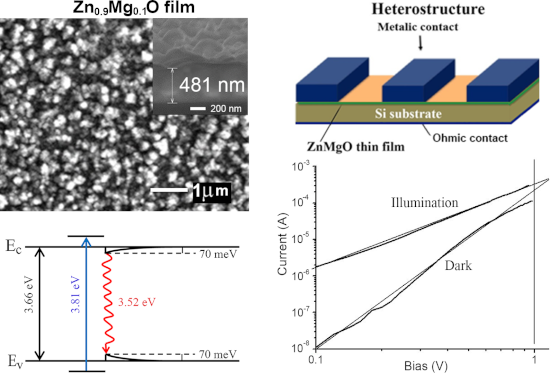
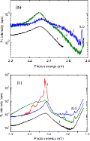
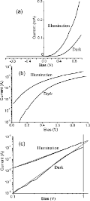
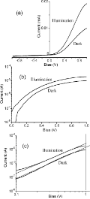
- –voltage characteristic does not fit the classical formula for a p–n junction, which should be a straight line for the forward bias in the semi-logarithmic coordinates. On the contrary, the characteristics are fit to straight lines in the double logarithmic coordinates (Figure 9c and Figure 10c). Moreover
- , the investigated heterojunctions work as photodetectors at forward bias, while a classical p–n junction should function as a photodetector at reverse bias. Since the current–voltage characteristics are fit to straight lines in the log–log coordinates, it means that they correspond to a power function

A Josephson junction based on a highly disordered superconductor/low-resistivity normal metal bilayer
Beilstein J. Nanotechnol. 2020, 11, 858–865, doi:10.3762/bjnano.11.71
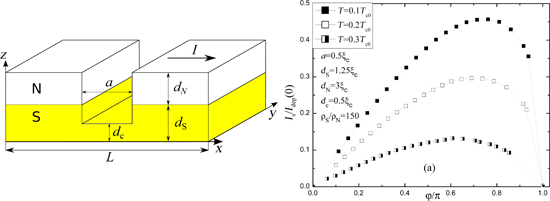
- Pavel M. Marychev Denis Yu. Vodolazov Institute for Physics of Microstructures, Russian Academy of Sciences, Nizhny Novgorod, 603950, Russia 10.3762/bjnano.11.71 Abstract We calculate the current–phase relation (CPR) of a SN-S-SN Josephson junction based on a SN bilayer of variable thickness
- composed of a highly disordered superconductor (S) and a low-resistivity normal metal (N) with proximity-induced superconductivity. In such a junction, the N layer provides both a large concentration of phase in the weak link and good heat dissipation. We find that when the thickness of the S and the N
- layer and the length of the S constriction are about the superconducting coherence length the CPR is single-valued and can be close to a sinusoidal shape. The product IcRn can reach Δ(0)/2|e| (Ic is the critical current of the junction, Rn is its normal-state resistance, Δ(0) is the superconductor gap


Epitaxial growth and superconducting properties of thin-film PdFe/VN and VN/PdFe bilayers on MgO(001) substrates
Beilstein J. Nanotechnol. 2020, 11, 807–813, doi:10.3762/bjnano.11.65
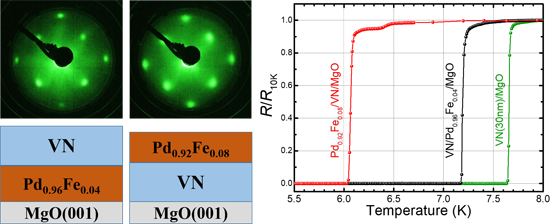
- junction technology is currently implied to be used for the logics fabrication, however, hybrid Josephson junctions incorporating magnetic components are also considered for the mainframe computation components [9][14][15][16][17][18][19], and cache and main memories [8][20][21][22][23][24][25]. It is
- ferromagnets to improve the operation characteristics of superconductor–ferromagnet–insulator heterojunctions for superconducting spintronics applications. For example, cubic superconducting MoNx, which is a Josephson junction technology material [4][5][46], exhibits a good epitaxial match with Pd1−xFex alloys


Electromigration-induced directional steps towards the formation of single atomic Ag contacts
Beilstein J. Nanotechnol. 2020, 11, 680–687, doi:10.3762/bjnano.11.55
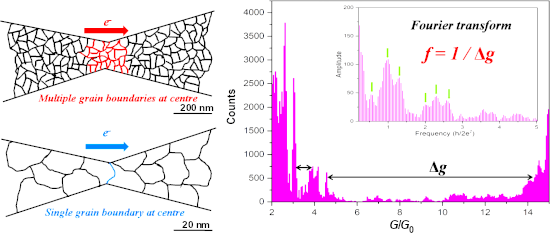
- essentially only one junction that is conducting. Such instabilities seem to be characteristic to the EM process, since they are commonly not observed in MCBJ experiments but have also been found in recent EM experiments with Cu nanocontacts [24]. Since a distribution of contacts of various sizes exist, there


Comparison of fresh and aged lithium iron phosphate cathodes using a tailored electrochemical strain microscopy technique
Beilstein J. Nanotechnol. 2020, 11, 583–596, doi:10.3762/bjnano.11.46
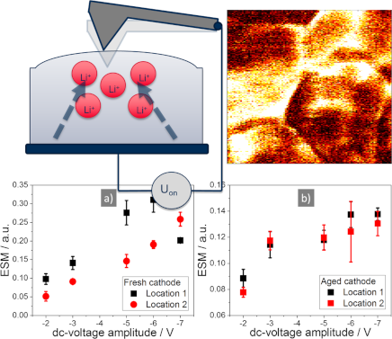
- mechanisms are piezoelectricity, flexoelectricity and electrostriction. Further contributions are possible by deformation potential generation, electron–hole formation, coupling of electrons and phonons, electrochemical side reactions in the tip–sample junction, electrostatic interaction, and volume
- (Rtip around 30 nm or even larger), the ESM signal would exhibit rather diffuse signal allocation. Therefore, it is more reasonable to assume a limited probed volume close to the surface of the tip–sample junction of only a few nanometres in depth. Dependency of the ESM signal intensity during stepwise
- excitation dc-voltage amplitudes, the short excitation time of only 10 ms and the inert gas atmosphere. This prevents the generation of a water droplet meniscus at the tip–sample junction, which can serve as an electrolyte for electrochemical reactions. The increase of the ESM signal intensity for the fresh



High dynamic resistance elements based on a Josephson junction array
Beilstein J. Nanotechnol. 2020, 11, 417–420, doi:10.3762/bjnano.11.32
- effect. Keywords: dynamic resistance; Josephson junction array; nanoelectronics; quantum phase slip; superconductivity; Ti nanowires; Introduction The field of modern nanoelectronics is facing stagnation with respect to further miniaturization, deviating from Moore’s law [1]. Typically, two main reason
- ), including superconducting systems based on the Josephson effect. It has been shown that physics behind a Josephson junction (JJ) is dual to a quantum phase-slip junction (QPSJ) [3], whereby the corresponding QPSJ-based qbit operation has also been demonstrated [4]. At the same time, the quantum dynamics of
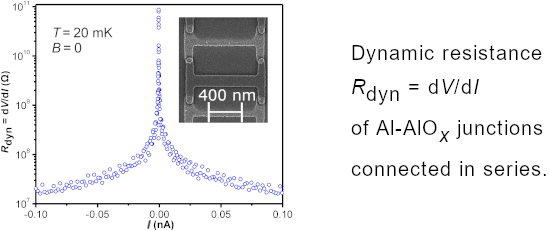
- connected in series, each being a Al–AlOx–Al junction with a gap of about 400 µV. The charging energy, Ec = e2/2C, of each SIS contact (considering it to be a plate capacitor with dielectric constant ε ≈ 10, area 100 × 100 nm and distance between plates ≈2 nm) is about two orders of magnitude higher than

Implementation of data-cube pump–probe KPFM on organic solar cells
Beilstein J. Nanotechnol. 2020, 11, 323–337, doi:10.3762/bjnano.11.24
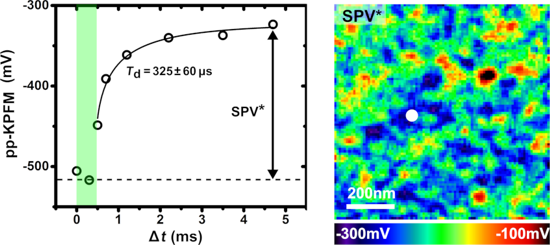
- be taken into account, which renders the interpretation of IM-KPFM data even more difficult. Upon illumination, the capacitive junction formed by the cantilever tip and the conducting substrate onto which the organic layer is deposited is indeed reduced due to photogenerated carriers [19]. As a first
- varying illumination state. Upon illumination, the charge carrier density increases leading not only to a reduction of the tip–sample capacitive junction but also to an increase in the KPFM S/N ratio. Regarding the basic operating principles of pp-KPFM, it is unclear why photoinduced capacitive changes




Anomalous current–voltage characteristics of SFIFS Josephson junctions with weak ferromagnetic interlayers
Beilstein J. Nanotechnol. 2020, 11, 252–262, doi:10.3762/bjnano.11.19
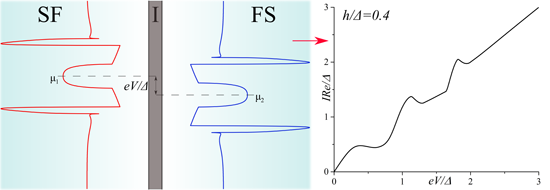
- situation is resolved by addition of an insulating barrier (I) yielding a SFIFS layer sequence, which allows one to realize much larger values of the product IcRn, where Ic is the critical current of the junction and Rn its normal state resistance [36][37][38]. Recently, SIFS junctions attracted much
- the SIFS CVC similar to the I–V curve of the FIS junction. In this paper we study the current–voltage characteristics of SFIFS Josephson junctions with two ferromagnetic interlayers. SFIFS structures were also proposed for various applications in memory elements [56][57][58], single-flux quantum
- circuits [47], and as injectors in superconductor–ferromagnetic transistors [81][82][83][84], which can be used as amplifiers for memory, digital, and RF applications. In this work we study the current–voltage characteristics of a SFIFS junction as shown below in Figure 1. We present a quantitative model


Nonequilibrium Kondo effect in a graphene-coupled quantum dot in the presence of a magnetic field
Beilstein J. Nanotechnol. 2020, 11, 225–239, doi:10.3762/bjnano.11.17
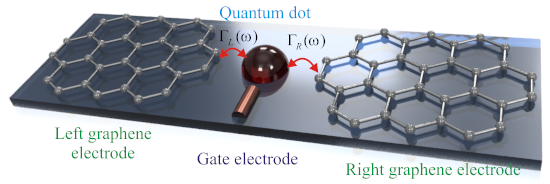
- be realized by a molecular junction or a single quantum dot (QD) or many QDs in a particular arrangement coupled to charge reservoirs by metallic [10][11][12][13][14][15][16][17][18][19][20][21][22][23][24][25][26][27][28][29][30][31], ferromagnetic [32][33][34][35] or graphene electrodes [36][37][38


Rational design of block copolymer self-assemblies in photodynamic therapy
Beilstein J. Nanotechnol. 2020, 11, 180–212, doi:10.3762/bjnano.11.15