


Search results
Search for "light source" in Full Text gives 208 result(s) in Beilstein Journal of Nanotechnology. Showing first 200.
Review of time-resolved non-contact electrostatic force microscopy techniques with applications to ionic transport measurements
Beilstein J. Nanotechnol. 2019, 10, 617–633, doi:10.3762/bjnano.10.62
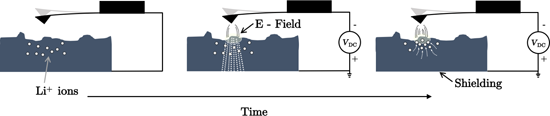
- . One example of this is in time-resolved Kelvin probe force microscopy (KPFM) experiments that measure the surface photovoltage of a sample as a function of time after a light source is pulsed. This was first implemented by Takihara et al. to measure the photovoltage dynamics of a sample at time scales
- by the detection electronics, but instead is theoretically limited only by the thermal noise of the cantilever [18]. This principle can be easily extended to ionic systems (such as those discussed previously) by simply replacing the pulsed light source with a pulsed voltage. In this case, the





Direct observation of the CVD growth of monolayer MoS2 using in situ optical spectroscopy
Beilstein J. Nanotechnol. 2019, 10, 557–564, doi:10.3762/bjnano.10.57
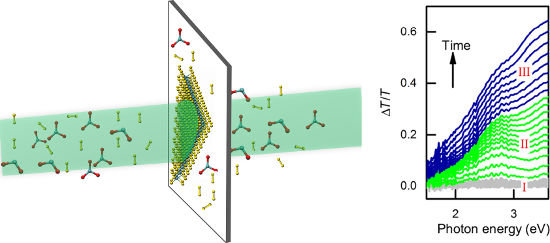
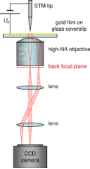
- performed in a confocal microconfiguration using a ×100 microscope objective lens and a 2400 grooves mm−1 grating. For DR measurements, an inverted microscope (Nikon Eclipse Ti) was used. A beam from a tungsten halogen white light source was reflected into a ×50 ultra-long working distance objective using a


Ultraviolet patterns of flowers revealed in polymer replica – caused by surface architecture
Beilstein J. Nanotechnol. 2019, 10, 459–466, doi:10.3762/bjnano.10.45
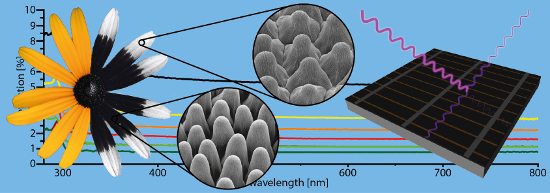
- integrating sphere on the opposite side of the opening where the light source was situated. The polymer replicas were colored black using black dye and a thin layer of carbon black was embedded at the backside of the replicas. Both steps were undertaken to avoid reflection at the backside of the replicas and


Surface plasmon resonance enhancement of photoluminescence intensity and bioimaging application of gold nanorod@CdSe/ZnS quantum dots
Beilstein J. Nanotechnol. 2019, 10, 22–31, doi:10.3762/bjnano.10.3
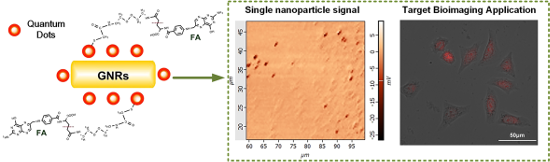
- future research. We chose the longer absorption peak of the GNRs as equivalent to the QD PL emission peak. When the QDs and GNRs are coupled together, two kinds of nanostructured particles were combined by mutual electrostatic adsorption. The PL of the QDs could then be used as the light source to excite


A new bioinspired method for pressure and flow sensing based on the underwater air-retaining surface of the backswimmer Notonecta
Beilstein J. Nanotechnol. 2018, 9, 3039–3047, doi:10.3762/bjnano.9.282
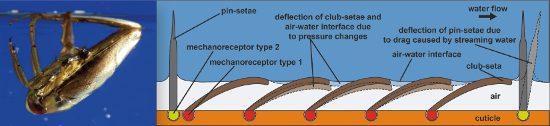
- Polytechnique Fédérale de Lausanne, 1015 Lausanne, Switzerland Swiss Light Source, Paul Scherrer Institute, 5232 Villigen, Switzerland Department of Functional Morphology and Biomechanics, Institute of Zoology, Christian-Albrechts-Universität zu Kiel, Am Botanischen Garten 1–9, D-24118 Kiel, Germany 10.3762
- pixel size of 3 µm. Synchrotron-µCT of basal hemelytra More detailed cross sections of parts of a hemelytron were created at the Swiss Light Source synchrotron of the Paul Scherrer Institute (PSI; Villigen, Switzerland; X02DA TOMCAT beamline). The X-rays, produced by a 2.9 T superbending magnet on a 2.4


Size limits of magnetic-domain engineering in continuous in-plane exchange-bias prototype films
Beilstein J. Nanotechnol. 2018, 9, 2968–2979, doi:10.3762/bjnano.9.276
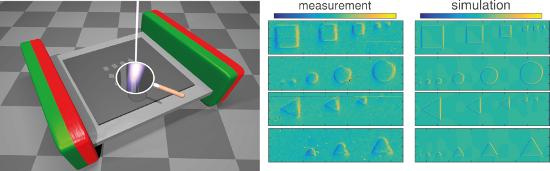
- Institute “Electronic Properties”, Forschungszentrum Jülich, 52425 Jülich, Germany Advanced Light Source, Lawrence Berkeley National Laboratory, Berkeley, CA, USA Faculty of Physics, Thin Films and Physics of Nanostructures, University of Bielefeld, 33501 Bielefeld, Germany 10.3762/bjnano.9.276 Abstract


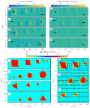


![[Graphic 63]](/bjnano/content/inline/2190-4286-9-276-i63.svg?max-width=637&scale=1.18182) .
. ![[Graphic 64]](/bjnano/content/inline/2190-4286-9-276-i64.svg?max-width=637&scale=1.18182) is the angle between the domain wall (DW) normal vector
is the angle between the domain wall (DW) normal vector ![[Graphic 65]](/bjnano/content/inline/2190-4286-9-276-i65.svg?max-width=637&scale=1.18182) and the local unidirectio...
and the local unidirectio...
Contactless photomagnetoelectric investigations of 2D semiconductors
Beilstein J. Nanotechnol. 2018, 9, 2741–2749, doi:10.3762/bjnano.9.256
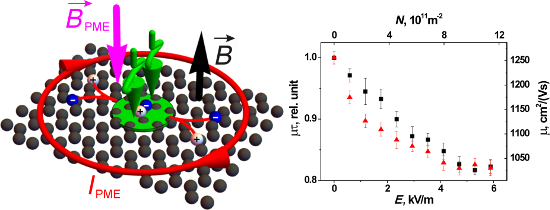
- = 1021 photons/(m2s)). Schematic presentation (a) of the measuring set up used for the induction technique of PME investigations of a point-illuminated 2D semiconductor in Corbino configuration (V – nanovoltmeter connected to a measuring coil; L – electronically chopped light source; the other symbols

![[Graphic 1]](/bjnano/content/inline/2190-4286-9-256-i2.svg?max-width=637&scale=1.18182) evoked by the PME circulating current in a point-illuminated 2D...
evoked by the PME circulating current in a point-illuminated 2D...

![[Graphic 7]](/bjnano/content/inline/2190-4286-9-256-i8.svg?max-width=637&scale=1.18182) vs the illumination intensity for differe...
vs the illumination intensity for differe...

![[Graphic 15]](/bjnano/content/inline/2190-4286-9-256-i16.svg?max-width=637&scale=1.18182) vs the carrier lifetime for different values ...
vs the carrier lifetime for different values ...


Impact of the anodization time on the photocatalytic activity of TiO2 nanotubes
Beilstein J. Nanotechnol. 2018, 9, 2628–2643, doi:10.3762/bjnano.9.244
- . 15 cycles were necessary to obtain a constant current density. Linear sweep voltammograms (LSVs) were recorded at 5 mV/s under N2 and O2 atmosphere. Light source was a Xe lamp (Spectral products, ASB-XE-175) coupled to a motorized monochromator (Horiba Jobin Yvon 0106-07-07) for photo-electrochemical


Au–Si plasmonic platforms: synthesis, structure and FDTD simulations
Beilstein J. Nanotechnol. 2018, 9, 2599–2608, doi:10.3762/bjnano.9.241
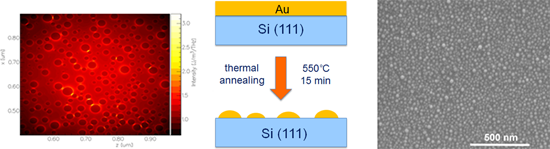
- . The sensor was placed in the zx-plane, between the light source and the nanoparticle layer, to allow for recording both incident and reflected fluxes. In both cases the pulse propagated along the y-axis, perpendicular to the sample surface, and was of a collimated phase front with a power of 1 W; the
- for 15 min). Green circles indicate the recognized structures. A sample of 0.5 μm × 0.5 μm size (marked by the black frame) was used for the simulations. Setup for the FDTD and FDTD/DFT simulations. Left: view from the bottom, zx-plane; yellow rectangle – outer border of the light source; red
- rectangle – outer border of the sensors; brown circles – gold nanoparticles. Right: Side view, xy-plane; vellow line – light source, wave propagation in upward direction; red and brown lines – sensors for FDTD and FDTD/DFT simulation sets, respectively; light-blue area – air; yellow area – silicon; brown



Thickness-dependent photoelectrochemical properties of a semitransparent Co3O4 photocathode
Beilstein J. Nanotechnol. 2018, 9, 2432–2442, doi:10.3762/bjnano.9.228
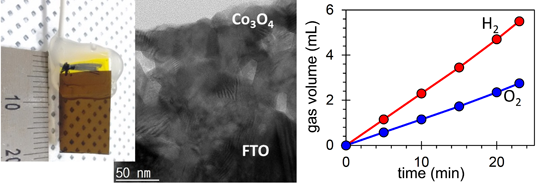
- light source (5800 K, Bridgelux, ES Star Array, BXRA-56C0700-A) with a light intensity of 100 mW·cm−2 was calibrated with a power meter (KUSAMMECO, KM-SPM-11). Scan rates of 20 mV·s−1 with a 0.1 mV step were set to record the linear sweep voltammetry (LSV), with the scan direction from positive to



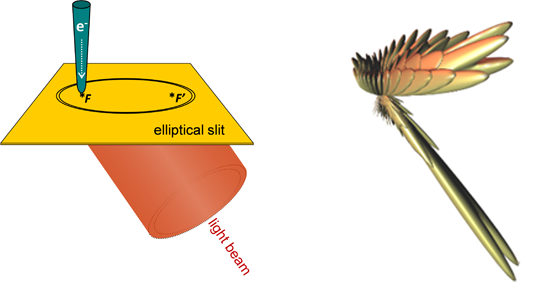
Directional light beams by design from electrically driven elliptical slit antennas
Beilstein J. Nanotechnol. 2018, 9, 2361–2371, doi:10.3762/bjnano.9.221
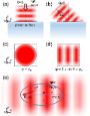
- phase φ of the optical field at the surface varies with position, i.e., φ(x) = kxsin θ + φ0, where k is the wavevector modulus of the incident light and φ0 is a constant. In order to emit a beam of light in a specific direction, a light source at a planar surface must reproduce this spatial phase
- a planar surface, the phase of the electric field of an incident light beam in (a,c) orthogonal or (b,d) oblique incidence is spatially (a,c) independent or (b,d) dependent, respectively. If this spatial phase distribution is reproduced on a planar surface, an extended planar light source can emit a
- beam of light in a particular direction out of the plane. (e) Such a light source is obtained when an elliptical slit antenna is fed by circular surface waves at one of its focii. The scattered light from the slit has the same spatial phase distribution at the surface as a light beam arriving at





Hierarchical heterostructures of Bi2MoO6 microflowers decorated with Ag2CO3 nanoparticles for efficient visible-light-driven photocatalytic removal of toxic pollutants
Beilstein J. Nanotechnol. 2018, 9, 2297–2305, doi:10.3762/bjnano.9.214
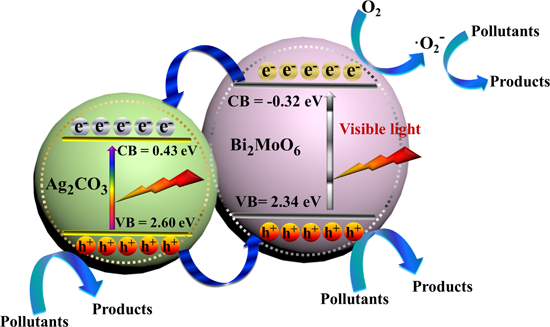
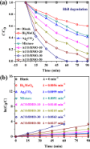
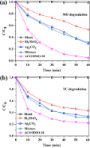
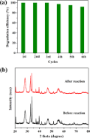
- light source. First, the suspension was stirred in the dark for half an hour. During reaction, 2 mL of solution was taken at certain intervals, and centrifuged to obtain the supernatant for UV–vis spectrophotometry measurements. Total organic carbon (TOC) tests were executed by the degradation of RhB




Optimization of the optical coupling in nanowire-based integrated photonic platforms by FDTD simulation
Beilstein J. Nanotechnol. 2018, 9, 2248–2254, doi:10.3762/bjnano.9.209
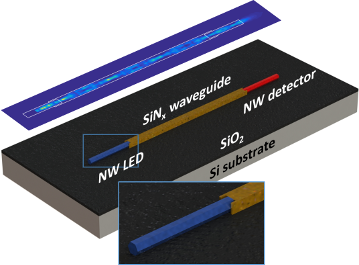
- waveguide are shown in Figure 4. It should be noted that the distributions in Figure 4 show interference effects that are due to our simulation method that uses a monochromatic wave light source. These effects in our case are not physical, since we are dealing with an LED source which has significant
- width. For NW devices with a 1 µm diameter, the optimized efficiency is reached for a 1.49 µm wide waveguide. All of the parameters are within reach of current nanofabrication capabilities. Therefore, the optimized photonic platform with a high light coupling efficiency could be implemented. This light
- source–waveguide–photodetector platform is the main building block of future multifunctional integrated photonic systems for photonic and sensing applications. (a) Schematic illustration of the platform geometry used for the FDTD simulations. The platform consists of a NW LED, waveguide and NW


The role of adatoms in chloride-activated colloidal silver nanoparticles for surface-enhanced Raman scattering enhancement
Beilstein J. Nanotechnol. 2018, 9, 2236–2247, doi:10.3762/bjnano.9.208
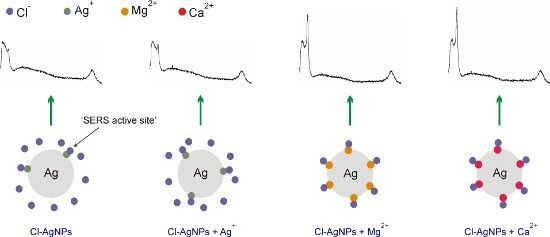
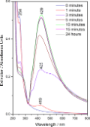
- reaction does not proceed in the absence of an intense light source, regardless of the amount of hydrogen peroxide added in the reaction mixture. It should be mentioned that the formation of stable, SERS-active Cl-AgNP colloids can also be obtained in the absence of hydrogen peroxide, but in this case, the



A scanning probe microscopy study of nanostructured TiO2/poly(3-hexylthiophene) hybrid heterojunctions for photovoltaic applications
Beilstein J. Nanotechnol. 2018, 9, 2087–2096, doi:10.3762/bjnano.9.197
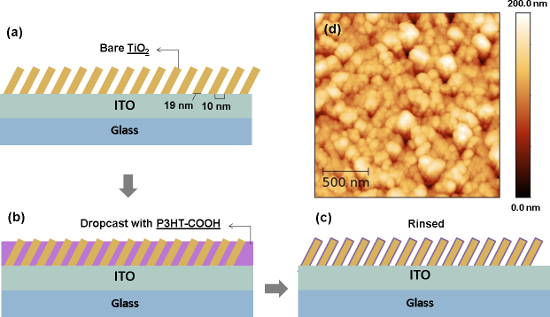
- 600 mV. The light source for sample irradiation was a green laser diode (wavelength = 500 nm, power density = 1.45 mW/mm2). Photo-assisted KPFM measurements were also performed in ambient conditions, with a Bruker multimode microscope controlled by a Nanoscope III unit coupled to a Nanonis control


Self-assembled quasi-hexagonal arrays of gold nanoparticles with small gaps for surface-enhanced Raman spectroscopy
Beilstein J. Nanotechnol. 2018, 9, 1977–1985, doi:10.3762/bjnano.9.188
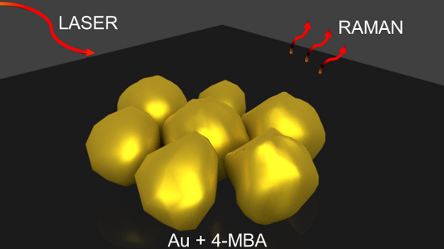
- -built dark-field spectroscopy setup. A 50× objective (Mitutoyo BD Plan APO SL 50X) was used for imaging and taking the spectra. The samples were illuminated by a laser driven light source (Energetiq EQ-99-FC) at an incident angle of light of about 45°. The spectra were taken with an Andor Shamrock SR



Electromigrated electrical optical antennas for transducing electrons and photons at the nanoscale
Beilstein J. Nanotechnol. 2018, 9, 1964–1976, doi:10.3762/bjnano.9.187
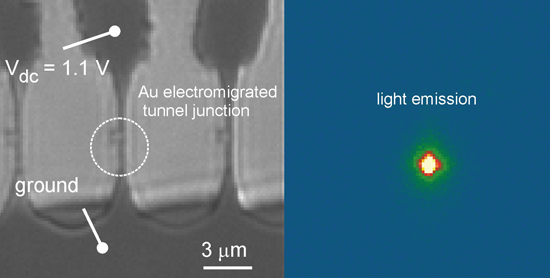
- electrically characterize the transport properties of the junctions in the light of the Fowler–Nordheim representation and the Simmons model for electron tunneling. We demonstrate light emission from the feedgap upon electron injection and show examples of how this nanoscale light source can be coupled to


![[Graphic 32]](/bjnano/content/inline/2190-4286-9-187-i38.svg?max-width=637&scale=1.18182) and
and ![[Graphic 33]](/bjnano/content/inline/2190-4286-9-187-i39.svg?max-width=637&scale=1.18182) are...
are...


Numerical analysis of single-point spectroscopy curves used in photo-carrier dynamics measurements by Kelvin probe force microscopy under frequency-modulated excitation
Beilstein J. Nanotechnol. 2018, 9, 1834–1843, doi:10.3762/bjnano.9.175
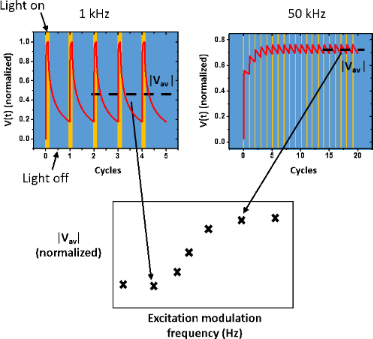
- milliseconds and a few hundreds of milleseconds) under frequency-modulated excitation (light source, electrical bias), yielding an averaged time-integral value of the instantaneous photovoltage. One can obtain a spectroscopy curve of the average surface photovoltage (SPVAV) by sweeping the excitation source


Know your full potential: Quantitative Kelvin probe force microscopy on nanoscale electrical devices
Beilstein J. Nanotechnol. 2018, 9, 1809–1819, doi:10.3762/bjnano.9.172
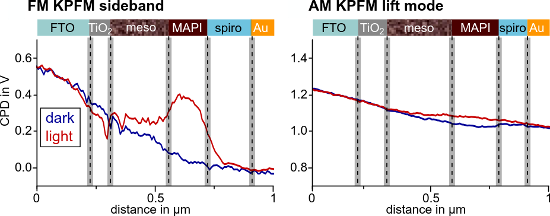
- observed fundamental differences in the potential distribution when using FM sideband KPFM as compared to AM lift mode KPFM (Figure 1). The cell was under short circuit conditions and could be illuminated with a white light source from the side. Further details on the solar cell, the sample preparation and


Direct AFM-based nanoscale mapping and tomography of open-circuit voltages for photovoltaics
Beilstein J. Nanotechnol. 2018, 9, 1802–1808, doi:10.3762/bjnano.9.171
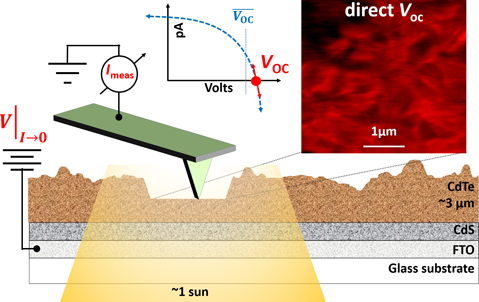
- (Asylum Research MFP-3D-IO) is custom-mounted on an optical microscope (Nikon TE-2000) that has a broad-spectrum LED light source (Cree MK-R 12). The LED illuminates an area of ca. 1·104 µm2, including the sample/tip junction, from below through a 40× objective to provide an intensity of ca. 1 equivalent
- be directly determined by engaging the secondary feedback loop as previously described. Since the notations ISC and VOC are technically defined for 1 equivalent sun, all results and discussions indicate an effective ISC* and VOC* because the light source is not a true solar simulator. In any case


Controllable one-pot synthesis of uniform colloidal TiO2 particles in a mixed solvent solution for photocatalysis
Beilstein J. Nanotechnol. 2018, 9, 1715–1727, doi:10.3762/bjnano.9.163
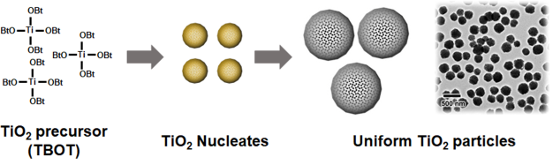
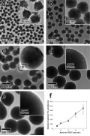
- LED lamp was used as the light source during the photocatalysis experiments. The concentration of RhB was monitored by UV–vis spectrophotometry (Thermo Fisher Scientific, Genesys 10S) during the reaction. (a–e) TEM images of as-synthesized TiO2 with different volume ratios of ethanol to acetonitrile




Multimodal noncontact atomic force microscopy and Kelvin probe force microscopy investigations of organolead tribromide perovskite single crystals
Beilstein J. Nanotechnol. 2018, 9, 1695–1704, doi:10.3762/bjnano.9.161
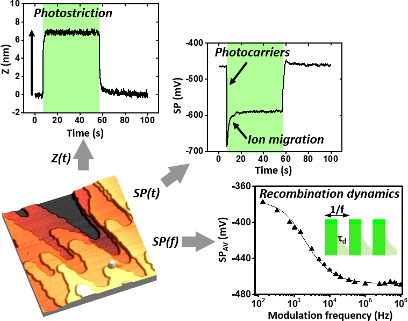
- AFM (nc-AFM) combined with KPFM. MAPbBr3 has been selected for these experiments since its absorption band edge [12] falls well below the wavelength of the AFM light source (840 nm for the Omicron VT-AFM setup used here). A specific protocol allowing simultaneous recording of the spectroscopic curves


Friction force microscopy of tribochemistry and interfacial ageing for the SiOx/Si/Au system
Beilstein J. Nanotechnol. 2018, 9, 1647–1658, doi:10.3762/bjnano.9.157
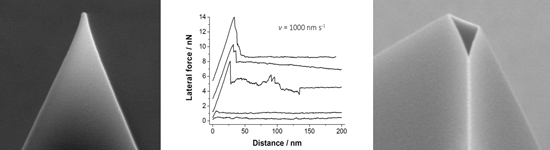
- minimize movement during hold times, the system was allowed to stabilize for prolonged times after turning on the light source for detecting the cantilever bending and after piezo repositioning. Furthermore, the temperature in the laboratory was kept stable to less than ±1 °C. The relative tip movement was




Ag2WO4 nanorods decorated with AgI nanoparticles: Novel and efficient visible-light-driven photocatalysts for the degradation of water pollutants
Beilstein J. Nanotechnol. 2018, 9, 1308–1316, doi:10.3762/bjnano.9.123
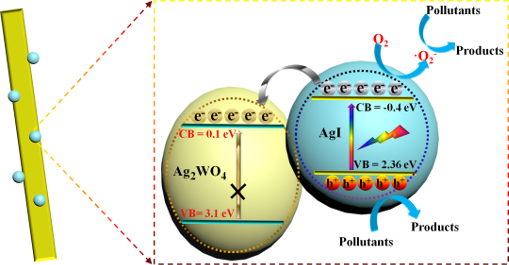
- ) were recorded on an UV–vis spectrophotometer (Shimadzu, UV-2600). Photocatalytic tests The photocatalytic activity of the as-prepared samples was evaluated by the removal of RhB, MO or 4-CP under visible-light irradiation. A 300 W Xe lamp with a cut-off filter (λ > 400 nm) was used as the light source




Artifacts in time-resolved Kelvin probe force microscopy
Beilstein J. Nanotechnol. 2018, 9, 1272–1281, doi:10.3762/bjnano.9.119
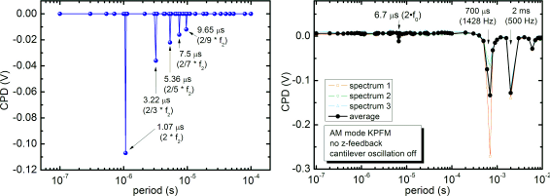
- difference between the CPD under illumination and in the dark – after switching on and off a laser light source. The CPD change resulting from the separation of the excited charge carriers was monitored in real time over the course of several minutes. Similar experiments were also performed using





