Search results
Search for "mesoporous" in Full Text gives 209 result(s) in Beilstein Journal of Nanotechnology. Showing first 200.
Targeted therapeutic effect against the breast cancer cell line MCF-7 with a CuFe2O4/silica/cisplatin nanocomposite formulation
Beilstein J. Nanotechnol. 2019, 10, 2217–2228, doi:10.3762/bjnano.10.214
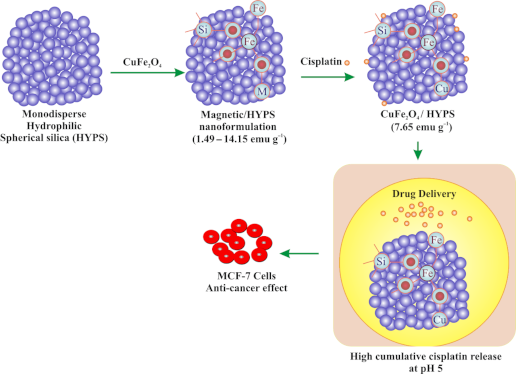
- (magnetic resonance imaging), tissue repair, and thermal ablation have been gaining considerable attention in recent years. In particular, the use of superparamagnetic iron oxide nanoparticles (SPIONs) is now advantageous as they are FDA-approved for clinical use [2]. Magnetic Fe3O4-based mesoporous silica
- form aggregates, exert variable oxidation states and result in dose-dependent toxicity. Several supports, including silica and carbon, were used to reduce such aggregation. Notably, different types of nanocomposites were reported based on Co, Ni, Mn and Fe over mesoporous carbon capsules [8]. A carbon
- surface anisotropy effect [9][10]. Among the ferrites, copper ferrites are interesting due to their superior conductive and magnetic characteristics. A mesoporous Cu1−xZnxFe2O4 system has been reported using a nanocasting technique [11]. Based on the Bertaut analysis, the doping of Zn tends to form mixed


Ultrathin Ni1−xCoxS2 nanoflakes as high energy density electrode materials for asymmetric supercapacitors
Beilstein J. Nanotechnol. 2019, 10, 2207–2216, doi:10.3762/bjnano.10.213
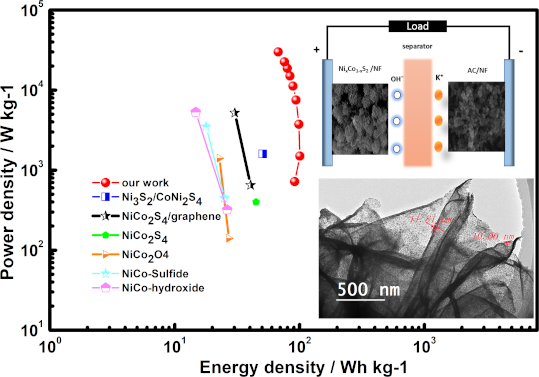
- nanoflakes, the results were compared with previously reported NiCo-based ASCs. The new device outperforms Ni3S2/CoNi2S4/NF//AC [41], NiCo2S4/graphene//AC [39], NiCo2S4/NCF//(OMC = ordered mesoporous carbon)/NCF [31], NiCo2O4//AC [17], NiCo-sulfide//AC [28] and NiCo-hydroxide//AC [42]. The EIS results of the


Improved adsorption and degradation performance by S-doping of (001)-TiO2
Beilstein J. Nanotechnol. 2019, 10, 2116–2127, doi:10.3762/bjnano.10.206
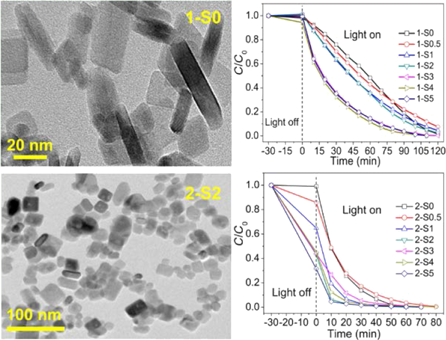
- performance. Li et al. synthesized composites of mesoporous (001)-TiO2 and C applying a one-pot hydrothermal strategy in the presence of glucose and hydrofluoric acid (HF). The composites an exhibited excellent visible-light-driven photocatalytic performance [14]. Chen et al. synthesized a composite of g-C3N4




Synthesis of highly active ETS-10-based titanosilicate for heterogeneously catalyzed transesterification of triglycerides
Beilstein J. Nanotechnol. 2019, 10, 2039–2061, doi:10.3762/bjnano.10.200
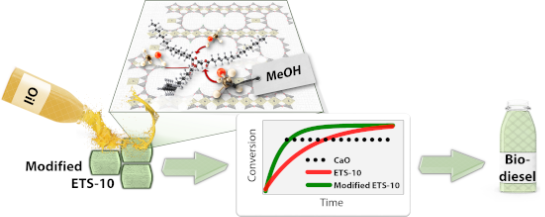
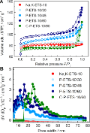
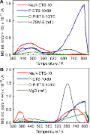
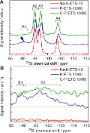
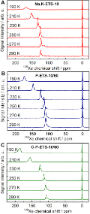
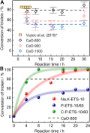
- noting that the appearance of mesopores after treatment has led to the change of the isotherm shape from type I (typical for microporous solids) to a combination of types I and IV, as is expected for micro–mesoporous materials [37]. It was suggested that exposure of the ETS-10 framework to H2O2 solution
- the possible diffusion exchange with the intercrystalline space during the used diffusion time (20 ms). It is worth mentioning that in both catalysts, microporous Na,K-ETS-10 and micro–mesoporous P-ETS-10/60, the amount of triolein was below the detection limit. While for the microporous








Review of advanced sensor devices employing nanoarchitectonics concepts
Beilstein J. Nanotechnol. 2019, 10, 2014–2030, doi:10.3762/bjnano.10.198
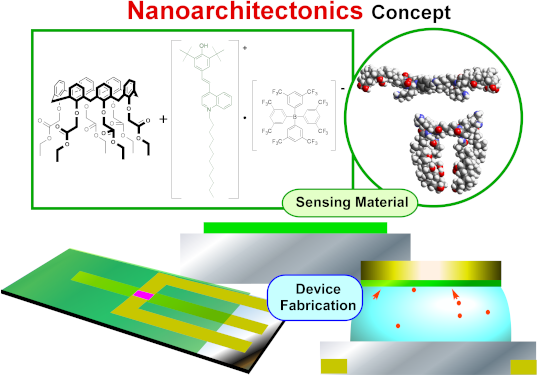
- particles [122]. Mesoporous carbons were used for sensing of tannins in acidic aqueous environment with highly cooperative adsorption in the mesochannels [123]. The nanoarchitectonic construction of carbon nanocages with high surface mesoporous structures [124] was integrated with electrospun polymer fibers
- and resulted in a highly sensitive sensing material for aniline vapor [125]. Layer-by-layer structures of mesoporous carbon capsules can work as sensing membranes capable of selectively sensing through the doping of secondary sensing units [126]. As an emerging nanoporous material, metal–organic





The influence of porosity on nanoparticle formation in hierarchical aluminophosphates
Beilstein J. Nanotechnol. 2019, 10, 1952–1957, doi:10.3762/bjnano.10.191
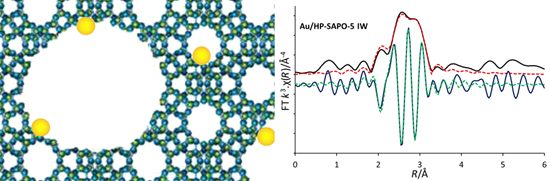
- nanoparticles in a catalytic reaction [12]. However, due to the limited pore aperture and channels of these systems, even sub-nanometre particles can block the framework and hinder activity, thereby preventing reagents from accessing the internal active sites. In contrast, mesoporous species (pores greater than
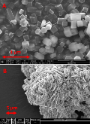
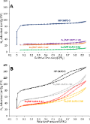
- hierarchical nature of the sample (Figure S2, Supporting Information File 1), but with a disordered mesoporous region. This is typical of hierarchical materials prepared in this manner [12][14] as they contain a broad range of mesopore sizes. Subsequent pore-distribution plots show no textural features for MP
Facile synthesis of carbon nanotube-supported NiO//Fe2O3 for all-solid-state supercapacitors
Beilstein J. Nanotechnol. 2019, 10, 1923–1932, doi:10.3762/bjnano.10.188
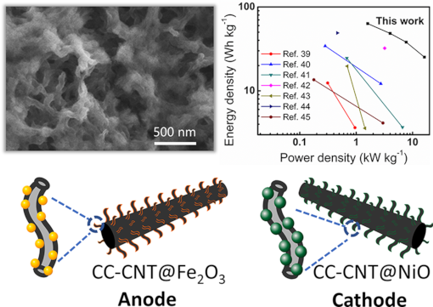
- –Halenda (BJH) pore size distribution of CC-CNT@Fe2O3 are shown in Supporting Information File 1, Figure S4. It is a type-IV isotherm, indicating the mesoporous texture of the sample (Figure S4a, Supporting Information File 1). The BET surface area was found to be 24.9 m2·g−1, much larger than that of pure
- , verifying the mesoporous texture of the sample (Figure S7a, Supporting Information File 1). The BET surface area was 34.4 m2·g−1, much larger than that of pure carbon cloth (0.2 m2·g−1). Pore size distribution (Figure S4b, Supporting Information File 1) shows that numerous pores have a size of about 2 and


Charge-transfer interactions between fullerenes and a mesoporous tetrathiafulvalene-based metal–organic framework
Beilstein J. Nanotechnol. 2019, 10, 1883–1893, doi:10.3762/bjnano.10.183
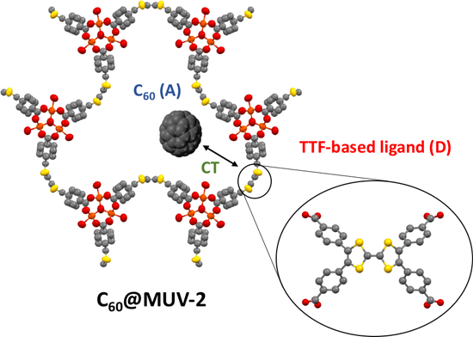
- (CT) process between the framework and the guest molecules is a crucial step towards the design of new electroactive MOFs. Herein, we present the encapsulation of fullerenes (C60) in a mesoporous tetrathiafulvalene (TTF)-based MOF. The CT process between the electron-acceptor C60 guest and the
- is based on the 6-connected trimeric cluster [Fe3(μ3O)(COO)6] as secondary building unit (SBU) and tetratopic tetrathiafulvalene-tetrabenzoate (TTFTB4−) ligands. This MOF shows a hierarchical structure with mesoporous channels of ≈3 nm and orthogonal microporous channels of ≈1 nm. In addition, it
- along the c-axis), which could prevent the charge delocalisation along the framework. Conclusion In summary, we have reported for the first time the encapsulation of C60 in a mesoporous TTF-based MOF (MUV-2). Charge-transfer interactions between C60 and TTF ligands from the framework in C60@MUV-2 were


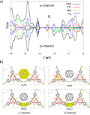


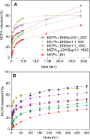
Layered double hydroxide/sepiolite hybrid nanoarchitectures for the controlled release of herbicides
Beilstein J. Nanotechnol. 2019, 10, 1679–1690, doi:10.3762/bjnano.10.163
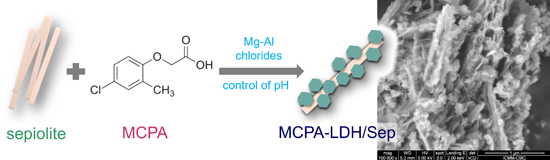
- , iii) field-induced material control, iv) new manipulations of atoms and molecules, and v) theoretical modeling and design [1][2]. Based on these premises a large number of nanoarchitectonic materials have been prepared including mesoporous solids, self-organized block-copolymers, supramolecular


Nanoporous smartPearls for dermal application – Identification of optimal silica types and a scalable production process as prerequisites for marketed products
Beilstein J. Nanotechnol. 2019, 10, 1666–1678, doi:10.3762/bjnano.10.162
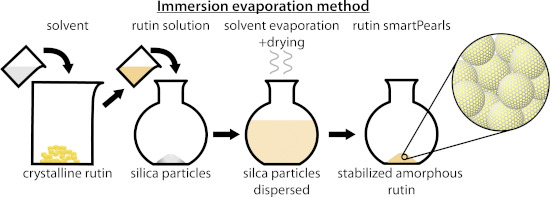
- parameters (e.g., particle size, pore diameter, pore volume) in order to identify particles which are most easy to process. Materials and Methods Materials Rutin with a purity of 95% was purchased from Denk Ingredients (Munich, Germany). Various mesoporous silica particles (Table 1) with pore diameter of 3




Materials nanoarchitectonics at two-dimensional liquid interfaces
Beilstein J. Nanotechnol. 2019, 10, 1559–1587, doi:10.3762/bjnano.10.153
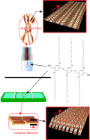
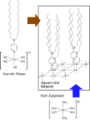
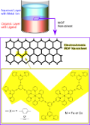
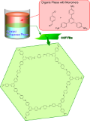
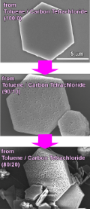
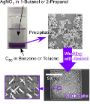
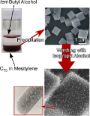
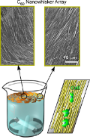
- -dimensional fullerene objects, Ji, Shrestha, and co-workers reported the synthesis of two-dimensional mesoporous carbon microbelts and demonstrated their usage as electrode material for electrochemical supercapacitors (Figure 19) [251]. Two-dimensional belt-like mesoporous structures can be fabricated from
- C60 molecules by liquid–liquid interfacial precipitation using a carbon disulfide solution of C60 and isopropyl alcohol. Under optimized conditions, these mesoporous C60 microbelts extended to lengths of the order of centimetres. Heat treatment of the obtained C60 microbelts converts them into two
- -dimensional amorphous carbon microbelts at 900 °C and their dense graphitic versions at 2000 °C. Especially the former carbon material exhibited excellent electrochemical supercapacitive performance due to the enhanced surface area and the robust mesoporous framework motifs. The hierarchical bimodal pore













BiOCl/TiO2/diatomite composites with enhanced visible-light photocatalytic activity for the degradation of rhodamine B
Beilstein J. Nanotechnol. 2019, 10, 1412–1422, doi:10.3762/bjnano.10.139
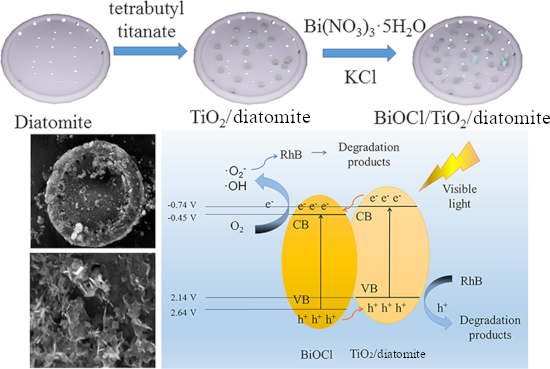
- diatomite, TiO2/diatomite and BTD have an H4-type hysteresis loop, indicating that all samples have a mesoporous structure. At the same time, the pore size distribution and average pore size also confirm that the samples have mesoporous structure. Figure 2b shows that the pore size distribution of BTD has a
- wide size distribution, although most are mesoporous, and the rest are macroporous. The specific surface area of BTD is slightly lower than that of diatomite due to the surface loading of BiOCl and TiO2. The pore volume of the BTD composite is larger than that of BiOCl and TiO2/diatomite, which


Highly ordered mesoporous silica film nanocomposites containing gold nanoparticles for the catalytic reduction of 4-nitrophenol
Beilstein J. Nanotechnol. 2019, 10, 1368–1379, doi:10.3762/bjnano.10.135
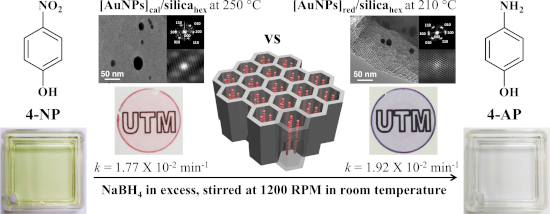
- synthesis method using discotic trinuclear gold(I) pyrazolate complex, were successfully utilized for the fabrication of thin film mesoporous silica nanocomposites containing gold nanoparticles. The material exhibited a highly ordered hexagonal structure when subjected to a thermal hydrogen reduction
- . Such catalytic activity is due to the presence of gold nanoparticles of smaller size in the silicate channels of the highly ordered mesoporous film nanocomposites. Keywords: catalyst; gold nanoparticle; mesoporous silica; nanocomposite; thermal hydrogen reduction; 4-nitrophenol reduction
- ; Introduction Mesoporous silica nanomaterials with pore size between 2 to 50 nm [1] have been recently applied to the development of biomedical adsorbents [2][3][4], drug delivery systems [5][6][7], catalysts [8][9][10], as well as supports for metal nanoparticles [11][12][13] due to their large surface area


Playing with covalent triazine framework tiles for improved CO2 adsorption properties and catalytic performance
Beilstein J. Nanotechnol. 2019, 10, 1217–1227, doi:10.3762/bjnano.10.121

- ) have been prepared under classical ionothermal conditions from single dicyano-aryl or heteroaryl systems. The as-prepared samples are highly micro-mesoporous and thermally stable materials featuring high specific surface area (up to 1860 m2·g−1) and N content (up to 29.1 wt %). All these features make
- isotherm profiles typical of bimodal micro-mesoporous materials with complex and ill-defined pore networks (see Supporting Information File 1, Figures S2A,A′ and S2B,B′). As found for related CTF samples previously synthesized by us under similar reaction conditions [30], CTF2 presents a type-IV isotherm
- mesoporous and N-poor solids (CTF2) were ideal candidates for the CO2 capture and storage. Among the prepared CTFs, CTF1 and CTF4 exhibit a CO2 adsorption uptake at ambient pressure as high as 5.23 and 3.83 mmol·g−1 at 273 and 298 K, respectively. A comparative analysis with the current literature data


Photoactive nanoarchitectures based on clays incorporating TiO2 and ZnO nanoparticles
Beilstein J. Nanotechnol. 2019, 10, 1140–1156, doi:10.3762/bjnano.10.114
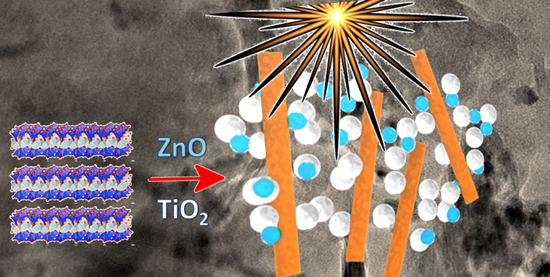
- situ formation in the available nanoscale spaces of the solid substrates, resulting in controlled size and shape of the supported TiO2 and ZnO NPs. The involved inorganic matrices can be of very diverse nature such as silica and silicates (mesoporous silicas, zeolites, clays, and clay minerals
- solids such as zeolites and mesoporous silicas have been used as templates in the growth of NPs with precisely controlled particle size and shape replicating size and shape of the pores. Thus, a novel class of nonlinear optical materials based on host–guest composites has been prepared using zeolites as
- inorganic crystalline hosts [60][61][62][63][64][65][66]. Nanoarchitectures composed of zeolites and mesoporous silica and TiO2 or ZnO NPs have been reported as efficient photocatalysts as well as photoluminescent materials [67][68][69]. The formation of TiO2 and ZnO NPs on the external surface, in addition



Glucose-derived carbon materials with tailored properties as electrocatalysts for the oxygen reduction reaction
Beilstein J. Nanotechnol. 2019, 10, 1089–1102, doi:10.3762/bjnano.10.109
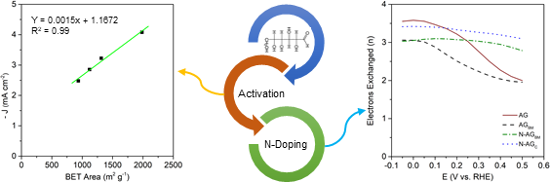
- nitrides [30], activated carbons [31] or mesoporous carbons [32][33]. Some of these materials are obtained from chemical compounds, fossil fuels or by complex and expensive synthesis procedures. In order to keep fuel cells as ecologically friendly as possible, the use of biomass as a carbon source appears


Effects of gold and PCL- or PLLA-coated silica nanoparticles on brain endothelial cells and the blood–brain barrier
Beilstein J. Nanotechnol. 2019, 10, 941–954, doi:10.3762/bjnano.10.95
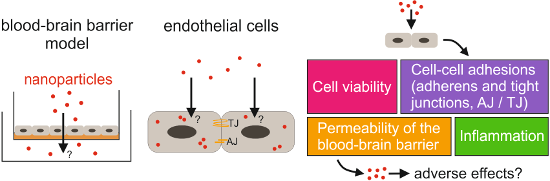
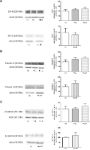
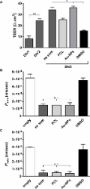
- enter the brain and cause or worsen diseases of the central nervous system [16] that NPs might contribute to [17]. Coated or uncoated mesoporous Si-NPs of different size and zeta potential did not elicit considerable cytotoxicity in MDCK II kidney epithelial cells or RBE4 rat brain ECs but were taken up
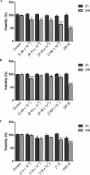
- all three NP types on rBCEC4 cell viability was detected with the effect being most prominent after 24 h of PCL exposure. At similar NP concentrations, Au-NPs displayed a lower cytotoxicity for rBCEC4 cells compared to PCL- or PLLA-NPs. Contrary to this, coated or uncoated mesoporous Si-NPs of
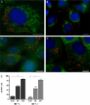
- cells containing NPs. Similar to our findings, mesoporous Si-NPs were taken up by both epithelial, MDCK II, and endothelial cells, RBE4. Uptake was shown to be enhanced by copolymer coating and was found more prominent in RBE4 cells compared to MDCK II cells [18]. In contrast to our findings, Trickler



Polydopamine-coated Au nanorods for targeted fluorescent cell imaging and photothermal therapy
Beilstein J. Nanotechnol. 2019, 10, 794–803, doi:10.3762/bjnano.10.79
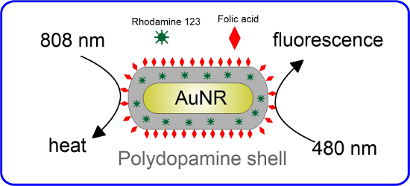
- tunable shell thickness. The most popular coatings such as mesoporous silica, PEG and polyelectrolyte shells do not meet the above quality criteria. In 2007 Messersmith et al. reported the mussel-inspired adhesive polydopamine (PDA) multifunctional coating for various materials including nanoparticles [25
- obtain a loading efficiency of 103 R123 molecules per one composite AuNRs-PDA-R123-folate particle. This number is comparable with the typical estimations of the loading capacity for AuNRs coated with a mesoporous silica shell [45] (several thousands of dye molecules per particle). In our case, a smaller
- loading capacity can be attributed to the relatively small AuNR size and to the difference in the chemical structure of the adsorbing molecules. Thus, the PDA coating does not enhance the loading of both R123 and folate compared to the typical loading capacities reported for AuNRs coated with mesoporous


An efficient electrode material for high performance solid-state hybrid supercapacitors based on a Cu/CuO/porous carbon nanofiber/TiO2 hybrid composite
Beilstein J. Nanotechnol. 2019, 10, 781–793, doi:10.3762/bjnano.10.78
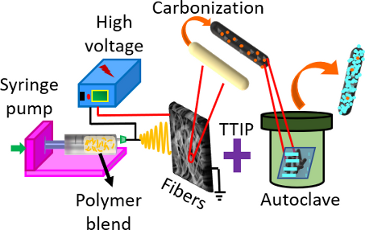
- compare the recently reported capacitance value, which is listed in Table 1 [29][30][31][32][33][34][35][36][37]. This may be attributed to the relatively high conductivity of Cu and CNFs, while nanoscale TiO2 helps to stabilize electrolyte transport and the mesoporous nature offers a high number of


On the transformation of “zincone”-like into porous ZnO thin films from sub-saturated plasma enhanced atomic layer deposition
Beilstein J. Nanotechnol. 2019, 10, 746–759, doi:10.3762/bjnano.10.74
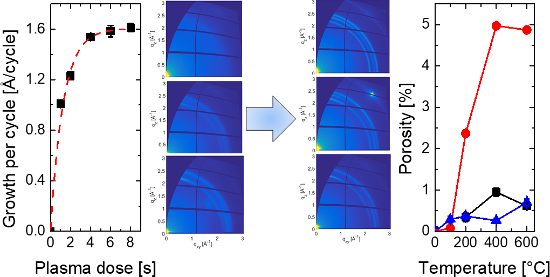
- a type-II isotherm is associated with nonporous materials. Mesoporous materials are instead characterized by a type-IV isotherm, in which a hysteresis arises in the desorption step, due to the condensation of water in the pores. The adsorptive uptake was expressed as adsorptive volume obtained from
- al. [15] reported on the formation of mesoporous and microporous layers on nanoparticles coated with MLD zincone layers. In their contribution, the pore size distribution and surface area were reported as functions of the calcination temperature, showing a decrease in the overall porosity starting
- stated, burning of the organic functionalities reduces the amount of carbon in the layers and, in turn, the swelling upon water exposure. In the literature, mesoporous materials showed hysteresis in the adsorption and desorption branches [78]. For the zincone-like layers, despite the increase in the


Commercial polycarbonate track-etched membranes as substrates for low-cost optical sensors
Beilstein J. Nanotechnol. 2019, 10, 677–683, doi:10.3762/bjnano.10.67
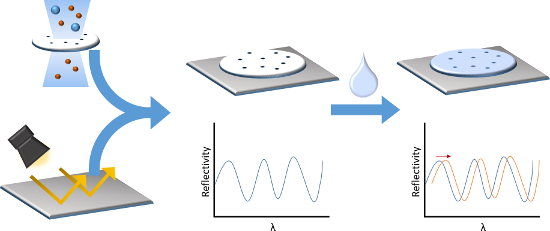
- the interaction between the optical field and the target substances, which boosts the sensitivity. In this work, we propose the use of a readily available mesoporous material for the development of such sensors: commercial polycarbonate track-etched membranes. In order to demonstrate their utility for
- porous sensors with such easily available mesoporous material. Keywords: chemical sensor; Fabry–Pérot interferometer; optical sensor; polycarbonate; track-etched membrane; Introduction Sensors are present in our daily life in order to detect and monitor chemical, biological and physical agents of


Improving control of carbide-derived carbon microstructure by immobilization of a transition-metal catalyst within the shell of carbide/carbon core–shell structures
Beilstein J. Nanotechnol. 2019, 10, 419–427, doi:10.3762/bjnano.10.41
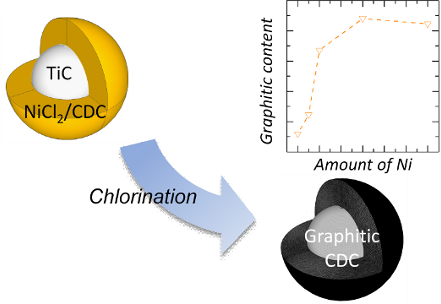
- using halogen gases at elevated temperatures. Depending on the carbide and parameters employed during the synthesis, CDC can be varied from extremely amorphous to highly crystalline microstructures and from ultramicro- to mesoporous pore structures. Therefore, CDC is known as material with tunable


One-step nonhydrolytic sol–gel synthesis of mesoporous TiO2 phosphonate hybrid materials
Beilstein J. Nanotechnol. 2019, 10, 356–362, doi:10.3762/bjnano.10.35
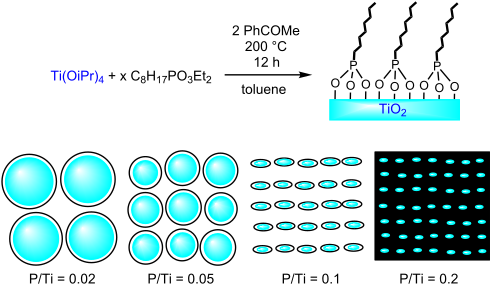
- Yanhui Wang P. Hubert Mutin Johan G. Alauzun Institut Charles Gerhardt Montpellier, UMR 5253, Université de Montpellier, CC 1701, Place Eugène Bataillon, 34095 Montpellier Cedex 5, France 10.3762/bjnano.10.35 Abstract Mesoporous TiO2–octylphosphonate hybrid materials were prepared in one step by
- modified by octylphosphonate units, where the octyl chains form an organic continuous matrix. Keywords: anatase; mesoporous; nonaqueous sol–gel; phosphonate; Introduction The development of porous hybrid organic–inorganic materials has been a major goal for materials scientists for more than 25 years [1
- ., mesoporous materials) [20][21][22][23][24]. Several NHSG routes have also been used to prepare Class II hybrids. For instance the alkyl elimination route was applied to the synthesis of organosilsesquioxanes, organosilsesquioxane–metal oxide hybrids [25][26][27], silica–titania modified by organosilicon


Removal of toxic heavy metals from river water samples using a porous silica surface modified with a new β-ketoenolic host
Beilstein J. Nanotechnol. 2019, 10, 262–273, doi:10.3762/bjnano.10.25
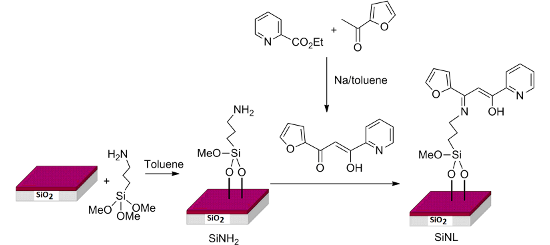
- coordination complexes with most transition metals [41][42]. The incorporation at the surface silica of a β-ketoenol group thus affords these hybrids the capacity to retain heavy metal ions. The group of C. Sanchez has prepared some mesoporous thin films functionalized with silylated β-ketoenol compounds as
- the sorbent material after five cycles of use. This suggests that SiNL has excellent chemical stability as a highly efficient adsorbent for the recovery of Zn(II), Pb(II), Cd(II) and Cu(II) ions. Extraction of heavy metal in natural real water samples. The mesoporous SiNL adsorbent was also used for


Thermal control of the defunctionalization of supported Au25(glutathione)18 catalysts for benzyl alcohol oxidation
Beilstein J. Nanotechnol. 2019, 10, 228–237, doi:10.3762/bjnano.10.21
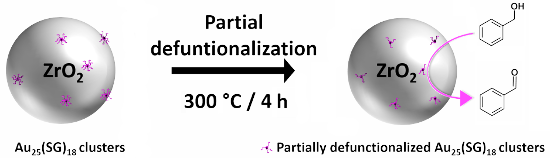
- toluene at 80 °C with a base and under atmospheric conditions [21]. Using O2 as an oxidant under atmospheric conditions is a limitless and inexpensive oxidizing agent and allows for a sustainable transformation. Nevertheless, in the last example, the mesoporous silica support exhibits low stability in