Search results
Search for "optics" in Full Text gives 283 result(s) in Beilstein Journal of Nanotechnology. Showing first 200.
Imaging and milling resolution of light ion beams from helium ion microscopy and FIBs driven by liquid metal alloy ion sources
Beilstein J. Nanotechnol. 2020, 11, 1742–1749, doi:10.3762/bjnano.11.156
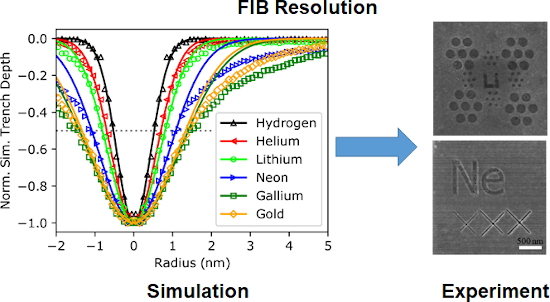
- milling resolution. Improvement is possible in both cases as GFIS technology can be extended to other gases [46][47][48]. Resolution improvements should be obtainable for both technologies using better optics and optimized platforms. Comparison of the spot size (imaging resolution) as a function of the


High-responsivity hybrid α-Ag2S/Si photodetector prepared by pulsed laser ablation in liquid
Beilstein J. Nanotechnol. 2020, 11, 1596–1607, doi:10.3762/bjnano.11.142
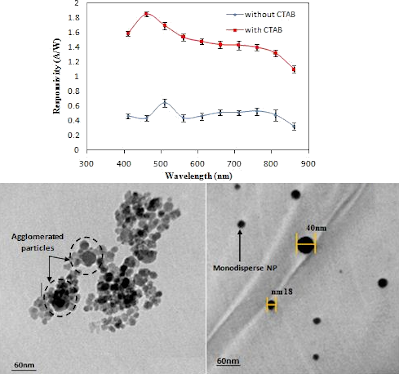
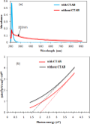
- Optics, Germany). An Ag2S/Si photodetector was prepared by depositing a Ag2S layer on the front side of a silicon substrate through a mask by drop-casting. A single-crystal p-type silicon (111) substrate with an electrical resistivity of 3–5 Ω·cm and a thickness of 300 μm was used. As shown in Figure 2




Cu2O nanoparticles for the degradation of methyl parathion
Beilstein J. Nanotechnol. 2020, 11, 1546–1555, doi:10.3762/bjnano.11.137
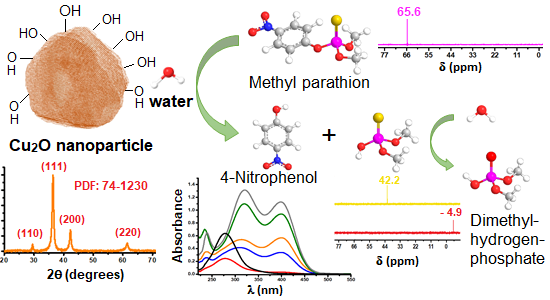
- similar results. Likewise, degradation experiments in the darkness were also performed giving identical results to those under daylight thus photocatalytic degradation was ruled out. Instrumentation UV–vis electronic absorption spectra were acquired on an Ocean Optics CHEM-2000 spectrophotometer equipped


Optically and electrically driven nanoantennas
Beilstein J. Nanotechnol. 2020, 11, 1542–1545, doi:10.3762/bjnano.11.136

- frequencies to a traveling electromagnetic wave that can be observed in the far field. Optical antennas are key elements in nano-optics, bridging the gap between the dimension of an optical wavelength (several hundreds of nanometers) and the size of elementary quantum emitters such as single atoms, molecules
- optics for a new class of quantum devices [37]. The concept, realization and prospective applications of such optically and electrically driven antennas are explored in the Beilstein Journal of Nanotechnology Thematic Issue, “Optically and electrically driven nanoantennas”. In most applications for
Wafer-level integration of self-aligned high aspect ratio silicon 3D structures using the MACE method with Au, Pd, Pt, Cu, and Ir
Beilstein J. Nanotechnol. 2020, 11, 1439–1449, doi:10.3762/bjnano.11.128
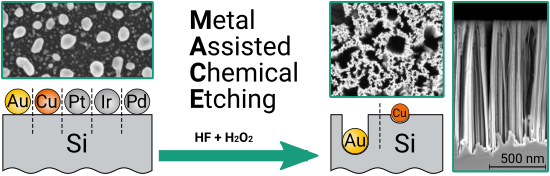
- Mathias Franz Romy Junghans Paul Schmitt Adriana Szeghalmi Stefan E. Schulz Nano Device Technologies, Fraunhofer Institute for Electronic Nano Systems ENAS, Technologie-Campus 3, 09126 Chemnitz, Germany Fraunhofer Institute for Applied Optics and Precision Engineering IOF, Center of Excellence in


An atomic force microscope integrated with a helium ion microscope for correlative nanoscale characterization
Beilstein J. Nanotechnol. 2020, 11, 1272–1279, doi:10.3762/bjnano.11.111
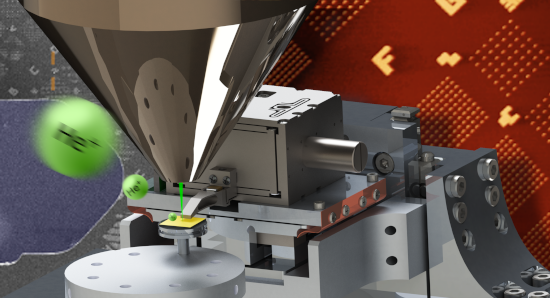
- the optics is very impractical, as it requires the user to vent the chamber. Using self-sensing readout addresses these concerns [5][10][17] and also significantly improves the usability of the correlative instrument for users outside of the AFM community. The reported AFM uses silicon cantilever


Nonadiabatic superconductivity in a Li-intercalated hexagonal boron nitride bilayer
Beilstein J. Nanotechnol. 2020, 11, 1178–1189, doi:10.3762/bjnano.11.102
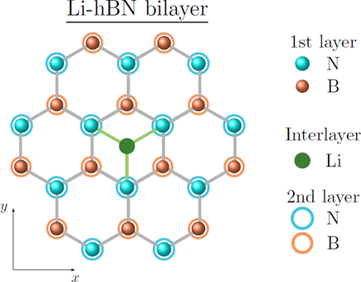
- Kamila A. Szewczyk Izabela A. Domagalska Artur P. Durajski Radoslaw Szczesniak Division of Theoretical Physics, Jan Długosz University in Częstochowa, Ave. Armii Krajowej 13/15, 42-200 Częstochowa, Poland Quantum Optics and Engineering Division, Faculty of Physics and Astronomy, University of


![[Graphic 34]](/bjnano/content/inline/2190-4286-11-102-i54.svg?max-width=637&scale=1.18182) for Li-hBN. The results were obta...
for Li-hBN. The results were obta...
Integrated photonics multi-waveguide devices for optical trapping and Raman spectroscopy: design, fabrication and performance demonstration
Beilstein J. Nanotechnol. 2020, 11, 829–842, doi:10.3762/bjnano.11.68
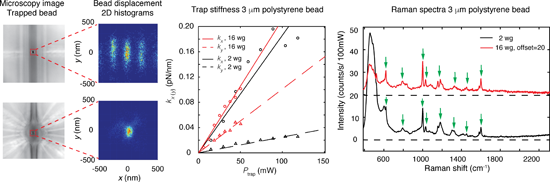
- waveguides. Keywords: Brownian motion; integrated optics devices; lab-on-a-chip; optical trapping; nanofabrication; Raman spectroscopy; ridge waveguides; Introduction Photonic lab-on-a-chip (LOC) techniques strongly attract attention for the manipulation and measurement of biological particles such as
- LOC devices are on-chip versions of a laser-tweezers Raman spectroscopy (LTRS) setup, which is a free space optics instrument. In LTRS, optical trapping and Raman spectroscopy of a particle are carried out using a focused laser beam, enabling the label-free analysis of single cells in an aqueous


Nanoparticles based on the zwitterionic pillar[5]arene and Ag+: synthesis, self-assembly and cytotoxicity in the human lung cancer cell line A549
Beilstein J. Nanotechnol. 2020, 11, 421–431, doi:10.3762/bjnano.11.33
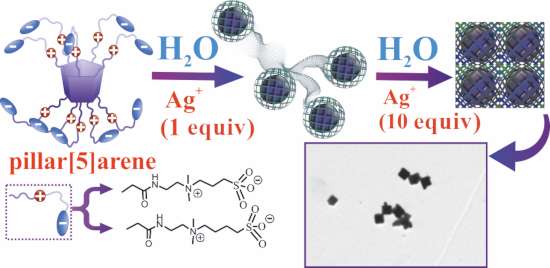
- cuvettes. The instrument contains a 4 mW He–Ne laser operating at a wavelength of 633 nm and incorporates noninvasive backscatter optics (NIBS). The measurements were performed at the detection angle of 173° and the software automatically determined the measurement position within the quartz cuvette. The




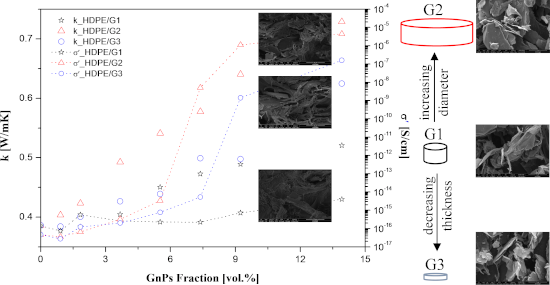
Size effects of graphene nanoplatelets on the properties of high-density polyethylene nanocomposites: morphological, thermal, electrical, and mechanical characterization
Beilstein J. Nanotechnol. 2020, 11, 167–179, doi:10.3762/bjnano.11.14
- energy into heat were collected by a suitable optic (Au-coated mirrors, Edmund Optics) and focused on an IR photodetector (HgCdTe photoconductive detector, Kolmar Technologies, KMPV 11-1-J1/DC). Afterwards, a lock-in amplifier (Stanford Research Systems SR865) output the amplitude and phase of the
- frequencies, a flat top (FT) optics grouping consisting of a diffuser/beam-shaper (ED1-C20, diameter 1", 20°, Circle Pattern Diffuser, Thorlabs) and two lenses (one to collect the large diffused beam and another to converge it on the sample) was used. Using this configuration, the shape of the heating spot


Mobility of charge carriers in self-assembled monolayers
Beilstein J. Nanotechnol. 2019, 10, 2449–2458, doi:10.3762/bjnano.10.235
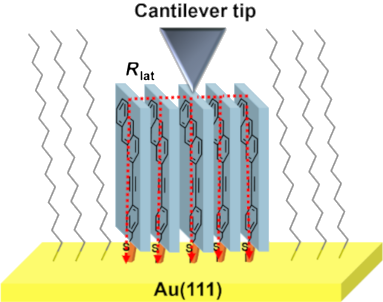
- °) to determine the molecular orientation. Infrared reflection-absorption spectroscopy (IRRAS) was performed on a Bruker VERTEX80 spectrometer (Bruker Optics GmbH) by investigating the PAT-SAM on Au/silicon wafers. As a background sample we used a SAM of deuterated octadecanethiol on an Au/silicon wafer


Deterministic placement of ultra-bright near-infrared color centers in arrays of silicon carbide micropillars
Beilstein J. Nanotechnol. 2019, 10, 2383–2395, doi:10.3762/bjnano.10.229
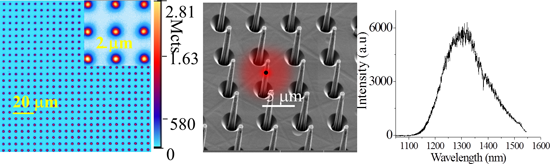
- is similar to the one described above with all optics optimized for IR emission. A CW 980 nm diode laser was used to excite the sample and perform confocal mapping, a DM (Semrock Di02-R1064-25x36, filters are LP Semrock BLP02-1319R at 1319 nm and a band-pass filter (BP) from Edmund optics at 1350


Nitrogen-vacancy centers in diamond for nanoscale magnetic resonance imaging applications
Beilstein J. Nanotechnol. 2019, 10, 2128–2151, doi:10.3762/bjnano.10.207
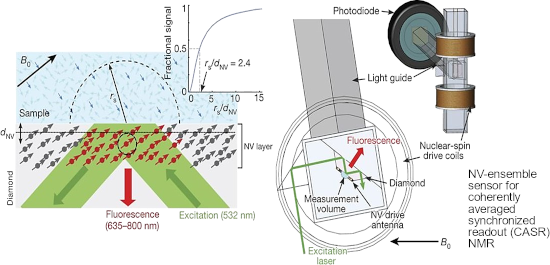
- resonances is interpreted using quantum optics and spin theory, which describe them in terms of spin–orbit interactions and Rabi oscillations. To achieve NV color centers in diamond that are applicable to magnetometry, the reader should refer to the technical information in [20] on the diamond material


Optimization and performance of nitrogen-doped carbon dots as a color conversion layer for white-LED applications
Beilstein J. Nanotechnol. 2019, 10, 2004–2013, doi:10.3762/bjnano.10.197
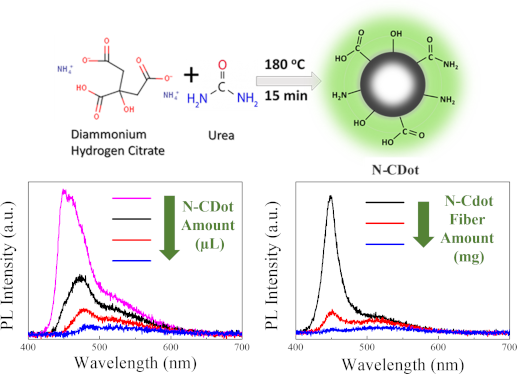
- -Alpha XPS spectrometer. Fourier-transform infrared spectroscopy (FTIR; Spectrum 100, PerkinElmer, Shelton, CT, USA) was used to characterize the kinetic behavior of the chemical bonds. Photoluminescence (PL) and absorbance were measured using an integrating sphere (ISP-50-80-R, Ocean Optics Inc
- .) attached to a USB2000+ spectrometer (Ocean Optics Inc., Dunedin, FL, USA) with a premium fiber cable. A commercial blue LED chip (CREE, 450 nm, royal blue) was used as the blue light source. The morphology of the produced N-CDot fibers was analyzed by scanning electron microscopy (SEM; Quanta 250, FEI


Porous silver-coated pNIPAM-co-AAc hydrogel nanocapsules
Beilstein J. Nanotechnol. 2019, 10, 1973–1982, doi:10.3762/bjnano.10.194
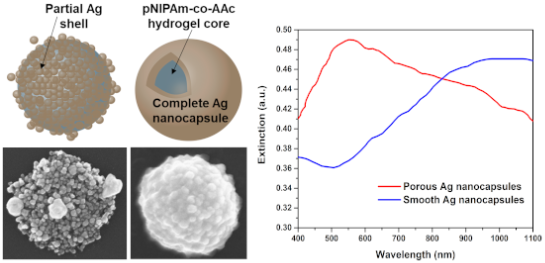
- Interest in the preparation and utilization of uniquely structured nanocomposites continues to expand due to their potential use in electronics, optics, magnetism, medicine, catalysis, and energy applications [1][2][3][4][5][6]. The physical and chemical properties of these materials provide significant


The influence of porosity on nanoparticle formation in hierarchical aluminophosphates
Beilstein J. Nanotechnol. 2019, 10, 1952–1957, doi:10.3762/bjnano.10.191
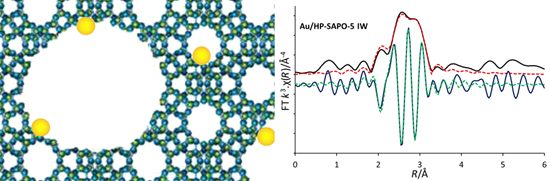
- : aluminophosphate; catalysis; hierarchical catalysts; nanoparticles; porosity; Findings The controlled synthetic design of metallic nanoparticles has generated significant interest in recent decades due to their implementation in a range of fields, including medicine [1], optics [2] and catalysis [3]. Given the
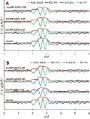
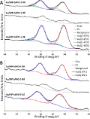
Growth dynamics and light scattering of gold nanoparticles in situ synthesized at high concentration in thin polymer films
Beilstein J. Nanotechnol. 2019, 10, 1768–1777, doi:10.3762/bjnano.10.172
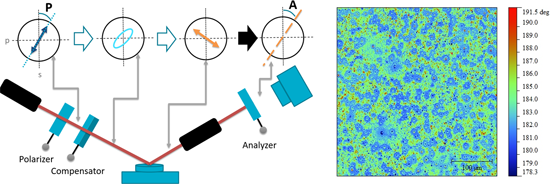
- Corentin Guyot Philippe Vandestrick Ingrid Marenne Olivier Deparis Michel Voue University of Mons, Physics of Materials and Optics, Research Institute for Materials Science and Engineering, Mons, Belgium AGC Glass Europe - Technovation Centre, Gosselies, Belgium University of Namur, Physics
- simpler. In a single step, both the gold salt and the polymer are mixed to prepare the nanocomposite. The simplicity of the method is regarded as a great advantage for the production of nanocomposites for various applications in nano-optics. The principle of in situ methods is the use of one of the matrix
- backscattering of light from plasmonic nanocomposites doped with AuNPs, which is problematic for fiber optics integration, e.g. in Q-switched fiber lasers. This important issue has so far not been addressed. In particular, we investigate the modifications of the scattering properties of nanocomposites induced by


Novel hollow titanium dioxide nanospheres with antimicrobial activity against resistant bacteria
Beilstein J. Nanotechnol. 2019, 10, 1716–1725, doi:10.3762/bjnano.10.167
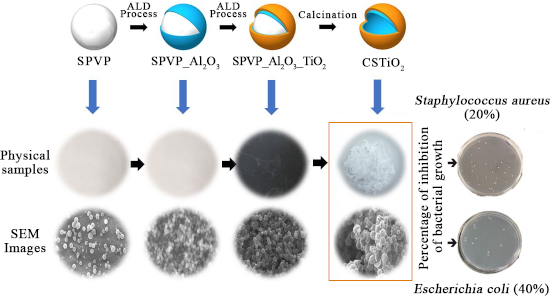
- –80° at 0.02° s−1. SAXS measurements were performed using a Bruker N8 Horizon SAXS system equipped with a Cu Kα radiation (λ = 1.54 Å) source and 2D VÅNTEC-500 and MONTEL optics. The data were acquired in the q-range from 0.012–0.37 Å−1 with a measurement time of 14.400 s in vacuum (2 mbar) at room


Stationary beam full-field transmission helium ion microscopy using sub-50 keV He+: Projected images and intensity patterns
Beilstein J. Nanotechnol. 2019, 10, 1648–1657, doi:10.3762/bjnano.10.160
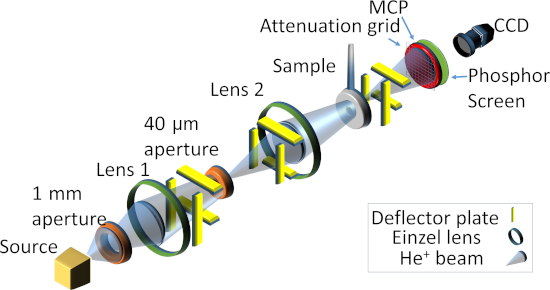
- comprised of a microchannel plate (MCP) in front of a phosphor screen, whose intensity is recorded with a CCD camera (Edmund Optics EO-0312M). There is a metal mesh attenuation grid in front of the MCP, which mechanically blocks 90% of the incoming intensity to prevent damage to the MCP. There are three


Magnetic segregation effect in liquid crystals doped with carbon nanotubes
Beilstein J. Nanotechnol. 2019, 10, 1464–1474, doi:10.3762/bjnano.10.145
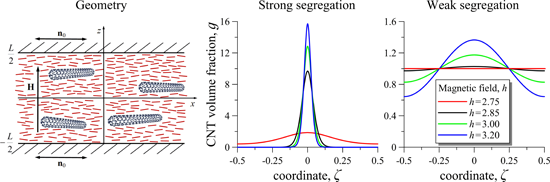
- ratio the physical properties of this carbon nanomaterial vary greatly in different directions. In this sense, the anisotropic properties of CNTs (for example, thermal and electrical conductivities) are attractive for a wide range of applications, including nanoelectronics and optics [2]. A distinctive


Growth of lithium hydride thin films from solutions: Towards solution atomic layer deposition of lithiated films
Beilstein J. Nanotechnol. 2019, 10, 1443–1451, doi:10.3762/bjnano.10.142
- used. Characterization Auger spectroscopy was carried out on a Auger microprobe Jeol JAMP-9510F with hemispherical analyser using 3 kV accelerating voltage and 10 nA probe current. Sample was tilted 55° to the excitation, with the normal coincident with the axis of the collection optics of the analyser


Janus-micromotor-based on–off luminescence sensor for active TNT detection
Beilstein J. Nanotechnol. 2019, 10, 1324–1331, doi:10.3762/bjnano.10.131
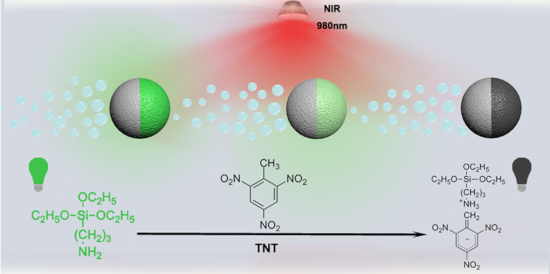
- luminescence was measured using a HORIBA Jobin Yvon FluoroMax-4 spectrophotometer with a 980 nm diode laser at a power of 1 W cm−2 (Shanghai Laser & Optics Century Co. Ltd). (a) Schematic representation of the fabrication process of Janus UCNP-modified polyelectrolyte capsule motors. (b) TEM images, (c) FTIR


Fabrication of phase masks from amorphous carbon thin films for electron-beam shaping
Beilstein J. Nanotechnol. 2019, 10, 1290–1302, doi:10.3762/bjnano.10.128
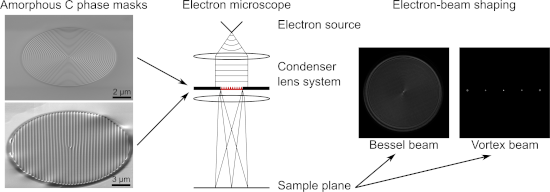
- their transverse beam profile in form of a squared Bessel function of the first kind and m-th order, , which were first discussed and experimentally realized in light optics [22][23]. For m = 0 the global maximum of the Bessel function lies at the origin, making this case interesting for an electron
- with kρ = 10 µm−1 and a diameter of 10 µm in the plane of the second condenser (C2) aperture. Illumination of the PM can be controlled via excitation of the first condenser lens (C1), which is accomplished in this microscope by changing the value of the so-called “spot size”. The imaging optics of the



Angle-dependent structural colors in a nanoscale-grating photonic crystal fabricated by reverse nanoimprint technology
Beilstein J. Nanotechnol. 2019, 10, 1211–1216, doi:10.3762/bjnano.10.120
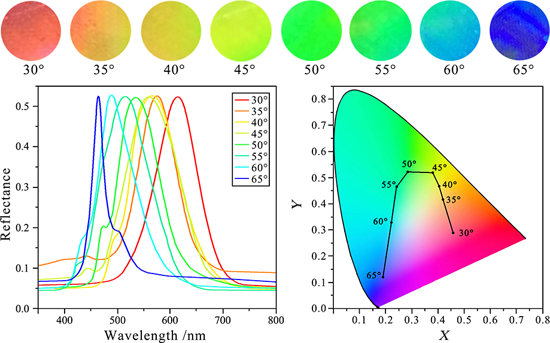
- crystal was peeled-off from the PC mould. The surface structures of photonic crystal were obtained by SEM (Nova Nano SEM450, USA). The spectroscopic analyses were performed with an Ocean Optics fiber-optic spectrophotometer. The data analysis and fitting were performed by using Origin software. The SEM


Green fabrication of lanthanide-doped hydroxide-based phosphors: Y(OH)3:Eu3+ nanoparticles for white light generation
Beilstein J. Nanotechnol. 2019, 10, 1200–1210, doi:10.3762/bjnano.10.119
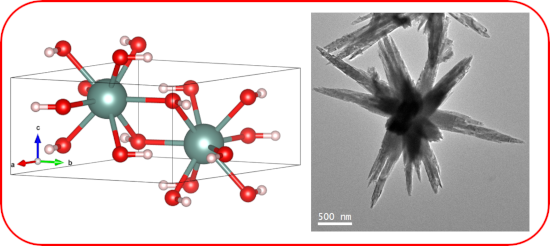
- Optics spectrometer (Ocean Optics, USB2000+, Duiven, The Netherlands). Synthesis of Eu-doped yttrium hydroxide crystals An amount of yttrium(III) acetate hydrate (5.63 × 10⁻⁴ mol) and a varying amount of europium(III) acetate hydrate were dissolved in 10 mL of deionized water. Depending on the dopant