


Search results
Search for "oxides" in Full Text gives 467 result(s) in Beilstein Journal of Nanotechnology. Showing first 200.
Specific absorption rate of randomly oriented magnetic nanoparticles in a static magnetic field
Beilstein J. Nanotechnol. 2023, 14, 485–493, doi:10.3762/bjnano.14.39
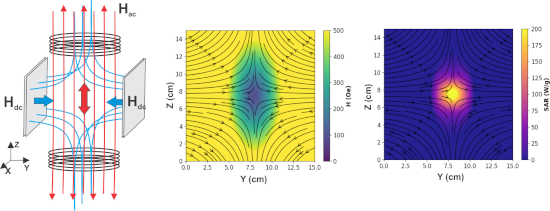
- hyperthermia; magnetic nanoparticles; magnetic particle imaging; specific absorption rate; static magnetic field; Introduction Magnetic nanoparticles, mainly iron oxides, are promising materials for the diagnosis and therapy of oncological diseases [1][2][3]. Important fields of application of magnetic



Mixed oxides with corundum-type structure obtained from recycling can seals as paint pigments: color stability
Beilstein J. Nanotechnol. 2023, 14, 467–477, doi:10.3762/bjnano.14.37
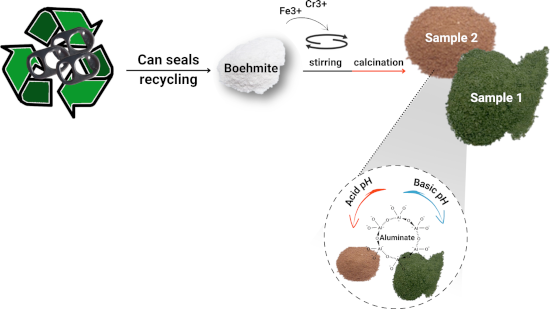
- , Guarapuava, 85040-167, Brazil 10.3762/bjnano.14.37 Abstract Green chromium and red iron oxides are technically important pigments due to their high color intensity, good dispersibility in paints, and superior hiding power. We report on the synthesis of colored pigments of mixed oxides with a corundum-type
- ) coloration of the mixed oxides was confirmed by XPS and visible-light absorption measurements. The colorimetric stability of the oxides in acid and alkaline environments was evaluated. After 240 h of exposure to harsh environments, both pigments demonstrated stability and showed no strong color difference
- obtaining boehmite, we added chromium and iron ions to obtain colored mixed oxides with a corundum-type structure. The stability of the synthesized pigments in acid and alkaline environments was evaluated by colorimetric measurements. Results and Discussion X-ray diffractometry (XRD) The XRD of the pristine




Evaluation of electrosynthesized reduced graphene oxide–Ni/Fe/Co-based (oxy)hydroxide catalysts towards the oxygen evolution reaction
Beilstein J. Nanotechnol. 2023, 14, 420–433, doi:10.3762/bjnano.14.34
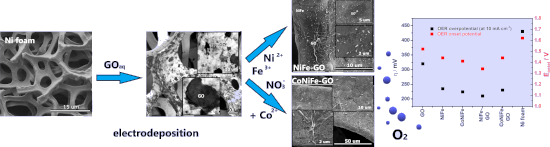
- Cracow, Poland 10.3762/bjnano.14.34 Abstract In this work, the specific role of the addition of graphene oxide (GO) to state-of-the-art nickel–iron (NiFe) and cobalt–nickel–iron (CoNiFe) mixed oxides/hydroxides towards the oxygen evolution reaction (OER) is investigated. Morphology, structure, and OER
- friendly nature [11]. Even though transition-metal-based catalysts still suffer from low surface areas [12], dissolution and aggregation of metallic phase and metal oxides during the active OER process occurs [13]. Hence, Ni-, Fe- and/or Co-based catalysts have been synthesized as hybrid catalysts with
- graphene material with Ni-, Fe- and/or Co-based oxides/hydroxides with high chemical reactivity provides both an effective electron pathway through the catalyst [20] and high specific surface area [21], which is desirable for the OER process [13]. The overall electrocatalytic performance of the hybrid





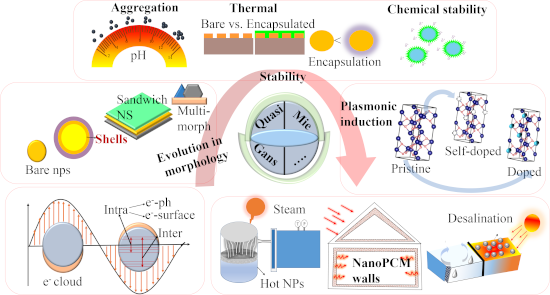
Plasmonic nanotechnology for photothermal applications – an evaluation
Beilstein J. Nanotechnol. 2023, 14, 380–419, doi:10.3762/bjnano.14.33




Bismuth-based nanostructured photocatalysts for the remediation of antibiotics and organic dyes
Beilstein J. Nanotechnol. 2023, 14, 291–321, doi:10.3762/bjnano.14.26
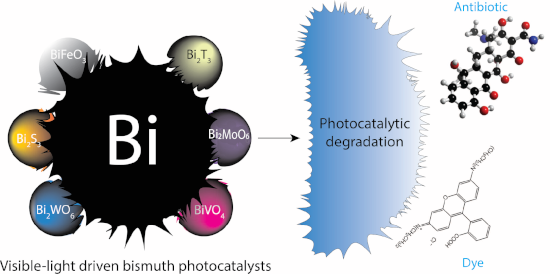
- semiconductor as well as the redox levels of the substrate [11][21]. One of the main barriers preventing photocatalysis from being used in practical applications is the lack of suitable semiconductor photocatalysts. The commonly used nanometre-sized photocatalysts are metal oxides or sulfides (binary compounds
- susceptibility, ferroelectricity, photostability and useful electrical properties [102][103][104][105]. The highest visible-light photocatalytic activity among bismuth-based oxides with a similar structure has been observed for Bi2WO6, which can be attributed to its distinctive structure [103][104]. It is
- allow for the integration of multiple functions derived from various types of nanocatalysts, such as semiconductor nanoparticles, plasmonic metals, and carbon-based and magnetic oxides, into the same host matrix. This enables effective tuning of the photocatalytic characteristics of the final


Recent progress in cancer cell membrane-based nanoparticles for biomedical applications
Beilstein J. Nanotechnol. 2023, 14, 262–279, doi:10.3762/bjnano.14.24
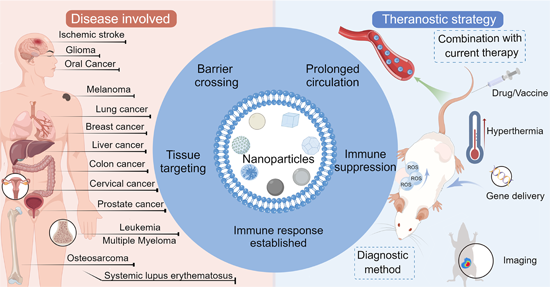
- by enhancing proton relaxation in tissues [120]. Among them, superparamagnetic iron oxides (SPIONs) are widely used with numerous advantages, such as small size, colloidal stability, low toxicity, magnetic heating properties, and enhanced molecular MRI [121]. However, SPIONs cannot be effectively


A novel approach to pulsed laser deposition of platinum catalyst on carbon particles for use in polymer electrolyte membrane fuel cells
Beilstein J. Nanotechnol. 2023, 14, 190–204, doi:10.3762/bjnano.14.19
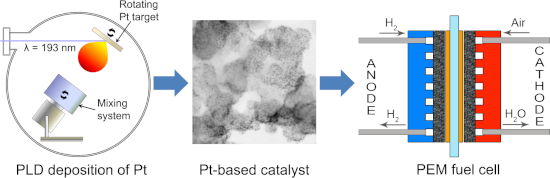
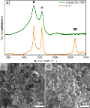
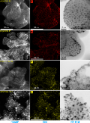
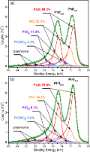
- , FWHM 1.58 ± 0.14 eV). In both cases, the metallic form of Pt dominates and constitutes 64.3% and 76.6% for material A and 20% Pt XC-72R, respectively (data on the graph). Among the oxides, the PtO form is dominant and constitutes 21.4% and 14.3% for material A and 20% Pt XC-72R, respectively. These



Two-step single-reactor synthesis of oleic acid- or undecylenic acid-stabilized magnetic nanoparticles by thermal decomposition
Beilstein J. Nanotechnol. 2023, 14, 11–22, doi:10.3762/bjnano.14.2
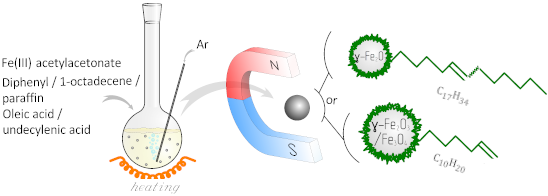
- of Sciences, Heyrovského nám. 2, 162 06 Prague 6, Czech Republic Institut des Molécules et Matériaux du Mans (IMMM), UMR 6283 CNRS − Le Mans Université, Avenue Olivier Messiaen, 72085 Le Mans Cedex, France 10.3762/bjnano.14.2 Abstract Different iron oxides (i.e., magnetite, maghemite, goethite
- mol of acetylacetonate and up to 5.5 mol/mol. Below the mentioned limit, NPM dispersions were colloidally unstable, and at higher ratios no NPM were formed which could be precipitated by an applied magnetic field. Monodisperse nanoparticles of iron oxides were synthesized with a diameter of 8–13 nm
- oxide nanoparticles in biomedicine requires in-depth studies of their structure and properties. It was well-established that different iron oxides (e.g., magnetite (Fe3O4), maghemite (γ-Fe2O3), goethite (α-FeOOH), and wüstite (FeO)), have a divergent impact on biological objects [7]. In this regard


Hydroxyapatite–bioglass nanocomposites: Structural, mechanical, and biological aspects
Beilstein J. Nanotechnol. 2022, 13, 1490–1504, doi:10.3762/bjnano.13.123
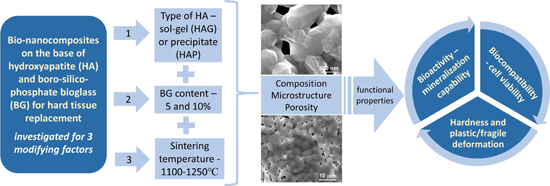
- , P, and Na, in the form of oxides, and SiO2, which was proven to be a very useful component for CHA formation, as well as for angiogenesis processes and collagen formation [8][9]. Since the discovery of 45S5 Bioglass, a wide range of bioglasses have been elaborated and investigated, which can be
- divided into the following large groups: (i) silicate-based bioglasses (SBG), (ii) phosphate-based bioglasses (PBG), and (iii) borate-based bioglasses (BBG). The chemical composition of the glass, the ratio of its constituent oxides, and the glass structure have a determinative influence on its biological
Straight roads into nowhere – obvious and not-so-obvious biological models for ferrophobic surfaces
Beilstein J. Nanotechnol. 2022, 13, 1345–1360, doi:10.3762/bjnano.13.111
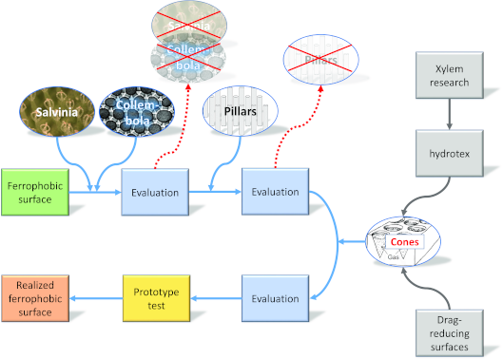
- problem: Failing blast furnace tuyères In this section, the problem and its technical and economical relevance will be briefly outlined. Iron ore consists mostly of iron oxides, which have to be reduced in order to obtain metallic iron (or steel). This is primarily achieved via the blast furnace pathway


Near-infrared photoactive Ag-Zn-Ga-S-Se quantum dots for high-performance quantum dot-sensitized solar cells
Beilstein J. Nanotechnol. 2022, 13, 1337–1344, doi:10.3762/bjnano.13.110
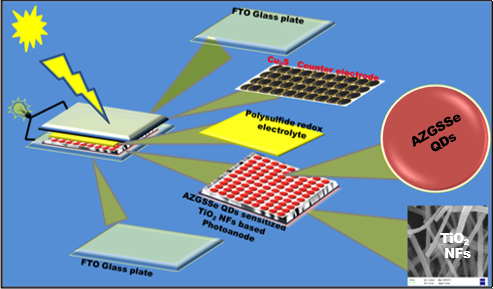
- [4][5][6][7]. At present, QDSCs have reached 14.4% efficiency. In QDSCs, QDs are added to the metal oxides. Our earlier reports demonstrated that porous TiO2 nanofibers possess an enormous surface area for the maximum absorption of QDs [8][9][10]. For the past decades, binary or ternary QDs based on


Recent trends in Bi-based nanomaterials: challenges, fabrication, enhancement techniques, and environmental applications
Beilstein J. Nanotechnol. 2022, 13, 1316–1336, doi:10.3762/bjnano.13.109
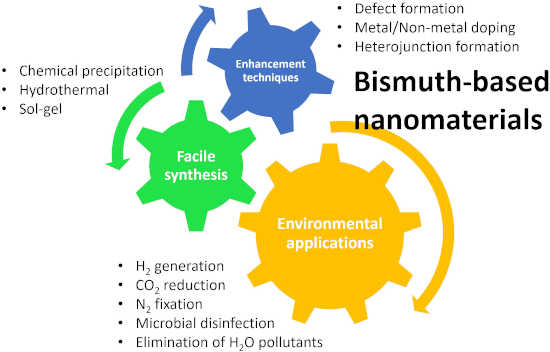
- environmentally beneficial alternatives [7]. The choice of the photocatalysts is one of the most important steps in attaining high performance in photocatalysis. Semiconductors with bandgaps greater than 3 eV are called wide-bandgap photocatalysts. These semiconductors include oxides (e.g., TiO2, Bi2O3, Bi2WO6
- scientific community in environmental cleanup using bismuth-based nanoparticles (Figure 1). In recent years, an abundance of Bi-based photocatalysts has been reported. The most commonly used Bi-based photocatalysts include metallic Bi, Bi-based binary oxides, Bi-based oxyhalides, Bi-based multicomponent
- oxides, and binary Bi sulfides. Bismuth oxyhalides are indirect bandgap semiconductors in which photogenerated electrons and holes rarely recombine. BiOX is an excellent photocatalyst, and it is widely applied due to its small bandgap and high electron density, which are easily adjustable by changing the




Design of surface nanostructures for chirality sensing based on quartz crystal microbalance
Beilstein J. Nanotechnol. 2022, 13, 1201–1219, doi:10.3762/bjnano.13.100
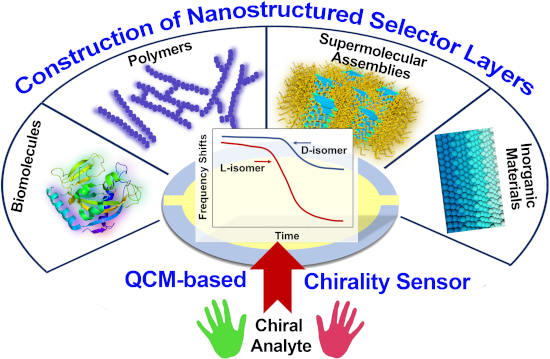
- considered to be the most promising platform for enantiospecific sensing and may also be explored for chiral separation and catalysis [111]. Induced chiral metal or inorganic oxides Based on the template strategy, metals or inorganic oxides with chiral channels could be fabricated by using chiral templates


Application of nanoarchitectonics in moist-electric generation
Beilstein J. Nanotechnol. 2022, 13, 1185–1200, doi:10.3762/bjnano.13.99
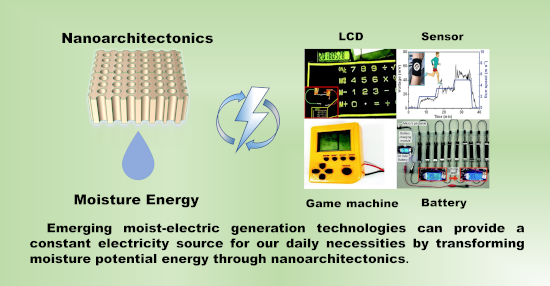
- discussed in detail. 2 Inorganic nanomaterials for MEG 2.1 Carbon nanotubes and carbon nanoparticles Among inorganic nanomaterials, carbon nanoparticles, carbon nanotubes, graphene, graphene oxide, metal oxides, and transition metal chalcogenides (TMDs) have been reported so far regarding applications in


Biomimetic chitosan with biocomposite nanomaterials for bone tissue repair and regeneration
Beilstein J. Nanotechnol. 2022, 13, 1051–1067, doi:10.3762/bjnano.13.92
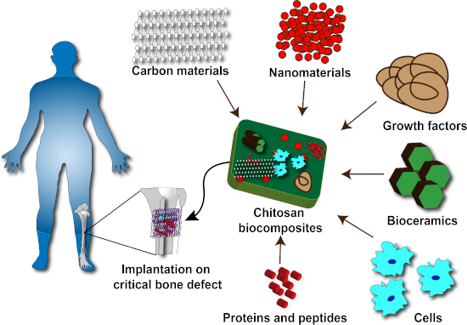
- deacetylation in the chitosan, the positive charge density increases, which results in high electrostatic interaction which electrically stimulate the osteoblasts to proliferative and differentiate [46][47][48]. Chitosan biomaterials containing graphene oxides were used as substrates for the generation of
Electrocatalytic oxygen reduction activity of AgCoCu oxides on reduced graphene oxide in alkaline media
Beilstein J. Nanotechnol. 2022, 13, 1020–1029, doi:10.3762/bjnano.13.89
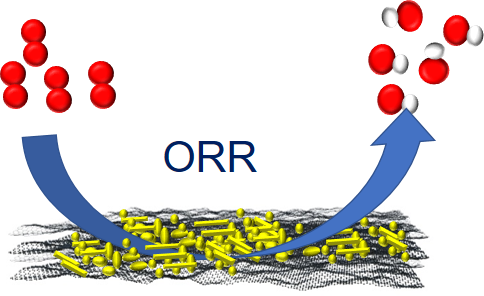
- selection of Cu and Co is their similar crystal structure to that of silver, besides their catalytic oxidizing ability. Moreover, to date, there are no reports on the evaluation of the electrochemical ORR activity in alkaline media employing AgCuCo oxides supported on rGO. To identify the phase formation
- concentration in the trimetallic oxides, in combination with conductive rGO, plays a key role in the ORR activity in alkaline medium. We optimized the Ag content in the trimetallic oxide ACC-2, which showed an onset potential of 0.94 V vs RHE and a limiting current density of 3.6 mA·cm−2 along with considerable


Theoretical investigations of oxygen vacancy effects in nickel-doped zirconia from ab initio XANES spectroscopy at the oxygen K-edge
Beilstein J. Nanotechnol. 2022, 13, 975–985, doi:10.3762/bjnano.13.85
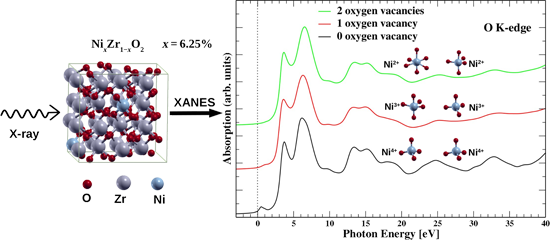
- and magnetic order in a typical diluted magnetic oxide. Such a finding may be crucial for spintronics-related applications. Keywords: defect; ligand field; nickel; oxidation state; oxides; spectroscopy; spintronics; vacancy; X-ray absorption; X-ray absorption near-edge structure (XANES); zirconia
- ; Introduction The search for room-temperature magnetic semiconductors has been the driving force behind the increasing interest of material scientists and solid-state physicists in magnetic oxides [1]. This is due to their potential applications as building block of spintronic devices. Magnetic oxides are
- been achieved [3][4]). Also, in the last decade, considerable efforts have been devoted to determine the type of magnetic interaction (paramagnetic, ferromagnetic, or antiferromagnetic) and the microscopic mechanisms responsible for the magnetism in doped magnetic oxides (DMO) [5]. Several experimental



Solar-light-driven LaFexNi1−xO3 perovskite oxides for photocatalytic Fenton-like reaction to degrade organic pollutants
Beilstein J. Nanotechnol. 2022, 13, 882–895, doi:10.3762/bjnano.13.79
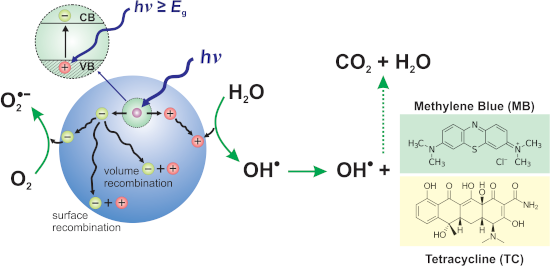
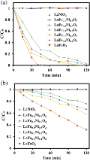
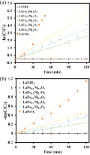
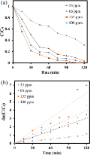
- ), Chengalpattu district, Kelambakkam, Tamil Nadu, 603103, India 10.3762/bjnano.13.79 Abstract LaFexNi1−xO3 perovskite oxides were prepared by the sol–gel method under various conditions, including different pH values (pH 0 and pH 7) and different calcination temperatures (500–800 °C) as well as different Fe/Ni
- ratios (1/9, 3/7, 5/5, 7/3, 9/1). The samples were examined by XRD, DRS, BET, and SEM to reveal their crystallinity, light-absorption ability, specific surface area, and surface features, respectively. The photocatalytic Fenton reaction was conducted using various LaFexNi1−xO3 perovskite oxides to
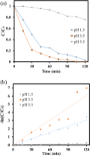
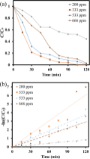
- decompose the methylene blue molecules. Accordingly, the synthesis condition of pH 0, calcination temperature at 700 °C, and Fe/Ni ratio = 7/3 could form LaFe0.7Ni0.3O3 perovskite oxides as highly efficient photocatalysts. Moreover, various conditions during the photocatalytic degradation were verified



Temperature and chemical effects on the interfacial energy between a Ga–In–Sn eutectic liquid alloy and nanoscopic asperities
Beilstein J. Nanotechnol. 2022, 13, 817–827, doi:10.3762/bjnano.13.72
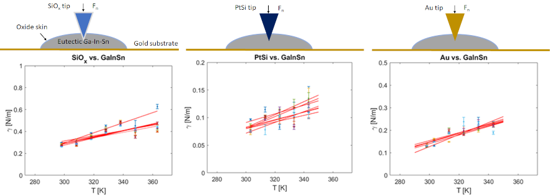
- that these contributions arose from contamination by the ambient, we excluded them from our calculations of the surface chemical composition. Figure 6 shows that the surface oxide on the melt mainly consists of gallium and tin oxides, with a minor contribution from indium oxide. After heating at 100 °C
- %, while the atomic fractions of tin and indium bound as oxides (SnO or SnO2, and In2O3) did not significantly change. Given the atomic concentrations in Table 3, the native mixed surface oxide of the Ga–In–Sn eutectic liquid consists of GaO2–Sn2O3–In2O3 or (Ga0.8Sn0.14In0.06)O2. After heating, this
- the respective stabilities of the oxides at the tip and at the liquid surface, respectively. Their stability can be discussed based on their respective melting points and enthalpies of fusion ΔHfus and formation at T = 298.15 K, For amorphous SiO2, the following values were reported: = 1726 K




Optimizing PMMA solutions to suppress contamination in the transfer of CVD graphene for batch production
Beilstein J. Nanotechnol. 2022, 13, 796–806, doi:10.3762/bjnano.13.70
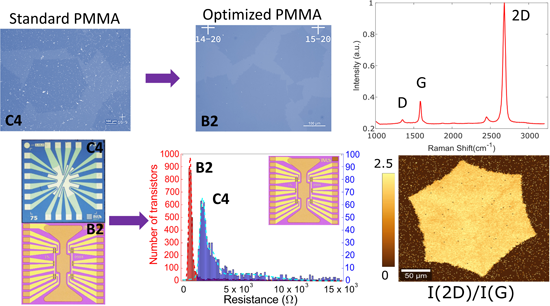
- stability and impermeability to gases and liquids. In contrast, the surrounding exposed areas of the Cu foil surface exhibited high reactivity and were readily oxidized to copper oxides with a noticeable color change. The apparent color contrast between the oxidized and non-oxidized Cu surfaces made the





Efficient liquid exfoliation of KP15 nanowires aided by Hansen's empirical theory
Beilstein J. Nanotechnol. 2022, 13, 788–795, doi:10.3762/bjnano.13.69
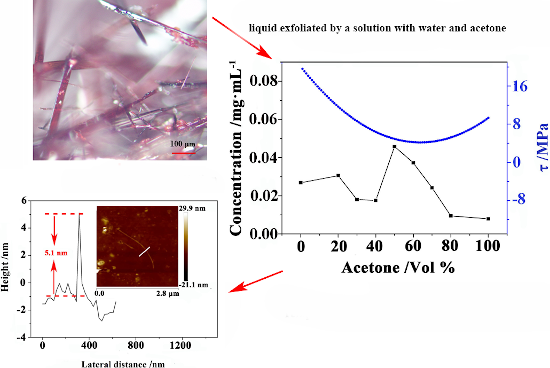
- improved by adjusting the composition and type of solutions used in the liquid-phase exfoliation [15][16][17]. This theory has been successfully used for improving the exfoliation efficiency in several low-dimensional materials, such as carbon, graphene, metal oxides, and fibrous phosphorus. [18]. In a


A nonenzymatic reduced graphene oxide-based nanosensor for parathion
Beilstein J. Nanotechnol. 2022, 13, 730–744, doi:10.3762/bjnano.13.65
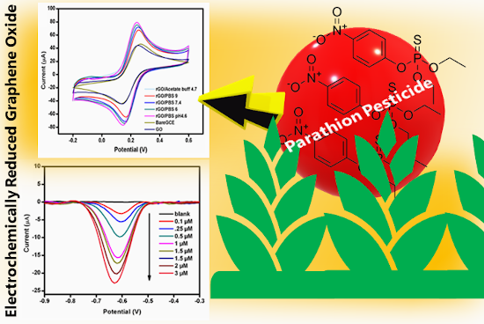
- , selective, sensitive, and point-of-care (POC) analytical tools for monitoring environmental pollutants [2][11]. They can also detect residual OPs based on their electrocatalytic activity and affinity toward nanomaterials, such as nanoparticles, carbon nanomaterials, and metal oxides [11]. In a few reports


A non-enzymatic electrochemical hydrogen peroxide sensor based on copper oxide nanostructures
Beilstein J. Nanotechnol. 2022, 13, 424–436, doi:10.3762/bjnano.13.35
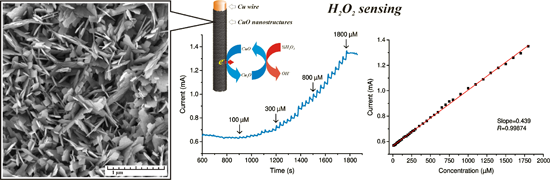
- ]. Nanostructured materials are widely used as the working surface of the electrode [47][48][49]. The most common are transition metal nanoparticles [33][37][50][51][52][53][54], carbon nanotubes [8], metal oxides [55][56][57][58][59][60][61][62][63][64], graphene [32][33], and ordered mesoporous carbon [38][65][66
- copper wire is observed. This process is similar to the conventional hydrothermal growth of most metal oxides described in previous studies [74][78][79]; however, this work has a fundamental difference: Cu-containing salts are not used in the synthesis process. The copper wire itself acts as the
- healthcare to analyse changes in the concentration of H2O2 in biological fluids. Also, a promising option to study more complex analytes and to significantly increase the sensitivity is the use of this nanostructured CuO sensor as part of a multisensor system based on several types of metal oxides (e.g





A chemiresistive sensor array based on polyaniline nanocomposites and machine learning classification
Beilstein J. Nanotechnol. 2022, 13, 411–423, doi:10.3762/bjnano.13.34
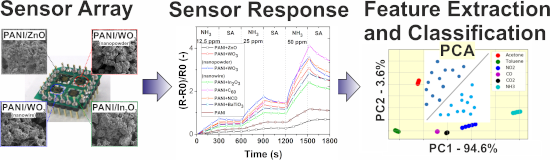
- 1999/2, 182 21 Prague, Czech Republic 10.3762/bjnano.13.34 Abstract The selective detection of ammonia (NH3), nitrogen dioxide (NO2), carbon oxides (CO2 and CO), acetone ((CH3)2CO), and toluene (C6H5CH3) is investigated by means of a gas sensor array based on polyaniline nanocomposites. The array
- oxides, and various volatile organic compounds, is crucial in automotive, defense, aviation, chemical, medicine, and food industries [1][2]. Research on chemical sensors is currently focused on the fabrication of multisensor arrays for enhanced detection and identification of various chemical compounds


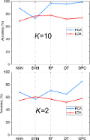


Relationship between corrosion and nanoscale friction on a metallic glass
Beilstein J. Nanotechnol. 2022, 13, 236–244, doi:10.3762/bjnano.13.18
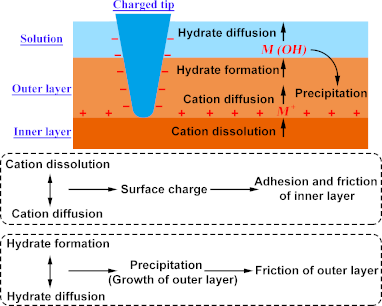
- inner layer, which involves two physicochemical processes. Metal cations are generated at the interface between the inner and outer layer by the dissolution of the inner layer oxides and the metal substrate and then diffuse away from the interface. In the case of immersion, the constant small adhesion
- explain the bilayer structure found after polarization [30][31][42]. Metal cations react with water, or anions present in the solution, and form hydrated oxides and hydroxides at the interface between the outer layer and solution. These hydrates diffuse into the bulk solution, or partially transform as





