Search results
Search for "pore size" in Full Text gives 215 result(s) in Beilstein Journal of Nanotechnology. Showing first 200.
Design and facile synthesis of defect-rich C-MoS2/rGO nanosheets for enhanced lithium–sulfur battery performance
Beilstein J. Nanotechnol. 2019, 10, 2251–2260, doi:10.3762/bjnano.10.217
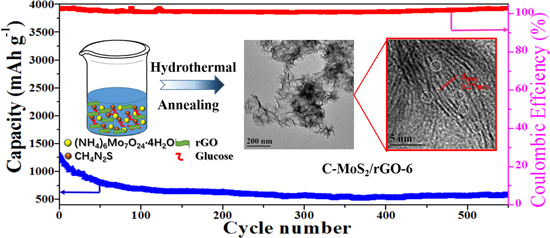
- are almost completely removed during the hydrothermal synthesis and annealing process [41]. Full nitrogen sorption isotherms of the composites were measured to obtain the specific surface area and the pore size distribution. A type-IV isotherm with a type-H3 hysteresis loop in the relative pressure
- range of 0.45–1.0 P/P0 suggests the presence of a mesoporous structure, as displayed in Figure 5a. The specific surface area was calculated to be 131.72, 300.64, 539.16 m2·g−1 by using the Brunauer–Emmett–Teller (BET) method. The pore size distribution obtained from the Barrett–Joyner–Halenda (BJH
- carbon is reduced by hydrogen to cause further increase of carbon defects; and the crystallinity of the MoS2 nanosheets is further improved. This is consistent with the results of XRD and Raman. The pore size distribution of the composites exhibits a sharp peak at 3 nm and another broad peak at 40 nm


Targeted therapeutic effect against the breast cancer cell line MCF-7 with a CuFe2O4/silica/cisplatin nanocomposite formulation
Beilstein J. Nanotechnol. 2019, 10, 2217–2228, doi:10.3762/bjnano.10.214
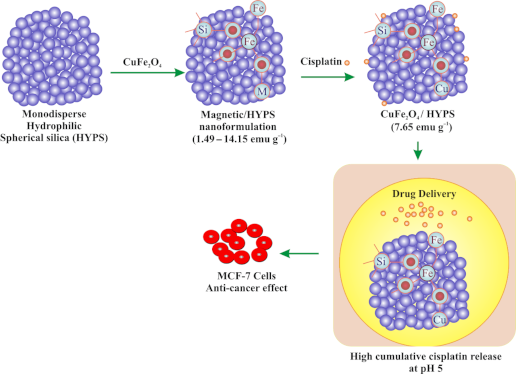
- saline solution. The presence of cubic spinel CuFe2O4 on HYPS was confirmed through powder X-ray diffraction (PXRD), Fourier transform infrared spectroscopy (FTIR) and diffuse reflectance UV–vis spectroscopy (DR UV–vis) analysis. The HYPS particles showed a surface area of 170 m2/g, pore size of 8.3 nm
- and pore volume of 0.35 cm3/g. The cisplatin/CuFe2O4/HYPS nanoformulation showed the accumulation of copper ferrite nanoparticles on the surface and in the pores of HYPS with a surface area of 45 m2/g, pore size of 16 nm and pore volume of 0.18 cm3/g. Transmission electron microscopy (TEM) and energy
- and Methods HYPS was purchased from Superior Silica, USA. Cu(NO3)2·3H2O, Fe(NO3)3·9H2O, cisplatin and aluminium mesocellular foam with a high surface area of 539 m2/g and large aperture pore size of 14.7 nm was obtained from Sigma-Aldrich. Silicalite with a surface area of 313 m2/g was prepared in


Ultrathin Ni1−xCoxS2 nanoflakes as high energy density electrode materials for asymmetric supercapacitors
Beilstein J. Nanotechnol. 2019, 10, 2207–2216, doi:10.3762/bjnano.10.213
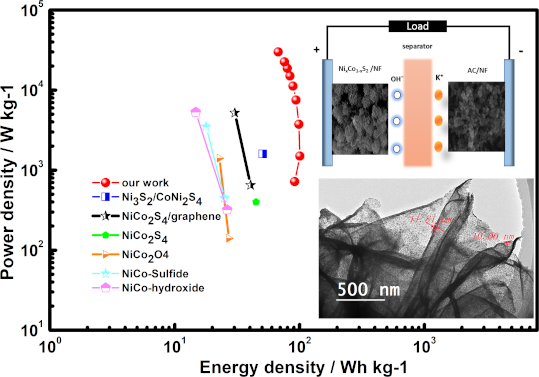
- . Specific surface area and pore size of the as-synthesized material were determined by BET measurements (Micromeritics 3 Flex). Electrochemical measurements Electrochemical properties of the electrode material The electrochemical performance of all samples was tested using a three-electrode system
- pore size of about 1.5 nm (Figure S4b, Supporting Information File 1). This result verifies that the pore size of the three-dimensional structure of the Ni1−xCoxS2 nanoflakes is smaller than the pore size of Ni1.7Co1.3O4 (around 4 nm) as shown in Figure S4d (Supporting Information File 1). The pores in


Improved adsorption and degradation performance by S-doping of (001)-TiO2
Beilstein J. Nanotechnol. 2019, 10, 2116–2127, doi:10.3762/bjnano.10.206
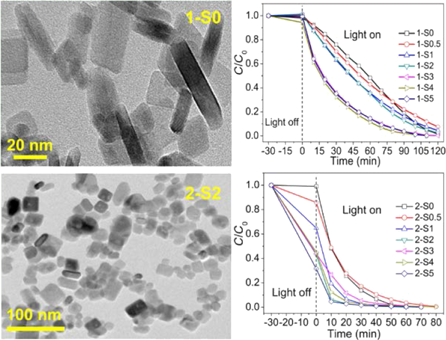
- % to 68.5% due to the synergistic effects of the oxygen vacancies, increased number of surface chemical adsorption centers as a result of SO42− adsorption on the TiO2 surface and the larger pore size. (3) S-doping increases the MB degradation rate from 6.9 × 10⁻² min−1 to 18.2 × 10⁻² min−1 due to an
- Instruments, USA). The pore size distribution was calculated using the Barret–Joyner–Halenda (BJH) method. The photoluminescence (PL) was measured on a fluorescence spectrophotometer (F-4500, Hitachi, Japan). Electron spin resonance (ESR) signals of the reactive species spin trapped by 5,5-dimethyl-1
- °C, as shown by the TEM images (Figure 2). In addition, the S-doped samples prepared at 250 °C have a larger pore size, which is beneficial for adsorption of the pollutant molecules. PL measurements are effective to examine the separation efficiency and recombination processes of photo-generated




The influence of porosity on nanoparticle formation in hierarchical aluminophosphates
Beilstein J. Nanotechnol. 2019, 10, 1952–1957, doi:10.3762/bjnano.10.191
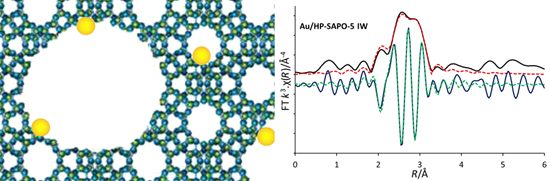
- microporous SAPO-5 species, to demonstrate the advantages of hierarchical systems for nanoparticle deposition. We selected SAPO-5 as our basic framework, as the AlPO-5 synthesis is robust and forms one of the largest AlPO frameworks (pore size 7.3 Å), which will aid nanoparticle deposition and maintain
Facile synthesis of carbon nanotube-supported NiO//Fe2O3 for all-solid-state supercapacitors
Beilstein J. Nanotechnol. 2019, 10, 1923–1932, doi:10.3762/bjnano.10.188
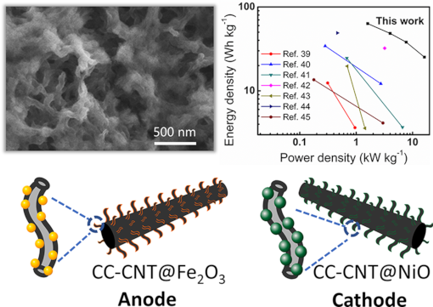
- –Halenda (BJH) pore size distribution of CC-CNT@Fe2O3 are shown in Supporting Information File 1, Figure S4. It is a type-IV isotherm, indicating the mesoporous texture of the sample (Figure S4a, Supporting Information File 1). The BET surface area was found to be 24.9 m2·g−1, much larger than that of pure
- carbon cloth (0.2 m2·g−1). The pore size distribution (Figure S4b, Supporting Information File 1) shows that most pores have a size of 40–50 nm. The high surface area, and the mesopores can help the ion diffusion between electrode and electrolyte. The morphologies of CNT@Fe2O3 were further examined by
- CC-CNT substrate by the same method as Fe2O3. As shown in Figure 5a, NiO is homogeneously coated on CC-CNT forming porous structures. N2 adsorption–desorption isotherm and BJH pore size distribution of CC-CNT@NiO are shown in Supporting Information File 1, Figure S7. It is a type-IV isotherm


TiO2/GO-coated functional separator to suppress polysulfide migration in lithium–sulfur batteries
Beilstein J. Nanotechnol. 2019, 10, 1726–1736, doi:10.3762/bjnano.10.168
- composite. The BET specific surface area of the TiO2/GO composite was determined to be 155.2 m2 g−1. Through the Barrett–Joyner–Halenda (BJH) analysis, the pore size distribution of TiO2/GO shows that the majority of the pores are around 2.9 and 7.4 nm. The rich porosity not only provides abundant pore
- synthesized by selectively dissolving Al atoms from a Ti10Al90 alloy. It can be readily observed that the abundant nanowires and uniform nanopores, with a pore size of ≈40 nm, formed a sea-urchin-like structure. Furthermore, the energy-dispersive X-ray spectroscopy (EDS) analysis confirms the homogenous
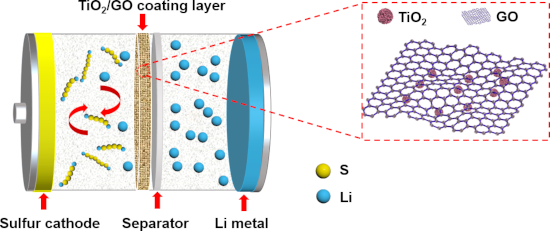
- mV. Schematic illustration of a Li/S battery with a TiO2/GO-coated functional separator. (a) XRD patterns of the as-spun and as-dealloyed Ti10Al90 alloy foils. (b) Raman spectra of TiO2, GO and the TiO2/GO composite. (c) TGA curve and (d) N2 adsorption–desorption isotherms and pore size distribution


Nanoporous smartPearls for dermal application – Identification of optimal silica types and a scalable production process as prerequisites for marketed products
Beilstein J. Nanotechnol. 2019, 10, 1666–1678, doi:10.3762/bjnano.10.162
- (20% loading), and the curve with peaks are plotted (system overloaded, 25%). For AL-1 FP samples (the silica with the smallest pore size of 3 nm) only the overloaded curves are shown (12% and 15%). The comparison between DSC and XRD reveals that XRD was more sensitive to detecting crystallinity. In
- all overloaded systems, where peaks could be detected by XRD, no peaks could be seen in DSC. Thus, applying both methods in parallel was necessary. In conclusion, silica with a very small pore size of 3 nm are deemed to be less suitable. The loading of the other silica materials was generally between
- agglomerate, and in combination with their small pore size of 3 nm, the maximum loading is low (<12%). Better processability was observed for larger particles with larger pores and pore volume, where the best results among the silica materials studied was found with Syloid® XDP 3050. Due to the solubility




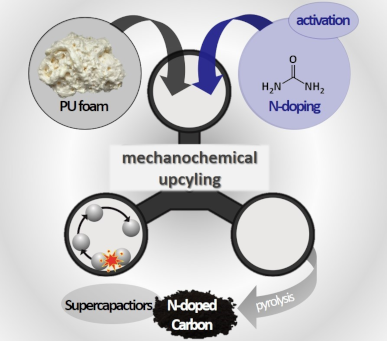
Upcycling of polyurethane waste by mechanochemistry: synthesis of N-doped porous carbon materials for supercapacitor applications
Beilstein J. Nanotechnol. 2019, 10, 1618–1627, doi:10.3762/bjnano.10.157
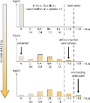
- -derived carbon materials were investigated by N2 physisorption at −196 °C (Figure 2A), and the calculation of the pore size distributions was carried out under the assumption of slit and cylindrical pore geometry using quenched solid density functional theory (QSDFT; Figure 2B). The sample PU-BM-800 (i.e
- materials. For each sample, the relative pressure range is given at the corresponding location. The calculation of the total pore volume was performed at a relative pressure of p/p0 = 0.95. Assuming slit and cylindrical pore geometry, the pore size distributions were calculated from the adsorption branch
- (measured at −196 °C) and (B, D) cumulative pore size distribution (PSD) using QSDFT with cylindrical/slit-shaped pores of the samples (A, B): PUPC-800-1 (cyan), PUPC-800-2 (blue), PUPC-800-3 (green), and PU-BM-800 (black) and the samples (C, D): PUUPC-1-800 (green), PUUPC-2-800 (blue), PUUPC-3-800 (grey


Materials nanoarchitectonics at two-dimensional liquid interfaces
Beilstein J. Nanotechnol. 2019, 10, 1559–1587, doi:10.3762/bjnano.10.153
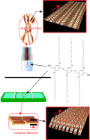
- rejections of water pollutant surrogates from water [229][230][231]. Considering the high tuning capability of pore-size and functional groups decorating the inner pores of COFs, the separation membranes made out of COFs are promising for water purification technologies including desalination [232
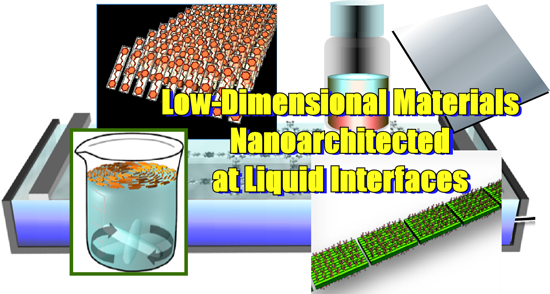
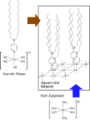
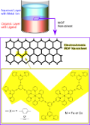
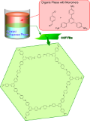
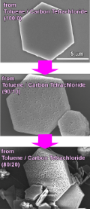
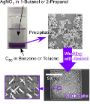
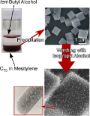
- nanosheets. At 90% carbon tetrachloride content, the average pore size became ca. 400 nm. These integrated two-dimensional structures would be nanoarchitectonics pieces for the fabrication of sensitive sensors, organic solar cells, and miniaturized organic superconductors. As a functional development of two













High-temperature resistive gas sensors based on ZnO/SiC nanocomposites
Beilstein J. Nanotechnol. 2019, 10, 1537–1547, doi:10.3762/bjnano.10.151
- instrument (Micromeritics). Prior to this, all samples were evacuated at a temperature of 300 °C to 4 × 10⁻¹ Pa for 3 h. Based on the nitrogen adsorption isotherms obtained, the specific surface area, volume, and average pore size were calculated using BET (Brunauer–Emmett–Teller) and BJH (Barret–Johner
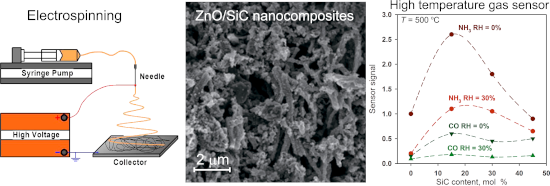
- controllers (Bronkhorst). Synthesis scheme of nanocrystalline ZnO, SiC and ZnO/SiC nanocomposite materials. SEM micrographs of polymer nanofibers containing polycarbosilane (a) and zinc acetate (b). SEM micrographs of annealed SiC (c) and ZnO (d). (e) SEM micrograph of ZnO/SiC_45 nanocomposite. (f) Pore size



BiOCl/TiO2/diatomite composites with enhanced visible-light photocatalytic activity for the degradation of rhodamine B
Beilstein J. Nanotechnol. 2019, 10, 1412–1422, doi:10.3762/bjnano.10.139
- electron spectrometer was used to observe X-ray photoelectron spectroscopy (XPS) results. A monochromatic Al Kα source (1486.7 eV) and a 300 × 500 μm spot size was used to collect the spectra. In 77 K nitrogen atmosphere, the specific surface area and pore size distribution of the sample were determined by
- area, the higher the photocatalytic activity [33]. The specific surface area, pore size and pore volume of the samples were determined by N2 adsorption–desorption measurements. The results of BiOCl, diatomite, TiO2/diatomite and BTD are shown in Figure 2. In addition, the data of specific surface area
- diatomite, TiO2/diatomite and BTD have an H4-type hysteresis loop, indicating that all samples have a mesoporous structure. At the same time, the pore size distribution and average pore size also confirm that the samples have mesoporous structure. Figure 2b shows that the pore size distribution of BTD has a


Highly ordered mesoporous silica film nanocomposites containing gold nanoparticles for the catalytic reduction of 4-nitrophenol
Beilstein J. Nanotechnol. 2019, 10, 1368–1379, doi:10.3762/bjnano.10.135
- ; Introduction Mesoporous silica nanomaterials with pore size between 2 to 50 nm [1] have been recently applied to the development of biomedical adsorbents [2][3][4], drug delivery systems [5][6][7], catalysts [8][9][10], as well as supports for metal nanoparticles [11][12][13] due to their large surface area
- , good thermal stability, high uniformity, and controllable pore size [1]. These nanomaterials with a hexagonal structure were independently discovered using a layered silicate kanemite as a template to form folded sheet materials (FSM)-16 [14] and cetyltrimethylammonium bromide (CTAB) as a cationic
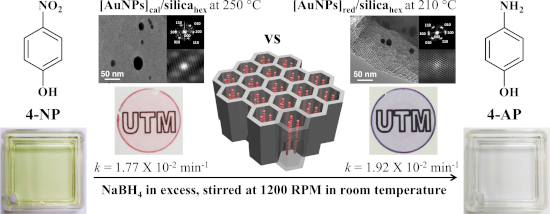
- temperature (Table 1), indicating a small decrease of pore size and unit cell. For example, when the calcination temperature was changed from 190 to 250 °C in increments of 20 °C (Figure 4a, plots (a)–(d)), the position of the d100 diffraction peaks for the resulting mesoporous silica ([AuNPs]cal/silicahex


Multicomponent bionanocomposites based on clay nanoarchitectures for electrochemical devices
Beilstein J. Nanotechnol. 2019, 10, 1303–1315, doi:10.3762/bjnano.10.129
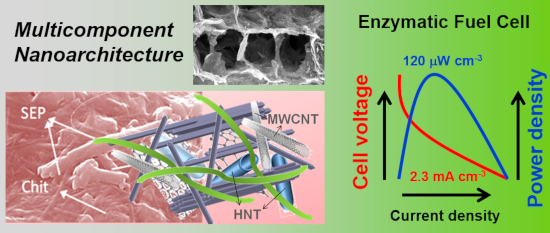
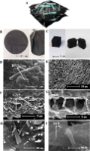
- matrix and the sepiolite fibres as well as to an increase in the relative density that produces a decrease in porosity, commonly related to a smaller pore size and a lower tendency to collapse than in the case of larger macropores [48][49]. In contrast, a decrease in the compression modulus (1.4 MPa) was
- and current sources were set at 40 kV and 30 mA, respectively. Diffractograms were recorded at a goniometer speed of 0.5 s per step between 4° and 60° (2θ). The BET specific surface area and the pore size distribution (Barret–Joyner–Hallenda method) were determined from nitrogen adsorption/desorption



Playing with covalent triazine framework tiles for improved CO2 adsorption properties and catalytic performance
Beilstein J. Nanotechnol. 2019, 10, 1217–1227, doi:10.3762/bjnano.10.121

- , consequently, optimize their gas-adsorption capacity. In addition, the control of the chemico-physical properties (i.e., pore-size distribution, specific surface area (SSA) and surface basicity) of the target samples is known to play a fundamental role in the control of their performance (activity and
- was determined with helium. The specific surface area (SSA) for each sample was determined by the Brunauer–Emmet–Teller method (BET) using data points at a relative pressure p/p0 between 0.05 and 0.3. The total pore volume was determined at a relative pressure of 0.98. The pore size distribution was
- equimolar mixtures (p-DCB/DCI, IV, and DCBP/DCI, V). Specific surface area, pore size distribution and N content (wt % loading and % of each N configuration) as measured for CTF1–5. CO2 adsorption uptake, isosteric heat of adsorption (Qst) and CO2/N2 selectivity values measured for CTF1–5 at comparison with


Glucose-derived carbon materials with tailored properties as electrocatalysts for the oxygen reduction reaction
Beilstein J. Nanotechnol. 2019, 10, 1089–1102, doi:10.3762/bjnano.10.109
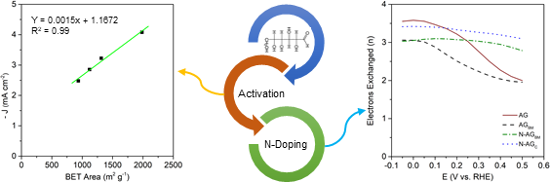
- the response of the electrocatalyst towards the oxygen reduction reaction. Results and Discussion Effect of microporosity The nitrogen adsorption–desorption isotherms and the pore size distributions obtained by applying the quenched solid density functional theory (QSDFT) are presented in Figure 1a
- between the carbon material and the activating agent results in materials with a more developed microporosity. In addition, the pore size of the samples is also broadened by increasing the contact time (Figure 1b). The reaction occurring during the physical activation of the samples removes carbon atoms
- Warburg impedance, indicating a higher resistance of the electrolyte ion diffusion into the porous structure, and hence, a lower value of limiting current density. These diffusion limitations are less evident for those samples with wider pore size, as pores act as diffusion channels favoring the kinetics


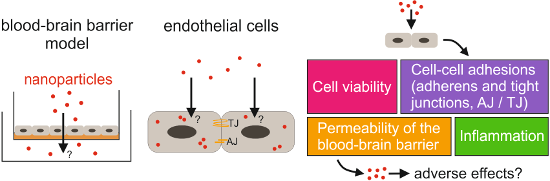
Effects of gold and PCL- or PLLA-coated silica nanoparticles on brain endothelial cells and the blood–brain barrier
Beilstein J. Nanotechnol. 2019, 10, 941–954, doi:10.3762/bjnano.10.95
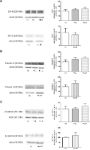
- the bands, given in arbitrary units, and subsequent standardization on actin. rBCEC4 monolayer permeability rBCEC4 cells (90,000) were seeded per gelatin-coated Millicell® culture plate insert with 3 µm pore size (Merck Millipore, Germany) on days in vitro 0 (DIV0) and left to grow until monolayer



An efficient electrode material for high performance solid-state hybrid supercapacitors based on a Cu/CuO/porous carbon nanofiber/TiO2 hybrid composite
Beilstein J. Nanotechnol. 2019, 10, 781–793, doi:10.3762/bjnano.10.78
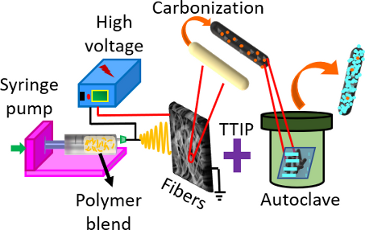
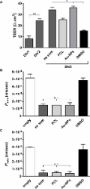
- proportional with the pore size of the active electrode materials [14]. The synthesis of carbon materials with very high surface area and appropriate pore size suitable for supercapacitor electrodes is a major challenge. It has been shown that this could be achieved by addition of sacrificial polymers, which
- room temperature. The surface area and pore size analysis were performed using a Micromeritics ASAP 2020 instrument using Brunauer–Emmett–Teller (BET) adsorption theory. Degassing under high vacuum (10−6 mbar) at 200 °C was performed for samples before the surface area and pore size analysis
- , to study the porous structures and surface area, N2 adsorption–desorption isotherms and the pore size distribution were analyzed for the Cu/CuO/PCNF/TiO2 composites. To determine the performance of the supercapacitors, the surface area and pore size distribution are two important factors to provide


On the transformation of “zincone”-like into porous ZnO thin films from sub-saturated plasma enhanced atomic layer deposition
Beilstein J. Nanotechnol. 2019, 10, 746–759, doi:10.3762/bjnano.10.74
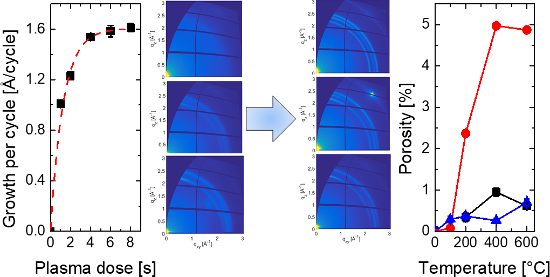
- ZnO [15][16]. Liang et al. [15] reported on the transformation of zincones deposited on TiO2 nanoparticles into porous ZnO via thermal treatment in the presence of air. Low surface area and wide pore size distribution (in the micropore and mesopore size range) were achieved. The surface area and the
- humidity, resulting in classical adsorption/desorption isotherms, generally categorized according to the IUPAC classification [45][46][47][48]. A type-I isotherm is associated with porous materials with a narrow distribution of pore size with a diameter below 2 nm (nanoporous or microporous materials), and
- al. [15] reported on the formation of mesoporous and microporous layers on nanoparticles coated with MLD zincone layers. In their contribution, the pore size distribution and surface area were reported as functions of the calcination temperature, showing a decrease in the overall porosity starting


Improving control of carbide-derived carbon microstructure by immobilization of a transition-metal catalyst within the shell of carbide/carbon core–shell structures
Beilstein J. Nanotechnol. 2019, 10, 419–427, doi:10.3762/bjnano.10.41
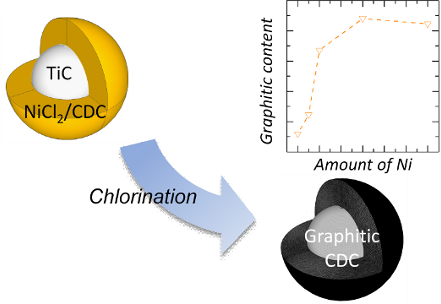
- mass of the non-porous carbide core [15]. According to the IUPAC classification, the isotherm can be classified as type Ia suggesting a highly (ultra-)microporous material [27]. The pore size distribution (PSD) of the material was evaluated by using the quenched solid density functional theory (QSDFT
- (type Ib) isotherm, indicating a broad range of micropores. This is in accordance with pore size distributions obtained for TiC-CDC at 1200 °C [4][30]. The addition of 5 mg of nickel per gram of carbide (CDC-Ni5) already shows a pronounced influence on the resulting isotherm, which is a combination of
- a decrease in the adsorbed volume of N2 in the low-pressure range. The pore size distributions evaluated by the QSDFT model are displayed in Figure 6b. CDC-Ni0 displays mainly pores in the micropore regime (<2 nm). On the other hand, the CDCs produced with the aid of the nickel catalyst show pores


One-step nonhydrolytic sol–gel synthesis of mesoporous TiO2 phosphonate hybrid materials
Beilstein J. Nanotechnol. 2019, 10, 356–362, doi:10.3762/bjnano.10.35
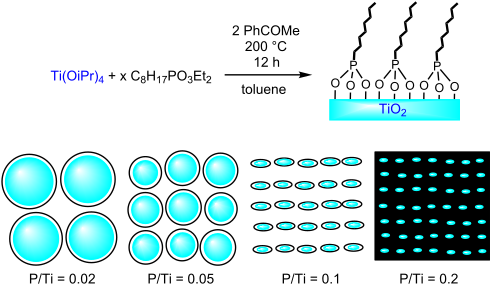
- with the P/Ti ratio, leading to an increase of the specific surface area and a decrease of the pore size of the hybrid samples. For a P/Ti ratio of 0.2, the volume fraction of organic octyl groups exceeds 50%. The hybrid material becomes nonporous and can be described as amorphous TiO2 clusters
- of some macropores. As SEM images do not show the presence of macropores in TiP0.05 and TiP0.02 samples, these macropores likely correspond to pores between relatively small aggregates resulting from the grinding of the samples. The pore size distribution results confirmed the presence of mesopores
- 77 K with a Micrometrics TriStar 3000 apparatus; the specific surface area was determined by the BET method in the 0.05–0.25 P/P0 range. The mesopore volume and pore size distribution were obtained by the Barrett–Joyner–Halenda (BJH) method from the desorption branch. Solid-state 31P magic angle


Site-specific growth of oriented ZnO nanocrystal arrays
Beilstein J. Nanotechnol. 2019, 10, 274–280, doi:10.3762/bjnano.10.26
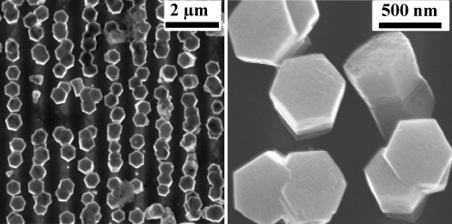
- pores of size ≈600 nm; however, many-coupled branched NCs with hexagonal shape are formed when a patterned pore size of ≈200 nm is used. X-ray diffraction data is in agreement with the observed morphology. A mechanism is proposed to interpret the observed site-specific oriented/branched growth that is
- correlated to the pore size. As ordered NC arrays have the potential to generate new collective properties different from single NCs, our first demonstration of a cost effective and facile fabrication process opens up new possibilities for devices with versatile functionalities. Keywords: electrodeposition
- of a patterned pore size in controlling the growth of array vs branched ZnO NCs is shown. A mechanism based on the nucleation and growth is proposed to understand the oriented/branched twin ZnO NC morphologies. Experimental Growth of ZnO nanocrystals An electrodeposition technique was employed to


pH-mediated control over the mesostructure of ordered mesoporous materials templated by polyion complex micelles
Beilstein J. Nanotechnol. 2019, 10, 144–156, doi:10.3762/bjnano.10.14
- ; hybrid organic–inorganic interface; mesoporous materials; nanostructured materials; polyion complex micelles; polyion electrostatic complexation; Introduction Due to their unique physicochemical properties originating from their uniform pore size and periodically arranged network at the mesoscale
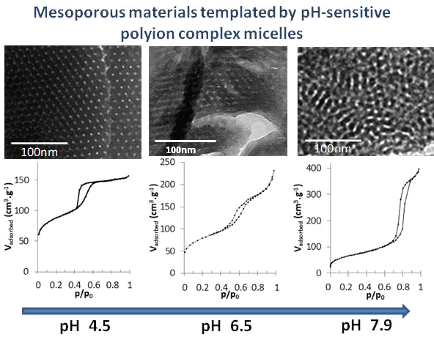
- with H1-like hysteresis loop (IUPAC classification [34]) showing capillary condensation at a relative pressure p/p0 ranging from 0.42 to 0.70. This indicates that the structural mesoporosity presents a cylindrical pore geometry with a high degree of pore size uniformity. This is confirmed by the narrow
- pore size distribution (PSD) calculated from the adsorption branch by the NLDFT method (Figure S3 in Supporting Information File 1). Within that pH range, the mean pore diameter (dpore) and mesopore volume (Vmeso) slightly increase with pH (Table 1). When the synthesis was performed at 1.9 wt % of DHBC


New micro/mesoporous nanocomposite material from low-cost sources for the efficient removal of aromatic and pathogenic pollutants from water
Beilstein J. Nanotechnol. 2019, 10, 119–131, doi:10.3762/bjnano.10.11
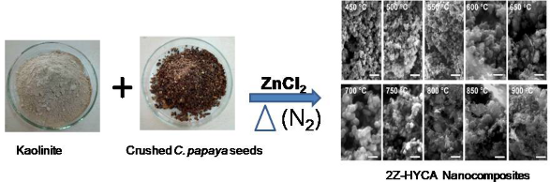
- 150 °C for 20 h prior to analysis. The surface areas were calculated either by the single-point or multipoint Brunauer–Emmett–Teller (BET) method [24]. The pore size distributions were calculated using the quenched solid density functional theory (QSDFT) methodology (part of the QuadraWin 5.05
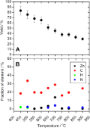
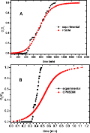
- the specific surface areas or the pore volume is observed with increasing temperature. The specific surface areas are scattered at approximately 230 m2/g (Figure 1b), and the total pore volume scatters at approximately 0.23 cm3/g (Figure 1c). Pore size distributions (PSDs) were determined from the




Controlling surface morphology and sensitivity of granular and porous silver films for surface-enhanced Raman scattering, SERS
Beilstein J. Nanotechnol. 2018, 9, 2813–2831, doi:10.3762/bjnano.9.263
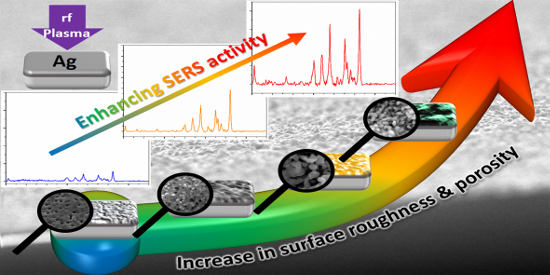
- of argon and oxygen gas (8 sccm argon, 4 sccm oxygen gas flow at a power of 200 W for 15 min). Treatment of the so obtained oxidized silver film with pure argon rf plasma (argon flow rate 16.7 sccm, power 200 W, 15 min) results in a complex network of interconnected silver particles with large pore
- size (Figure 8a). This difference in morphology is already observed in the silver film oxidized by the argon/oxygen mixture when compared to the silver film oxidized by oxygen plasma alone (Figure S16a,d, Supporting Information File 1). The difference in the obtained morphologies can eventually be