


Search results
Search for "threshold" in Full Text gives 432 result(s) in Beilstein Journal of Nanotechnology. Showing first 200.
Current-induced mechanical torque in chiral molecular rotors
Beilstein J. Nanotechnol. 2023, 14, 711–721, doi:10.3762/bjnano.14.57
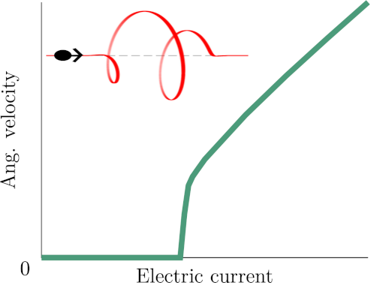
- , the rotor generically undergoes a directed motion, provided that the incident current exceeds a threshold value. Above this threshold, the corresponding rotation frequency (per incoming particle current) for helical geometries turns out to be 2πm/M1, where m/M1 is the ratio of the mass of an incident
- potential barrier V(ϑ), we find that the mass current needs to overcome a threshold for the wire to rotate. The resulting time-averaged angular velocity is time-independent and directional for all supercritical currents. Finally, we consider a situation where the net torque exerted by the transmitted
- , specifically the velocity–current characteristics and threshold currents. Our results can support the design of nanoscale mechanical devices. Model Model geometry (kinematics) Our classical model contains a particle (mass m) moving on a rigid path, which can rotate around an axis, see left part of Figure 1




![[Graphic 29]](/bjnano/content/inline/2190-4286-14-57-i54.svg?max-width=637&scale=1.18182)


Investigations on the optical forces from three mainstream optical resonances in all-dielectric nanostructure arrays
Beilstein J. Nanotechnol. 2023, 14, 674–682, doi:10.3762/bjnano.14.53
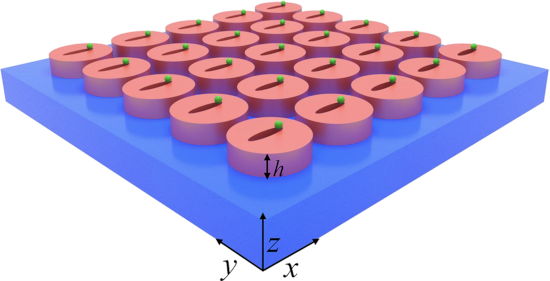
- when one designs nano-optical tweezers system to capture nanoscale particles. The low absorption losses, high laser power damage threshold as well as the large optical force that can be achieved with lossless all-dielectric nanostructures provide a better choice compared to the metallic counterpart in


Metal-organic framework-based nanomaterials as opto-electrochemical sensors for the detection of antibiotics and hormones: A review
Beilstein J. Nanotechnol. 2023, 14, 631–673, doi:10.3762/bjnano.14.52


Suspension feeding in Copepoda (Crustacea) – a numerical model of setae acting in concert
Beilstein J. Nanotechnol. 2023, 14, 603–615, doi:10.3762/bjnano.14.50
- simulation are summarized in Figure 6. As seen directly from the plots, the well-pronounced threshold angle is ϕmin = −0.375π. Below this threshold, there is practically zero food consumption. Paradoxically, the quantity of ingested particles is even smaller than in the reference system without setae, that
- cannot be transported into the mouth opening. If, and to which extent, long setae have adhesion on their tips in real copepods awaits further investigations. Time dependencies of Neaten at different angles of rotation for the basic segments of the short setae. The threshold angle, ϕmin = −0.375π, at


Thermal transport in kinked nanowires through simulation
Beilstein J. Nanotechnol. 2023, 14, 586–602, doi:10.3762/bjnano.14.49
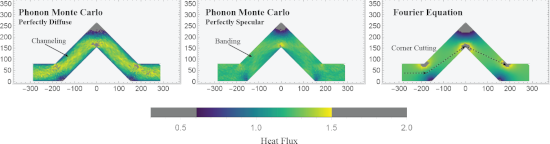
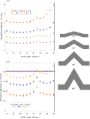
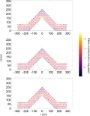
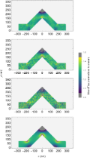
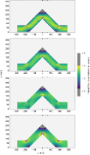
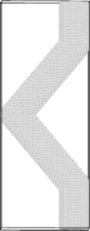
- threshold angles where LoS = 0 are highlighted. Comparison of thermal conductances for kinked wires, straight wires with angled lattices, and a series resistance estimate. Thermal conductances calculated from 2D PMC simulations of kinked nanowires with varying kink angles. Three




On the use of Raman spectroscopy to characterize mass-produced graphene nanoplatelets
Beilstein J. Nanotechnol. 2023, 14, 509–521, doi:10.3762/bjnano.14.42
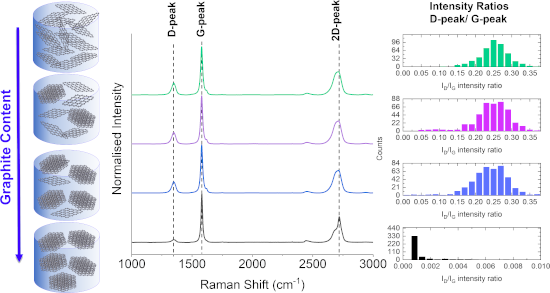
- Information File 1, Figure S2) we can define a threshold value for a spectrum that corresponds to graphite. This is taken as the d90 value from the distribution. Based on this, we can then classify each pixel measured across a sample as either “graphite” or “GNP”. From this, we can calculate a fraction of
- Roscher et al. [23] and defining a cut-off in the R2 value from fitting the 2D peak and, second, by running a non-negative least squares fit and defining a cut-off for the “sediment-like” spectral loading, as implemented above for graphite additions. The value of the threshold has here been set to
- fraction of added sediment. The largest variation is still seen at the lowest loading of sediment. Using a threshold value of 1.09 × 10⁻³, the mean absolute deviation from the expected value is 73% with a maximum of 172% for 1 wt % using the NNLS fitting. Using the R2 value from the 2D peak fit with a


Plasmonic nanotechnology for photothermal applications – an evaluation
Beilstein J. Nanotechnol. 2023, 14, 380–419, doi:10.3762/bjnano.14.33
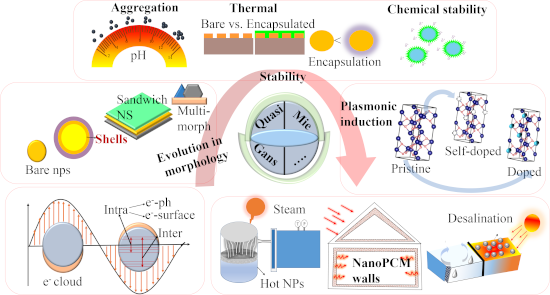
- . When the energy of the photons is greater than the bandgap, interband transitions are observed. As an example of the energies at which interband transitions [28] occur, Cu, Au, Ag exhibit them at 2.25, 2.4, and 4 eV, respectively, and threshold energy levels of interband transitions are 1.6–1.8 eV for
- Al and Cu, the higher temperature increases possible with reduced sphericity, the better absorption properties when surrounded by materials with a higher refractive index (due to multipolar excitations instead of only dipolar excitations), and the threshold particle size above which the optical
- [83]. Plasmonic nanobubbles (formed when the irradiation fluence exceeded a threshold value), although being excellent tunable scatterers themselves, did not result in thermal phenomena such as heating and only led to mechanical phenomena such as cavitation effects. Explosive boiling is of explicit




Overview of mechanism and consequences of endothelial leakiness caused by metal and polymeric nanoparticles
Beilstein J. Nanotechnol. 2023, 14, 329–338, doi:10.3762/bjnano.14.28
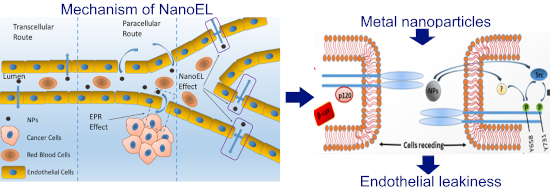
- cumulative gravity appeared to be the critical threshold force required to disrupt endothelial cells. The leakiness of the endothelium resulting from the action of NPs occurs relatively quickly, usually within an hour after exposing the cells to NPs [20][21][23]. In addition to understanding the key


Quasi-guided modes resulting from the band folding effect in a photonic crystal slab for enhanced interactions of matters with free-space radiations
Beilstein J. Nanotechnol. 2023, 14, 322–328, doi:10.3762/bjnano.14.27
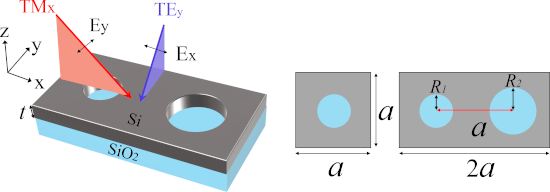
- been proposed to realize low-threshold polariton lasers [24]. However, we show in this work that, even when the period increase and the accompanied FBZ shrinking occurs only along one direction of the two-dimensional periodicity, the resonance still depends on the in-plane wave vector along both


Biocatalytic synthesis and ordered self-assembly of silica nanoparticles via a silica-binding peptide
Beilstein J. Nanotechnol. 2023, 14, 280–290, doi:10.3762/bjnano.14.25
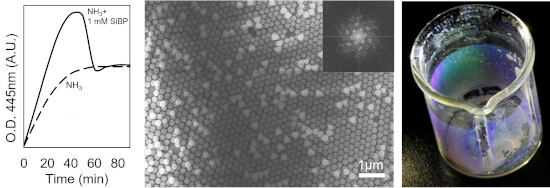
- particle clusters or irregular particles were not observed (Figure 4f), while NH3 alone yielded spherical particles of 100 to 130 nm (Figure 4g). Based on the OD and SEM observations, SiBP seems to drastically change the particle formation/growth regime above a threshold concentration. In the reactions of
- released silicic acid is then deposited onto particles with larger radius. Evidence of coalescence was observed in our study as well (shown by the arrows in Figure 3 and Figure 4). At later stages of the reaction, when the precursor concentration drops below the nucleation threshold, the dominant regime




Atmospheric water harvesting using functionalized carbon nanocones
Beilstein J. Nanotechnol. 2023, 14, 1–10, doi:10.3762/bjnano.14.1
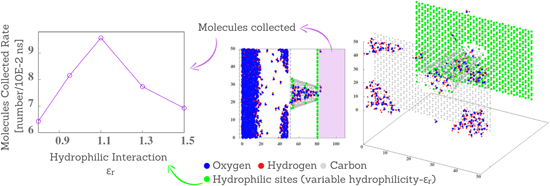
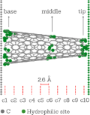
- with εr. In order to understand the impact of varying attraction, we calculated the mean collected rate of molecules (MCR) per unit of time (10−2 ns), using Figure 9b shows the MCR of molecules as a function of εr. For values of εr below a certain threshold, the MCR increases in proportion to εr. The
- movement of molecules in the nanocone depends on the combination of attraction on hydrophilic sites and repulsion on hydrophobic sites. Enhancing hydrophilic attraction increases the number of water molecules attracted to the base of the nanocone. For εr values above a certain threshold, however, the MCR




Observation of collective excitation of surface plasmon resonances in large Josephson junction arrays
Beilstein J. Nanotechnol. 2022, 13, 1578–1588, doi:10.3762/bjnano.13.132
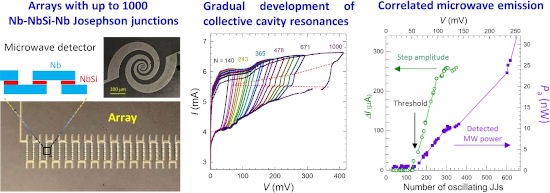
- formation of standing waves at the electrode/substrate interface. We observe that resonant steps in the current–voltage characteristics appear above some threshold number of junctions, Nth ≈ 100, and then progressively enhance in amplitude with further increment of the number of junctions in the resistive
- between JJs and the long-range phase-locking of the arrays. Our main result is the observation of a gradual development of collective resonances upon sequential switching of JJs into the oscillating resistive state. We show that a threshold number of JJs, Nth ≈ 100, is required for excitation of the
- collective cavity modes. Above the threshold, the amplitude of resonant steps grows in a quasi-linear manner with the number of active JJs. We employ an external microwave detector for measuring EMW emission from the arrays. It is observed that the emitted power is correlated with the amplitude of the




Laser-processed antiadhesive bionic combs for handling nanofibers inspired by nanostructures on the legs of cribellate spiders
Beilstein J. Nanotechnol. 2022, 13, 1268–1283, doi:10.3762/bjnano.13.105
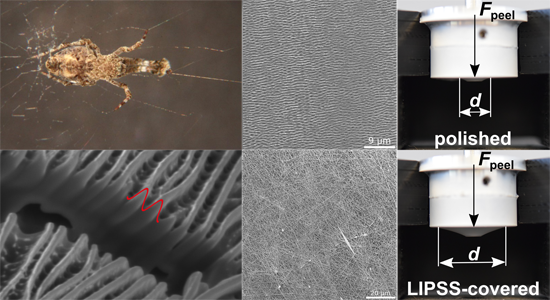
- act longitudinal in the nonwoven. This force is split vectorial at the point of contact in a vertical peel off force and a local horizontal shear force. Due to the rotational symmetry the total horizontal forces cancel out. When exceeding a critical threshold value, the peel-off forces separates the
- : sample with laser-structured surface; orange: electrospun nonwoven. Left: An aluminium piston is put into a 5 mm hole drilled into the sample carrier and the sample. Right: Defined forces Fpeel are applied onto the aluminium piston by adding defined weights. When exceeding a critical threshold value, the






Studies of probe tip materials by atomic force microscopy: a review
Beilstein J. Nanotechnol. 2022, 13, 1256–1267, doi:10.3762/bjnano.13.104
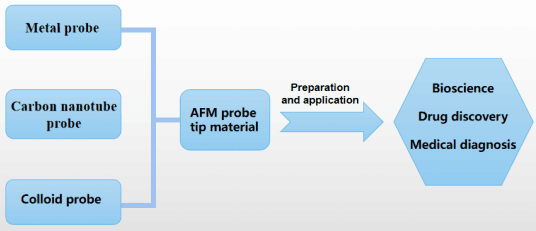
- and poorly controlled. Cheng et al. [11] introduced a method to selectively prepare individual carbon nanotubes on AFM tips by controlling the trigger threshold to regulate the growth solution on the tip. The obtained carbon nanotube probes are of suitable length and do not require a subsequent
- to generate CNT probes with a high aspect ratio. The method focuses on adjusting the trigger threshold and thus the amount of growth solution attached to the tip accordingly to fabricate individual CNTs. The success rate is well over 93%, and the generated CNT probes do not require further cutting
- and are of suitable length. This controllable method has great adhesion for CNT probes. The growth of individual CNTs at the tip was achieved when the trigger threshold was controlled in the range of 0.25–0.50 V. The properties and functionality of such tips were verified using samples with high
Analytical and numerical design of a hybrid Fabry–Perot plano-concave microcavity for hexagonal boron nitride
Beilstein J. Nanotechnol. 2022, 13, 1030–1037, doi:10.3762/bjnano.13.90
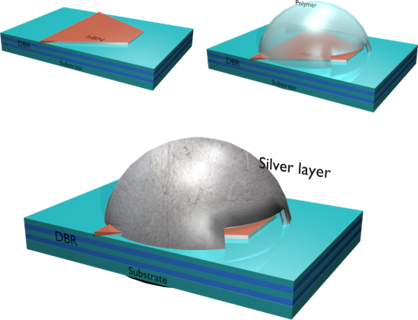
- substituting in Equation 3, q2 = (n2/n1)q1. This leads to z2 = (n2/n1)z1 and W01 = W02. Finally, by defining ∆z = z2 − z1 we get: As a threshold for R2 we set R2 ≥ L2 in accordance with the stability range where 0 ≤ g ≤ 1. Although work has been done to include the lensing effect of a curved “n1/n2” interface


Numerical study on all-optical modulation characteristics of quantum cascade lasers
Beilstein J. Nanotechnol. 2022, 13, 1011–1019, doi:10.3762/bjnano.13.88
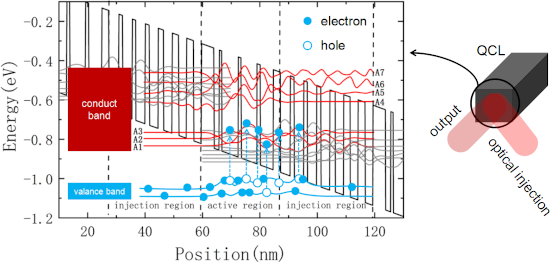
- to the conduction band [23]. Moreover, the fluctuation of threshold current caused by the light injection is around tens of mA [19], which is much smaller than the threshold current. Therefore, all-optical modulation can only be achieved when the QCL works near or above the threshold. It is worth
- sufficient for the calculation, and here Ai (i = 1, 2, 3, 4, 5, 6, 7) represents the i-th subband in the active region, as shown in Figure 2. Our simulation used an external bias electrical field of 53 kV/cm, which was above the threshold value, and the temperature of the electrons and cavity were 300 K and


Influence of water contamination on the sputtering of silicon with low-energy argon ions investigated by molecular dynamics simulations
Beilstein J. Nanotechnol. 2022, 13, 986–1003, doi:10.3762/bjnano.13.86
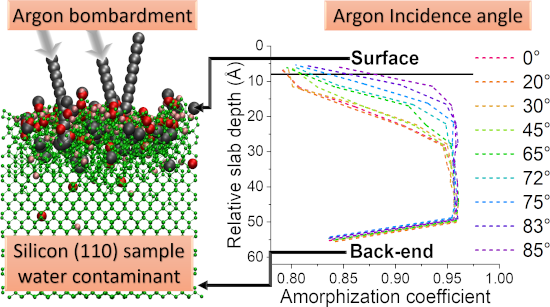
- depth. Investigations performed with low-energy argon ions [15][19][20] have shown that the current model describing the sputter yields and the sputtering processes (such as sputtering threshold and the amorphization process) does not fit with experimental data, leading to discrepancies that cannot be
- scheme with a threshold of 10−6 eV/atom. The force threshold for the conjugate gradient geometry optimisation is set to 10−4 eV/Å. The interatomic interactions are calculated by changing the distance between Ar and H and between O and Si atoms by 0.1–12.0 Å in 0.1 Å steps in a simulation box of 25 × 10
- of silicon might be lowered by the presence of the surface contamination, at least if the contamination level is above a critical threshold. In order to study in our simulations the evolution of a given sample under continuous irradiation, including the effect of water contamination, we kept the




Theoretical investigations of oxygen vacancy effects in nickel-doped zirconia from ab initio XANES spectroscopy at the oxygen K-edge
Beilstein J. Nanotechnol. 2022, 13, 975–985, doi:10.3762/bjnano.13.85
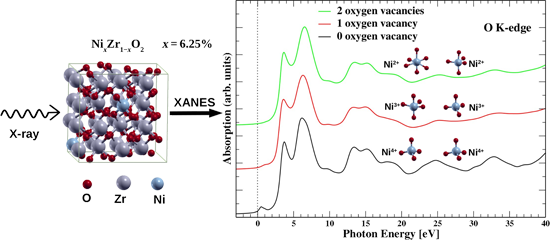
- absorption spectrum near the ionization threshold of core electrons with orbital momentum l belonging to the absorbing atom [29]. It is sensitive to the electronic structure of the absorbing atom, since its intensity is nearly proportional to the density of the unoccupied states whose symmetry verifies the


Efficiency of electron cooling in cold-electron bolometers with traps
Beilstein J. Nanotechnol. 2022, 13, 896–901, doi:10.3762/bjnano.13.80
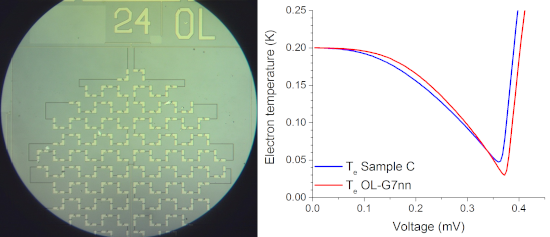
- from 256 to 48 mK with an unavoidable threshold of 42 mK due to the residual Andreev current. For our measurements, new samples with CEB arrays were deposited, using the equipment of the Center for Quantum Technologies at NNSTU n.a. R.E. Alekseev. These samples have normal metal traps, as well as
- from 100 to 25 mK due to lower Andreev currents, thus decreasing our previous threshold [7] of 42 mK in the low-temperature range. For a better determination of the parameters, we have improved our fitting algorithm that takes into account both the leakage and Andreev currents and the sixth power of


Micro-structures, nanomechanical properties and flight performance of three beetles with different folding ratios
Beilstein J. Nanotechnol. 2022, 13, 845–856, doi:10.3762/bjnano.13.75
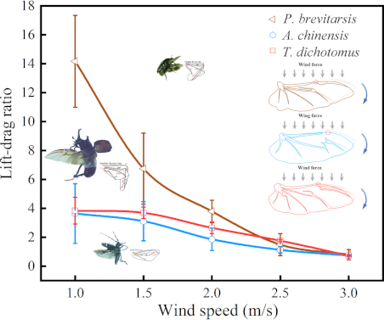
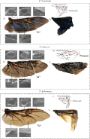
- reaches a certain threshold, the hind wings would undergo passive deformation reducing the wing area, which results in decreased lift. A higher folding ratio of hind wings leads to easier deformation with increasing wind speed (Figure 6). When the wind speed reached a certain value (Figure 5B) and the




Optimizing PMMA solutions to suppress contamination in the transfer of CVD graphene for batch production
Beilstein J. Nanotechnol. 2022, 13, 796–806, doi:10.3762/bjnano.13.70
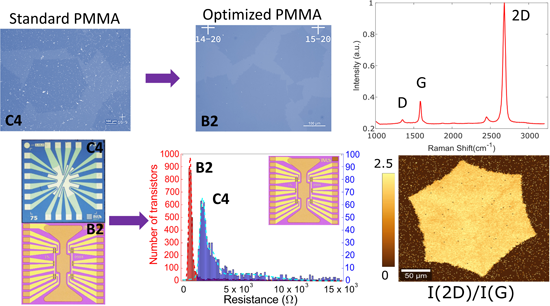
- ). The broader G phonon band observed for the B2 samples reveals that a significantly higher number of inter-band decay pathways are available due to a lower Pauli blocking threshold [23] (equivalent to twice |EF|), further indicating that the p-type doping caused by adsorbed PMMA is less intense for the
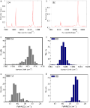
- transistor to reach an output voltage of 1 mV. Histogram distributions for the graphene channel resistances were plotted (using MATLAB scripts) to compare the effects of B2 and C4 PMMA-assisted graphene transfer on device performance. Based on our observations of the device performance, a threshold




Reliable fabrication of transparent conducting films by cascade centrifugation and Langmuir–Blodgett deposition of electrochemically exfoliated graphene
Beilstein J. Nanotechnol. 2022, 13, 666–674, doi:10.3762/bjnano.13.58
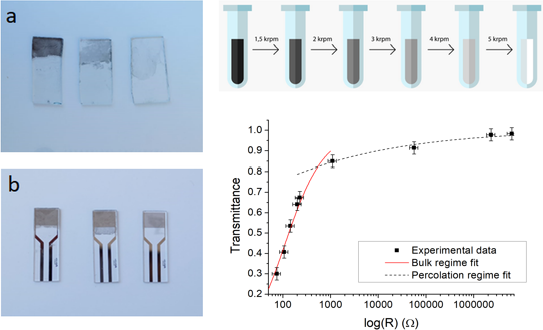
- of 3, 4, and 5 krpm, further diluting the solutions in different volumes of solvent, we reliably and consistently obtained films of tunable thickness. We show that there is a limit to how thin these films can be, which is imposed by the percolation threshold. The percolation threshold is
- centrifugation rate, which indicates films with a decreased density of large particles. We quantify the number of scattering centers by analyzing the dark-field images using the software imageJ. First, we set the brightness threshold for what counts as a scattering particle. As these are dark-field images
- , anything that is not completely dark is counted as a scattering particle. Thus, we set the threshold at a brightness value of 3 (on a scale from 0 to 255). Such an analysis yields results that are consistent with intuitive observation (Table 1). The film structure was further investigated with SEM, shown


A new method for obtaining the magnetic shape anisotropy directly from electron tomography images
Beilstein J. Nanotechnol. 2022, 13, 590–598, doi:10.3762/bjnano.13.51
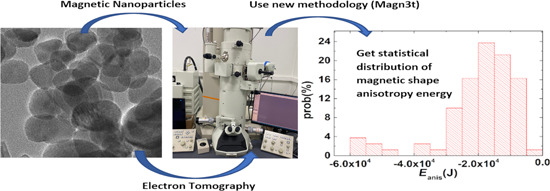
- can be found in Supporting Information File 1). Data volume thresholding aims to find an optimal value according the which the data is separated in two classes (background and objects). More specifically, each voxel becomes 0 if its original value is lower that the threshold value, or 1 if the


Approaching microwave photon sensitivity with Al Josephson junctions
Beilstein J. Nanotechnol. 2022, 13, 582–589, doi:10.3762/bjnano.13.50
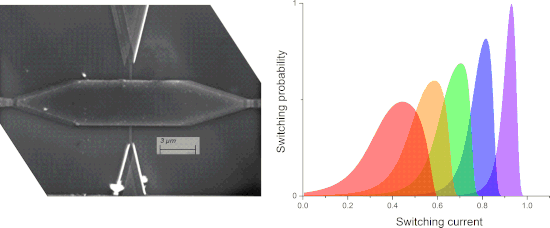
- voltage is zero. This makes it easier to determine the lifetime in the numerical model. In this case, the JJ is considered to be switched if the phase exceeds a certain threshold value, usually chosen to the right of the position of the nearest maximum of the potential for a given bias current. There is a


Investigation of electron-induced cross-linking of self-assembled monolayers by scanning tunneling microscopy
Beilstein J. Nanotechnol. 2022, 13, 462–471, doi:10.3762/bjnano.13.39
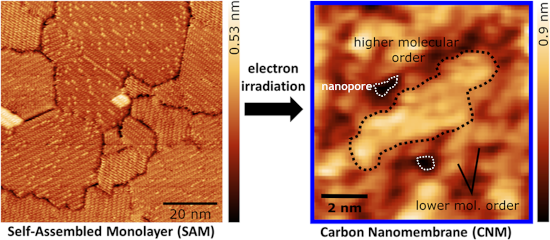
- values determined by STM are smaller than the areal density of ≈7 × 10¹⁷ m−2 and the pore diameter of 0.7 ± 0.1 nm determined using AFM [36]. This is mainly due to different imaging mechanisms and different threshold definitions used for pore determination. Finally, the evolution of electron-induced





