


Search results
Search for "ultrahigh vacuum" in Full Text gives 180 result(s) in Beilstein Journal of Nanotechnology.
Implementation of data-cube pump–probe KPFM on organic solar cells
Beilstein J. Nanotechnol. 2020, 11, 323–337, doi:10.3762/bjnano.11.24
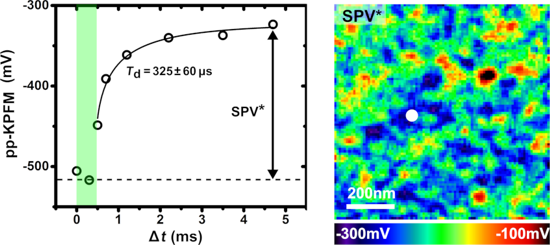
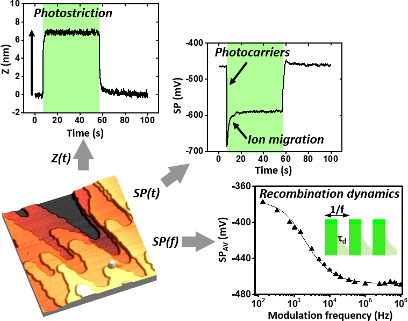
- the chosen approach for pp-KPFM are finally discussed. pp-KPFM Implementation The experiments were performed on the basis of noncontact AFM (nc-AFM) under ultrahigh vacuum (UHV) with a beam deflection setup operated in frequency-modulation (FM) mode at room temperature. In the following, we only


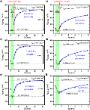


Nanoscale spatial mapping of mechanical properties through dynamic atomic force microscopy
Beilstein J. Nanotechnol. 2019, 10, 1332–1347, doi:10.3762/bjnano.10.132
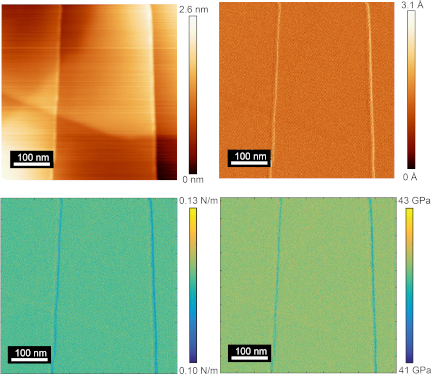
- frequency of two FMM and CR modes on the response amplitude. Experimental All experiments were conducted in an RHK 7500 UHV-AFM system operated under ultrahigh vacuum conditions (pressure less than 5 × 10⁻¹⁰ Torr) and at room temperature. Atomically flat samples of HOPG were prepared by mechanically
- the force sensor were determined under ultrahigh vacuum using the beam-geometry method, involving the measurement of the frequency of the first normal oscillation mode to determine the thickness of the cantilever [26]. The normal stiffness of the cantilevers was determined to be in the range of 0.25
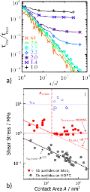
- . Of course the advantages of dynamic AFM come at the expense that the lateral shear force between the tip and sample cannot be eliminated, making the technique inappropriate for weakly bonded samples. On the other hand, more variations of the experimental set up are possible for AFM, such as ultrahigh


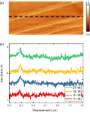


Imaging the surface potential at the steps on the rutile TiO2(110) surface by Kelvin probe force microscopy
Beilstein J. Nanotechnol. 2019, 10, 1228–1236, doi:10.3762/bjnano.10.122
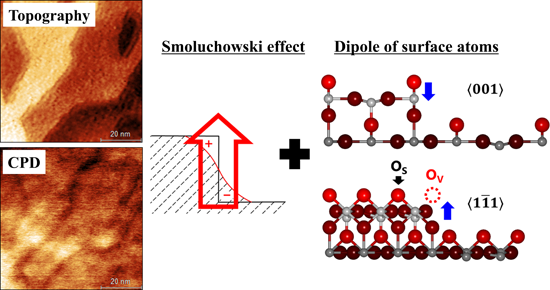
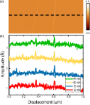
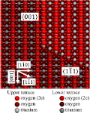
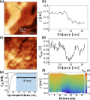
- out with a custom-built ultrahigh-vacuum noncontact atomic force microscopy (NC-AFM) system operated at a temperature of 78 K with a base pressure below 4 × 10⁻¹¹ mbar. The NC-AFM system was operated in the frequency-modulation mode [44] with a constant cantilever oscillation amplitude (5 Å). The
![[Graphic 16]](/bjnano/content/inline/2190-4286-10-122-i16.svg?max-width=637&scale=1.18182) and
and ![[Graphic 17]](/bjnano/content/inline/2190-4286-10-122-i17.svg?max-width=637&scale=1.18182) .
.

![[Graphic 38]](/bjnano/content/inline/2190-4286-10-122-i38.svg?max-width=637&scale=1.18182) and
and ![[Graphic 39]](/bjnano/content/inline/2190-4286-10-122-i39.svg?max-width=637&scale=1.18182) steps. (a) Topographic image...
steps. (a) Topographic image...


![[Graphic 72]](/bjnano/content/inline/2190-4286-10-122-i72.svg?max-width=637&scale=1.18182) , b)
, b) ![[Graphic 73]](/bjnano/content/inline/2190-4286-10-122-i73.svg?max-width=637&scale=1.18182) , c) reduced
, c) reduced ![[Graphic 74]](/bjnano/content/inline/2190-4286-10-122-i74.svg?max-width=637&scale=1.18182) , and d)
, and d) ![[Graphic 75]](/bjnano/content/inline/2190-4286-10-122-i75.svg?max-width=637&scale=1.18182) steps. B...
steps. B...
Playing with covalent triazine framework tiles for improved CO2 adsorption properties and catalytic performance
Beilstein J. Nanotechnol. 2019, 10, 1217–1227, doi:10.3762/bjnano.10.121
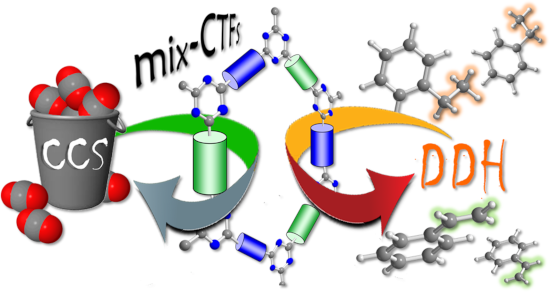
- conditions. CO2 adsorption properties of CTF1–5 The wide morphological and chemical diversity of the as-synthesized CTF samples prompted us to evaluate their CO2 adsorption and separation capacities. To this aim, all materials were firstly activated under ultrahigh vacuum and CO2 isotherms were recorded at T
- ) measurements were performed in an ultrahigh vacuum (UHV) Thermo-VG scientific spectrometer equipped with a CLAM4 (MCD) hemispherical electron analyser. The Al Kα line (1486.6 eV) of a dual anode X-ray source was used as incident radiation. Survey and high-resolution spectra were recorded in constant pass


In situ AFM visualization of Li–O2 battery discharge products during redox cycling in an atmospherically controlled sample cell
Beilstein J. Nanotechnol. 2019, 10, 930–940, doi:10.3762/bjnano.10.94
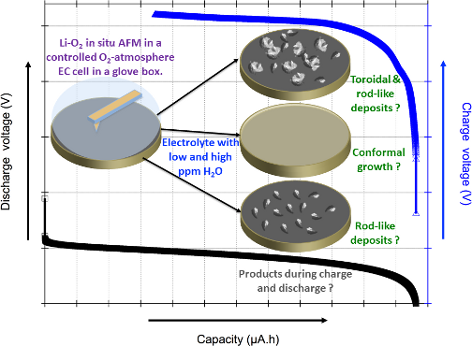
- -ray photoelectron spectroscopy to study the reactions under ultrahigh vacuum as well as 500 mtorr O2 pressure. Zheng et al. [20] performed in situ scanning electron microscopy of the reaction whereby they observed the growth of toroidal lithium peroxide (Li2O2) particles along a specific direction as


Comparing a porphyrin- and a coumarin-based dye adsorbed on NiO(001)
Beilstein J. Nanotechnol. 2019, 10, 874–881, doi:10.3762/bjnano.10.88
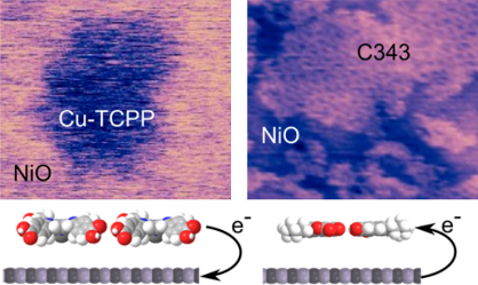
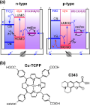
- (nc-AFM) is used at room temperature (RT) to compare the properties of the two dyes deposited on a NiO(001) single-crystal surface. Under ultrahigh vacuum (UHV) conditions, the adsorption modes of both molecules on the surface of NiO(001) are studied and their charge state upon adsorption are



Hydrophilicity and carbon chain length effects on the gas sensing properties of chemoresistive, self-assembled monolayer carbon nanotube sensors
Beilstein J. Nanotechnol. 2019, 10, 565–577, doi:10.3762/bjnano.10.58
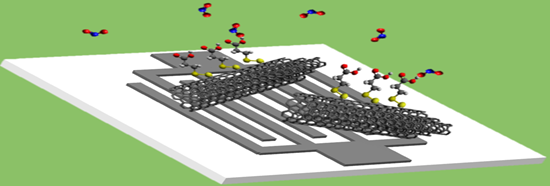
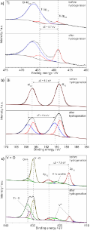
- suggests the absence (or a non-detectable amount) of unbound thiol molecules (S 2p1/2 BE ≈ 165 eV), which confirms the correct formation of SAMs. The small amount of unbound thiol molecules detected by Raman spectroscopy were possibly removed under the ultrahigh vacuum needed to perform XPS, which would


Widening of the electroactivity potential range by composite formation – capacitive properties of TiO2/BiVO4/PEDOT:PSS electrodes in contact with an aqueous electrolyte
Beilstein J. Nanotechnol. 2019, 10, 483–493, doi:10.3762/bjnano.10.49
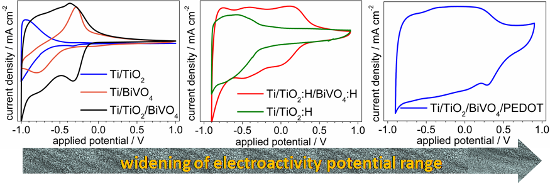
- and 300 W. XPS measurements were performed at room temperature under ultrahigh-vacuum conditions, with pressures below 1.1 × 10⁻⁸ mbar. Data analysis was performed with the CASA XPS software package using Shirley background subtraction and a least-squares Gaussian–Lorentzian curve fitting algorithm




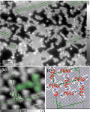
Apparent tunneling barrier height and local work function of atomic arrays
Beilstein J. Nanotechnol. 2018, 9, 3048–3052, doi:10.3762/bjnano.9.283
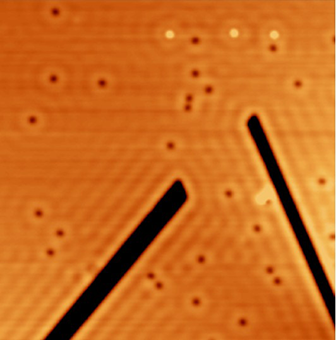
- of a barrier height increase with decreased lateral size of the tunneling-current path is expected to be reliable. These results predict a kinetic energy contribution of the order of 1 eV for tunneling between two atomically sharp structures. Experiments were performed in an ultrahigh vacuum STM


Femtosecond laser-assisted fabrication of chalcopyrite micro-concentrator photovoltaics
Beilstein J. Nanotechnol. 2018, 9, 3025–3038, doi:10.3762/bjnano.9.281
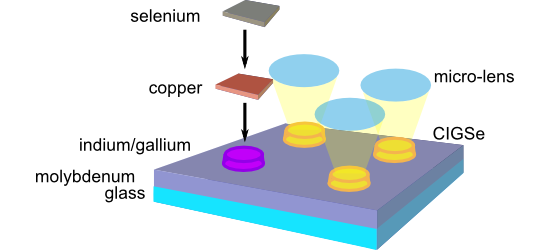
- pressure for CISe samples from the nucleation approach and all samples from the LIFT approach, or in an ultrahigh-vacuum chamber with a directed selenium beam for CIGSe samples from the nucleation approach. In both cases, the temperature protocol comprised an annealing step at around 200–250 °C followed by


Investigation of CVD graphene as-grown on Cu foil using simultaneous scanning tunneling/atomic force microscopy
Beilstein J. Nanotechnol. 2018, 9, 2953–2959, doi:10.3762/bjnano.9.274
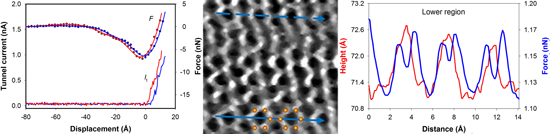
- ]. Experimental Our setup is a commercial STM/AFM operated in ultrahigh vacuum (UHV) that was modified and improved by the implementation of a Fabry–Pérot fiber interferometer in order to achieve high sensitivity in detecting lever deflection and measuring the oscillation amplitude, which in turn allows us to


In situ characterization of nanoscale contaminations adsorbed in air using atomic force microscopy
Beilstein J. Nanotechnol. 2018, 9, 2925–2935, doi:10.3762/bjnano.9.271
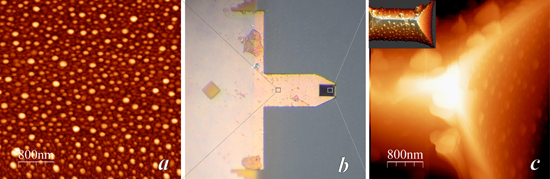
- involving surfaces a well-defined surface condition is essential. Preparing such surfaces has thus been a field of intense research over many decades. One approach is to work under ultrahigh-vacuum (UHV) conditions, which has opened fascinating experimental possibilities [5]. More importantly, well-defined


Low cost tips for tip-enhanced Raman spectroscopy fabricated by two-step electrochemical etching of 125 µm diameter gold wires
Beilstein J. Nanotechnol. 2018, 9, 2718–2729, doi:10.3762/bjnano.9.254
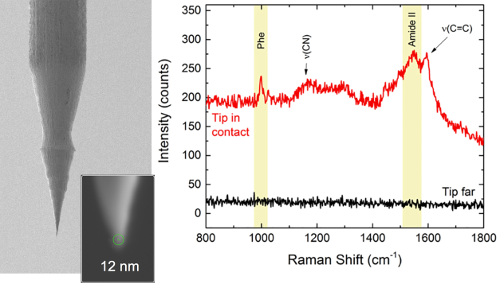
- ] and shear-force microscopy (ShFM) [15] allow for chemical imaging of nanostructured materials, surfaces and (bio)molecular layers with a spatial resolution of 4–10 nm in ambient conditions [15][16], and can even reach atomic-level sensitivity in ultrahigh vacuum (UHV) [17][18][19]. Excellent reviews


Silicene, germanene and other group IV 2D materials
Beilstein J. Nanotechnol. 2018, 9, 2665–2667, doi:10.3762/bjnano.9.248

- concepts exploiting their topological properties. In recent years this search has lead to the discovery of other members of this family of 2D materials based on other group IV elements. In 2012 silicene was first synthesized under ultrahigh vacuum conditions on a silver(111) single crystal by Si molecular
- beam epitaxy (MBE) [1][2] and at around the same time on zirconium diboride thin films grown on Si(111) substrates by Si segregation through the film [3]. The synthesis of silicene further launched an intensive search for other 2D elemental materials synthesized under ultrahigh vacuum by MBE-like

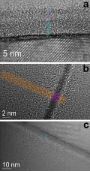
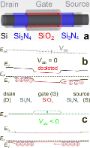
Intrinsic ultrasmall nanoscale silicon turns n-/p-type with SiO2/Si3N4-coating
Beilstein J. Nanotechnol. 2018, 9, 2255–2264, doi:10.3762/bjnano.9.210
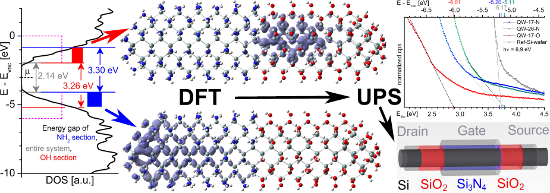
- swiftly loaded into the ultrahigh vacuum (UHV) annealing chamber. All NWell samples were contacted via a lateral metal contact frame on the front surface which was processed by photolithographical structuring, wet-chemical mesa etching and thermal evaporation of Al. The reference Si-wafer was contacted





Localized photodeposition of catalysts using nanophotonic resonances in silicon photocathodes
Beilstein J. Nanotechnol. 2018, 9, 2097–2105, doi:10.3762/bjnano.9.198
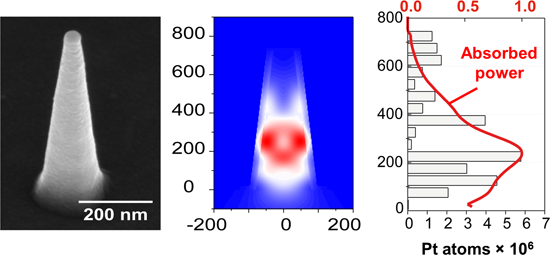
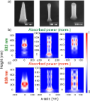
- electrolyte. X-ray photoemission spectroscopy (XPS) X-ray photoemission spectroscopy (XPS) was performed in a custom-built ultrahigh-vacuum chamber, operating at a base pressure below 5 × 10⁻⁹ mbar. A XM1200 monochromatic X-ray source (Al Kα line, Scienta Omicron) was used for X-ray excitation of the sample


Recent highlights in nanoscale and mesoscale friction
Beilstein J. Nanotechnol. 2018, 9, 1995–2014, doi:10.3762/bjnano.9.190
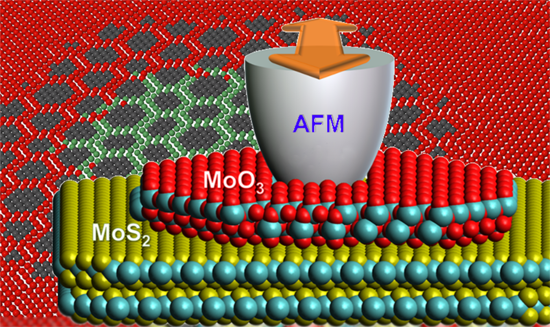
- important prerequisite of these experiments is to operate the instrument under ultrahigh-vacuum conditions, where contaminants can be avoided. In the case of Kawai et al. [58], the GNRs were grown by on-surface chemistry through evaporating a precursor of 10,10’-dibromo-9,9’-bianthryl monomers. By suitable


Quantitative comparison of wideband low-latency phase-locked loop circuit designs for high-speed frequency modulation atomic force microscopy
Beilstein J. Nanotechnol. 2018, 9, 1844–1855, doi:10.3762/bjnano.9.176
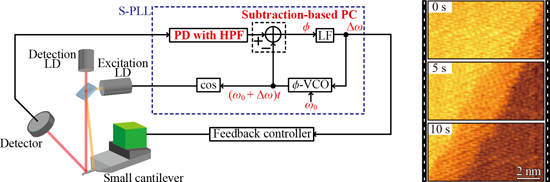
- [1]. It has been used under ultrahigh vacuum conditions for high-resolution imaging of various materials, including metals, semiconductors, metal oxides, and organic molecules [2][3][4][5]. Furthermore, recent advances in FM-AFM have enabled atom manipulation and identification at room temperature [6



Know your full potential: Quantitative Kelvin probe force microscopy on nanoscale electrical devices
Beilstein J. Nanotechnol. 2018, 9, 1809–1819, doi:10.3762/bjnano.9.172
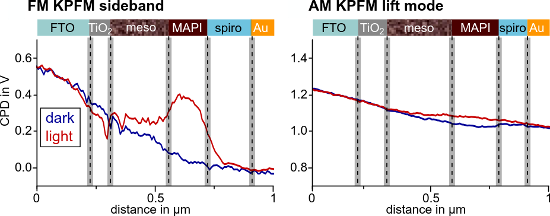
- capacitance. Thus, FM detection is more sensitive to the electrostatic interaction of the tip apex with the sample surface [20]. Originally, the peroiodic oscillations in Δf were directly detected by means of a phased-locked loop in non-contact AFM under ultrahigh vacuum conditions. An elegant way of


Multimodal noncontact atomic force microscopy and Kelvin probe force microscopy investigations of organolead tribromide perovskite single crystals
Beilstein J. Nanotechnol. 2018, 9, 1695–1704, doi:10.3762/bjnano.9.161
- inverse temperature solubility. The single crystal investigated under ultrahigh vacuum (UHV) was fixed on a stainless steel sample UVH holder with a compatible electrically conductive silver epoxy paste (EPO-TEK E4110), which was cured at room temperature (RT) over 24 hours. The sample was subsequently
- cleaved with a scalpel just before being introduced in the load-lock of the VT-AFM (after cleavage, the sample thickness was estimated to be on the order of 1 mm). Noncontact AFM and Kelvin probe force microscopy The nc-AFM experiments were carried out with an Omicron VT-AFM setup in ultrahigh vacuum (UHV


Friction force microscopy of tribochemistry and interfacial ageing for the SiOx/Si/Au system
Beilstein J. Nanotechnol. 2018, 9, 1647–1658, doi:10.3762/bjnano.9.157
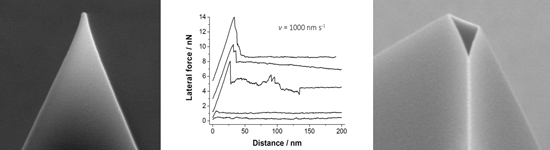
- ultrahigh vacuum. We measured very low friction forces compared to adhesion forces and found a modulation of lateral forces reflecting the atomic structure of the surfaces. Holding the force-microscopy tip stationary for some time did not lead to an increase in static friction, i.e., no contact ageing was
- minutes) [5], while contact ageing between chemically reactive surfaces may occur very fast (nanoseconds to milliseconds) [14]. Here, we report FFM experiments in ultrahigh vacuum that address contact ageing and atomic-scale friction for contacts formed by Si, SiOx, and Au. We found that no contact ageing
- layers, in particular oxide films, from surface and tip. The control of surface oxidation required the implementation of all experiments in ultrahigh vacuum. We report on tribochemical processes between Si, SiOx, and Au, which were initiated by removal of the passivating layers. Experimental Tip and




Atomistic modeling of tribological properties of Pd and Al nanoparticles on a graphene surface
Beilstein J. Nanotechnol. 2018, 9, 1239–1246, doi:10.3762/bjnano.9.115
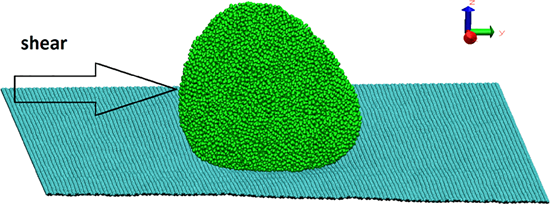
- ][14]. There are many studies concerning the tribological properties of nanoobjects. For example, alumina nanoparticles were studied in [9] and self-organized monolayers in [4]. In [5] the authors studied the interaction in ultrahigh vacuum between a nanoasperity and an alkali-metal halide surface at
- surfaces in ultrahigh vacuum [5]. The temperature dependence of the friction shown in Figure 8 can be understood as follows [20][21][22][23]: At high temperatures the friction decreases with increasing temperature due to thermal fluctuations, which help to move the particles over the energy barriers they
- , which is similar to that of hexadecanethiol self-assembled monolayers on Au substrates [4] and NaCl crystal surfaces in ultrahigh vacuum [5]. We found that the friction force, i.e., the force acting on the particles from the substrate, depends nearly linearly on the contact area consistent with [13][14


Field-controlled ultrafast magnetization dynamics in two-dimensional nanoscale ferromagnetic antidot arrays
Beilstein J. Nanotechnol. 2018, 9, 1123–1134, doi:10.3762/bjnano.9.104
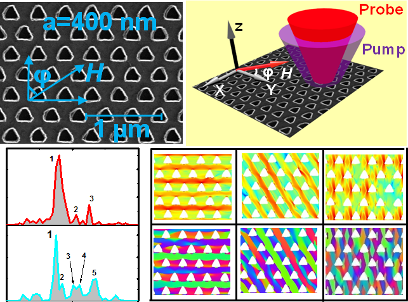
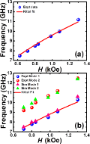
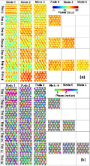
- -thick protective layer of Al2O3 was deposited on top of the Py film in an ultrahigh vacuum chamber at a base pressure of 2 × 10⁻⁸ Torr. The Al2O3 capping layer was deposited on the Py film to protect the samples from external contamination of the environment, degradation with time, and also from direct



Electron interactions with the heteronuclear carbonyl precursor H2FeRu3(CO)13 and comparison with HFeCo3(CO)12: from fundamental gas phase and surface science studies to focused electron beam induced deposition
Beilstein J. Nanotechnol. 2018, 9, 555–579, doi:10.3762/bjnano.9.53
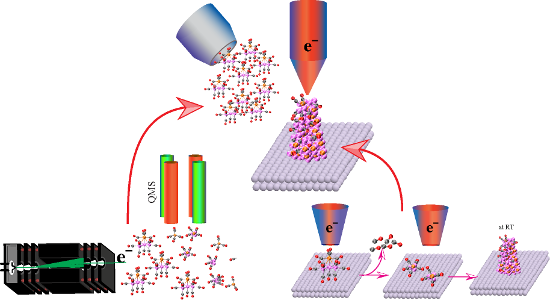
- carbonyl complex H2FeRu3(CO)13 covering its low energy electron induced fragmentation in the gas phase through dissociative electron attachment (DEA) and dissociative ionization (DI), its decomposition when adsorbed on a surface under controlled ultrahigh vacuum (UHV) conditions and exposed to irradiation


Dopant-stimulated growth of GaN nanotube-like nanostructures on Si(111) by molecular beam epitaxy
Beilstein J. Nanotechnol. 2018, 9, 146–154, doi:10.3762/bjnano.9.17
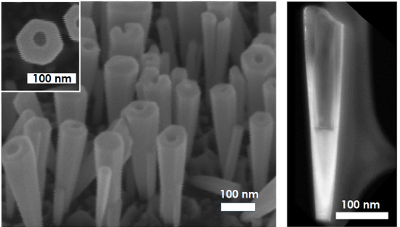
- Discussion Growth technique In our experiments, we used p-type Si(111) substrates that were treated with the Shiraki cleaning procedure prior to loading into the MBE chamber, where each substrate was annealed in ultrahigh vacuum. The annealing temperature varied from sample to sample in the range of 850 to





