Search results
Search for "AFM" in Full Text gives 739 result(s) in Beilstein Journal of Nanotechnology. Showing first 200.
Gap-directed chemical lift-off lithographic nanoarchitectonics for arbitrary sub-micrometer patterning
Beilstein J. Nanotechnol. 2023, 14, 34–44, doi:10.3762/bjnano.14.4
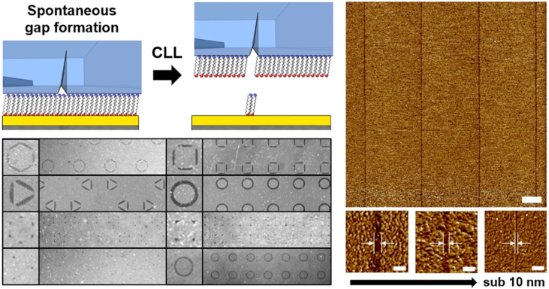
- Schottky Field Emission Scanning Electron Microscope, Tokyo, Japan) is used, but for sub-100 nm features AFM is employed to avoid the heavy influence of high-energy electron beams on molecular patterns in imaging. The straightness of the obtained lines is also assessed by calculating the linear regression
- of pattern edges. Coordinates of 10 evenly spaced points on edges of line features are extracted and a regression line is obtained. The R2 values are calculated to be at least 0.9858 for all line borders shown in the AFM images of Figure 4, indicating the straight pattern edges and faithful transfers
- characterized by SEM for feature line width of (B) 150 nm and by AFM for feature line widths (C) 80 nm (D) 50 nm (E) 35 nm, and (F) 5 nm. Scale bar is 2 μm (B) and (C), and 100 nm (D–F). Illustration of the gap-directed chemical lift-off lithography process. (A) The selective removal of alkanethiols from an Au


Electrical and optical enhancement of ITO/Mo bilayer thin films via laser annealing
Beilstein J. Nanotechnol. 2022, 13, 1589–1595, doi:10.3762/bjnano.13.133
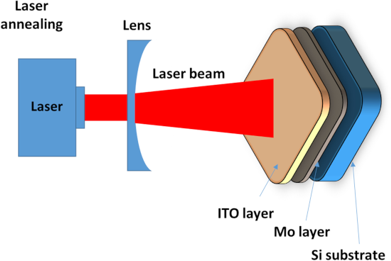
- AFM analysis shows that grain size and RMS roughness increased from 16.02 to 36.19 nm and 0.4 to 2.6 nm, respectively, when the laser energy was increased to 120 mJ. The as-deposited sample has an optical transmittance of nearly 80% in the 300–800 nm range. The laser annealing yielded a higher
- roughness of the bilayer structure were studied utilizing an atomic force microscope (AFM, Bruker Dimension Edge) and the Gwyddion software. The optical transmission was measured using an UV–vis spectrophotometer (UV-3600i Plus, SHIMADZU) in the range of λ = 300–800 nm. Finally, the electrical properties
- 3.21 × 10¹⁴ lines/m2. Figure 2 displays the surface morphology in 3D images of ITO/Mo for the as-deposited and annealed samples. These images were scanned over an area of 1.0 × 1.0 µm using AFM. Figure 2 shows the different morphologies for as-deposited and annealed samples using a laser for different


From a free electron gas to confined states: A mixed island of PTCDA and copper phthalocyanine on Ag(111)
Beilstein J. Nanotechnol. 2022, 13, 1572–1577, doi:10.3762/bjnano.13.131
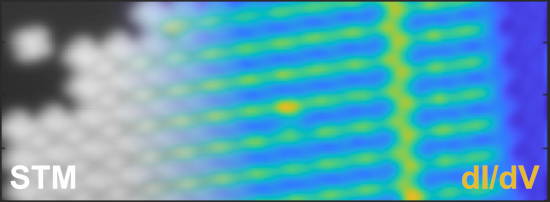
- of one-dimensional quantum wells, our analysis shows that this state does not act as a free electron gas and that the features are instead localized above individual PTCDA molecules. Keywords: AFM; copper phthalocyanine; dI/dV; PTCDA; STM; Introduction Organic semiconductor devices typically
- -precision STM and atomic force microscopy (AFM) scanning. Third, CuPc and PTCDA are known to form commensurate phases on flat metal surfaces. In particular, they have been well studied at different stoichiometries on Ag(111) [16]. Henneke and co-workers showed that more than 0.15 ML of PTCDA in addition to
- to CuPc within each unit cell, called the P2C phase [16]. A STM and AFM investigation of single CuPc and PTCDA molecules on a thin insulating layer interestingly showed little change of the dI/dV spectra (features shifted, but were preserved) or of the corresponding dI/dV images when the two


Induced electric conductivity in organic polymers
Beilstein J. Nanotechnol. 2022, 13, 1551–1557, doi:10.3762/bjnano.13.128
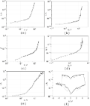
- microscopy (AFM) using an earlier described methodology [5]. The study of the film morphology showed that they are homogeneous, and within the entire thickness range from 3 nm to 1 µm the films are solid, without significant defects and/or pin holes. The observation confirms the good film-forming properties



Frequency-dependent nanomechanical profiling for medical diagnosis
Beilstein J. Nanotechnol. 2022, 13, 1483–1489, doi:10.3762/bjnano.13.122
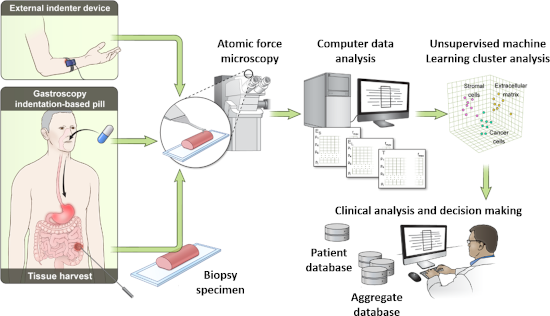
- Bioengineering, National Institutes of Health, Bethesda, Maryland, USA 10.3762/bjnano.13.122 Abstract Atomic force microscopy (AFM), developed in the early 1980s, has become a powerful characterization tool in micro- and nanoscale science. In the early 1990s, its relevance within biology and medicine research
- healthcare strategies that link routine AFM measurements with computer analysis, real-time communication with healthcare providers, and medical databases. This approach would be appropriate for diseases such as cancer, lupus, arteriosclerosis and arthritis, among others, which bring about significant
- mechanical changes in the affected tissues. Keywords: atomic force microscopy; healthcare; mechanical properties; mechanobiology; medical diagnosis; Introduction Since its invention in the early 1980s, atomic force microscopy (AFM) has been extensively used for topographical, mechanical, electrical, and


Laser-processed antiadhesive bionic combs for handling nanofibers inspired by nanostructures on the legs of cribellate spiders
Beilstein J. Nanotechnol. 2022, 13, 1268–1283, doi:10.3762/bjnano.13.105
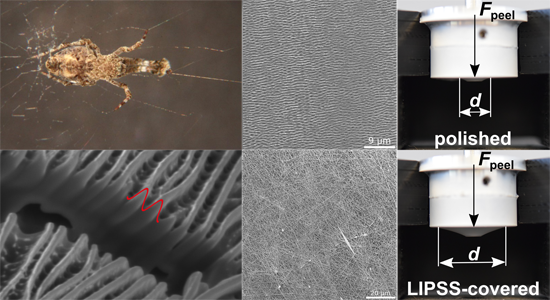
- Microsoft Excel. Details are presented in Table S2 in Supporting Information File 1. To investigate the effects of the surface texture on the measured peel-off force in more detail, the surfaces of the Al alloy and the Ti alloy samples were investigated by means of atomic force microscopy (AFM). The
- arithmetic average roughness (Ra), the quadratic average roughness (Rq) and the maximum height (Ry) were measured; the results are shown in Table 3. The results of the AFM measurements revealed that the LIPSS covering the Al alloy surface are rather flat. Ry, which represents basically double the amplitude a
- alloy samples, as well as the LIPSS-covered Al alloy sample were investigated by means of AFM on a Nanosurf Mobile S device (Nanosurf AG, Liestal, Switzerland). The investigated area had a size of 30 µm × 30 µm. The measurements were performed in contact mode with a Contr10 (Nanoworld, Neuchatel






Studies of probe tip materials by atomic force microscopy: a review
Beilstein J. Nanotechnol. 2022, 13, 1256–1267, doi:10.3762/bjnano.13.104
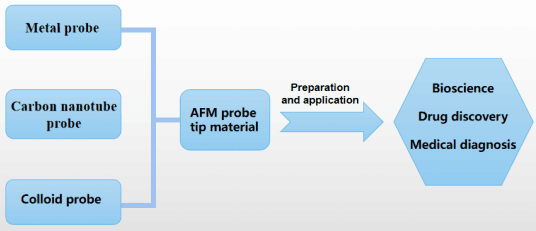
- Ke Xu Yuzhe Liu School of Electrical & Control Engineering, Shenyang Jianzhu University, Shenyang 110168, China 10.3762/bjnano.13.104 Abstract As a tool that can test insulators' surface morphology and properties, the performance index of atomic force microscope (AFM) probes is the most critical
- and disadvantages of the improved probes compared with ordinary probes by comparing the differences in spatial resolution, sensitivity, imaging, and other performance aspects, and finally provides an outlook on the future development of AFM probes. This paper promotes the development of AFM probes in
- the direction of new probes and further promotes the broader and deeper application of scanning probe microscope (SPM). Keywords: AFM; carbon nanotube probe; colloid probe; metal probe; Introduction AFM represents a well-established technique for the investigation of the nanosurface morphology
Design of surface nanostructures for chirality sensing based on quartz crystal microbalance
Beilstein J. Nanotechnol. 2022, 13, 1201–1219, doi:10.3762/bjnano.13.100
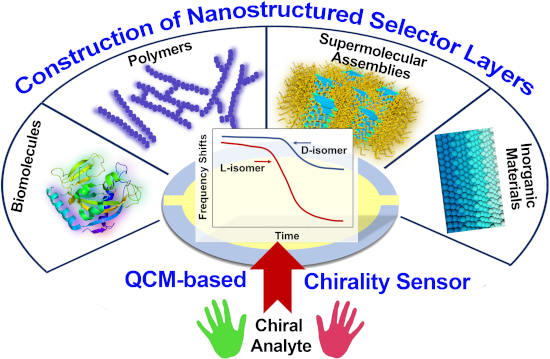
- , Xu et al. studied real-time chiral recognition of CD films to isomers in the gas phase [69]. Based on atomic force microscopy (AFM) observations, functional β-CDs with a short sulfide group were inclined to form monolayers. In contrast, those with long sulfide groups produced a quasi-two-layer


A cantilever-based, ultrahigh-vacuum, low-temperature scanning probe instrument for multidimensional scanning force microscopy
Beilstein J. Nanotechnol. 2022, 13, 1120–1140, doi:10.3762/bjnano.13.95
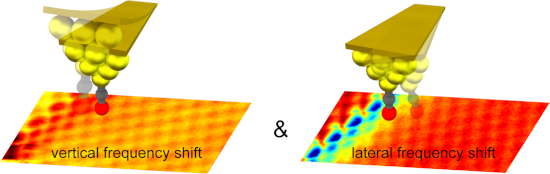
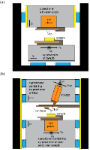
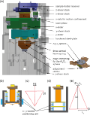
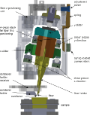
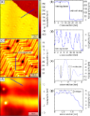
- Cantilever-based atomic force microscopy (AFM) performed under ambient conditions has become an important tool to characterize new material systems as well as devices. Current instruments permit robust scanning over large areas, atomic-scale lateral resolution, and the characterization of various sample
- properties using multifrequency and multimodal AFM operation modes. Research of new quantum materials and devices, however, often requires low temperatures and ultrahigh vacuum (UHV) conditions and, more specifically, AFM instrumentation providing atomic resolution. For this, AFM instrumentation based on a
- tuning fork force sensor became increasingly popular. In comparison to microfabricated cantilevers, the more macroscopic tuning forks, however, lack sensitivity, which limits the measurement bandwidth. Moreover, multimodal and multifrequency techniques, such as those available in cantilever-based AFM





Effects of focused electron beam irradiation parameters on direct nanostructure formation on Ag surfaces
Beilstein J. Nanotechnol. 2022, 13, 1004–1010, doi:10.3762/bjnano.13.87
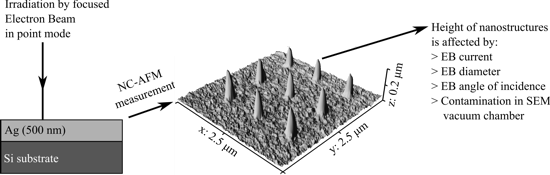
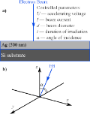
- -contact atomic force microscopy (AFM) using the model Park NX10 AFM. The first experiment was conducted with beam current I as the variable parameter ranging from 7 to 500 pA. However, changing the value of I also changed the beam diameter d, which is a function of I and the working distance (WD). The
- the ones measured by AFM due to the tip convolution effect [37]; however, this should not affect the displayed trends. The results presented in Figure 3 show that the height of the nanostructures on the Ag surface could be increased by elevating the EB focus by a few microns above the surface during
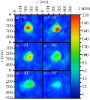
- surface as functions of time following chamber decontamination by nitrogen plasma cleaning. Constant EB parameters are: U = 30 kV, I = 55 pA, d = 14 nm, t = 30 s, and α = 0°. A representative AFM image of a nanostructure on an Ag surface after sustaining damage from N plasma cleaning. Constant EB




Design of a biomimetic, small-scale artificial leaf surface for the study of environmental interactions
Beilstein J. Nanotechnol. 2022, 13, 944–957, doi:10.3762/bjnano.13.83
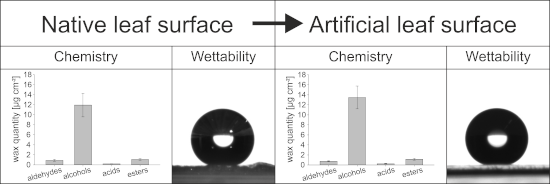
- secondary electron detector. The working distance was 4–7 mm. Atomic force microscopy analysis of recrystallized structures The thickness of the wax coating on glass (1400 µg) was examined with an atomic force microscope (AFM, NanoWizard II, JPK instruments, Berlin, Germany). For this purpose, the
- recrystallized wax layer on the glass was partially removed with a razor blade. The sample was then attached to a microscope slide with double-sided adhesive tape. The AFM recordings were performed in tapping mode (amplitude: 0.05 V; frequency: 302.9 kHz, line rate: 0.3 Hz, set point: 940 mV) with tapping
- scales between them. AFM analysis of recrystallized structures Like the SEM analysis, the AFM analysis showed granule-shaped structures on the artificial surface (1400 µg). By removing the wax with a razor blade, a distinct edge was created, showing a 1.12 ± 0.23 µm thick wax layer (Figure 5). Analysis
Comparing the performance of single and multifrequency Kelvin probe force microscopy techniques in air and water
Beilstein J. Nanotechnol. 2022, 13, 922–943, doi:10.3762/bjnano.13.82
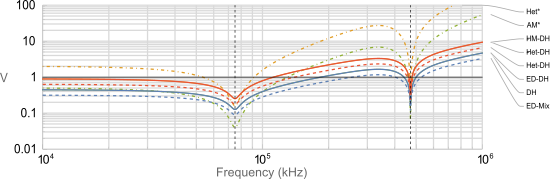
- liquid environments whilst needing the smallest AC bias for operation. Keywords: AFM; atomic force microscopy; closed loop; Kelvin probe force microscope; KPFM; open loop; performance; signal-to-noise ratio; Introduction Atomic force microscopy (AFM) is an enabling technique for the nanoscale mapping
- forces in KPFM is generally expressed as the minimum detectable CPD [53], and is directly limited by the geometry of the interaction, thermal noise of the cantilever, and the detection noise limits of the AFM [36][54]. Cantilevers have a number of eigenmodes, ωn, where there is a mechanical enhancement
- -mode [14][48][49][50]. The most common application of KPFM in AFM is CL AM-KPFM on the fundamental eigenmode where a bias feedback loop is employed to cancel the electrostatic force and to extract VCPD [10][60][61]. This single-frequency technique can also be used under OL conditions without a feedback
Temperature and chemical effects on the interfacial energy between a Ga–In–Sn eutectic liquid alloy and nanoscopic asperities
Beilstein J. Nanotechnol. 2022, 13, 817–827, doi:10.3762/bjnano.13.72
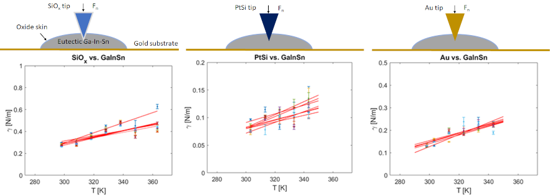
- increase of the interfacial energy as a function of the temperature, which can be explained by the reactivity between SiOx and Ga and the occurrence of chemical segregation at the liquid alloy surface. Keywords: atomic force microscopy (AFM); interfacial energy; liquid alloy; Introduction Recently, room
- atomic force microscopy (AFM) tips of different chemistries as a function of the temperature (T = 21–90 °C) by AFM force spectroscopy using an XE100 AFM equipped with a heating stage (manufactured by Park Instruments, Republic of Korea). We recorded force–distance curves with PtSi-coated Si cantilevers
- (PtSi-cont, manufactured from NanoSensors, Switzerland), SiOx cantilevers (Contsc, manufactured from NanoSensors, Switzerland), and Au-coated Si cantilevers (ContscAu, manufactured from NanoSensors, Switzerland). Before measurements, the sensitivity of the AFM photodiode was calibrated by recording a



Optimizing PMMA solutions to suppress contamination in the transfer of CVD graphene for batch production
Beilstein J. Nanotechnol. 2022, 13, 796–806, doi:10.3762/bjnano.13.70
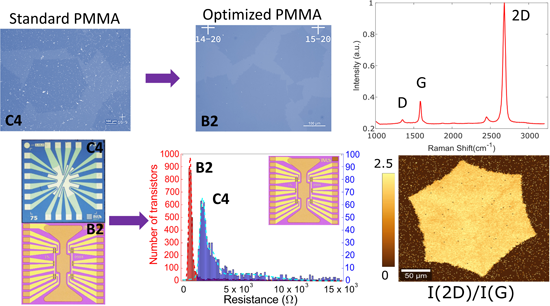
- analyzer had a pass energy of 20 eV. Atomic force microscopy The surface topographies of graphene were investigated by a Bruker Dimension Icon atomic force microscope (AFM), using PPP-NCH (NanosensorsTM) cantilevers with a tip radius smaller than 20 nm, a force constant of 42 N/m, and 250 kHz resonance
- frequency. The AFM measurement was carried out in tapping mode. A 633 nm laser light aimed at the back side of the cantilever tip was reflected toward a position-sensitive photodetector, which provides feedback signals to piezoelectric scanners that maintain the cantilever tip at constant height (force




Efficient liquid exfoliation of KP15 nanowires aided by Hansen's empirical theory
Beilstein J. Nanotechnol. 2022, 13, 788–795, doi:10.3762/bjnano.13.69
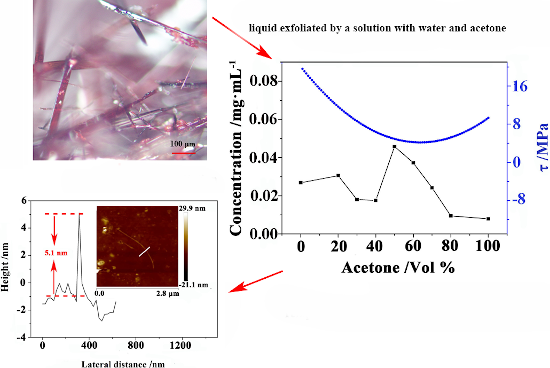
- concentration, centrifugation was not used. Measurement equipment UV−visible spectrophotometry was performed by using a Shimadzu UV-3101PC system. Atomic force microscopy (AFM) tests were performed in a Multimode 8 system. The Raman tests were performed on a WITec alpha300 RA confocal Raman microscopy system


Gelatin nanoparticles with tunable mechanical properties: effect of crosslinking time and loading
Beilstein J. Nanotechnol. 2022, 13, 778–787, doi:10.3762/bjnano.13.68
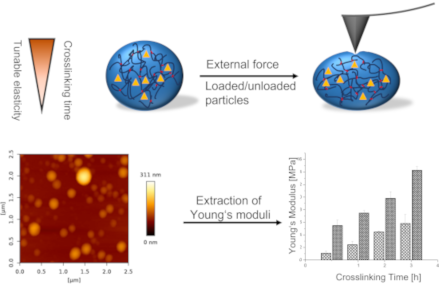
- for 0.5 h imaged under liquid conditions by AFM are shown in Figure 1. Incorporating lysozyme as a protein drug up to an initial loading of 3 mg per 20 mg gelatin resulted in particles with comparable size (242.67 ± 11.32 nm), size distribution (0.132 ± 0.04), and a negative zeta potential at neutral
- significant for all different crosslinking times. The absolut Young's modulus values are significantly lower than reported before [17]. This can be due to different reasons such as a batch to batch variance of gelatin as a natural product, a difference in the measurement speed during the AFM experiment and
- , Germany). Fluorescein isothiocyanate-dextran 70 kDa (FITC-dextran) was purchased from TdB (Upsala Sweden). Pall Minimate™ tangential flow filtration capsules 300 kDa were obtained from VWR International GmbH (Darmstadt, Germany). Silicon wafers used as substrates in AFM experiments were derived from Plano


Direct measurement of surface photovoltage by AC bias Kelvin probe force microscopy
Beilstein J. Nanotechnol. 2022, 13, 712–720, doi:10.3762/bjnano.13.63
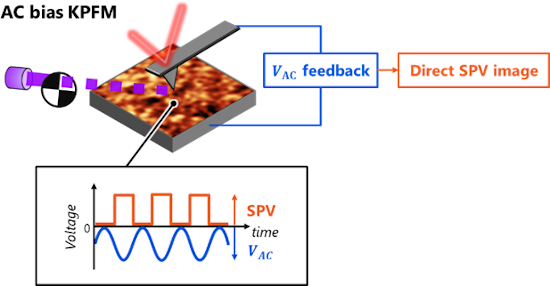
- microscopy (AFM) [22]. KPFM measures the contact potential difference (CPD), which corresponds to the difference in work function between the tip and the sample, consecutively in darkness and under illumination, to determine the SPV values: SPV = CPDlight − CPDdark. In this method, the thermal drift between
- force This signal is measured with a lock-in amplifier and compensated by VAC control, yielding the SPV value. To improve the sensitivity, ωm is usually tuned to the second (first) resonance frequency of the cantilever, while the first (second) resonance frequency is assigned to the AFM measurement [29
- time [31]. To reach sufficient sensitivity, the value should typically be larger than 1 V. Experimental The experiments were performed by customized ultrahigh-vacuum (UHV) noncontact atomic force microscopy (NC-AFM, UNISOKU) at a temperature T of 78 K with a base pressure below 5 × 10⁻¹¹ Torr. The NC


Reliable fabrication of transparent conducting films by cascade centrifugation and Langmuir–Blodgett deposition of electrochemically exfoliated graphene
Beilstein J. Nanotechnol. 2022, 13, 666–674, doi:10.3762/bjnano.13.58
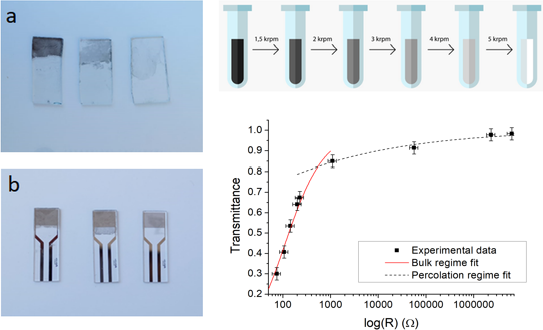
- wavelength of 660 nm and the number of graphene layers was calculated for each sample, taking into account an absorption of 2.3% for each layer of graphene, as in the work by Bonaccorso and co-workers [43]. Although atomic force microscopy (AFM) is often employed to characterize graphene films [2][12][14][44
- ], applying that method to films that consist of heterogeneous flakes, such as Langmuir–Blodgett-deposited films, is more difficult. Since the thickness varies from flake to flake, only an average film thickness over a certain area makes sense. The area over which average thickness can be measured with AFM is
- limited by the scan size, at a maximum of about 50 µm × 50 µm. The best method for measuring the average film thickness with AFM is to make scans that show the underlying substrate as well as the film itself and to make a histogram of measured heights, where a narrow peak related to the substrate and a


Quantitative dynamic force microscopy with inclined tip oscillation
Beilstein J. Nanotechnol. 2022, 13, 610–619, doi:10.3762/bjnano.13.53
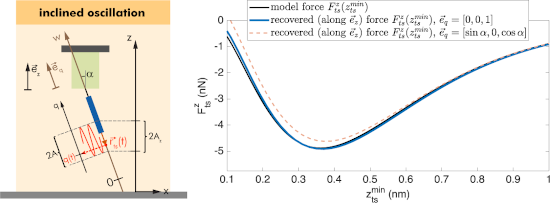
- Philipp Rahe Daniel Heile Reinhard Olbrich Michael Reichling Fachbereich Physik, Universität Osnabrück, Barbarastrasse 7, 49076 Osnabrück, Germany 10.3762/bjnano.13.53 Abstract In the mathematical description of dynamic atomic force microscopy (AFM), the relation between the tip–surface normal
- . Experimentally, however, the sampling path representing the tip oscillating trajectory is often inclined with respect to the surface normal and the data recording path. Here, we extend the mathematical description of dynamic AFM to include the case of an inclined sampling path. We find that the inclination of
- measuring a heterogeneous atomic surface. We propose to measure the AFM observables along a path parallel to the oscillation direction in order to reliably recover the force along this direction. Keywords: atomic force microscopy; cantilever; quantitative force measurement; sampling path; Introduction


![[Graphic 38]](/bjnano/content/inline/2190-4286-13-53-i79.svg?max-width=637&scale=1.18182) and the axis w....
and the axis w....


Revealing local structural properties of an atomically thin MoSe2 surface using optical microscopy
Beilstein J. Nanotechnol. 2022, 13, 572–581, doi:10.3762/bjnano.13.49
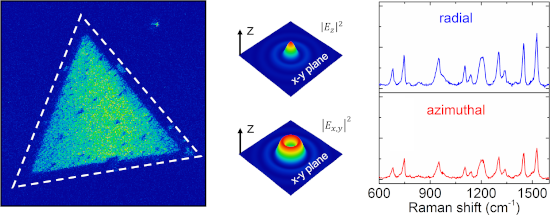
- the optical contrast, one can estimate that the thickness of the more transparent areas of the MoSe2 flake is smaller than that of other regions. To visualize the CuPc molecule distribution on the MoSe2 flake, atomic force microscopy (AFM) was used, and the results are shown in Figure 1b. The insets
- in Figure 1b are high-resolution AFM images of CuPc/MoSe2. The upper inset exhibits a step from the SiO2/Si substrate to the border of the MoSe2 flake, and the lower inset shows a distinct transition from the border to the center of the MoSe2 flake. The MoSe2 flake is fully covered by CuPc molecule
- pronounced correlation, which is exemplarily indicated by the dashed red circle in Figure 2a and Figure 2b. Figure 2c shows the AFM topographic image of the corresponding region of CuPc/MoSe2. The surface of the MoSe2 flake is covered by some nanoparticles marked by the dashed red circle, which were reported


Effects of substrate stiffness on the viscoelasticity and migration of prostate cancer cells examined by atomic force microscopy
Beilstein J. Nanotechnol. 2022, 13, 560–569, doi:10.3762/bjnano.13.47
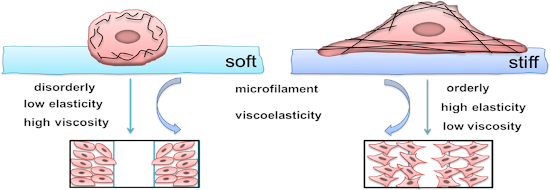
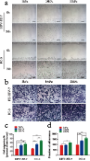
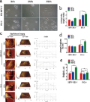
- unclear how mechanical properties regulate the cellular response to the environmental matrix. In this study, atomic force microscopy (AFM) and laser confocal imaging were used to qualitatively evaluate the relationship between substrate stiffness and migration of prostate cancer (PCa) cells. Cells
- . Analysis of AFM force–distance curves indicated that the elasticity of the cells cultured on 35 kPa substrates increased while the viscosity decreased. Wound-healing experiments showed that PCa cells cultured on 35 kPa substrates have higher migration potential. These phenomena suggested that the
- functions have not been well appreciated [16]. In recent years, alterations in the physical properties of cells have been considered as a marker of malignant transformation of cancer cells [17][18][19]. Based on atomic force microscopy (AFM) measurements, our group found that the progression of prostate



Influence of thickness and morphology of MoS2 on the performance of counter electrodes in dye-sensitized solar cells
Beilstein J. Nanotechnol. 2022, 13, 528–537, doi:10.3762/bjnano.13.44
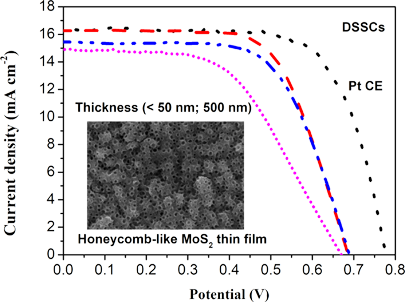
- grids with a diameter of around 50 nm (see Figure 3e, insert). The roughness of the films was further studied by AFM. The film with the honeycomb-like structure showed the highest average roughness (Sa) and root mean square roughness (Sq) of 24.179 and 30.443 nm, respectively (see Supporting Information
- thank Professor Tzu-Chien Wei, Department of Chemical Engineering, National Tsing Hua University, Taiwan, for his great help on EIS, AFM and Raman measurements. Funding This research was fully funded by Tra Vinh University under grant contract number 140/HĐ.HĐKH-ĐHTV


Investigation of electron-induced cross-linking of self-assembled monolayers by scanning tunneling microscopy
Beilstein J. Nanotechnol. 2022, 13, 462–471, doi:10.3762/bjnano.13.39
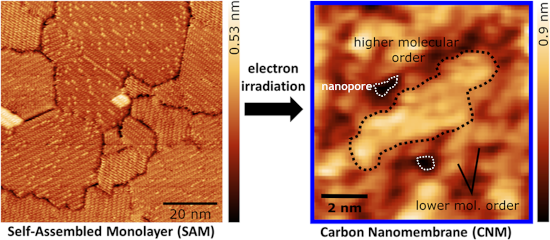
- values determined by STM are smaller than the areal density of ≈7 × 10¹⁷ m−2 and the pore diameter of 0.7 ± 0.1 nm determined using AFM [36]. This is mainly due to different imaging mechanisms and different threshold definitions used for pore determination. Finally, the evolution of electron-induced


Relationship between corrosion and nanoscale friction on a metallic glass
Beilstein J. Nanotechnol. 2022, 13, 236–244, doi:10.3762/bjnano.13.18
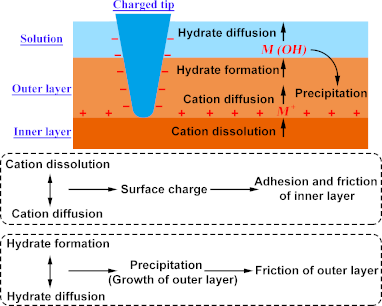
- surface dissolution at the interface of the two layers. The findings contribute to the understanding of mechanical contacts with metallic glasses under corrosive conditions by exploring the interrelation of microscopic corrosion mechanisms and nanoscale friction. Keywords: atomic force microscopy (AFM
- polarization curves of ZrNiTi MGs in NaCl solution and phosphate buffer recorded in an electrochemical AFM cell. In NaCl solution, no passivity is observed during anodic polarization. The current density increases rapidly even at a low applied potential (approx. 0 V). In contrast, the ZrNiTi MG in phosphate
- be found in [21]. The lack of height contrast in Figure 3a is explained by penetration of the AFM tip into the soft outer layer surrounding the scan field. No height difference can be measured between the surrounding area, where the tip penetrates the outer layer, and the scan field, where the outer


Theranostic potential of self-luminescent branched polyethyleneimine-coated superparamagnetic iron oxide nanoparticles
Beilstein J. Nanotechnol. 2022, 13, 82–95, doi:10.3762/bjnano.13.6
- over vacuum should be generated to obtain the spatial frequency distribution in the image. Then, a noise-filtering mask from the reduced FFT preserving only the crystalline contributions from the original image should be generated to produce the filtered nanoparticle image [35]. An AFM analysis
- performed at magnetic mode indicated particles of approx. 20 nm in size, which suggests a slight particle aggregation (Figure 1b). According to the literature, it is usually not uncommon to obtain different results using AFM and TEM analysis. However, due to a higher resolution and material-related
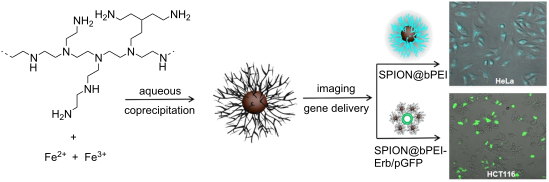
- , holds great potential for effective gene/drug delivery coupled with dual-mode imaging. a) TEM image of SPION@bPEI. b) AFM micrograph image of SPION@bPEI (magnetic mode). c) X-ray diffraction pattern of SPION@bPEI prepared via the in situ coating method. Since the presence of the polymer prevented the