Search results
Search for "cancer cells" in Full Text gives 166 result(s) in Beilstein Journal of Nanotechnology.
Serum type and concentration both affect the protein-corona composition of PLGA nanoparticles
Beilstein J. Nanotechnol. 2019, 10, 1002–1015, doi:10.3762/bjnano.10.101
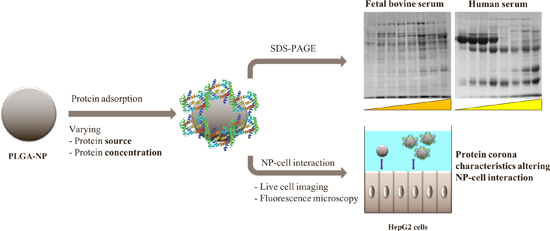
- obtained from Promega Corporation (Madison, USA). Urea was purchased from Acros Organics (New Jersey, USA). Human liver cancer cells (HepG2) were kindly provided by the Institute of Food Chemistry of the University of Muenster, Germany. Phosphate-buffered saline (PBS), Dulbecco’s modified Eagle’s medium



The systemic effect of PEG-nGO-induced oxidative stress in vivo in a rodent model
Beilstein J. Nanotechnol. 2019, 10, 901–911, doi:10.3762/bjnano.10.91
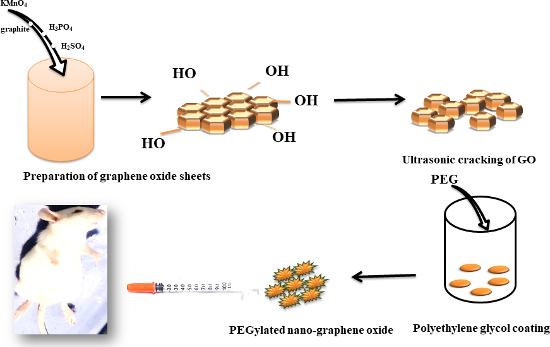
- dual-functionalized GO for the photothermal enhancement of gene delivery [23]. Xiong et al. studied the synergistic effects of PEG-functionalized GO for chemo-photothermal therapy [24]. Tian et al. revealed that PEG-GO enhanced the uptake of chlorin e6 by cancer cells [25]. Shen et al. exploited the


Tungsten disulfide-based nanocomposites for photothermal therapy
Beilstein J. Nanotechnol. 2019, 10, 811–822, doi:10.3762/bjnano.10.81
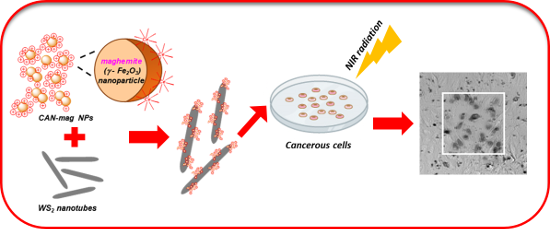
- . Functionalization of the nanotubes with CAN-mag nanoparticles resulted in a magnetic nanocomposite. When tested in vitro with two types of cancer cells, the functionalized nanotubes showed a better PTT activity compared to non-functionalized nanotubes, as well as reduced aggregation and the ability to add a second
- human cancer cells – HeLa (cervical cancer) and MCF7 (breast cancer). The cells were cultured on 24-well plates. When the cells reached 80% confluence, freshly prepared aqueous dispersions of WS2-NT or WS2-NT-CM (45 µL, 1 mg/mL) were added to two of the plates, and a third plate, with no additives, was
- small percentages. Yet, the composite maintained the magnetic character of the nanoparticles. Moreover, the functionalized nanotubes proved to have a higher activity as PTT agents compared to bare WS2-NTs in in vitro tests done with HeLa and MCF7 cancer cells. In addition, functionalization with CAN-mag






Polydopamine-coated Au nanorods for targeted fluorescent cell imaging and photothermal therapy
Beilstein J. Nanotechnol. 2019, 10, 794–803, doi:10.3762/bjnano.10.79
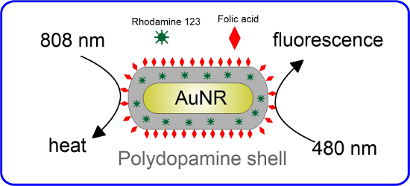
- fluorescent imaging and plasmonic phothothermal abilities have not been reported previously. The multifunctional nanoparticles were stable in cell buffer, nontoxic and suitable for targeted fluorescent imaging and photothermal therapy of cancer cells. We demonstrate the enhanced accumulation of folate
- ) loading, resulting in the formation of AuNR-PDA-R123-folate nanocomposites (Scheme 1). This platform demonstrates three distinct features: (1) targeting of nanocomposites with folic acid leads to enhanced cellular uptake by folate-positive cancer cells compared with PEG-coated nanorods; (2) the high
- loading with rhodamine 123 makes the nanoparticles suitable for cell imaging with a simple fluorescent microscope; (3) through using NIR-mediated photothermal therapy the cancer cells can be killed with a high efficiency. Results and Discussion Synthesis and characterization of the AuNRs-PDA-R123-folate


Targeting strategies for improving the efficacy of nanomedicine in oncology
Beilstein J. Nanotechnol. 2019, 10, 168–181, doi:10.3762/bjnano.10.16
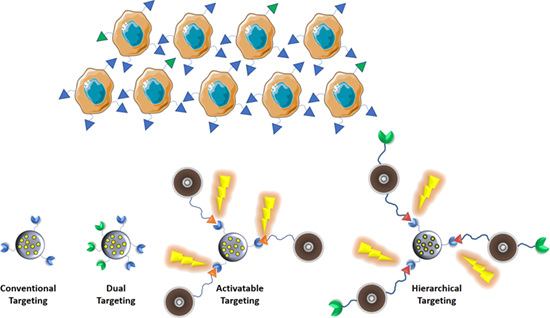
- against specific cell populations. As example, Herceptin is an antibody that recognizes the human epidermal growth factor receptor 2 (HER2) overexpressed in breast cancer cells (HER2+). This antibody has been attached on the surface of poly(D,L-lactic-co-glycolic acid) (PLGA) nanoparticles loaded with the
- specifically to αβ-integrin, which is usually upregulated in many different tumoral cell lines such as breast, lung or fibroblast cancer cells, and also by the epithelial cells of the tumoral blood vessels [32][33]. Ruoshlati et al. have reported that the cyclic version of RGD, CRGDKGPDC (called iRGD), which
- destruction of CD13+ cancer cells as human fibrosarcoma cells (HT-1080) [36]. These liposomes released more than 75% of their payload when the temperature reached 41.3 °C whereas they maintained the Dox within their hydrophilic core at physiological temperature. Other systems widely employed for targeting


Surface plasmon resonance enhancement of photoluminescence intensity and bioimaging application of gold nanorod@CdSe/ZnS quantum dots
Beilstein J. Nanotechnol. 2019, 10, 22–31, doi:10.3762/bjnano.10.3
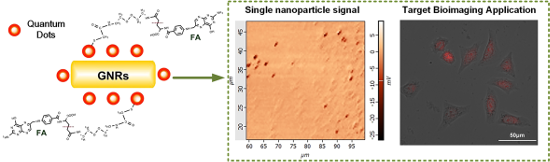
- as an optical process for MCF-7 breast cancer cells. Keywords: bioimaging; gold nanorods; photoluminescence enhancement; quantum dots; Introduction In the past decades, quantum dots (QDs) have proven to be increasingly useful for their unique features [1][2][3][4][5]. The light emission from QDs
- distance using the combined strong electrostatic adsorption. Secondly, FA was conjugated with this composite nanoparticle for biological applications, where the FA renders the nanoparticle useful for the specific targeting of cancer cells [28][29]. According to current knowledge, when bulk semiconductor
- staining appearing in Figure 8 was due to the accumulation of functionalized nanoparticles in the cells, and there was no sign of any damage to the cell, demonstrating passive uptake in MCF-7 breast cancer cells using CdSe/ZnS@FA and GNR@CdSe/ZnS@FA. However, because the PL intensity and cell morphology of


Characterization and influence of hydroxyapatite nanopowders on living cells
Beilstein J. Nanotechnol. 2018, 9, 3079–3094, doi:10.3762/bjnano.9.286
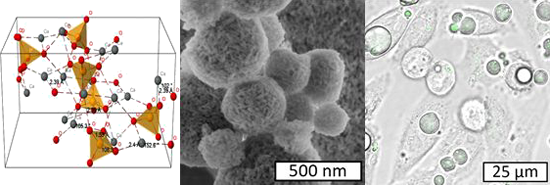
- significantly limits the insight of underlying mechanisms that affect living cells. There is a wide range of available cell lines to study possible organism reactions and cytotoxicity mechanisms, such as endothelial, neural, hepatic, phagocytic or cancer cells [26][27]. Still, systematic studies describing

![[Graphic 1]](/bjnano/content/inline/2190-4286-9-286-i2.svg?max-width=637&scale=1.18182) .
.



Hybrid Au@alendronate nanoparticles as dual chemo-photothermal agent for combined cancer treatment
Beilstein J. Nanotechnol. 2018, 9, 2947–2952, doi:10.3762/bjnano.9.273
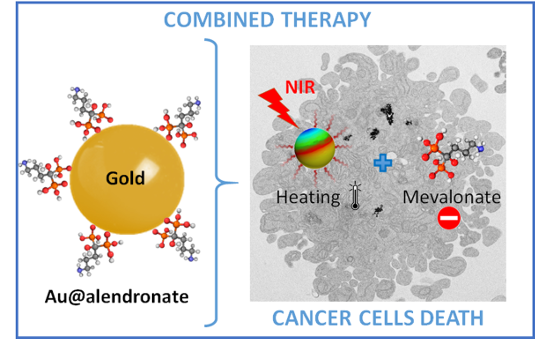
- under irradiation within the first biological window (650–900 nm). The Au@alendronate nanoplatform thus provided a combined antitumor activity through drug delivery and photothermal therapy. Au@alendronate NPs inhibited in vitro the proliferation of prostate cancer cells (PC3) in a dose-dependent manner


Size-selected Fe3O4–Au hybrid nanoparticles for improved magnetism-based theranostics
Beilstein J. Nanotechnol. 2018, 9, 2684–2699, doi:10.3762/bjnano.9.251
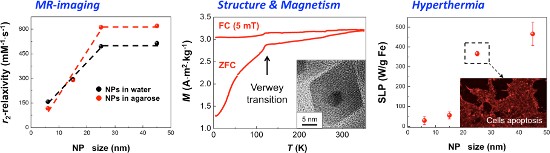
- diameter from 6 to 25 nm. The 25 nm and 44 nm diameter NPs show similar theranostic performance. In in vitro experiments we detected the death of 4T1 mouse breast cancer cells at a rate of 79 ± 8% after exposure to 25 nm Fe3O4–Au hybrids for 30 min in an ac magnetic field (AMF) with 261–393 kHz and 25 mT
- mouse breast cancer cells were purchased from the American Type Culture Collection (ATCC, Manassas, VA, USA). They were cultured in RPMI-1640 medium (Gibco) supplemented with 10% fetal bovine serum (FBS) (Gibco) and 2 mM L-glutamine (Gibco) at 37 °C in a humidified incubator supplied with 5% CO2. MTS


Polarization-dependent strong coupling between silver nanorods and photochromic molecules
Beilstein J. Nanotechnol. 2018, 9, 2657–2664, doi:10.3762/bjnano.9.247
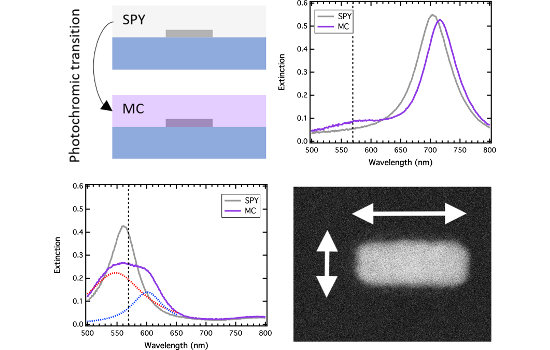
- light emitted by quantum dots or molecules [2][3], and to kill cancer cells [4]. This resonance is directly linked to the intrinsic properties of the metallic nanoparticles (depending on the geometry or the nature of the metal), which makes it difficult to easily control its spectral position. Many

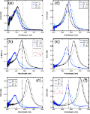


Cytotoxicity of doxorubicin-conjugated poly[N-(2-hydroxypropyl)methacrylamide]-modified γ-Fe2O3 nanoparticles towards human tumor cells
Beilstein J. Nanotechnol. 2018, 9, 2533–2545, doi:10.3762/bjnano.9.236
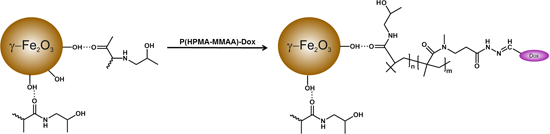
- , biocompatibility, absence of toxicity, minimal immunogenicity, and enhanced permeability and retention to cancer cells [18]. Moreover, PHPMA, which has a long history of biomedical applications as a drug-delivery vehicle, enables the control of biodistribution and accumulation via molecular weight limitations [19


Enhanced antineoplastic/therapeutic efficacy using 5-fluorouracil-loaded calcium phosphate nanoparticles
Beilstein J. Nanotechnol. 2018, 9, 2499–2515, doi:10.3762/bjnano.9.233
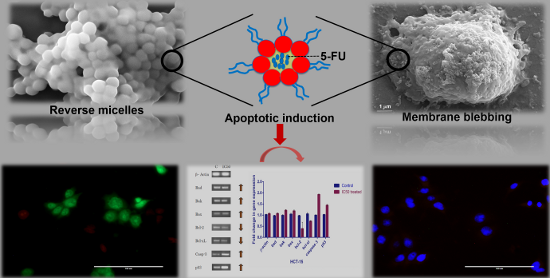
- -transform infrared spectroscopy (FTIR), and X-ray diffraction (XRD). The antineoplastic potential of the CaP@5-FU NPs against colorectal and lung cancer cells was reported. The CaP@5-FU NPs were found to inhibit half the population (IC50) of lung adenocarcinoma (A549) cells at 32 μg/mL and colorectal (HCT
- -15) cancer cells at 48.5 μg/mL treatment. The apoptotic induction of CaP@5-FU NPs was confirmed with acridine orange/ethidium bromide (AO/EB) staining and by examining the morphological changes with Hoechst and rhodamine B staining in a time-dependent manner. The apparent membrane bleb formation was
- inhibit the cancer cells of an oral squamous cell carcinoma (OSCC) mouse xenograft model with increased blood retention time [20]. Furthermore, a poly(amidoamine) (PAMAM) dendrimer stabilized with a silver nanoparticle surface for the encapsulation of 5-FU showed synergistic growth inhibition in A549 and


Fabrication of photothermally active poly(vinyl alcohol) films with gold nanostars for antibacterial applications
Beilstein J. Nanotechnol. 2018, 9, 2040–2048, doi:10.3762/bjnano.9.193
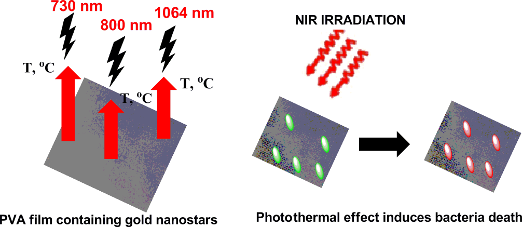
- explored in numerous studies to eradicate cancer cells, controlled drug delivery and enhancement of cell growth [1][2][3][4][5]. Among the many types of such nanoparticles, gold nanostars (GNSs) (having a well-tunable LSPR position in the biotransparent NIR window (750–1300 nm) and ease of surface


Nanocomposites comprised of homogeneously dispersed magnetic iron-oxide nanoparticles and poly(methyl methacrylate)
Beilstein J. Nanotechnol. 2018, 9, 1613–1622, doi:10.3762/bjnano.9.153
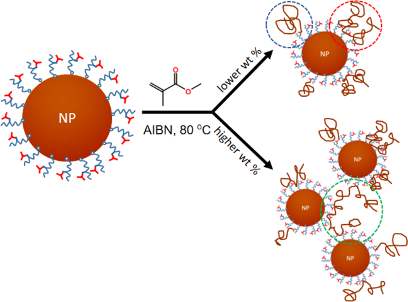
- field amplitudes, the NC3 sample can produce a substantial amount of heat. At a frequency of 620 kHz and a relatively small AC amplitude of 5.0 kA/m (6 mT), the NC3 sample was rapidly heated to temperatures above 43 °C. This temperature is well beyond the temperature causing necrosis of cancer cells


Enzymatically promoted release of organic molecules linked to magnetic nanoparticles
Beilstein J. Nanotechnol. 2018, 9, 986–999, doi:10.3762/bjnano.9.92
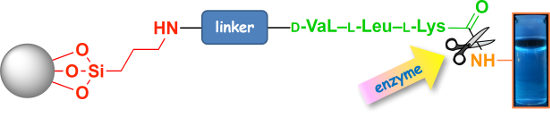
- cancer cells. To achieve selectivity, there are two main strategies. In the first one, the enzyme is exogenous and is artificially introduced into the body and selectively targeted to the tumour tissue using genes, viruses or antibodies (GDEPT, VDEPT, and ADEPT, respectively). Alternatively, the enzyme




Green synthesis of fluorescent carbon dots from spices for in vitro imaging and tumour cell growth inhibition
Beilstein J. Nanotechnol. 2018, 9, 530–544, doi:10.3762/bjnano.9.51
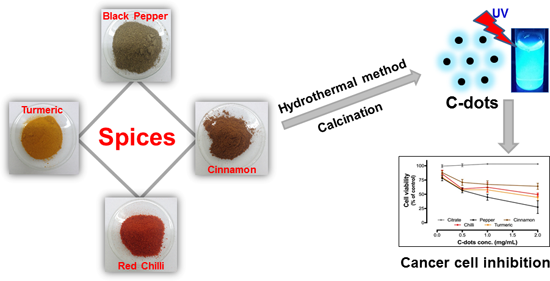
- , TEM and ESI-QTOF-MS. Moreover, their bioimaging potential and toxicity have been evaluated in vitro in human glioblastoma LN-229 cells and in immortalized epithelial human kidney cells (HK-2). The effects on cancer and non-cancer cells have been also compared with C-dots synthesized from citric acid
- toxicity to human cancer cells. The C-dots exhibit an interesting differential cytotoxicity in cancerous and non-cancerous human cells, which should be further explored. This differential cytotoxicity depends from the spice from which the C-dots were synthesized. An evident concentration-dependent
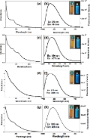
- . Merged transmission and fluorescence (left) and fluorescence (right) imaging of LN-229 cancer cells after 24 h of incubation with no C-dots (untreated) and with 1 mg·mL−1 of citrate, cinnamon, red chilli, turmeric and black pepper C-dots. Images were collected using a Zeiss LSM780 confocal microscope (40


Nanoparticle delivery to metastatic breast cancer cells by nanoengineered mesenchymal stem cells
Beilstein J. Nanotechnol. 2018, 9, 321–332, doi:10.3762/bjnano.9.32
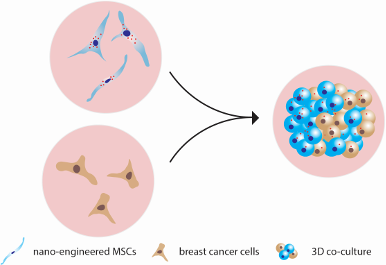
- metastatic breast cancer cell line MDA-MD-231 and primary breast cancer cell line MCF7 to explore the transfer of quantum dots (QDs) to cancer cells. First, the optimal conditions for high-content QD loading in MSCs were established. Then, QD uptake in breast cancer cells was assessed after 24 h in a 3D co
- -culture with nanoengineered MSCs. We found that incubation of MSCs with QDs in a serum-free medium provided the best accumulation results. It was found that 24 h post-labelling QDs were eliminated from MSCs. Our results demonstrate that breast cancer cells efficiently uptake QDs that are released from
- nanoengineered MSCs in a 3D co-culture. Moreover, the uptake is considerably enhanced in metastatic MDA-MB-231 cells compared with MCF7 primary breast cancer cells. Our findings suggest that nanoengineered MSCs could serve as a vehicle for targeted drug delivery to metastatic cancer. Keywords: cancer



Carbon nano-onions as fluorescent on/off modulated nanoprobes for diagnostics
Beilstein J. Nanotechnol. 2017, 8, 1878–1888, doi:10.3762/bjnano.8.188
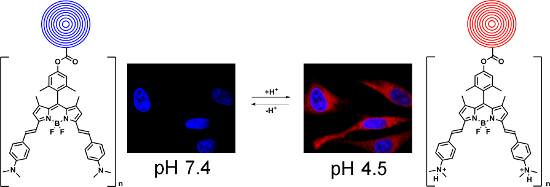
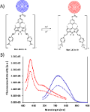
- recent reports have shown that CNOs exhibit weak inflammatory potential and low cytotoxicity [16], and they are readily internalized by cancer cells and localize in the lysosomes [18][19]. Moreover, our in vivo studies performed on zebrafish (Danio Rerio) during the development stage demonstrated their




Optical techniques for cervical neoplasia detection
Beilstein J. Nanotechnol. 2017, 8, 1844–1862, doi:10.3762/bjnano.8.186

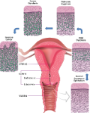
- population in low-income countries. In high-resource settings a regular screening by the cytopathological Pap test is performed for an early detection and prevention of cervical cancer. Cells collected from the external os of the cervix are studied under a microscope. If abnormal cells are detected, further



Synthesis and functionalization of NaGdF4:Yb,Er@NaGdF4 core–shell nanoparticles for possible application as multimodal contrast agents
Beilstein J. Nanotechnol. 2017, 8, 1815–1824, doi:10.3762/bjnano.8.183
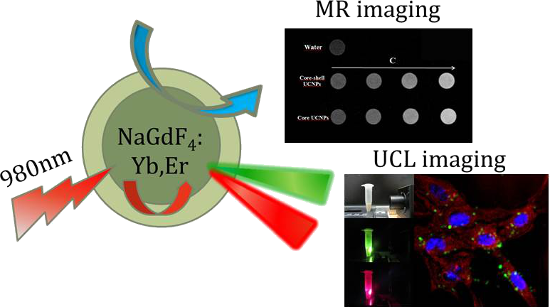
- still no information has been presented about uptake of these nanoparticles into different types of cancer cells [22]. Although different gadolinium chelates are widely used in clinics as contrast agents for magnetic resonance imaging (MRI), the literature for the last two years shows increased
- (UC) emission intensity of Tween 80-coated nanoparticles in comparison with oleic acid coated UCNPs. In addition, the nonspecific uptake and distribution of non-targeted Tween 80-coated UCNPs in human MCF-7 and MDB-MA-231 breast cancer cells was visualized by using confocal fluorescence microscopy
- were studied to evaluate their application to biological imaging using MDA-MB-231 breast cancer cells. The confocal image of MDA-MB-231 breast cancer cells after 24 h incubation with UCNPs is shown in Figure 6A. The scatter of excitation light by intracellular cell structures was marked with red color


Methionine-mediated synthesis of magnetic nanoparticles and functionalization with gold quantum dots for theranostic applications
Beilstein J. Nanotechnol. 2017, 8, 1734–1741, doi:10.3762/bjnano.8.174
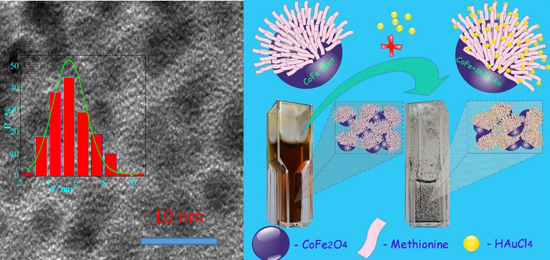
- nanomedicine, biocompatible iron oxide-based NPs have attracted particular interest due to their size-dependent magnetic, optical and chemical properties that allow for the design of NPs for multimodal imaging and photothermal therapy of cancer cells [1]. Dual-imaging probes, capable to perform simultaneously


Uptake and intracellular accumulation of diamond nanoparticles – a metabolic and cytotoxic study
Beilstein J. Nanotechnol. 2017, 8, 1649–1657, doi:10.3762/bjnano.8.165
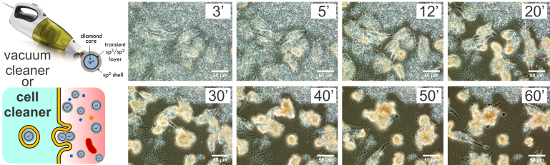
- impaired the radio-resistance of cancer cells and potentiated radiation-caused DNA damage and the generation of cytotoxic reactive oxygen species [47]. Thus, the positive charge of our as-received DNDs could, at least partly, explain their more pronounced cytotoxic effect than that observed in negatively


Development of polycationic amphiphilic cyclodextrin nanoparticles for anticancer drug delivery
Beilstein J. Nanotechnol. 2017, 8, 1457–1468, doi:10.3762/bjnano.8.145
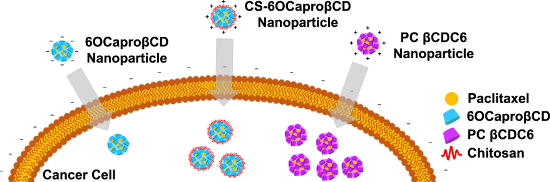
- bioactive cationic polysaccharide derived from deacetylation of chitin and is well-characterized for its mucosal penetration enhancer property and apoptotic activity against cancer cells [42]. To alter the surface charge of nanomaterials, chitosan can be used as coating material in nanoparticles [43][44
- their drug encapsulation, release profile and anticancer activity on MCF-7 human breast cancer cell line in particular. Safety and apoptotic efficacy of blank and PCX-loaded cationic or anionic amphiphilic CD nanoparticles were evaluated with cell culture studies against a series of healthy and cancer
- cells. The amphiphilic, cationic PC βCDC6 derivative was used as the anticancer drug carrier delivery system for PCX for the first time in this study. There are various studies in which this derivative is used as a gene transfer delivery system; however, there is only example where this derivative was


Cationic PEGylated polycaprolactone nanoparticles carrying post-operation docetaxel for glioma treatment
Beilstein J. Nanotechnol. 2017, 8, 1446–1456, doi:10.3762/bjnano.8.144
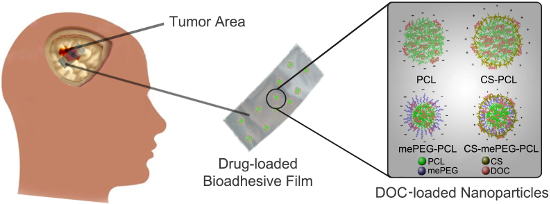
- that active targeted PEG/PCL nanoparticles enhanced tumor penetration [22]. Besides that, Ungaro et al. obtained docetaxel-loaded core–shell PEO/PCL nanoassemblies for passive targeting of the anticancer drug to cancer cells. Their results showed that docetaxel-loaded PEO/PCL nanoparticles were more
- effective on growth inhibition of breast and prostate cancer cells when compared to free docetaxel [23]. Core–shell nanoparticles are also used as non-viral vectors for the treatment of glioma. Zamora et al. prepared photochemical internalization mediated polyamine core–shell nanoparticles for tumor
- of the tumor by killing cancer cells in surrounding tissues. Results and Discussion Pre-formulation studies Pre-formulation studies were evaluated to select optimal nanoparticle formulations. Particle size, polydispersity index and surface charge are known to be critical parameters that significantly




Carbon nanomaterials sensitize prostate cancer cells to docetaxel and mitomycin C via induction of apoptosis and inhibition of proliferation
Beilstein J. Nanotechnol. 2017, 8, 1307–1317, doi:10.3762/bjnano.8.132
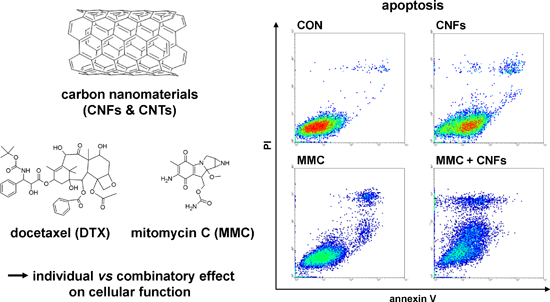
- in combination with DTX and MMC evoked additive to partly synergistic anti-tumor effects. CNFs and CNTs possess the ability to sensitize cancer cells to a wide range of structurally diverse chemotherapeutics and thus represent an interesting option for the development of multimodal cancer therapies
- . Co-administration of chemotherapeutics with carbon nanomaterials could result in a reduction of the chemotherapeutic dosage and thus limit systemic side effects. Keywords: carbon nanomaterials; chemosensitization; docetaxel; mitomycin C; prostate cancer cells; Introduction According to the global
- that CNTs can be charged with chemotherapeutics, which can eventually be released from the CNT carrier and thus exert anti-proliferative effects on cancer cells in vitro and in vivo [13][14][15][16][17][18][19][20][21][22]. Carbon nanomaterials can also augment the cell-damaging effects of conventional