


Search results
Search for "cantilever" in Full Text gives 315 result(s) in Beilstein Journal of Nanotechnology. Showing first 200.
Direct observation of the CVD growth of monolayer MoS2 using in situ optical spectroscopy
Beilstein J. Nanotechnol. 2019, 10, 557–564, doi:10.3762/bjnano.10.57
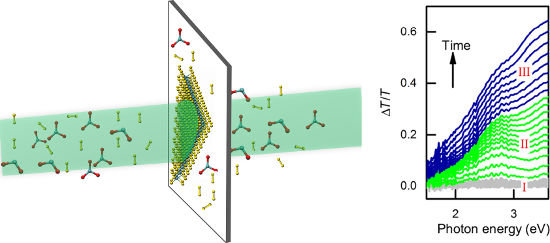
- situ using atomic force microscopy (Veeco Dimensions S3100) in tapping mode. A soft cantilever (TipsNano) was employed. The Raman and PL spectra spectra of the MoS2 thin films were collected using a JY Horiba LabRAM Aramis VIS microscope with an excitation wavelength of 532 nm. Measurements were


Mechanical and thermodynamic properties of Aβ42, Aβ40, and α-synuclein fibrils: a coarse-grained method to complement experimental studies
Beilstein J. Nanotechnol. 2019, 10, 500–513, doi:10.3762/bjnano.10.51
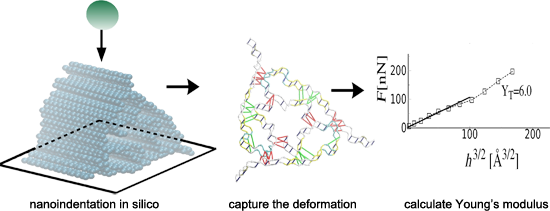
- contact area, which will be the arc region that forms in contact with the sphere. In considering other shapes for the cantilever tip, such as conical or flat punch, the impact of the anisotropy is expected to be much higher [16]. Nonetheless, to our knowledge the exact shape of the cantilever tip cannot
- range of applications of AFM technique span from biomolecules to single cells [31][56][57]. The AFM nanoindentation force–distance curves typically depend on the correct determination of the cantilever stiffness and only measurements of biological fibrils located at the centre of the fibril are
- considered. The former refers to the way that the indentation load is measured by the deflection of the AFM cantilever. The latter is an assumption of the semi-infinite half-space approximation. Once the AFM data is obtained, it requires interpretation by using a contact mechanics theory. There is no


Advanced scanning probe lithography using anatase-to-rutile transition to create localized TiO2 nanorods
Beilstein J. Nanotechnol. 2019, 10, 412–418, doi:10.3762/bjnano.10.40
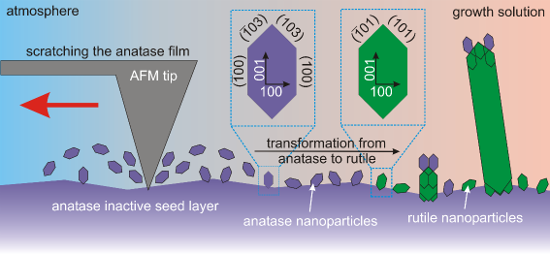
- cantilever arrays [47]. Besides these technically challenges, there are some clear advantages of this method. First, it works under ambient conditions, and the setup is inexpensive compared to electron-beam lithography. Nevertheless, the resolution is roughly of the same order of magnitude. Second, it is a


A comparison of tarsal morphology and traction force in the two burying beetles Nicrophorus nepalensis and Nicrophorus vespilloides (Coleoptera, Silphidae)
Beilstein J. Nanotechnol. 2019, 10, 47–61, doi:10.3762/bjnano.10.5
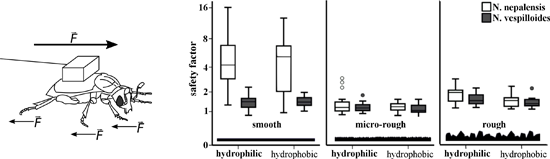
- (CSM Instruments, Peseux, Switzerland) equipped with a dual-beam cantilever STH-001 as previously described [19]. This cantilever features a highly sensitive dual-beam spring able to measure forces in the x-direction (Ft, stiffness = 4.8139 mN/µm) and z-direction (Fn, stiffness = 0.5122 mN/µm) with a



Bidirectional biomimetic flow sensing with antiparallel and curved artificial hair sensors
Beilstein J. Nanotechnol. 2019, 10, 32–46, doi:10.3762/bjnano.10.4
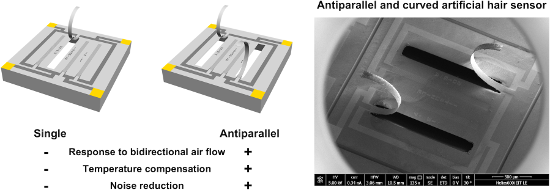
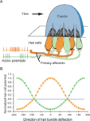
- stimuli. Inspired by the neuromasts found in the lateral line of fish, we present a novel flow sensor design based on two curved cantilevers with bending orientation antiparallel to each other. Antiparallel cantilever pairs were designed, fabricated and compared to a single cantilever based hair sensor in
- terms of sensitivity to temperature changes and their response to changes in relative air flow direction. Results: In bidirectional air flow, antiparallel cantilever pairs exhibit an axially symmetrical sensitivity between 40 μV/(m s−1) for the lower air flow velocity range (between ±10–20 m s−1) and 80
- μV/(m s−1) for a higher air flow velocity range (between ±20–32 m s−1). The antiparallel cantilever design improves directional sensitivity and provides a sinusoidal response to flow angle. In forward flow, the single sensor reaches its saturation limitation, flattening at 67% of the ideal sinusoidal


Electrostatic force microscopy for the accurate characterization of interphases in nanocomposites
Beilstein J. Nanotechnol. 2018, 9, 2999–3012, doi:10.3762/bjnano.9.279
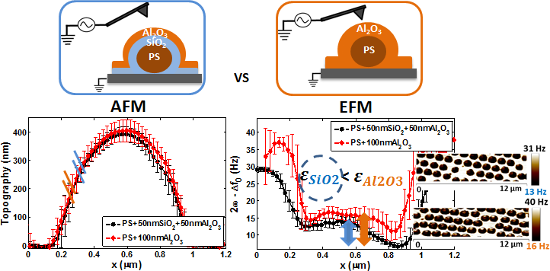
- AFM (Bruker, previously Veeco, EnviroscopeTM). The probe consisted of a metal covered tip (µmasch: HQ:NSC18/Pt) supported by a cantilever electrically connected to a metallic sample holder and biased at an electrical potential. AC-biased EFM (ω = 100π rad) was employed in the double-pass configuration
- shifts Δf0 were extracted during the second scan by maintaining the phase shift constant throughout the modification of the cantilever exciting frequency. In the linear regime, Δf0 and G are related by the following equation [58]: Basically, the G2ω component was measured using an access module with a




Investigation of CVD graphene as-grown on Cu foil using simultaneous scanning tunneling/atomic force microscopy
Beilstein J. Nanotechnol. 2018, 9, 2953–2959, doi:10.3762/bjnano.9.274
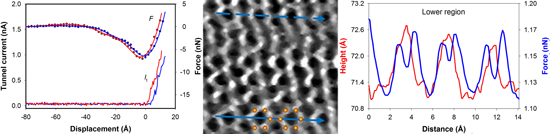
- –tip preparation. The main chamber is pumped with a combination of an ion getter pump, titanium sublimation pump and a turbomolecular pump backed with a double-stage rotary pump. A base pressure of about 10−10 mbar is achievable by baking out the chamber. The oscillation amplitude of the cantilever
- taken on several samples showed the presence of dominantly single-layer graphene [36]. Results and Discussion We used a custom-made tungsten tip–cantilever probe [32] the stiffness of which was estimated from thermal oscillations to be about 53 N/m. The simultaneously acquired STM topography and force
- tunneling current. In our simultaneous STM/AFM experiments, we used the tunnel current to control the tip–surface distance. Evidently, tunnel currents as small as 0.1–0.2 nA keep the interaction beyond the minimum of the force curve. Another set of simultaneous scans obtained using the same W cantilever at


In situ characterization of nanoscale contaminations adsorbed in air using atomic force microscopy
Beilstein J. Nanotechnol. 2018, 9, 2925–2935, doi:10.3762/bjnano.9.271
- to access the state of contamination of real surfaces under ambient conditions using advanced atomic force microscopy techniques. Keywords: atomic force microscopy; cantilever; contact potential; electrostatic forces; force spectroscopy; Hamaker constant; Kelvin probe microscopy; surface
- of contamination as the rest of the cantilever and as the chip onto which the tip and cantilever are attached. Second, we will assume that by precisely measuring the tip–sample interaction we can infer properties related to the surface energy as well as the contact potential, which allows one to
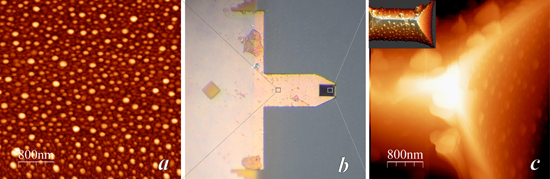
- access the chemistry of the tip–sample system. Results and Discussion Topographic imaging of the tip and the flat part of a cantilever Figure 1 shows images where the lower side of the cantilever, that is, the side with the sensing tip, has been used as the sample. As discussed below, tip imaging can be


Charged particle single nanometre manufacturing
Beilstein J. Nanotechnol. 2018, 9, 2855–2882, doi:10.3762/bjnano.9.266
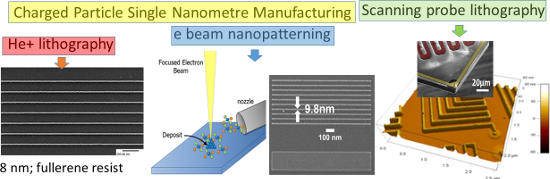
- techniques of atomic force microscopy (AFM) and scanning tunneling microscopy (STM). In both cases, a probe is scanned over a sample and the interaction is used to study the sample properties. For AFM, the atomic force between a sharp tip at the end of a cantilever beam and the sample surface is measured by
- read-out of the cantilever bending. The STM uses the tunneling current between a tip and the surface to obtain information about the sample surface [106][107]. Scanning probe nanolithography uses the interaction of such a tip with the sample to nanostructure its surface. For the purpose of this review
- in turn depends on the distance between tip and sample. The hybrid STM/AFM system from Quate et al. [145] uses two simultaneously operating feedback loops: one to keep the tip–sample distance constant by measuring the cantilever deflection and adjusting the z-position of the scanner, and the second


Characterization of the microscopic tribological properties of sandfish (Scincus scincus) scales by atomic force microscopy
Beilstein J. Nanotechnol. 2018, 9, 2618–2627, doi:10.3762/bjnano.9.243
- 4a reviews three arbitrarily chosen force-vs-distance curves obtained with a sand probe, spherical probe and sharp tip. All curves feature a typical shape [23]. During the approach of the cantilever towards the sample (trace) the tip–sample force is almost zero and shows a small negative peak when
- aim to scratch the surface of the samples. To achieve such a large normal load, we utilized cantilevers with a nominal spring constants of 40 N/m. To avoid that tip wear influences the scratching tests, we started every experiment with a fresh cantilever with a pristine tip. On each sample, we
- left to right and top to bottom). The deflection sensitivity (Sver) varied for every pristine cantilever used for each sample. This effect causes a slight difference on normal load on each sample because we had to increase the loading force in voltage steps (Fload = cz·Sver·(Usetpoint − Udis)). The


Effective sensor properties and sensitivity considerations of a dynamic co-resonantly coupled cantilever sensor
Beilstein J. Nanotechnol. 2018, 9, 2546–2560, doi:10.3762/bjnano.9.237
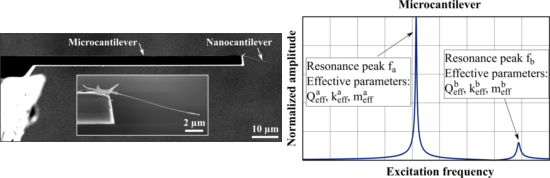
- Julia Korner University of Utah, 50 S. Central Campus Dr #2110, Salt Lake City, Utah, 84112, USA 10.3762/bjnano.9.237 Abstract Background: Co-resonant coupling of a micro- and a nanocantilever can be introduced to significantly enhance the sensitivity of dynamic-mode cantilever sensors while
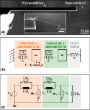
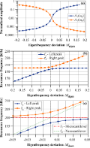
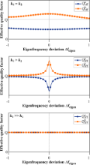
- and the degree of frequency matching. Consequently, while an individual cantilever is characterized by its eigenfrequency, spring constant, effective mass and quality factor, the resonance peaks of the co-resonantly coupled system can be described by effective properties which are a mixture of both
- -resonant system’s effective properties. While the effective spring constant and effective mass mainly define the sensitivity of the coupled cantilever sensor, the effective quality factor primarily influences the detectability. Hence, a balance has to be found in optimizing both parameters in sensor design


![[Graphic 7]](/bjnano/content/inline/2190-4286-9-237-i43.svg?max-width=637&scale=1.18182) ...
...


Nanoscale characterization of the temporary adhesive of the sea urchin Paracentrotus lividus
Beilstein J. Nanotechnol. 2018, 9, 2277–2286, doi:10.3762/bjnano.9.212
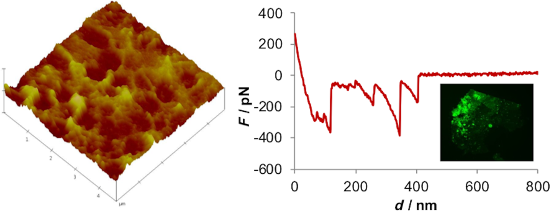
- . lividus could be easily collected on mica (Figure 1a,b) and subsequently located using an optical microscope to be precisely positioned beneath the AFM cantilever (Figure 1c). The diameter of the adhesive footprints roughly corresponded to the size of the tube feet discs (±1 mm). The thickness of the
- silicon nitride cantilever with a silicon tip (SNL, Bruker) with a spring constant of 0.12 N/m. All of the above-mentioned probes were calibrated on a stiff sample, to access tip deflection sensitivity, followed by thermal tuning to determine the spring constant. At least five sea urchin adhesive
- ×) illustrating the positioning of the moist adhesive footprint (indicated by the arrow) beneath the triangular-shaped AFM cantilever. Peak force tapping AFM (PFT-AFM) image (a) and height profile (b) of Paracentrotus lividus moist footprints at the edge of the adhesive material. Image obtained with a ScanAsyst


The structural and chemical basis of temporary adhesion in the sea star Asterina gibbosa
Beilstein J. Nanotechnol. 2018, 9, 2071–2086, doi:10.3762/bjnano.9.196
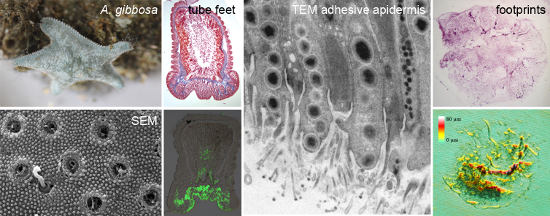
- (Bruker Nano Inc., Santa Barbara, CA) using AFM in tapping mode. Tapping mode AFM was performed in amplitude modulation mode. The height of the cantilever position is constantly adjusted (via a feedback loop) to keep constant the ratio of the tip vibrational amplitude in contact with the sample surface to


A variable probe pitch micro-Hall effect method
Beilstein J. Nanotechnol. 2018, 9, 2032–2039, doi:10.3762/bjnano.9.192
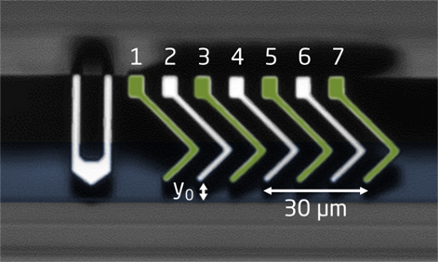
- microHall-A300 tool from CAPRES A/S and an M7PP with an electrode pitch of 10 μm. The M7PP used consisted of nickel-coated poly-silicon cantilever electrodes extending from the edge of a silicon die. A magnetic field with the flux density Bz = 600 mT was applied perpendicular to a boron-doped (1015 cm−2


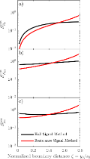
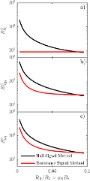
![[Graphic 11]](/bjnano/content/inline/2190-4286-9-192-i25.svg?max-width=637&scale=1.18182) for a) R0, b) NHS and c) μH when in- and off-line errors are present during ...
for a) R0, b) NHS and c) μH when in- and off-line errors are present during ...

![[Graphic 15]](/bjnano/content/inline/2190-4286-9-192-i29.svg?max-width=637&scale=1.18182) for the sheet resistance, Hall mobility and Hall sheet carrier density, due ...
for the sheet resistance, Hall mobility and Hall sheet carrier density, due ...
Nonlinear effect of carrier drift on the performance of an n-type ZnO nanowire nanogenerator by coupling piezoelectric effect and semiconduction
Beilstein J. Nanotechnol. 2018, 9, 1917–1925, doi:10.3762/bjnano.9.183
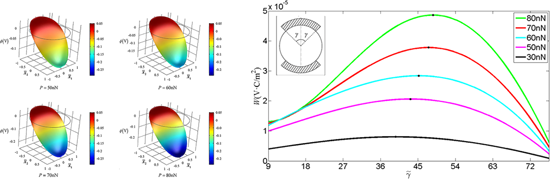
- results are useful in the design of piezotronics and piezo-phototropic devices and the corresponding applications. A circular ZNW cantilever exposed to a force P at the free end. Nonlinearity as a result of carrier drift for n0 = 1.0·1023m−3 as a function of the end force P. a) P = 0.7, 1.5, 3.0, 5.0 and


![[Graphic 46]](/bjnano/content/inline/2190-4286-9-183-i59.svg?max-width=637&scale=1.18182) and (b) boundary electric displacement Dr at Ω for different end f...
and (b) boundary electric displacement Dr at Ω for different end f...


Quantitative comparison of wideband low-latency phase-locked loop circuit designs for high-speed frequency modulation atomic force microscopy
Beilstein J. Nanotechnol. 2018, 9, 1844–1855, doi:10.3762/bjnano.9.176
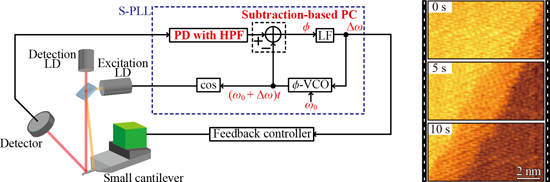
- improvements in bandwidth or resonance frequency of all of the components constituting the tip–sample distance regulation loop, such as the cantilever, cantilever excitation unit, cantilever deflection sensor, scanner, feedback controller, and phase-locked loop (PLL) circuit. In particular, the PLL circuit is
- (TDS2002B, Tektronix). The experimental data presented below in Figure 7 and Figure 8 were obtained using a standard-size cantilever (NCH, Nanoworld; f0 = 151.46 kHz, k = 41.3 N/m and Q = 9) and an ultra-short cantilever (USC, Nanoworld; f0 = 3.44 MHz, k = 59.9 N/m and Q = 7). The cantilever vibrations were
- -speed FM-AFM imaging was performed in the deposited water using an AC55 (Olympus) cantilever (f0 = 1.53 MHz, Δf = 1.6 kHz, A = 0.1 nm). The cantilever vibrations were excited and detected using the same setups that were employed for the PLL performance measurements. For the high-speed operation of the



Know your full potential: Quantitative Kelvin probe force microscopy on nanoscale electrical devices
Beilstein J. Nanotechnol. 2018, 9, 1809–1819, doi:10.3762/bjnano.9.172
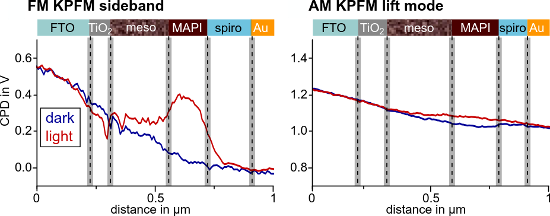
- experimental setup are given in the figure caption and in [7]. The FM- and AM-KPFM data was collected in subsequent measurements with the same cantilever on the same solar cell cross section. However, the resolved potential distributions differed significantly. In dark, the potential drop from FTO to gold
- . Since the invention of KPFM, a vast number of studies have investigated differences in lateral and voltage resolution of AM and FM methods. Polak et al. have investigated, how AC coupling between excitation and cantilever deflection signal affects the measured potentials in AM-KPFM [16]. Generally, FM
- -KPFM is less affected by AC crosstalk artefacts, as excitation and detection are performed at different frequencies. Other influences that have been investigated were the cantilever orientation with respect to a structured sample [17], the tip–sample distance [17][18][19][20], topographic or capacitive


Direct AFM-based nanoscale mapping and tomography of open-circuit voltages for photovoltaics
Beilstein J. Nanotechnol. 2018, 9, 1802–1808, doi:10.3762/bjnano.9.171
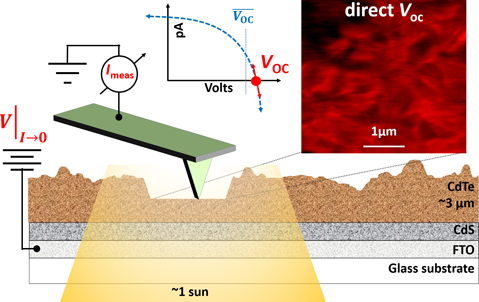
- underpins nearly all AFM topography imaging. Normally, this feedback loop continually updates the AFM probe height in order to maintain a constant AFM tip–sample interaction, which is sensed via the integrated cantilever deflection or amplitude that, of course, changes at surface protrusions or depressions
- secondary PID loop varies the sample bias to maintain a fixed cantilever amplitude, phase, or frequency. The capacitive and/or coulombic interactions that perturb these signals null when the probe bias equals the ensemble specimen voltage beneath the tip, providing a directly measured map of local surface


Multimodal noncontact atomic force microscopy and Kelvin probe force microscopy investigations of organolead tribromide perovskite single crystals
Beilstein J. Nanotechnol. 2018, 9, 1695–1704, doi:10.3762/bjnano.9.161
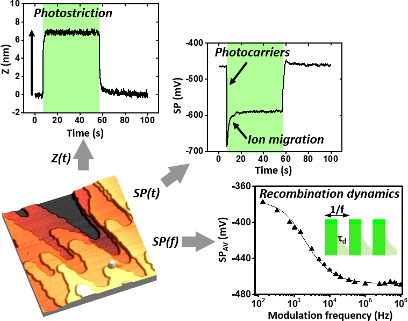
- by AFM under illumination originate mainly from the intrinsic material deformation [16]. More precisely, thanks to a rigorous experimental protocol, they demonstrated that it is possible to discriminate between the intrinsic material deformation and the extrinsic effects related to the AFM cantilever
- of nanometers. KPFM measurements were carried out in single-pass mode under frequency modulation (FM-KPFM) with the modulation bias, VAC (typically 0.5 V peak-to-peak at 1200 Hz), and the compensation voltage, VDC, applied to the cantilever (tip bias Vtip = VDC). The contact potential difference (CPD
- our measurement) and does not scale with the illumination time. Consistent with the conclusions of the former work by Zhou et al. [16], this strongly supports the idea that the “fast” cantilever height photoresponse originates from an intrinsic photostriction effect (and not from a thermally induced


Toward the use of CVD-grown MoS2 nanosheets as field-emission source
Beilstein J. Nanotechnol. 2018, 9, 1686–1694, doi:10.3762/bjnano.9.160
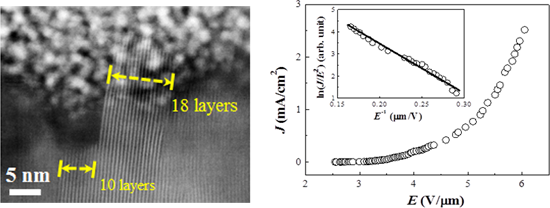
- energy-dispersive spectroscopy (EDS) detector) operating at 200 kV for imaging and elemental characterization. Roughness and topography of the as-grown MoS2 NSs (before transfer) were examined by atomic force microscope (AFM). The AFM scans were recorded in resonant mode (AppNanoTM made cantilever with



Friction force microscopy of tribochemistry and interfacial ageing for the SiOx/Si/Au system
Beilstein J. Nanotechnol. 2018, 9, 1647–1658, doi:10.3762/bjnano.9.157
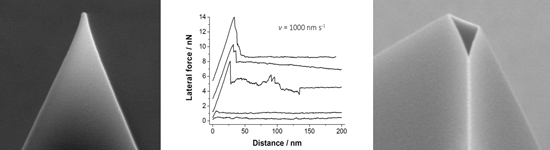
- ultra-sharp tip is scanned across the surface line by line probing a square frame. Lateral forces acting on the sliding contact are determined as deflection of a cantilever spring holding the tip. Single-asperity contact ageing between silica tip and surface has been directly observed in ambient
- (H21D; Epoxy Technology, Inc., USA) to a metal tip holder. In order to remove water and physisorbed hydrocarbons, holder and cantilever were transferred into the preparation chamber of an ultrahigh vacuum system (p = 10−10 mbar) and heated to 120 °C for several hours until the pressure had stabilized
- . The holder was then transferred into the measurement chamber with the FFM experiment. Normal and lateral spring constant of each cantilever were calculated from the resonance frequency and the dimensions of cantilevers and tips. The tip height was assessed individually from SEM images of the




Correlative electrochemical strain and scanning electron microscopy for local characterization of the solid state electrolyte Li1.3Al0.3Ti1.7(PO4)3
Beilstein J. Nanotechnol. 2018, 9, 1564–1572, doi:10.3762/bjnano.9.148
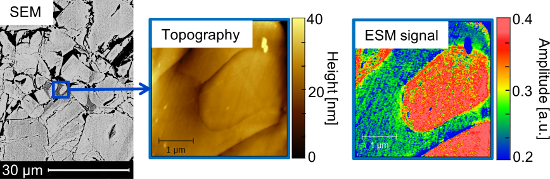
- ]. Further information on how to connect this instrument to a Bruker Dimension Icon AFM is described in [35]. The applied AC frequency must match the contact resonance frequency of the cantilever used, and is exactly given in the respective figure caption. To ensure a stable tip–sample interaction, a slow


Electrostatically actuated encased cantilevers
Beilstein J. Nanotechnol. 2018, 9, 1381–1389, doi:10.3762/bjnano.9.130
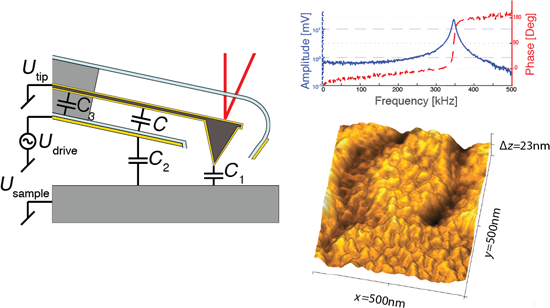
- Background: Encased cantilevers are novel force sensors that overcome major limitations of liquid scanning probe microscopy. By trapping air inside an encasement around the cantilever, they provide low damping and maintain high resonance frequencies for exquisitely low tip–sample interaction forces even when
- actuating the cantilever results in a frequency response free of spurious peaks. We analyze static, harmonic, and sub-harmonic actuation modes. Sub-harmonic mode results in stable amplitudes unaffected by potential offsets or fluctuations of the electrical surface potential. We present a simple plate
- , or vacuum environments. Keywords: amplitude calibration; atomic force microscopy; electrostatic excitation; encased cantilevers; liquid AFM; Introduction Dynamic atomic force microscopy requires excitation of the cantilever oscillation. Most commonly, this is achieved using a dither piezo built




Chemistry for electron-induced nanofabrication
Beilstein J. Nanotechnol. 2018, 9, 1317–1320, doi:10.3762/bjnano.9.124

- precursor, thus highlighting the importance of the actual chemical nature of the substrate [31]. This Thematic Series is completed by publications on interesting applications of FEBID. This concerns the fabrication and characterization of magnetic cobalt nanospheres on cantilever tips for magnetic resonance
Artifacts in time-resolved Kelvin probe force microscopy
Beilstein J. Nanotechnol. 2018, 9, 1272–1281, doi:10.3762/bjnano.9.119
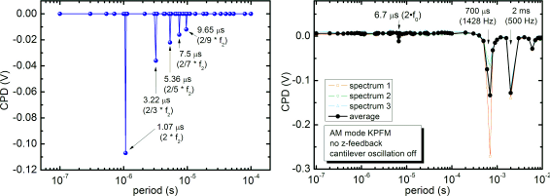
- potential, which contains information about the involved charge carrier dynamics. Here, we show that such measurements are prone to artifacts due to frequency mixing, by performing numerical dynamics simulations of the cantilever oscillation in KPFM subjected to a bias-modulated signal. For square bias
- match the results of the numerical dynamics simulations. Small differences are observed that can be attributed to transients and higher-order Fourier components, as a consequence of the intricate nature of the cantilever driving forces. These results are corroborated by experimental measurements on a
- model system. In the experimental case, additional artifacts are observed due to constructive or destructive interference of the bias modulation with the cantilever oscillation. Also, in the case of light modulation, we demonstrate artifacts due to unwanted illumination of the photodetector of the beam





