Search results
Search for "copper" in Full Text gives 577 result(s) in Beilstein Journal of Nanotechnology. Showing first 200.
Batch preparation of nanofibers containing nanoparticles by an electrospinning device with multiple air inlets
Beilstein J. Nanotechnol. 2023, 14, 141–150, doi:10.3762/bjnano.14.15
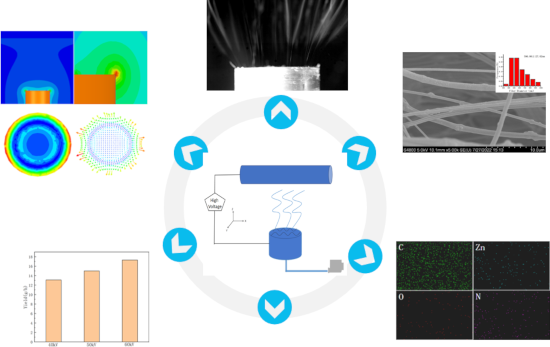
- has become a research hotspot. As the distribution uniformity of nanoparticles in functional nanofibers has a great impact on their performance, an electrospinning device with multiple air inlets, which has a copper porous spinneret, is proposed to obtain functional nanofibers with higher yield and
- , 50, and 60 kV). A simplified 3D model of the porous copper spinneret with a diameter of 70 mm and a height of 45 mm is shown in Figure 1b. Ten holes with a diameter of 2 mm were drilled into the spinneret. The specific simulation parameters were as follows: The conductivity of copper was 5.8 × 10¹¹
- direction, the electric field intensity dropped at 5 mm, which was caused by a round hole with a radius of 1 mm. At 20 mm, the electric field intensity increased greatly due to the boundary between the middle circular platform and the groove, where one side was a copper conductor and the other side was the


Antimicrobial and mechanical properties of functionalized textile by nanoarchitectured photoinduced Ag@polymer coating
Beilstein J. Nanotechnol. 2023, 14, 95–109, doi:10.3762/bjnano.14.11
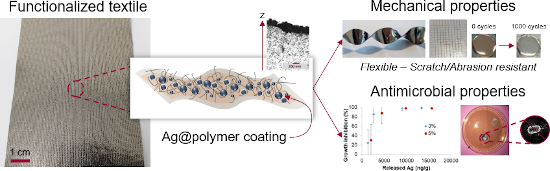
- the outer cell membrane and as such, are less likely to prompt resistance in microorganisms. In addition, their tunable sizes, shapes, and high surface area-to-mass ratio offer increased interactions with cells [8]. The prevalent MNPs used today as antimicrobial agents are copper [9] (or copper oxide



Solvent-induced assembly of mono- and divalent silica nanoparticles
Beilstein J. Nanotechnol. 2023, 14, 52–60, doi:10.3762/bjnano.14.6
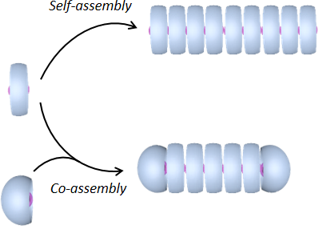
- . Characterization methods Transmission electron microscopy experiments were performed using a Hitachi H600 microscope operating at an acceleration voltage of 75 kV. The samples were prepared by depositing one drop of the colloidal dispersion on conventional carbon-coated copper grids. The liquid evaporated in the


Electrical and optical enhancement of ITO/Mo bilayer thin films via laser annealing
Beilstein J. Nanotechnol. 2022, 13, 1589–1595, doi:10.3762/bjnano.13.133
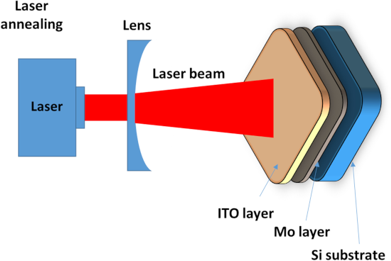
- significantly improve the electrical properties without affecting the optical transmission [9]. Several metals have been used for such thin layers, including silver [10], aluminium [11], copper [12], and gold [13]. Molybdenum thin films are another choice for the application in solar cells because of good


From a free electron gas to confined states: A mixed island of PTCDA and copper phthalocyanine on Ag(111)
Beilstein J. Nanotechnol. 2022, 13, 1572–1577, doi:10.3762/bjnano.13.131
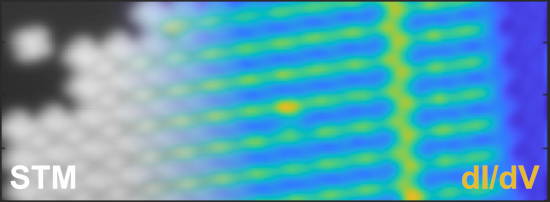
- gas (2DEG). We investigated mixed islands of PTCDA and copper phthalocyanine (CuPc) to study the change in the electronic state with the addition of an electron donor. We no longer observe a 2DEG state and instead identify states at 0.46 and 0.79 V. While one state appears in dI/dV images as an array
- of one-dimensional quantum wells, our analysis shows that this state does not act as a free electron gas and that the features are instead localized above individual PTCDA molecules. Keywords: AFM; copper phthalocyanine; dI/dV; PTCDA; STM; Introduction Organic semiconductor devices typically
- Information File 1. A natural complement to PTCDA is copper phthalocyanine (CuPc) for several reasons: First, CuPc and PTCDA together can form an organic light-emitting diode with PTCDA as the acceptor [14]. Second, CuPc [15] and PTCDA both lie flat on metal surfaces at submonolayer coverage, enabling high


Facile preparation of Au- and BODIPY-grafted lipid nanoparticles for synergized photothermal therapy
Beilstein J. Nanotechnol. 2022, 13, 1432–1444, doi:10.3762/bjnano.13.118
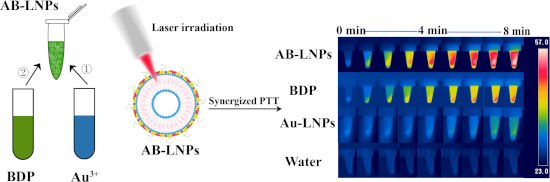
- determined and calculated using the following formula: The morphology of AB-LNPs was obtained on a Hitachi HT7700 transmission electron microscope (TEM, Hitachi, Japan). AB-LNPs were diluted and plated on a carbon-coated copper grid. The stability of AB-LNPs The stability of AB-LNPs was studied by measuring




Straight roads into nowhere – obvious and not-so-obvious biological models for ferrophobic surfaces
Beilstein J. Nanotechnol. 2022, 13, 1345–1360, doi:10.3762/bjnano.13.111
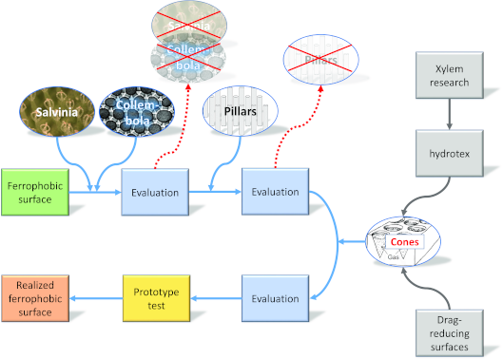
- is described that started with a posed technical problem for which seemingly obvious biological models exist. The technical problem was to devise a ferrophobic surface that prevents the contact between the copper surface of a tuyère (a water cooled aeration pipe within a blast furnace) and liquid
- able to create stable air bodies, which support the refilling of embolised conduits. By adopting the shape of these micropores, a successful prototype for a ferrophobic copper surface repelling liquid iron could be devised. This case study illustrates that straight road maps from technical problems to
- a water-cooled copper surface, an application whose technical demands are extremely far away from the conditions of organismic functions. The aim of this contribution is to provide a case study from the biomimetic practice, representing an in-depth history of a biomimetic project. This history is


Near-infrared photoactive Ag-Zn-Ga-S-Se quantum dots for high-performance quantum dot-sensitized solar cells
Beilstein J. Nanotechnol. 2022, 13, 1337–1344, doi:10.3762/bjnano.13.110
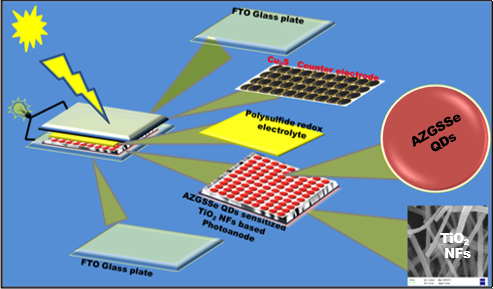
- (GaCl3), sulfur powder (S), 1-dodecanethiol (DDTh), ʟ-cysteine, copper(II) chloride, polyvinylidene fluoride (PVDF), titanium isisopropoxide (TIP), glycerol, oleylamine (OAM), titanium tetrachloride (TiCl4), N-methyl-2-pyrrolidine (NMP), chloroform, acetonitrile, ethanol, and methanol were purchased from
- [2][19][20]. Hence, in this work Cu2S was chosen as the CE material. The CE was fabricated as described in [8]. At first, Cu2S NPs were prepared by a hydrothermal method using ʟ-cysteine and copper(II) chloride. Then the Cu2S paste containing 95% of Cu2S and 5% of PVdF in NMP was coated onto FTO


Studies of probe tip materials by atomic force microscopy: a review
Beilstein J. Nanotechnol. 2022, 13, 1256–1267, doi:10.3762/bjnano.13.104
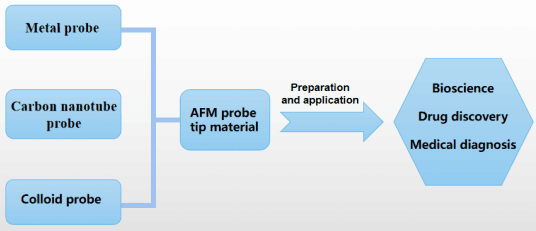
- , such as copper, silver, platinum, etc. Thus, it is also possible to prepare electrochemical colloidal probes (eCPs) with other metals. eCPs under electrochemical control of colloidal probes have potential in various research areas such as adhesion science, tribology or long-range interactions. eCPs
A cantilever-based, ultrahigh-vacuum, low-temperature scanning probe instrument for multidimensional scanning force microscopy
Beilstein J. Nanotechnol. 2022, 13, 1120–1140, doi:10.3762/bjnano.13.95
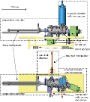
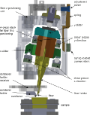
- nitrogen (LN2) container and an additional heat shield, which is passively cooled by the evaporating He gases of the LHe tank (Figure 2a). The microscope is surrounded by two shields (a Au-plated oxygen-free high thermal conductivity (OFHC) copper LHe shield and an Al LN2 shield) of which there is an inner






Recent advances in green carbon dots (2015–2022): synthesis, metal ion sensing, and biological applications
Beilstein J. Nanotechnol. 2022, 13, 1068–1107, doi:10.3762/bjnano.13.93




Biomimetic chitosan with biocomposite nanomaterials for bone tissue repair and regeneration
Beilstein J. Nanotechnol. 2022, 13, 1051–1067, doi:10.3762/bjnano.13.92
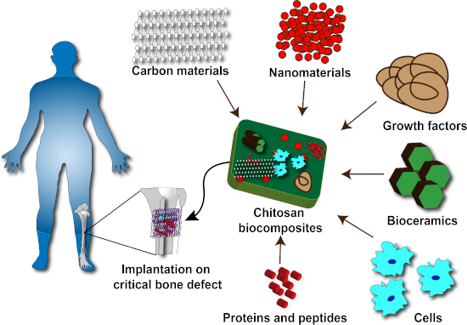
- , researchers have tried several ways to develop different materials using chitosan-based nanocomposites of silver, copper, gold, zinc oxide, titanium oxide, carbon nanotubes, graphene oxide, and biosilica. The combination of materials helps in the expression of ideal bone formation genes of alkaline
- , uniform raw materials quality, and are abundant. Chitosan is a natural polymeric substance and an extensively studied material for bone tissue engineering due to its biocompatibility, biodegradability, and antimicrobial properties [7][8][9][10]. Chitosan in combination with silver, gold, copper, titanium
- related to β-catenin signalling for the osteogenic process was confirmed by Western blot analysis [67]. Chitosan–copper nanocomposites Several research discoveries have proven the osteogenic properties of copper nanoparticles (CuNPs). Injectable hydrogels comprising copper with bioactive nanoparticles
Electrocatalytic oxygen reduction activity of AgCoCu oxides on reduced graphene oxide in alkaline media
Beilstein J. Nanotechnol. 2022, 13, 1020–1029, doi:10.3762/bjnano.13.89
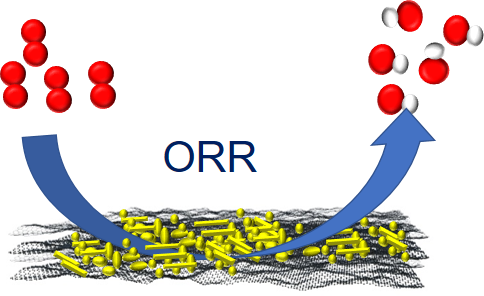
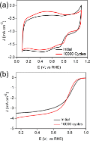
- the oxygen reduction reaction (ORR) in alkaline medium. Varying the Ag fraction in copper cobalt oxide has a significant influence on the ORR activity. At a ratio of 2:1:1, AgCuCo oxide NPs on rGO displayed the best values for onset potential, half-wave potential, and limiting current density (Jk) of
- 0.94 V vs RHE, 0.78 V, and 3.6 mA·cm−2, respectively, with an electrochemical active surface area of 66.92 m2·g−1 and a mass activity of 40.55 mA·mg−1. The optimum electrocatalyst shows considerable electrochemical stability over 10,000 cycles in 0.1 M KOH solution. Keywords: copper cobalt oxide NPs
- electrocatalysts [14][18][19]. Oxophilicity, agglomeration, and poor chemical stability of Ag require the amalgamation of Ag with other metals for a better optical and catalytic activity [20]. Chen et al. synthesised Ag nanoscale alloys containing metals such as copper, cobalt, iron, and indium via pulse film


Influence of water contamination on the sputtering of silicon with low-energy argon ions investigated by molecular dynamics simulations
Beilstein J. Nanotechnol. 2022, 13, 986–1003, doi:10.3762/bjnano.13.86
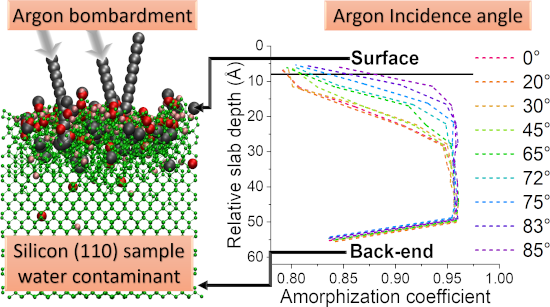
- MD/binary collision approximation (BCA) simulations. ReaxFF simulations can cover a broad range of applications: from DNA molecule bombardments with heavy atoms [31] to graphene layer deposition on copper surfaces [32]. Numerous simulations using the ReaxFF potential have been conducted in the past




Bioselectivity of silk protein-based materials and their bio-inspired applications
Beilstein J. Nanotechnol. 2022, 13, 902–921, doi:10.3762/bjnano.13.81



Optimizing PMMA solutions to suppress contamination in the transfer of CVD graphene for batch production
Beilstein J. Nanotechnol. 2022, 13, 796–806, doi:10.3762/bjnano.13.70
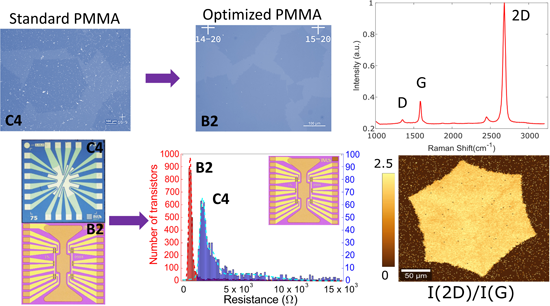
- stability and impermeability to gases and liquids. In contrast, the surrounding exposed areas of the Cu foil surface exhibited high reactivity and were readily oxidized to copper oxides with a noticeable color change. The apparent color contrast between the oxidized and non-oxidized Cu surfaces made the




Hierarchical Bi2WO6/TiO2-nanotube composites derived from natural cellulose for visible-light photocatalytic treatment of pollutants
Beilstein J. Nanotechnol. 2022, 13, 745–762, doi:10.3762/bjnano.13.66
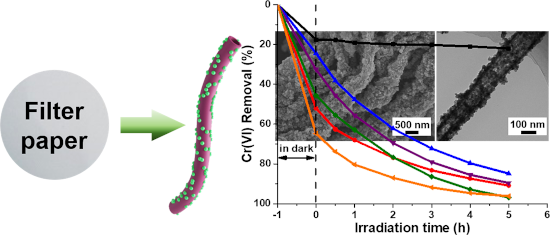
- homogeneous suspension. The suspension was then dropped onto an Al foil to be observed via field-emission scanning electron microscopy (FE-SEM), and onto a carbon-supported copper grid for examination via transmission electron microscopy (TEM) and high resolution transmission electron microscopy (HR-TEM


Experimental and theoretical study of field-dependent spin splitting at ferromagnetic insulator–superconductor interfaces
Beilstein J. Nanotechnol. 2022, 13, 682–688, doi:10.3762/bjnano.13.60
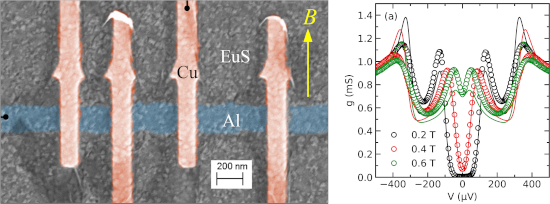
- a Si(111) substrate heated to 800 °C. In a second fabrication step, aluminium/aluminium oxide/copper tunnel junctions were fabricated on the EuS film using e-beam lithography and shadow evaporation. The nominal aluminium film thickness was d = 10 nm. The differential conductance g = dI/dV of the
- tunnel junctions was measured as a function of the bias voltage V using standard low-frequency lock-in techniques in a dilution refrigerator at base temperatures down to T = 50 mK with an in-plane magnetic field B applied along the direction of the copper wires, as indicated in Figure 4. Details of film



Comparative molecular dynamics simulations of thermal conductivities of aqueous and hydrocarbon nanofluids
Beilstein J. Nanotechnol. 2022, 13, 620–628, doi:10.3762/bjnano.13.54
- investigate thermal properties of different hybrid nanofluids, Singh et al. [35] used theoretical and experimental results of GO–CuO/DW (graphene oxide and copper oxide nanoparticles dispersed in distilled water) and compared those with mononanofluids (i.e., GO/DW and CuO/DW) at different temperatures. The
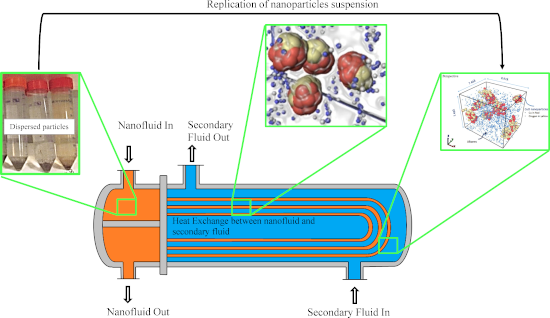
- white colour represents the oxygen atom and the blue is the hydrogen atom. b) Water/CuO nanofluid in an orthogonal box of 40 Å × 40 Å × 25 Å with 463 water molecules; where red atoms are copper and yellow represents oxygen bonded in a CuO nanoparticle. The blue-coloured atoms are hydrogen and the white


Revealing local structural properties of an atomically thin MoSe2 surface using optical microscopy
Beilstein J. Nanotechnol. 2022, 13, 572–581, doi:10.3762/bjnano.13.49
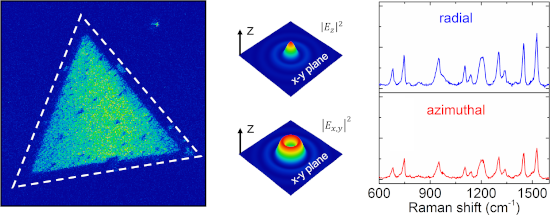
- molybdenum diselenide (MoSe2) flake as surface-enhanced Raman spectroscopy (SERS) platform, we demonstrate the dependency of the Raman enhancement on laser beam polarization and local structure using copper phthalocyanine (CuPc) as probe. Second harmonic generation (SHG) and photoluminescence spectroscopy
- dichalcogenide. Keywords: copper phthalocyanine; local structure; molybdenum diselenide; optical spectroscopy; surface-enhanced Raman spectroscopy; Introduction Two-dimensional (2D) materials have garnered interest for the next generation of optoelectronic and electrochemical devices, mainly owing to their


Influence of thickness and morphology of MoS2 on the performance of counter electrodes in dye-sensitized solar cells
Beilstein J. Nanotechnol. 2022, 13, 528–537, doi:10.3762/bjnano.13.44
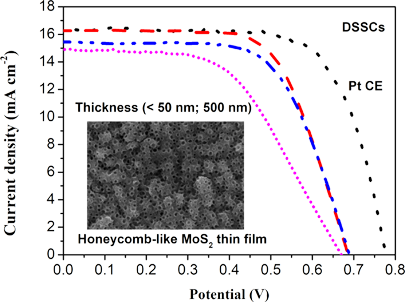
- , respectively. For comparison, DSSCs based on Pt/FTO CE (DSSCs-Pt) were also fabricated under the same conditions. Characterizations of MoS2 thin films X-ray diffraction (XRD) analysis was carried out using a D8 Advance (Bruker, Germany) with a copper anode (λKα = 1.54 Å). Raman spectroscopy measurements were


A non-enzymatic electrochemical hydrogen peroxide sensor based on copper oxide nanostructures
Beilstein J. Nanotechnol. 2022, 13, 424–436, doi:10.3762/bjnano.13.35
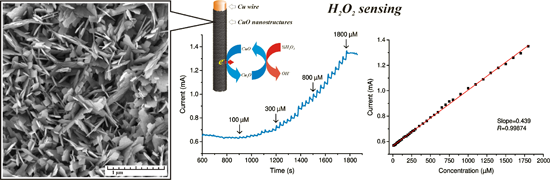
- , Latvia Institute of Solid State Physics, University of Latvia, Kengaraga street 8, Riga, LV-1063, Latvia 10.3762/bjnano.13.35 Abstract This article describes the synthesis of nanostructured copper oxide on copper wires and its application for the detection of hydrogen peroxide. Copper oxide petal
- qualitative detection of H2O2 in real samples, as well as for the quantitative determination of its concentration. Keywords: copper oxide; electrochemical sensor; hydrogen peroxide; nanostructures; Introduction Hydrogen peroxide, a strong oxidant and an essential intermediate product in many biomedical
- candidate is copper oxide (CuO) [56][67][68][69][70][71]. It has selectivity for the determination of H2O2, high catalytic activity, and a variety of morphologies (e.g., nanoneedles, nanoplates, and nanorods). Various techniques have been used in the preparation of nanostructured epitaxial CuO coatings





A chemiresistive sensor array based on polyaniline nanocomposites and machine learning classification
Beilstein J. Nanotechnol. 2022, 13, 411–423, doi:10.3762/bjnano.13.34
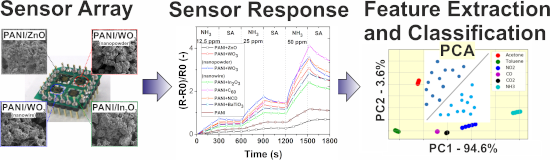
- electrode systems was manufactured as a flexible printed circuit board (DuPont Pyralux AP8535 with 75 µm thickness, double-sided, copper-clad laminate in an all-polyimide composite of polyimide film bonded to copper foil). It contains the heating elements and the temperature sensors for the temperature




The effect of metal surface nanomorphology on the output performance of a TENG
Beilstein J. Nanotechnol. 2022, 13, 298–312, doi:10.3762/bjnano.13.25
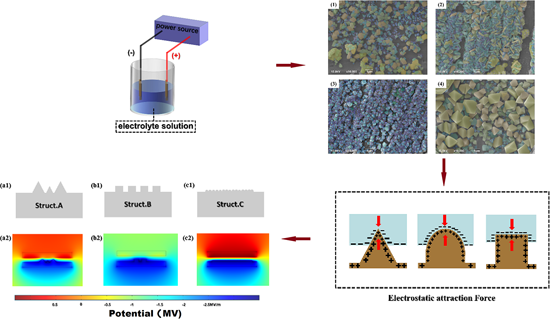
- of a metal and a polymer. There are different charge densities on different kinds of metal surface nanomorphology, which significantly influences the output performance of the TENG. Copper samples with different nanomorphology were obtained by controlling pH value, current density, electrolyte
- concentration, and temperature during the electrodeposition of copper. The samples were characterized using XRD and SEM. The output performance of the TENG is closely related to the size, charge density distribution, and shape of the metal nanoparticles. Keywords: charge density; green energy; metal
- freely. Therefore, there is no high charge density on the tip surface of the polymer surface. Here, size and morphology of nanoscale copper were controlled by adjusting current density, temperature, pH value, and solution concentration during electrodeposition. The effects of different morphologies and





Investigation of a memory effect in a Au/(Ti–Cu)Ox-gradient thin film/TiAlV structure
Beilstein J. Nanotechnol. 2022, 13, 265–273, doi:10.3762/bjnano.13.21
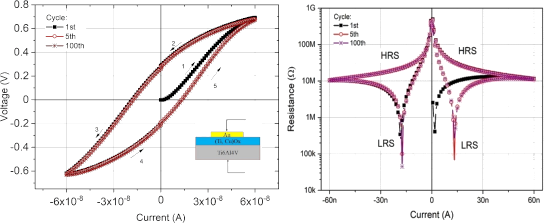
- distribution profile of copper are presented. Experimental electrical measurements performed using DC simulation showed wide nonpinched hysteresis loops, indicating bipolar resistive switching properties. Additionally, the so-called forming process of switching properties has been observed for the first cycle
- circular copper target (99.995%). All three targets were sputtered simultaneously in an oxygen atmosphere of 99.999% purity. The targets used in the process were 28.5 mm in diameter and their thickness was 3 mm. The process uses magnetrons with an unbalanced magnetic field set in a confocal configuration
- these pulses (pulse width modulation, PWM). One of the biggest difficulties in the preparation of mixed (Ti,Cu)Ox thin films with defined composition using co-sputtering of Ti and Cu targets is that titanium and copper differ from each other in the sputtering yield in oxygen by a factor of more than ten