


Search results
Search for "dielectric" in Full Text gives 463 result(s) in Beilstein Journal of Nanotechnology. Showing first 200.
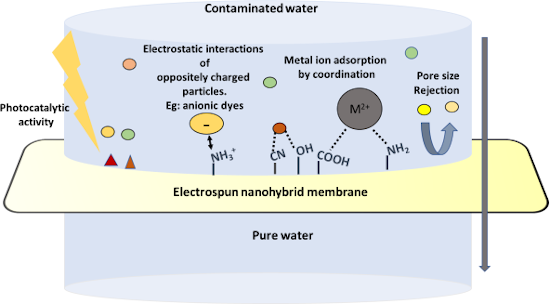
A comprehensive review on electrospun nanohybrid membranes for wastewater treatment
Beilstein J. Nanotechnol. 2022, 13, 137–159, doi:10.3762/bjnano.13.10




Sputtering onto liquids: a critical review
Beilstein J. Nanotechnol. 2022, 13, 10–53, doi:10.3762/bjnano.13.2

- (DC), radio frequency (RF, usually at 13.56 MHz), pulsed-DC, or high-power pulses can be applied. Typically, RF generators are employed when a dielectric target is to be sputtered. Pulsed-DC discharges are generated when a metallic target is sputtered in a reactive atmosphere to synthesize insulating
- of bipolar waveforms, allow for discharging the dielectric layer grown on the target surface during the OFF time and allow for safe operation, see [67] for more information. High-power plasma pulses can be applied as well on the cathode. The goal is to apply a very high peak current pulse without






Design aspects of Bi2Sr2CaCu2O8+δ THz sources: optimization of thermal and radiative properties
Beilstein J. Nanotechnol. 2021, 12, 1392–1403, doi:10.3762/bjnano.12.103
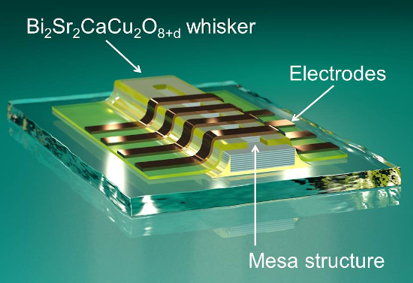
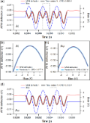
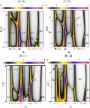
- the leftmost panels: Figure 6a shows a mesa (red) on a large crystal (black) with an attached metallic electrode (yellow), mounted on a dielectric substrate; Figure 6b shows a mesa on a large crystal with a capping metallic layer, without electrode; Figure 6c shows a mesa on a thin whisker (black
- electrode and whisker is set to ≃6 × 10⁵ (Ω·m)−1 and the relative dielectric permittivity of the substrate is εr = 10. First we consider the case without dielectric losses, tan(δ) = 0. The middle panels in Figure 6 show the local distributions of electric field amplitudes in the xz crosssection through the
- makes things worse due to formation of the large parasitic capacitance shunting the EMW. Simulations presented in Figure 6 are made for ideal dielectrics with tan(δ) = 0. The detrimental role of the parasitic crystal/electrode capacitance becomes much more pronounced if we take into account dielectric


Plasmon-enhanced photoluminescence from TiO2 and TeO2 thin films doped by Eu3+ for optoelectronic applications
Beilstein J. Nanotechnol. 2021, 12, 1271–1278, doi:10.3762/bjnano.12.94
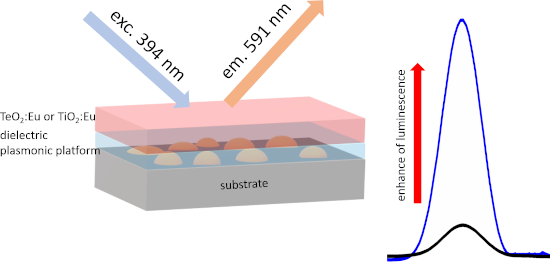
- luminescence properties of europium-doped titanium dioxide and tellurium oxide thin films enhanced by gold plasmonic nanostructures. We propose a new type of plasmon structure with an ultrathin dielectric film between plasmonic platform and luminescent material. Plasmonic platforms were manufactured through
- investigated by SEM and TEM, while the composition of oxides film was analyzed by XPS. Luminescence properties were studied on the basis of excitation and emission spectra. The experiments show that the additional dielectric layer enhances the luminescence intensity. Such structures could be potential
- were annealed at 550 °C for 15 min in air atmosphere. The formation of metallic nanostructures has been described in detail in our previous works [24][25][26]. On the prepared plasmonic platforms a dielectric buffer layer was deposited. We chose two kinds of layers. The first one, Al2O3, with different


Enhancement of the piezoelectric coefficient in PVDF-TrFe/CoFe2O4 nanocomposites through DC magnetic poling
Beilstein J. Nanotechnol. 2021, 12, 1262–1270, doi:10.3762/bjnano.12.93
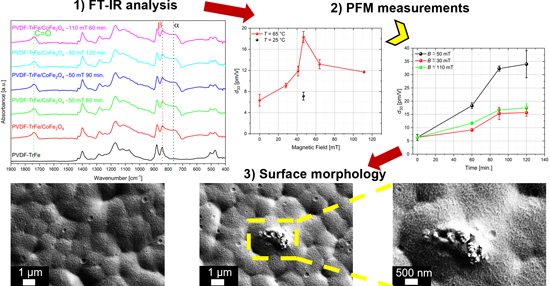
- piezoelectric constant and, therefore, a high conversion efficiency. However, these materials are toxic, brittle, and not environmentally friendly. In order to overcome these disadvantages, several studies have investigated polymeric piezoelectric materials and nanostructured materials with high dielectric


Electrical, electrochemical and structural studies of a chlorine-derived ionic liquid-based polymer gel electrolyte
Beilstein J. Nanotechnol. 2021, 12, 1252–1261, doi:10.3762/bjnano.12.92
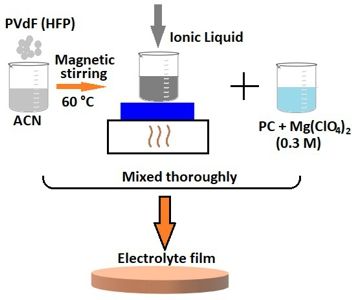
- techniques, such as the addition of ionic liquids (ILs) with low viscosity and high dielectric constant values or some suitable fillers have been used by the research community to increase the ionic conductivity of polymer electrolytes [6][7]. As mentioned above, one way to increase the ionic conductivity is
- ][23], fluoropolymers such as poly(vinylidene fluoride-co-hexafluoropropylene) (PVdF-HFP) have received much attention from the research community as potential polymer hosts for the synthesis of polymer electrolytes [10][11][24][25]. The dielectric constant value of PVdF-HFP is ≈8.4 and it comprises a
- tabulated in Table 2. Dielectric studies are some of the most important techniques to understand the effect of plasticizers, blending of polymers, inter-/intramolecular interactions, their transport mechanism, and relaxation behavior at a molecular level. Figure 6a and Figure 6b show the dielectric constant



Morphology-driven gas sensing by fabricated fractals: A review
Beilstein J. Nanotechnol. 2021, 12, 1187–1208, doi:10.3762/bjnano.12.88
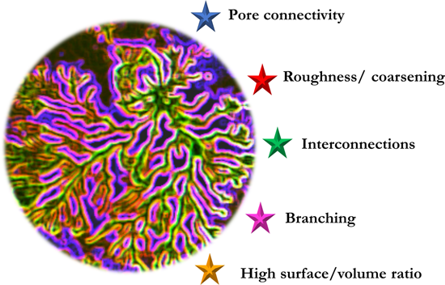
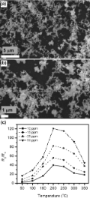
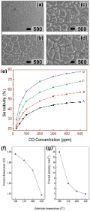
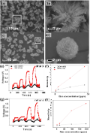
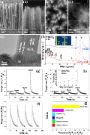
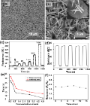
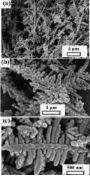
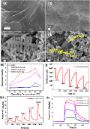
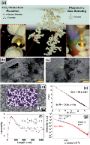
- , carbon monoxide, ammonia, nitrous oxide, and ethanol (Figure 10e,f) at 250 °C. The estimated fractal dimensions were 1.82 for the pore network and 1.72 for the foam sensor. Titanium oxide-based fractals Fusco et al. modified dielectric titanium oxide (TiO2) nanoparticles with fractal structure with a
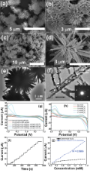
- ethanol, acetone, and toluene, was examined. The LSPR sensor showed a 4–8 times higher sensitivity for detecting gas molecules with the fractal-enhanced dielectric structure. The enhancement in the sensitivity was mainly attributed to the large surface-to-volume ratio of fractal system, which resulted in
- deposited on an antenna, and a microwave transduction principle was employed for gas sensing. In these measurements, the interaction of the gas analyte with the sensor was studied at different frequencies and changes in the reflection coefficient and dielectric properties of sensing material were observed










Irradiation-driven molecular dynamics simulation of the FEBID process for Pt(PF3)4
Beilstein J. Nanotechnol. 2021, 12, 1151–1172, doi:10.3762/bjnano.12.86
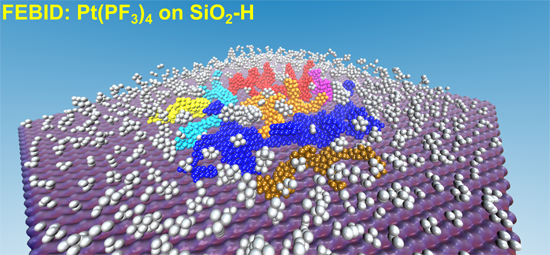
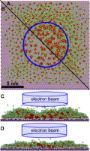
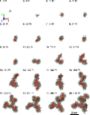
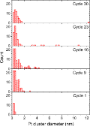
- without fragmentation of the molecule. On this basis, one concludes that almost every ionizing collision leads to fragmentation; hence, the DI cross section can be approximated by the total ionization cross section. The latter can be calculated by means of the dielectric formalism [46] as it was done in








Open-loop amplitude-modulation Kelvin probe force microscopy operated in single-pass PeakForce tapping mode
Beilstein J. Nanotechnol. 2021, 12, 1115–1126, doi:10.3762/bjnano.12.83
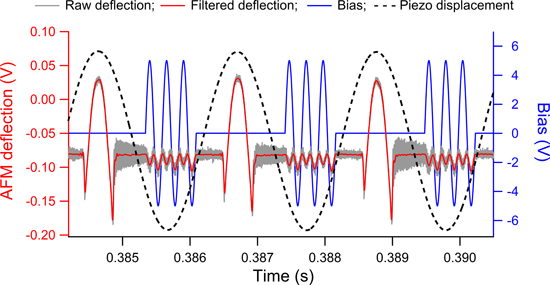
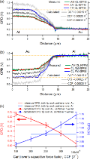
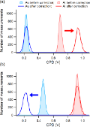
- voltage, CPD the contact potential difference between the AFM probe and sample, and CF the capacitive factor depending on the geometry and dielectric properties of the system. Expressions of CF are obtained from the detailed calculation of the electrostatic force between the AFM probe and sample [67][68





First-principles study of the structural, optoelectronic and thermophysical properties of the π-SnSe for thermoelectric applications
Beilstein J. Nanotechnol. 2021, 12, 1101–1114, doi:10.3762/bjnano.12.82
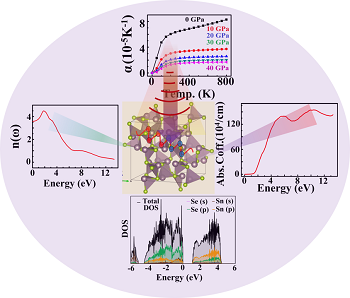
- , the computation of the optical properties is decreased towards the assessment of the response function, which is called dielectric tensor or polarizability. For practical optoelectronics applications, it is essential to investigate the optical response of the π-SnSe alloy. For this purpose, we have
- used the independent particle approximation (IPA) implemented by the optics module of WIEN2k, which computes the direct transitions through Kohn and Sham (KS) [70] eigenvalues between occupied and unoccupied states [71]. For the first step, a complex dielectric function ε(ω), which depends on the
- frequency and comprises all the details of the optical response, is determined through the following relation [72]: where ε1(ω) and ε2(ω) represent the real and imaginary parts of the dielectric function, respectively. The absorptive imaginary ε2(ω) component can be determined by calculating the matrix


Molecular assemblies on surfaces: towards physical and electronic decoupling of organic molecules
Beilstein J. Nanotechnol. 2021, 12, 950–956, doi:10.3762/bjnano.12.71

- . Among others, ultrathin dielectric layers of either alkali halides (e.g., NaCl [17]) or metal oxides (e.g., MgO [18], Al2O3 [19], and CuO [20]), or nitrides (CuN [21]) have been shown to be beneficial for successfully reducing or even completely switching off the unwanted interaction between the metal
- dielectric layers on top of the surface [34][35] or a chemical modification of the surface to saturate the dangling bonds. In surface-science-based studies, for the latter approach hydrogenation of semiconductor surfaces is frequently applied as effective passivation against chemisorption of adsorbates [36
- changing chemical environment. Next, we outline articles that use 2D materials and ultrathin dielectric layers as decoupling layers. While on the one hand, molecular functionalization is a powerful approach to tune the electronic and optical properties of 2D materials, in particular for many practical
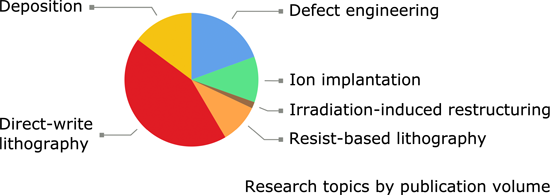
A review of defect engineering, ion implantation, and nanofabrication using the helium ion microscope
Beilstein J. Nanotechnol. 2021, 12, 633–664, doi:10.3762/bjnano.12.52


High-yield synthesis of silver nanowires for transparent conducting PET films
Beilstein J. Nanotechnol. 2021, 12, 624–632, doi:10.3762/bjnano.12.51
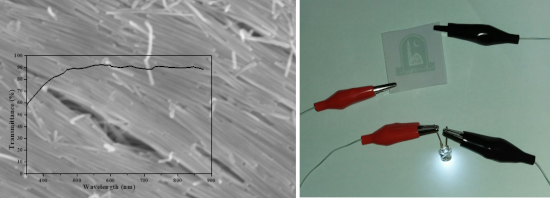
- circuit including a white LED was utilized. Results and Discussion To determine the morphology, the as-prepared silver nanostructures were first characterized by UV–vis absorption spectroscopy. The absorption spectrum of AgNWs is a function of the dielectric material, the chemicals used, and the particle


Impact of GaAs(100) surface preparation on EQE of AZO/Al2O3/p-GaAs photovoltaic structures
Beilstein J. Nanotechnol. 2021, 12, 578–592, doi:10.3762/bjnano.12.48
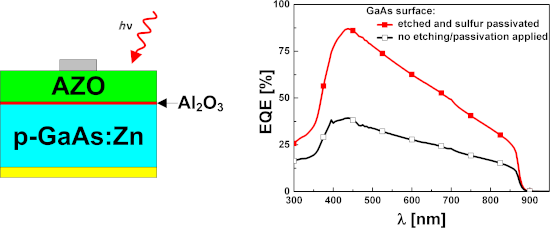
- negative impact on the performance of GaAs-based microelectronic and optoelectronic devices [10][11]. Therefore, in order to take advantage of the properties of gallium arsenide [12], its interface with a dielectric or other semiconductor partner must be carefully prepared. This can be obtained either by
- the removal of the native oxide layer followed by an adequate surface passivation technique [13] and/or by a proper choice of the dielectric and its deposition method. Regarding the dielectric, the most common ones are aluminum oxide (Al2O3) and hafnium dioxide (HfO2) for which the preferable
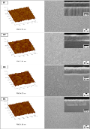
- fabricated devices. The initial illustrative model of the device presented the deposited Al2O3 passivation coating as a separate dielectric film (Figure 2). However, according to the XPS analysis results (Table 1) one can see that the Al2O3 deposited within five ALD cycles does not constitute a separate




Local stiffness and work function variations of hexagonal boron nitride on Cu(111)
Beilstein J. Nanotechnol. 2021, 12, 559–565, doi:10.3762/bjnano.12.46
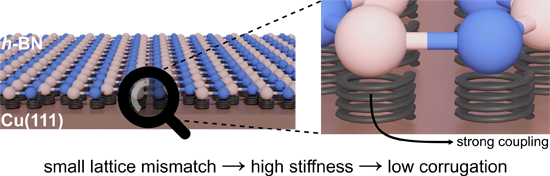
- - and few-layer thick graphene films [1][2]. Unique properties, such as high thermal stability and conductivity, immense intra-sheet stiffness, and excellent dielectric properties, make h-BN interesting for technological applications. For example, thin films of h-BN have been used as a passivating layer
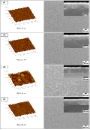
- non-contact atomic force microscopy (nc-AFM) to study h-BN on Cu(111). This template has interesting properties because the dielectric layer is only very weakly bound to the metal and shows an electronically induced Moiré superstructure [25][26]. First STM studies on this system pointed to only a
- originate from a locally varying charge transfer between the substrate and the dielectric layer [38][39][40]. In our studied substrate, it is the lattice mismatch between h-BN and the Cu(111) substrate that leads to a varying atomic registry and subsequently induces a lateral modulation of the charge


Simulation of gas sensing with a triboelectric nanogenerator
Beilstein J. Nanotechnol. 2021, 12, 507–516, doi:10.3762/bjnano.12.41
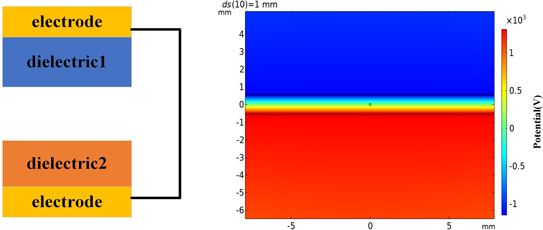
- rectangles represent the triboelectric materials with different dielectric constants. The length and width are set as 50 mm and 0.1 mm, respectively. By changing the distance (ds), we simulate the process of the triboelectric materials approaching and moving away from each other. Figure 3a is the surface
- the two dielectric materials varies, the field intensity caused by the charge also varies. The corresponding electric potential decreases with decreasing distance and increases with increasing distance. Figure 3b is the electric potential distribution diagram when the distance is 0.1 mm. In the
- simulation, we measured the potential difference between the outer surfaces of the two dielectric materials as ds is gradually increased from 0.1 to 1 mm, as shown in Figure 3c, which also reflects the influence of the distance between the two triboelectric materials on the potential. In practice, it is



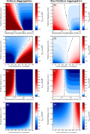
Colloidal particle aggregation: mechanism of assembly studied via constructal theory modeling
Beilstein J. Nanotechnol. 2021, 12, 413–423, doi:10.3762/bjnano.12.33
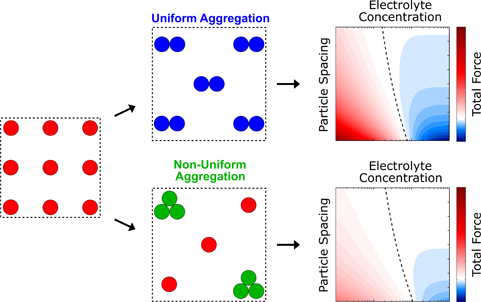
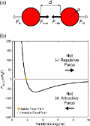
- layers result in repulsion between two particles, this force is constantly opposed by the attractive van der Waals force. The balance between these interparticle forces gives the total DLVO force and highly depends on system parameters, such as the electrolyte concentration and fluid dielectric constant
- dielectric constant, respectively. Conversely, the attractive van der Waals force is given by [14]: where the characteristic energy scale is set by the Hamaker constant, A. It is noted that Equation 1 and Equation 2 assume spherical particles of equal radius and a sufficiently small separation distance (a
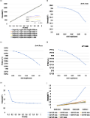
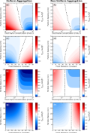
- lattice arrangements are shown in Figure 5 and Figure 6, respectively. The total DLVO forces from both uniform (left) and non-uniform (right) aggregation are plotted as functions of particle spacing or particle radius and electrolyte concentration or fluid dielectric constant. The same general trends were


Structural and optical characteristics determined by the sputtering deposition conditions of oxide thin films
Beilstein J. Nanotechnol. 2021, 12, 354–365, doi:10.3762/bjnano.12.29
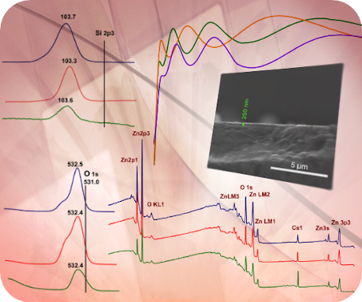
- ; optical quality; SiO2 and ZnO; structural properties; thin films; Introduction The application of oxide thin films is quite diverse due to their excellent properties [1][2][3][4][5], such as dielectric properties [6][7][8] for the production of metamaterials [9]. Metamaterials applied in the field of
- space science come with a new dimension of microstructural representation of advanced functional materials [10][11]. Metamaterial structures are of significant interest not only in space science but also in the fields of public security and sensors [9][10][11]. Materials with dielectric properties, such
- others. Among the important applications of these oxides are materials with dielectric properties used in the fabrication of metasurface structures, transparent conductive oxides and buffer layers used in solar cells, and materials used in sensor technology [6][8][17][18][19][20][21]. Materials with


Paper-based triboelectric nanogenerators and their applications: a review
Beilstein J. Nanotechnol. 2021, 12, 151–171, doi:10.3762/bjnano.12.12
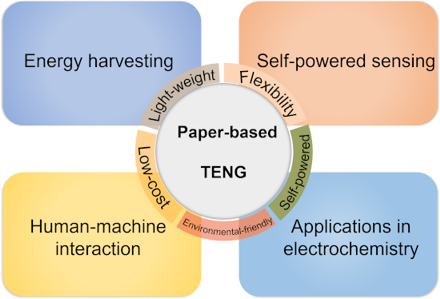
- polarization direction, TENGs can have four working modes [87], including vertical contact–separation (CS) mode, in-plane lateral-sliding (LS) mode, single-electrode (SE) mode, and freestanding triboelectric-layer (FT) mode, as shown in Figure 2a. In the vertical CS mode, a stack of two dielectric films is
- plated with a metal electrode at the back surface of each layer. When the two dielectric films are vertically separated and periodically contacted due to the application of external forces, a small air gap is formed in the middle and a potential difference is induced between the two electrodes, which can
- ground and taken as the reference electrode. The direction of the induced electric field can be reversely changed during the approximation or separation between the bottom electrode and the upper dielectric materials. The charge exchange will occur between the bottom electrode and ground to balance the




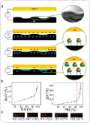


Mapping the local dielectric constant of a biological nanostructured system
Beilstein J. Nanotechnol. 2021, 12, 139–150, doi:10.3762/bjnano.12.11
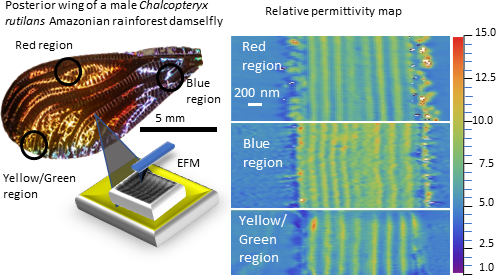
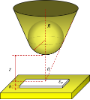
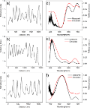
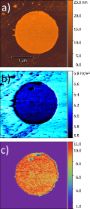
- work is to determine the varying dielectric constant of a biological nanostructured system via electrostatic force microscopy (EFM) and to show how this method is useful to study natural photonic crystals. We mapped the dielectric constant of the cross section of the posterior wing of the damselfly
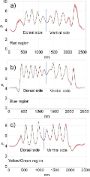
- Chalcopteryx rutilans with nanometric resolution. We obtained structural information on its constitutive nanolayers and the absolute values of their dielectric constant. By relating the measured profile of the static dielectric constant to the profile of the refractive index in the visible range, combined with
- optical reflectance measurements and simulation, we were able to describe the origin of the strongly iridescent wing colors of this Amazonian rainforest damselfly. The method we demonstrate here should be useful for the study of other biological nanostructured systems. Keywords: dielectric constant




Bulk chemical composition contrast from attractive forces in AFM force spectroscopy
Beilstein J. Nanotechnol. 2021, 12, 58–71, doi:10.3762/bjnano.12.5
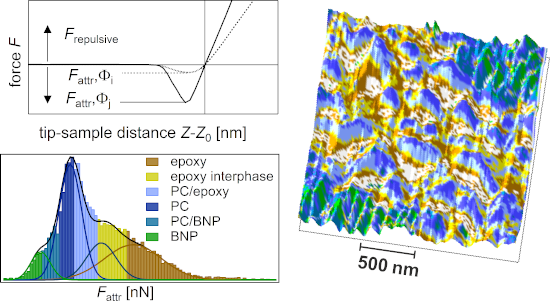
- turn generate oscillating dipoles in an adjacent body. The response of a specific material in an oscillating electromagnetic field E(f) is described by the dielectric constant εr(f) which can be extracted from the absorption spectrum of the material. Hence, how materials (e.g., the sample (S) and the
- tip (T)) interact in a medium (m) is defined by the difference in the dielectric responses. The Hamaker coefficient AHam can be derived from the relative differences of the dielectric constant εS(f), εT(f), and εm(f), summed up over all the frequencies at which the fluctuations can occur (UV–vis–IR


Kondo effects in small-bandgap carbon nanotube quantum dots
Beilstein J. Nanotechnol. 2020, 11, 1873–1890, doi:10.3762/bjnano.11.169
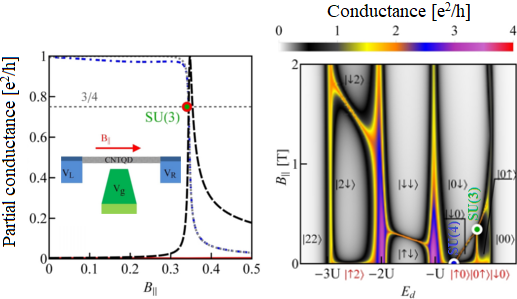
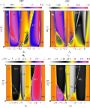
- effects of interaction play a more fundamental role. Carbon nanotubes are quasi one-dimensional systems, and the role of correlations further increases in quantum dots due to additional confinement. Of importance is also the low dielectric constant, which is especially low in suspended nanotubes [36]. A



![[Graphic 37]](/bjnano/content/inline/2190-4286-11-169-i52.svg?max-width=637&scale=1.18182) as a functio...
as a functio...


Mapping of integrated PIN diodes with a 3D architecture by scanning microwave impedance microscopy and dynamic spectroscopy
Beilstein J. Nanotechnol. 2020, 11, 1764–1775, doi:10.3762/bjnano.11.159
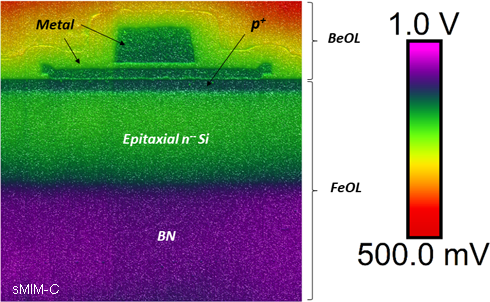
- ) (doped semiconducting layers) and “back end of line” (BEOL) layers (metallization, trench dielectric, and isolation) of highly integrated microelectronic devices. Based on atomic force microscopy, an electromagnetically shielded and electrically conductive tip is used in scanning microwave impedance
- monolithic silicon integrated PIN diode with a 3D architecture. The studied device includes FEOL regions (doped semiconductors and oxides) and “back end of line” (BEOL) regions (metallic and dielectric layers). After the presentation of the results, the capabilities of the sMIM mode are discussed in detail
- second area of interest was the bottom of a deep trench (area 2 in Figure 2). Deep trenches were fabricated by dry etching pores with a high aspect ratio and a diameter of 1 µm. During the FEOL processing, trenches were filled with a dielectric layer, followed by an in situ highly phosphorus-doped


Absorption and photoconductivity spectra of amorphous multilayer structures
Beilstein J. Nanotechnol. 2020, 11, 1757–1763, doi:10.3762/bjnano.11.158
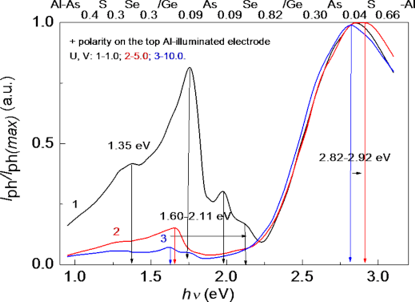
- , Nt is the concentration of traps, e is the electron charge, µ is the drift mobility, ε is the dielectric constant, t = Δ/(kBT) (Δ is the parameter of the trap distribution, kB is the Boltzmann constant, T is the absolute temperature), V is the applied voltage, and d is the sample thickness. The


Out-of-plane surface patterning by subsurface processing of polymer substrates with focused ion beams
Beilstein J. Nanotechnol. 2020, 11, 1693–1703, doi:10.3762/bjnano.11.151
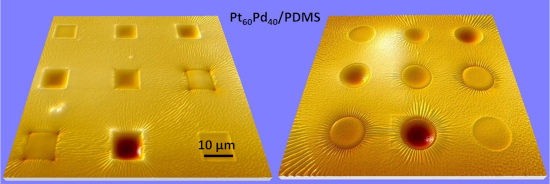
- for the fabrication of a range of microoptical and microfluidic devices and microelectromechanical systems (MEMS). Possible applications of the method for microoptical devices are discussed in detail in our previous work [4]. They include tuning the thickness of the dielectric layer in the metal





