


Search results
Search for "fabrication" in Full Text gives 912 result(s) in Beilstein Journal of Nanotechnology. Showing first 200.
Direct electron beam writing of silver using a β-diketonate precursor: first insights
Beilstein J. Nanotechnol. 2024, 15, 1117–1124, doi:10.3762/bjnano.15.90

- fabrication of nano-optical components, where the actual geometry in combination with the material composition governs the optical response of the device [13]. However, typically a dominant carbon portion is present in the deposit due to the use of organometallic precursors [9][14], which poses practical
- challenges in device design and fabrication. Accordingly, various methods to improve purity during [15][16][17][18] or after deposition [18][19][20][21][22] were developed. For plasmonic applications, a metallic surface layer with a thickness exceeding the skin depth is sufficient to obtain the desired


Unveiling the potential of alginate-based nanomaterials in sensing technology and smart delivery applications
Beilstein J. Nanotechnol. 2024, 15, 1077–1104, doi:10.3762/bjnano.15.88

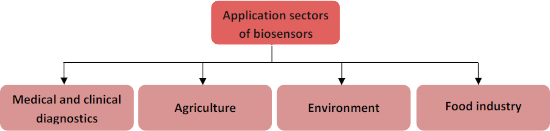
- meet the specific needs of glucose detection, such as incorporating glucose oxidase for enzymatic sensing, allowing for efficient and accurate glucose detection [140]. The fabrication of alginate-based nanoparticles for glucose detection involves several steps. First, alginate is mixed with a cross


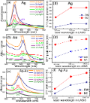
Effect of wavelength and liquid on formation of Ag, Au, Ag/Au nanoparticles via picosecond laser ablation and SERS-based detection of DMMP
Beilstein J. Nanotechnol. 2024, 15, 1054–1069, doi:10.3762/bjnano.15.86

- , such as high cost, chemical instability, and sustainability issues [22][23]. Menéndez-Manjón et al. [24] reported the synthesis of Ag/Au alloy NPs via picosecond LASiS of solid targets in monomer MMA. Amendola et al. [25] demonstrated the fabrication of magneto-plasmonic alloy NPs, such as Fe–Au, by
- affordable and accessible fabrication methods which guarantee stability and reproducibility along with accessible sample collection of SERS substrates. There has been significant interest in utilizing flexible materials such as paper, nitrocellulose, polymer film, cotton fabrics, adhesive tape, glass fibers
- al. [55], the authors demonstrated the Ag NP fabrication by varying the surrounding aqueous NaCl solution concentrations between 0 to 20 mM using a nanosecond laser at an excitation of 355 nm. Their study noticed increased Ag NP absorbance while changing the aqueous NaCl solution concentration from 0


Bolometric IR photoresponse based on a 3D micro-nano integrated CNT architecture
Beilstein J. Nanotechnol. 2024, 15, 1030–1040, doi:10.3762/bjnano.15.84
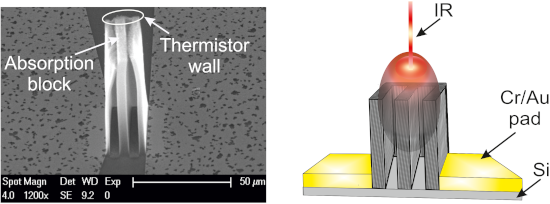
- customized specific requirements for various applications. While the thermal conductivity along the CNT orientation is large, it decreases dramatically in the perpendicular direction [5]. This thermal behavior varies significantly depending on structure, density, and fabrication of the CNTs. Single-walled
- thermal sensing solutions and sets the stage for transformative advances in non-cryogenic IR microbolometer and thermal detector technology. The following sections provide a comprehensive overview of the 3D micro-nano design, fabrication methods, performance characteristics, and potential applications
- reduction as well as sensitive and versatile thermal detection devices suitable for a wide range of high-tech applications. Fabrication process of the pixel-based CNT microbolometer. (a) AlOx deposition, (b) lithography process and metal contact evaporation, (c) iron catalyst evaporation, and (d) CNT growth


Recent progress on field-effect transistor-based biosensors: device perspective
Beilstein J. Nanotechnol. 2024, 15, 977–994, doi:10.3762/bjnano.15.80
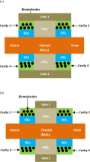
- technology rapidly emerged [40][41]. However, all these FETs were highly bulky and required more space. Nakamoto et al. [42] later devised a biosensor with a novel fabrication method aligned well with the complementary metal–oxide–semiconductor (CMOS) fabrication process. Usually, biosensors convert
- from researchers due to their desirable properties and advantages, including low cost, label-free operation, high sensitivity, robustness, low power consumption, and a straightforward fabrication process based on CMOS technology [47][48]. A field-effect transistor-based biosensor comprises a
- . The gate metal around the three nanocavity regions was added for the best electrostatic control. Additionally, a spacer near the source region was removed to facilitate the introduction of biomolecules into the cavity. The fabrication process flow of the proposed VS NS FET has been detailed by Ryu et




Beyond biomimicry – next generation applications of bioinspired adhesives from microfluidics to composites
Beilstein J. Nanotechnol. 2024, 15, 965–976, doi:10.3762/bjnano.15.79
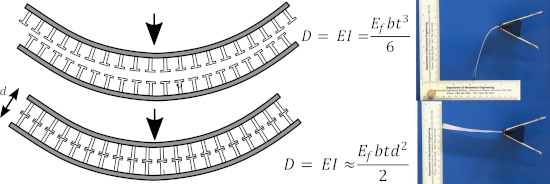
- Creative Commons Attribution 3.0 Unported License, https://creativecommons.org/licenses/by/3.0. The source journal is © The Royal Society of Chemistry 2015. Panel (a) represents the fabrication process that may include gasket structures in addition to fibers and rigid backing layers to ensure that pressure


Electrospun nanofibers: building blocks for the repair of bone tissue
Beilstein J. Nanotechnol. 2024, 15, 941–953, doi:10.3762/bjnano.15.77
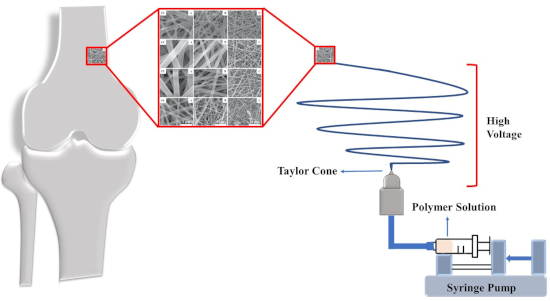
- produced using various production techniques such as self-coupling and phase separation, and especially electrospinning. Electrospinning is a simple, scalable and versatile fabrication method for the production of various nanofiber formulations from a large number of different polymers. Polymer fiber


Water-assisted purification during electron beam-induced deposition of platinum and gold
Beilstein J. Nanotechnol. 2024, 15, 884–896, doi:10.3762/bjnano.15.73
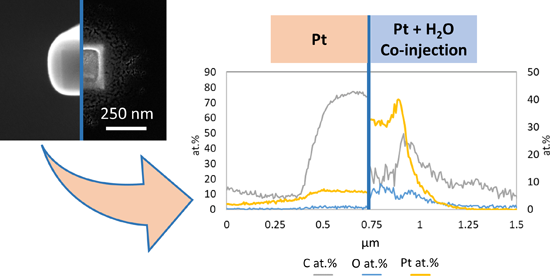
- Cristiano Glessi Fabian A. Polman Cornelis W. Hagen Delft University of Technology, Fac. Applied Sciences, Dept. Imaging Physics, Lorentzweg 1, 2628CJ Delft, Netherlands 10.3762/bjnano.15.73 Abstract Direct fabrication of pure metallic nanostructures is one of the main aims of focused electron
- structures in applications such as nanoprobes and sensors [4][5][6], or for the fabrication of superconductors [7][8][9][10] and plasmonic devices [11][12][13]. A lower carbon content can be achieved by means of precursor design [14], variation of deposition conditions [15], or post-deposition purification
- , resulting in the fabrication of metal oxide nanostructures. Post-deposition purification requires the removal of carbon after completion of the deposition, causing porosity and/or severe changes in size and shape. In addition, post-deposition purification may lead to only partly purified material. For






The effect of age on the attachment ability of stick insects (Phasmatodea)
Beilstein J. Nanotechnol. 2024, 15, 867–883, doi:10.3762/bjnano.15.72

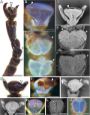
- roughness (1 µm) matches the size of the tips and course roughness (12 µm) matches the size of the entire nubs [33]. The combination of these three levels of roughness was used to investigate potential effects in the three mentioned perspectives of the attachment pads. For details on the fabrication process


Intermixing of MoS2 and WS2 photocatalysts toward methylene blue photodegradation
Beilstein J. Nanotechnol. 2024, 15, 817–829, doi:10.3762/bjnano.15.68
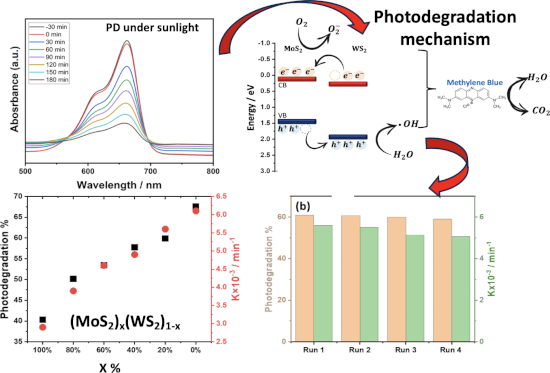
- , making it a promising avenue for future developments in catalytic materials for pollutant degradation. Overall, these advancements underscore the superior efficacy of the presented synthesis methods, positioning them at the forefront of MoS2 and WS2 nanocomposite fabrication and paving the way for


Electron-induced ligand loss from iron tetracarbonyl methyl acrylate
Beilstein J. Nanotechnol. 2024, 15, 797–807, doi:10.3762/bjnano.15.66
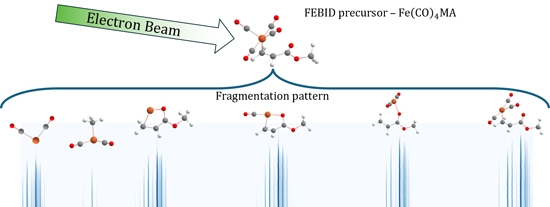
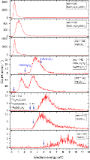
- (FEBID). FEBID is an emerging method for the fabrication of 3D nanostructures. It relies on the local decomposition of precursors in the focal area of an electron beam [1][2][3][4]. In the case of deposition of metals, the interaction with the electrons should ideally lead to a cleavage of all metal



Effect of repeating hydrothermal growth processes and rapid thermal annealing on CuO thin film properties
Beilstein J. Nanotechnol. 2024, 15, 743–754, doi:10.3762/bjnano.15.62
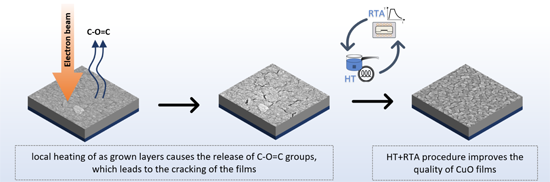
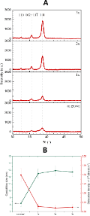
- work [47], outlining the fabrication of structured CuO films on fluorine-doped tin oxide from a solution devoid of additional substances. Post-processing plays a significant role in the field of nanomaterials fabrication. Metal oxide thin films often undergo annealing. This practice aims to improve the




Level set simulation of focused ion beam sputtering of a multilayer substrate
Beilstein J. Nanotechnol. 2024, 15, 733–742, doi:10.3762/bjnano.15.61
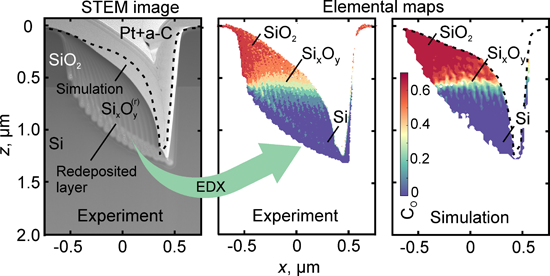
- possible to deterministically produce a nanoscale topography on the surface of almost any substrate [1]. FIB milling was originally established in semiconductor technology [2] and materials science applications [3]. Now it is increasingly used for fabrication of complex micro- and nanoscale structures and
- multilayer films [8], the patterning of 2D materials [9], or the direct introduction of dopants into a solid-state host through recoil implantation [10]. Examples that rely on ion milling include patterning of magnetic multilayers [11], fabrication of optical metamaterials [12], and modification of
- only possible for shallow structures milled under constant sputtering yield conditions [18][19][20]. For more complex cases, one has to turn to various kinds of computer simulations that considerably facilitate structure fabrication using FIB. For example, surface evolution was studied using segment
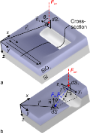

![[Graphic 55]](/bjnano/content/inline/2190-4286-15-61-i68.svg?max-width=637&scale=1.18182)


Gold nanomakura: nanoarchitectonics and their photothermal response in association with carrageenan hydrogels
Beilstein J. Nanotechnol. 2024, 15, 678–693, doi:10.3762/bjnano.15.56

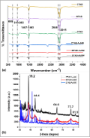
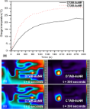
- hydrogels for enabling usage on nanophotonic, photothermal, and bio-imaging applications. Keywords: anisotropy; hydrogel; kappa-carrageenan; metal nanoparticles; nanoarchitectonics; nanomakura; photothermal properties; surfactants; Introduction Nanoarchitectonics is the fabrication of functional material






Functional fibrillar interfaces: Biological hair as inspiration across scales
Beilstein J. Nanotechnol. 2024, 15, 664–677, doi:10.3762/bjnano.15.55
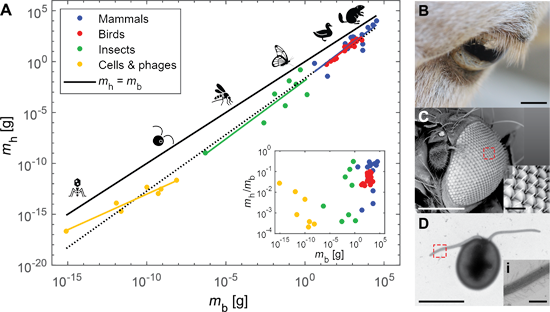
- , which branch into spatulae at the tips [60]. The branching ensures a high density of hairs to generate high adhesive forces [61]. With advances in fabrication techniques at the micrometer scale, gecko-inspired adhesive hairs have been developed, which are capable of generating adhesion without the use


Exfoliation of titanium nitride using a non-thermal plasma process
Beilstein J. Nanotechnol. 2024, 15, 631–637, doi:10.3762/bjnano.15.53
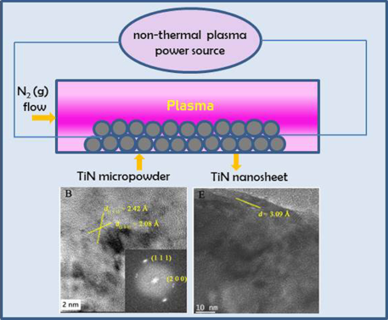
- exfoliation methods, offering promising prospects for applications in photoacoustic imaging and photothermal therapy of tumors because of their satisfactory absorption characteristics in the second near-infrared (NIR-II) region [5]. The non-thermal plasma (NTP) synthesis method enables the fabrication of 2D



Electron-induced deposition using Fe(CO)4MA and Fe(CO)5 – effect of MA ligand and process conditions
Beilstein J. Nanotechnol. 2024, 15, 500–516, doi:10.3762/bjnano.15.45
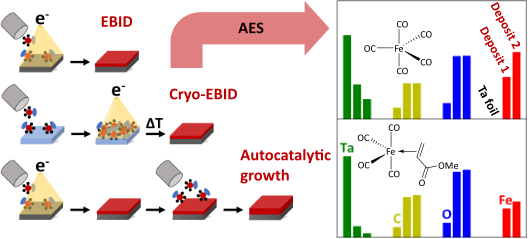
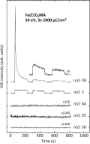
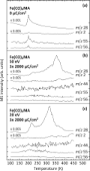
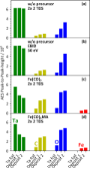
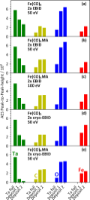
- surface reactions; Introduction Focused electron beam-induced deposition (FEBID) is a state-of-the-art direct-write process for the fabrication of nanoscale materials and devices with arbitrary shape and size down to the sub-10 nm regime [1][2][3]. In FEBID, precursor molecules that contain the element
- then writes patterns into the condensed layer followed by warming up to room temperature to remove the intact precursor from the non-irradiated areas. While cryo-FEBID is less versatile with respect to the fabrication of 3D nanostructures, the processing speed is much higher than for room-temperature
- FEBID, where the precursor is typically present at submonolayer coverage [29]. However, to the best of our knowledge, cryo-FEBID has not yet been applied to the fabrication of iron deposits. Numerous fundamental studies have investigated the electron-induced fragmentation of isolated Fe(CO)5 in the gas



Aero-ZnS prepared by physical vapor transport on three-dimensional networks of sacrificial ZnO microtetrapods
Beilstein J. Nanotechnol. 2024, 15, 490–499, doi:10.3762/bjnano.15.44
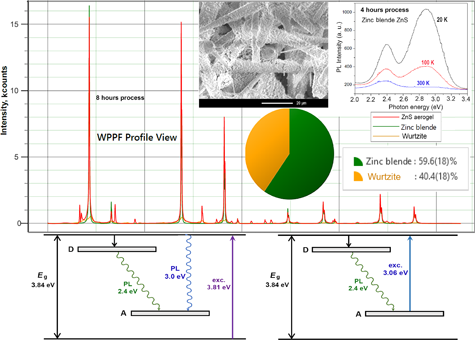
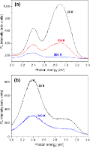
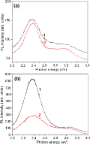
- networks of microtetrapods and has been proposed for microfluidic applications. In this paper, a cost-effective technological approach is proposed for the fabrication of aero-ZnS by using physical vapor transport with Sn2S3 crystals and networks of ZnO microtetrapods as precursors. The morphology of the



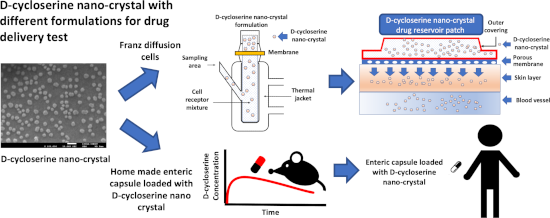
Fabrication of nanocrystal forms of ᴅ-cycloserine and their application for transdermal and enteric drug delivery systems
Beilstein J. Nanotechnol. 2024, 15, 465–474, doi:10.3762/bjnano.15.42


Superconducting spin valve effect in Co/Pb/Co heterostructures with insulating interlayers
Beilstein J. Nanotechnol. 2024, 15, 457–464, doi:10.3762/bjnano.15.41
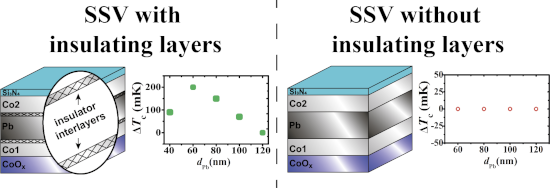
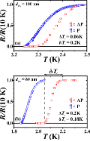
- in a conventional tunneling junction”. While the theory [50] assumes a symmetric F1/S/F2 structure, our samples may actually be asymmetric from the point of view of the interface transparencies. The oxidation times of the two interfaces were different in our samples, and our fabrication procedure was



![[Graphic 6]](/bjnano/content/inline/2190-4286-15-41-i6.svg?max-width=637&scale=1.18182)
Potential of a deep eutectic solvent in silver nanoparticle fabrication for antibiotic residue detection
Beilstein J. Nanotechnol. 2024, 15, 426–434, doi:10.3762/bjnano.15.38
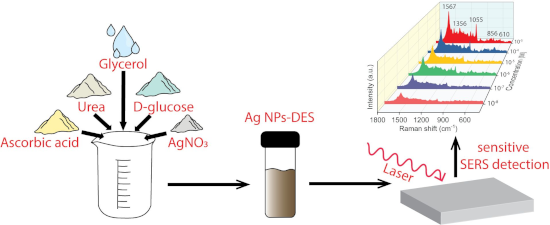
- Institute of Materials Science, Vietnam Academy of Science and Technology, Hanoi, Vietnam 10.3762/bjnano.15.38 Abstract Deep eutectic solvents (DESs) have recently emerged as an alternative solvent for nanoparticle synthesis. There have been numerous advancements in the fabrication of silver nanoparticles
- nanoparticles (Au NPs) were the first to be fabricated in DESs [28][29]. SERS platforms based on Au NPs-DES whose sensitivity and durability are competitive to the other materials were successfully constructed [29][30]. However, no attention has been paid to the potential of DESs in the fabrication of Ag NPs
- good selectivity. Moreover, compared to other studies on NFT and SDZ detection (Table 2), the Ag NPs-DES material shows competitive LOD values and a linear range. Thus, Ag NPs-DES is a promising candidate in SERS applications along with the tremendous potential of DES in Ag NPs fabrication. Conclusion


Unveiling the nature of atomic defects in graphene on a metal surface
Beilstein J. Nanotechnol. 2024, 15, 416–425, doi:10.3762/bjnano.15.37
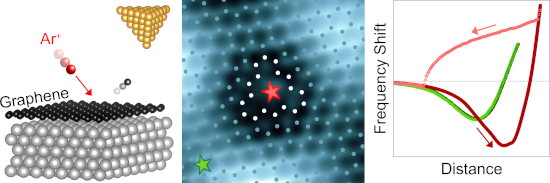
- , during its epitaxial growth in surface science experiments or its fabrication for applications, defects, that is, deviations from the ideal 2D lattice, inevitably occur. Examples for defects are vacancies, interstitial atoms, grain boundaries, stacking faults or wrinkles [5][6][7][8][9][10][11][12][13


Classification and application of metal-based nanoantioxidants in medicine and healthcare
Beilstein J. Nanotechnol. 2024, 15, 396–415, doi:10.3762/bjnano.15.36
- alloys, owing to their favorable mechanical properties and biocompatibility, have been explored for the fabrication of vascular grafts highlighting their potential as a durable and biocompatible alternative in atherosclerosis-related revascularization procedures [187]. Similarly, studies conducted by Li
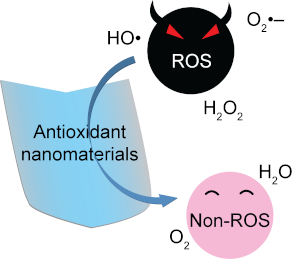
- chain-breaking metal-based nanoantioxidants stop the oxidative reactions after they begin. The strategy for the fabrication of antioxidant nanomaterials is to mimic natural antioxidant enzymes such as CAT, GPx, and SOD. With excellent properties such as high stability, bioavailability, and activity


Investigating ripple pattern formation and damage profiles in Si and Ge induced by 100 keV Ar+ ion beam: a comparative study
Beilstein J. Nanotechnol. 2024, 15, 367–375, doi:10.3762/bjnano.15.33
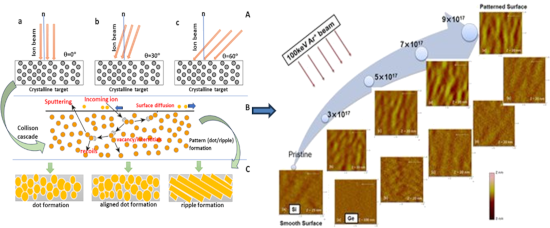
- fabrication on Si and Ge by 100 keV Ar+ ion beam bombardment is discussed. The irradiation was performed in the ion fluence range of ≈3 × 10¹⁷ to 9 × 10¹⁷ ions/cm2 and at an incident angle of θ ≈ 60° with respect to the surface normal. The investigation focuses on topographical studies of pattern formation
- understood. Despite controlled fabrication of patterns has been achieved, details that influence the process of self-assembly still remain open. Ion beam sputtering is an important method for inducing topographical changes in specific materials. For silicon, self-organized dots, ripples, and cones have been


Modulated critical currents of spin-transfer torque-induced resistance changes in NiCu/Cu multilayered nanowires
Beilstein J. Nanotechnol. 2024, 15, 360–366, doi:10.3762/bjnano.15.32
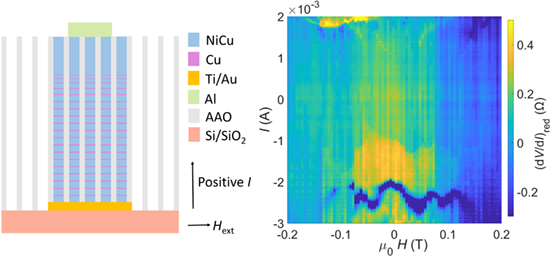
- template were contacted with the top electrodes. After a lift-off process, the 3D devices based on the NiCu/Cu multilayered nanowire array were obtained. A typical device structure is shown in Figure 1b,c. The description of the setup and more details of AAO template fabrication, electrodeposition and
- device fabrication, and scanning electron microscopy (SEM) images of the devices during the fabrication process are presented in Supporting Information File 1. In most reported works, the nanowires were deposited in all pores of the AAO templates [18][19][20][21]. Additional etching steps or coating
- steps were necessary to define the contact area and to obtain a small contact array, which complicates the fabrication process [18][19]. Compared with these works, our process does not need any additional etching step to either define the contact area of the nanowire or electrodes for the top contact





