Search results
Search for "nanosheets" in Full Text gives 161 result(s) in Beilstein Journal of Nanotechnology.
Thermal control of the defunctionalization of supported Au25(glutathione)18 catalysts for benzyl alcohol oxidation
Beilstein J. Nanotechnol. 2019, 10, 228–237, doi:10.3762/bjnano.10.21
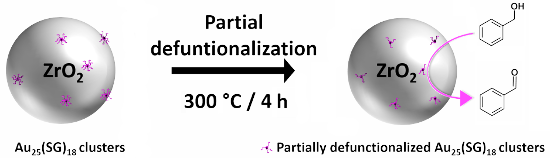
- hydroperoxide or by calcination at 300 °C and showed, in both cases, incomplete conversion of the alcohol (46%) under 5 bar of O2, at 30 °C and in the presence of a base [32]. Another heterogeneous catalyst, Au25(dodecanethiolate)18 deposited on porous carbon nanosheets, has been thermally treated at 500 °C for
- supported on hierarchically porous carbon nanosheets [17] and Au25(SPhNH2)17 supported on SBA-15 [21], both calcined at 400 °C, showed 67% and 68% of selectivity for benzaldehyde, respectively. Thus, the 100% selectivity for benzaldehyde of Au25(SG)18 over ZrO2 when calcined at 400 °C may result from the
- different compositions of the clusters or the effect of the type of support that can be involved in the oxidation mechanism or their different morphologies, as porous materials for the carbon nanosheets and the silica, and nanoparticles for ZrO2. Effect of the reaction temperature In general, the oxidation




Ternary nanocomposites of reduced graphene oxide, polyaniline and hexaniobate: hierarchical architecture and high polaron formation
Beilstein J. Nanotechnol. 2018, 9, 2936–2946, doi:10.3762/bjnano.9.272
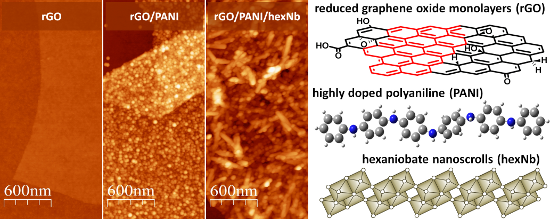
- as n-alkylamines and tetra(n-alkyl)ammonium hydroxides, giving rise to colloidal dispersions of nanoparticles of different morphologies such as nanosheets and nanoscrolls [32][33]. As reported previously [6], the treatment of H2K2Nb6O17 with tetra(n-butyl)ammonium hydroxide (TBAOH) is an efficient


Layered calcium phenylphosphonate: a hybrid material for a new generation of nanofillers
Beilstein J. Nanotechnol. 2018, 9, 2906–2915, doi:10.3762/bjnano.9.269
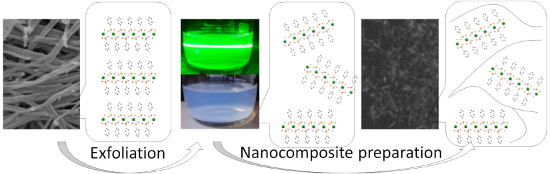
- /bjnano.9.269 Abstract The use of nanosheets of layered calcium phenylphosphonate as a filler in a polymeric matrix was investigated. Layered calcium phenylphosphonate (CaPhP), with chemical formula CaC6H5PO3∙2H2O, is a hybrid organic–inorganic material that exhibits a hydrophobic character due to the
- layered structure and thus fillers formed from nanosheets can be obtained [1][2]. Convenient interactions among functional groups of the polymer chain and the surface groups of the filler are necessary to retain the nanoscale character of the filler and to protect it from the formation of agglomerates in
- precursor for the preparation of nanosheets by exfoliation. Exfoliation is a process whereby thin sheets of material are completely separated from the bulk. This happens when cohesive forces between the adjacent planes, which are usually caused by van der Waals interactions, are overcome. Mechanical or


Nanostructure-induced performance degradation of WO3·nH2O for energy conversion and storage devices
Beilstein J. Nanotechnol. 2018, 9, 2845–2854, doi:10.3762/bjnano.9.265
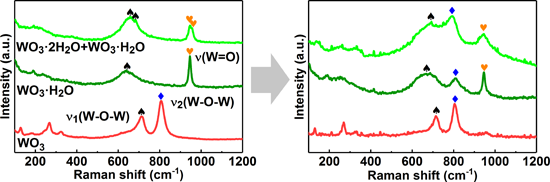
- flower-like balls on the upper layer and nanosheets beneath them as represented in Figure 2c. The nanosheets were ca. 1.3 μm square-shaped and almost vertically aligned on the substrate (Figure 2d,e). The image of a typical nanosheet shows the very low thickness of ca. 27 nm (Figure 2f). The upper layer
- with grouped flower-like balls is highlighted in Figure 2g,h. The images show that the flower-like balls have a diameter of ca. 2.5 μm and are composed of self-assembled square nanosheets with similar sizes as the nanosheets in the layer grown beneath. The magnified image in Figure 2i displays
- nanosheets with average thickness of ca. 37 nm in a flower-like ball crossing each other. Figure 3 shows SEM images of the sample synthesized at 120 °C. The as-grown pure WO3·H2O existed in form of square sheets and hexagonal plates as displayed in Figure 3a–c. The square sheets were measured to be ca. 6 μm


Impact of the anodization time on the photocatalytic activity of TiO2 nanotubes
Beilstein J. Nanotechnol. 2018, 9, 2628–2643, doi:10.3762/bjnano.9.244
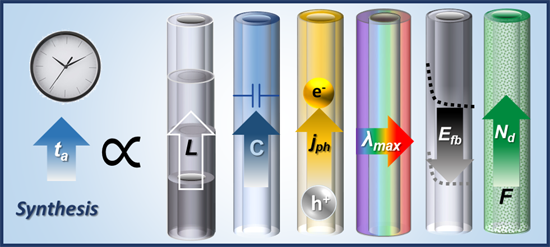
- synthesis methods resulting in a wide range of morphologies, such as mesoporous structures [4], microtubes [5], microdendrites, nanoparticles [6][7][8], nanorods [9][10], nanotubes [11][12][13], nanowires [14], and nanosheets [15][16]. Standing out from the rest of the synthesis techniques, electrochemical


Lead-free hybrid perovskites for photovoltaics
Beilstein J. Nanotechnol. 2018, 9, 2209–2235, doi:10.3762/bjnano.9.207
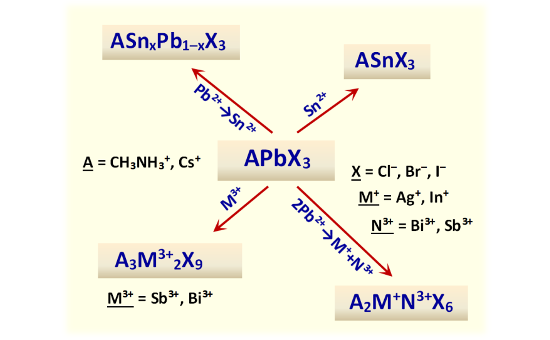
- photodetector is characterized by an on/off ratio as high as ≈105 and a prolonged stability retaining the unvaried response after a shelf-storage for at least three months (Figure 11a). The efficiency of solar cells based on Cs3Bi2I9 HP nanosheets was found to depend on the composition of the HTL layer. The


Electrospun one-dimensional nanostructures: a new horizon for gas sensing materials
Beilstein J. Nanotechnol. 2018, 9, 2128–2170, doi:10.3762/bjnano.9.202


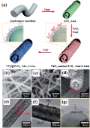


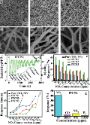


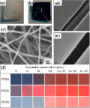
Synthesis of carbon nanowalls from a single-source metal-organic precursor
Beilstein J. Nanotechnol. 2018, 9, 1895–1905, doi:10.3762/bjnano.9.181
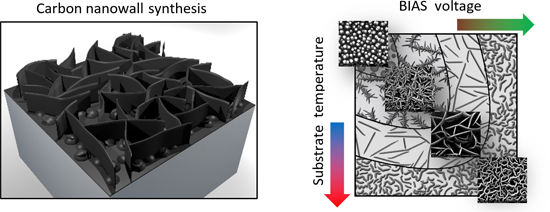
- acetylacetonate; carbon nanowalls; growth zones; ICP PECVD; metal-organic precursor; Introduction The first report of the synthesis of carbon nanowalls (CNWs), i.e., wall-like carbon nanosheets aligned perpendicular to the substrate, was given by Wu and co-workers [1]. The average thickness of these sheets was
- number of dangling bonds that act as nucleation sites for randomly orientated carbon nanoflakes. 2D growth and the subsequent formation of (few-layer) graphene sheets follow. The nanoflakes being almost vertically aligned on the substrate grow fastest to finally form vertically standing nanosheets. The


Improving the catalytic activity for hydrogen evolution of monolayered SnSe2(1−x)S2x by mechanical strain
Beilstein J. Nanotechnol. 2018, 9, 1820–1827, doi:10.3762/bjnano.9.173
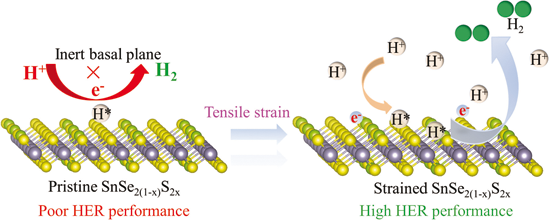
- between 1.85 and 1.99 eV by varying x from 0 to 1. Other 2D-TMDs alloy nanosheets, such as Mo1−xWxSe2 [39] and WS2(1−x)Se2x [40][41], have also shown tuneable bandgaps and different electrical properties by varying the value of x. Monolayer SnS2 and SnSe2 have indirect bandgaps of 2.1 and 1.1 eV
- in recent decades to the development of inexpensive catalysts for the electrochemical HER. Some of the recent studies have focused on monolayer SnX2 (X = S, Se). Liu et al. [43] investigated SnS2 nanosheets regarding their electrochemical behaviour and electrocatalytic properties for HER by examining


Toward the use of CVD-grown MoS2 nanosheets as field-emission source
Beilstein J. Nanotechnol. 2018, 9, 1686–1694, doi:10.3762/bjnano.9.160
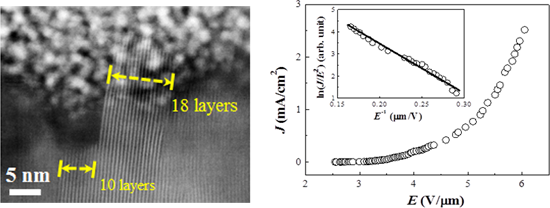
- ), CIRMAP, Research Institute for Materials Science and Engineering, University of Mons, Mons, Belgium 10.3762/bjnano.9.160 Abstract Densely populated edge-terminated vertically aligned two-dimensional MoS2 nanosheets (NSs) with thicknesses ranging from 5 to 20 nm were directly synthesized on Mo films
- ; molybdenum disulfide (MoS2); nanosheets; sulfurization; transmission electron microscopy (TEM); Introduction There is a great interest in the development of one- and two-dimensional (1D and 2D) materials for field-emission (FE) based cathodes using various nanostructured materials [1] for applications in
- displays, X-ray sources and cold-cathode electron sources [2]. 1D and 2D materials such as carbon nanotubes [3], ZnO nanorods [1], LaB6 nanowires [2], SnS2 nanosheets (NSs) [4], vertically aligned graphene [5], WS2 nanotubes [6], MoSe2 nanosheets [7], and MoS2 NSs [8][9][10] are potential field-emitter



Free-radical gases on two-dimensional transition-metal disulfides (XS2, X = Mo/W): robust half-metallicity for efficient nitrogen oxide sensors
Beilstein J. Nanotechnol. 2018, 9, 1641–1646, doi:10.3762/bjnano.9.156
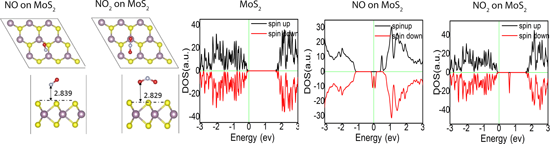
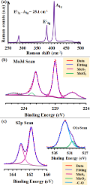
- results also suggest XS2 (X = Mo, W) nanosheets can act as promising nanoscale NO sensors. Keywords: free radical; half-metallicity; nitric oxide (NO); sensors; spin-polarized; Introduction Nitrogen oxide (NOx) gases, one of the most common groups of air pollutants, are known as one culprit of acid rain


Sheet-on-belt branched TiO2(B)/rGO powders with enhanced photocatalytic activity
Beilstein J. Nanotechnol. 2018, 9, 1550–1557, doi:10.3762/bjnano.9.146
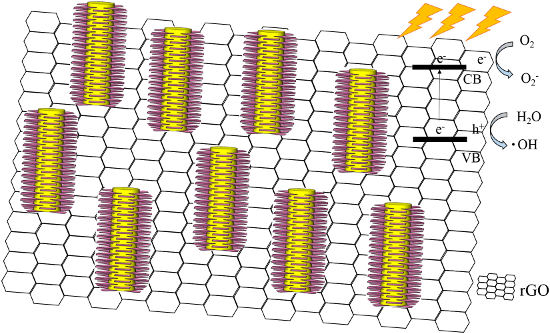
- common but still draws much attention. Many types of TiO2(B) nanostructures have been synthesized, such as nanowires [9][10], nanotubes [11], nanobelts [12][13][14], nanofibers [15] and nanosheets [16]. TiO2(B) is mostly used in lithium-ion batteries due to its relatively open crystal structure, superior
- in Figure 3a). Figure 3b shows more clearly the radially growing nanosheets along the nanobelt trunk. The average length of the nanosheet branches is ≈100 nm. The selected area electron diffraction (SAED) pattern collected from several “sheet-on-belt” nanostructures indicates diffraction rings
- heterogeneously on metallic Ti foils, such titanates decomposed to anatase TiO2 upon calcination in air at 400 °C for 1 h [32][33]. In the current investigation, hydrogen titanate nanosheets are supposed to nucleate heterogeneously on the TiO2(B) trunks via surface deficiencies or exposed ledges when immersing


Cr(VI) remediation from aqueous environment through modified-TiO2-mediated photocatalytic reduction
Beilstein J. Nanotechnol. 2018, 9, 1448–1470, doi:10.3762/bjnano.9.137
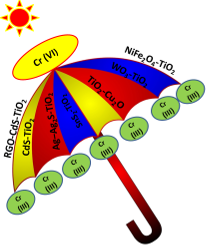
- facilitation by a RGO nanosheets, as shown in Figure 8. Shaikh et al. synthesized TiO2–RGO nanocomposites with uniformly dispersed 4–9 nm diameter TiO2 nanoparticles by a one-step solvothermal technique and evaluated its photocatalytic activity towards reduction of Cr(VI). The use of 1 wt % of RGO at acidic pH
- photoreduction of Cr(VI) under sunlight illumination [143]. Its enhanced photoreduction capacity over TiO2 nanosheets, P25 and CD–P25 was attributed to the better charge transfer as well as higher light absorption properties of CDs. The in situ formation of H2O2 promotes the photoactivity to a great extent


Electrodeposition of reduced graphene oxide with chitosan based on the coordination deposition method
Beilstein J. Nanotechnol. 2018, 9, 1200–1210, doi:10.3762/bjnano.9.111
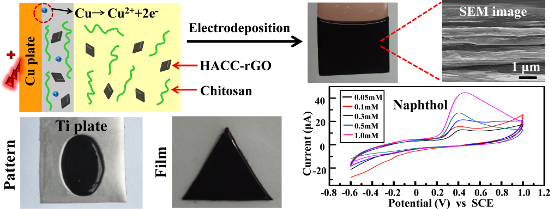
- et al. reported that after electrodeposition in the graphene oxide/chitosan solution, graphene nanosheets could be electrodeposited onto the glassy carbon electrode through the electrochemical reduction of graphene oxide [24]. However, it has been reported that the electrochemically reduced graphene


Electrostatic force spectroscopy revealing the degree of reduction of individual graphene oxide sheets
Beilstein J. Nanotechnol. 2018, 9, 1146–1155, doi:10.3762/bjnano.9.106
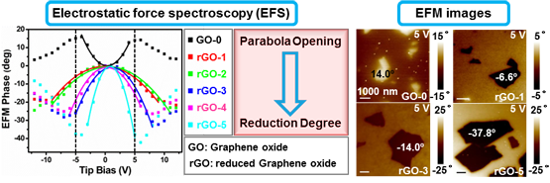
- increment in the visible region as well as the disappearance of the broad shoulder at 300 nm for samples 1–5 compared to sample 0 imply the removal of the oxygen-containing groups and the restoration of the π-conjugation network within the graphene nanosheets [11][12]. Nevertheless, except for the


Room-temperature single-photon emitters in titanium dioxide optical defects
Beilstein J. Nanotechnol. 2018, 9, 1085–1094, doi:10.3762/bjnano.9.100
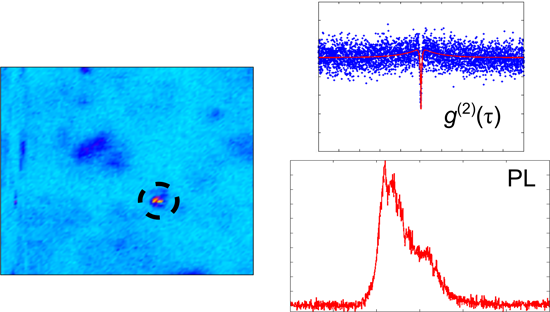
- ]. The defects are responsible for visible photoluminescence (PL) in TiO2 and have been observed in thin films [39][40][41], nanocrystals/nanoparticles [42][43][44][45][46][47], nanorods [48], nanotubes [49][50][51], nanosheets [52], nanoribbons [53] and fibres [54]. In material sciences, the PL spectrum


Review on nanoparticles and nanostructured materials: history, sources, toxicity and regulations
Beilstein J. Nanotechnol. 2018, 9, 1050–1074, doi:10.3762/bjnano.9.98



Facile synthesis of a ZnO–BiOI p–n nano-heterojunction with excellent visible-light photocatalytic activity
Beilstein J. Nanotechnol. 2018, 9, 789–800, doi:10.3762/bjnano.9.72
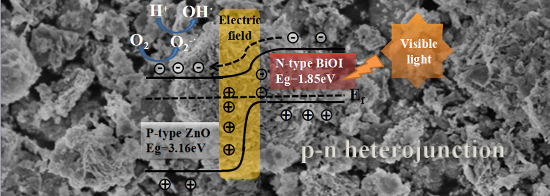
- . [36] reported ZnO-embedded BiOI hybrid nanoflakes fabricated by using Zn5(CO3)2(OH)6 ultrathin nanosheets for BiOI deposition followed by calcination. The obtained ZnO-embedded BiOI hybrid nanoflakes show good photocatalytic activity and recyclability. Jiang et al. [37] prepared the BiOI/ZnO


Valley-selective directional emission from a transition-metal dichalcogenide monolayer mediated by a plasmonic nanoantenna
Beilstein J. Nanotechnol. 2018, 9, 780–788, doi:10.3762/bjnano.9.71
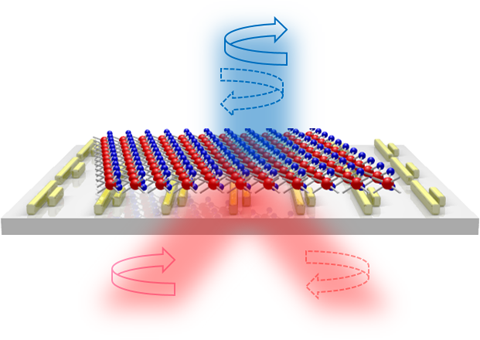
- believe that with the development of material fabrication techniques, nanostructures of TMDCs [49][50][51] could also be readily fabricated, so one can control the position and size of the TMDCs nanosheets with respect to the antenna. Thus, a system consisting of a double-bar antenna and a TMDC nanosheet


Perovskite-structured CaTiO3 coupled with g-C3N4 as a heterojunction photocatalyst for organic pollutant degradation
Beilstein J. Nanotechnol. 2018, 9, 671–685, doi:10.3762/bjnano.9.62
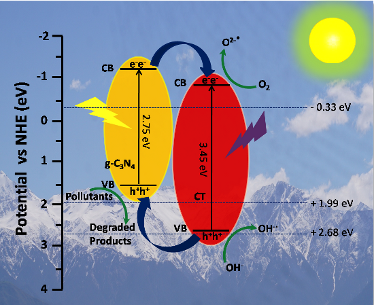
- )–CaTiO3 (CTCN) organic–inorganic heterojunction photocatalyst was synthesized by a facile mixing method, resulting in the deposition of CaTiO3 (CT) nanoflakes onto the surface of g-C3N4 nanosheets. The photocatalytic activity of the as-synthesized heterojunction (along with the controls) was evaluated by
- specific surface area [24]. In this regard, various attempts have been made by researchers to eliminate these issues in recent times. Several strategies such as synthesis of mesoporous g-C3N4 [25], synthesis of 2D nanosheets [26], coupling with conductive materials [23], heterostructure formation with
- polyacrylamide gel route. Furthermore, we made a promising 2D–2D heterojunction of CT nanoflakes and g-C3N4 nanosheets by a facile mixing method. The photocatalytic performance of the as-prepared CT–g-C3N4 (CTCN) heterojunction photocatalyst and the controls was evaluated by monitoring the degradation of


Sensing behavior of flower-shaped MoS2 nanoflakes: case study with methanol and xylene
Beilstein J. Nanotechnol. 2018, 9, 608–615, doi:10.3762/bjnano.9.57

- methods have been applied to synthesize single or few-layered MoS2, including but not limited to mechanical cleavage, chemical exfoliation, hydrothermal synthesis and chemical vapor deposition [16][17][18][19][20][21][22][23]. The hydrothermal process is a scalable method to synthesize MoS2 nanosheets and
- electro-activity of MoS2 nanosheets. Furthermore, sulfur vacancies contribute significantly to the electronic properties of MoS2 [36][37]. Hence, such sulfur vacancy is desirable for the gas sensing properties of MoS2. To study the application of the flower-shaped MoS2 for gas sensing, the Brunauer–Emmett
- addition, we studied the sensing ability of the flower-shaped MoS2 nanosheets toward xylene. Figure 5a,b represents the gas sensing response toward 200–400 ppm of xylene vapor at the temperature range from 100 to 200 °C. When the temperature was increased, the sensitivity was enhanced from about 0.25 to


Anchoring Fe3O4 nanoparticles in a reduced graphene oxide aerogel matrix via polydopamine coating
Beilstein J. Nanotechnol. 2018, 9, 591–601, doi:10.3762/bjnano.9.55
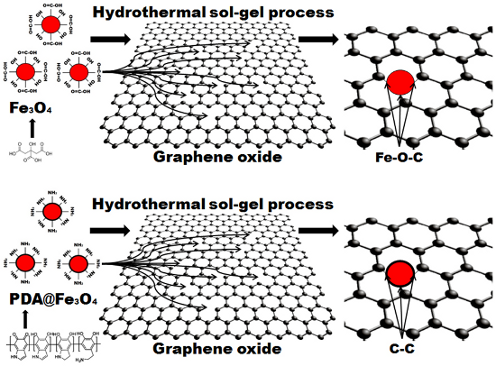
- second method involves the addition of already prepared nanoparticles to GO water dispersion before hydrogel formation [22]. As introduced MNPs physically adsorb at GO defects or unsaturated edges and become trapped in between GO nanosheets. The main advantage of this approach is the homogeneity in size


Sugarcane juice derived carbon dot–graphitic carbon nitride composites for bisphenol A degradation under sunlight irradiation
Beilstein J. Nanotechnol. 2018, 9, 353–363, doi:10.3762/bjnano.9.35
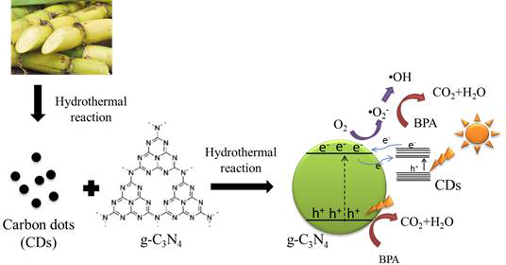
- 1) show a TEM image of CD/g-C3N4(0.5) and g-C3N4, respectively. The observation of CDs (small dark spots) shows that the CDs were well distributed onto the smooth, thin-layered g-C3N4 nanosheets. The inset of Figure 1e indicates that the particle size of the CDs falls in the range of 3−6.5 nm. The


Synthesis and characterization of electrospun molybdenum dioxide–carbon nanofibers as sulfur matrix additives for rechargeable lithium–sulfur battery applications
Beilstein J. Nanotechnol. 2018, 9, 262–270, doi:10.3762/bjnano.9.28
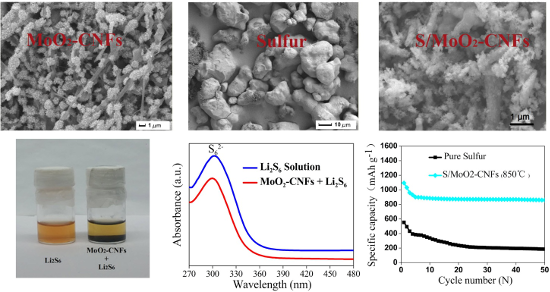
- conductivity of Ti4O7 nanoparticles [16][17] and Co9S8 [18] nanosheets have been used in new concepts for sulfur matrices with both a polar nature and good conductivity. Therefore, the exploration of novel conductive composites is another direction leading to the practical application of Li–S batteries


BN/Ag hybrid nanomaterials with petal-like surfaces as catalysts and antibacterial agents
Beilstein J. Nanotechnol. 2018, 9, 250–261, doi:10.3762/bjnano.9.27
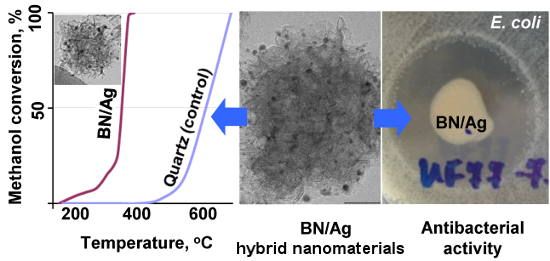
- bactericidal properties of h-BN nanosheets can be significantly improved after the growth of Ag nanoparticles (NPs) on their surfaces. In our previous work [16] we have produced BN/Ag HNMs by Ag ion implantation into the BN NPs with petal-like surfaces. However, this technique does not allow for the production
- solid particles consisting of numerous BN nanosheets, 30–50 nm in length and 10–25 nm in width, with a characteristic interplanar spacing of 0.33 nm (Figure 1c). The formation of Ag NPs on the BN NP surfaces during the syntheses did not lead to a significant modification of the initial BN NP structures
- to 35 nm, were also detected (Figure 1h). The HRTEM images of individual BN/Ag HNMs obtained via CVD and UV decomposition methods are illustrated in Figure 1f and 1i. The outer BN NP surface is formed by BN nanosheets consisting of several h-BN atomic layers and Ag NPs located between the petals