


Search results
Search for "phonon" in Full Text gives 201 result(s) in Beilstein Journal of Nanotechnology. Showing first 200.
Absence of free carriers in silicon nanocrystals grown from phosphorus- and boron-doped silicon-rich oxide and oxynitride
Beilstein J. Nanotechnol. 2018, 9, 1501–1511, doi:10.3762/bjnano.9.141
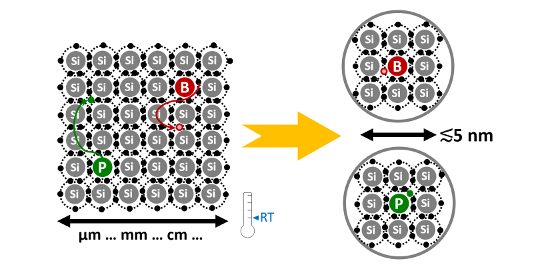
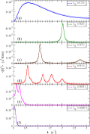
- carriers would quench the PL, which would preferentially affect the larger NCs with least confinement energy. Instead of a PL redshift expected for doped NCs with decreasing T, we observe a small blueshift related to the thermal contraction of the lattice and reduced electron–phonon interaction, which


Electronic conduction during the formation stages of a single-molecule junction
Beilstein J. Nanotechnol. 2018, 9, 1471–1477, doi:10.3762/bjnano.9.138
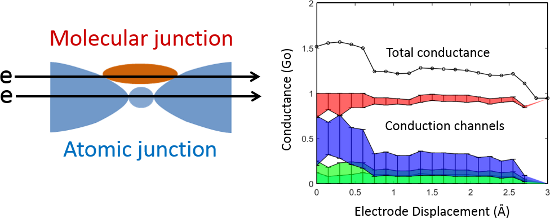
- conductance steps at 45 ± 1 mV take place at higher voltage than expected for conductance steps due to Ag phonon excitations (<25 mV) [15], and are ascribed to activation of a vibration mode in the molecular junction [13]. The overall distribution of steps as a function of voltage is seen in Figure 2b. The
- transport via the molecular junction, while the overall conductance is the outcome of the parallel molecular and metallic pathways. The zero-voltage feature observed in Figure 2a,c does not allow a clear identification of phonon-induced steps in the conductance via the metallic bridge, which are expected
- G0 (bottom) zero-voltage conductance. The steps in the conductance appear below 25mV and are associated with activation of metal phonon modes [15]. (a,b) Conductance traces measured for the Ag–vanadocene junction (black curve) and the experimentally resolved conductance contributions of the main


Computational exploration of two-dimensional silicon diarsenide and germanium arsenide for photovoltaic applications
Beilstein J. Nanotechnol. 2018, 9, 1247–1253, doi:10.3762/bjnano.9.116
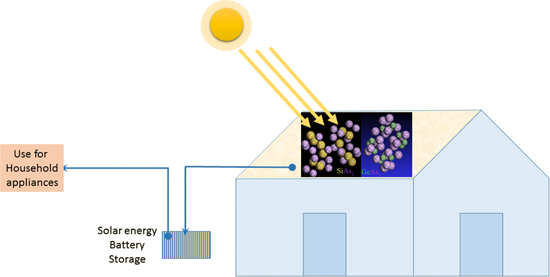
- the same IV–V group combination, we focus our study on two-dimensional SiAs2 and GeAs2 and compare them with their bulk counter parts with regard to electronic band structure, phonon-vibration frequencies, optical properties, band gap modulation behavior and predict their potential applications
- spacing representing the augmentation charges, charge densities and potentials (NGFX, NGFY, NGFZ) so as to get accurate results. The phonon spectrum was computed using the density functional perturbation theory (DFPT) [27] as implemented in the Quantum-ESPRESSO package [28]. The excitonic properties are
- calculated lattice constants for single-layered SiAs2 and GeAs2 are slightly smaller than those calculated for the bulk phases. The lattice constant c is kept constant and greater than 15 Å by adding a vacuum layer. The dynamical stability of SiAs2 and GeAs2 monolayers is evaluated by analysing the phonon


Thermoelectric current in topological insulator nanowires with impurities
Beilstein J. Nanotechnol. 2018, 9, 1156–1161, doi:10.3762/bjnano.9.107
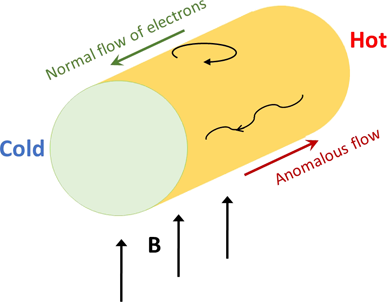
- electronic transport properties and also reduce the phonon scattering which then leads to increased efficiency [1]. Interestingly, often the materials that show the best thermoelectric properties on the nanoscale can also exhibit topological insulator properties [2], although the connection between the two


Room-temperature single-photon emitters in titanium dioxide optical defects
Beilstein J. Nanotechnol. 2018, 9, 1085–1094, doi:10.3762/bjnano.9.100
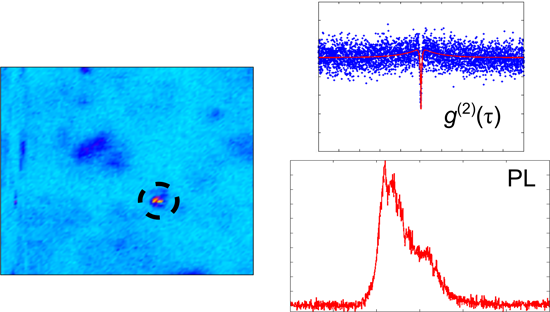
- signals in the emission peaks by suppressing the contributions due to phonon sidebands. Conclusion This study investigated thin films, single crystals and nanopowders of TiO2 via confocal microscopy. For the first time, it has been observed that TiO2 defects exhibit antibunching behaviour within thin


Theoretical study of strain-dependent optical absorption in a doped self-assembled InAs/InGaAs/GaAs/AlGaAs quantum dot
Beilstein J. Nanotechnol. 2018, 9, 1075–1084, doi:10.3762/bjnano.9.99
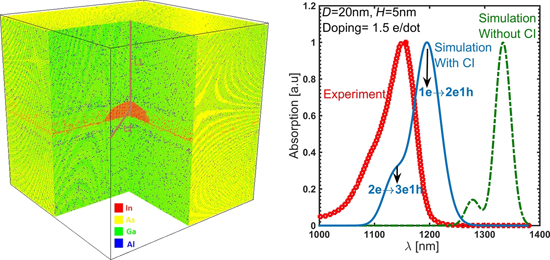
- harmonic potential underestimates the repulsion at smaller bond lengths and also fails to capture the weakening of atomic forces at large atomic separation [8]. The anharmonic strain parameters were originally optimized to obtain correct Grüneisen parameters for accurate phonon dispersion calculations [7
- and bond-bending coefficient β on the bond length strain, while B describes the dependence of bond-bending coefficient (β) on angle deformation. The anharmonic model was developed to simulate phonon dispersion and transport and the anharmonic strain parameters were optimized to reproduce the Grüneisen
- parameters γi = −(V/ωi)(δωi/δV), which are a measure of the dependence of the phonon mode frequencies on strain. Simulating the strain in quantum dots with the original anharmonic strain parameters produces inaccurate results. In addition, simulating strain in quantum wells with these parameters gives strain




Electro-optical interfacial effects on a graphene/π-conjugated organic semiconductor hybrid system
Beilstein J. Nanotechnol. 2018, 9, 963–974, doi:10.3762/bjnano.9.90
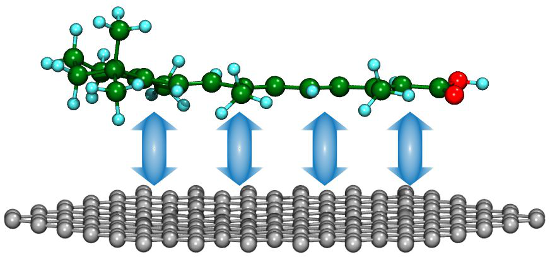
- , respectively. Both spectra show two major Raman features: the first-order bond-stretching G band [51] and the two-phonon 2D band [52][53]. The single-Lorentzian shape of the 2D band (≈2690 cm−1) reassures that the graphene piece is a single-layer flake [52][53]. The inset in the upper left corner of Figure 6




The effect of atmospheric doping on pressure-dependent Raman scattering in supported graphene
Beilstein J. Nanotechnol. 2018, 9, 704–710, doi:10.3762/bjnano.9.65
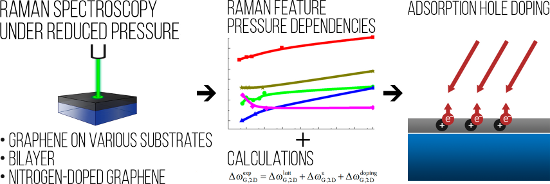
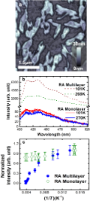
- graphene charge carrier density and the effect of the substrate on the electronic and phonon properties of graphene. It was found that adsorption of molecules from the atmosphere onto graphene doped with nitrogen (electron doping) compensates for the electron charge. Furthermore, the atmosphere-induced
- 2D peak experimental pressure shift can be explained by changes in the corresponding phonon mode energy due to (1) graphene lattice compressibility [5], (2) strain induced by the difference of compressibility values for graphene and substrate [5][14], and (3) possible desorption of atmosphere
- -induced doping groups [3][13]. Thus, the experimental peak shift due to pressure change can be written as: The first term is defined by the following expression [5]: where and are normal G and 2D peak positions, respectively; γG,2D is a Grüneisen parameter for corresponding E2g and A1g phonon modes


Green synthesis of fluorescent carbon dots from spices for in vitro imaging and tumour cell growth inhibition
Beilstein J. Nanotechnol. 2018, 9, 530–544, doi:10.3762/bjnano.9.51
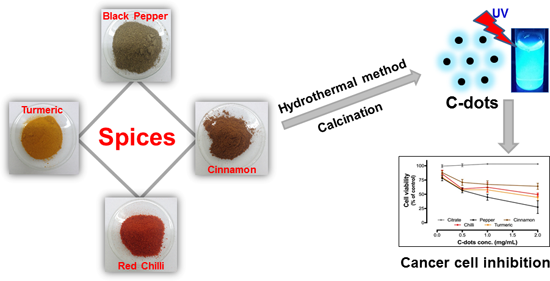
- attributed to surface state emission, intrinsic band emission, triple ground state emission, dipole emission involving electron–phonon coupling, transition from surface electrons to valence holes, self-trapped excitons and to the presence of small organic molecules. Moreover, the characteristic excitation


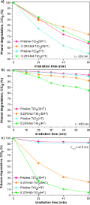
Influence of the preparation method on the photocatalytic activity of Nd-modified TiO2
Beilstein J. Nanotechnol. 2018, 9, 447–459, doi:10.3762/bjnano.9.43
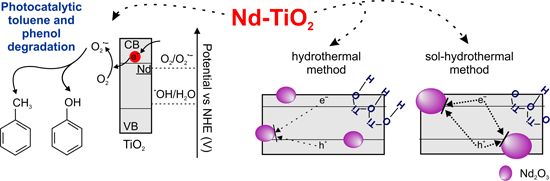
- packaged energy levels, which limits the possible efficiency of up-conversion processes [20]. To obtain up-conversion of Nd3+ ions, good crystallization of the host material, revealing also low phonon energy is required [20]. The presence of Nd3+ ions in the Nd2O3 phase or in an environment that is highly




Review: Electrostatically actuated nanobeam-based nanoelectromechanical switches – materials solutions and operational conditions
Beilstein J. Nanotechnol. 2018, 9, 271–300, doi:10.3762/bjnano.9.29
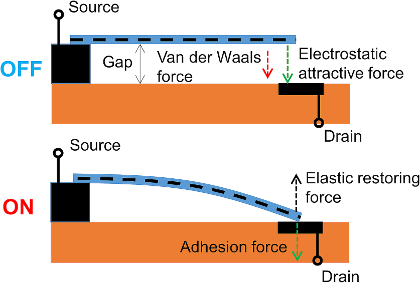
- 5 V [123]. Here, the switching to the off state is achieved by applying a voltage pulse, presumably causing a phonon heating driven repulsion force [123]. However, practical challenges for the use of CNTs in NEM contact switches still remain, such as dependence of electrical properties of CNTs on


Dopant-stimulated growth of GaN nanotube-like nanostructures on Si(111) by molecular beam epitaxy
Beilstein J. Nanotechnol. 2018, 9, 146–154, doi:10.3762/bjnano.9.17
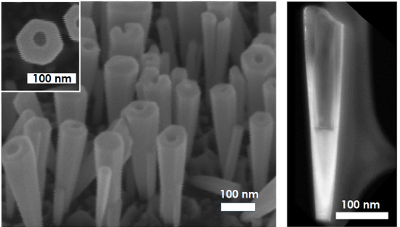
- , XB, D0XA and D0XB. As one can see, in our spectra, phonon replicas of exciton transitions related to a longitudinal optical phonon with 93 meV energy [37] (XA – 1 LO, D0XA – 1 LO and D0XB – 1 LO) are observed. Features in the region of 3.43 eV indicate transitions related to structural defects [38


Combined scanning probe electronic and thermal characterization of an indium arsenide nanowire
Beilstein J. Nanotechnol. 2018, 9, 129–136, doi:10.3762/bjnano.9.15
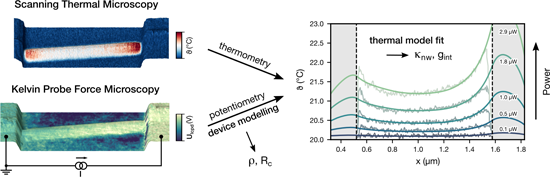
- ], then phonon scattering at an additional interface may partly be responsible for the reduced interfacial conductivity to the electrodes. The extracted interfacial thermal conductivities agree well with measured values reported in literature [36][37][38][39]. Conclusion In summary, we have shown that KFM


Design of photonic microcavities in hexagonal boron nitride
Beilstein J. Nanotechnol. 2018, 9, 102–108, doi:10.3762/bjnano.9.12
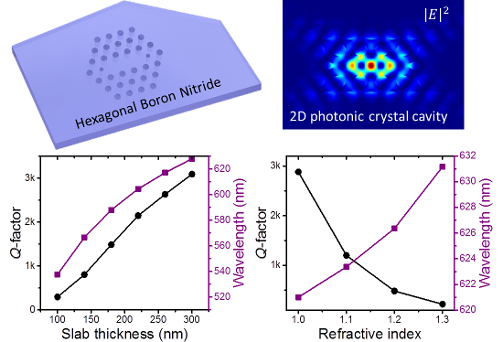
- attractive candidate for a monolithic cavity system. In particular, hBN has a wide bandgap of ≈6 eV which makes it transparent in the visible spectral range that contains the zero phonon lines (ZPLs) of a range of ultra-bright emitters [21]. Furthermore, hBN has properties which are desirable for micro


Growth model and structure evolution of Ag layers deposited on Ge films
Beilstein J. Nanotechnol. 2018, 9, 66–76, doi:10.3762/bjnano.9.9
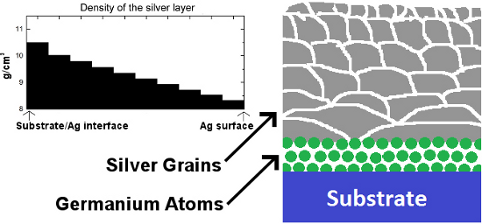
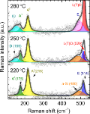
- measurements immediately after the deposition process as well as 10 days later. The results are presented in Figure 8. There are two characteristic bands in the Raman spectra. The band centered at 270 cm−1 most likely originates from the confined optical phonon in ultra-small germanium nanoclusters, while the
- band at around 160 nm is a combination of bands originating from transverse acoustic, longitudinal acoustic, longitudinal optical and transverse optical phonon modes in the amorphous Ge Raman spectrum [29][30][31]. This indicates a mixture of nanocrystalline and amorphous Ge. The bands are clearly






CdSe nanorod/TiO2 nanoparticle heterojunctions with enhanced solar- and visible-light photocatalytic activity
Beilstein J. Nanotechnol. 2017, 8, 2741–2752, doi:10.3762/bjnano.8.273
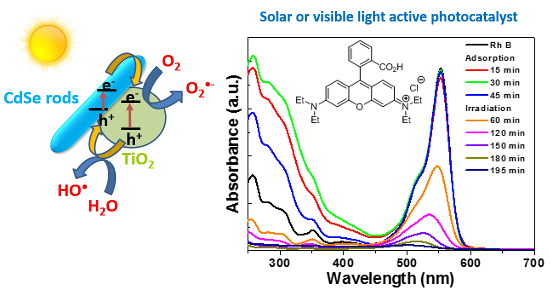
- their dispersion in TiO2 particles. Raman spectroscopy was further used to confirm the structures of CdSe/TiO2 composites. Two peaks located at 206 and 414 cm−1 corresponding to the longitudinal optical (LO) phonon and its overtone (2LO) can be observed for CdSe NRs (Figure S2, Supporting Information



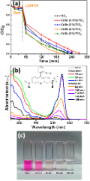
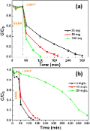

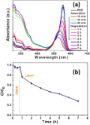


Fabrication of CeO2–MOx (M = Cu, Co, Ni) composite yolk–shell nanospheres with enhanced catalytic properties for CO oxidation
Beilstein J. Nanotechnol. 2017, 8, 2425–2437, doi:10.3762/bjnano.8.241
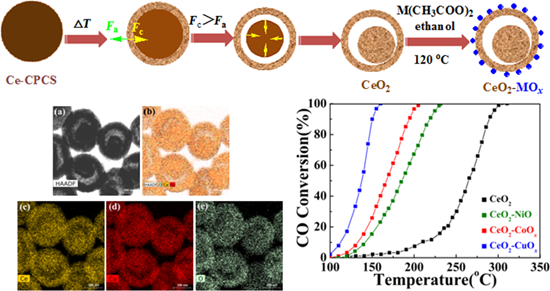
- on various parameters, including the crystal defects, oxygen vacancies, phonon confinement, and inhomogeneous strain related to the reduced ceria [31][32]. Herein, the shift can be related to the interaction between the MOx species and CeO2 surface, which leads to lengthening and weakening of the M–O


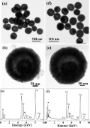

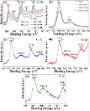


Changes of the absorption cross section of Si nanocrystals with temperature and distance
Beilstein J. Nanotechnol. 2017, 8, 2315–2323, doi:10.3762/bjnano.8.231
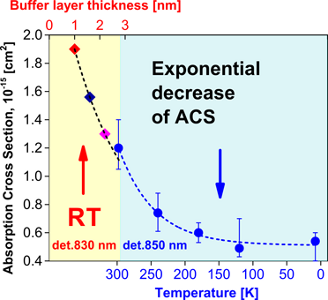
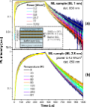
- the function presented in Equation 20 (Figure 4b) for our ML structures. Temperature dependence of the ACS Contrary to the common assumption, the ACS should be generally considered as temperature-dependent [5][29]. There are two mechanisms responsible for this dependence. First, for the phonon
- -assisted transitions the occupation number of phonons is an exponential function [1] of temperature containing the Bose–Einstein statistical factor: where Ωph is the typical (average) phonon energy and kB is the Boltzmann constant. Second, with varying temperatures the band gap of a NC is shifting. This
- changes the effective DOS at a certain energy. Following the phenomenological expression proposed by Cardona’s group [30] we can write: where B is a temperature-independent constant related to the strength of the electron–phonon interaction, and Egap,0 corresponds to the band gap at 0 K. The ACS is equal


Velocity dependence of sliding friction on a crystalline surface
Beilstein J. Nanotechnol. 2017, 8, 2186–2199, doi:10.3762/bjnano.8.218
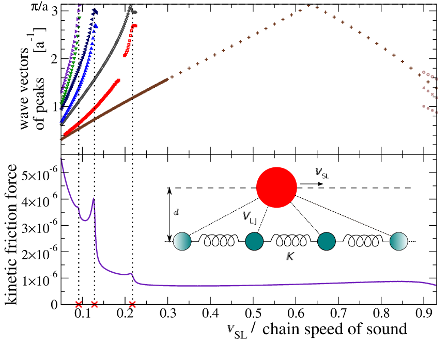
- , representing a crystalline substrate. This interaction converts a part of the kinetic energy of the slider into phonon waves in the substrate. As a result, the slider experiences a friction force. As a function of the slider speed, we observe dissipation peaks at specific values of the slider speed, whose
- nature we understand by means of a Fourier analysis of the excited phonon modes. By relating the phonon phase velocities with the slider velocity, we obtain an equation whose solutions predict which phonons are being excited by the slider moving at a given speed. Keywords: atomic-scale friction; contact
- ][29][30][31][32][33][34][35]. The main difficulty here is to provide a satisfactory implementation of the thermostat that not only provides a correct canonical dynamics in equilibrium conditions, but also manages to dispose of the extra excitation energy carried by the traveling phonon waves generated



![[Graphic 31]](/bjnano/content/inline/2190-4286-8-218-i50.svg?max-width=637&scale=1.18182) as functions of vSL. Panels (c) and (d): detail ...
as functions of vSL. Panels (c) and (d): detail ...

![[Graphic 34]](/bjnano/content/inline/2190-4286-8-218-i53.svg?max-width=637&scale=1.18182) , with the dynamic friction Fd as a function of vSL...
, with the dynamic friction Fd as a function of vSL...


![[Graphic 40]](/bjnano/content/inline/2190-4286-8-218-i59.svg?max-width=637&scale=1.18182) (symbols), compared with the values of k of the phonons who...
(symbols), compared with the values of k of the phonons who...


Substrate and Mg doping effects in GaAs nanowires
Beilstein J. Nanotechnol. 2017, 8, 2126–2138, doi:10.3762/bjnano.8.212
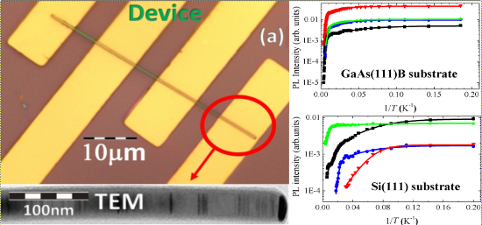
- the lattice and the electron–phonon interaction promote the broadening and the redshift of the energy levels, which leads to a reduction of the bandgap [46][62][63]. Among the several theoretical models available in the literature, one that probably better describes the temperature dependence of the
- ). For two of the investigated nanowires, our values are in good agreement with a recent result (≈31 cm2/Vs) in p-type Si-doped GaAs nanowires, obtained by measuring the plasmon–phonon interactions using transmission Raman spectroscopy [59] and, on average, clearly higher than the reported value (0.417


Adsorbate-driven cooling of carbene-based molecular junctions
Beilstein J. Nanotechnol. 2017, 8, 2060–2068, doi:10.3762/bjnano.8.206
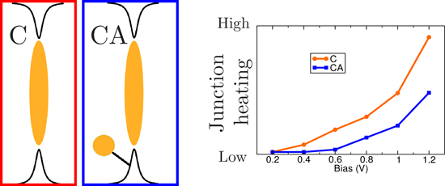
- polarization basis for gold and a double-ζ plus polarization basis for nitrogen, hydrogen and carbon atoms. Exchange–correlation is described with the generalized gradient approximation (GGA) [32]. For the calculation of the electron–phonon coupling matrix we use the Inelastica code [33] with the M(Γ
- ) approximation [34], which consists of calculating the electron–phonon coupling matrix M in just one point of the Brillouin zone (Γ) for both electrons and phonons. The dynamical region includes the molecule, the Au atoms forming electrode terminations and the adsorbate atoms. The position of the molecule, tip
- , for high energy modes (E ≥ 70 meV), the numerator can be well approximated by the emission rate Re,λ(Vb) since, assuming a low phonon-bath temperature, . Also, the denominator J + Ra,λ(Vb) − Re,λ(Vb) does not change much for carbene modes over the whole bias range considered. Figure S6 in Supporting


![[Graphic 14]](/bjnano/content/inline/2190-4286-8-206-i21.png?max-width=637&scale=1.18182) = 176 meV as a function of applied bias for the C and CA junctions, a...
= 176 meV as a function of applied bias for the C and CA junctions, a...

Oxidative stabilization of polyacrylonitrile nanofibers and carbon nanofibers containing graphene oxide (GO): a spectroscopic and electrochemical study
Beilstein J. Nanotechnol. 2017, 8, 1616–1628, doi:10.3762/bjnano.8.161
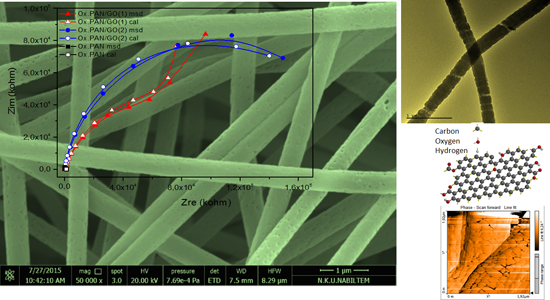
- electron–phonon interactions of the material [51]. ATR-FTIR spectroscopy of oxidized PAN/GO nanofibers The ATR-FTIR results show a broad OH stretching peak of GO around 3300 cm−1 [57] and the C–H vibrations of the CH, CH2 and CH3 structures of oxidized polyacrylonitrile around 2920 cm−1 [38][40]. Through


Calcium fluoride based multifunctional nanoparticles for multimodal imaging
Beilstein J. Nanotechnol. 2017, 8, 1484–1493, doi:10.3762/bjnano.8.148
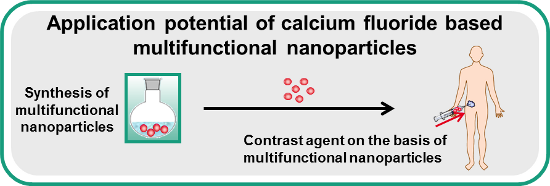
- favorable chemical and mechanical properties. They seem to be perfect materials as fluorescence host matrix owing to their low phonon energies and they subsequently minimize the quenching of the excited state of rare-earth ions. In contrast to chloride or bromide hosts, fluorides are completely air stable
- biocompatible agents for bone and teeth reconstruction [23]. Calcium fluoride exhibits a wide transparent spectral window (190–1100 nm), large band gap (approx. 12 eV), low refractive index and low phonon energy [14]. Because of the high stability and flexibility of the fluorite structure, a number of various


Comprehensive Raman study of epitaxial silicene-related phases on Ag(111)
Beilstein J. Nanotechnol. 2017, 8, 1357–1365, doi:10.3762/bjnano.8.137
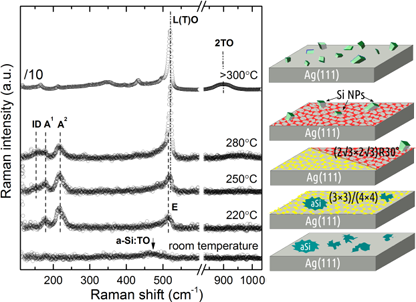
- cm−1 with a shoulder around 350 cm−1. Narrow phonon modes indicative of crystalline order are not observed in this case. At a temperature of 220 °C at which (3×3)/(4×4) epitaxial silicene is formed, the prototypical phase with C6v symmetry is identified by the presence of narrow A1 and A2 modes at
- band at 520 cm−1 with a FWHM of 8 cm−1. This mode is similar to the L(T)O phonon mode of diamond-like silicon, clearly indicating the formation of Si crystallites. Additionally, the second-order TO phonon mode around 900 cm−1 (Figure 2, top spectrum) supports the bulk-like nature of the structures
- formed. The fact that the intensity of the L(T)O phonon mode gets higher for deposition at 350 °C demonstrates that the sizes of the crystallites enlarge with increasing deposition temperatures. However, this temperature is still low compared to the growth temperature of crystalline Si, which usually



3D continuum phonon model for group-IV 2D materials
Beilstein J. Nanotechnol. 2017, 8, 1345–1356, doi:10.3762/bjnano.8.136
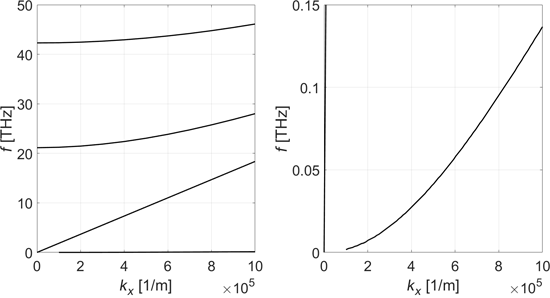
- anisotropy and flexural modes perpendicular to the layers and can thus be applied to any two-dimensional material. In this paper, we use the model to not only compare the phonon spectra among the group-IV materials but also to study whether these phonons differ from those of a compound material such as
- molybdenum disulfide. The origin of quadratic modes is clarified. Mode coupling for both graphene and silicene is obtained, contrary to previous works. Our model allows us to predict the existence of confined optical phonon modes for the group-IV materials but not for molybdenum disulfide. A comparison of
- the long-wavelength modes to density-functional results is included. Keywords: graphene; molybdenum disulfide; phonon; silicene; two-dimensional materials; Introduction Phonon spectra in two-dimensional (2D) nanomaterials have almost exclusively been computed using density-functional theory (DFT


![[Graphic 19]](/bjnano/content/inline/2190-4286-8-136-i109.png?max-width=637&scale=1.18182) phonon modes of single-layer MoS2. The right plot is a ...
phonon modes of single-layer MoS2. The right plot is a ...



