Search results
Search for "reactivity" in Full Text gives 283 result(s) in Beilstein Journal of Nanotechnology. Showing first 200.
Antimicrobial metal-based nanoparticles: a review on their synthesis, types and antimicrobial action
Beilstein J. Nanotechnol. 2020, 11, 1450–1469, doi:10.3762/bjnano.11.129
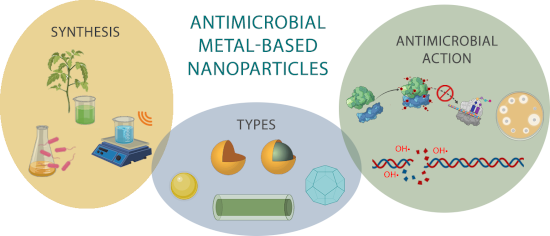
- activity can result in the development of novel antimicrobial substances. Specifically, metal-based nanoparticles have attracted much interest due to their broad effectiveness against pathogenic microorganisms due to their high surface area and high reactivity. The aim of this review was to explore the


Atomic defect classification of the H–Si(100) surface through multi-mode scanning probe microscopy
Beilstein J. Nanotechnol. 2020, 11, 1346–1360, doi:10.3762/bjnano.11.119
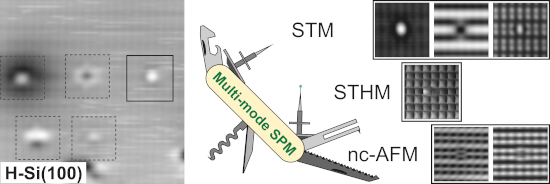
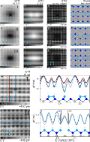
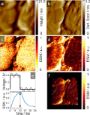
- apparent contrast of the hydrogen atoms with the surrounding surface. Previous studies have identified the two contrasts as resulting from differing chemical reactivity of different functionalizing apex atoms [38], where the dark contrast image corresponds to a Si-terminated tip [39][40][41] and the bright
- contrast image corresponds to an H-terminated tip [39][40]. The transition between the two modes through the loss of H-functionalization of the tip (by capping a surface dangling bond [40]) can be seen in Supporting Information File 1, Figure S4. This differing chemical reactivity is seen in Figure 1j
- , where the height-dependent frequency shift spectra (Δf(z)) taken above select positions on the surface (see Figure 1g,h for positions), shows significantly different character for each tip termination. To highlight the termination-dependent reactivity, frequency shift difference spectra [42] were



Role of redox-active axial ligands of metal porphyrins adsorbed at solid–liquid interfaces in a liquid-STM setup
Beilstein J. Nanotechnol. 2020, 11, 1264–1271, doi:10.3762/bjnano.11.110
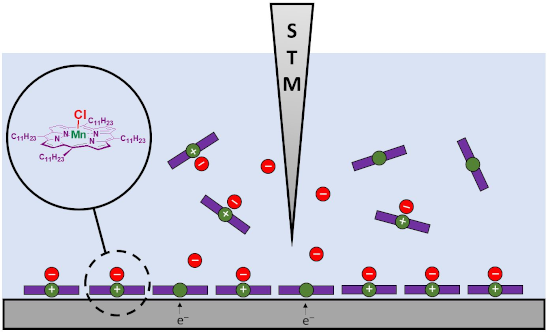
- insights into reactivity at the single-molecule scale, some mechanistic aspects still remained unclear. For instance, the reduction of the Mn(III) porphyrin to a Mn(II) porphyrin also involves the dissociation of the axially coordinating Cl ligand from the metal center, and it is as yet unclear what the
- their reactivity. Our proposal of redox reactions is supported by the observation that the magnitude of the current increases with an increasing concentration of Mn(III)TUPCl in the supernatant solution. Typically, Faradaic currents depend linearly on the concentration of the redox-active species, and
- of the chloride counterion for the redox reactivity of MnTUPCl. To investigate the influence of the nature of the used electrodes, we varied the sample surfaces (HOPG and Au(111)) and the tip material (Pt90Ir10, Au and W). A summary of these experiments is given in Table 1. Additional currents were


Hybridization vs decoupling: influence of an h-BN interlayer on the physical properties of a lander-type molecule on Ni(111)
Beilstein J. Nanotechnol. 2020, 11, 1168–1177, doi:10.3762/bjnano.11.101
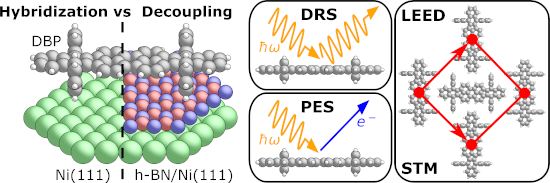
- chemical reactivity (prone to oxidation) and a strong hybridization with the organic molecules [41]. In contrast to these traditional low work function materials, h-BN on Ni(111) is chemically inert, and we showed that organic molecules like DBP are decoupled from the metal surface which makes this system


Straightforward synthesis of gold nanoparticles by adding water to an engineered small dendrimer
Beilstein J. Nanotechnol. 2020, 11, 1110–1118, doi:10.3762/bjnano.11.95
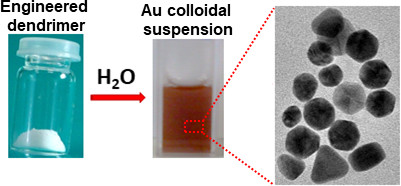
- nanoparticle synthesis due to the reactivity of this linkage [37][38][39] and due to its ability to complex metals, especially gold(I), with the sulfur atom [40][41]. A recent theoretical work demonstrated that the highest occupied molecular orbital of a small dendrimer containing the P=N–P=S linkage is


A new photodetector structure based on graphene nanomeshes: an ab initio study
Beilstein J. Nanotechnol. 2020, 11, 1036–1044, doi:10.3762/bjnano.11.88
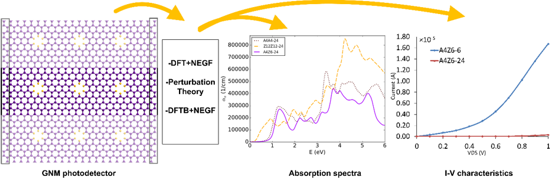
- 1, from the A4Z6-6 and A4A4-6 supercells six carbon atoms (one hexagon) were removed, and from the A4Z6-24 supercell 24 carbon atoms were removed. Note that the creation of these holes in the graphene lattice leaves dangling bonds on carbon atoms at the edges and increases the reactivity of these


Microwave-induced electric discharges on metal particles for the synthesis of inorganic nanomaterials under solvent-free conditions
Beilstein J. Nanotechnol. 2020, 11, 1019–1025, doi:10.3762/bjnano.11.86
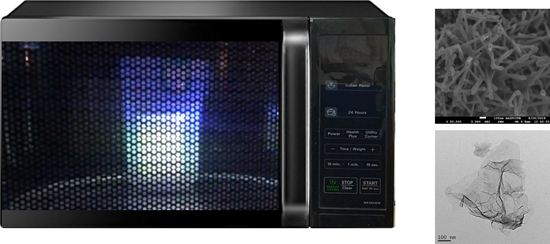
- of CuF/CuF2 nanorods. The reactivity of Cu with sulfur is higher than that with fluorine as soft–soft interactions between Cu and S dominate the product stability compared to soft–hard interactions between Cu and F. The XRD pattern in Figure 4a confirms the hexagonal covellite structure of CuS. The
- fluorides depending on the reactivity. Cu and Ni, in the presence of graphite and /or g-C3N4 and the absence of sulfur produce metallic nanoparticles. This might be due to the reducing capability of carbon at high temperatures preventing the metals from getting oxidized. When sulfur is used in the reaction
- mixture along with g-C3N4, sulfur helps to produce carbon nanotubes instead of carbon nanospheres. The reactivity of sulfur with the end caps of nanotubes does not allow the carbon nanotubes to close. These amorphous carbon nanotubes help as a template to intercalate metal fluorides/metal sulfides. As the


Three-dimensional solvation structure of ethanol on carbonate minerals
Beilstein J. Nanotechnol. 2020, 11, 891–898, doi:10.3762/bjnano.11.74
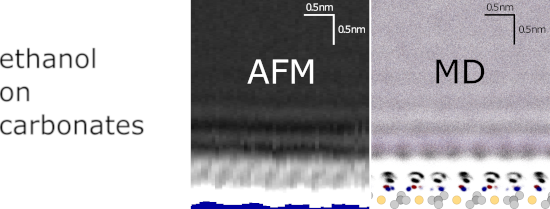
- between a mineral and its environment takes place at the interface, the interfacial structure is of fundamental importance for gaining molecular-level understanding of the mineral reactivity. In the presence of water, the hydration structure at the interface needs to be known. With the advent of high
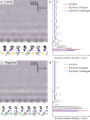

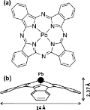
Templating effect of single-layer graphene supported by an insulating substrate on the molecular orientation of lead phthalocyanine
Beilstein J. Nanotechnol. 2020, 11, 814–820, doi:10.3762/bjnano.11.66
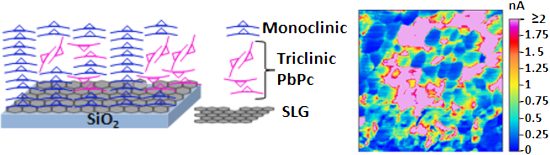
- transparency disappears with an increasing number of graphene layers, and the wettability approaches that of graphite. The underlying support substrate is reported to even influence the chemical reactivity of a monolayer of graphene [15]. Most of the orientation studies of MPc on graphene deal with planar MPc


Comparison of fresh and aged lithium iron phosphate cathodes using a tailored electrochemical strain microscopy technique
Beilstein J. Nanotechnol. 2020, 11, 583–596, doi:10.3762/bjnano.11.46
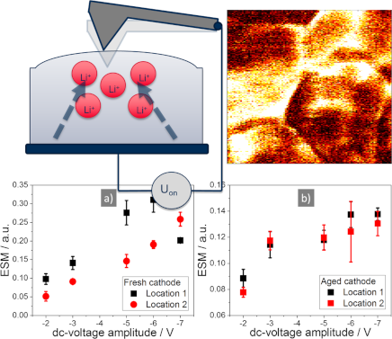
- additional mechanical (stiffness, elasticity), electrical (conductivity, surface potential), electrochemical (reactivity, mobility and activity), mechanoelectrical (piezoelectricity) and chemical (chemical bonding) material properties. In situ AFM imaging of the sample topography is often used to study the



Rational design of block copolymer self-assemblies in photodynamic therapy
Beilstein J. Nanotechnol. 2020, 11, 180–212, doi:10.3762/bjnano.11.15
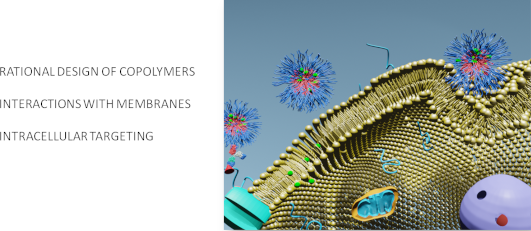
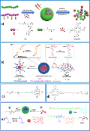
- PDT. Block copolymer nanoassemblies offer the unique possibility to protect the photosensitizer in a hydrophobic environment (as described in Figure 3) and to prevent the aggregation. At the same time, they improve the biodistribution, pharmacokinetics and photochemical reactivity of the






Fabrication of Ag-modified hollow titania spheres via controlled silver diffusion in Ag–TiO2 core–shell nanostructures
Beilstein J. Nanotechnol. 2020, 11, 141–146, doi:10.3762/bjnano.11.12
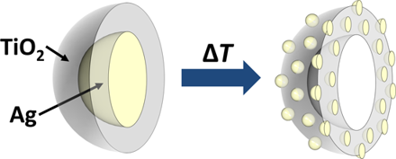
- CSNs. This is likely due to much lower reactivity of Au compared to Ag. Ag–TiO2 nanostructures at an intermediate and the final stage of thermal modification are shown in SEM images in Figure 1 and Figure 2B–E. The SEM images in Figure 1 clearly indicate the titania shell, the Ag core and products of



Fully amino acid-based hydrogel as potential scaffold for cell culturing and drug delivery
Beilstein J. Nanotechnol. 2019, 10, 2579–2593, doi:10.3762/bjnano.10.249
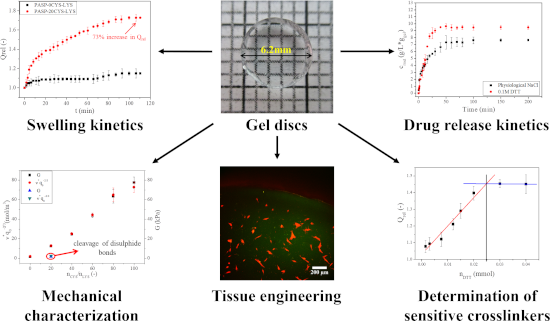
- matrix. The PSI-0CYS-LYS gel shows a significantly higher swelling degree at every pH value due to the smaller reactivity of the amine groups in LYS, which leads to a lower amount of cross-links [21]. Regarding the mass swelling degree of the PASP-based hydrogels, two groups can be observed which differ
- in the ratio of the LYS and the CYS cross-linkers (Figure 2b). The gels with a lower ratio of LYS cross-links (100, 80 and 60CYS-LYS) have a lower swelling degree than the gels with higher LYS concentration (40, 20 and 0CYS-LYS) at every pH value, which also proves the lower reactivity of LYS. The
- * [21]. This indicates that a larger amount of CYS molecules reacts with two amine groups cross-linking the polymer chains. The strong electron withdrawing character of the carboxyl group of the amino-acid group decreases the electron density of the alpha amine group, resulting in a weaker reactivity of


Multiwalled carbon nanotube based aromatic volatile organic compound sensor: sensitivity enhancement through 1-hexadecanethiol functionalisation
Beilstein J. Nanotechnol. 2019, 10, 2364–2373, doi:10.3762/bjnano.10.227
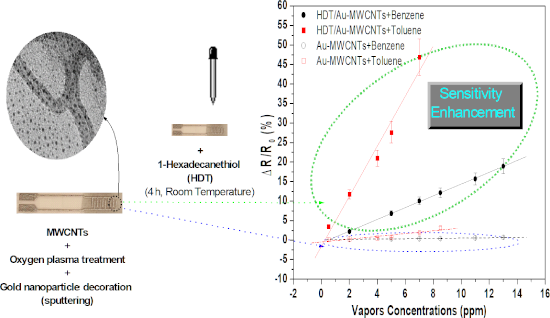
- decoration of MWCNTs Prior to their deposition on the interdigitated electrode surface, the MWCNTs were treated by oxygen plasma to create oxygen vacancies on the walls of the CNTs in order to enhance their surface reactivity [14][15]. The detailed description of the experimental steps undertaken is


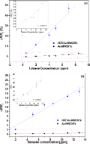


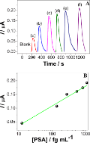
Use of data processing for rapid detection of the prostate-specific antigen biomarker using immunomagnetic sandwich-type sensors
Beilstein J. Nanotechnol. 2019, 10, 2171–2181, doi:10.3762/bjnano.10.210

- immobilized on the electrode surface. Also, the monoclonal antibody provides high specificity to a single epitope, which is reflected in a low cross-reactivity. A comparison of various sandwich-type immunosensors and immunoassays for detection of PSA in the literature is presented in Table 1. Repeatability is


Improved adsorption and degradation performance by S-doping of (001)-TiO2
Beilstein J. Nanotechnol. 2019, 10, 2116–2127, doi:10.3762/bjnano.10.206
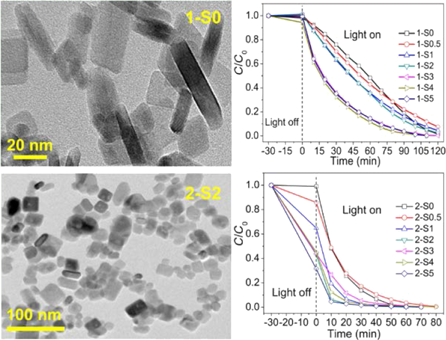
- − radicals with high reactivity. Experimental (×) and calculated (—) X-ray powder diffraction patterns of 1-S0 (a) and 2-S2 (b). Peak positions are shown as small markers (|). The lower trace represents the difference between the calculated and experimental data. TEM images (a–c) and HRTEM images (d–f) for 1





Novel hollow titanium dioxide nanospheres with antimicrobial activity against resistant bacteria
Beilstein J. Nanotechnol. 2019, 10, 1716–1725, doi:10.3762/bjnano.10.167
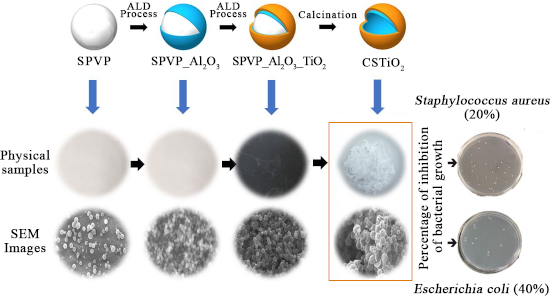
- infections both in developed and developing countries worldwide [1]. Thus, the search for new alternatives against microbial incidence has become an important challenge. In this context, nanoparticles (NPs) have become of great interest to researchers because of their high reactivity against both Gram


High-temperature resistive gas sensors based on ZnO/SiC nanocomposites
Beilstein J. Nanotechnol. 2019, 10, 1537–1547, doi:10.3762/bjnano.10.151
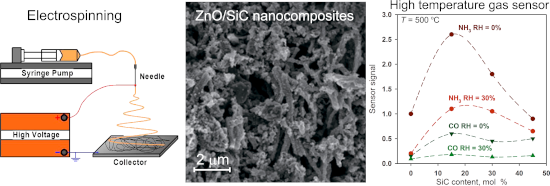
- composite nanomaterials using highly dispersed silicon carbide (SiC). The unique physical and chemical properties of silicon carbide – wide band gap (Eg = 2.4–3.2 eV), high Debye temperature 1400 K, high thermal conductivity of 4.9 W/cm·K, low reactivity to oxygen and water vapor – ensure the stability of
- difference in the adsorption properties, reactivity and electrical behavior of semiconductor oxides and silicon carbide, as well as possible chemical interactions on their interface, cause changes in the sensor performance of composite materials. The SiC-based materials in the form of planar Pt/MO/SiC



Imaging the surface potential at the steps on the rutile TiO2(110) surface by Kelvin probe force microscopy
Beilstein J. Nanotechnol. 2019, 10, 1228–1236, doi:10.3762/bjnano.10.122
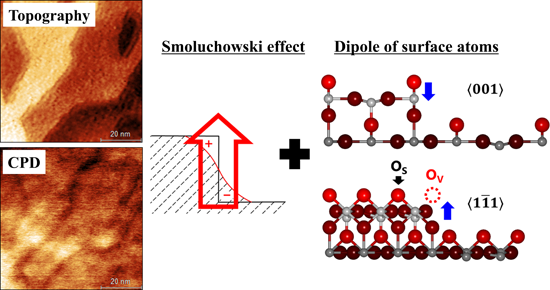
- an oxygen adatom (Oad) and hydrogen (H) atoms on the surface), play an important role in catalytic reactions, and many studies about the adsorption state and the reaction processes have been performed [9][10][11][12]. In general, crystal steps exhibit a high reactivity [13][14][15] because of their
- electron–hole recombination, increasing the quantum yield for the chemical reaction, and enhancing the catalytic reactivity. These results demonstrate novel properties of steps regarding the charge distribution, except for low coordination. The proposed dipole model should not be unique to TiO2 and should
![[Graphic 16]](/bjnano/content/inline/2190-4286-10-122-i16.svg?max-width=637&scale=1.18182) and
and ![[Graphic 17]](/bjnano/content/inline/2190-4286-10-122-i17.svg?max-width=637&scale=1.18182) .
.
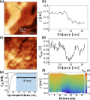

![[Graphic 38]](/bjnano/content/inline/2190-4286-10-122-i38.svg?max-width=637&scale=1.18182) and
and ![[Graphic 39]](/bjnano/content/inline/2190-4286-10-122-i39.svg?max-width=637&scale=1.18182) steps. (a) Topographic image...
steps. (a) Topographic image...


![[Graphic 72]](/bjnano/content/inline/2190-4286-10-122-i72.svg?max-width=637&scale=1.18182) , b)
, b) ![[Graphic 73]](/bjnano/content/inline/2190-4286-10-122-i73.svg?max-width=637&scale=1.18182) , c) reduced
, c) reduced ![[Graphic 74]](/bjnano/content/inline/2190-4286-10-122-i74.svg?max-width=637&scale=1.18182) , and d)
, and d) ![[Graphic 75]](/bjnano/content/inline/2190-4286-10-122-i75.svg?max-width=637&scale=1.18182) steps. B...
steps. B...
Green fabrication of lanthanide-doped hydroxide-based phosphors: Y(OH)3:Eu3+ nanoparticles for white light generation
Beilstein J. Nanotechnol. 2019, 10, 1200–1210, doi:10.3762/bjnano.10.119
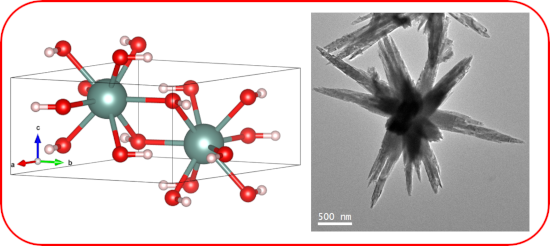
- into the transparent solution, respectively. Selecting LiOH as the ion source is critical here since the other possible ions such as Na+ and K+ are not as reactive as Li+ ions. Such a high reactivity of Li+ ions in the solution is expected to distort the crystal structure relatively more compared to



Photoactive nanoarchitectures based on clays incorporating TiO2 and ZnO nanoparticles
Beilstein J. Nanotechnol. 2019, 10, 1140–1156, doi:10.3762/bjnano.10.114
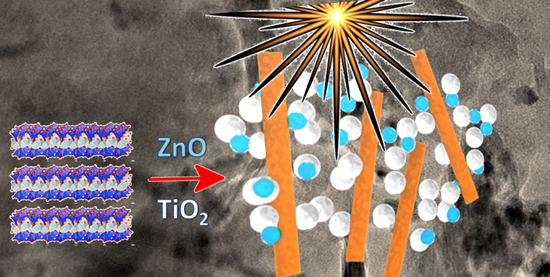
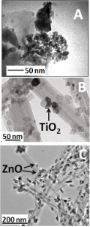
- the experimentally observed differences in the photoactivity are not yet clear due to the effect of complex parameters including light absorption, charge recombination, changes in the available surface area and chemical reactivity [44][45]. Another characteristic of ZnO is its lower chemical stability
- reactivity can be modified [48][49]. TiO2 and ZnO NPs with different shapes, sizes and exposed crystal facets were assembled to yield hollow particles, fibers, nanosheets, nanowires, nanorods, nanoflowers and nanobelts through various synthesis routes including template synthesis [50][51][52][53



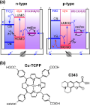
Comparing a porphyrin- and a coumarin-based dye adsorbed on NiO(001)
Beilstein J. Nanotechnol. 2019, 10, 874–881, doi:10.3762/bjnano.10.88
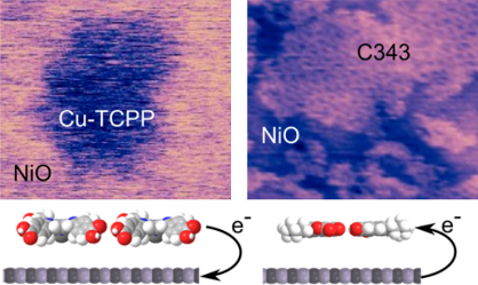
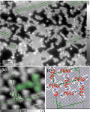
- surfaces, mandatory for reliable SPM studies, are difficult to prepare because of the hardness of the material and its high reactivity [12][13][14][15][26][27][28][29][30][31][32][33][34]. Figure 2a shows a topographic image measured by nc-AFM of the bare NiO(001) surface that was prepared by in situ



Nitrous oxide as an effective AFM tip functionalization: a comparative study
Beilstein J. Nanotechnol. 2019, 10, 315–321, doi:10.3762/bjnano.10.30
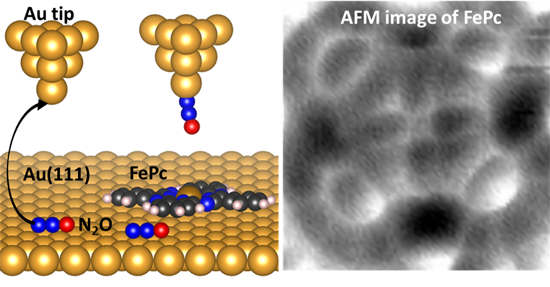
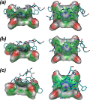
- attached to a Au pyramid, projected onto isosurfaces of their respective total electron densities (cut at 0.03 e/A3). The spatial ESP variation is an important factor for the determination of the molecular reactivity and can be interpreted as the static distribution of the charge around the molecule [36


Zn/F-doped tin oxide nanoparticles synthesized by laser pyrolysis: structural and optical properties
Beilstein J. Nanotechnol. 2019, 10, 9–21, doi:10.3762/bjnano.10.2
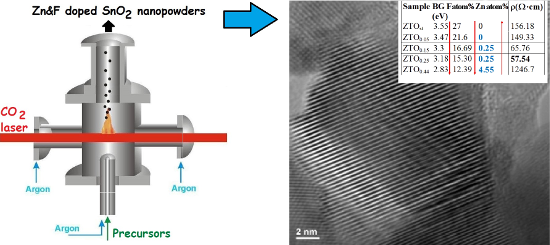
- precursors to oxides (SnO2 and ZnO, in fact Zn-doped SnO2), CO2 and H2O in the laser pyrolysis reaction zone. Due to the much higher reactivity of metals, the metal oxides are formed with priority, and the unoxidized alkyl radicals from the precursors will undergo a complex process involving reactions such



Accurate control of the covalent functionalization of single-walled carbon nanotubes for the electro-enzymatically controlled oxidation of biomolecules
Beilstein J. Nanotechnol. 2018, 9, 2750–2762, doi:10.3762/bjnano.9.257
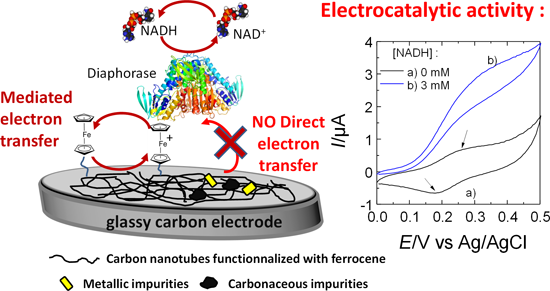
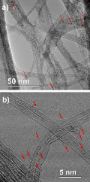
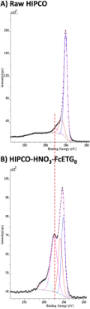
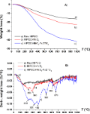
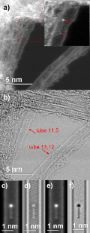
- underlined the role of residual metallic and carbonaceous impurities present in CNT samples on the electrocatalytic effects often reported in the literature [21][22][23][24][25][26]. The presence of such impurities may modify the reactivity of the CNTs themselves and can make it difficult to qualify and
- the PEG linker via molecular dynamics calculations The influence of the linker length on the resultant enzymatic reactivity of the ferrocene unit was explored using the molecular dynamics package LAMMPS [32][33] to simulate both FcETG2 and FcETG8 when covalently attached to the surface of a (10,0