Search results
Search for "ambient conditions" in Full Text gives 320 result(s) in Beilstein Journal of Nanotechnology. Showing first 200.
Facile chemical routes to mesoporous silver substrates for SERS analysis
Beilstein J. Nanotechnol. 2018, 9, 880–889, doi:10.3762/bjnano.9.82
- due to the low redox potential of most of the metals, leading to fast oxidation or corrosion of metal sponges in ambient conditions. The oxidation stability of noble metals makes them more reliable as functional materials and thus materials such as porous silver, gold and platinum can be kept for a
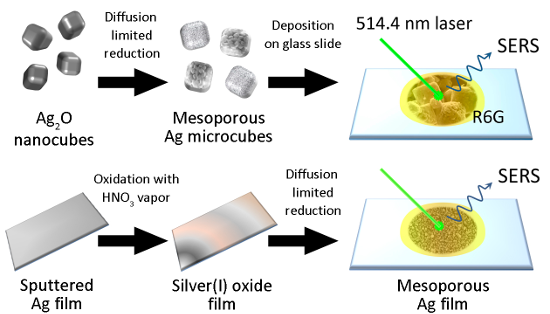
- -colored product was washed out and dried in air at ambient conditions. A mesoporous Ag film was prepared in two steps using a magnetron sputtered silver film (thickness of 150 nm) as a precursor. The primary Ag film was deposited onto a thoroughly washed glass slide in argon using a magnetron Quorum
- washed with distilled water and dried in ambient conditions for 24 h. Scanning electron microscopy (SEM) was applied to characterize microstructure of the individual Ag or Ag2O nanostructures and films. The analysis was performed in using a NVision 40 microscope (Carl Zeiss) at 9 kV accelerating voltage


Comparative study of antibacterial properties of polystyrene films with TiOx and Cu nanoparticles fabricated using cluster beam technique
Beilstein J. Nanotechnol. 2018, 9, 861–869, doi:10.3762/bjnano.9.80
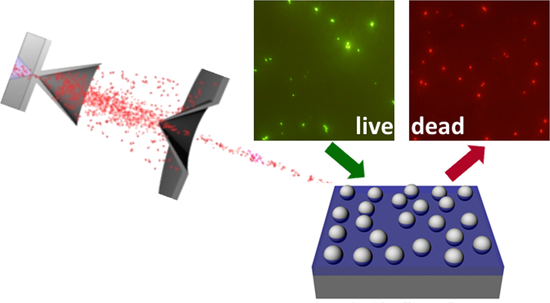
- antibacterial effect. Furthermore, Cu NPs under ambient conditions can easily lead to the formation of CuO, which also displays a direct toxicity for microorganisms [18]. They already disturb microorganisms when being in contact with the bacterial surface by reacting with proteins forming pores in the membrane


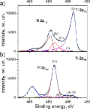


Towards the third dimension in direct electron beam writing of silver
Beilstein J. Nanotechnol. 2018, 9, 842–849, doi:10.3762/bjnano.9.78
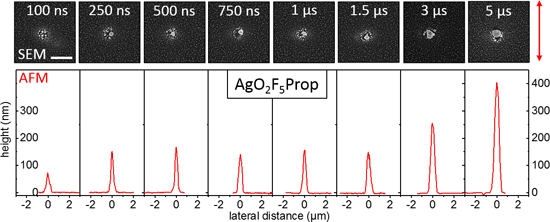
- resonant behavior in the visible range without suffering from losses due to interband transitions [20]. However, the coinage metal silver comes with some technical issues. It tends to react to silver sulfide under ambient conditions [21] and hence requires an encapsulation within the final device


Noble metal-modified titania with visible-light activity for the decomposition of microorganisms
Beilstein J. Nanotechnol. 2018, 9, 829–841, doi:10.3762/bjnano.9.77
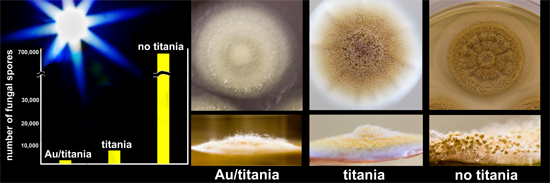
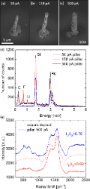
- localized surface plasmon resonance (LSPR) at ca. 410–430 nm), they were easily oxidized under ambient conditions, and the resultant silver deposits on titania were composed of a zero valent silver core and a silver oxide shell. XRD analysis confirmed XPS data showing silver in three oxidation states (Ag(0


Graphene composites with dental and biomedical applicability
Beilstein J. Nanotechnol. 2018, 9, 801–808, doi:10.3762/bjnano.9.73
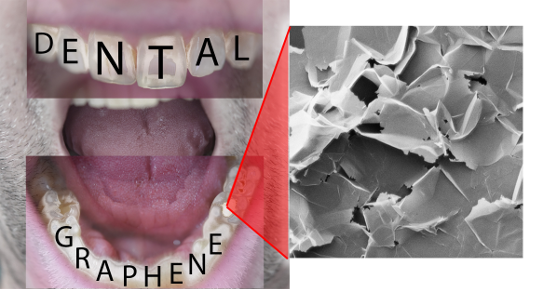
- ). Characterization The MLG and FLG material was characterized by Raman spectroscopy (Renishaw at 514 nm) and the AFM measurements were performed on a MultiMode V AFM (Veeco) in tapping mode under ambient conditions. RTESP silicon probes (Veeco) were used with a nominal tip radius of 10 nm and nominal spring constant


Synthesis and characterization of two new TiO2-containing benzothiazole-based imine composites for organic device applications
Beilstein J. Nanotechnol. 2018, 9, 721–739, doi:10.3762/bjnano.9.67
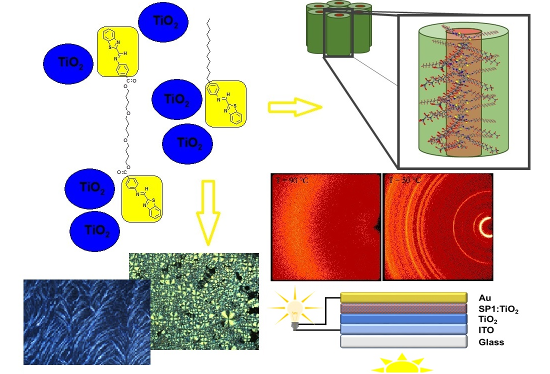
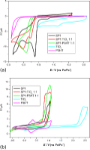
- was achieved by argon bubbling through the solution for about 10 min before measurement. All electrochemical experiments were carried out under ambient conditions. (a) Adsorption and desorption N2 isotherms of TiO2 at liquid nitrogen temperature. (b) Pore size distribution of TiO2 using Gaussian






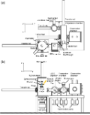
Combined pulsed laser deposition and non-contact atomic force microscopy system for studies of insulator metal oxide thin films
Beilstein J. Nanotechnol. 2018, 9, 686–692, doi:10.3762/bjnano.9.63
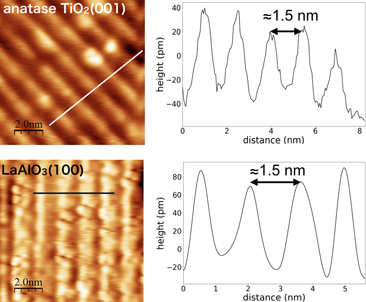
- the surface quality can be expected without the sputtering and annealing. Of course, one can perform experiments of the same surface without the combined system. Some insulator thin films such as TiO2 made by PLD and left under ambient conditions can be cleaned by an iteration of sputtering and

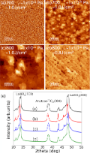

Tuning adhesion forces between functionalized gold colloidal nanoparticles and silicon AFM tips: role of ligands and capillary forces
Beilstein J. Nanotechnol. 2018, 9, 660–670, doi:10.3762/bjnano.9.61
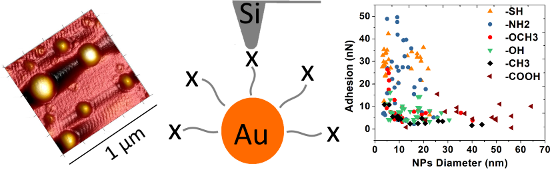
- force microscopy in ambient conditions. Au NPs were synthesized by chemical reduction of metal salts and functionalized with thiols presenting different tail groups varying from a very hydrophobic to a highly hydrophilic behavior. The tail groups were either an amino (–NH2), hydroxy (–OH), carboxyl
- interactions represent a major part of the molecular forces acting between both contact surfaces, however, the presence of water vapor (humidity rate of the order of 35%) in air, has a strong impact on these results via capillary forces. In ambient conditions a water mono-bilayer with thickness around 1 nm can
- that under ambient conditions an adsorbed thin water film exists at the NPs–substrate interface, that should increase the capillary forces and indirectly the adhesion between NPs and tip. On the other hand, high polarity of –COOH group increases the reactivity of NPs with airborne contaminants, which


Kinetics of solvent supported tubule formation of Lotus (Nelumbo nucifera) wax on highly oriented pyrolytic graphite (HOPG) investigated by atomic force microscopy
Beilstein J. Nanotechnol. 2018, 9, 468–481, doi:10.3762/bjnano.9.45
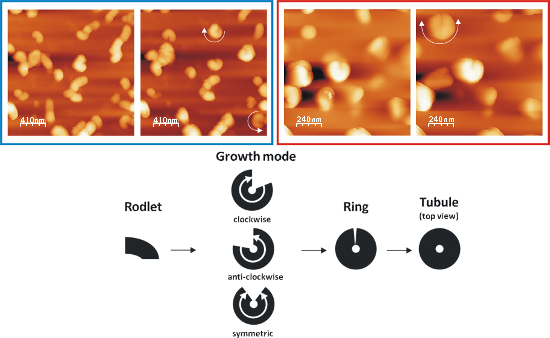
- measurements were carried out with a Picoscan AFM (Molecular Imaging, Tempe, AZ, USA) with a PicoScan controller coupled with a MAC Mode controller. The system was used to operate in the MAC Mode employing type I MAC levers under ambient conditions. Type I MAC silicon cantilevers with a length of 90 µm and a


Sugarcane juice derived carbon dot–graphitic carbon nitride composites for bisphenol A degradation under sunlight irradiation
Beilstein J. Nanotechnol. 2018, 9, 353–363, doi:10.3762/bjnano.9.35
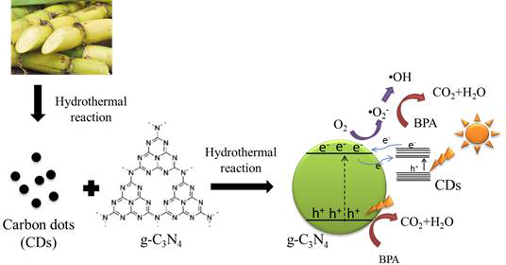
- detection of elemental C and N (inset of Figure 1b) using energy-dispersive X-ray spectroscopy (EDS) was attributed to the presence of pristine g-C3N4 and CDs [44]. A small peak of elemental O inevitably appeared due to reaction under ambient conditions. Figure 1e and Figure S2 (Supporting Information File


Wafer-scale bioactive substrate patterning by chemical lift-off lithography
Beilstein J. Nanotechnol. 2018, 9, 311–320, doi:10.3762/bjnano.9.31
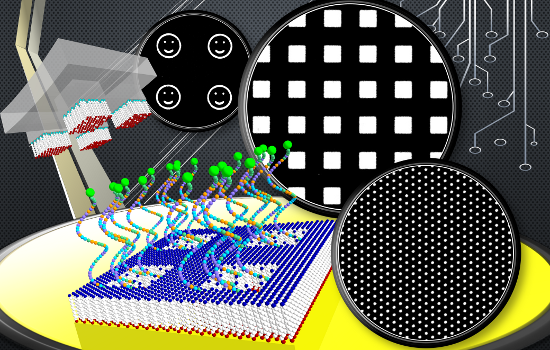
- achieved and delivers applications such as protein–ligand binding study and biological species sensing [7][8][9]. The other widely adopted system, the self-assembled monolayer (SAM), provides ease of operation and high stability under ambient conditions [10][11]. These approaches utilize the self
- steps, and biomolecule anchoring. It should be noted that the conformal contact reaction requires no external pressure, and the lift-off operation is performed under ambient conditions. As shown in the AFM images of Figure 1, the SAM-modified Au surface reveals a depressed square pattern after CLL


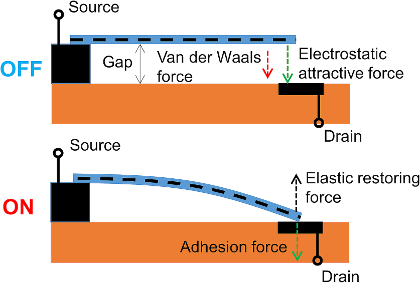
Review: Electrostatically actuated nanobeam-based nanoelectromechanical switches – materials solutions and operational conditions
Beilstein J. Nanotechnol. 2018, 9, 271–300, doi:10.3762/bjnano.9.29


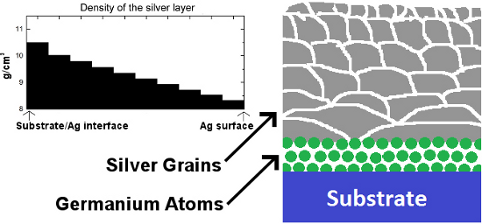
Growth model and structure evolution of Ag layers deposited on Ge films
Beilstein J. Nanotechnol. 2018, 9, 66–76, doi:10.3762/bjnano.9.9
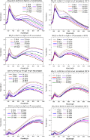
- evolution of the film structure. If stored under ambient conditions for the first week after deposition, the changes in the transmission spectra are smaller than the measurement accuracy. Over the course of the following three weeks, the segregation-induced effects result in considerably modified






Response under low-energy electron irradiation of a thin film of a potential copper precursor for focused electron beam induced deposition (FEBID)
Beilstein J. Nanotechnol. 2018, 9, 57–65, doi:10.3762/bjnano.9.8
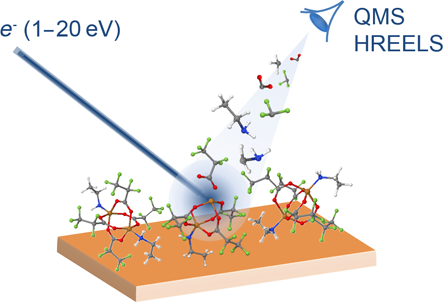
- ligands that are solid and stable under ambient conditions. They are directly deposited on the surface for studying the fragmentation with surface science tools. Results: Infrared spectroscopy and high-resolution electron energy loss spectroscopy (HREELS) are combined to show that the precursor is able to
- the four perfluorinated carboxylate ligands. The use of lightly bound amine and carboxylate ligands gives complexes that are stable in gel form under ambient conditions but yield a copper purity from 60% to 80% in CVD. In these CVD studies, the sublimation of the full complexes was observed to be
- has already been studied by variable temperature infrared spectroscopy (VT-IR) [8]. The effect of vacuum exposure is detailed hereafter. Amine ligand stability under ambient conditions The IR spectra of the pristine compounds A and B are recorded in Poland (Figure 2, respectively, spectrum a and c



A robust AFM-based method for locally measuring the elasticity of samples
Beilstein J. Nanotechnol. 2018, 9, 1–10, doi:10.3762/bjnano.9.1
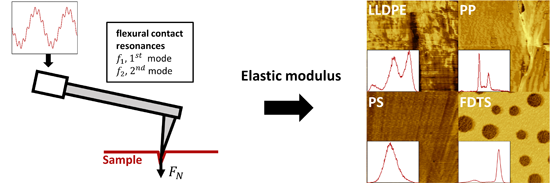
- quantitative determination of local elastic modulus of sample under ambient conditions (humidity and temperature). It combines the simplicity of the theoretical model developed by Herruzo et al. [7] for the determination of sample elasticity from 1 MPa to 3 GPa with a robust measuring method based on contact


CdSe nanorod/TiO2 nanoparticle heterojunctions with enhanced solar- and visible-light photocatalytic activity
Beilstein J. Nanotechnol. 2017, 8, 2741–2752, doi:10.3762/bjnano.8.273
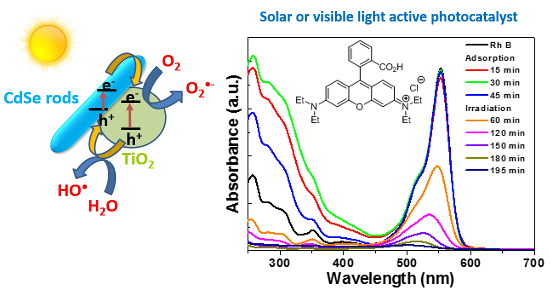
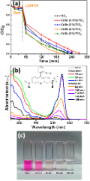
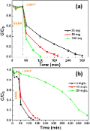
- mL glass flask and the mixture was magnetically stirred in the dark under ambient conditions for 45 min to reach a thorough adsorption–desorption equilibrium. After that period, the light was turned on. Aliquots of 2 mL were taken at regular time intervals and centrifuged (4000 rpm for 2 min) to
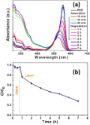
- ) was used and the areas of each component were modified according to classical Scofield sensitivity factors. All the optical measurements were performed at room temperature (20 ± 1 °C) under ambient conditions. The absorption spectra of liquid samples were recorded on a Thermo Scientific Evolution 220






Dry adhesives from carbon nanofibers grown in an open ethanol flame
Beilstein J. Nanotechnol. 2017, 8, 2719–2728, doi:10.3762/bjnano.8.271
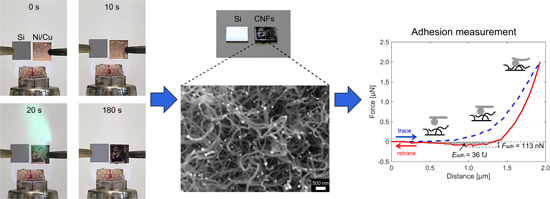
- same time it avoids the use of unfavourable gases such as hydrogen or ammonia and electrical power for heating as the ethanol flame provides sufficiently high temperatures by itself. It is, of course, unlikely to produce CNFs on an industrial scale with an open flame under ambient conditions. It might


Patterning of supported gold monolayers via chemical lift-off lithography
Beilstein J. Nanotechnol. 2017, 8, 2648–2661, doi:10.3762/bjnano.8.265
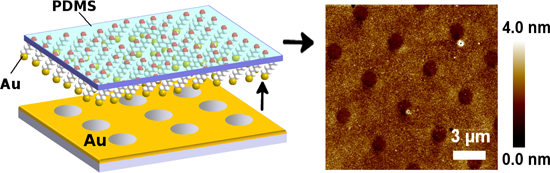
- under ambient conditions. Having established characterization modalities to evaluate Au–alkanethiolate monolayers on PDMS, we developed an additional strategy for patterning PDMS with Au–alkanethiolate monolayers that takes advantage of the chemical selectivity associated with CLL. We previously
- features onto PDMS [74][75][76], CLL is parallel, high-throughput, and is performed under ambient conditions. Further studies will test the impact of the composition of the supporting molecules on the properties of the lifted-off Au monolayer. The structural and electronic properties of the Au monolayer


Localized growth of carbon nanotubes via lithographic fabrication of metallic deposits
Beilstein J. Nanotechnol. 2017, 8, 2592–2605, doi:10.3762/bjnano.8.260
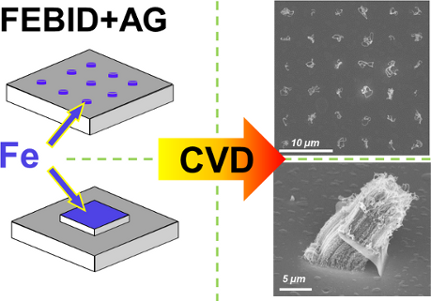
- Fe samples were transferred under ambient conditions to the CVD apparatus at the University of Szeged, Hungary. Therefore, oxidation of the Fe deposits, forming Fe2O3 and Fe3O4, is anticipated as discussed previously [32]. However, exposure to H2 for ten minutes before the CVD and simultaneous dosage




Direct writing of gold nanostructures with an electron beam: On the way to pure nanostructures by combining optimized deposition with oxygen-plasma treatment
Beilstein J. Nanotechnol. 2017, 8, 2530–2543, doi:10.3762/bjnano.8.253
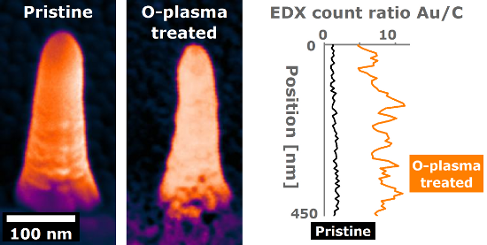
- small O fraction was also detected (<10 atom %), but it remains unclear whether it partially originates from decomposed precursor molecules (C7H10AuF3O2) or partially from the atmospheric O2 and H2O that had been adsorbed to the NPs during a short transfer of the samples under ambient conditions from

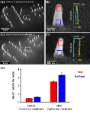
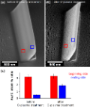
Au nanostructure fabrication by pulsed laser deposition in open air: Influence of the deposition geometry
Beilstein J. Nanotechnol. 2017, 8, 2438–2445, doi:10.3762/bjnano.8.242
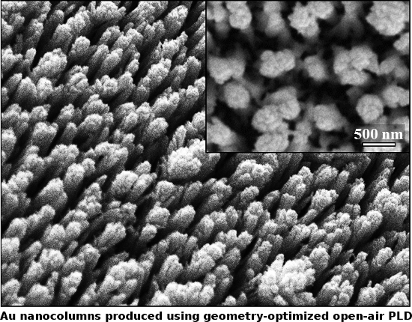
- and realization in ambient conditions presented in this work more ideal for industrial applications. Keywords: Au nanostructures; deposition geometry; nanocolumns; open-air PLD; physical properties; Introduction The growing interest in nanomaterials is related to their unique and fascinating


Hydrothermal synthesis of ZnO quantum dot/KNb3O8 nanosheet photocatalysts for reducing carbon dioxide to methanol
Beilstein J. Nanotechnol. 2017, 8, 2264–2270, doi:10.3762/bjnano.8.226
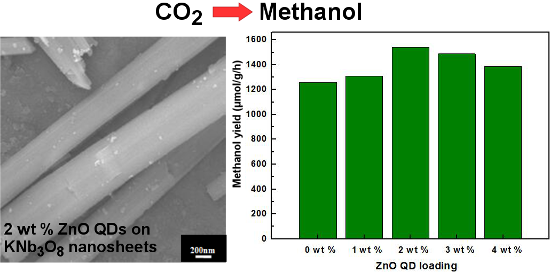
- Raman system using a 325 nm laser. Photocatalytic reaction The photocatalytic reduction of CO2 to methanol was carried out at ambient conditions in a quartz container and batch operated slurry reactor with cooling jacket. 20 mg of the catalyst was added to 20 mL of isopropanol under magnetic stirring




Ester formation at the liquid–solid interface
Beilstein J. Nanotechnol. 2017, 8, 2139–2150, doi:10.3762/bjnano.8.213
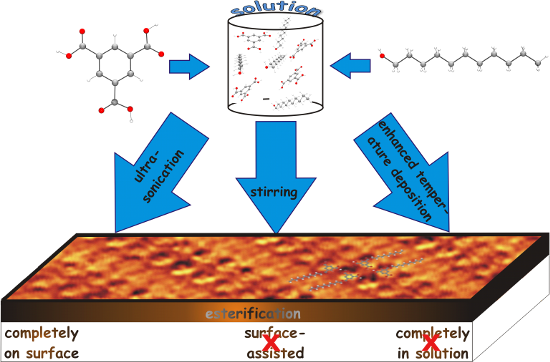
- ambient conditions [27]. Molecular mixture at solid−liquid interfaces could possibly initiate chemical reactions and be monitored in situ with scanning tunneling microscopy (STM). Metal complexation reactions, polymerizations [28][29][30] and photochemical dimerization [31] are shown to be initiated at


High-stress study of bioinspired multifunctional PEDOT:PSS/nanoclay nanocomposites using AFM, SEM and numerical simulation
Beilstein J. Nanotechnol. 2017, 8, 2069–2082, doi:10.3762/bjnano.8.207
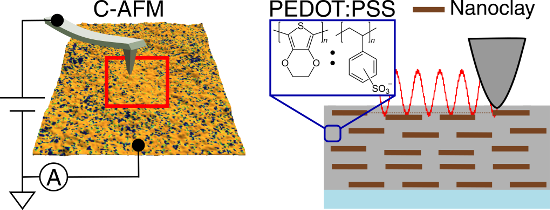
- within the linear regime. Due to the difficulty and unreliability of holding the AFM probe steady during measurement (due to high drift in ambient conditions), which would be required in order to maintain a constant contact area during a current-voltage (I–V) measurement, we confirm linearity of the I–V
- used to calibrate the force constant of the cantilevers. CRFM and C-AFM measurements were carried out with a scan rate of 0.5 Hz over 256 × 256 pixels per image. Bimodal AFM images were obtained with a scan rate of 2 Hz over 256 × 256 pixels per image. All measurements were performed in ambient
- conditions (≈20 °C and ≈40% RH). The scanning electron microscopy (SEM) images were taken using a FEI Teneo LV. Samples were casted on a glass slide, then cooled down with liquid nitrogen and broken in half. They were then placed at a 45-degree angle with respect to the electron gun, in order to observe the


Imidazolium-based ionic liquids used as additives in the nanolubrication of silicon surfaces
Beilstein J. Nanotechnol. 2017, 8, 1961–1971, doi:10.3762/bjnano.8.197
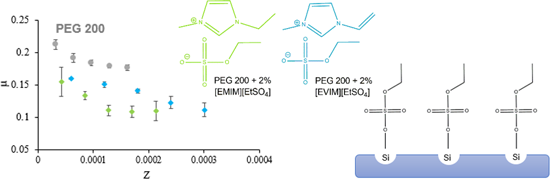
- in the lubricants Most ILs and PEG itself are very hygroscopic liquids the water content of which may increase during the tribological applications under ambient conditions. Thus, it is important to know the influence of water on the tribological performance of pure PEG and its mixtures. Two types of