


Search results
Search for "capillary" in Full Text gives 260 result(s) in Beilstein Journal of Nanotechnology. Showing first 200.
Interaction-tailored organization of large-area colloidal assemblies
Beilstein J. Nanotechnol. 2018, 9, 1582–1593, doi:10.3762/bjnano.9.150
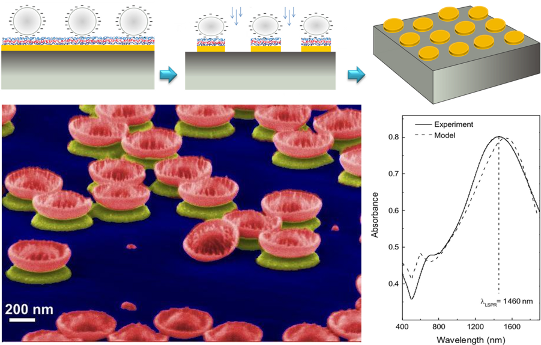
- lateral capillary forces tend to induce aggregation and disorder. Nevertheless, we were able to control the surface coverage by tuning the absorption time in order to achieve a long range order. Notably, we showed how this method can be easily transferred for use with different materials to produce large
- temperature and carefully dried in a nitrogen flow; in this third (2D) assembly phase, however, (unwanted) lateral capillary forces could become relevant when the solvent film thickness approaches the particle diameter, as discussed later. As process parameters, the NaCl concentration and particle
- ]. In the third 2D assembly phase, during the unavoidable drying process, when the solvent film thickness reaches the particle diameter, unwanted attractive lateral capillary forces [24][28] can become relevant. This results in particle displacements and deviations from the RSA model since the particle


Surface characterization of nanoparticles using near-field light scattering
Beilstein J. Nanotechnol. 2018, 9, 1228–1238, doi:10.3762/bjnano.9.114
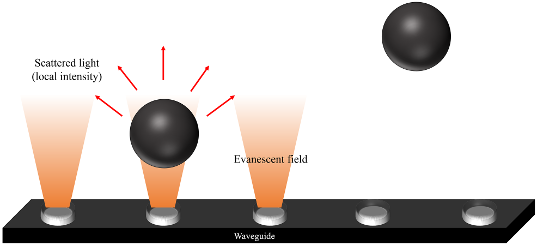
- capillary cuvette cell (Malvern Instruments, Worcestershire, UK). Near-field light scattering system (NLS) A near-field evanescent field was generated by a single-mode Fabry–Pérot coherent laser diode that was coupled into a silicon nitride waveguide (Optofluidics) and was capable of trapping metallic




A novel copper precursor for electron beam induced deposition
Beilstein J. Nanotechnol. 2018, 9, 1220–1227, doi:10.3762/bjnano.9.113
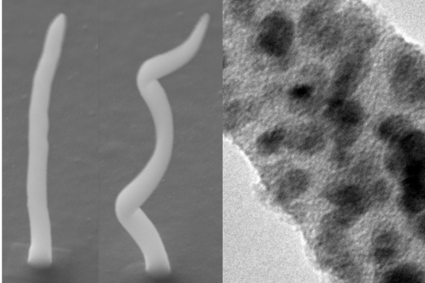
- respective precursor gas is locally supplied by a capillary needle. The electrons decompose the adsorbed molecules and leave non-volatile fragments on the substrate while the volatile fragments are pumped out of the chamber [2]. Due to the small spot size of the electron beam in combination with the


Review on nanoparticles and nanostructured materials: history, sources, toxicity and regulations
Beilstein J. Nanotechnol. 2018, 9, 1050–1074, doi:10.3762/bjnano.9.98

- capillary attractive forces and molecular interactions [230] or van der Waals interactions leads to adhesion [231]. This may be due to the production of secretory fluids in the contact area by some animals (insects) [232][233][234], whereas others do not (spiders, geckos) [235][236], which makes the basic
- force in the physical form contribute to their adhesion. In recent reports, the reason for adhesion of gecko setae is due to van der Waals interaction through strong evidence [237] and rejects the capillary adhesion mechanisms. It was predicted that application of contact mechanics may help in smaller


Single-crystalline FeCo nanoparticle-filled carbon nanotubes: synthesis, structural characterization and magnetic properties
Beilstein J. Nanotechnol. 2018, 9, 1024–1034, doi:10.3762/bjnano.9.95
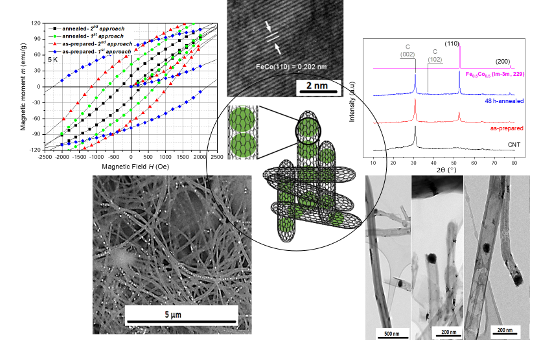
- via capillary force [38][39][40]. Due to the attractive properties of Fe–Co nanoparticles, this work is directed towards the synthesis of CNT-based nanocomposites of Fe–Co based on a post-synthesis method, in which prefabricated multiwalled CNTs (MWCNTs) are used as templates. Two facile filling


Scanning speed phenomenon in contact-resonance atomic force microscopy
Beilstein J. Nanotechnol. 2018, 9, 945–952, doi:10.3762/bjnano.9.87
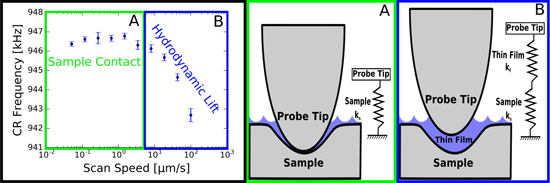
- thick [16][17] and is usually studied by measuring adhesive forces between the AFM tip and sample. Capillary necking between the adsorbed water layer and AFM tip creates additional adhesive forces that can be easily measured with a typical AFM system. These measurements are conducted using force pull


Cyclodextrin inhibits zinc corrosion by destabilizing point defect formation in the oxide layer
Beilstein J. Nanotechnol. 2018, 9, 936–944, doi:10.3762/bjnano.9.86
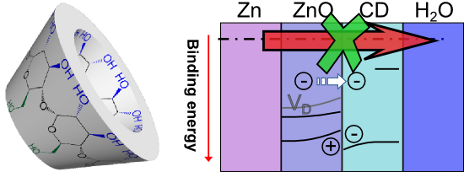
- Luggin capillary, a platinum foil counter electrode, and a zinc working electrode with an exposed surface area of 0.196 cm2. The electrolyte volume for the measurements was 10 mL, and the electrolyte surface was ≈2.5 cm away from the surface of the working electrode. All electrode potentials shown here


Facile chemical routes to mesoporous silver substrates for SERS analysis
Beilstein J. Nanotechnol. 2018, 9, 880–889, doi:10.3762/bjnano.9.82
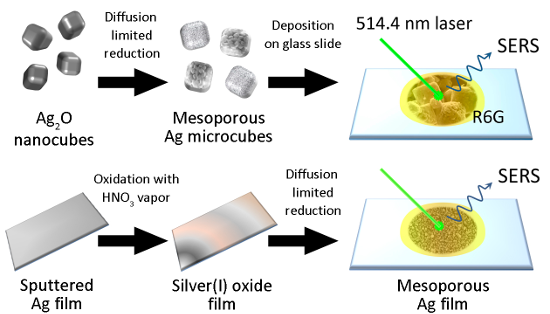
- . According to the Brunauer–Emmett–Teller (BET) surface area analysis and the Barrett–Joyner–Halenda (BJH) (BET-BJH) nitrogen capillary adsorption analysis, the specific surface area of the mesoporous silver particles (mp-Ag) reached 42 ± 5 m2/g and the pore size distribution analysis demonstrated a broad


Perfusion double-channel micropipette probes for oxygen flux mapping with single-cell resolution
Beilstein J. Nanotechnol. 2018, 9, 850–860, doi:10.3762/bjnano.9.79
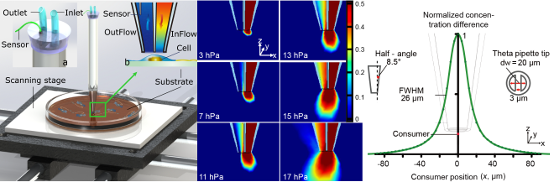
- fluorescein (Acros Organics, Fisher Scientific; excitation/emission wavelengths 498/518 nm) aqueous solution (0.08 wt %). The extraction channel was loaded with pure water. Two plastic tubes were then inserted into the two unmodified channels at the other end of the theta capillary and sealed with epoxy (Bob


Effect of ferroelectric BaTiO3 particles on the threshold voltage of a smectic A liquid crystal
Beilstein J. Nanotechnol. 2018, 9, 824–828, doi:10.3762/bjnano.9.76
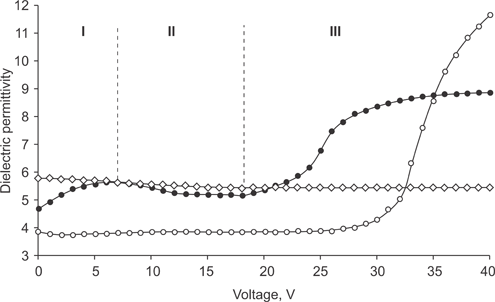
- Teflon spacer. The internal surfaces of glasses were covered by a transparent and conductive ITO layer. Polyimide was used as a planar aligning material. The process of filling of the electro-optical cell was carried out by a capillary method in the isotropic state of the LC. The capacitance of the


Facile synthesis of a ZnO–BiOI p–n nano-heterojunction with excellent visible-light photocatalytic activity
Beilstein J. Nanotechnol. 2018, 9, 789–800, doi:10.3762/bjnano.9.72
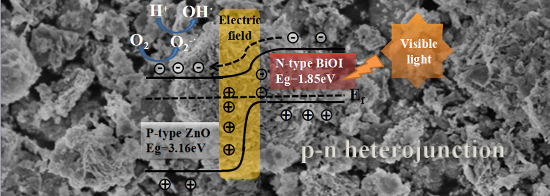
- heterostructured nanocomposites of ZnO and BiOI. The structural characteristics of the as-prepared ZnO/BiOI composites were revealed by nitrogen adsorption–desorption isotherms shown in Figure S3, Supporting Information File 1. The isotherm of sample B-4, with a unique hysteresis loop and a classical two capillary


Synthesis and characterization of two new TiO2-containing benzothiazole-based imine composites for organic device applications
Beilstein J. Nanotechnol. 2018, 9, 721–739, doi:10.3762/bjnano.9.67
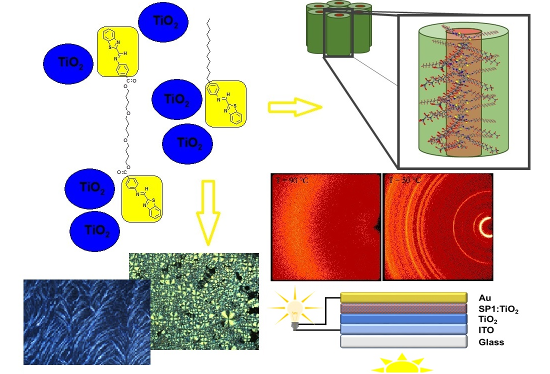
- explained by the phenomenon of the capillary condensation that occurs when titanium dioxide is exposed to the adsorbate. According to the BET method of calculation, the investigated titanium dioxide is characterized by a surface area of 59.5 m2/g. Its structure is a combination of both mesopores (defined in






Tuning adhesion forces between functionalized gold colloidal nanoparticles and silicon AFM tips: role of ligands and capillary forces
Beilstein J. Nanotechnol. 2018, 9, 660–670, doi:10.3762/bjnano.9.61
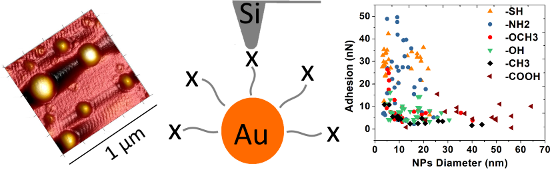
- higher than on their nanoparticle counterparts, the dependance on functional groups remained the same. Keywords: adhesion; AFM; gold; nanoparticle functionalization; nanoparticles; Introduction Adhesion is a complex combination of various interfacial forces such as capillary, electrostatic and vdW
- , electrostatic forces, H-bonding and capillary forces are crucial to understand the dependence of adhesive force on the type of functional layer. First, the high adhesion values of –SH and –NH2 coated NPs are explainable by the high polarizability of the molecules. Hence, adhesion forces acting between
- hydrophilic NPs (including –SH, –COOH, –OH and –NH2 tail groups) and the silicon probe seem to be controlled mainly by attractive forces such as electrostatic and H-bonding as well as capillary forces. For NPs size varying from 5 to 20 nm diameters, the range of adhesion values of –NH2 coated NPs is quite


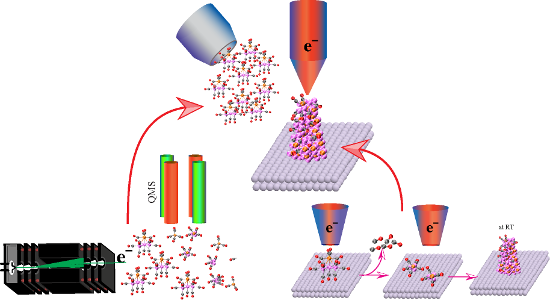
Electron interactions with the heteronuclear carbonyl precursor H2FeRu3(CO)13 and comparison with HFeCo3(CO)12: from fundamental gas phase and surface science studies to focused electron beam induced deposition
Beilstein J. Nanotechnol. 2018, 9, 555–579, doi:10.3762/bjnano.9.53


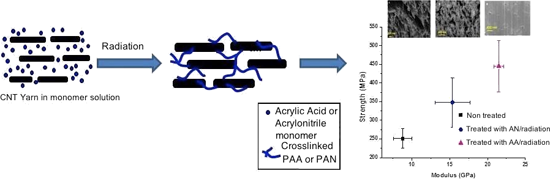
Single-step process to improve the mechanical properties of carbon nanotube yarn
Beilstein J. Nanotechnol. 2018, 9, 545–554, doi:10.3762/bjnano.9.52
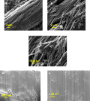
- ). The CNT yarn treated with AN and irradiation showed a rougher surface. The CNT yarn treated with AA exhibited a smoother appearance but wavy extensions protrude from the surface as shown in Figure 6. This is probably related to hydrophobic interactions, van der Waals and capillary force interactions




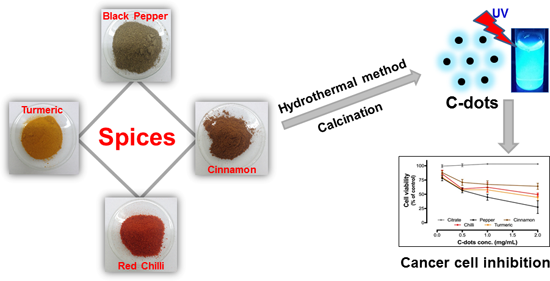
Green synthesis of fluorescent carbon dots from spices for in vitro imaging and tumour cell growth inhibition
Beilstein J. Nanotechnol. 2018, 9, 530–544, doi:10.3762/bjnano.9.51
- in an ESI-QTOF instrument Impact II (Bruker Daltonics, Bremen, Germany), working in positive detection mode. The mass range was recorded between 100 and 500 Da, using a capillary voltage of 4500 V. The nebulizer was working at 20 psi and the drying gas flow was kept at 4 L·min−1. The temperature was


Ultralight super-hydrophobic carbon aerogels based on cellulose nanofibers/poly(vinyl alcohol)/graphene oxide (CNFs/PVA/GO) for highly effective oil–water separation
Beilstein J. Nanotechnol. 2018, 9, 508–519, doi:10.3762/bjnano.9.49
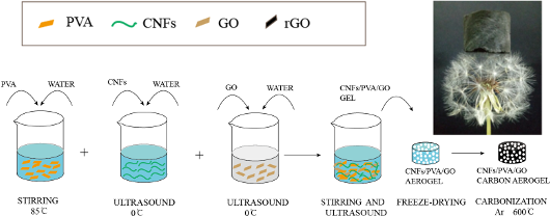
- aerogel provides sufficient space for the storage of absorbed organic solvents or oils, so that its absorption ability is greatly enhanced. In addition, the crossed CNF-derived nanofibers between the carbon skeleton can provide small pathways for liquid flow as well as enhance the capillary effect of the
- , especially for gasoline, which attained the highest value at 97 g/g. The absorption capacity and water contact angle of the CNF/PVA/GO carbon aerogel is higher than most existing oil-absorption materials (Table 1). This was attributed mainly to the strong capillary effect of the super-hydrophobic carbon


Influence of the preparation method on the photocatalytic activity of Nd-modified TiO2
Beilstein J. Nanotechnol. 2018, 9, 447–459, doi:10.3762/bjnano.9.43
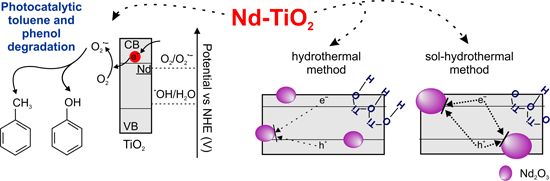
- further samples were collected after regular time periods during irradiation. The analysis of toluene concentration in the gas phase was performed using a gas chromatograph (Trace 1300, Thermo Scientific) equipped with a flame ionization detector (FID) and Elite-5 capillary column. X-ray diffraction




Engineering of oriented carbon nanotubes in composite materials
Beilstein J. Nanotechnol. 2018, 9, 415–435, doi:10.3762/bjnano.9.41
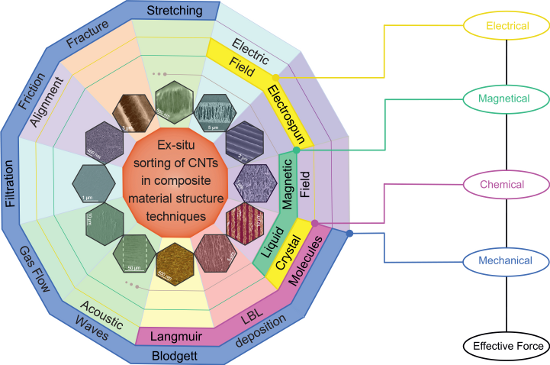
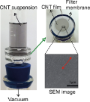
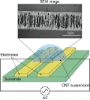
- capillary forces. Although the method is slow, because it supports a wide variety of substrates and the whole process is automatic, it is an appropriate method for industrial applications [7][102][103][104]. Acoustic waves In this method, surface acoustic waves (SAWs) are used to align and orient CNTs. SAWs








Electron interaction with copper(II) carboxylate compounds
Beilstein J. Nanotechnol. 2018, 9, 384–398, doi:10.3762/bjnano.9.38
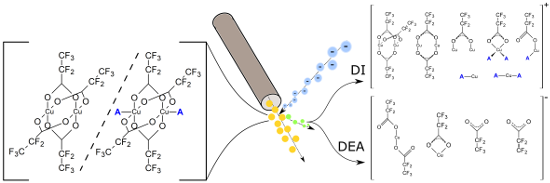
- main reaction chamber by small capillary, which creates a molecular beam that perpendicularly collides with the electron beam. Ionic products are then forced by a weak electric field into the ion optics of the quadrupole mass spectrometer. After separation of the products with different mass-to-charge


Photocatalytic and adsorption properties of TiO2-pillared montmorillonite obtained by hydrothermally activated intercalation of titanium polyhydroxo complexes
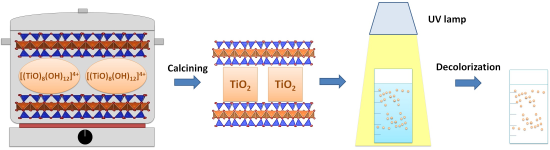
Beilstein J. Nanotechnol. 2018, 9, 364–378, doi:10.3762/bjnano.9.36
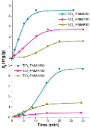
- samples are shown in Figure 6a. All the isotherms are characterized by the presence of capillary condensation hysteresis loops and belong to type IV according to IUPAC classification [39], which is typical for materials with mesoporous structure. Furthermore, the shape of the hysteresis loop for these




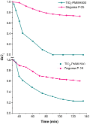


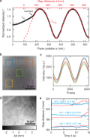
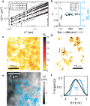
The nanofluidic confinement apparatus: studying confinement-dependent nanoparticle behavior and diffusion
Beilstein J. Nanotechnol. 2018, 9, 301–310, doi:10.3762/bjnano.9.30
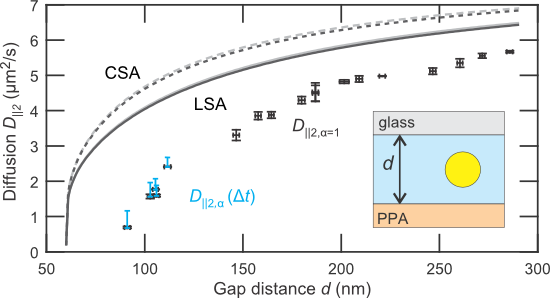
- nanoparticles and vesicles in nanofluidic systems [13]. In a follow-up experiment, it was shown that crucial information on the trapping potential can be gained by using an AFM-type system and a micro-capillary to adjust the gap distance [14]. Another example of a strongly gap-dependent behavior is the lateral



Review: Electrostatically actuated nanobeam-based nanoelectromechanical switches – materials solutions and operational conditions
Beilstein J. Nanotechnol. 2018, 9, 271–300, doi:10.3762/bjnano.9.29
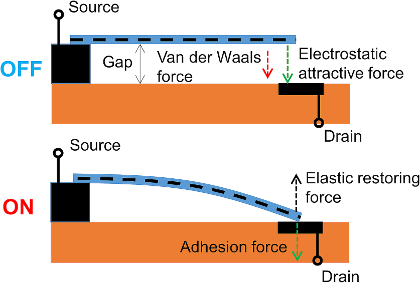
- thousand times larger than forces that are proportional to volume, making inertial forces negligible. At the nanoscale, van der Waals, capillary and electrostatic forces become the governing factors. It is important to note, that with the decrease of the size scale, breakdown of the predictions of


Gas-assisted silver deposition with a focused electron beam
Beilstein J. Nanotechnol. 2018, 9, 224–232, doi:10.3762/bjnano.9.24
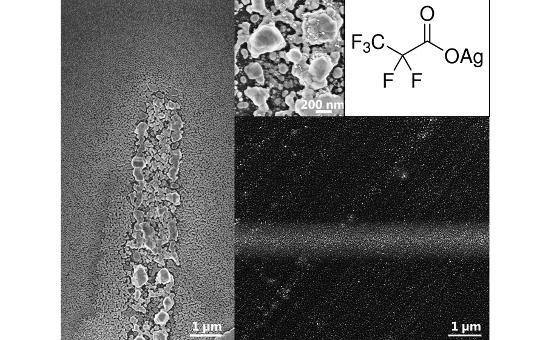
- mode of the Hitachi S3600 software was used. The precursor was introduced into the chamber via a homebuilt gas injection system (GIS). The GIS was made of chemically inert stainless steel and designed to minimize the molecule path lengths. Instead of a capillary, a large GIS-opening of 3 mm inner


Humidity-dependent wound sealing in succulent leaves of Delosperma cooperi – An adaptation to seasonal drought stress
Beilstein J. Nanotechnol. 2018, 9, 175–186, doi:10.3762/bjnano.9.20
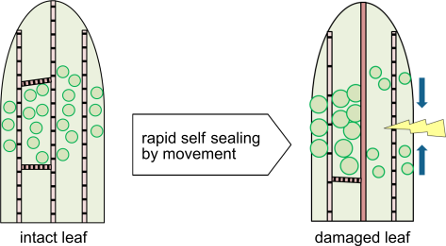
- , the boundary layer energy is much higher in the case of water-saturated air (100% r.h.) than in the case of a macroscopic droplet of liquid water [20][21]. Third, liquid water from macroscopic droplets is sucked into the fissure by capillary and osmotic forces. This allows the hypothesis that the





