Search results
Search for "infrared" in Full Text gives 568 result(s) in Beilstein Journal of Nanotechnology. Showing first 200.
Facile preparation of Au- and BODIPY-grafted lipid nanoparticles for synergized photothermal therapy
Beilstein J. Nanotechnol. 2022, 13, 1432–1444, doi:10.3762/bjnano.13.118
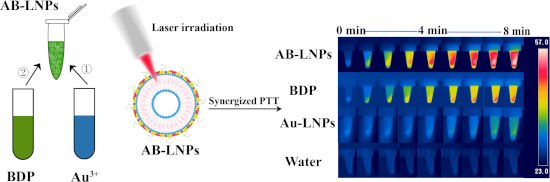
- near-infrared (NIR) absorption [2]. Various gold nanoscale platforms, including nanostars, nanorods, nanospheres, nanoshells, and nanocages, have been designed as PTAs for PTT. Gold nanorods (ca. 50 nm), nanoshells (ca. 130 nm), and nanoparticles with large sizes (>50 nm) are suitable for PTT because
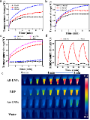
- changes of water, BDP, Au-LNPs, and AB-LNPs with a BDP concentration of 100 μM and a Au concentration of 100 μM with laser irradiation (680 nm, 0.5 W/cm2) were also recorded for 10 min. The temperature of the samples for photothermal conversion measurements was recorded by an infrared thermal camera




Near-infrared photoactive Ag-Zn-Ga-S-Se quantum dots for high-performance quantum dot-sensitized solar cells
Beilstein J. Nanotechnol. 2022, 13, 1337–1344, doi:10.3762/bjnano.13.110
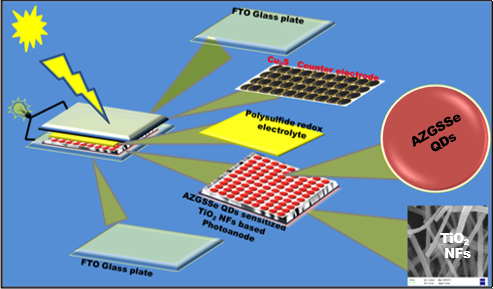
- nanocrystals. The X-ray diffraction pattern confirms the hexagonal structure. Due to the near-infrared light absorption capability, the synthesized QDs were used as the sensitizer to fabricate QDSCs. The fabricated QDSCs were characterized by using electrochemical impedance spectroscopy and photovoltaic
- . Hence, they have application potential in optoelectronic devices. Herein, we synthesized, for the first time, Ag, Zn, Ga, S, and Se-based alloyed QDs (AZGSSe QDs) and investigated the optoelectric and morphological properties. Due to the near-infrared (NIR) light absorption, the QDs were used as
- spectrum of colloidal AZGSSe QDs (Figure 4a) reveals a wide absorption range in the near-infrared (NIR) region. This confirms the NIR photoactive nature of the synthesized QDs. Figure 4b depicts the Tauc plot [30] of the synthesized QDs. From this, the bandgap energy of AZGSSe QDs was found to be 1.37 eV


Enhanced electronic transport properties of Te roll-like nanostructures
Beilstein J. Nanotechnol. 2022, 13, 1284–1291, doi:10.3762/bjnano.13.106
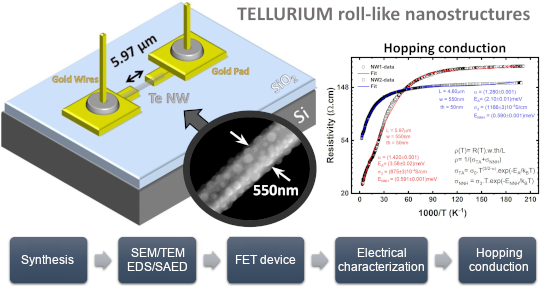
- devices, radioactive cooling devices, field-effect transistors, infrared acousto-optic deflectors, and even for antifungal activity [1][2][3][4][5][6][7]. Several chemical and physical methods have been recently developed to synthesize Te-based nanostructures, such as monolayers (MLs), nanoparticles (NPs




Design of surface nanostructures for chirality sensing based on quartz crystal microbalance
Beilstein J. Nanotechnol. 2022, 13, 1201–1219, doi:10.3762/bjnano.13.100
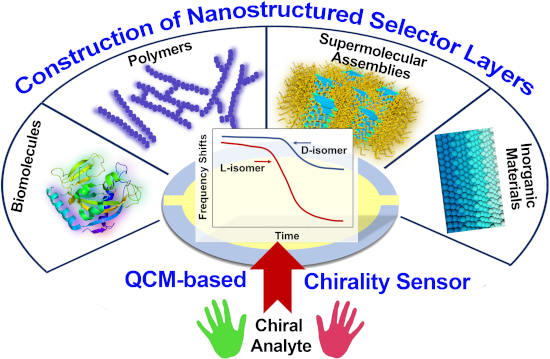
- resonance [10], Fourier transform infrared spectrometry (FTIR) [11], UV–vis absorption spectrometry [12], mass spectrometry (MS) [13], titration microcalorimetry [14], high-performance liquid chromatography (HPLC) [15], gas chromatography (GC), capillary electrophoresis (CE) [16], and electrochemical chiral


Application of nanoarchitectonics in moist-electric generation
Beilstein J. Nanotechnol. 2022, 13, 1185–1200, doi:10.3762/bjnano.13.99
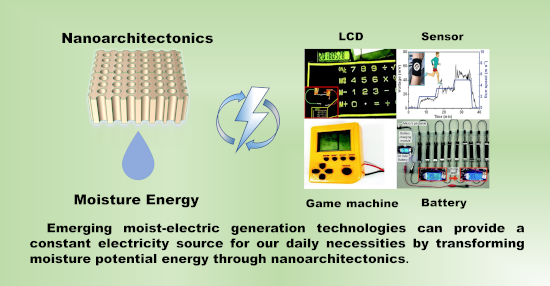
- bonding near the cathode, measured by infrared spectroscopy (Figure 8f,g). Under moist conditions, a voltage signal could be measured in the gradient structure device, while the PDA film without polarization treatment did not produce an obvious voltage or current signal. This lateral gradient
- electrodes for (1) the anode and (2) the cathode. (f) Infrared spectra of g-PDA near (1) the anode and (2) the cathode. (g) High-resolution C 1s spectra of the g-PDA film for (1) the anode and (2) the cathode. Figure 8e–g were reprinted with permission from [84], Copyright 2019 American Chemical Society


Microneedle-based ocular drug delivery systems – recent advances and challenges
Beilstein J. Nanotechnol. 2022, 13, 1167–1184, doi:10.3762/bjnano.13.98
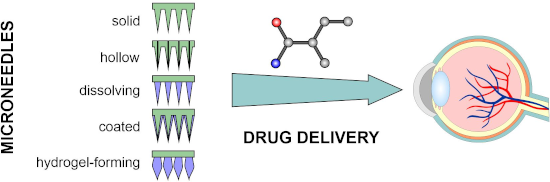
- photopolymerization of photosensitive polymers, but in this case each layer of the polymer is projected as whole [152]. A more complicated method is two‑photon polymerization (TPP), which uses a near-infrared beam instead of UV radiation. TPP initiates the polymerization of the resin by multiphoton absorption [153


Rapid fabrication of MgO@g-C3N4 heterojunctions for photocatalytic nitric oxide removal
Beilstein J. Nanotechnol. 2022, 13, 1141–1154, doi:10.3762/bjnano.13.96
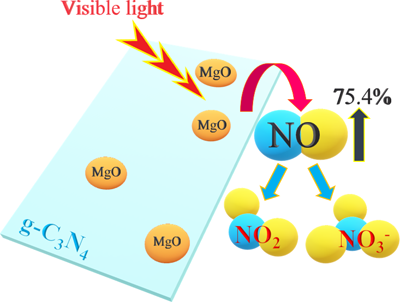
- -transform infrared spectroscopy (FTIR) was used to determine the chemical bond composition of the materials. Differential reflectance spectroscopy (DRS) determined the change in the bandgap of the materials. The elements of the materials were identified by high-resolution X-ray photoelectron spectroscopy





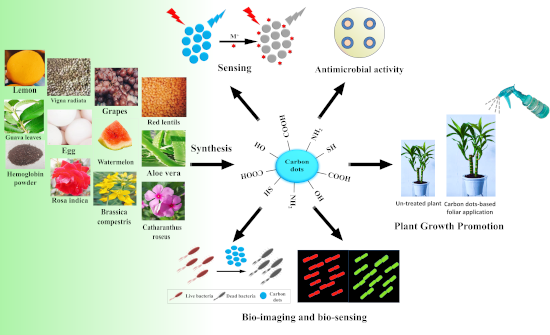
Recent advances in green carbon dots (2015–2022): synthesis, metal ion sensing, and biological applications
Beilstein J. Nanotechnol. 2022, 13, 1068–1107, doi:10.3762/bjnano.13.93




Numerical study on all-optical modulation characteristics of quantum cascade lasers
Beilstein J. Nanotechnol. 2022, 13, 1011–1019, doi:10.3762/bjnano.13.88
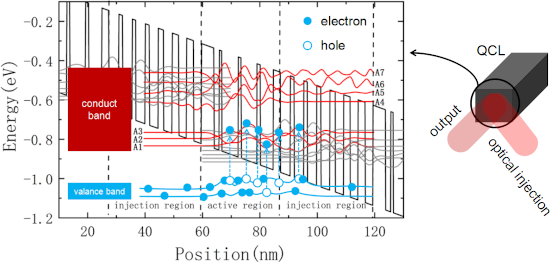
- number of photons in the cavity of a mid-infrared QCL modulated with near-infrared optical injection. The results were consistent with an experiment, where the injected light increases the electron population and lifetime, but does not affect the optical gain obviously. Our study can be helpful for
- multiple nanostructures, which are grown by molecular beam epitaxy (MBE) [1]. It has been widely used in the fields of free space optical communication [2][3], gas detection [4][5], and biological research [6][7]. Because the QCL is a narrow linewidth and high-power laser working in the mid-infrared to
- , thus reducing the number of photons in the cavity and achieving modulation. Conclusion In this paper, to explore the phenomenon of all-optical modulation of QCLs, we studied the characteristics of a mid-infrared QCL using near-infrared optical injection of several mW at wavelengths of 820 nm and 1550


Comparing the performance of single and multifrequency Kelvin probe force microscopy techniques in air and water
Beilstein J. Nanotechnol. 2022, 13, 922–943, doi:10.3762/bjnano.13.82
- techniques to yield multidimensional data sets and aid in isolation of the influence of electrostatic potential, for example, PeakForce infrared-KPFM (PFIR-KPFM) [66], nanomechanical mapping + KPFM [67][68], magnetic force microscopy (MFM) + KPFM [69], piezoresponse force microscopy (PFM) + KPFM [70], and G
Recent advances in nanoarchitectures of monocrystalline coordination polymers through confined assembly
Beilstein J. Nanotechnol. 2022, 13, 763–777, doi:10.3762/bjnano.13.67

- and the infrared spectrum, hydrogen bonding between the nanosheets and the ice-like water molecules were found to be the main contributors to the unique adhesion behavior (Figure 9) [149]. This finding suggests that the 2D coordination polymers could cooperatively assemble into useful macrostructures




Hierarchical Bi2WO6/TiO2-nanotube composites derived from natural cellulose for visible-light photocatalytic treatment of pollutants
Beilstein J. Nanotechnol. 2022, 13, 745–762, doi:10.3762/bjnano.13.66
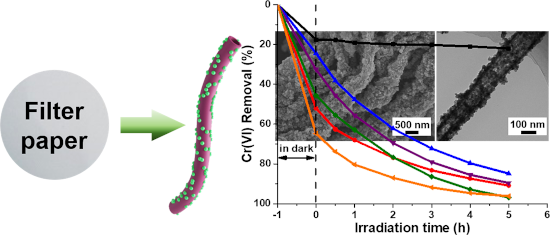
- the practical content (72.9 wt %) of the Bi2WO6 component in the 70%−Bi2WO6/TiO2-NT nanocomposite. Characterization Powder X-ray diffraction (XRD) patterns of the samples were obtained from the Rigaku Ultima IV diffractometer with a Cu Kα (λ = 0.15405 nm) radiation source. Fourier transform infrared


A nonenzymatic reduced graphene oxide-based nanosensor for parathion
Beilstein J. Nanotechnol. 2022, 13, 730–744, doi:10.3762/bjnano.13.65
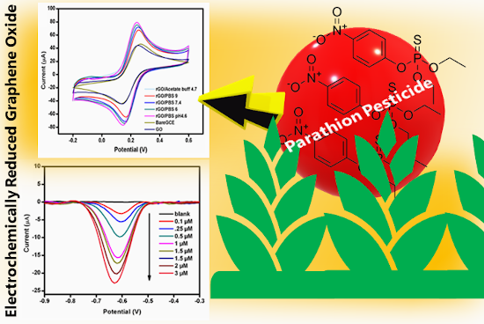
- (ULVAC-PHI, U.S.) with monochromatic Al Kα (hν = 1486.6 eV) radiation, and a beam size of 100 μm. The Fourier transform infrared (FTIR) absorption spectra of GO and ERGO were collected in the 4000–400 cm−1 region on a Perkin Elmer spectrometer as KBr (Sigma-Aldrich, Germany) pellets. The crystalline


Tunable high-quality-factor absorption in a graphene monolayer based on quasi-bound states in the continuum
Beilstein J. Nanotechnol. 2022, 13, 675–681, doi:10.3762/bjnano.13.59
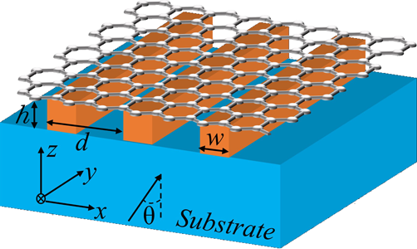
- stealth, infrared detectors, thermophotovoltaic cells, and thermal emitters. According to their spectral bandwidths, the absorbers can be classified as broad-band absorbers and narrow-band absorbers [1][2][3][4]. In general, broad-band absorbers [5][6][7][8] are used for electromagnetic cloaking and solar
- interband contributions and is described by: Here, σintra and σinter are the intraband and interband conductivity, respectively. In the mid-infrared wavelength region considered in this work, the Fermi level is greater than half of the photon energy, that is, ℏω < 2Ef. Thus, the intraband contribution will


Antibacterial activity of a berberine nanoformulation
Beilstein J. Nanotechnol. 2022, 13, 641–652, doi:10.3762/bjnano.13.56
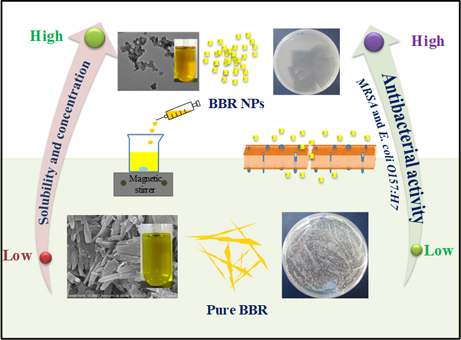
- solution were determined using Fourier-transform infrared spectroscopy (FTIR, NEXUS 670 from Nicolet). The FTIR analysis was conducted in transmission mode in the wavenumber range of 400 to 4000 cm−1. Size and shape of BBR NPs were investigated by scanning electron microscopy (SEM, S-4800, Hitachi) and



Detection and imaging of Hg(II) in vivo using glutathione-functionalized gold nanoparticles
Beilstein J. Nanotechnol. 2022, 13, 549–559, doi:10.3762/bjnano.13.46
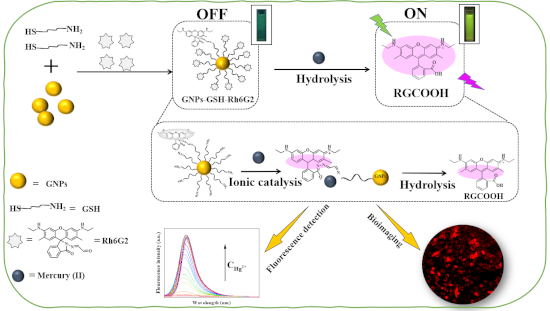
- Fluorescence spectrophotometer (Hitachi, Japan). Mean particle size and the zeta potential were recorded using a Zetasizer Nano ZS90 (Malvern, UK). A Nicolet iS10 infrared spectrometer (Nicolet, USA) was used to gather FTIR spectra in a scanning range of 400–4000 cm−1. Fluorescence images of cells were


Zinc oxide nanostructures for fluorescence and Raman signal enhancement: a review
Beilstein J. Nanotechnol. 2022, 13, 472–490, doi:10.3762/bjnano.13.40
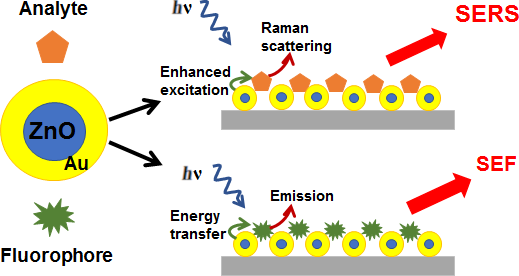
- nanostructures, however, are significantly inferior to those on noble metals since the LSPR is centred in the near-infrared in the case of the conduction band (CB) and in the UV region in the case of the valence band (VB) [14]. Therefore, concrete solutions have been proposed to improve the EM enhancement in ZnO
- as SEF, SERS [16][17], infrared absorption, and even second harmonic generation [18], which can improve the performance of optical sensors and optoelectronic devices. ZnO alone and in combination with noble metals has been recently used for the development of SERS substrates [15][19] due to several
- unoccupied molecular orbital level (LUMO) of the analyte molecules match the conduction band (CB) and valence band (VB) of the semiconductor. The EM effect can be amplified by shifting the LSPR peak to the near infrared (NIR) or visible spectral region by doping the semiconductor and, thus, increasing the




Investigation of electron-induced cross-linking of self-assembled monolayers by scanning tunneling microscopy
Beilstein J. Nanotechnol. 2022, 13, 462–471, doi:10.3762/bjnano.13.39
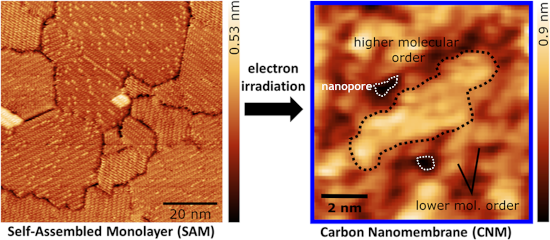
- separation [36][37][38][39][40][41][42]. The interactions between aromatic SAMs and electrons have been studied by X-ray photoelectron spectroscopy (XPS), near-edge X-ray-absorption fine-structure (NEXAFS) technique [43][44][45][46][47][48][49], infrared spectroscopy [43][50][51][52], high-resolution


Coordination-assembled myricetin nanoarchitectonics for sustainably scavenging free radicals
Beilstein J. Nanotechnol. 2022, 13, 284–291, doi:10.3762/bjnano.13.23
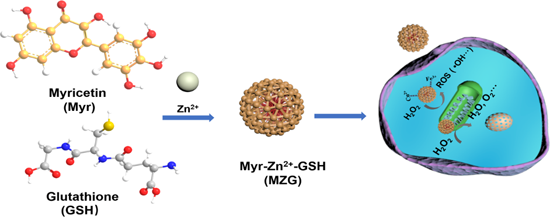
- component co-assembles with Myr and GSH. Fourier-transform infrared (FTIR) spectra were used to further confirm the self-assembly of the MZG nanoparticles. In Figure 2d, the two bands at 2522 cm−1 and 3350 cm−1 were assigned to the mercapto group (–SH) and the stretching vibration of the amino group (–NH2


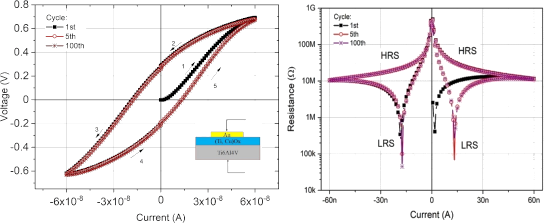
Investigation of a memory effect in a Au/(Ti–Cu)Ox-gradient thin film/TiAlV structure
Beilstein J. Nanotechnol. 2022, 13, 265–273, doi:10.3762/bjnano.13.21
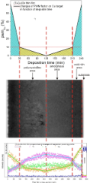
- (Ti–Cu)Ox film. As one can see, the prepared thin film is quite transparent in the visible part of the optical spectrum. However, the average transmission does not exceed more than 25% on average in the wavelength range of 500 to 1000 nm. In the infrared, the transparency of the thin film is higher



Photothermal ablation of murine melanomas by Fe3O4 nanoparticle clusters
Beilstein J. Nanotechnol. 2022, 13, 255–264, doi:10.3762/bjnano.13.20
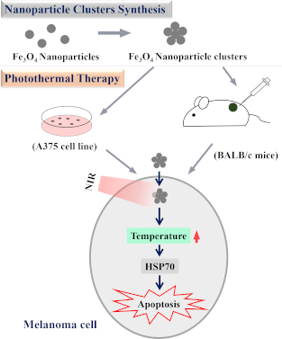
- diameter of 329.2 nm. They are highly absorptive at the near-infrared wavelength of 808 nm and efficient at locally converting light into heat. In vitro experiments using light-field microscopy and cell viability assay showed that Fe3O4 NPCs, in conjunction with near-infrared irradiation, effectively
- ablated A375 melanoma cells by inducing overt apoptosis. Consistently, in vivo studies using BALB/c mice found that intratumoral administration of Fe3O4 NPCs and concomitant in situ exposure to near-infrared light significantly inhibited the growth of implanted tumor xenografts. Finally, we revealed, by
- the promise of Fe3O4 NPCs as a new PTT option to treat melanoma. Keywords: Fe3O4 nanoparticle clusters; heat shock protein 70; melanoma; near infrared; photothermal therapy; Introduction The global incidence of melanoma, one of the deadliest forms of cancer, has kept increasing annually over the


Impact of device design on the electronic and optoelectronic properties of integrated Ru-terpyridine complexes
Beilstein J. Nanotechnol. 2022, 13, 219–229, doi:10.3762/bjnano.13.16
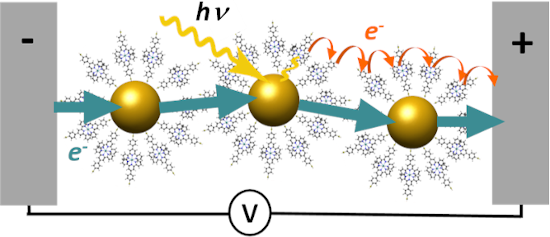
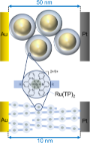
- was verified by infrared reflection absorption spectroscopy (IRRAS) and surface-enhanced Raman spectroscopy in combination with density functional theory calculations, as well as variable angle spectroscopic ellipsometry. Based on this wire formation protocol the on-chip preparation of Ru(TP)2-complex


Engineered titania nanomaterials in advanced clinical applications
Beilstein J. Nanotechnol. 2022, 13, 201–218, doi:10.3762/bjnano.13.15
- photosensitive materials, followed by irradiation of the target lesion with the light of a particular wavelength, is known as photodynamic therapy (PDT), while PTT is an extension of PDT that causes photon-mediated localized temperature elevation specifically by utilizing infrared radiation, which stimulates
- drawback of using TiO2 as photosensitizer is the shallow penetration depth in tissues as it gets activated only by UV light; however, for deep penetration of light into tissues, the wavelength should be in the near-infrared (NIR) window (700–1100 nm) [111]. TiO2 nps can be retained in the body for more


Tin dioxide nanomaterial-based photocatalysts for nitrogen oxide oxidation: a review
Beilstein J. Nanotechnol. 2022, 13, 96–113, doi:10.3762/bjnano.13.7
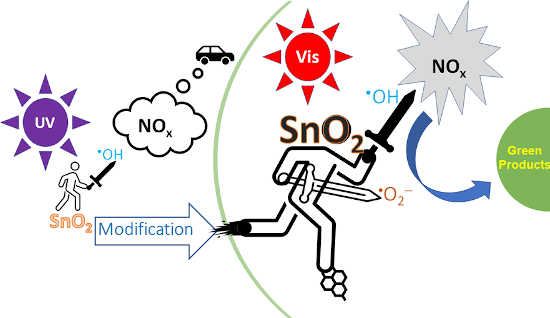
- photoinduced electrons from the CB of BiOBr to that of SnO2, thus prolonging the lifetime of photogenerated electron–hole pairs (Figure 8). The NO-to-NO2 conversion and intermediates and products were confirmed via in situ diffuse reflectance infrared Fourier transform spectroscopy during NO oxidation [70


Influence of magnetic domain walls on all-optical magnetic toggle switching in a ferrimagnetic GdFe film
Beilstein J. Nanotechnol. 2022, 13, 74–81, doi:10.3762/bjnano.13.5
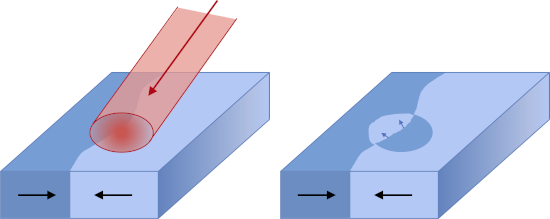
- dichroism (XMCD) as magnetic contrast mechanism. We focus single ultrashort infrared laser pulses of 100 fs temporal width to the vicinity of magnetic domain walls and study the local deviations from a perfect, deterministic toggle switching and their relation to the domain-wall position for temperatures