


Search results
Search for "low energy" in Full Text gives 295 result(s) in Beilstein Journal of Nanotechnology. Showing first 200.
Luminescence of Tb3Al5O12 phosphors co-doped with Ce3+/Gd3+ for white light-emitting diodes
Beilstein J. Nanotechnol. 2019, 10, 1237–1242, doi:10.3762/bjnano.10.123
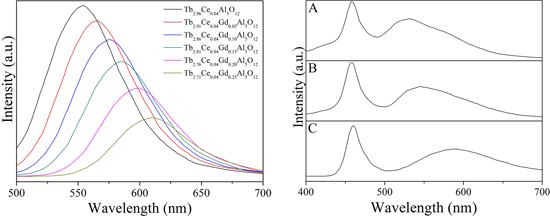
- correlated colour temperature (CCT) [1][2]. At the same time, this type of WLEDs has the advantages of long lifetime, eco-friendliness, high luminous efficiency and low energy consumption, which helps to mitigate two serious issues in the world, namely ecological crisis and energy dilemma. As a result


Pure and mixed ordered monolayers of tetracyano-2,6-naphthoquinodimethane and hexathiapentacene on the Ag(100) surface
Beilstein J. Nanotechnol. 2019, 10, 1188–1199, doi:10.3762/bjnano.10.118
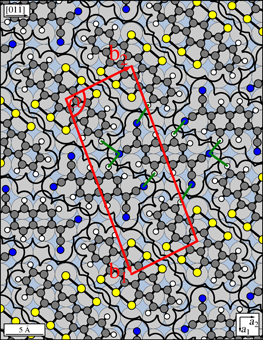
- structures are formed on a surface by molecules that are otherwise typically used for the synthesis of bulk charge-transfer materials. The layers were obtained by vacuum deposition on the Ag(100) surface and analyzed by low-energy electron diffraction (LEED) and scanning tunneling microscopy (STM). The
- a planar orientation on the surface. We discuss the influence of intermolecular charge transfer on the ordering in the mixed structure. Keywords: charge transfer; low-energy electron diffraction; hexathiapentacene; scanning tunneling microscopy; tetracyano-2,6-naphthoquinodimethane; Introduction
- :1 stoichiometry. Experimental The experiments were conducted in an ultra-high vacuum (UHV) chamber with a base pressure of 10−10 mbar. The chamber was equipped with a variable-temperature scanning tunneling microscope STM (type RHK UHV 300) from RHK Technologies and a multi-channel plate (MCP) low


Electroluminescence and current–voltage measurements of single-(In,Ga)N/GaN-nanowire light-emitting diodes in a nanowire ensemble
Beilstein J. Nanotechnol. 2019, 10, 1177–1187, doi:10.3762/bjnano.10.117
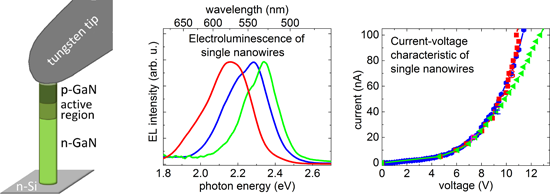
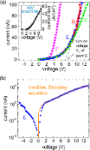
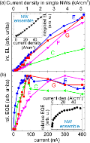
- was found that the different emission lines in the spectra and their observed evolution with increasing injection current result from different emission energies and intensities of the four (In,Ga)N insertions. The low-energy line was attributed to the EL of the first insertion (QW 1) next to the n


Co-doped MnFe2O4 nanoparticles: magnetic anisotropy and interparticle interactions
Beilstein J. Nanotechnol. 2019, 10, 856–865, doi:10.3762/bjnano.10.86
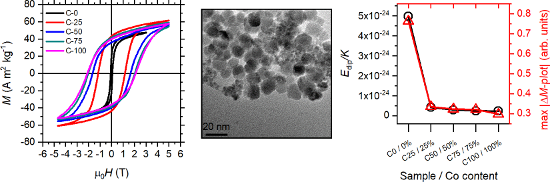
- , we investigate the structural and magnetic properties of ensembles of ferrite nanoparticles with formula Mn1−xCoxFe2O4, (0 ≤ x ≤ 1) prepared by a combined low-energy ball milling and self-combustion method. This simple and low cost synthesis approach (i.e., the synthesis is performed at a relatively
- on the magnetic properties of Mn1−xCoxFe2O4 nanoparticles prepared by low-energy ball milling was investigated. Small effects are observed regarding the structure of the sample, while the average particle size and shape remain almost constant. All samples systematically show a lattice parameter


An efficient electrode material for high performance solid-state hybrid supercapacitors based on a Cu/CuO/porous carbon nanofiber/TiO2 hybrid composite
Beilstein J. Nanotechnol. 2019, 10, 781–793, doi:10.3762/bjnano.10.78
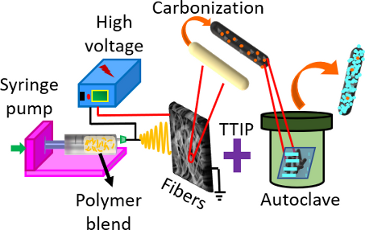
- only the physical processes are involved in separating the charges, and thus the surface area and porous nature of the electrode materials play the main role. However, charge stored only through electrostatic ion adsorption causes a relatively low energy density (<10 Wh kg−1), which leads to


On the transformation of “zincone”-like into porous ZnO thin films from sub-saturated plasma enhanced atomic layer deposition
Beilstein J. Nanotechnol. 2019, 10, 746–759, doi:10.3762/bjnano.10.74
- charging was compensated using a dual beam charge neutralization, with a flux of low-energy electrons (ca. 1 eV) combined with positive Ar ions of very low energy (10 eV). Samples were sputter cleaned for 1 min with an Ar ion beam of 1 kV, 1 µA (raster size: 2 × 2 cm2). The acquired spectra were processed
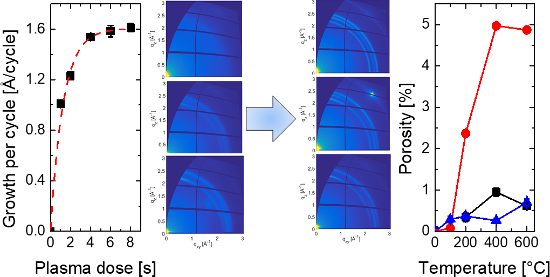
- justified with the formation of more Zn–OH groups due to the removal of the organic ligands. Furthermore, room-temperature PE-ALD processes have often shown in the literature the inclusion of chain-terminating –OH groups in the inorganic matrix, due to the low energy provided during the growth [47][57]. The


Deposition of metal particles onto semiconductor nanorods using an ionic liquid
Beilstein J. Nanotechnol. 2019, 10, 718–724, doi:10.3762/bjnano.10.71
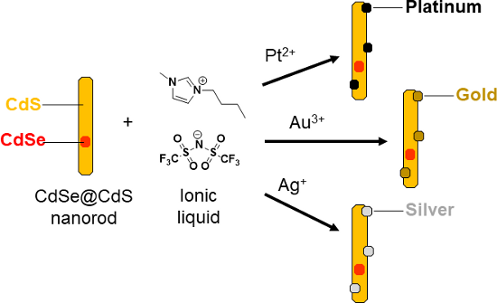
- expanded upon by Pyun et al. [27][28]. Our CdSe quantum dots had an average diameter of 2.4 nm as determined using the correlation of particle diameter with the wavelength of the low energy absorbance peak (λmax = 509 nm) [29]. The CdSe@CdS nanorods had an average length of 50 ± 10 nm and an average


Enhancement in thermoelectric properties due to Ag nanoparticles incorporated in Bi2Te3 matrix
Beilstein J. Nanotechnol. 2019, 10, 634–643, doi:10.3762/bjnano.10.63
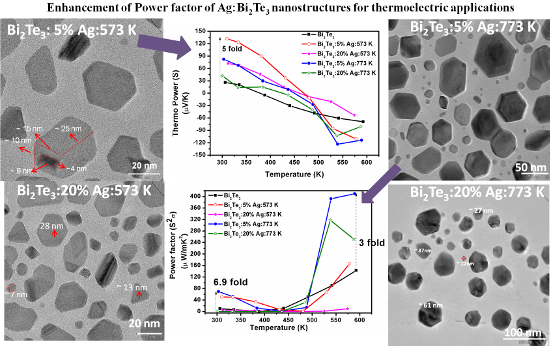
- theoretical calculations for the introduction of metal nano-inclusions in TE materials. This theory predicts the band bending at the metal–semiconductor interface will allow for the transmission of high energy electrons along with a blocking of low energy electrons. This electron energy filter results in
- method and the incorporation in Bi2Te3 synthesized by ball milling, which yielded a significant enhancement in power factor and ZT in Bi/Bi2Te3 due to the scattering of low-energy electrons by a barrier potential at the Bi–Bi2Te3 interface [15]. Improvement in TE properties has also been observed after
- a future study. The enhancement of the Seebeck coefficient can be attributed to carrier filtering. Band bending at the metal–semiconductor interfaces leads to a strong scattering of low-energy electrons whereas high-energy electrons remain unaffected [20][21]. The energy-dependent scattering of



Direct observation of the CVD growth of monolayer MoS2 using in situ optical spectroscopy
Beilstein J. Nanotechnol. 2019, 10, 557–564, doi:10.3762/bjnano.10.57
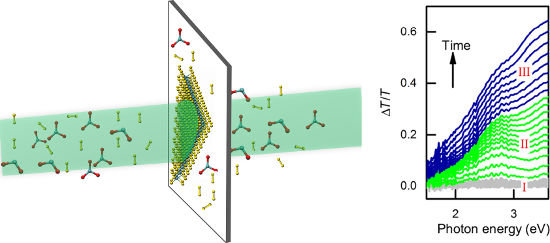
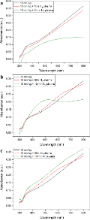
- contrast, the features associated with MoS2 vanish. The decrease of the transmittance (the increase of DTS) over the low-energy range could be attributed to the increase of the scattering of the MoO3 thin film deposited on the quartz window. In order to understand the observed evolution of the DT


Mo-doped boron nitride monolayer as a promising single-atom electrocatalyst for CO2 conversion
Beilstein J. Nanotechnol. 2019, 10, 540–548, doi:10.3762/bjnano.10.55
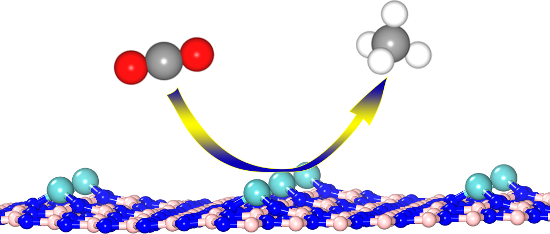
- CRR and HER on the Mo-doped BN is −0.45 V and −0.62 V, respectively. Therefore, we can draw the conclusion that the CRR is predominant on the catalyst due to its relatively low energy demand. The limiting potential is relatively low among most of the catalysts to selectively produce CH4 for CRR with


Choosing a substrate for the ion irradiation of two-dimensional materials
Beilstein J. Nanotechnol. 2019, 10, 531–539, doi:10.3762/bjnano.10.54
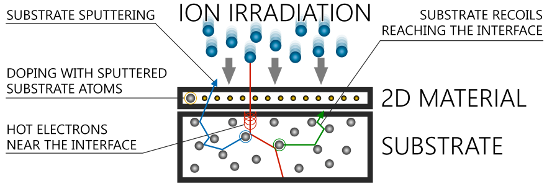
- the latter, the maximum values of transferred energy are up to an order of magnitude larger. The insets in Figure 1 show details of the low-energy region (10−1–100 keV) of the dependencies presented. As the incident ion energy increases, the energy transferred to both substrate sputtering and recoils
- reaching the interface begins to increase notably starting from 10−1–100 keV where the ion has enough energy to activate these processes. As seen in the insets, the energy transferred to recoils reaching the interface seems to dominate over sputtering in the low-energy range. However, it should be noted
- crystal lattice, leading to ion implantation (doping) [25]. For the latter to occur, the ion should have a considerably low energy – of about 20–200 eV, with the most effective implantation occurring at 25–75 eV [1][25][26][27][28][29]. The process peaks in the lower part of this region for 2D TMDs and in
Advanced scanning probe lithography using anatase-to-rutile transition to create localized TiO2 nanorods
Beilstein J. Nanotechnol. 2019, 10, 412–418, doi:10.3762/bjnano.10.40
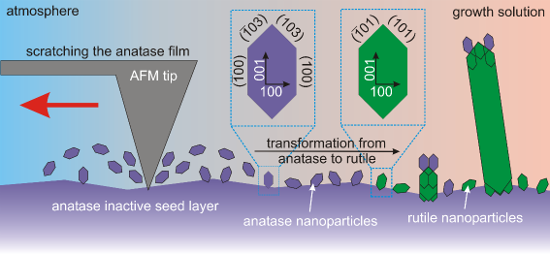
- TiO2 nanorods grow hydrothermally on anatase particles with a diameter of approximately 25 nm [39][40]. Even if rutile TiO2 seed nanocrystals are already present, it is assumed that anatase clusters diffuse along rutile TiO2 surfaces towards low-energy facets and perform a solid-state phase


Transport signatures of an Andreev molecule in a quantum dot–superconductor–quantum dot setup
Beilstein J. Nanotechnol. 2019, 10, 363–378, doi:10.3762/bjnano.10.36
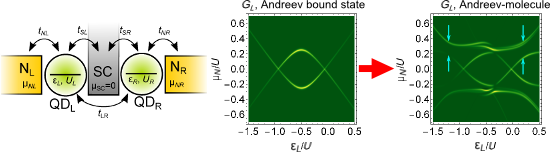
- using second-order perturbation theory in the SC-QD tunneling term HT,SC. This procedure yields a 16-dimensional low-energy effective Hamiltonian for the double QD, which describes the superconducting proximity effect of the SC lead on the double QD. Here, we describe this effective Hamiltonian and the
- procedure to obtain it. For this, we consider the Hamiltonian without the N leads, HQD + HSC + HT,SC + HIT. (We will take into account the N leads later to describe transport.) Assuming Δ U and further neglecting the QD-SC tunneling HT,SC, the 16-dimensional quasiparticle-free low-energy subspace is
- energetically well-separated from other states containing a finite number of quasiparticles. The low-energy subspace is spanned by the product basis, the products of particle-number eigenstates of each QD, namely, where the arrows denote the spin states of the electrons. We will use the notation We perform



Intuitive human interface to a scanning tunnelling microscope: observation of parity oscillations for a single atomic chain
Beilstein J. Nanotechnol. 2019, 10, 337–348, doi:10.3762/bjnano.10.33
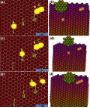
- surface atoms. Figure 4 shows that after fixing the crystallographic orientation (as explained above), with the use of two adatoms one can obtain with 100% certainty the complete information about the surface atoms, as the adatoms will sit only on the hollow sites (low-energy position, see Figure 4b). A




A Ni(OH)2 nanopetals network for high-performance supercapacitors synthesized by immersing Ni nanofoam in water
Beilstein J. Nanotechnol. 2019, 10, 281–293, doi:10.3762/bjnano.10.27
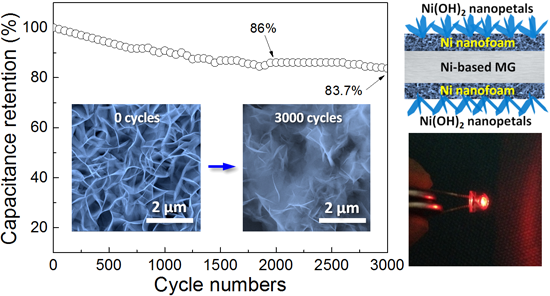
- between active materials and electrolyte, for which transition metal oxides/hydroxides with multiple valence are used as electrode materials [8][9]. EDLCs hold a high power density and long cycling stability, but their practical application is limited by the low energy density. In comparison, pseudo




Study of silica-based intrinsically emitting nanoparticles produced by an excimer laser
Beilstein J. Nanotechnol. 2019, 10, 211–221, doi:10.3762/bjnano.10.19
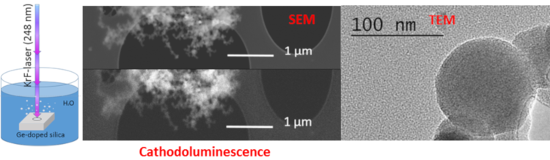
- , within the spot, are irradiated differently. Our data indicate that for low energy per pulse (or fluence) the particle shape tends to be irregular. The use of the same mask could limit the contribution of the irradiated part far from the center (thus with low local fluence), which seems to contribute to



Sputtering of silicon nanopowders by an argon cluster ion beam
Beilstein J. Nanotechnol. 2019, 10, 135–143, doi:10.3762/bjnano.10.13
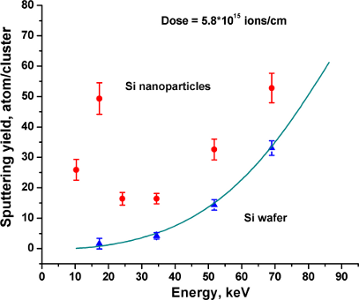
- target density. The energy dependence demonstrated an unusual non-monotonic behavior. At 17.3 keV a maximum of the sputtering yield was observed, which was more than forty times higher than that of the bulk Si. The surface roughness at low energy demonstrates a similar energy dependence with a maximum
- discussed in [6][7], ≈1 µm and 60 nm, respectively. Moreover, the roughening effect itself can be a consequence of the high sputtering yield. A more accurate explanation of the sputtering yield increase at the low energy requires additional study of the structure of the top layer. It should be noted that
- the cluster, A = 57 eV and q = 2.25 are the fitting parameters. At low energy, the denominator is close to 1 and the equation is simplified to The functional dependence in Equation 1 and Equation 3 is the same except for the presence of the threshold energy Eth in Equation 1. In general, the existence





Apparent tunneling barrier height and local work function of atomic arrays
Beilstein J. Nanotechnol. 2018, 9, 3048–3052, doi:10.3762/bjnano.9.283
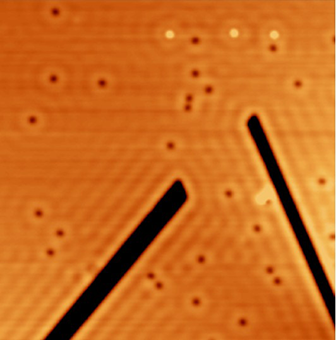
- . This is reflected by the notion of a local work function Φ [7][8][9]. Adsorbates modify Φ in an intriguing manner [10][11][12][13]. In turn, variations of Φ produce, e.g., atomic-scale contrast in field-emission microscopy, photo-emission electron microscopy, and low-energy electron microscopy [14][15


Site-controlled formation of single Si nanocrystals in a buried SiO2 matrix using ion beam mixing
Beilstein J. Nanotechnol. 2018, 9, 2883–2892, doi:10.3762/bjnano.9.267
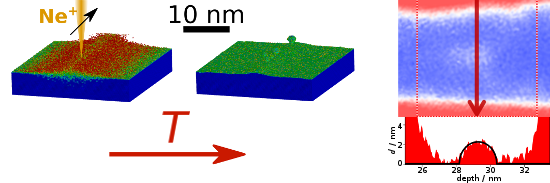
- pyrolysis [13] and ion beam synthesis in an SiO2 matrix [14][15][16][17]. Compared to conventional ion beam synthesis using low-energy ion implantation, collisional mixing of Si into an SiO2 layer by ion irradiation at higher energies leads to a better control over the Si excess, and a self-aligned δ-layer


Charged particle single nanometre manufacturing
Beilstein J. Nanotechnol. 2018, 9, 2855–2882, doi:10.3762/bjnano.9.266
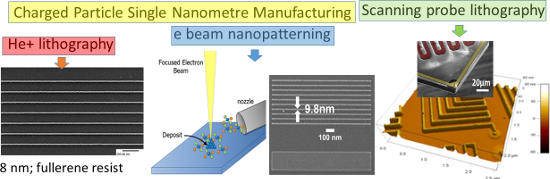
- focusing the primary electron beam on the substrate in the presence of adsorbed precursor gas molecules delivered from a nozzle close to the sample surface. The electrons interact with the substrate generating high-energy backscattered and low-energy (<50 eV) secondary electrons all of which interact with


Controlling surface morphology and sensitivity of granular and porous silver films for surface-enhanced Raman scattering, SERS
Beilstein J. Nanotechnol. 2018, 9, 2813–2831, doi:10.3762/bjnano.9.263
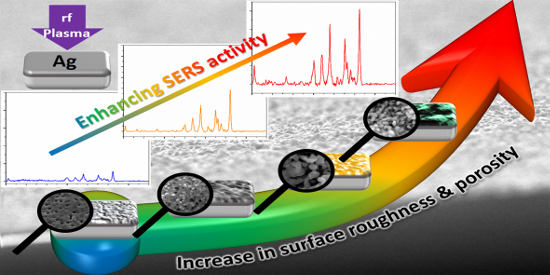
- using a microfocused, monochromated Al Kα X-ray source (30–400 µm spot size). The K-Alpha charge compensation system was employed during analysis, using electrons of 8 eV energy and low-energy argon ions to prevent any localized charge build-up. Auger spectroscopy was performed using a PHI 680 (Physical





Biomimetic surface structures in steel fabricated with femtosecond laser pulses: influence of laser rescanning on morphology and wettability
Beilstein J. Nanotechnol. 2018, 9, 2802–2812, doi:10.3762/bjnano.9.262
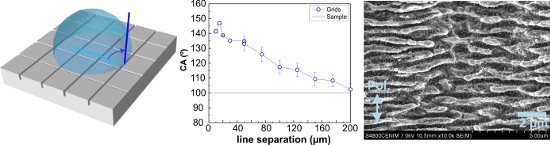
- Experimental section, the surface wetting was measured after at least 15 days after irradiation so that the surface was stabilized, allowing the formation of this free low energy coating required for a stable surface. A straightforward way to measure the apparent contact angle wetting behavior of a surface is



Magnetic and luminescent coordination networks based on imidazolium salts and lanthanides for sensitive ratiometric thermometry
Beilstein J. Nanotechnol. 2018, 9, 2775–2787, doi:10.3762/bjnano.9.259
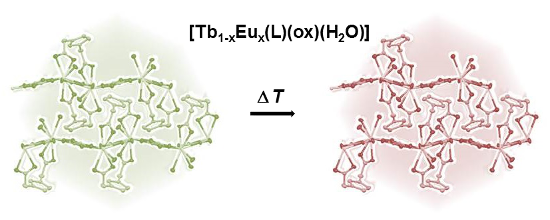
- emission spectra, the broad band has a very fast time dependence totally suppressed by a time delay of only 0.05 ms. The suppression of the low-energy T1→S0 ligand emission denotes an energy transfer from the triplet excited state to the Eu3+ and Tb3+ excited levels. This energy transfer is more effective



Disorder in H+-irradiated HOPG: effect of impinging energy and dose on Raman D-band splitting and surface topography
Beilstein J. Nanotechnol. 2018, 9, 2708–2717, doi:10.3762/bjnano.9.253
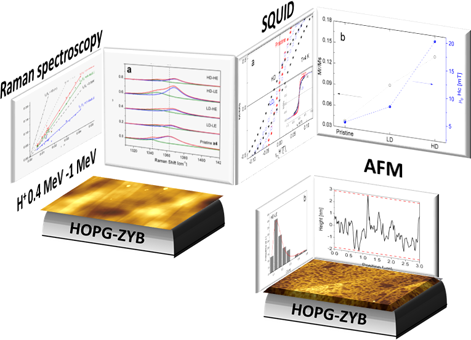
- were performed using a Tandem NEC Pelletron 5SDH of 1.7 MV, at two impinging energies: 0.4 MeV (low energy, LE) and 1 MeV (high energy, HE), using two different doses: 1014 ions/cm2 (low dose, LD) and 1016 ions/cm2 (high dose, HD). These irradiation conditions were chosen in order to ensure a maximum
- of dose and energy. We do not observe a continuous evolution from low dose and low energy to high dose and high energy in our spectra, which may allow us to correlate changes in each component of the D band with a certain kind of defects or defect-like features, including changes in the hybridization
- impinging energy is approximately four times greater than in the case of lower energy. In fact, SRIM simulations allowed us to estimate penetration depths of 3.3 μm and 12.6 μm for low and high energies, respectively. Hence, a smaller mean free path of the ions results in the case of low energy, which


Two-dimensional semiconductors pave the way towards dopant-based quantum computing
Beilstein J. Nanotechnol. 2018, 9, 2668–2673, doi:10.3762/bjnano.9.249
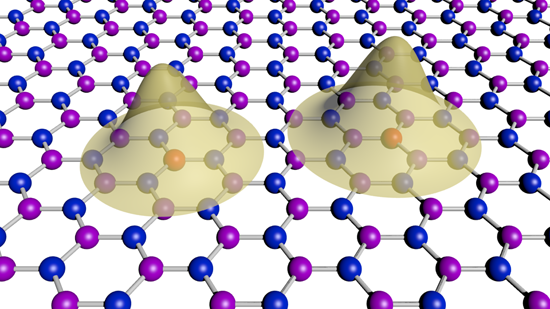
- neighboring donors. For two electrons bound to a single donor there are two low-energy levels well separated from the next excited state, one singlet and one triplet, which allows to map the lower-energy-states problem to the Heisenberg spin-1/2 Hamiltonian. For two electrons bound to a donor pair, there are


![[Graphic 7]](/bjnano/content/inline/2190-4286-9-249-i7.svg?max-width=637&scale=1.18182) and energy for one electron bound to a donor pair
and energy for one electron bound to a donor pair ![[Graphic 8]](/bjnano/content/inline/2190-4286-9-249-i8.svg?max-width=637&scale=1.18182) as a function of R. For R = 2a*, ...
as a function of R. For R = 2a*, ...




