


Search results
Search for "magnetic field" in Full Text gives 325 result(s) in Beilstein Journal of Nanotechnology. Showing first 200.
Influence of dielectric layer thickness and roughness on topographic effects in magnetic force microscopy
Beilstein J. Nanotechnol. 2019, 10, 1056–1064, doi:10.3762/bjnano.10.106
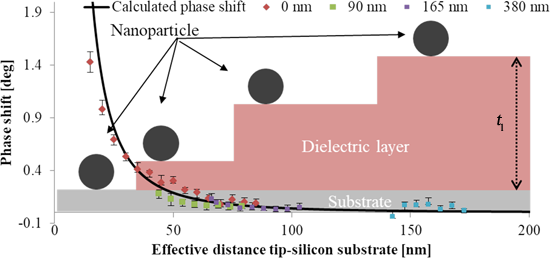
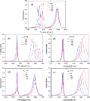
- magnetic field of the probe with a magnetic moment of 3·10−16 A·m2 is sufficient to induce a magnetic moment at lift heights up to 150 nm in superparamagnetic nanoparticles with 10 nm diameter. This results in attractive forces and, thus, negative phase shifts in MFM measurements. Therefore the magnetic


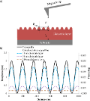


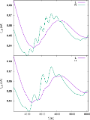
![[Graphic 2]](/bjnano/content/inline/2190-4286-10-106-i7.svg?max-width=637&scale=1.18182) ; black line) and measured phase shift for single nanoparticles with 10 ± 2 nm diameter...
; black line) and measured phase shift for single nanoparticles with 10 ± 2 nm diameter...


Magnetic field-assisted assembly of iron oxide mesocrystals: a matter of nanoparticle shape and magnetic anisotropy
Beilstein J. Nanotechnol. 2019, 10, 894–900, doi:10.3762/bjnano.10.90
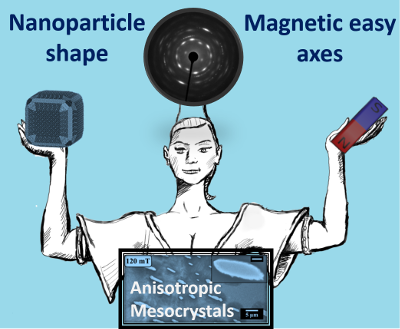
- iron oxide-truncated nanocubes using the slow evaporation of the solvent within an externally applied homogeneous magnetic field. Anisotropic mesocrystals with an elongation along the direction of the magnetic field can be produced. The structure of the directed mesocrystals is compared to self
- -assembled mesocrystalline films, which are formed without the influence of a magnetic field. The remarkable structural difference of mesocrystals produced within the external magnetic field from those self-assembled without field indicates that the specific nanoparticle ordering within the superstructure is
- superparamagnetic nanoparticles and how a magnetic field can be used to design anisotropic mesocrystals with different structures. Keywords: directed assembly; magnetite; mesocrystal; nanoparticle; transmission electron microscopy; Findings In materials science, nanoparticles and their assemblies belong to the


Co-doped MnFe2O4 nanoparticles: magnetic anisotropy and interparticle interactions
Beilstein J. Nanotechnol. 2019, 10, 856–865, doi:10.3762/bjnano.10.86
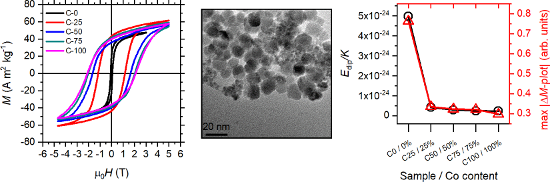
- to 5 K in a zero magnetic field; then a static magnetic field of 2.5 mT was applied. MZFC was measured during the warming up phase from 5 to 300 K, and MFC was recorded during the subsequent cooling down from 300 to 5 K. The field-dependent isothermal remanent magnetization (IRM) and direct current
- demagnetization (DCD) were measured at 5 K. In the IRM measurement process, the demagnetized samples were cooled from 300 to 5 K in a zero magnetic field. Then a small external field was applied only for a few seconds, and the remanence was measured (MIRM). The process was repeated, increasing the field in
- measurements were performed by an AC susceptometer system. The measurements were carried out by cooling the sample from room temperature to 100 K in zero magnetic field, then magnetic susceptibility was measured during the warming up process in a magnetic field of 1 mT at frequencies of 33, 111, 333, 666 and


Periodic Co/Nb pseudo spin valve for cryogenic memory
Beilstein J. Nanotechnol. 2019, 10, 833–839, doi:10.3762/bjnano.10.83
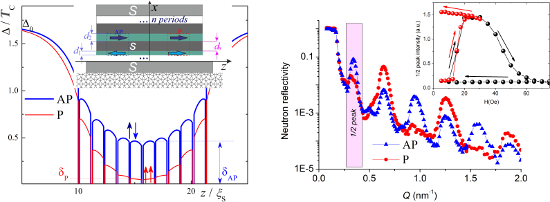
- alignment can be controlled with a magnetic field of only several tens of Oersted. Keywords: cryogenic computing; neutron scattering; spin valve; superconducting spintronics; Findings Superconductor digital devices have attracted growing attention due to their unique energy efficiency and performance [1
- reflectometer NREX at the research reactor FRM-2 (Munich, Germany). The neutron reflectivities were taken with a monochromatic polarized neutron beam of wavelength λ = 0.43 nm at a temperature T = 13 K with the magnetic field applied in-plane to the structure and normal to the scattering plane (see inset in
- Figure 3a). No spin analysis of the scattered beam was performed in this experiment. Figure 3a and Figure 3b shows reflectivities measured at H = 300 Oe and in magnetic field H = 30 Oe after magnetization of the sample in the negative direction. The curves in the saturated state are characterized by


Tungsten disulfide-based nanocomposites for photothermal therapy
Beilstein J. Nanotechnol. 2019, 10, 811–822, doi:10.3762/bjnano.10.81
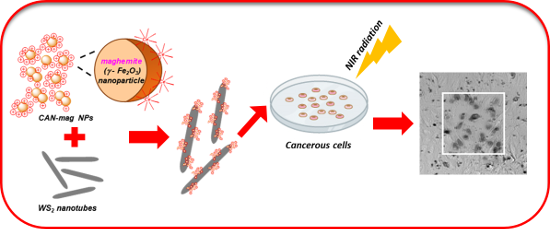
- . For WS2-NTs (red spectrum, inset image), the external magnetic field induces a very weak magnetic field in the opposite direction. This means that WS2-NTs are diamagnetic. The CAN-mag curve (green) demonstrates superparamagnetic behavior, where the magnetization increases with the strength of the
- magnetic field until it approaches saturation, and there is no hysteresis loop. Superparamagnetism is typical for iron-oxide nanoparticles [67]. The nanocomposite WS2-NT-CM (blue curve) maintains superparamagnetism, with a saturation value of about ±13 emu/g, which is a sixth of the saturation value for






Coexisting spin and Rabi oscillations at intermediate time regimes in electron transport through a photon cavity
Beilstein J. Nanotechnol. 2019, 10, 606–616, doi:10.3762/bjnano.10.61
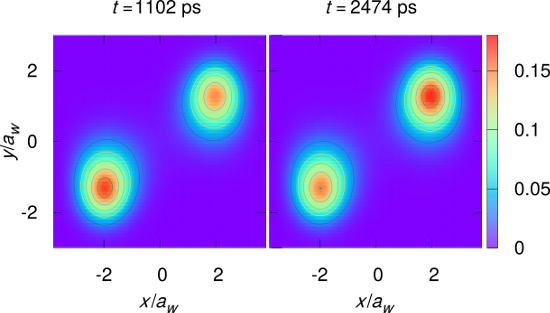
- time regimes, the current and the average photon number are calculated by solving a Markovian master equation in the dressed-states picture, with the Coulomb interaction also taken into account. We predict that in the presence of a transverse magnetic field the interdot Rabi oscillations appearing in
- oscillations of the transport current in time still reveal Rabi oscillations, but in a complex many-level system other oscillations can be present. In particular we find that for a weak Rabi splitting the even weaker Zeeman spin splitting caused by a small external magnetic field plays a role in the transport
- = 3 × 10⁻⁷ (aw is defined below). In the second line of the Hamiltonian (Equation 2) are the para- and the diamagnetic electron–photon interactions, respectively. Aext (Equation 3) is a classical vector potential leading to a homogeneous, external, small magnetic field, Bext = 0.1 T, directed along


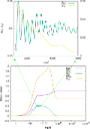
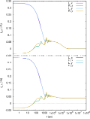
![[Graphic 40]](/bjnano/content/inline/2190-4286-10-61-i49.svg?max-width=637&scale=1.418184) and photon
and photon ![[Graphic 41]](/bjnano/content/inline/2190-4286-10-61-i50.svg?max-width=637&scale=1.418184) content in the open central system as a function of time. In additio...
content in the open central system as a function of time. In additio...
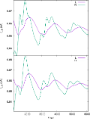

![[Graphic 60]](/bjnano/content/inline/2190-4286-10-61-i69.svg?max-width=637&scale=1.418184)
![[Graphic 61]](/bjnano/content/inline/2190-4286-10-61-i70.svg?max-width=637&scale=1.418184)
![[Graphic 62]](/bjnano/content/inline/2190-4286-10-61-i71.svg?max-width=637&scale=1.418184) and
and ![[Graphic 63]](/bjnano/content/inline/2190-4286-10-61-i72.svg?max-width=637&scale=1.418184) i...
i...
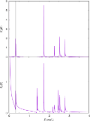
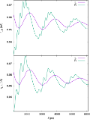
![[Graphic 76]](/bjnano/content/inline/2190-4286-10-61-i85.svg?max-width=637&scale=1.418184) in the steady state. The cavity pho...
in the steady state. The cavity pho...
Transport signatures of an Andreev molecule in a quantum dot–superconductor–quantum dot setup
Beilstein J. Nanotechnol. 2019, 10, 363–378, doi:10.3762/bjnano.10.36
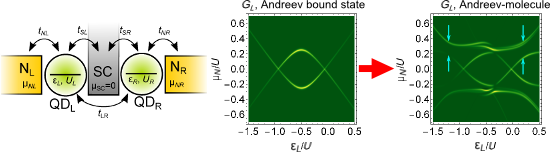
- the states with odd number of electrons. Since we do not account for a magnetic field, these eight states are decomposed into two invariant subspaces with different total spin z component Each energy eigenvalue in one doublet subspace has an equal partner in the spectrum of the other doublet subspace



Geometrical optimisation of core–shell nanowire arrays for enhanced absorption in thin crystalline silicon heterojunction solar cells
Beilstein J. Nanotechnol. 2019, 10, 322–331, doi:10.3762/bjnano.10.31
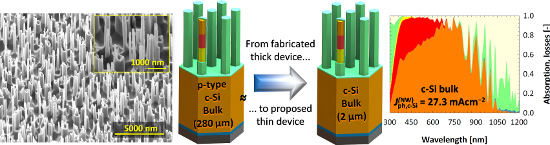
- (in the active layer) or lost (in supporting layers, or due to reflection): where q is the elemental charge, X can be either Ai or R, and λ is the wavelength of light. Note that only the spectral range between 300 and 1200 nm was considered. In addition, the value of electric and magnetic field inside


Heating ability of magnetic nanoparticles with cubic and combined anisotropy
Beilstein J. Nanotechnol. 2019, 10, 305–314, doi:10.3762/bjnano.10.29
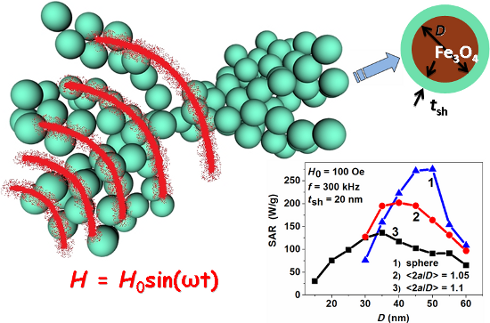
- ] and sufficiently high saturation magnetization [5]. However, only nanoparticles with a high specific absorption rate (SAR) in an alternating external magnetic field are suitable for magnetic hyperthermia. Therefore, a significant number of recent experimental studies [6][7][8][9][10][11][12][13][14
- nanoparticles to generate heat in an alternating external magnetic field. According to the present calculations, for interacting magnetite nanoparticles with cubic or combined anisotropy, sufficiently high SAR values of the order of 250–350 W/g can be obtained for low values of magnetic field amplitudes, H0
- ][31] governs the dynamics of the unit magnetization vector of the ith single-domain nanoparticle of the cluster where γ is the gyromagnetic ratio, κ is phenomenological damping parameter, γ1 = γ/(1+κ2), is the effective magnetic field and is the thermal field. The effective magnetic field acting on


Electromagnetic analysis of the lasing thresholds of hybrid plasmon modes of a silver tube nanolaser with active core and active shell
Beilstein J. Nanotechnol. 2019, 10, 294–304, doi:10.3762/bjnano.10.28
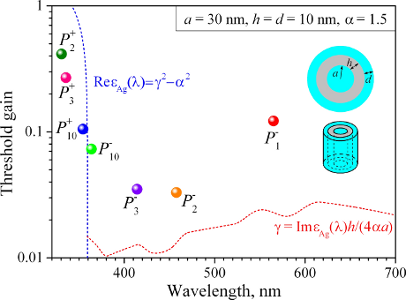
- Equation 14 of the present paper and its derivation). Denote by U the component of the magnetic field Hz. Assuming that the field is time-harmonic and depends on time as e−iωt, the LEP implies that the function U must satisfy the 2D Helmholtz equation with the corresponding refractive indices in each of


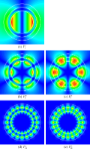
![[Graphic 29]](/bjnano/content/inline/2190-4286-10-28-i46.svg?max-width=637&scale=1.18182) λ = 565.03...
λ = 565.03...

![[Graphic 36]](/bjnano/content/inline/2190-4286-10-28-i53.svg?max-width=637&scale=1.18182) ...
...


Relation between thickness, crystallite size and magnetoresistance of nanostructured La1−xSrxMnyO3±δ films for magnetic field sensors
Beilstein J. Nanotechnol. 2019, 10, 256–261, doi:10.3762/bjnano.10.24
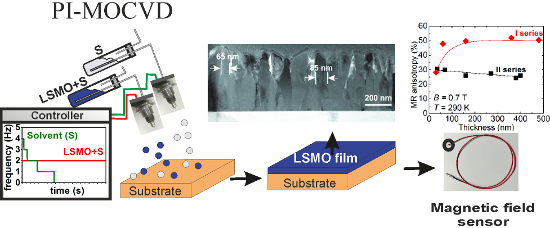
- additional supply source of precursor solution in an exponentially decreasing manner, exhibit the highest magnetoresistance and the lowest magnetoresistance anisotropy. The possibility to use these films for the development of magnetic field sensors operating at room temperature is discussed. Keywords
- : colossal magnetoresistance; crystallites; magnetic field sensors; MOCVD growth; nanostructured films; Introduction Perovskite manganite materials are an interesting topic of research since they can be applied as sensors for measuring the magnetic field due to the colossal magnetoresistance (CMR
- films consisting of columnar nanograins have already been successfully applied for the sensing of high pulsed magnetic fields (B-scalar sensor) [13][14]. Despite this development, the scalar (independent of field orientation) CMR effect under a low magnetic field is still a challenging goal towards


Magnetic-field sensor with self-reference characteristic based on a magnetic fluid and independent plasmonic dual resonances
Beilstein J. Nanotechnol. 2019, 10, 247–255, doi:10.3762/bjnano.10.23
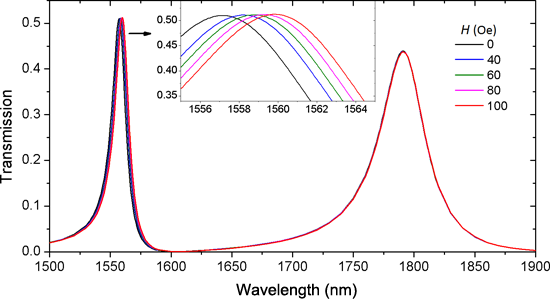
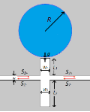
- , Tianjin 300222, China 10.3762/bjnano.10.23 Abstract A magnetic-field sensor with self-reference characteristic based on metal–dielectric–metal (MDM) plasmonic waveguides and a magnetic fluid (MF) is proposed and theoretically investigated. Independent dual resonances are supported by the coupled
- resonator–waveguide system. The physical mechanisms of dual resonances are analyzed by the temporal coupled-mode theory. The transmission response to an external magnetic field is explored by using the remarkable tunability of the refractive index of the MF. Based on the different dependence of two
- resonances on the external field, a magnetic-field sensor with self-reference characteristic is achieved. The magnetic-field nanosensor shows an excellent performance with a high sensitivity of 27 pm/Oe, i.e., 270 pm/mT. The proposed sensor takes advantage of the refractive-index tunability of the MF and the



Size limits of magnetic-domain engineering in continuous in-plane exchange-bias prototype films
Beilstein J. Nanotechnol. 2018, 9, 2968–2979, doi:10.3762/bjnano.9.276
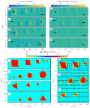
- widths b of 5 μm, 2 μm, 1 μm, 500 nm, 200 nm and 100 nm were written by HIM in an external magnetic field, applied antiparallel to the initial EB field. For b ≥ 500 nm, the stripe repetition number was chosen to be N = 5, whereas for b < 500 nm, N = 10. The magnetic charge contrast of this pattern
- ] and to the fact that the unidirectional anisotropy of the EB has been mimicked by a local magnetic field. Since the DW charge states remain unaffected along the DW, a strong interaction between the corresponding demagnetization fields is present in the regions close to the domain vertices. As a result
- ferromagnetic (F) layer has been initialized by heating at 573 K for 90 min and subsequent cooling at a rate of 1 K·min−1 for 300 min to room temperature in an external magnetic field of 80 kA·m−1. HIM patterning A commercial HIM (Zeiss Orion Plus) has been modified with a sample holder allowing for the




![[Graphic 63]](/bjnano/content/inline/2190-4286-9-276-i63.svg?max-width=637&scale=1.18182) .
. ![[Graphic 64]](/bjnano/content/inline/2190-4286-9-276-i64.svg?max-width=637&scale=1.18182) is the angle between the domain wall (DW) normal vector
is the angle between the domain wall (DW) normal vector ![[Graphic 65]](/bjnano/content/inline/2190-4286-9-276-i65.svg?max-width=637&scale=1.18182) and the local unidirectio...
and the local unidirectio...
Magnetic and luminescent coordination networks based on imidazolium salts and lanthanides for sensitive ratiometric thermometry
Beilstein J. Nanotechnol. 2018, 9, 2775–2787, doi:10.3762/bjnano.9.259
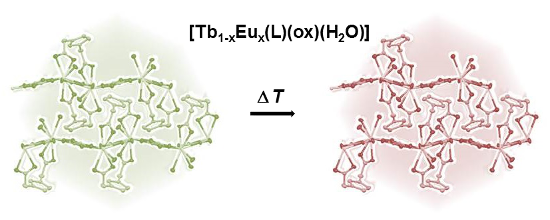
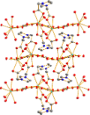
- 0.5 T dc magnetic field. The magnetic susceptibilities and products χT are presented as functions of the temperature in Figure 3. At 300 K, the value of χT for the compound [Gd(L)(ox)(H2O)] is 7.88 emu·K·mol−1, which agrees well with the theoretical value for spin-only S = 7/2 Gd3+ ions. The χT
- measurements were performed using a Quantum Design SQUID-VSM magnetometer. The static susceptibility measurements were performed in the temperature range of 1.8–300 K with an applied field of 0.5 T. Samples were blocked in eicosane to avoid orientation under magnetic field. Magnetization measurements at



Contactless photomagnetoelectric investigations of 2D semiconductors
Beilstein J. Nanotechnol. 2018, 9, 2741–2749, doi:10.3762/bjnano.9.256
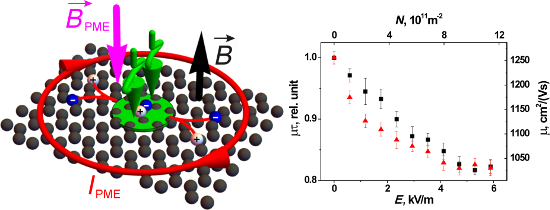
- , on the magnetic field as well as on the intensity and spatial distribution of illumination. The theoretical predictions agree with the results of the contactless investigations performed on non-suspended single-layer graphene. We use the contactless PME method for determining the dependence of
- method for determining these parameters in 2D semiconductors that is based on the photomagnetoelectric (PME) effect [10]. There are a few phenomena which are or may be called PME effects. For example, in semiconductors the simultaneous action of light and magnetic field evokes specific electromotive
- forces [10]. In the magnetic field, B, perpendicular to the photogenerated carrier concentration gradient, the diffusing electrons and holes are deflected in opposite directions. Their current flows in a third, mutually perpendicular direction. The PME response decreases with the increase of

![[Graphic 1]](/bjnano/content/inline/2190-4286-9-256-i2.svg?max-width=637&scale=1.18182) evoked by the PME circulating current in a point-illuminated 2D...
evoked by the PME circulating current in a point-illuminated 2D...

![[Graphic 7]](/bjnano/content/inline/2190-4286-9-256-i8.svg?max-width=637&scale=1.18182) vs the illumination intensity for differe...
vs the illumination intensity for differe...

![[Graphic 15]](/bjnano/content/inline/2190-4286-9-256-i16.svg?max-width=637&scale=1.18182) vs the carrier lifetime for different values ...
vs the carrier lifetime for different values ...


Disorder in H+-irradiated HOPG: effect of impinging energy and dose on Raman D-band splitting and surface topography
Beilstein J. Nanotechnol. 2018, 9, 2708–2717, doi:10.3762/bjnano.9.253
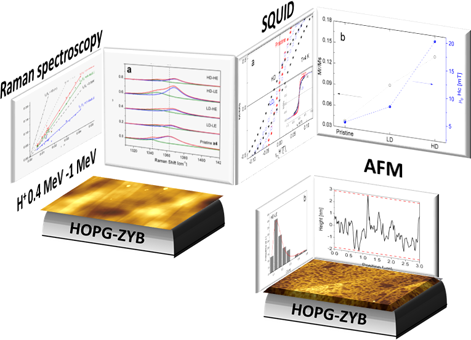
- Design SQUID with RSO, in order to accurately measure any magnetic changes in the graphite samples, which are of the order of (or less than) 10−6 emu. The magnetic field was applied parallel to the graphene planes to diminish the contribution of the diamagnetic background. The samples were transferred
- after Raman characterization. Figure 4a shows the normalized magnetization M/Ms as a function of the magnetic field H for samples irradiated with an energy of 0.4 MeV (LE), low and high doses, together with the pristine sample, after subtracting the diamagnetic contribution inherent to graphite. Even


Size-selected Fe3O4–Au hybrid nanoparticles for improved magnetism-based theranostics
Beilstein J. Nanotechnol. 2018, 9, 2684–2699, doi:10.3762/bjnano.9.251
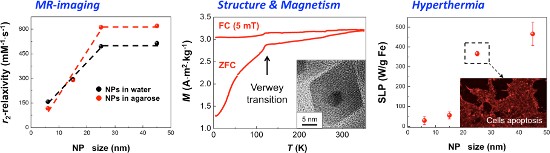
- diameter from 6 to 25 nm. The 25 nm and 44 nm diameter NPs show similar theranostic performance. In in vitro experiments we detected the death of 4T1 mouse breast cancer cells at a rate of 79 ± 8% after exposure to 25 nm Fe3O4–Au hybrids for 30 min in an ac magnetic field (AMF) with 261–393 kHz and 25 mT
- light scattering data (Table S1, Supporting Information File 1). The ability of magnetite NPs to increase the T2-contrast in MRI arises from the creation of huge magnetic field gradients, accelerating the relaxation rate of water protons in the vicinity of the NPs [56]. The correlation of r2-relaxivity
- with the size of Fe3O4 NPs and clusters of NPs has been thoroughly discussed in the literature. See for example [57][58][59][60]. These aggregates can be considered as magnetic volumes in which the dipole–dipole interaction between NPs produces a strong magnetic field gradient leading to the


Au–Si plasmonic platforms: synthesis, structure and FDTD simulations
Beilstein J. Nanotechnol. 2018, 9, 2599–2608, doi:10.3762/bjnano.9.241
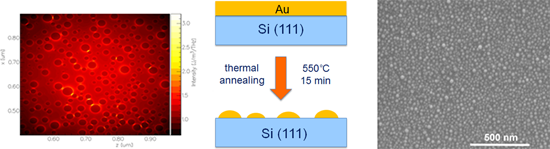
- components parallel to the surface are much stronger than those of the perpendicular y-components. This effect is particularly clearly visible for the magnetic field. The calculated absorbance as a result of the FDTD/DFT simulation is shown in Figure 15. We can observe a quite good agreement with the



Cytotoxicity of doxorubicin-conjugated poly[N-(2-hydroxypropyl)methacrylamide]-modified γ-Fe2O3 nanoparticles towards human tumor cells
Beilstein J. Nanotechnol. 2018, 9, 2533–2545, doi:10.3762/bjnano.9.236
- from MRI contrast agents to drug-delivery systems, local heat sources in magnetic hyperthermia therapy of tumors, magnetically assisted transfection of cells, and magnetic field-assisted separation techniques. Let us to note that MRI is already widely used in human medicine and several iron-oxide-based
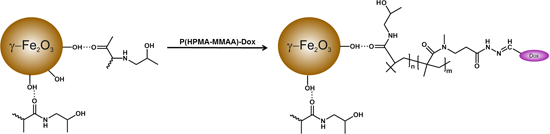
- using a magnetic field allowing for easy separation and/or targeted delivery in the organism [26]. In this report, citrate-treated maghemite nanoparticles and a novel PHPMA-based surface coating were used to ensure biocompatibility, minimal immunogenicity and to provide reactive functional groups for


Nanocellulose: Recent advances and its prospects in environmental remediation
Beilstein J. Nanotechnol. 2018, 9, 2479–2498, doi:10.3762/bjnano.9.232
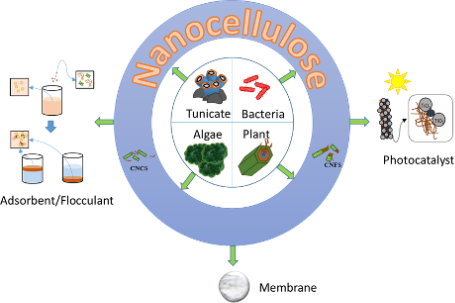
- magnetic field. As a result, magnetic nanomaterials have drawn increasing attention. Nanocellulose incorporated with other magnetic nanomaterials is presented as an excellent composite adsorbent with magnetic properties. For example, a core–shell cellulose magnetite (Fe3O4) polymeric ionic liquid magnetic
- dioxide sample. The incorporation of magnetite was able to inhibit the photodegradation of the cellulose structure during UV irradiation and this hybrid structure demonstrated high catalyst recyclability using an external magnetic field. Nanoparticles generally tend to aggregate, leading to difficulties


High-temperature magnetism and microstructure of a semiconducting ferromagnetic (GaSb)1−x(MnSb)x alloy
Beilstein J. Nanotechnol. 2018, 9, 2457–2465, doi:10.3762/bjnano.9.230
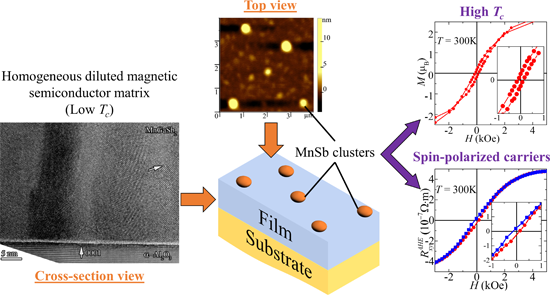
- magnetization as function of the magnetic field for the sample GM3 (see Table 1) for magnetic field orientations parallel to the sample plane and perpendicularly to it. The presence of a well-pronounced hysteresis suggests that ferromagnetic ordering in these materials appears at T > 300 K. This is more evident
- agreement with values of Hc ≈ 130 Oe and Hsat ≈ 4 kOe obtained from SQUID data with the magnetic field oriented perpendicularly to the sample plane. Note, that the values of Hc and Hsat in Table 1 were obtained with the magnetic field oriented parallel to the sample plane. The difference between the values
- This work was partially supported by Russian Foundation for Basic Research (grants #17-02-00262 and #16-03-00150) and by Ministry of Education and Science of Russian Federation (grant #16.2814.2017/PCh). (a) Magnetization as a function of the magnetic field for sample GM3 at T = 300 K. Measurements



Magnetism and magnetoresistance of single Ni–Cu alloy nanowires
Beilstein J. Nanotechnol. 2018, 9, 2345–2355, doi:10.3762/bjnano.9.219
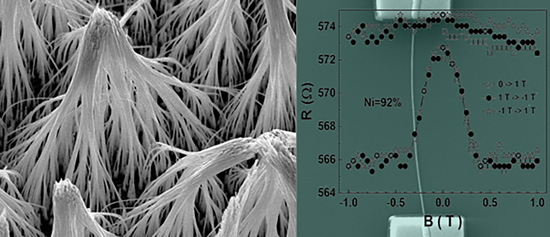
- implication in the magnetoresistance behavior, which has to remain constant when passing the applied magnetic field through any vicinity of the switching field (Figure 2). In order to support theoretically the mechanism of a S–W-like coherent rotation in transversal geometry also for nanowires with diameters
- no field applied, the magnetization lies along the wire due to the strong shape anisotropy. The perpendicular magnetoresistance as a function of the induction of the magnetic field (left column) and the corresponding magnetization reversal in perpendicular geometry (right column) as calculated via
- Equation 5, for single Ni–Cu alloy nanowires of different Ni concentrations. Hysteresis loops showing the average magnetic moment of Ni atoms as a function of the applied magnetic field, obtained from SQUID magnetometry measurements at 300 K on arrays of Ni–Cu nanowires of different compositions (54 and 92


Performance analysis of rigorous coupled-wave analysis and its integration in a coupled modeling approach for optical simulation of complete heterojunction silicon solar cells
Beilstein J. Nanotechnol. 2018, 9, 2315–2329, doi:10.3762/bjnano.9.216
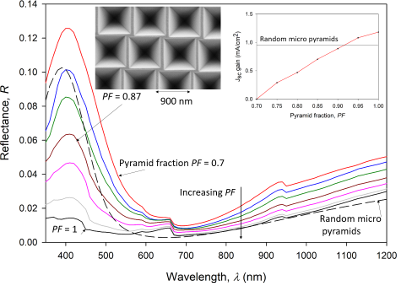
- the propagation of light inside each sublayer separately. The matrix size depends on the number of modes considered. Based on this matrix, complex vectors of the electric and magnetic field, E and H, inside each sublayer can be defined at the end of the calculation. Eigenvectors of the matrix define


Metal–dielectric hybrid nanoantennas for efficient frequency conversion at the anapole mode
Beilstein J. Nanotechnol. 2018, 9, 2306–2314, doi:10.3762/bjnano.9.215
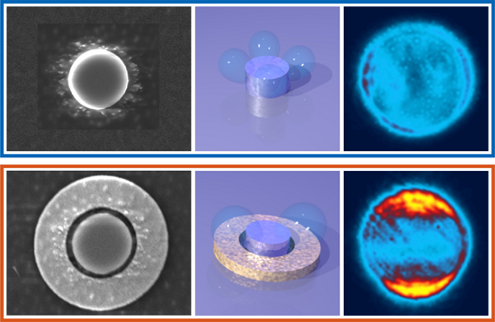
- the electric field, E0, polarized along the y-axis with respect to the reference system of Figure 2a. For the dispersion of the refractive index of Al0.18Ga0.82As we used the analytical model proposed in [39]. In Figure 2b,c both the electric and magnetic field enhancements are depicted, respectively
- ) Electric field vector map at 1550 nm for the proposed structure. b) Electric and c) magnetic field distribution in the hybrid nanoantenna at 1550 nm. d) The full multipolar decomposition of the first five contributing multipole moments: electric dipole (Pe), magnetic dipole (Md), toroidal dipole (Td


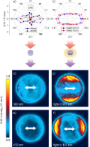


Influence of the thickness of an antiferromagnetic IrMn layer on the static and dynamic magnetization of weakly coupled CoFeB/IrMn/CoFeB trilayers
Beilstein J. Nanotechnol. 2018, 9, 2198–2208, doi:10.3762/bjnano.9.206
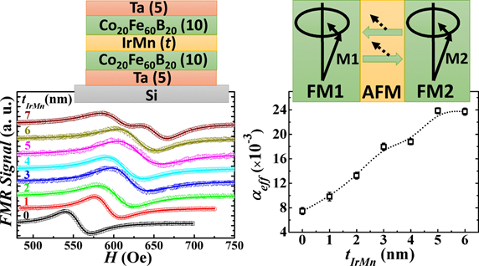
- was varied (5, 10, 15, 20 and 25 nm). No cooling of the samples in an external magnetic field through the Néel temperature (TN) was performed. For accurately estimating the thicknesses of individual layers and interfacial roughness, X-ray reflectivity (XRR) measurements were performed using a
- sweeping the in-plane external dc magnetic field through resonance at a constant microwave frequency (f). Here, the external field was modulated using a pair of Helmholtz coils, which provide a small ac field (211.5 Hz) of 1.3 Oe, and in combination with lock-in detection, the field derivative of FMR





