


Search results
Search for "platinum" in Full Text gives 342 result(s) in Beilstein Journal of Nanotechnology. Showing first 200.
Multicomponent bionanocomposites based on clay nanoarchitectures for electrochemical devices
Beilstein J. Nanotechnol. 2019, 10, 1303–1315, doi:10.3762/bjnano.10.129
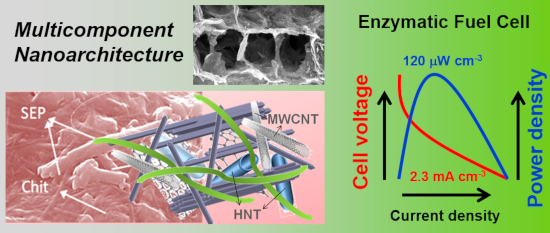
- analyzer) was carried out to estimate the amount of GOx loaded into the HNTs. Biosensing test Cyclic voltammetry (CV) was performed with a standard three-electrode electrochemical cell connected to a Solartron 1480 MultiStat potentiostat. A platinum wire was used as a counter electrode and Ag|AgCl (soaked


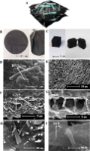

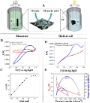
Alloyed Pt3M (M = Co, Ni) nanoparticles supported on S- and N-doped carbon nanotubes for the oxygen reduction reaction
Beilstein J. Nanotechnol. 2019, 10, 1251–1269, doi:10.3762/bjnano.10.125
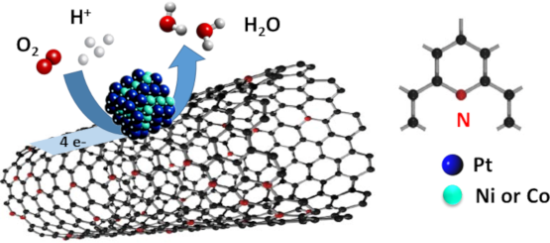
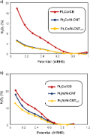
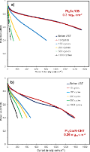
- ; nickel; oxygen reduction reaction; platinum; proton exchange membrane fuel cell (PEMFC); Introduction Proton exchange membrane fuel cells (PEMFCs) convert chemical energy from the hydrogen oxidation reaction (HOR) and the oxygen reduction reaction (ORR) into electrical energy. PEMFCs are one of the most
- contains generally four times more catalyst than the anodic layer, which explains why most of the research is focused on the optimization of the cathodic catalytic layer. Platinum nanoparticles (NPs) supported on carbon black (CB), especially Vulcan XC-72 [3][4], are usually used as the catalyst. To meet
- be done without compromise to the catalyst layer performance and durability. It is known that catalyst degradation via platinum dissolution and carbon corrosion plays an important role in the voltage degradation of PEMFCs [6][7][8]. CB, which is widely used, particularly for its low cost, suffers








Molecular attachment to a microscope tip: inelastic tunneling, Kondo screening, and thermopower
Beilstein J. Nanotechnol. 2019, 10, 1243–1250, doi:10.3762/bjnano.10.124
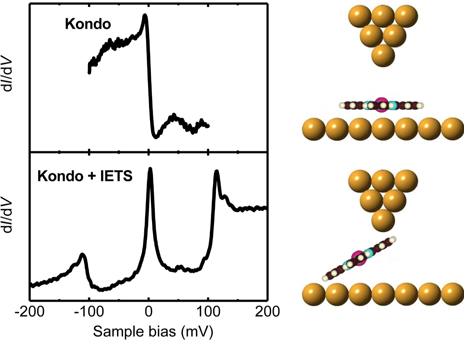
- junction conductance of about 200% (see Figure 2e). Such a large conductance increment supports the strong electron–vibration interaction of the MnPc molecule suspended in the STM gap, similar to the one reported for CO2 molecule in the platinum break junction [31][32]. Furthermore, the spectral intensity


Porous N- and S-doped carbon–carbon composite electrodes by soft-templating for redox flow batteries
Beilstein J. Nanotechnol. 2019, 10, 1131–1139, doi:10.3762/bjnano.10.113
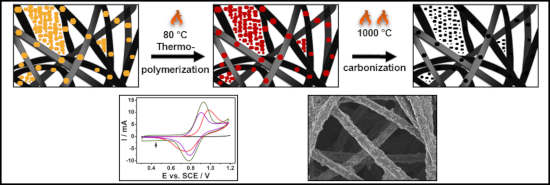
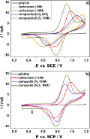
- Reference 600 potentiostat from Gamry Instruments operating in a three-electrode setup. A saturated calomel electrode (SCE) was used as reference electrode (243 ± 2 mV vs SHE) and a platinum electrode consisting of a 1 mm thick platinum piece (0.6 cm × 0.7 cm) represented the counter electrode. The



Glucose-derived carbon materials with tailored properties as electrocatalysts for the oxygen reduction reaction
Beilstein J. Nanotechnol. 2019, 10, 1089–1102, doi:10.3762/bjnano.10.109
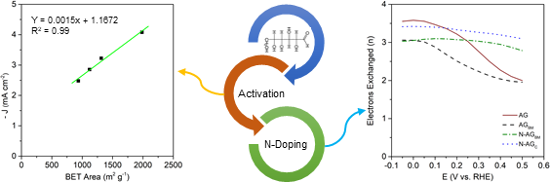
- electrocatalyst used for the reaction. The most commonly used electrocatalyst to supply faster kinetics and a four-electron pathway are platinum-based materials [3][4], which are costly and may assume up to 50% of the total cost of a fuel cell [5]. Transition metals [6][7], metal oxides [8][9] and carbon


Fabrication of silver nanoisland films by pulsed laser deposition for surface-enhanced Raman spectroscopy
Beilstein J. Nanotechnol. 2019, 10, 882–893, doi:10.3762/bjnano.10.89
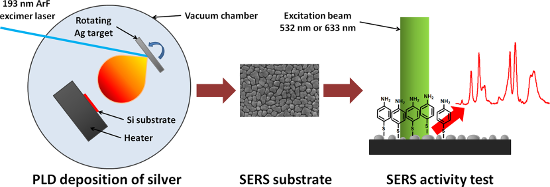
- pMA monolayer adsorbed on the surface of a platinum foil with 99.998% purity. According to literature reports, a pMA monolayer can be made on the surface of platinum, as well as on the surface of silver and gold, a pMA monolayer can be made [30][31]. EF values were calculated according to the
- the EF of the Raman signal, the Raman measurements of the pMA adsorbed on the surface of the platinum film were also done. Compared to SERS substrates, obtaining a spectrum with the appropriate signal-to-noise ratio required increasing the laser power and extended measurement time. For the 532 nm
- image of continuous Ag film, description of procedure of the determination of the enhancement factor (EF) and Raman spectrum of pMA on platinum foil. Acknowledgements This work was supported by the Polish Ministry of Science and Higher Education grant for Development of the Young Researchers. This work




An efficient electrode material for high performance solid-state hybrid supercapacitors based on a Cu/CuO/porous carbon nanofiber/TiO2 hybrid composite
Beilstein J. Nanotechnol. 2019, 10, 781–793, doi:10.3762/bjnano.10.78
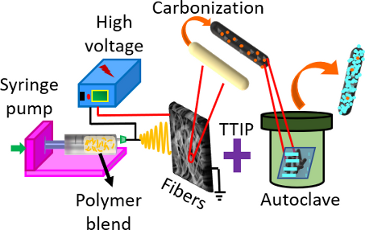
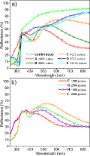
- an area of 1 cm2 and dried at 70 °C overnight and was used as the working electrode. A platinum wire acts as counter electrode and Ag/AgCl acts as reference electrode for the electrochemical measurements in three-electrode configuration in 1 M H2SO4 aqueous electrolyte from 0 to 1 V potential range


Renewable energy conversion using nano- and microstructured materials
Beilstein J. Nanotechnol. 2019, 10, 771–773, doi:10.3762/bjnano.10.76

- : materials and devices” covers the photo-electrochemical growth of platinum catalysts at plasmonic hot spots [6], the laser-assisted local growth of chalcopyrite absorbers [4], the preferential reactive ion etching of silicon by morphological anisotropies [5], the oxidation of copper nanoparticles resulting
An iridescent film of porous anodic aluminum oxide with alternatingly electrodeposited Cu and SiO2 nanoparticles
Beilstein J. Nanotechnol. 2019, 10, 735–745, doi:10.3762/bjnano.10.73
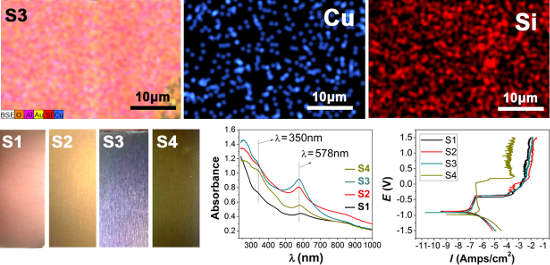
- . The electrochemical measurements were carried out using an electrochemical workstation (CS-310) in a three-electrode system, where the platinum electrode and saturated calomel electrode (SCE) worked as the counter and reference electrodes, respectively. The scanning range of the potentiodynamic


Deposition of metal particles onto semiconductor nanorods using an ionic liquid
Beilstein J. Nanotechnol. 2019, 10, 718–724, doi:10.3762/bjnano.10.71
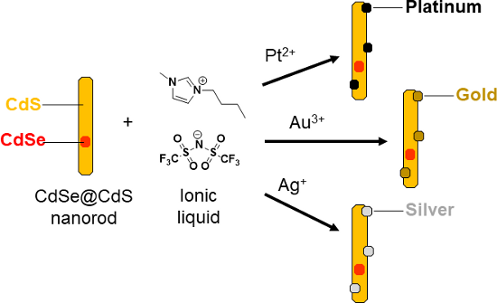
- an ionic liquid, and the effect this has on catalytic performance. Platinum, gold, and silver nanoparticles were deposited onto CdSe@CdS (core@shell) nanorods from metal salts in an ionic liquid (1-butyl-3-methylimidazolium bis(trifluoromethylsulfonyl)imide) without additional surfactants or reducing
- agents. Photocatalytic dye degradation experiments showed that catalysts with platinum particles deposited using the ionic liquid out-performed similar materials synthesized using organic solvents and ligands. We concluded that metal particles can be deposited onto well-defined semiconductor nanorods
- using the methods reported here. Keywords: catalyst; ionic liquid; methylene blue; platinum; semiconductor nanorod; Introduction Core@shell semiconductor nanorods with attached noble metal particles have been widely studied as photocatalysts, and any improvement on the synthesis of these materials has


Ultrathin hydrophobic films based on the metal organic framework UiO-66-COOH(Zr)
Beilstein J. Nanotechnol. 2019, 10, 654–665, doi:10.3762/bjnano.10.65
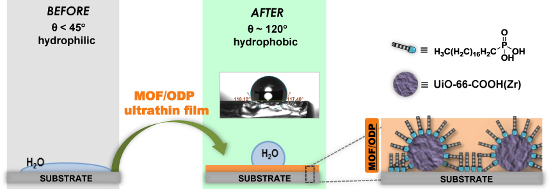
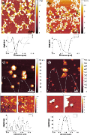
- containing 0.5 mg·mL−1 of pure MOF were used and a proper amount of ODP was added to prepare the mixture containing the MOF and 10 wt % of ODP. SEM images were taken at 10 kV with a FEG column using a SEM Inspect F50 (FEI Company). All samples were coated with a layer of platinum (5–10 nm) prior to SEM


Hydrophilicity and carbon chain length effects on the gas sensing properties of chemoresistive, self-assembled monolayer carbon nanotube sensors
Beilstein J. Nanotechnol. 2019, 10, 565–577, doi:10.3762/bjnano.10.58
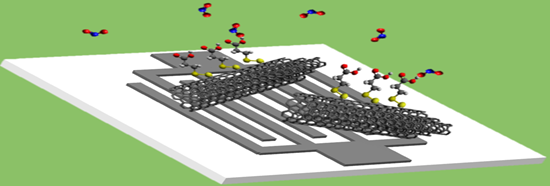
- were taken at 80 kV. Fabrication of the sensor substrate A 10 × 10 mm2 alumina substrate was employed. Interdigitated electrodes and a heating resistor were screen-printed on either side of the substrate employing a platinum ink (see Supporting Information File 1, Figure S6). The electrode area was
- coated with a mat of CNTs via airbrushing through a shadow mask. Once the sensors were sputtered with gold and functionalized with thiols, two-wire contacts were made on the samples using a conductive epoxy (Ag component metallization, Heraeus) and platinum wires. The samples were bonded to a 20 × 30 mm2


Widening of the electroactivity potential range by composite formation – capacitive properties of TiO2/BiVO4/PEDOT:PSS electrodes in contact with an aqueous electrolyte
Beilstein J. Nanotechnol. 2019, 10, 483–493, doi:10.3762/bjnano.10.49
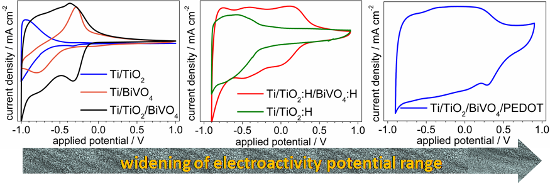
- cell was used for cyclic voltammetry and galvanostatic charge–discharge cycles measurements. Platinum mesh acted as a counter electrode, and Ag/AgCl (0.1 M KCl) was used as the reference electrode. The geometric surface area of tested electrodes was equal to 0.5 cm2. Current densities used for charge
- %) electrolyte containing 0.27 M NH4F and 1 M H3PO4 described previously [31]. The anodization process was performed in a two-electrode cell using platinum mesh as the cathode. The distance between the electrodes was about 2 cm. The anodization voltage was kept at 40 V for 2 h. The as-prepared electrodes were
- . The hydrogenation process significantly affects TiO2 conductivity and specific capacitance [34]. After the hydrogenation process samples were named as Ti/TiO2:H/BiVO4:H. PEDOT:PSS Poly(3,4-ethylenedioxythiophene):poly(styrenesulfonate) films were prepared by direct electropolymerization on a platinum




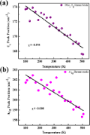
Temperature-dependent Raman spectroscopy and sensor applications of PtSe2 nanosheets synthesized by wet chemistry
Beilstein J. Nanotechnol. 2019, 10, 467–474, doi:10.3762/bjnano.10.46
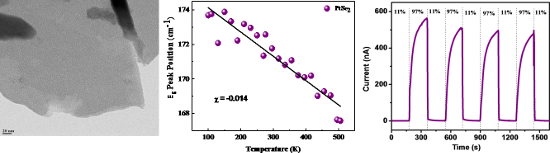
- effect. Apart from this, these TMDCs, for example MoS2 and MoSe2, show an indirect to direct band gap transition [13][14][15][16][17]. A 2D platinum diselenide (PtSe2) material has recently joined the growing class of stable TMDCs due its promising applications. The 2D PtSe2 has not been explored much to
- electronic device applications [20][21][22]. Bulk PtSe2 was first prepared in 1909 by Minozzi from elements [23]. PtSe2 nanosheets have been recently prepared by heating thin foils of platinum in selenium vapors at 400 °C [19][24]. In this paper we have synthesized few-layer-thick PtSe2 nanosheets by a wet



Integration of LaMnO3+δ films on platinized silicon substrates for resistive switching applications by PI-MOCVD
Beilstein J. Nanotechnol. 2019, 10, 389–398, doi:10.3762/bjnano.10.38
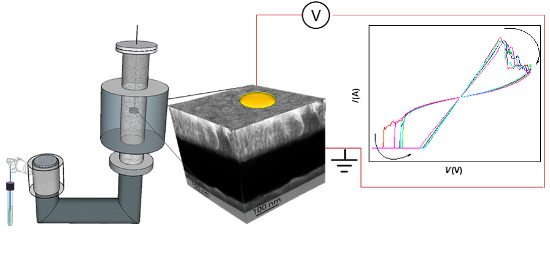
- frequency of 2.5 Hz, and an opening time of the valve of 2 ms. These last two parameters allowed for a good evaporation of the precursors and a constant flux during deposition. Samples grown at 675 °C and ca. 1 h of deposition time (i.e., 10000 pulses) evidenced the thermal instability of the platinum




Site-specific growth of oriented ZnO nanocrystal arrays
Beilstein J. Nanotechnol. 2019, 10, 274–280, doi:10.3762/bjnano.10.26
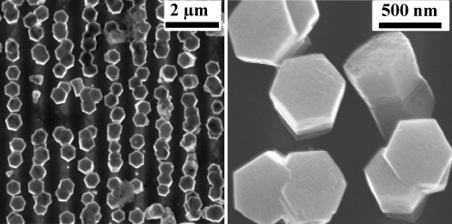
- , three electrode, glass cell. The bare/polymer-coated patterned ITO substrates were used as a working electrode (2 × 2 cm2) while a platinum sheet (2.5 × 2.5 cm2) and a saturated calomel electrode (SCE) were used as the counter and reference electrodes, respectively. The electrolyte (bath) temperature


Targeting strategies for improving the efficacy of nanomedicine in oncology
Beilstein J. Nanotechnol. 2019, 10, 168–181, doi:10.3762/bjnano.10.16
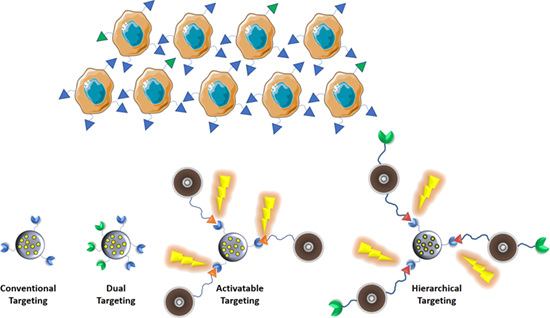
- loaded with a platinum(IV) pro-drug that released active cisplatin(II) in the reductive environment of the intracellular space. Another targeting moiety that has been employed for delivering therapeutics to mitochondria is triphenylphosphine [44]. This positively charged group also binds to the


Wet chemistry route for the decoration of carbon nanotubes with iron oxide nanoparticles for gas sensing
Beilstein J. Nanotechnol. 2019, 10, 105–118, doi:10.3762/bjnano.10.10
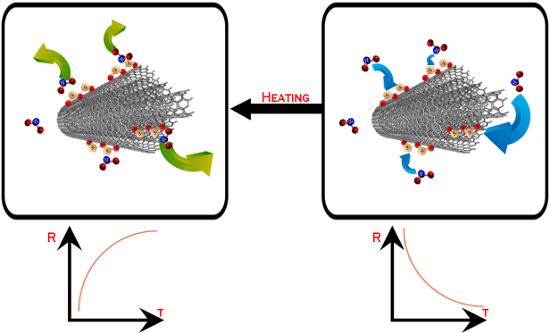
- layer were connected to a printed circuit board (PCB) using platinum wires. Those wires were attached to the heaters and CNT layers using silver paste that was cured in an oven at 120 °C for 30 minutes. To connect the Pt wires to the PCB we used tin wire and a soldering iron. Wire bonded sensors ready
- for testing can be seen in the Supporting Information File 2 (Figure S2). The silicon substrates onto which carbon nanotubes were deposited were glued to an alumina substrate that included a platinum heater employing a thermally conductive epoxy. A teflon chamber, which allowed allocating up to four




Amorphous NixCoyP-supported TiO2 nanotube arrays as an efficient hydrogen evolution reaction electrocatalyst in acidic solution
Beilstein J. Nanotechnol. 2019, 10, 62–70, doi:10.3762/bjnano.10.6
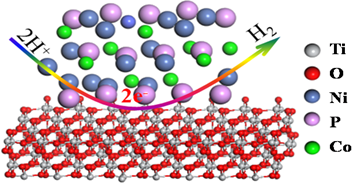
- electrochemical workstation (Chenhua, Shanghai) including linear sweep voltammetry (LSV), cyclic voltammetry (CV), electrochemical impedance spectroscopy (EIS), and Tafel analysis at 25 °C. The three electrode system was constituted of the sample working electrode, a platinum counter electrode, a Ag/AgCl





Bidirectional biomimetic flow sensing with antiparallel and curved artificial hair sensors
Beilstein J. Nanotechnol. 2019, 10, 32–46, doi:10.3762/bjnano.10.4
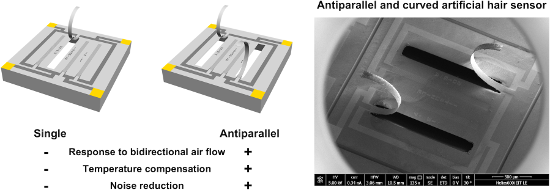
- platinum or tungsten and its length varies between 50 and 200 μm. This approach based on their novel 3D assembly method makes it possible to form large arrays of sensors on a variety of substrate materials. The research group from the MESA+ Institute for Nanotechnology at the University of Twente developed
- sensor array in parallel to two opposing, bent beams, air flow direction was determined by measuring the variation of platinum resistance between different cantilever beams with an external LCR meter (inductance L, capacitance C, and resistance R). The least resistance variation was caused by the upwind
- × 500 μm × 10 μm) which bent as air flow hit the plate. While the plate received the drag force of the air flow, the cantilevers measured the drag force using platinum strain gauges. One variable resistor (strain gauge) on each of the two cantilevers and two fixed resistances on the sensor substrate


Electrolyte tuning in dye-sensitized solar cells with N-heterocyclic carbene (NHC) iron(II) sensitizers
Beilstein J. Nanotechnol. 2018, 9, 3069–3078, doi:10.3762/bjnano.9.285
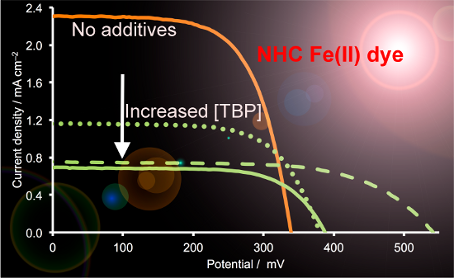
- series resistance (Rs), a resistance (RPt) and a constant phase element (CPE1) to model a platinum counter electrode, an extended distributed element (DX1) which represented the TiO2/electrolyte interface as a transmission line model, and a Warburg element (Ws) associated with diffusion of the
- used in the dye bath (in case of MeCN the electrodes were washed a second time with acetone) and dried with a heat gun. Commercial counter electrodes from Solaronix (Test Cell Platinum Electrodes Drilled) were rinsed with EtOH and dried on a heating plate at 500 °C for 30 min. The TiO2 electrodes and


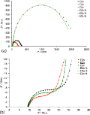

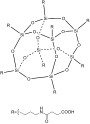
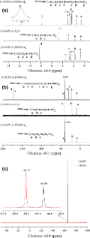
A novel polyhedral oligomeric silsesquioxane-modified layered double hydroxide: preparation, characterization and properties
Beilstein J. Nanotechnol. 2018, 9, 3053–3068, doi:10.3762/bjnano.9.284
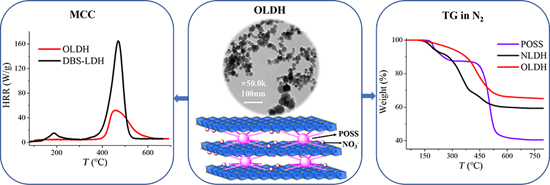
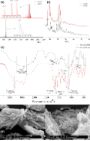
- dimensions of NLDH are roughly in accordance with the results obtained from TEM. However, as the thickness of the platinum coating layer is about 15 nm, close to the size of OLDH primary particles, the surface morphology of OLDH is not easily verified and seems to remind of stacked nuggets. Elemental
- hood before characterization. Scanning electron microscopy (SEM) images were recorded on an SU-70 or Utral 55 to study the surface morphologies. The samples were placed on a conducting carbon cement holder and were then coated with a thin layer of platinum using a sputter coater. Thermogravimetric







Hydrogen-induced plasticity in nanoporous palladium
Beilstein J. Nanotechnol. 2018, 9, 3013–3024, doi:10.3762/bjnano.9.280
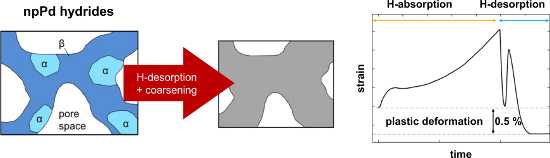
- , reversible expansion. This distinguishes palladium from other metals in the same group of the periodic table, such as platinum or nickel, which are only capable of adsorbing hydrogen mainly on their surfaces. In the literature, a solubility of hydrogen in palladium up to concentrations of about 0.7 (H/Pd


In situ characterization of nanoscale contaminations adsorbed in air using atomic force microscopy
Beilstein J. Nanotechnol. 2018, 9, 2925–2935, doi:10.3762/bjnano.9.271
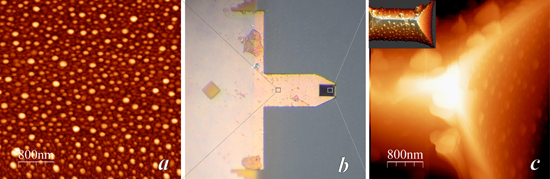
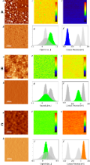
- where the flat part of the cantilever chip has been analyzed in (true) nc-DAFM using Kelvin probe microscopy (KPM) to measure the contact potential. The three analyzed samples correspond to the surface of platinum-films evaporated onto silicon cantilevers, but with three different state of contamination
- platinum surface is covered by some contamination (round islands); that is, one would expect two kinds of materials on the surface: the platinum substrate and some other most probably organic material on top of the platinum. Surprisingly, the contact potential image (Figure 2Ae) is completely homogeneous
- , leading to the conclusion that either the islands are completely transparent to the measurement of contact potential or that the platinum surface is covered everywhere by the same material, that is, the contact-potential image detects the same material on the islands as well as on the flatter part between


Charged particle single nanometre manufacturing
Beilstein J. Nanotechnol. 2018, 9, 2855–2882, doi:10.3762/bjnano.9.266
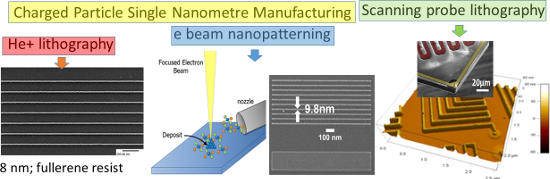
- van Oven et al. [65] using the organometallic precursor trimethyl(methylcyclopentadienyl)platinum(IV) (MeCpPtMe3). A combination of low beam current, low working distance and multiple pass patterning, synchronised with the 50 Hz disturbances, resulted in the successful fabrication of 3 nm Pt/C lines
- rates of the substrate materials to be made and hence the selectivity. A set of EBID masks with structures between 8 and 20 nm were fabricated using the platinum precursor MeCpPtMe3 on a silicon substrate with a 20 kV, 40 pA beam providing a dose of 4000 C·m−2 in ultrahigh-resolution (UHR) mode. The





