Search results
Search for "steel" in Full Text gives 225 result(s) in Beilstein Journal of Nanotechnology. Showing first 200.
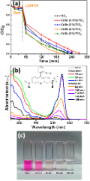
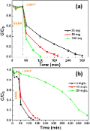
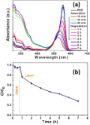
CdSe nanorod/TiO2 nanoparticle heterojunctions with enhanced solar- and visible-light photocatalytic activity
Beilstein J. Nanotechnol. 2017, 8, 2741–2752, doi:10.3762/bjnano.8.273
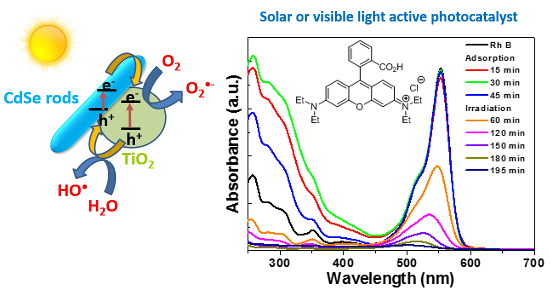
- 30 min at room temperature to ensure complete dissolution of precursors. Next, the solution was transferred to a teflon-lined stainless steel autoclave with 100 mL capacity and heated to 180 °C for 12 h. After cooling to room temperature, the CdSe NRs were recovered by centrifugation (4000 rpm for 15






Patterning of supported gold monolayers via chemical lift-off lithography
Beilstein J. Nanotechnol. 2017, 8, 2648–2661, doi:10.3762/bjnano.8.265
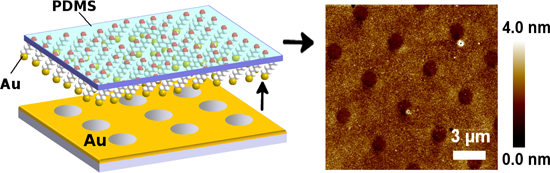
- of PDMS was placed on each glass slide, which was then placed gently on top of the PDMS. The “sandwiches” were cured on a hot plate at 110 °C under a 4.5 kg steel-brick weight. After 10 min, the heat was turned off while the “sandwiches” remained under the weight overnight. Patterning flat poly


Fabrication of CeO2–MOx (M = Cu, Co, Ni) composite yolk–shell nanospheres with enhanced catalytic properties for CO oxidation
Beilstein J. Nanotechnol. 2017, 8, 2425–2437, doi:10.3762/bjnano.8.241
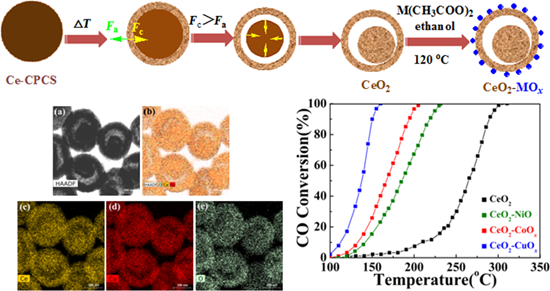
- solution. The resultant mixture was placed to a 50 mL Teflon-lined stainless steel autoclave and maintained at 100 °C for 10 h. After cooling to room temperature, the Ce-CPCSs were collected by centrifugation, washed with ethanol three times and oven-dried at 60 °C. The CeO2 yolk–shell nanospheres were
- mg of the as-prepared CeO2 was dispersed into the above clear solutions under ultrasonification. Subsequently, the resultant homogeneous slurry was placed in a 25 mL Teflon-lined stainless steel autoclave and maintained at 120 °C for 12 h. Finally, the products were harvested by centrifugation and
- silica sand was loaded into a stainless steel tube. A gas mixture of CO/O2/N2 (1:10:89) with a total flow rate of 50 mL/min flowed through the reactor, equivalent to a weight hourly space velocity (WHSV) of 60000 mL·g−1·h−1. The composition of the gas exiting from the reactor was monitored with an online





Electron beam induced deposition of silacyclohexane and dichlorosilacyclohexane: the role of dissociative ionization and dissociative electron attachment in the deposition process
Beilstein J. Nanotechnol. 2017, 8, 2376–2388, doi:10.3762/bjnano.8.237
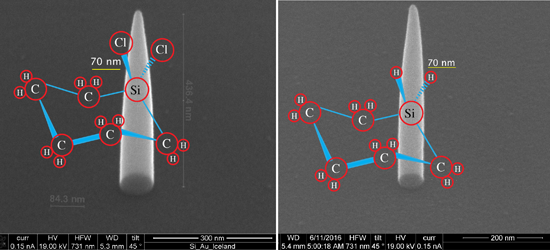
- the SEM specimen chamber using a custom-built inlet system consisting of a stainless steel container with the precursor molecules and a leak valve. With the leak valve the pressure of the precursor molecules in the chamber could be precisely controlled. The precursor dichlorosilacyclohexane (DCSCH





In situ controlled rapid growth of novel high activity TiB2/(TiB2–TiN) hierarchical/heterostructured nanocomposites
Beilstein J. Nanotechnol. 2017, 8, 2116–2125, doi:10.3762/bjnano.8.211
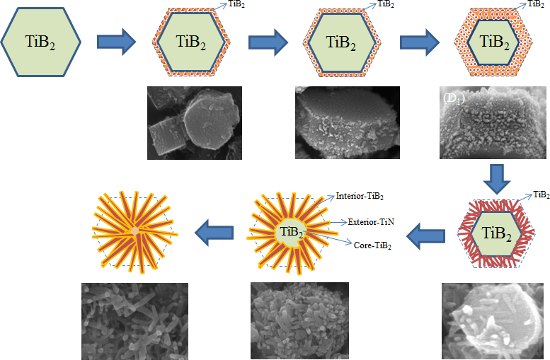
- , KBH4 and NH4NO3 were of analytical grade and purchased from Sinopharm Chemical Reagent Co., Ltd., China without further treatment. In a typical procedure, TiO2, Mg and B2O3 were milled for 2 h by a planet-type ball mill (the weight rate between stainless steel ball and mixture powders was 30:1


A comparative study of the nanoscale and macroscale tribological attributes of alumina and stainless steel surfaces immersed in aqueous suspensions of positively or negatively charged nanodiamonds
Beilstein J. Nanotechnol. 2017, 8, 2045–2059, doi:10.3762/bjnano.8.205
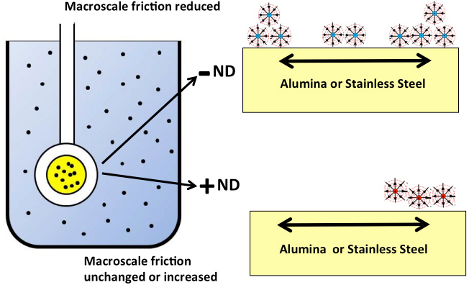
- the nanoscale and macroscale tribological attributes of alumina and stainless steel surfaces immersed in aqueous suspensions of positively (hydroxylated) or negatively (carboxylated) charged nanodiamonds (ND). Immersion in −ND suspensions resulted in a decrease in the macroscopic friction coefficients
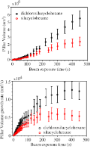
- to values in the range 0.05–0.1 for both stainless steel and alumina, while +ND suspensions yielded an increase in friction for stainless steel contacts but little to no increase for alumina contacts. Quartz crystal microbalance (QCM), atomic force microscopy (AFM) and scanning electron microscopy
- (SEM) measurements were employed to assess nanoparticle uptake, surface polishing, and resistance to solid–liquid interfacial shear motion. The QCM studies revealed abrupt changes to the surfaces of both alumina and stainless steel upon injection of –ND into the surrounding water environment that are


Systematic control of α-Fe2O3 crystal growth direction for improved electrochemical performance of lithium-ion battery anodes
Beilstein J. Nanotechnol. 2017, 8, 2032–2044, doi:10.3762/bjnano.8.204
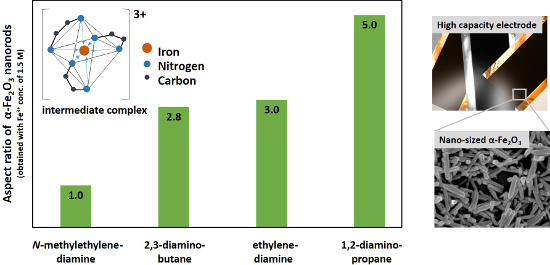
- to a 100 mL autoclave with teflon-lined stainless steel for hydrothermal treatment at 180 °C for 16 h. The product was allowed to naturally cool down to room temperature after reaction and collected by centrifugation with deionized water and ethanol. The sample was dried overnight at 60 °C, and a red


Imidazolium-based ionic liquids used as additives in the nanolubrication of silicon surfaces
Beilstein J. Nanotechnol. 2017, 8, 1961–1971, doi:10.3762/bjnano.8.197
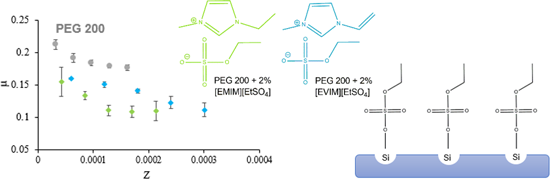
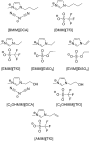
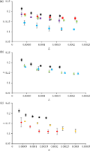
- . Although the use of ionic liquids (ILs) as additives to base oils in the lubrication of steel/steel or other types of metal/ metal tribological pairs has been investigated, the number of studies involving Si is very low. In this work, we tested imidazolium-based ILs as additives to the base oil
- of ceramics. Other investigators followed this idea and added imidazolium-based ILs to base oils to lubricate steel/aluminum contacts [5][6][7] and steel/steel contacts [8][9][10][11][12][13]. Jiménez and Bermúdez [7] tested two ILs with the short alkyl chain imidazolium cation [EMIM], and the anions
- imidazolium-based cations and the anions [BF4], hexafluorophosphate [PF6] and [NTf2] as additives to PEG and polyurea grease in the lubrication of steel/steel pairs, at room temperature and high temperatures. Recently, Pejaković et al. [14] tested several imidazolium sulfate ILs and found significant



Evaluation of preparation methods for suspended nano-objects on substrates for dimensional measurements by atomic force microscopy
Beilstein J. Nanotechnol. 2017, 8, 1774–1785, doi:10.3762/bjnano.8.179
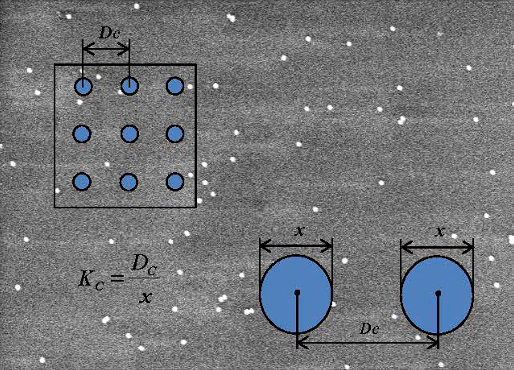
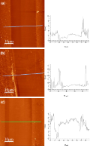
- preparation methods in which all of precipitated particles are deposited on the substrate, so the estimation is relevant for membrane filtration (if particle size > pore size) and droplet drying. Membrane filtration: The membranes were fixed and flowed off in a filter element (stainless steel 316, diameter 13


Nanotribological behavior of deep cryogenically treated martensitic stainless steel
Beilstein J. Nanotechnol. 2017, 8, 1760–1768, doi:10.3762/bjnano.8.177
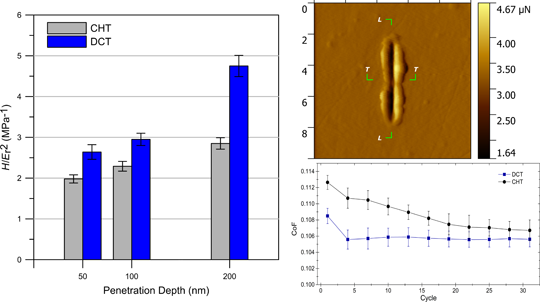
- , SE581 83 Linköping, Sweden 10.3762/bjnano.8.177 Abstract Cryogenic treatments are increasingly used to improve the wear resistance of various steel alloys by means of transformation of retained austenite, deformation of virgin martensite and carbide refinement. In this work the nanotribological
- behavior and mechanical properties at the nano-scale of cryogenically and conventionally treated AISI 420 martensitic stainless steel were evaluated. Conventionally treated specimens were subjected to quenching and annealing, while the deep cryogenically treated samples were quenched, soaked in liquid
- cryogenic treatments increased both hardness and elastic limit of a low-carbon martensitic stainless steel, while its tribological performance was enhanced marginally. Keywords: carbide refinement; cryogenic treatments; friction; nanoindentation; nanoscratch; wear-resistance improvement; Introduction AISI


Surface functionalization of 3D-printed plastics via initiated chemical vapor deposition
Beilstein J. Nanotechnol. 2017, 8, 1629–1636, doi:10.3762/bjnano.8.162
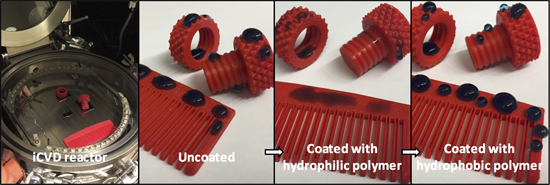
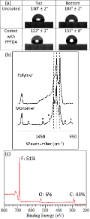
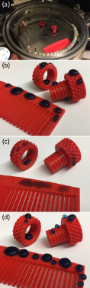
- ). Monomers were loaded into stainless steel jars and subsequently attached to the reactor chamber. To achieve appropriate monomer vapor pressure, PFDA was heated to 60 °C or 50 °C (for S1-S3, F1-F2, H1-H2), HEMA was heated to 50 °C, and EGDA was heated to 35 °C. TBPO was kept at room temperature of 25 °C and



Luminescent supramolecular hydrogels from a tripeptide and nitrogen-doped carbon nanodots
Beilstein J. Nanotechnol. 2017, 8, 1553–1562, doi:10.3762/bjnano.8.157
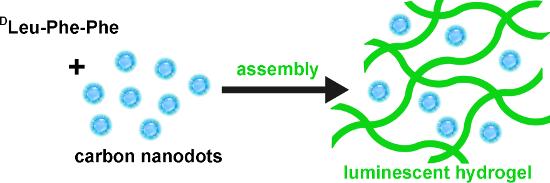
- dynamic time sweep rheological analysis was conducted on a Malvern Kinexus Ultra Plus rheometer with a 20 mm stainless steel parallel plate geometry. The temperature was maintained at 25 °C using a Peltier temperature controller. The samples were prepared in situ and immediately analyzed with a gap of


Development of a nitrogen-doped 2D material for tribological applications in the boundary-lubrication regime
Beilstein J. Nanotechnol. 2017, 8, 1476–1483, doi:10.3762/bjnano.8.147
- and obtained 17% and 14% reduction in coefficient of friction (COF) and wear scar diameter (WSD), respectively [24]. Berman et al. studied the friction and wear characteristics of 440C steel test pairs lubricated with graphene and found a remarkable reduction in COF (from ca. 1 to ca. 0.15) and wear
- sonicator (Sonics, 500 W). Tribological testing The tribological properties of nanolubricants were studied using a four-ball tester (Magnum Engineers, Bengaluru, India). The test balls are made of chrome steel alloy having a diameter of 12.7 mm according to ANSI standard. The measurements were performed
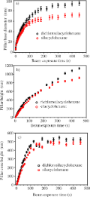
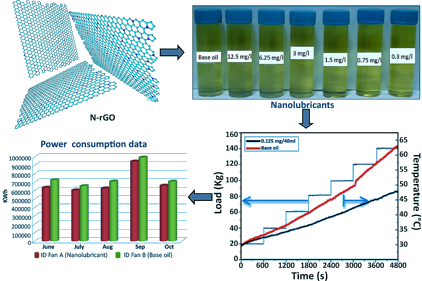
- concentrations. Variation of COF over time for base oil and nanolubricant with N-rGO (3 mg/L). Wear scar diameter (WSD) of stainless steel balls lubricated with (a) base oil and (b) N-rGO nanolubricant (3 mg/L). Comparison of the measured temperature of base oil and N-rGO (3 mg/L) nanolubricant as a function of


Micro- and nano-surface structures based on vapor-deposited polymers
Beilstein J. Nanotechnol. 2017, 8, 1366–1374, doi:10.3762/bjnano.8.138
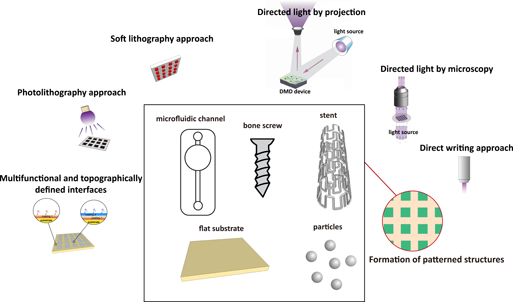
- ) surface and a poly(4-ethynyl-p-xylylene-co-p-xylylene) surface, respectively. Various substrates were successfully verified for the coating and patterning modifications: metal (silver, titanium, stainless steel), polystyrene (PS), poly(methyl methacrylate) (PMMA), silicon, glass, poly(dimethylsiloxane


Fabrication of hierarchically porous TiO2 nanofibers by microemulsion electrospinning and their application as anode material for lithium-ion batteries
Beilstein J. Nanotechnol. 2017, 8, 1297–1306, doi:10.3762/bjnano.8.131
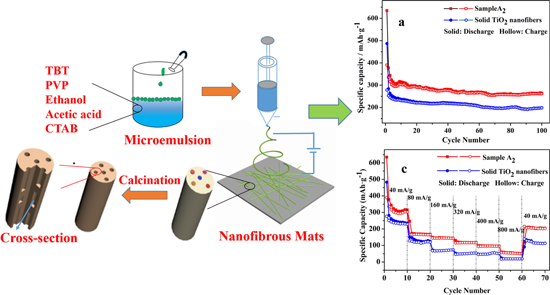
- /w) of 2.25, 1.9 and 1.55 were added slowly under stirring for 12 h to obtain a microemulsion. Preparation of porous TiO2 nanofibers The prepared microemulsion was filled in a 30 mL syringe with a blunt-end stainless steel needle, which had an inside diameter of 0.3 mm. Then the microemulsion was




Oxidative chemical vapor deposition of polyaniline thin films
Beilstein J. Nanotechnol. 2017, 8, 1266–1276, doi:10.3762/bjnano.8.128
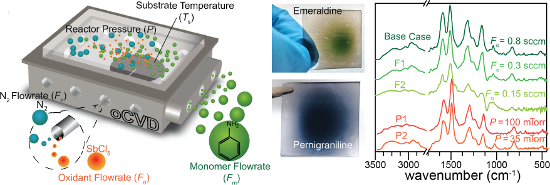
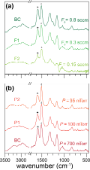
- inert carrier to help transport the oxidant and as a diluent to help control polymerization reactions. The monomer and oxidant are delivered in separate quarter-inch stainless-steel tubes to isolate the reactants prior to entering the reaction chamber and minimize polymerization and blockage in the gas




Preparation of thick silica coatings on carbon fibers with fine-structured silica nanotubes induced by a self-assembly process
Beilstein J. Nanotechnol. 2017, 8, 1145–1155, doi:10.3762/bjnano.8.116
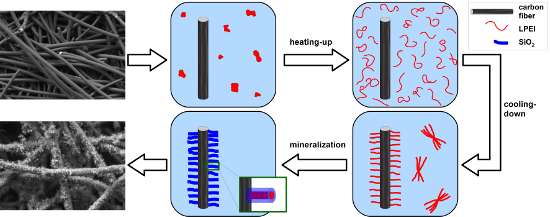
- attractive substrate. However, an exhaustive coating can be easily achieved for fibers consisting of silicon carbide, aramid, steel, glass and basalt (Supporting Information File 1, Figure S10). Conclusion A site-selective biomimetic silica deposition was accomplished via immobilization of linear polyamines


Hierarchically structured nanoporous carbon tubes for high pressure carbon dioxide adsorption
Beilstein J. Nanotechnol. 2017, 8, 1135–1144, doi:10.3762/bjnano.8.115
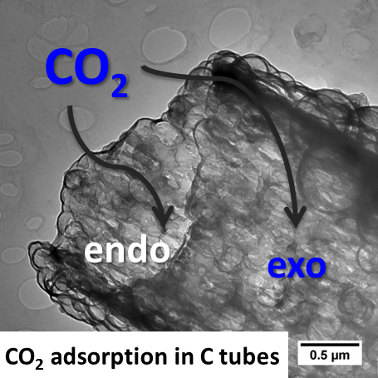
- fibres (1) In a similar manner as described in [38], electrospinning was performed in a homebuilt apparatus. Polystyrene (PS) fibres were electrospun from a 16 wt % PS THF/DMF 3:2 solution. After aging the spinning solution overnight, it was loaded into a glass syringe equipped with a stainless-steel
- the range 0–3 bar, 0–30 bar and 0–100 bar with an accuracy of 0.05% of the maximum pressure rating. The all stainless steel construction was made from Swagelok® tubes and fittings. A water bath was used for maintaining isothermal conditions and K-type thermocouples monitored the gas temperature in the


Treatment of fly ash from power plants using thermal plasma
Beilstein J. Nanotechnol. 2017, 8, 1043–1048, doi:10.3762/bjnano.8.105
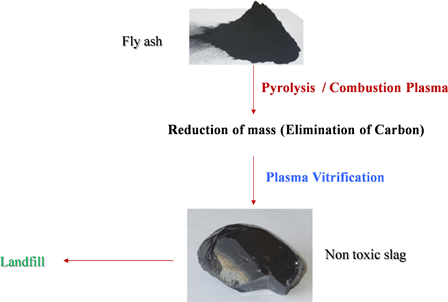
- the product and a glass frit (to increase the mass of Si in the product). The water-cooled stainless steel crucible is set just under the coupling zone of the plasma torches. During the experiments reported here, the current intensity is 100 A and the voltage is 220 V. In this step an inert gas (argon



Study of the correlation between sensing performance and surface morphology of inkjet-printed aqueous graphene-based chemiresistors for NO2 detection
Beilstein J. Nanotechnol. 2017, 8, 1023–1031, doi:10.3762/bjnano.8.103
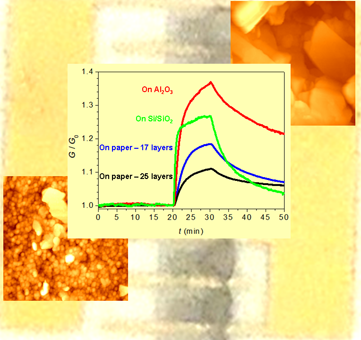
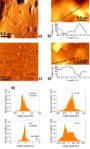
- 15 min for removing the residual solvent. Sensing analysis Tests for sensing measurements upon NO2 have been performed in the gas sensor characterization system (GSCS, Kenosistec equipment) equipped with a stainless steel chamber placed in a thermostatic box, keeping constant the temperature (T = 22


CVD transfer-free graphene for sensing applications
Beilstein J. Nanotechnol. 2017, 8, 1015–1022, doi:10.3762/bjnano.8.102
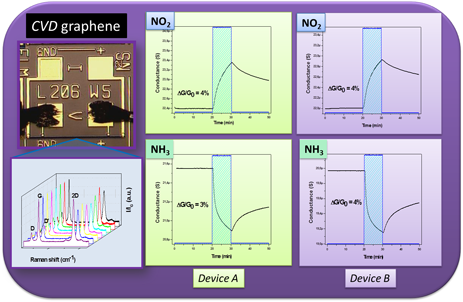
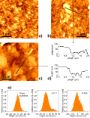
- different points of the sensing strips by means of Renishaw InVia Reflex spectrometer, at λ = 514 nm and 20 mW incident laser power, in backscattering configuration. The chemiresistors have been tested in a Gas Sensor Characterization System (GSCS, Kenosistec equipment) consisting of a stainless steel


3D Nanoprinting via laser-assisted electron beam induced deposition: growth kinetics, enhanced purity, and electrical resistivity
Beilstein J. Nanotechnol. 2017, 8, 801–812, doi:10.3762/bjnano.8.83
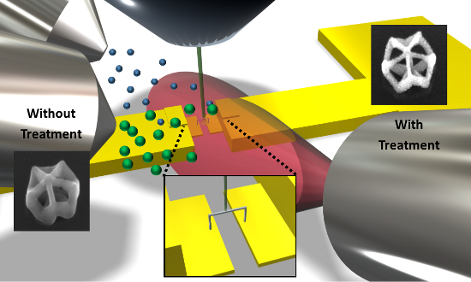
- sufficient to initiate carbon removal without inducing significant thermal drift and/or laser chemical vapor deposition (CVD). Laser pulses are delivered to the sample with an optical working distance of 9 mm using a multi-mode 100 µm diameter fiber optic cable housed within a stainless steel shaft with


Vapor deposition routes to conformal polymer thin films
Beilstein J. Nanotechnol. 2017, 8, 723–735, doi:10.3762/bjnano.8.76
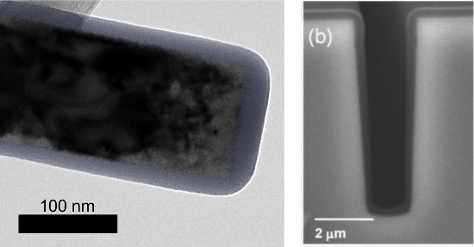
- ], copyright 2011 American Chemical Society. SEM images of iCVD pEGDA on micro-trenches with aspect ratios of a) 1.4 b) 3.5, c) 5.5 and d) 8.4. e) Cross-sectional SEM of 25 µm stainless-steel wire with 16 µm fluoropolymer coating formed via iCVD. f) iCVD pDMAMS on nylon fiber ion beam ablated to reveal


Carbon nanotube-wrapped Fe2O3 anode with improved performance for lithium-ion batteries
Beilstein J. Nanotechnol. 2017, 8, 649–656, doi:10.3762/bjnano.8.69
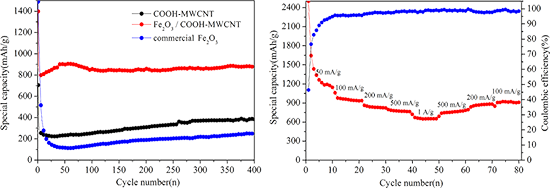
- aforementioned solution was added to 16.67 mL aqueous solution of 2 mg/mL short carboxyl of multi-walled carbon nanotubes (COOH-MWCNT Aladdin Corp). The mixture was magnetically stirred for 12 h. Finally, the mixture was transferred into teflon-lined stainless steel autoclave, and kept at 150 °C for 24 h. The


Diffusion and surface alloying of gradient nanostructured metals
Beilstein J. Nanotechnol. 2017, 8, 547–560, doi:10.3762/bjnano.8.59
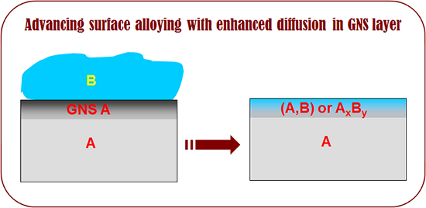
- the diffusion activation enthalpy is slightly lower than that that of GB diffusion. In addition, the Cr-diffusion depth values were determined in GNS low carbon steel samples chromized in a packed powder mixture of Cr–NH4Cl–Al2O3, as shown in Figure 2 [32]. One can see that the diffusion depth into
- observed in a GNS H13 steel sample, in which a significantly increased Cr-diffusion depth with respect to that in the CG sample was achieved at chromizing temperatures below 600 °C, and the depth even decreased with increasing temperatures above 600 °C [33]. Meanwhile, it was noticed that an isothermal
- preannealing might decrease the Cr-diffusion depth. For example, the pre-annealing at 400 °C decreased the Cr-diffusion depth values to ≈60% of the as-prepared GNS low carbon steel (also see Figure 2). Since the surface Cr concentration is approximately constant during chromizing, the apparent diffusivity in