Search results
Search for "surface charge" in Full Text gives 246 result(s) in Beilstein Journal of Nanotechnology. Showing first 200.
Tailoring the stability/aggregation of one-dimensional TiO2(B)/titanate nanowires using surfactants
Beilstein J. Nanotechnol. 2019, 10, 1024–1037, doi:10.3762/bjnano.10.103
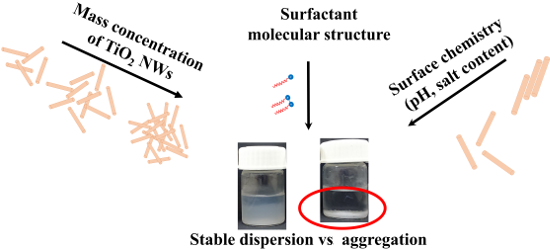
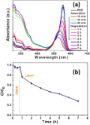
- stability, aggregation behavior and fate in aquatic environments [23]. As far as the stability of 1D TNWs is concerned, Szabó et al. [24] and Horváth et al. [25] investigated the surface charge and aggregation behavior of TNWs in the presence of polyelectrolytes (i.e., poly(styrene sulfonate) and poly
- depending on the pH values, which gives rise to a surface charge compensated by counter-ion. As a consequence an electrical double layer (EDL) is formed [52]. According to classical Derjaguin–Landau–Verwey–Overbeek (DLVO) theory, the stability of the NMs is determined by two major contributions: the
- concentrations more DTAB is needed to affect the surface charge and consequently the zeta potential. The presence of NaBr promoted the aggregation of dispersions with higher TNW mass concentration. A decrease in the absolute value of the zeta potential was observed and less stable TNW dispersions were obtained


Serum type and concentration both affect the protein-corona composition of PLGA nanoparticles
Beilstein J. Nanotechnol. 2019, 10, 1002–1015, doi:10.3762/bjnano.10.101
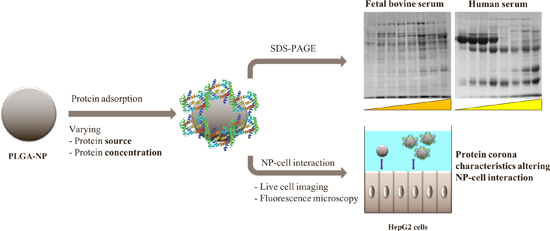
- study was to compare the protein corona of PLGA NPs that were exposed to 1000 µL of either FBS or human serum in order to explore the effect of the origin of the protein source on the amount, surface charge, and identity of the adsorbed protein layer. As already discussed above, 1000 µL serum in the
- the same instrument by laser Doppler microelectrophoresis to provide information about the surface charge of the NPs. The NP dilutions described above were transferred into a folded capillary cell and the determination was conducted at 22 °C. Morphological analysis of nanoparticles by SEM A quantity
- for reference and positive controls (+) derived from pure serum diluted with purified water. Abbreviations: fetal bovine serum (FBS), human serum (HS). Surface charge evolution of PLGA NPs after exposure to different amounts of serum in the incubation solution. The differences in the mean values (mean



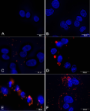
Effects of gold and PCL- or PLLA-coated silica nanoparticles on brain endothelial cells and the blood–brain barrier
Beilstein J. Nanotechnol. 2019, 10, 941–954, doi:10.3762/bjnano.10.95
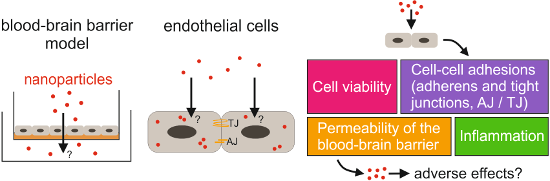
- neurons [11]. Kamikobu et al. reported that the effect of Si-NPs on cell viability of embryonic kidney cells and primary hippocampal cultures depended on concentration, size and surface charge of the particles. Notably, neuronal cells were shown to be more sensitive to NP exposure compared to embryonic



Tungsten disulfide-based nanocomposites for photothermal therapy
Beilstein J. Nanotechnol. 2019, 10, 811–822, doi:10.3762/bjnano.10.81
- accumulation effect, but parameters such as nanostructure shape and surface charge are extremely important [33]. A wide range of nanomaterials has been studied for cancer PTT to now, from organic conjugated polymers [34][35], through carbon-based nanomaterials [36][37], to inorganic nanostructures. Within the
- in TEM, and bright in SEM. A possible reason for this is that CAN-mag composite has a strong positive surface charge (see zeta potential results below in Figure 7), causing electrostatic repulsion forces that prevent a denser coverage. Another point that the electron microscope images show (see






The effect of translation on the binding energy for transition-metal porphyrines adsorbed on Ag(111) surface
Beilstein J. Nanotechnol. 2019, 10, 706–717, doi:10.3762/bjnano.10.70
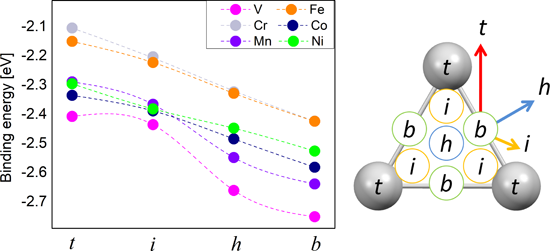
- molecule–surface charge transfer, analyzed for different geometric configurations allows us to propose qualitative models, relevant for the understanding of the self-assembly processes and related phenomena. Keywords: Ag(111) surface; DFT+U; metal porphyrine; van der Waals; Introduction Metalloporphyrins
- positions while the largest ones are obtained for the bridge positions. Most probably this is the result of decreasing the distance between molecule and surface. Since the molecule is closer to the surface, the molecule–surface charge transfer becomes more important, leading to higher dipolar moments. The
- ) interaction is a complex mechanism that involves a weak chemical bond between metal and surface, a relatively important charge transfer and an important van der Waals interaction. Molecule–surface charge transfer is reflected in the varying electronic population of the central TM atom, which in turn is


![[Graphic 1]](/bjnano/content/inline/2190-4286-10-70-i1.svg?max-width=637&scale=1.18182) , for all systems and relative molecule–surface positions. Right: symm...
, for all systems and relative molecule–surface positions. Right: symm...


![[Graphic 7]](/bjnano/content/inline/2190-4286-10-70-i7.svg?max-width=637&scale=1.18182) for selected TMPP systems (M = V, Mn, Co; red: positive values, blue: negative value...
for selected TMPP systems (M = V, Mn, Co; red: positive values, blue: negative value...
Ceria/polymer nanocontainers for high-performance encapsulation of fluorophores
Beilstein J. Nanotechnol. 2019, 10, 522–530, doi:10.3762/bjnano.10.53
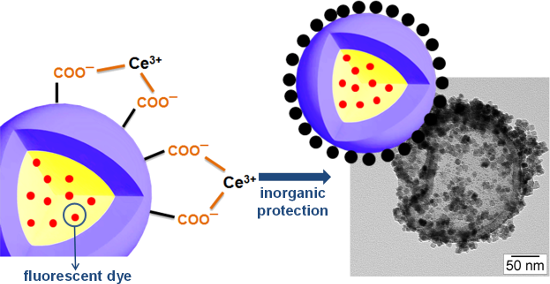
- crystallization experiments with specific concentration. The surface charge density was determined at pH 10 to ensure the complete deprotonation of the carboxylic groups. Synthesis of CeO2/polymer hybrid nanocapsules The synthesized polymeric nanocapsules, NC and NC(Ar), were used in the crystallization
- 1 reports the different samples reported in this work with the corresponding particle sizes measured by DLS. The surface charge density of the negatively charged latex nanocapsules was determined by direct polyelectrolyte titration with a roughly 0.001 N solution of poly(diallyldimethyl ammonium
- chloride), detecting the end point with an automatic streaming current detector with a particle-charge detector Mütek PCD-03 in combination with a Metrohm Titrino automatic titrator. The samples were diluted to a solid content of 0.1 wt % for titration and the surface charge density of 1.6 carboxylic


Removal of toxic heavy metals from river water samples using a porous silica surface modified with a new β-ketoenolic host
Beilstein J. Nanotechnol. 2019, 10, 262–273, doi:10.3762/bjnano.10.25
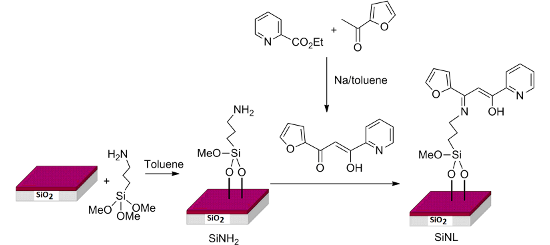
- . The speciation of metal ions in solution and the surface charge of the adsorbents can be influenced by the pH of a solution [56]. Donor groups attached to the adsorbents may be easily protonated or deprotonated to form different surface charges in solution at different pH values [40]. The effect of


Mechanism of silica–lysozyme composite formation unravelled by in situ fast SAXS
Beilstein J. Nanotechnol. 2019, 10, 182–197, doi:10.3762/bjnano.10.17
- physicochemical conditions [24]: U(2RHS < x < 2RHS + Δ) = −2.5 kBT; Δ = 0.1·(2RHS) under the restriction that Δmin ≥ 0.15 nm (i.e., the average H-bond length). The value of U in our study may slightly differ from literature values, because for constant pH value and salinity, the surface charge of NPs increases
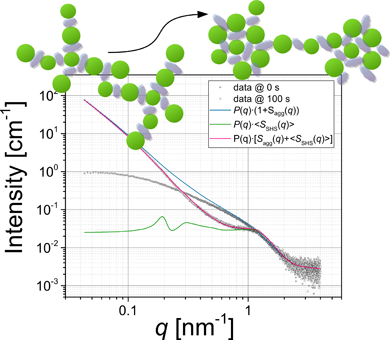
- interaction between the protein LZM and amorphous silica NPs (Figure 5). Immediately upon mixing, aggregation is induced due to the opposing surface charge of the silica NPs and the protein. An infinitely extensive and open (D = 1.8–2.2) aggregate network, from the point of view of the SAXS measurement, forms
- respect to silica constitutes the configuration of the highest attraction. This together with the relatively low dipole moment and the positive surface charge of the protein surface, potentially accounts for the bridging of the NPs by the LZM molecules, as the protein does not show a favoured orientation



New micro/mesoporous nanocomposite material from low-cost sources for the efficient removal of aromatic and pathogenic pollutants from water
Beilstein J. Nanotechnol. 2019, 10, 119–131, doi:10.3762/bjnano.10.11
- meant to determine the surface charge of samples prepared was carried out using the salt addition method, as described by Unuabonah et al. [22]. Elemental analysis to determine the amount of C, H, and N in the samples was performed with an Elementar Vario EL III elemental analyzer. Adsorption of 4




Characterization and influence of hydroxyapatite nanopowders on living cells
Beilstein J. Nanotechnol. 2018, 9, 3079–3094, doi:10.3762/bjnano.9.286
- in the application of novel NPs in medicine and biology. Adverse effect of NOAA on living organisms may be influenced by many factors such as size, shape, solubility, exposure time, surface charge, surface area, crystallinity, agglomeration or chemical composition [7][8][9]. Since the properties of
- number of samples, biological models and characterization methods provided encompassed much less than the scope of this work. Previous studies have focused mainly on the impact of shape, size or surface charge of the nanoparticles alone [20][23][24][25]. An approach limited to one or two features
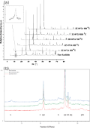
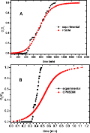
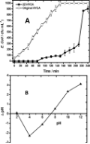
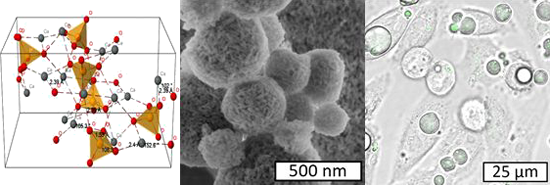
- -chemical method with spray drying, microwave solvothermal synthesis and synthesis in molten salts conducted at 300 °C) were characterized. A range of physicochemical characteristics including particle size, shape, specific surface area, degree of crystallinity, surface charge, state of agglomeration

![[Graphic 1]](/bjnano/content/inline/2190-4286-9-286-i2.svg?max-width=637&scale=1.18182) .
.



Hydrogen-induced plasticity in nanoporous palladium
Beilstein J. Nanotechnol. 2018, 9, 3013–3024, doi:10.3762/bjnano.9.280
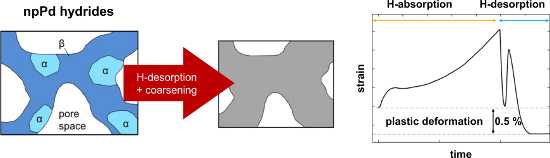
- recently [60], is where Δεe denotes the change in elastic strain, α is the specific surface area A/V, K the bulk modulus, Δf the change in surface stress, and Enp the Young’s modulus of the nanoporous structure. Δf can be linked to the change in surface charge density Δq via electrocapillary coupling


The nanoscaled metal-organic framework ICR-2 as a carrier of porphyrins for photodynamic therapy
Beilstein J. Nanotechnol. 2018, 9, 2960–2967, doi:10.3762/bjnano.9.275
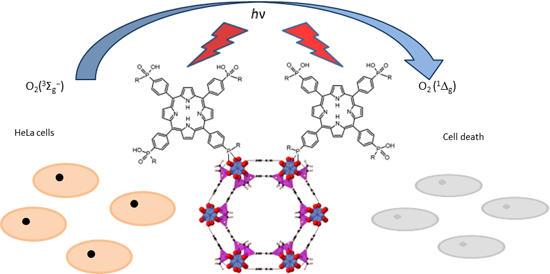
- diffractions using the Scherrer equation. The analysis of TEM images in Figure 2 (left) provides an average particle size of 28 nm, which is in good agreement with the results from the powder XRD analysis. The dispersibility of nanoICR-2 in aqueous media and its surface charge potential were evaluated using


Enhanced antineoplastic/therapeutic efficacy using 5-fluorouracil-loaded calcium phosphate nanoparticles
Beilstein J. Nanotechnol. 2018, 9, 2499–2515, doi:10.3762/bjnano.9.233
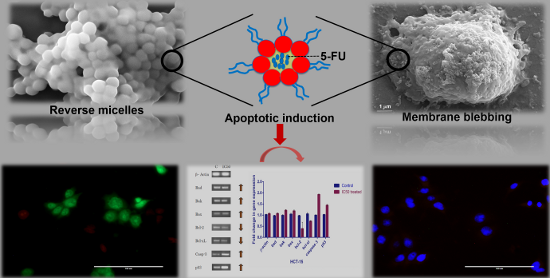
- TEM and SEM analysis. Zeta potential analysis The magnitude of the surface charge of the synthesized CaP@5-FU NPs was characterized by zeta potential analysis. The increased electrostatic repulsion between particles corresponding to a higher magnitude of the zeta potential results in reduced
- ± SEM (standard error of mean). Hydrodynamic diameter and surface charge The hydrodynamic diameter and surface charge of the CaP@5-FU and CaP NPs were measured in a Malvern Nano ZS 90 Zetasizer instrument at 25 °C. The diameter and zeta potential of 1 mg/mL CaP@5-FU NPs and CaP NPs in distilled water


Nanocellulose: Recent advances and its prospects in environmental remediation
Beilstein J. Nanotechnol. 2018, 9, 2479–2498, doi:10.3762/bjnano.9.232
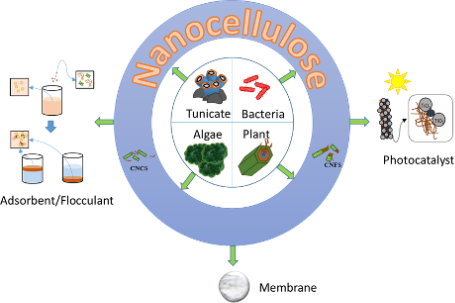
- cellulose. Surface charge modification by carboxylation, carboxymethylation, and sulphonation introduces anionic functionality to aid the defibrillation of cellulose fibres based on the principle of electrostatic repulsion between similar charges [32]. Wågberg et al. [78] revealed that carboxymethylation of
- et al. [97] found that the adsorption capacity of cationic CNFs toward anions increased with the surface charge content of cellulose. They concluded that cationic CNFs with an ammonium content of 1.2 mmol/g can be considered as an efficient adsorbent for negatively charged ions such as nitrate (NO3


Recent highlights in nanoscale and mesoscale friction
Beilstein J. Nanotechnol. 2018, 9, 1995–2014, doi:10.3762/bjnano.9.190
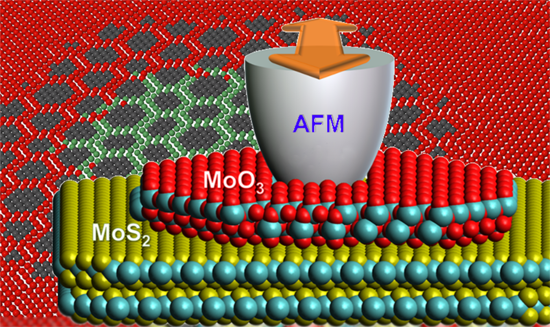
- interlocking of the RTIL molecular structure with the surface corrugation, but also by the surface charge, which is tunable (within reason) by the application of electric fields, with the effect of modifying the ordering of the boundary layers. Sliding in a confined geometry has been investigated with the


Synthesis of a MnO2/Fe3O4/diatomite nanocomposite as an efficient heterogeneous Fenton-like catalyst for methylene blue degradation
Beilstein J. Nanotechnol. 2018, 9, 1940–1950, doi:10.3762/bjnano.9.185
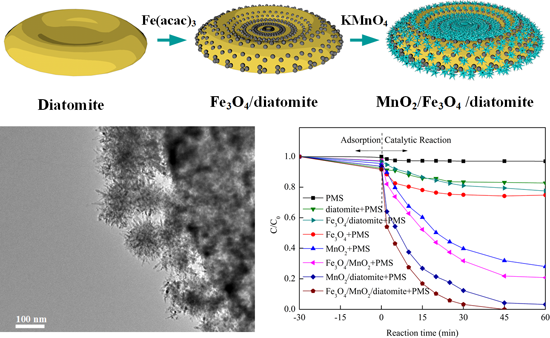
- highly increases the contact area between Fe3O4 nanoparticles and nano-MnO2 shell, which explains well the huge activity improvement after the coating with MnO2. The functional pH range is of vital importance for the practical application of various catalytic systems, because it affects surface charge


Controllable one-pot synthesis of uniform colloidal TiO2 particles in a mixed solvent solution for photocatalysis
Beilstein J. Nanotechnol. 2018, 9, 1715–1727, doi:10.3762/bjnano.9.163
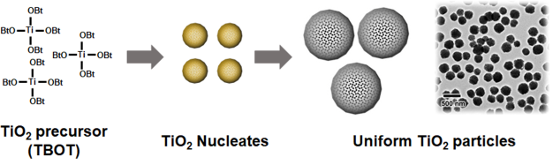
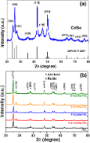
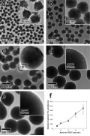
- carbon remained in the particle. However, TiO2-500 and TiO2-800 showed a negligible weight loss, indicating no obvious carbon species in the particle (Supporting Information File 1, Figure S3b). In addition, we measured the zeta potential of the calcined TiO2 samples for estimating the surface charge
- . Although zeta potential values of TiO2 samples do not exactly represent quantitative analysis of surface functional groups, it is a useful method to estimate the surface charge which is highly related with the surface OH group. The results show that the zeta potential values are estimated to be




Interaction-tailored organization of large-area colloidal assemblies
Beilstein J. Nanotechnol. 2018, 9, 1582–1593, doi:10.3762/bjnano.9.150
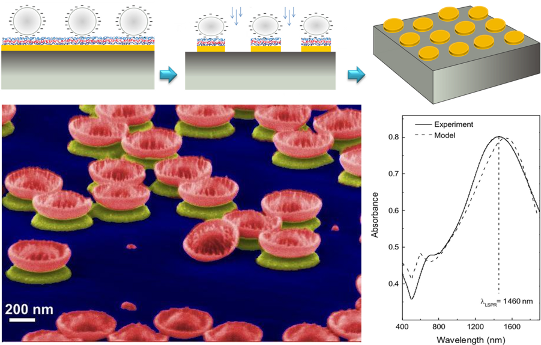
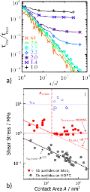
- latex with surface charge density 1.2 µC/cm2 and concentration 8% w/v) and 500 ± 50 nm (non-functionalized Polybeads® – microspheres containing a slight anionic charge from sulfate ester, concentration 2.5% w/v) were respectively purchased from Invitrogen and Polyscience, Inc. Poly
- . This effect was more evident with the 500 nm diameter particles since the capillary strength is proportional to the particle radius and the surface charge was much lower. When the particle concentration increases from 2 to 5 wt % (sample ), the resulting radial distribution function is very similar


Cathodoluminescence as a probe of the optical properties of resonant apertures in a metallic film
Beilstein J. Nanotechnol. 2018, 9, 1491–1500, doi:10.3762/bjnano.9.140
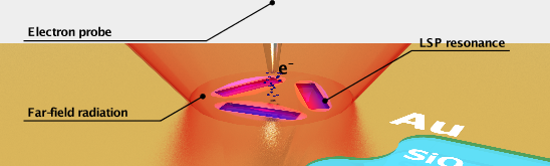
- radiated power to position confined to the central region defined by the slots. We can gain further insight by examining the electric field produced inside the cavities on resonance when excited by a centred dipole and the accompanying surface charge on the dielectric–metal or air–dielectric boundary
- (Figure 5). The white regions observable in the surface charge distributions correspond to the air-filled holes. Figure 5a shows the magnitude of the electric field with the arrows showing the direction of the electric field at a wavelength of 690 nm in a plane just above the lower surface of the gold
- the mode excited with a centred dipole has radial symmetry. Figure 5b shows that at 690 nm, where there is a maximum in transmission, the electric field penetrates the cavity. This is accompanied by a substantial induced surface charge on the interior walls of the cavity (Figure 5d) and the relative


Atomic-level characterization and cilostazol affinity of poly(lactic acid) nanoparticles conjugated with differentially charged hydrophilic molecules
Beilstein J. Nanotechnol. 2018, 9, 1328–1338, doi:10.3762/bjnano.9.126
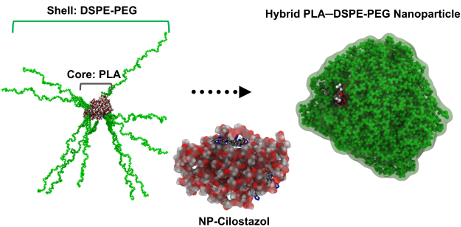
- , such as core–lipid interface (cyan dotted line), polar zone (purple dotted line) and surface charge (orange dotted line). The distance between the center of mass and the boundary areas is represented using the same color as the dotted lines. Snapshots of initial (left) and final (right) conformation of


Surface characterization of nanoparticles using near-field light scattering
Beilstein J. Nanotechnol. 2018, 9, 1228–1238, doi:10.3762/bjnano.9.114
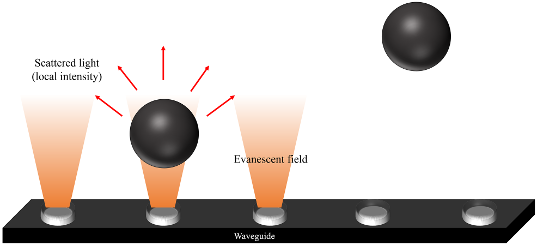
- the attraction between the nanoparticle and waveguide. Researchers attributed the increased diffusion of PEGylated particles towards the waveguide to the slight reduction in particle surface charge (zeta potential) after PEGylation [24]. This study provided evidence that the nanophotonic force


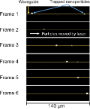


Electrostatic force spectroscopy revealing the degree of reduction of individual graphene oxide sheets
Beilstein J. Nanotechnol. 2018, 9, 1146–1155, doi:10.3762/bjnano.9.106
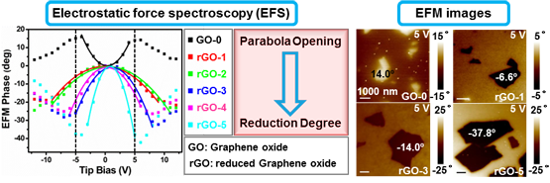
- substrate. The apparent height (polarization height) of nanomaterials in SPFM images are an indication of the local dielectric constant difference between the sample and substrate [20][37]. However, when a DC bias is applied, a local net charge (or the surface charge for nanomaterials) would affect the


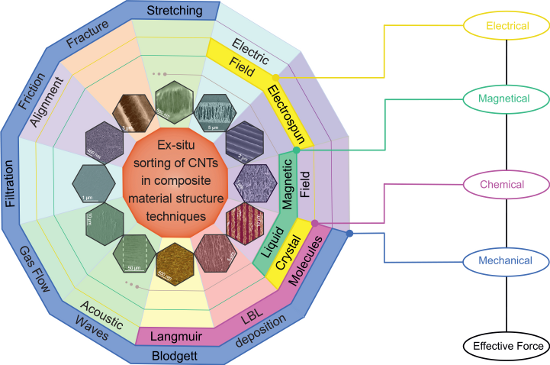
Engineering of oriented carbon nanotubes in composite materials
Beilstein J. Nanotechnol. 2018, 9, 415–435, doi:10.3762/bjnano.9.41
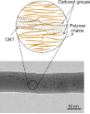
- spectroscopy: The XPS technique does not explore the whole sample volume but rather provides information about the chemical composition of the CNT surface [144][145]. XPS suffers from surface charge artifacts, so correct sample preparation is crucial to achieve a flat and uncontaminated surface. Despite the








The nanofluidic confinement apparatus: studying confinement-dependent nanoparticle behavior and diffusion
Beilstein J. Nanotechnol. 2018, 9, 301–310, doi:10.3762/bjnano.9.30
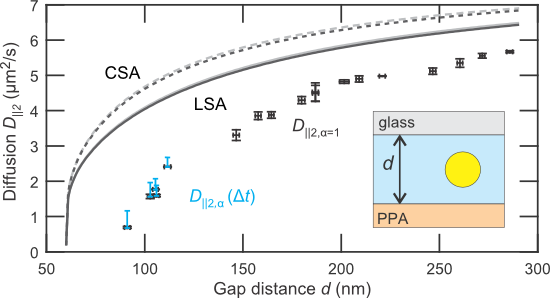
- diffusion. We note, however, that the same effect could be induced by a charge modulation of the surface potential (or correspondingly the surface charge) by ≈5%. To further investigate the origin of the obstacles we analyzed the time-averaged lateral particle distribution and its correlation to the
- , because pronounced subdiffusion is only observed for gap distances of d < 120 nm. In bulk, the electroviscous effect is attributed to the surface charge of the particles and leads to an increased effective viscosity and thus to a reduction in particle diffusion [37]. A similar mechanism should also play a



CdSe nanorod/TiO2 nanoparticle heterojunctions with enhanced solar- and visible-light photocatalytic activity
Beilstein J. Nanotechnol. 2017, 8, 2741–2752, doi:10.3762/bjnano.8.273
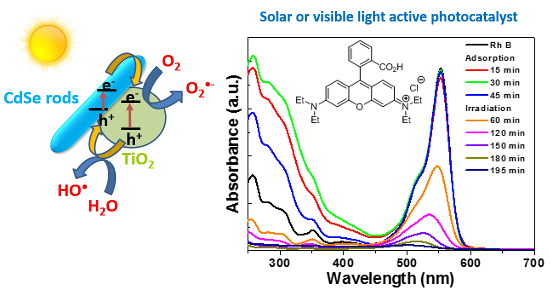
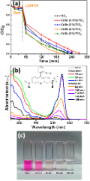
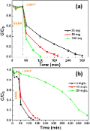
- produced. Influence of the pH of the rhodamine B solution The pH of the aqueous solution may play a crucial role on the kinetic of the photodegradation since it influences the surface charge of the catalyst and the structure of the dye in solution. Figure 8 shows that the CdSe (2 wt %)/TiO2 photocatalyst