Search results
Search for "titanium" in Full Text gives 304 result(s) in Beilstein Journal of Nanotechnology. Showing first 200.
Advanced scanning probe lithography using anatase-to-rutile transition to create localized TiO2 nanorods
Beilstein J. Nanotechnol. 2019, 10, 412–418, doi:10.3762/bjnano.10.40
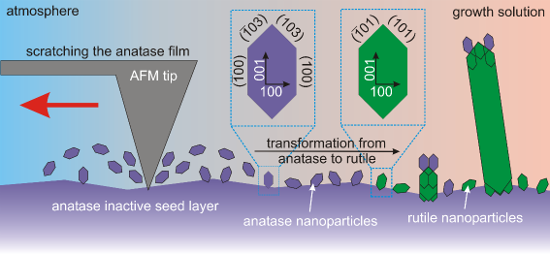
- liner and autoclaved with a hydrothermal growth solution consisting of 20 mL hydrochloric acid (14.8 wt %, diluted in distilled water) and 350 μL titanium(IV) butoxide in an oven with a setpoint temperature of 180 °C for 75 min. The hydrothermal growth process was stopped by cooling down the autoclave
- hydrothermal growth process as we described in detail in our previous work [36]. For that purpose, a 40 nm thin titanium layer was deposited via electron-beam assisted evaporation from titanium pellets (99.995% purity, Kurt J. Lesker Ltd.) at a pressure of 1.5 × 10⁻⁶ mbar with a deposition rate of 0.9 Å/s
- . Titanium was turned into the TiO2 seed layer in a rapid thermal processing oven at 850 °C in an oxygen atmosphere (500 sccm) for 2 h using a temperature dwell time of ±1 °C/s. The remaining resist was dissolved in acetone. Results and Discussion We have shown in a previous study that the nanorods produced


One-step nonhydrolytic sol–gel synthesis of mesoporous TiO2 phosphonate hybrid materials
Beilstein J. Nanotechnol. 2019, 10, 356–362, doi:10.3762/bjnano.10.35
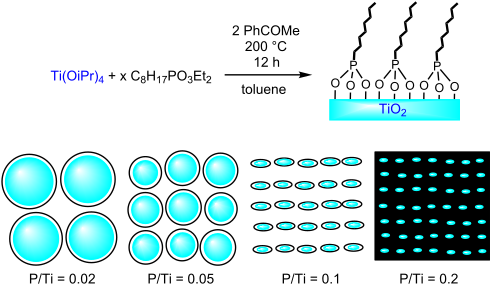
- , we present an original one-step NHSG synthesis of mesoporous TiO2–octylphosphonate hybrid materials, using a nonhydrolytic sol–gel method involving the reaction of titanium tetraisopropoxide and diethyl octylphosphonate precursors at 200 °C in the presence of acetophenone as an oxygen donor. Results
- did not react with titanium tetraisopropoxide under the same conditions. All four materials are referred to as TiPx where x is the P/Ti ratio. For comparison, a TiO2 sample was prepared under the exact same conditions but without diethyl octylphosphonate. Elemental analysis by energy dispersive X-ray
- ]. These spectra confirm the presence of phosphonate species linked to the TiO2 network through Ti–O–P bonds, and show the absence of a layered titanium octylphosphonate phase, which would lead to a sharp resonance at 7 ppm. In the case of the TiP0.2 sample, the shoulder at 31 ppm suggests the presence of


Scanning probe microscopy for energy-related materials
Beilstein J. Nanotechnol. 2019, 10, 132–134, doi:10.3762/bjnano.10.12

- relationship between Li-ion conductivity and the microstructure of the solid-state electrolyte lithium aluminum titanium phosphate films [10]. Furthermore, dielectric properties play a role for the storage of electrochemical energy. Ying Wang and co-workers report on a novel method for the characterization of
Amorphous NixCoyP-supported TiO2 nanotube arrays as an efficient hydrogen evolution reaction electrocatalyst in acidic solution
Beilstein J. Nanotechnol. 2019, 10, 62–70, doi:10.3762/bjnano.10.6
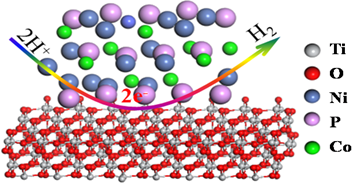
- gives a lower activity than the electrode without the titanium dioxide carrier, which may be related to the low conductivity of titanium dioxide. Thus the electrocatalytic activity can be improved effectively by improving the conductivity of the TNA support. In electrochemical HER, the bath voltage is




Hydrogen-induced plasticity in nanoporous palladium
Beilstein J. Nanotechnol. 2018, 9, 3013–3024, doi:10.3762/bjnano.9.280
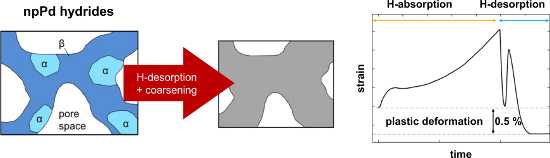
- [42][45], the strong deformation can be related to the surface-stress-induced compression in nanoporous samples, which is considerably higher than that in bulk samples. Hydrogen-induced phase transitions leading to ISP were reported for titanium [44], zirconium [46] and palladium [42] before. For a


Investigation of CVD graphene as-grown on Cu foil using simultaneous scanning tunneling/atomic force microscopy
Beilstein J. Nanotechnol. 2018, 9, 2953–2959, doi:10.3762/bjnano.9.274
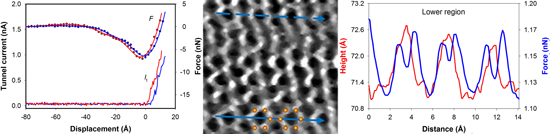
- –tip preparation. The main chamber is pumped with a combination of an ion getter pump, titanium sublimation pump and a turbomolecular pump backed with a double-stage rotary pump. A base pressure of about 10−10 mbar is achievable by baking out the chamber. The oscillation amplitude of the cantilever


Graphene-enhanced metal oxide gas sensors at room temperature: a review
Beilstein J. Nanotechnol. 2018, 9, 2832–2844, doi:10.3762/bjnano.9.264
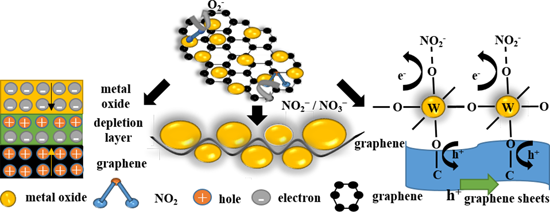
- achieved at all [19][20]. Metal-oxide semiconductors (MOS), including tin oxide (SnO2), titanium dioxide (TiO2), zinc oxide (ZnO), copper oxide (CuO), tungsten oxide (WO3), indium oxide (In2O3), ferric oxide (Fe2O3) and cobalt oxide (Co3O4) are important materials for gas sensors [21][22][23][24][25][26
- room-temperature sensor composed of a 3D graphene aerogel and SnO2 nanoparticles, synthesized via the method mentioned above, exhibited a higher response to NO2 and faster response/recovery times than a 2D SnO2–graphene sensor, fabricated by the same method without freeze-drying process. Titanium



Biomimetic surface structures in steel fabricated with femtosecond laser pulses: influence of laser rescanning on morphology and wettability
Beilstein J. Nanotechnol. 2018, 9, 2802–2812, doi:10.3762/bjnano.9.262
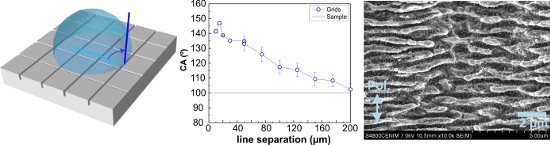
- study, structures with similar geometry have been mimicked on titanium substrates with the aim of demonstrating friction reduction [37]. In our case, we not only manage to mimic the shape but also their characteristic micrometer size, which may play an important role on the performance for real friction



Impact of the anodization time on the photocatalytic activity of TiO2 nanotubes
Beilstein J. Nanotechnol. 2018, 9, 2628–2643, doi:10.3762/bjnano.9.244
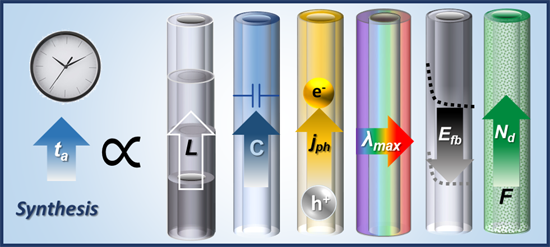
- Columbia, V6T 1Z4, Canada 10.3762/bjnano.9.244 Abstract Titanium oxide nanotubes (TNTs) were anodically grown in ethylene glycol electrolyte. The influence of the anodization time on their physicochemical and photoelectrochemical properties was evaluated. Concomitant with the anodization time, the NT
- photooxidation of methylene blue. Keywords: fluorine doping; nanotubes; photocatalytic activity; photoelectrochemistry; titanium(IV) oxide (TiO2); Introduction TiO2 started to attract great interest after Fujishima and Honda reported [1] on its photoelectrochemical (PEC) properties in 1972. Numerous features


Friction reduction through biologically inspired scale-like laser surface textures
Beilstein J. Nanotechnol. 2018, 9, 2561–2572, doi:10.3762/bjnano.9.238
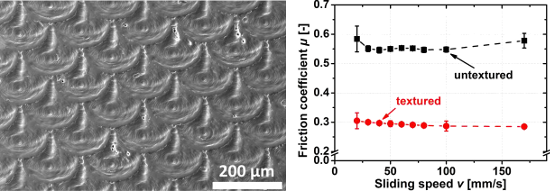
- demonstrated, for example, that sandfish skin exhibits low friction and little wear [25][26]. The development of manufactured surface textures that are inspired by animals with scale-like surface morphology has resulted in fascinating insights. For texturing a titanium alloy, a lithography-based method was
- sliding by a further optimization of the scale size and packing strategy. Perhaps even more importantly, friction also decreased upon texturing for lubricated contacts – at least for a wide range of sliding speeds. When testing the dry sliding performance of titanium alloy (Ti6Al4V) pins textured via mask


Non-agglomerated silicon–organic nanoparticles and their nanocomplexes with oligonucleotides: synthesis and properties
Beilstein J. Nanotechnol. 2018, 9, 2516–2525, doi:10.3762/bjnano.9.234
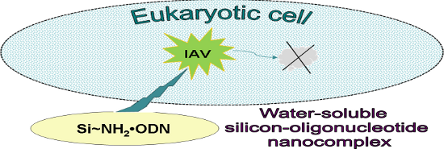
- practical medicine. Despite many efforts in this field, this problem cannot be considered as completely solved. А promising approach is the use of various nanoparticles as delivery vehicles. We have previously developed methods for immobilizing DNA fragments onto titanium dioxide nanoparticles with the


Nanocellulose: Recent advances and its prospects in environmental remediation
Beilstein J. Nanotechnol. 2018, 9, 2479–2498, doi:10.3762/bjnano.9.232
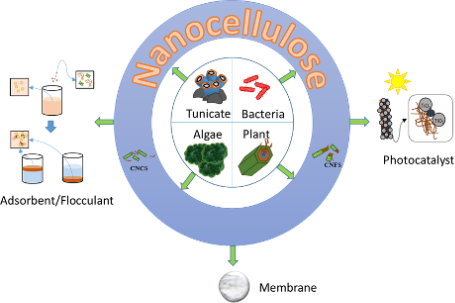
- fibrillated cellulose as a support/carrier for catalyst nanoparticles has attracted a lot of attention in recent years. For example, a study led by An et al. [125] discusses the application of CNFs as a support for titanium dioxide nanoparticles to prepare nano-fibrillated cellulose–TiO2 nanoparticle
- -absorbing materials in order to protect cellulosic fibres from UV bleaching [128]. An et al. [129] claimed that the prepared nano-fibrillated cellulose/magnetite/titanium dioxide nanocomposites had a higher photocatalytic hydrogen generation rate as compared to the nano-fibrillated cellulose/titanium


Droplet-based synthesis of homogeneous magnetic iron oxide nanoparticles
Beilstein J. Nanotechnol. 2018, 9, 2413–2420, doi:10.3762/bjnano.9.226
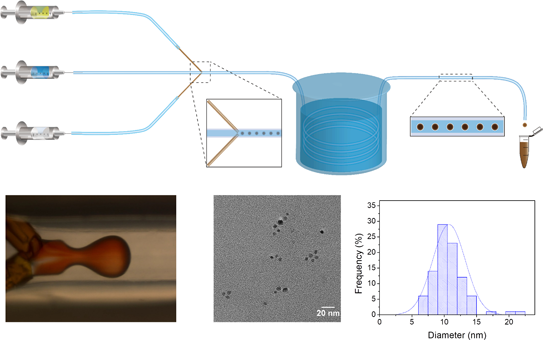
- have been synthesized in pinched flow microfluidic geometries, such as fluorescent silica particles [13], or titanium dioxide particles [27]. For these applications, the microfluidic devices were made from poly(dimethylsiloxane) (PDMS) following a soft-lithography fabrication method [28][29], or made


High-throughput micro-nanostructuring by microdroplet inkjet printing
Beilstein J. Nanotechnol. 2018, 9, 2372–2380, doi:10.3762/bjnano.9.222
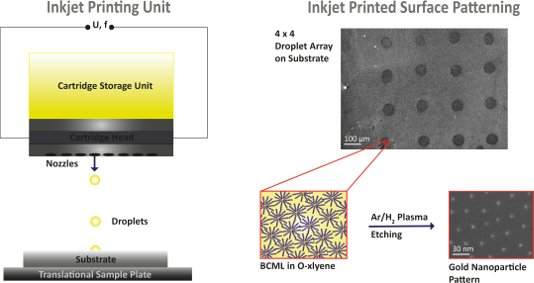
- in a high-throughput process. Inkjet printing was used to generate droplets of the micelle solution on surfaces, resulting in printed circles that contain patterns of gold nanoparticles with an interparticle spacing between 25 and 42 nm. We tested this method on different silicon and nickel–titanium
- generated on different types of silicon and nickel–titanium (NiTi) materials, thus providing a novel method to micro-nanostructure and functionalize materials, which are relevant in biomaterial and biosensor applications. Results and Discussion Inkjet printing for generating micelle solution droplets The
- nm thickness (prepared by Fraunhofer ISIT, Itzehoe), 200 nm thick nickel–titanium thin film sputtered on a 4 µm thick copper layer and glass substrate (prepared by Acquandas, Kiel) and free-standing nickel–titanium foil of 50 µm thickness (prepared by Acquandas, Kiel). Scanning electron microscopy


Block copolymers for designing nanostructured porous coatings
Beilstein J. Nanotechnol. 2018, 9, 2332–2344, doi:10.3762/bjnano.9.218
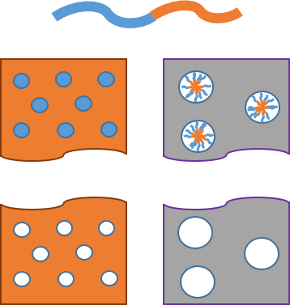
- within the solid SDA. In soft-templating, an endotemplating approach is used where the precursor starts to solidify around the porogens (which remain in the liquid state). Regarding the hard-templating route, the preparation of titanium structures on block copolymer films has been recently reported
- , where the titanium assembly is driven by the microphase separation of the PS-b-PEO layer underneath [99]. When the titanium coating procedure is performed by electron beam evaporation onto a previously self-assembled PS-b-PEO substrate, Ti preferentially deposits and diffuses inside the PS matrix, thus


Electrospun one-dimensional nanostructures: a new horizon for gas sensing materials
Beilstein J. Nanotechnol. 2018, 9, 2128–2170, doi:10.3762/bjnano.9.202
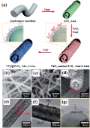
- by co-electrospinning a poly(vinyl pyrrolidone) (PVP) solution containing a titanium alkoxide (Ti(OiPr)4) and mineral oil. The mineral oil is removed at a later stage by calcination. In the same way, the interior of a hollow fiber is decorated by oil-dispersible nanoparticles using a silica capillary
- of electrospun metal oxide (MOx) semiconductors have been used for gas sensing applications. These semiconductors include titanium dioxide (TiO2) [93][94][95], tungsten trioxide (WO3) [27][96][97][98][99][100][101][102][103][104][105][106][107][108][109][110], copper oxide (CuO) [111], NiO [112






Spin-coated planar Sb2S3 hybrid solar cells approaching 5% efficiency
Beilstein J. Nanotechnol. 2018, 9, 2114–2124, doi:10.3762/bjnano.9.200
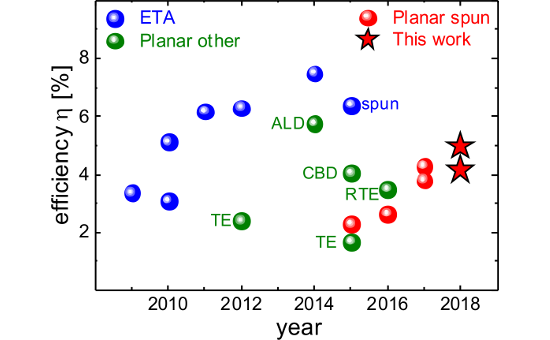
- under an inert N2-atmosphere. Solar cells: N-i-p stack of FTO/TiO2/Sb2S3/HTM/MoOx/Ag. FTO TEC7 substrates by Pilkington were structured by Kintec. A compact layer of TiO2 was obtained by spray-coating a 0.2 M solution of titanium diisopropoxide bis(acetylacetonate) 75 wt % in ethanol on a hot plate at


A scanning probe microscopy study of nanostructured TiO2/poly(3-hexylthiophene) hybrid heterojunctions for photovoltaic applications
Beilstein J. Nanotechnol. 2018, 9, 2087–2096, doi:10.3762/bjnano.9.197
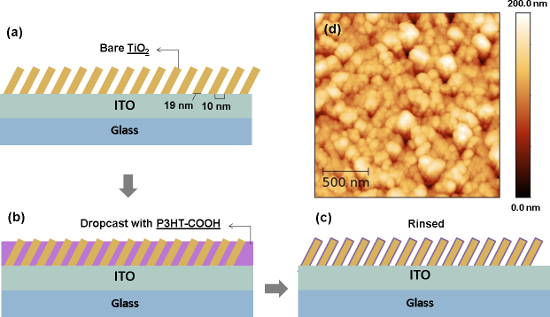
- the electron acceptor materials commonly used for DSSC and HBHJ, titanium dioxide (TiO2) is a well-known metal oxide semiconductor [6][7][8]. Depending on its nanostructure and its crystalline phase, its conductivity varies from 10−4 Ω−1·cm−1 to 10−11 Ω−1·cm−1 [9][10]. TiO2 is very valuable because it


Recent highlights in nanoscale and mesoscale friction
Beilstein J. Nanotechnol. 2018, 9, 1995–2014, doi:10.3762/bjnano.9.190
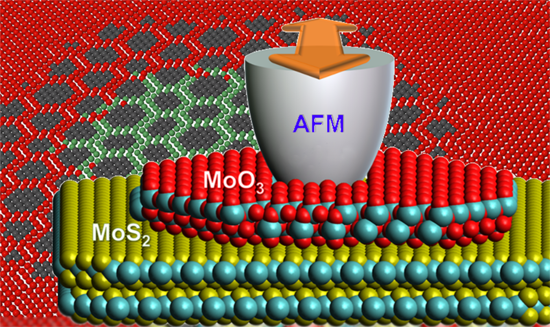
- assemble more complex nanodevices. Prospects in tuning friction with photo-assisted reactions The influence of light exposure on properties such as friction and adhesion is rarely explored. For instance, it is known that certain surfaces, such as titanium oxide, exhibit photocatalytic properties and might


Biomimetic and biodegradable cellulose acetate scaffolds loaded with dexamethasone for bone implants
Beilstein J. Nanotechnol. 2018, 9, 1986–1994, doi:10.3762/bjnano.9.189
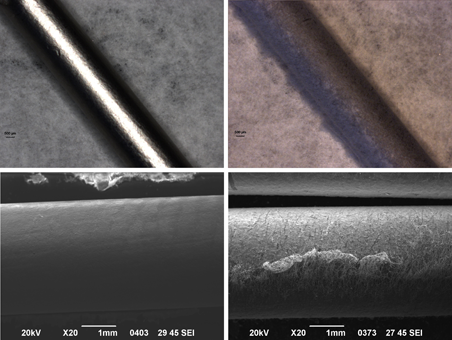
- anti-inflammatory drug onto the engineered implants and degradation study was conducted in order to assess the mass loss of polymers. This drug-delivery nanoplatform as coating on titanium implants may be a promising approach not only to alleviate but also to prevent implant-associated acute


Electromigrated electrical optical antennas for transducing electrons and photons at the nanoscale
Beilstein J. Nanotechnol. 2018, 9, 1964–1976, doi:10.3762/bjnano.9.187
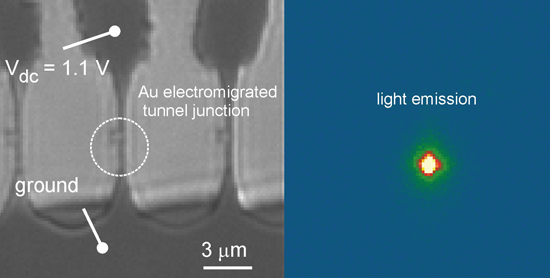
- processing. We realize the implementation of tunneling antennas on a TiO2 waveguide through a multi-step process. First, a 85 to 110 nm thick titanium dioxide layer is deposited by physical vapor deposition on a clean glass substrate. Then, the Au backbone that will subsequently define the electrically


![[Graphic 32]](/bjnano/content/inline/2190-4286-9-187-i38.svg?max-width=637&scale=1.18182) and
and ![[Graphic 33]](/bjnano/content/inline/2190-4286-9-187-i39.svg?max-width=637&scale=1.18182) are...
are...


A visible-light-controlled platform for prolonged drug release based on Ag-doped TiO2 nanotubes with a hydrophobic layer
Beilstein J. Nanotechnol. 2018, 9, 1793–1801, doi:10.3762/bjnano.9.170
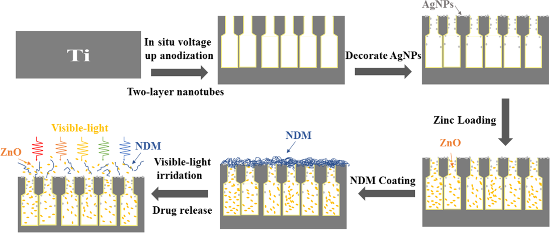
- exhibit promising application as a localized, prolonged drug delivery platform. Keywords: Ag doping; drug delivery; hydrophobic layer; prolonged drug release; TiO2 nanotubes; visible-light-controlled release; Introduction Titanium dioxide nanotubes (TNTs) are often employed as drug carriers, owing to
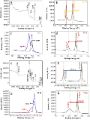
- . Only the peaks of titanium can be observed for the sample before heat treatment in Figure 2a. On the contrary, it can be observed that the peaks of anatase phase appear for the samples shown in Figure 2b while the weak peak of rutile appears at around 28.7° (marked by blue stars). The loading of Zn2
- platform. Experimental Materials Commercially pure titanium sheets (10 × 10 × 1 mm3) were purchased from Luoke Titanium Industry (Chengdu, China). Acetone was purchased from Changlian Chemical (Analytic Reagent, AR, Chengdu, China). Ethanol, dodecanethiol (NDM), ammonium fluoride (NH4F), ethylene glycol





Cryochemical synthesis of ultrasmall, highly crystalline, nanostructured metal oxides and salts
Beilstein J. Nanotechnol. 2018, 9, 1755–1763, doi:10.3762/bjnano.9.166
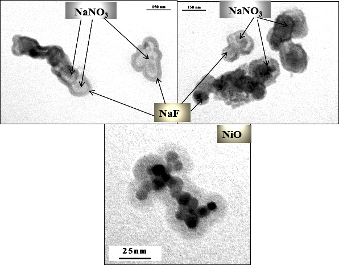
- NiO nanocrystals (4.1–4.7 nm) incorporated into the pore space of mesoporous titanium silicate [13]. We developed a method for the preparation of ultradispersed NiO based on the combination of the microemulsion method and cryochemical technology. NiO crystallites were obtained by cryotreatment of the
- metal-containing colloid and were incorporated in the titanium silicate (Ti0.03Si0.97O2) pores. It was found that chemical bonds are formed between the silicate surface and NiO crystallites, which leads to new physicochemical properties of the material. The high activity of NiO nanoparticles was


Preparation of micro/nanopatterned gelatins crosslinked with genipin for biocompatible dental implants
Beilstein J. Nanotechnol. 2018, 9, 1735–1754, doi:10.3762/bjnano.9.165
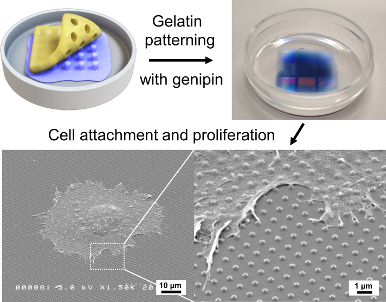
- differentiation [7], to functionalize implant surfaces [8][9], and to prevent the formation of bacterial biofilms [10]. In the dental field, we have used different micro/nanopatterns that employ an apatite paste [11], a flowable composite resin [12], a titanium coat [13], and curable dental materials [14]. The
- Saos-2 cells on titanium-coated micro/nanopatterns [13]. However, the distribution of vinculin on the gelatin pillar with a diameter of 500 nm and a height of 500 nm was not clear more than the regulated distribution of vinculin on the same-sized titanium-coated pillar [13]. Furthermore, the strength
- increased compared to planar apatite. Additionally, Saos-2 cell attachment to titanium surfaces containing 500 nm to 2 µm grooves or pillars showed a similar tendency [13]. Saos-2 cells may therefore prefer materials with an adequately rough surface and moderate wettability. With regard to the cell








Controllable one-pot synthesis of uniform colloidal TiO2 particles in a mixed solvent solution for photocatalysis
Beilstein J. Nanotechnol. 2018, 9, 1715–1727, doi:10.3762/bjnano.9.163
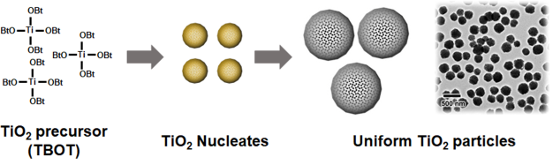
- Abstract This study reports on the controllable synthesis of uniform colloidal titanium dioxide (TiO2) particles and their photocatalytic applications toward rhodamine B (RhB) degradation. The monodispersed TiO2 particles were synthesized under mixed solvent conditions by sol–gel chemistry in a one-pot
- well as the crystalline properties and performance enhancement of TiO2 photocatalysts calcined at different temperatures. Keywords: mixed solvent; one-pot synthesis; photocatalysts; rhodamine B degradation; sol–gel synthesis; spherical TiO2 particles; Introduction Titanium dioxide (TiO2) is a widely
- robust sol–gel coating process in a mixed solvent of ethanol–acetonitrile (EtOH/ACN) for producing polymer@TiO2 core–shell nanostructures was reported [14]. Since the solubility of the TiO2 precursor, titanium butoxide (TBOT), is different in the two different solvents (ethanol and acetonitrile), the