Search results
Search for "STEM" in Full Text gives 301 result(s) in Beilstein Journal of Nanotechnology. Showing first 200.
Comparative biological effects of spherical noble metal nanoparticles (Rh, Pd, Ag, Pt, Au) with 4–8 nm diameter
Beilstein J. Nanotechnol. 2018, 9, 2763–2774, doi:10.3762/bjnano.9.258
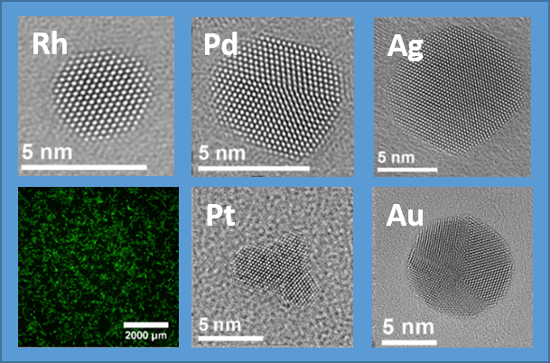
- determine the effect of particle exposure on the viability of human mesenchymal stem cells (hMSCs). Except for silver, no adverse effect of any of the metal nanoparticles was observed for concentrations up to 50 ppm (50 mg L−1) incubated for 24 h, indicating that noble metal nanoparticles (rhodium
- , Pd, Ag, Pt and Au that are of the same size and have the same surface functionalization (PVP) to compare their biological effect on a well-established system, i.e., on human mesenchymal stem cells (hMSC). Materials and Methods Chemicals Poly(N-vinyl pyrrolidone) (PVP K 30, Povidon 30; Fluka, M
- with a sample volume of 750 µL were used. High-resolution imaging was performed using an aberration-corrected FEI Titan transmission electron microscope (TEM) equipped with a Cs-probe corrector (CEOS Company) and operating at 300 kV [53]. Cell biology Human mesenchymal stem cells (hMSC, 5th to 10th


Accurate control of the covalent functionalization of single-walled carbon nanotubes for the electro-enzymatically controlled oxidation of biomolecules
Beilstein J. Nanotechnol. 2018, 9, 2750–2762, doi:10.3762/bjnano.9.257
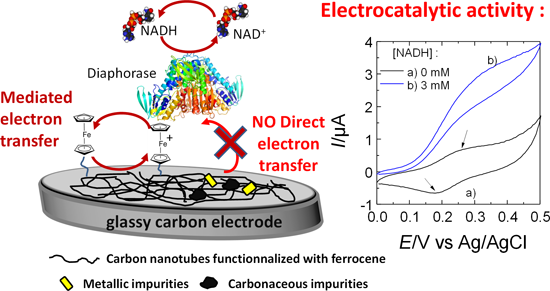
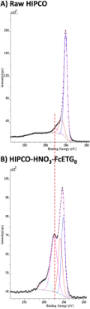
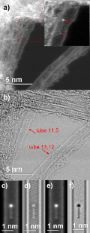
- systematically seen at the other end of these objects. The length of this kind of object was systematically measured between 1.2 and 1.4 nm, which agrees with the presence of a FcETG2 grafted group. Figure 10 illustrates this fact by presenting typical micrographs of high-resolution STEM images recorded on the
- image presented in Figure 10b was estimated slightly over-focused by 1 or 2 nm. Numerous STEM images were analyzed for different samples, and the functionalization of the sidewalls was observed for both metallic and semiconducting tubes oxidized with either HNO3 or H2SO4 acidic conditions. Therefore
- and 11 mrad for an image resolution of 1024 × 1024 pixels with a dwell-time of 60 µs. STEM-EDS and STEM-EELS experiments were performed with an electron probe of about 0.17 nm and a convergence semi-angle of 24 mrad. The energy resolution was about 0.45 eV. The collection angle of the EELS






Friction reduction through biologically inspired scale-like laser surface textures
Beilstein J. Nanotechnol. 2018, 9, 2561–2572, doi:10.3762/bjnano.9.238
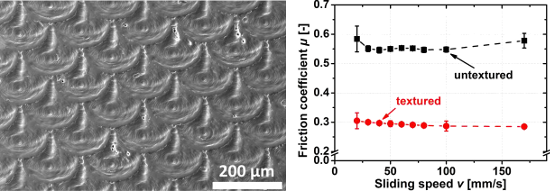
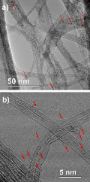
- have the same potential for reducing friction forces as standard surface textures, which have already been optimized for several decades [10]. The plateau in Figure 2b for sliding speeds between 40 and 70 mm/s may stem from different frictional interactions, or by run-in effects. Running-in is a


Cytotoxicity of doxorubicin-conjugated poly[N-(2-hydroxypropyl)methacrylamide]-modified γ-Fe2O3 nanoparticles towards human tumor cells
Beilstein J. Nanotechnol. 2018, 9, 2533–2545, doi:10.3762/bjnano.9.236
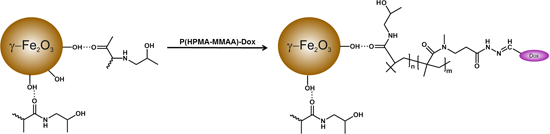
- undifferentiated cells, mesenchymal stem cells were utilized. Cellular uptake of agents was studied by fluorescence microscopy and induction of cell death was visualized by live/dead assay. Dox-conjugated γ-Fe2O3@P(HPMA-MMAA) particles showed enhanced cytotoxicity in drug-sensitive and drug-resistant tumor cells
- Mouse melanoma cells of B16F10/wt line, human T-leukemia cells of Jurkat, K562, HL-60 lines and its drug-resistant HL-60/vinc sub-line (overexpression of P-glycoprotein) were a kind gift of Prof. Walter Berger, Institute of Cancer Research, Vienna Medical University (Austria). Human mesenchymal stem
- streptomycin at 37 °C in humidified atmosphere containing 5% CO2, while hMSCs were cultured in mesenchymal stem cell growth medium (MSCGM BulletKitTM; Lonza, Italy). All other cells were cultured in RPMI medium supplemented with 10% fetal calf serum, streptomycin (50 µg/mL), and penicillin (50 units/mL) at 37


Adhesive contact of rough brushes
Beilstein J. Nanotechnol. 2018, 9, 2405–2412, doi:10.3762/bjnano.9.225
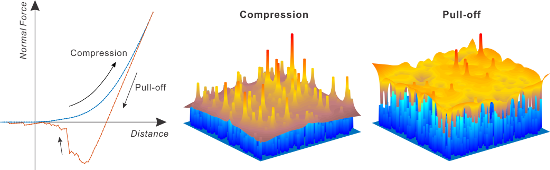
- the square, one can see the pillars, whose heights are statistically distributed. The elastic half-space is represented only by its surface. At the location of the highest pillars, one can see the “spikes”, which stem from pillars which are strongly pressed into the elastic half-space. At lower pillar
- heights (see the side of the contact) one can see the “negative spikes” which stem from the not-yet-destroyed adhesive contacts of individual pillars loaded in tension. The scheme of indenting and pull-off stages of an adhesive contact of exponentially distributed pillars. An example of a pillar structure


Nanoscale characterization of the temporary adhesive of the sea urchin Paracentrotus lividus
Beilstein J. Nanotechnol. 2018, 9, 2277–2286, doi:10.3762/bjnano.9.212
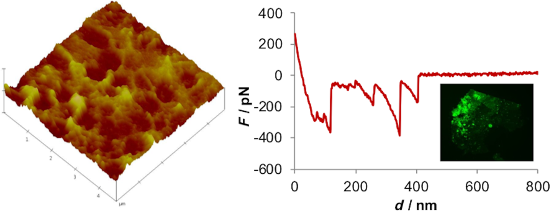
- proximal extensible stem and a distal flattened disc [13]. The later releases an adhesive secretion that remains attached to the substrate as a footprint after detachment [14]. In sea stars, the adhesive is released through individual pores by two types of adhesive secretory cells found together in the
- determined [26] where a peak around 550 nm (after excitation at 488 nm) and emission over 505–620 nm was observed. a) Collection of Paracentrotus lividus footprints on mica. b) Detailed view of a sea urchin tube foot attached to mica, showing the adhesive disc (D) and the stem (S). c) Optical microscopy (10


The role of adatoms in chloride-activated colloidal silver nanoparticles for surface-enhanced Raman scattering enhancement
Beilstein J. Nanotechnol. 2018, 9, 2236–2247, doi:10.3762/bjnano.9.208
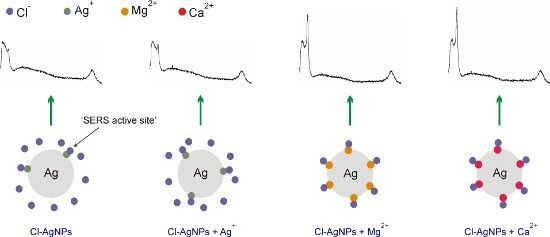
- transmission electron microscope (STEM), equipped with a cold field emission gun, working at an acceleration voltage of 200 kV. The absorption spectra were recorded with a Jasco V-630 UV–vis spectrometer at 1 nm spectral resolution. Raman and SERS spectra were obtained with a Renishaw InVia Raman microscope



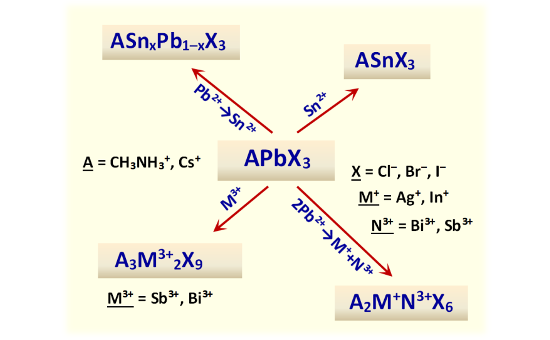
Lead-free hybrid perovskites for photovoltaics
Beilstein J. Nanotechnol. 2018, 9, 2209–2235, doi:10.3762/bjnano.9.207


Electrospun one-dimensional nanostructures: a new horizon for gas sensing materials
Beilstein J. Nanotechnol. 2018, 9, 2128–2170, doi:10.3762/bjnano.9.202
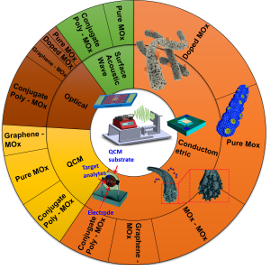
- deposited directly onto a controlled and selective deposition area using a multifield electrospinning setup as shown in Figure 2. The scanning transmission electron microscopy (STEM) image confirms the uniform distribution of MoO3 NPs inside the electrospun fibers. Similarly, CuO NPs are embedded in
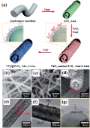
- fabrication strategy for synthesis of SnO2 NFs with a branch-on-stem morphology using electrospinning, oxygen plasma etching, sputtering and annealing. Electrospun PVP NFs were first etched with oxygen plasma to make a hierarchical template. Afterwards, a SnO2 film is deposited by sputtering and the PVP
- template is removed by annealing. The morphology of the NFs is dependent on sputtering time, resulting in uniformly distributed branches all over stem. Jun et al. [77] developed polypyrrole (PPy)-coated SnO2 tube-in-tube structures using single-nozzle electrospinning with a phase separation solvent method






The structural and chemical basis of temporary adhesion in the sea star Asterina gibbosa
Beilstein J. Nanotechnol. 2018, 9, 2071–2086, doi:10.3762/bjnano.9.196
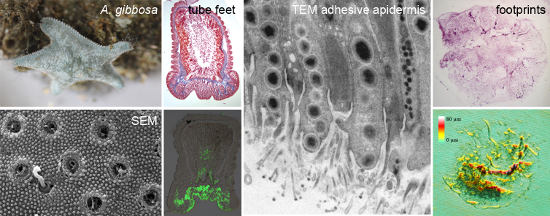
- flexible stem and an enlarged, flattened disc [11]. At the level of the disc, the epidermis is specialized into a sensory-secretory epithelium, enabling perception and adhesion [11][12]. For several echinoderm species, the adhesive strength was estimated by measuring the tenacity of single tube feet [13
- substrate, many of their tube feet break, leaving their discs and part of the stems attached [17][19][20]. These observations proved that the tenacity of the produced glue can exceed the tensile strength of the stem. The strong and temporary adhesion of echinoderms was proposed to rely on a duo-gland
- reversible attachment achieved through the hundreds of tube feet arranged in double rows on the oral surface of each arm (Figure 1B). Morphology and ultrastructure of the tube feet External morphology. The folded stem and the flattened adhesive disc were clearly distinguishable in SEM images (Figure 1C). For


High-throughput synthesis of modified Fresnel zone plate arrays via ion beam lithography
Beilstein J. Nanotechnol. 2018, 9, 2049–2056, doi:10.3762/bjnano.9.194
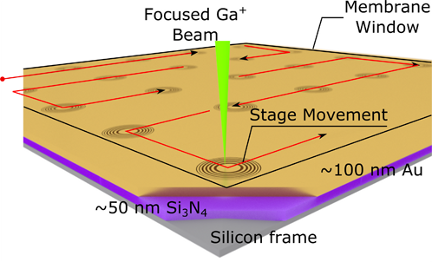
- . This can be attributed to the shifting plasmon resonances of the gold nanowires that make up the zones of the FZPs. A scanning transmission electron microscope (STEM) dark-field overview image of the completed array is shown in Figure 4b. The FZPs mostly exhibited high quality with zones free from
- could pass the inspection via electron microscopy. Hence, the robustness of the fabrication method is supported with a 100% yield. One of these FZPs from the marked region in Figure 4d is depicted in Figure 4e, a higher-magnification STEM dark-field image. The FZP showed similar characteristics to the
- applied to the fabrication of a large array of 64 FZPs in an overnight process. Such arrays of FZPs are proposed as expendable, cheap and high-resolution FZPs for FEL experiments, for lithography applications or wavefront sensing and beam diagnostic applications. Experimental Fabrication and SEM/STEM


Biomimetic and biodegradable cellulose acetate scaffolds loaded with dexamethasone for bone implants
Beilstein J. Nanotechnol. 2018, 9, 1986–1994, doi:10.3762/bjnano.9.189
- this nanoplatform cytocompatible. In future studies, the interaction with musculoskeletal tissues will be examined with other cell lines such as mesenchymal stem cells (MSCs) or bone marrow stromal cells (BMSC) in order to evaluate the tissue specific response to our scaffolds. This cytocompatible


A differential Hall effect measurement method with sub-nanometre resolution for active dopant concentration profiling in ultrathin doped Si1−xGex and Si layers
Beilstein J. Nanotechnol. 2018, 9, 1926–1939, doi:10.3762/bjnano.9.184
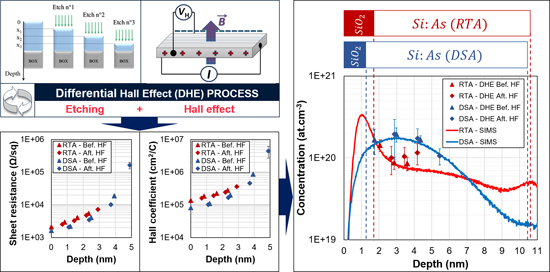
- the top Si/BOX interfaces in correspondence of the maximum slope of the oxygen signal. The position of the SiO2/Si interfaces determined in this way (1.2 nm and 1.6 nm below the surface for the DSA- and RTA-annealed wafers, respectively) are in perfect agreement with those found by STEM-EDX


Synthesis of rare-earth metal and rare-earth metal-fluoride nanoparticles in ionic liquids and propylene carbonate
Beilstein J. Nanotechnol. 2018, 9, 1881–1894, doi:10.3762/bjnano.9.180
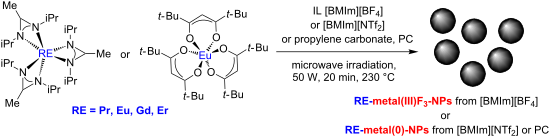
- distributions of the nanoparticles were determined by transmission electron microscopy (TEM) and high-angle annular dark-field scanning transmission electron microscopy (HAADF-STEM) to an average diameter of (11 ± 6) to (38 ± 17) nm for the REF3-NPs from [BMIm][BF4]. The RE-NPs from [BMIm][NTf2] or PC showed
- nanoparticles were determined by transmission electron microscopy (TEM) and high-angle annular dark-field scanning transmission electron microscopy (HAADF-STEM). The crystalline phases and the absence of impurities (oxides) in RE-NPs and REF3-NPs were identified by powder X-ray diffraction (PXRD) and selected
- in [BMIm][BF4] [12][42] or in the synthesis of metal-fluoride nanoparticles from metal acetate (hydrate) in ethylene glycol and an excess of [BMIm][BF4] [47]. The sizes and size distributions of the REF3 nanoparticles were determined by HAADF-STEM (Figure S4a, Supporting Information File 1) and TEM


A visible-light-controlled platform for prolonged drug release based on Ag-doped TiO2 nanotubes with a hydrophobic layer
Beilstein J. Nanotechnol. 2018, 9, 1793–1801, doi:10.3762/bjnano.9.170
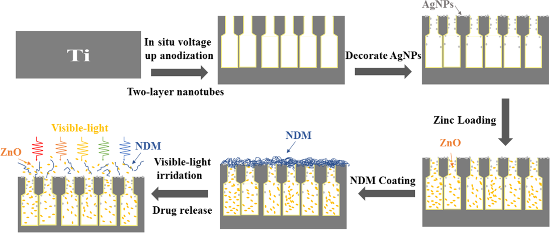
- essential to human being, previously published work [26] showed that Zn can greatly improve cell functionality by enhancing osteoblast proliferation and mineralization and promoting mesenchymal stem cell osteogenic differentiation. Meanwhile, its anti-inflammatory properties have also drawn wide attention





Uniform cobalt nanoparticles embedded in hexagonal mesoporous nanoplates as a magnetically separable, recyclable adsorbent
Beilstein J. Nanotechnol. 2018, 9, 1770–1781, doi:10.3762/bjnano.9.168
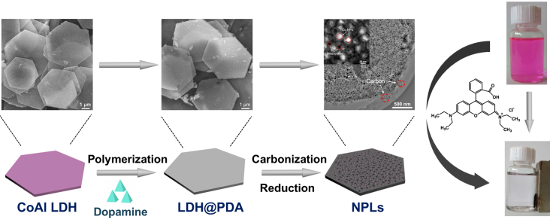
- of approximately 100 nm, which is slightly larger than the thickness of pure CoAl LDH reported in the literature [33]. The morphology and structure of the as-prepared NPLs-2.5-800 sample are observed by TEM (Figure 3A–C) and STEM (Figure 3D). As shown in Figure 3A, well-dispersed Co nanoparticles on
- containing magnetic Co nanoparticles (CoAl2O4 phase) and porous carbon layer by partial reduction Co2+ ions in the lattice of LDH with carbon during carbonization process at 800 °C [15][34]. The Z-contrast image in HAADF-STEM image correlates strongly with the atomic mass. Metallic cobalt is a heavier
- element and thus appears as the bright contrast, whereas the mesopores generated by the consumption of surface carbon are observed as darker contrasting areas in Figure 3D. From the HAADF-STEM image in Figure S5A of Supporting Information File 1, and the corresponding elemental line profiles in Figure S5B


Preparation of micro/nanopatterned gelatins crosslinked with genipin for biocompatible dental implants
Beilstein J. Nanotechnol. 2018, 9, 1735–1754, doi:10.3762/bjnano.9.165
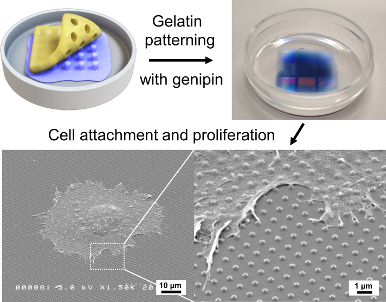
- of the surface of biomaterials. Surface topographical patterns significantly affect cell adhesion, spreading, morphology, proliferation, and differentiation [1][2][3][4][5]. Surfaces with specific micro/nanopatterns have been developed in order to reduce platelet response [6], to regulate stem cell
- either gelatin or collagen substrates. However, grooves with a width of 100 µm width did not influence osteoblast cell orientation [44]. Good cell alignment in collagen or gelatin grooves has also been reported for NIH-3T3 cells [36], vascular smooth muscle cells [46], and dental pulp stem cells [56]. In
- attachment of other cell types to other patterned surface, an improvement in cell attachment, due to patterning, depends on several different conditions. An increased tendency to attach to a patterned surface compared to a planar surface has been seen with human dental pulp-derived stem cells on tantalum








Toward the use of CVD-grown MoS2 nanosheets as field-emission source
Beilstein J. Nanotechnol. 2018, 9, 1686–1694, doi:10.3762/bjnano.9.160
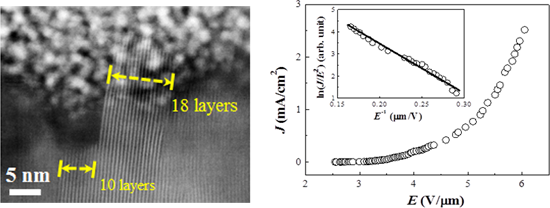
- and densely packed MoS2 NSs grown on SiO2/Si substrates can be seen from the low-magnification scanning TEM (STEM) image (Figure 4a). The STEM image (Figure 4b) demonstrates that the MoS2 NSs growth occurred perpendicular to the substrate. The height of the NSs ranges from 50 to 70 nm. The
- nm Mo film at 850 °C on SiO2/Si substrates: (a) HAADF-STEM image at low magnification with different observed materials layers marked; (b) TEM image at the interface between the MoS2 NSs and the Pt layer; (c) higher magnification of layer A showing edge dislocation (marked with “T”) in the MoS2
- layers; (d) high-magnification HAADF-STEM image at the interface between “A” and “B” from panel (a); (e–g) FFT analysis over the area marked by the dotted squares in panel (d), from top to bottom respectively. Photographs of (a) wet chemically transferred MoS2 sample on the FTO/glass substrate, the FTO



Optical near-field mapping of plasmonic nanostructures prepared by nanosphere lithography
Beilstein J. Nanotechnol. 2018, 9, 1536–1543, doi:10.3762/bjnano.9.144
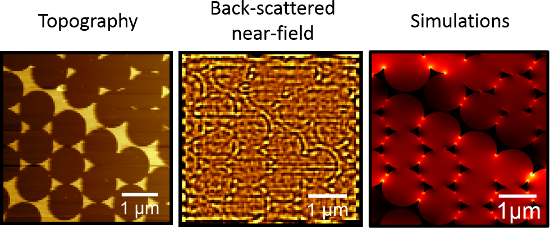
- intensity on the map [31]. The same principle is used with scanning transmission electron microscopy (STEM) and electron energy loss spectroscopy (EELS) [32][33][34]. This technique based on inelastic scattering measures the energy losses of the electrons. At the hot spots, the plasmon excitation results in




Electronic conduction during the formation stages of a single-molecule junction
Beilstein J. Nanotechnol. 2018, 9, 1471–1477, doi:10.3762/bjnano.9.138
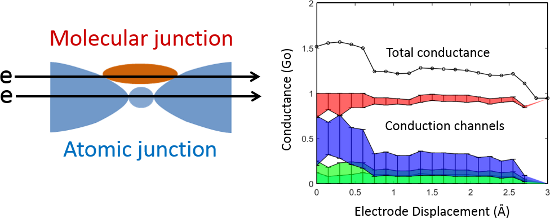
- conductance contribution of less than 0.5 G0. Note that this contribution is lower than estimated by the step height. Although the difference can stem from another conduction channel via the molecular junction that does not interact with vibration modes, one should bear in mind that both analysis methods
- by two main channels, each with lower conductance contribution than 1 G0. The deviation from the trivial channel distribution can stem from distorted local electronic structure at the single-atom junction due to the presence of the molecular bridge or other nearby adsorbed molecules, such that the


Review on nanoparticles and nanostructured materials: history, sources, toxicity and regulations
Beilstein J. Nanotechnol. 2018, 9, 1050–1074, doi:10.3762/bjnano.9.98

- incidental NMs; additionally, engineered NMs can be purposely designed to exploit novel features that stem from their small size. It is known that metal NPs may be spontaneously generated from synthetic objects, which implies that humans have long been in direct contact with synthetic NMs and that macroscale
- with the extracellular matrix (ECM) within the stem cells includes influential stem cell behavior through sources of passive mechanical force. A wide structural protein spectrum and polysaccharides of different length scales with dominating nanometer-sized collagen fibrils strands of 35–60 nm diameter


Bioinspired self-healing materials: lessons from nature
Beilstein J. Nanotechnol. 2018, 9, 907–935, doi:10.3762/bjnano.9.85
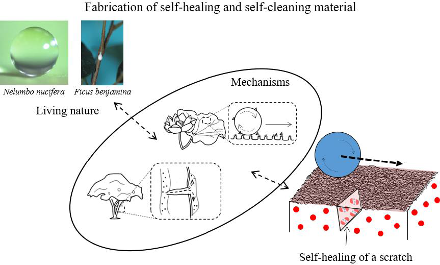
- both vertebrates and invertebrates. Flora will be broken down into herbaceous and woody plants. Herbaceous plants die down to the ground each year and regrow (perennials, annuals, and biennials), whereas woody plants refer to trees and plants that maintain a persistent woody stem above ground year
- [20] detail these phases of healing in a soft tissue wound injury, which are shown in Figure 4A [54]. Immediately after an injury to vertebrate soft tissue, platelets gather at the site of the wound to stem the loss of blood while also preventing foreign and potentially harmful material from entering
- component similar to the hard tissue response. In soft tissue, the short-term response involves clotting of the wound to stem blood flow. Over a longer period, the cellular response leads to remodeling of the epithelial (skin) tissue at the wound site. Stem cell response – In the discussion between








Noble metal-modified titania with visible-light activity for the decomposition of microorganisms
Beilstein J. Nanotechnol. 2018, 9, 829–841, doi:10.3762/bjnano.9.77
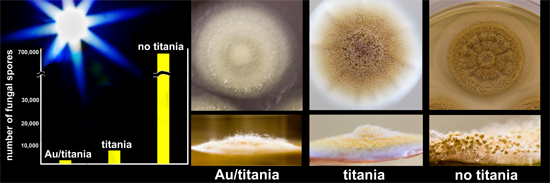
- were modified with silver and gold by photodeposition, and characterized by diffuse reflectance spectroscopy (DRS), X-ray powder diffraction (XRD), X-ray photoelectron spectroscopy (XPS) and scanning transmission electron microscopy (STEM). It was found that silver co-existed in zero valent (core) and
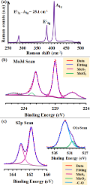
- . Collected spores were diluted 10–50 times with 8.5 g/L NaCl aqueous solution, and then counted. STEM images of modified titania samples: (a) Ag/TiO2(ST01), (b) Au/TiO2(ST01), (c) Ag/TiO2(ST41) and (d) Au/TiO2(ST41). XPS spectra for bare (top left) and gold-modified (bottom left) TiO2(ST01) sample, and


Cyclodextrin-assisted synthesis of tailored mesoporous silica nanoparticles
Beilstein J. Nanotechnol. 2018, 9, 693–703, doi:10.3762/bjnano.9.64
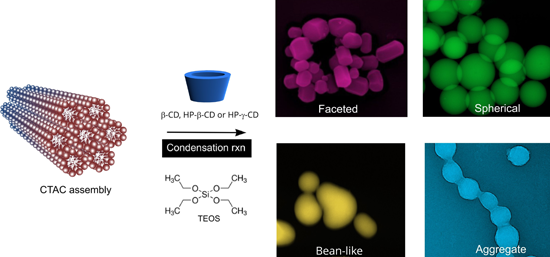
- types (i.e., β-CD, HP-γ-CD and HP-β-CD). By varying the concentrations of additives and CD-type, MSNs in various shapes, such as spherical, aggregate, bean-like and faceted were generated (Figure 1). The particles were characterized in terms of morphology by SEM, TEM and STEM, the surface area by BET
- HP groups. These molecules do not aggregate like β-CD, which might affect the particle formation, and eventually lead to the particles in different shapes and pore structures. For detailed analysis of the faceted particles, TEM, STEM and EDX analyses were performed. Figure 3f shows the TEM images of
- ). Figure 5 shows the TEM and STEM images of the particles. Under all conditions, MSNs were obtained where the particle shape transformed from single particles to aggregates depending on the CD content used. At low HP-γ-CD concentrations, mixed particles with spherical and faceted shape were formed. However


Towards 3D crystal orientation reconstruction using automated crystal orientation mapping transmission electron microscopy (ACOM-TEM)
Beilstein J. Nanotechnol. 2018, 9, 602–607, doi:10.3762/bjnano.9.56
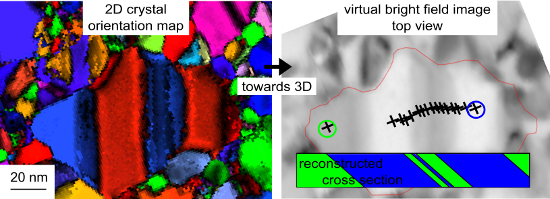
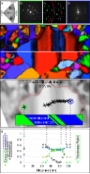
- . Keywords: ACOM-TEM; 3D reconstruction; in situ testing; quantitative crystallographic analysis; STEM; Findings For the study of nanostructured material with feature sizes <100 nm, transmission electron microscopy (TEM) is the method of choice due to its high spatial resolution [1][2][3][4]. Even though