Search results
Search for "UV–vis spectroscopy" in Full Text gives 165 result(s) in Beilstein Journal of Nanotechnology.
Optical and structural characterization of oleic acid-stabilized CdTe nanocrystals for solution thin film processing
Beilstein J. Nanotechnol. 2014, 5, 881–886, doi:10.3762/bjnano.5.100
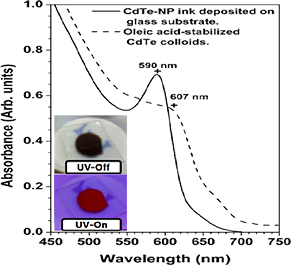
- enabled us to manipulate the CdTe nanocrystals under ambient conditions, and to use them to deposit CdTe thin films that were free of cadmium tellurate or tellurium oxide. The CdTe nanocrystals and thin films were characterized by TEM, X-ray diffraction, UV–vis spectroscopy and Raman spectroscopy. Results


Visible light photooxidative performance of a high-nuclearity molecular bismuth vanadium oxide cluster
Beilstein J. Nanotechnol. 2014, 5, 711–716, doi:10.3762/bjnano.5.83

- are illustrated. Results and Discussion Photochemical characterization of the bismuth vanadate cluster 1 UV–vis spectroscopy of 1 shows that the cluster features a prominent ligand to metal charge-transfer (LMCT) absorption band centred at λ = 335 nm with tailing of the absorption band up to λ ≈ 560


Injection of ligand-free gold and silver nanoparticles into murine embryos does not impact pre-implantation development
Beilstein J. Nanotechnol. 2014, 5, 677–688, doi:10.3762/bjnano.5.80
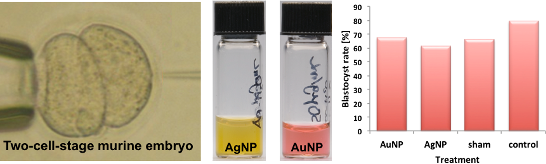
- ][80][81]. The laser and process parameters were set as previously reported [43]. The resulting AuNP and AgNP colloids were characterized directly after synthesis by UV–vis spectroscopy (Shimadzu 1650, Shimadzu Europe GmbH, Duisburg, Germany), and transmission electron microscopy (TEM; EM 10 C electron




Effects of the preparation method on the structure and the visible-light photocatalytic activity of Ag2CrO4
Beilstein J. Nanotechnol. 2014, 5, 658–666, doi:10.3762/bjnano.5.77
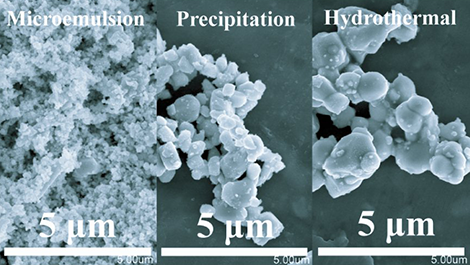
- areas are beneficial for the enhancement of photocatalytic performance by facilitating the absorption of pollutants for degradation. UV–vis spectroscopy measurements A comparison of UV–vis diffuse reflectance spectra (DRS) and the corresponding colours of the Ag2CrO4 samples are displayed in Figure 5


In vitro toxicity and bioimaging studies of gold nanorods formulations coated with biofunctional thiol-PEG molecules and Pluronic block copolymers
Beilstein J. Nanotechnol. 2014, 5, 546–553, doi:10.3762/bjnano.5.64
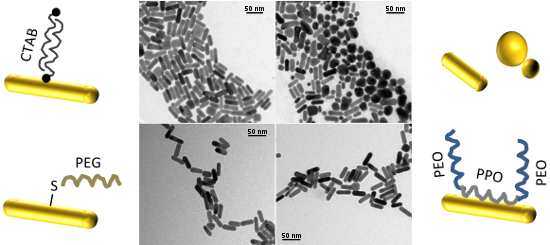
- corresponding impact on biological systems. In this work, we systematically study the cytotoxicity, colloidal stability, and optical property of AuNRs before and after functionalizing them with PEG-SH and PEO–PPO–PEO molecules. These AuNRs formulations were characterized by using UV–vis spectroscopy


Mesoporous cerium oxide nanospheres for the visible-light driven photocatalytic degradation of dyes
Beilstein J. Nanotechnol. 2014, 5, 517–523, doi:10.3762/bjnano.5.60
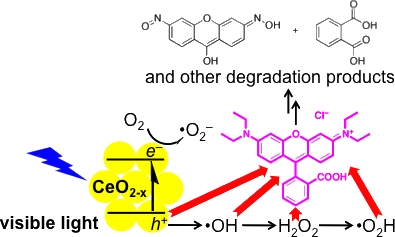
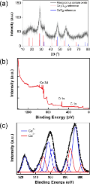
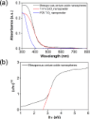
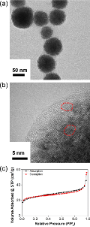
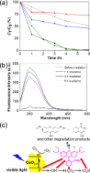
- photoelectron and UV–vis spectroscopy, and transmission electron microscopy. Together with N2 sorption experiments, the data confirms that the new cerium oxide material is mesoporous and absorbs visible light. The photocatalytic degradation of rhodamin B is investigated with a series of radical scavengers

One pot synthesis of silver nanoparticles using a cyclodextrin containing polymer as reductant and stabilizer
Beilstein J. Nanotechnol. 2014, 5, 380–385, doi:10.3762/bjnano.5.44
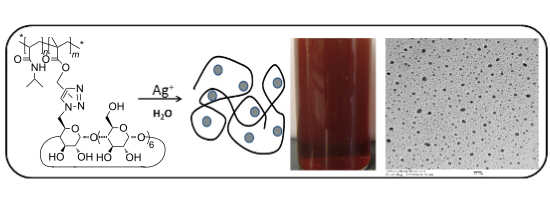
- structure of the silver nanoparticles has been confirmed by UV–vis spectroscopy and transmission electron microscopy. The optical properties of the nanoparticles have also been characterized by fluorescence spectroscopy. The formed spherical particles are stable in aqueous medium at room temperature over a
- period of several weeks. Furthermore the changes in the optical properties of the nanoparticles due to thermo induced volume phase transition behavior of the thermoresponsive cyclodextrin containing polymer 1 have been characterized by UV–vis spectroscopy. Keywords: cyclodextrin; polymer; silver


Extracellular biosynthesis of gadolinium oxide (Gd2O3) nanoparticles, their biodistribution and bioconjugation with the chemically modified anticancer drug taxol
Beilstein J. Nanotechnol. 2014, 5, 249–257, doi:10.3762/bjnano.5.27

- were bioconjugated with the chemically modified anticancer drug taxol with the aim of characterizing the role of this bioconjugate in the treatment of cancer. The biosynthesized Gd2O3 nanoparticles were characterized by UV–vis spectroscopy, transmission electron microscopy (TEM), X-ray diffraction (XRD
- ) and X-ray photoemission spectroscopy (XPS). The Gd2O3–taxol bioconjugate was confirmed by UV–vis spectroscopy and fluorescence microscopy and was purified by using high performance liquid chromatography (HPLC). Keywords: bioconjugation; biodistribution; gadolinium oxide; humicola sp; transmission
- was put onto a shaker at 50 °C (200 rpm) and maintained in the dark. Characterization of gadolinium oxide nanoparticles UV–vis spectroscopy To check the synthesis of gadolinium oxide nanoparticles, the mixture was monitored by periodic sampling of aliquots (2 mL) of the aqueous component. The


Study of mesoporous CdS-quantum-dot-sensitized TiO2 films by using X-ray photoelectron spectroscopy and AFM
Beilstein J. Nanotechnol. 2014, 5, 68–76, doi:10.3762/bjnano.5.6
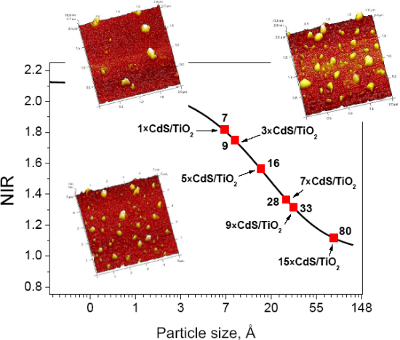
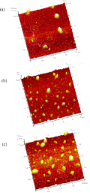
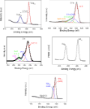
- the CdS nanoparticles as obtained by UV–vis spectroscopy. The results showed that XPS technique is a powerful tool in the estimation of the CdS particle size. In conjunction with these results, a very good correlation has been found between the number of deposition cycles and the particle size
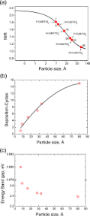
- be counted [9]. In the case of spectroscopy techniques such as UV–vis spectroscopy combined with effective mass approximation the values of particle size are usually strongly overestimated [11]. However, this technique could be useful in explaining the dependence of the band gap on quantum size
- the number of deposition cycles, which is in concordance with UV–vis spectroscopy and AFM studies. The small particles fill the pores of the TiO2 layer and then cover the surface of the substrate, which leads to a homogeneous layer. In order to illustrate the quantum size effect, the relationship


Photocatalytic antibacterial performance of TiO2 and Ag-doped TiO2 against S. aureus. P. aeruginosa and E. coli
Beilstein J. Nanotechnol. 2013, 4, 345–351, doi:10.3762/bjnano.4.40
- bacterial strains under visible-light irradiation. The TiO2 and Ag-doped TiO2 photocatalysts were synthesized by acid catalyzed sol–gel technique and characterized by X-ray diffraction (XRD), transmission electron microscopy (TEM), UV–vis spectroscopy and photoluminescence (PL). The XRD pattern revealed
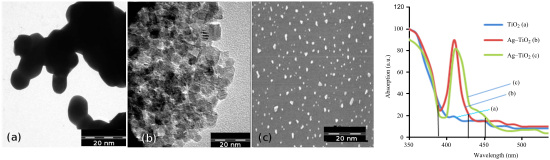
- that the annealed sample of TiO2 has both anatase and rutile phases while only an anatase phase was found in Ag-doped TiO2 nanoparticles. The decreased band-gap energy of Ag-doped TiO2 nanoparticles in comparison to TiO2 nanoparticles was investigated by UV–vis spectroscopy. The rate of recombination
- -doped TiO2 with a 3% concentration of silver salt (Figure 2b), whereas they are scattered in the case of Ag-doped TiO2 nanoparticles with a 7% concentration (Figure 2c) of silver salt. UV–vis spectroscopy Optical properties were observed by UV–vis spectroscopy. Figure 3 demonstrates the optical


Substrate-mediated effects in photothermal patterning of alkanethiol self-assembled monolayers with microfocused continuous-wave lasers
Beilstein J. Nanotechnol. 2012, 3, 65–74, doi:10.3762/bjnano.3.8
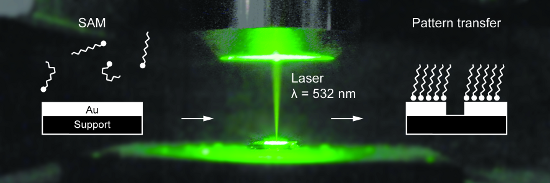
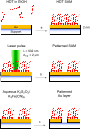
- exhibit a continuous Au layer. Atomic force microscopy (AFM) revealed a surface roughness of a few nanometers. Note that Au/glass substrates with 100 nm thick Au layers and Au/Si substrates are opaque and, hence, do not allow for characterization by means of UV–vis spectroscopy. In addition, the
- distinct immersion times on a single sample (Figure 8). After etching, the samples were rinsed in deionized water and blown dry with argon. For the characterization of bare and HDT-coated substrates, UV–vis spectroscopy, laser reflectance and transmittance measurements, contact angle measurements and




Direct monitoring of opto-mechanical switching of self-assembled monolayer films containing the azobenzene group
Beilstein J. Nanotechnol. 2011, 2, 834–844, doi:10.3762/bjnano.2.93
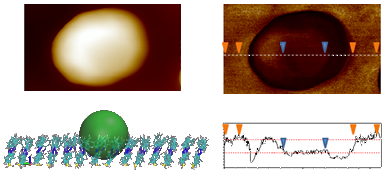
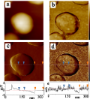
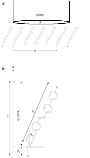
- ↔trans switching have been demonstrated for SAMs. These include mechanical testing, as mentioned above, as well as changes in the local surface potential [13][14], UV–vis spectroscopy [10], wettability [15], and direct molecular-resolution imaging by scanning tunneling microscopy [10]. These methods vary
- domains present in the experiment. We have no way to measure directly the efficiency of conversion for the island films. As a comparison, UV–vis spectroscopy performed on smooth, flat, semitransparent Au films, with RMS roughness of 0.7 nm showed only 30% conversion efficiency under similar illumination



Template-assisted formation of microsized nanocrystalline CeO2 tubes and their catalytic performance in the carboxylation of methanol
Beilstein J. Nanotechnol. 2011, 2, 776–784, doi:10.3762/bjnano.2.86
- Kα1) instruments. Thermogravimetric analysis (TGA) was performed on a Netzsch TG 209 F1 instrument coupled with a QMS 403 C mass spectrometer. For BET measurements a NOVA 3000e (Quantachrome) was used. For PLE measurements, Horiba, Fluorog-3 (Xe, excitation wavelength 325 nm) was used. For UV–vis
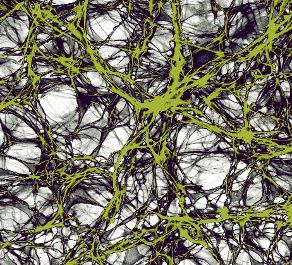
- spectroscopy, Perkin Elmer, Lambda 900 was used. DLS was measured by using a Malvern Zetasizer Nano with a red laser of 633 nm. Scanning electron micrographs (SEM) of electrospun PMMA fibres, fabricated from a 15 wt % solution of PMMA in a mixture of acetone and dimethyl formamide (60/40). An average fibre


Novel acridone-modified MCM-41 type silica: Synthesis, characterization and fluorescence tuning
Beilstein J. Nanotechnol. 2011, 2, 284–292, doi:10.3762/bjnano.2.33
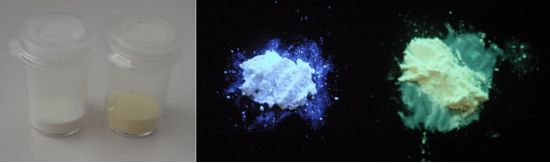
- ), IR and UV–vis spectroscopy, as well as 29Si and 13C CP-MAS NMR techniques. The material features a high inner surface area and a highly ordered two-dimensional hexagonal pore structure. The fluorescence properties of the organic chromophore can be tuned via complexation of its carbonyl group with


Precursor concentration and temperature controlled formation of polyvinyl alcohol-capped CdSe-quantum dots
Beilstein J. Nanotechnol. 2010, 1, 119–127, doi:10.3762/bjnano.1.14
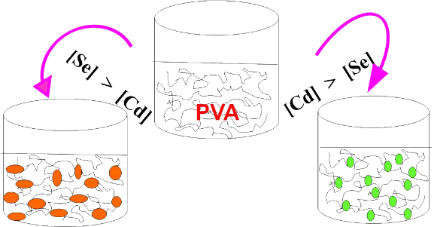
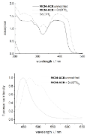
- due to slow aggregation of the initially produced nanoparticles, as monitored by UV–vis spectroscopy. Optical absorption study CdSe sols were synthesized, in the case of greenish-yellow colored sols, by keeping concentration of Cd(OAc)2 higher than that of Na2SeSO3, and vice versa for orange colored
- that strain broadening must be very small [33]. The particle size was found to be 1.7 nm from the intercept. The particle size found by the three methods, UV−vis spectroscopy, Scherrer equation and Williamson–Hall equation, are quite close to one another. Further, the chemical composition of the
- formed. The results from UV−vis spectroscopy, fluorescence measurements and XRD clearly indicate the formation of individual CdSe nanoparticles, with sizes within the quantum confinement limit. Conclusion In summary, PVA-capped CdSe quantum dots were synthesized at room temperature, by a simple chemical