Search results
Search for "XPS" in Full Text gives 399 result(s) in Beilstein Journal of Nanotechnology. Showing first 200.
Flexible freestanding MoS2-based composite paper for energy conversion and storage
Beilstein J. Nanotechnol. 2019, 10, 1488–1496, doi:10.3762/bjnano.10.147
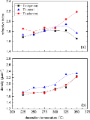
- identified (Supporting Information File 1, Table S1) that there was about 2.1 wt % of iron in the sample. This contamination originates from the carbon nanotubes, where iron usually serves as a catalyst for their growth [36]. X-ray photoelectron spectroscopy (XPS) was used to track the degree of degradation
- the measurements. High-resolution X-ray photoelectron spectroscopy (XPS) was performed using an ESCAProbeP spectrometer (Omicron Nanotechnology Ltd, Germany) with a monochromatic aluminum X-ray radiation source (1486.7 eV). Wide-scan surveys of all elements were performed (0–1000 eV, step 0.5 eV) with


Growth of lithium hydride thin films from solutions: Towards solution atomic layer deposition of lithiated films
Beilstein J. Nanotechnol. 2019, 10, 1443–1451, doi:10.3762/bjnano.10.142
- . Point Auger spectra were collected from different areas on the surface of the sample after 20 s cleaning with 500 eV Ar+ ions. Dwell time during the acquisitions was 100 ms with 1 eV measurement steps with an energy resolution of ΔE/E of 0.5 %. XPS signals were recorded using a Thermo Scientific K-Alpha
- XPS system (Thermo Fisher Scientific, UK) equipped with a micro-focused, monochromatic Al Kα X-ray source (1486.7 eV). An X-ray beam of 400 mm size was used at 6 mA and 12 kV. The spectra were acquired in the constant analyser energy mode with pass energy of 200 eV for the survey. Narrow regions were
- calibration routine and the internal Au, Ag and Cu standards supplied with the K-Alpha system. Argon etching was done with ion gun (1.4 µA of 2 keV Ar+ ions over 8 mm2). The samples indented to be used in XPS and Auger were coated with an additional layer of SiO2 inside of the deposition chamber. This


Selective gas detection using Mn3O4/WO3 composites as a sensing layer
Beilstein J. Nanotechnol. 2019, 10, 1423–1433, doi:10.3762/bjnano.10.140
- increased quantity of nanoparticles and decreased quantity of nanorods. Further information on the surface chemical composition of 5 atom % Mn3O4/WO3 composites was examined by XPS. The complete spectrum of the sample is displayed in Figure 5a, which confirms the presence of W, C, O and Mn. The high
- -resolution XPS spectrum of W 4f is shown in Figure 5b, which exhibits two symmetric peaks with binding energies around 35.4 eV and at 37.6 eV, originating from W 4f7/2 and W 4f5/2, respectively. These values are indicative of stoichiometric WO3, indicating the presence of W6+ ions [17]. The detailed O 1s XPS
- , the peaks at a binding energy of 641.1 eV and 653 eV are attributed to Mn 2p3/2 and Mn 2p1/2 with a splitting of 11.9 eV, which matches well with Mn3O4 [16][19][20]. The XPS results confirm the existence of crystalline Mn3O4. Gas sensing properties Since the electron mobility in the conduction band is


BiOCl/TiO2/diatomite composites with enhanced visible-light photocatalytic activity for the degradation of rhodamine B
Beilstein J. Nanotechnol. 2019, 10, 1412–1422, doi:10.3762/bjnano.10.139
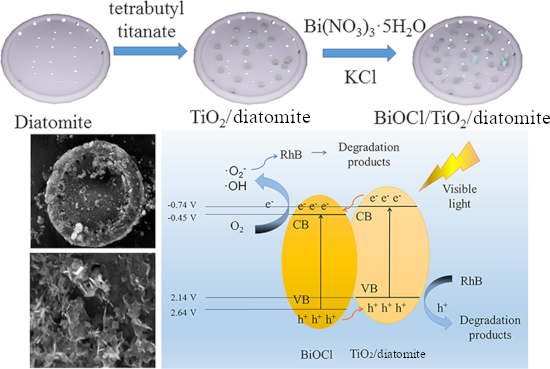
- electron spectrometer was used to observe X-ray photoelectron spectroscopy (XPS) results. A monochromatic Al Kα source (1486.7 eV) and a 300 × 500 μm spot size was used to collect the spectra. In 77 K nitrogen atmosphere, the specific surface area and pore size distribution of the sample were determined by
- indicates that BiOCl and TiO2 are mainly dispersed on the surface of diatomite, but not in the pores. The larger pore volume will be beneficial to the enrichment and degradation of dyes, thus showing a higher catalytic performance [33]. The surface chemical state of BTD was characterized by XPS. The survey
- /2, respectively [36]. In addition, no other chemical contact points have been found for the time being, which is similar to other reports on BiOCl/TiO2 [29][37]. The XPS results of recovered BTD (Figure S1, Supporting Information File 1) show that the signals of Ti, O, Cl, Bi and Si can still be


Gas sensing properties of individual SnO2 nanowires and SnO2 sol–gel nanocomposites
Beilstein J. Nanotechnol. 2019, 10, 1380–1390, doi:10.3762/bjnano.10.136
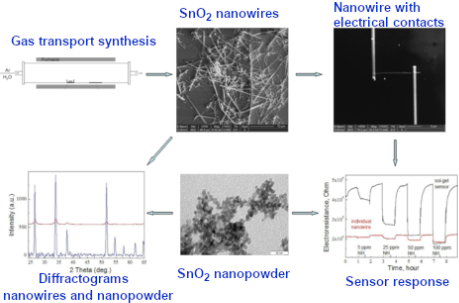
- was used for the fabrication of well-faceted wire-like crystals with diameters ranging between 15–100 nm. The sol–gel method allowed us to obtain fragile gels from powders with grain sizes of about 5 nm. By means of X-ray photoelectron spectroscopy (XPS) it was proven that the nanowires contain
- ; gas transport method; nanowires; quasi-one-dimensional materials; sol–gel synthesis; tin dioxide; X-ray absorption near edge structure (XANES); X-ray photoelectron spectroscopy (XPS); Introduction Semiconductor sensor functionality relies on heterogeneous catalytic chemical processes, which makes the
- calcination as follows: Figure 2 shows a TEM image of the obtained material. The particle diameter derived from this measurement was found to be 4–6 nm. X-ray spectroscopy of the materials In the present study, we used the non-destructive techniques, X-ray photoelectron spectroscopy (XPS) and X-ray absorption




Construction of a 0D/1D composite based on Au nanoparticles/CuBi2O4 microrods for efficient visible-light-driven photocatalytic activity
Beilstein J. Nanotechnol. 2019, 10, 1360–1367, doi:10.3762/bjnano.10.134
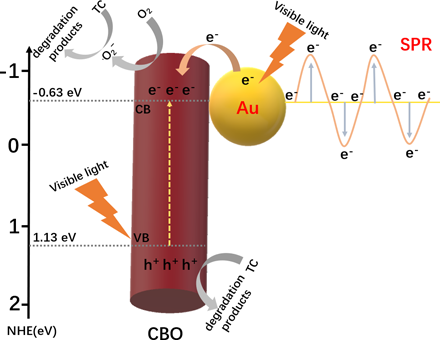
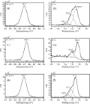
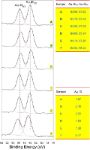
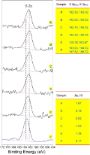
- heterojunction was formed in the composite photocatalyst. The chemical and electronic states of the elements on the Au/CBO surface were characterized by XPS. In the Au 4f XPS spectrum (Figure 5a) peaks at binding energies of 84.1 and 87.7 eV pertaining to Au 4f7/2 and Au 4f5/2, respectively, indicate that the
- region (Figure 5c), two peaks at 158.5 and 164 eV are assigned to the Bi 4f7/2 and Bi 4f5/2, respectively, which affirms Bi3+ in CBO [32]. Figure 5d shows the XPS spectrum of O 1s composed of two main peaks at 529.8 and 531.6 eV [33][34]. The main peak at 529.8 eV be can attributed to lattice oxygen, and
- /CBO composite. (a) TEM and (b) HRTEM images of the 2.5 wt % Au/CBO composite. XPS high-resolution spectra of the 2.5 wt % Au/CBO composite: (a) Au 4f; (b) Cu 2p; (c) Bi 4f and (d) O 1s. (a) TC degradation dynamics under visible-light irradiation. (b) Changes of the characteristic absorption of TC when


A biomimetic nanofluidic diode based on surface-modified polymeric carbon nitride nanotubes
Beilstein J. Nanotechnol. 2019, 10, 1316–1323, doi:10.3762/bjnano.10.130
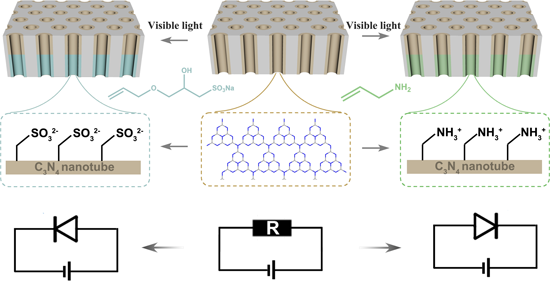
- , high-resolution XPS spectra of C 1s and N 1s were illustrated in Figure 2c and Figure 2d, which further confirm the tri-s-triazine-based carbon nitride structure. The C 1s spectra can be deconvoluted into three peaks centered at 284.8, 286.4, and 287.9 eV, while N 1s spectrum can be deconvoluted into
- purchased from Merck Millipore. Characterizations: The released CNNM was transferred to a quartz glass substrate and analyzed. X-ray photoelectron spectroscopy (XPS) was performed by an ESCALab220i-XL electron spectrometer from VG Scientific using 300W Al Kα radiation, while the base pressure was about 3
- after removing the AAO substrate. (b) FTIR spectra before and after polymerization. (c) High-resolution XPS C 1s spectra of carbon nitride nanotubes, indicating two typical C 1s peaks at 284.8 and 287.9 eV. The former can be assigned to the sp2-hybridized carbon atoms in the N-containing aromatic ring


A silver-nanoparticle/cellulose-nanofiber composite as a highly effective substrate for surface-enhanced Raman spectroscopy
Beilstein J. Nanotechnol. 2019, 10, 1270–1279, doi:10.3762/bjnano.10.126
- particle size [62]. These results are in accordance with the electron microscopy observations discussed above. The X-ray photoelectron spectroscopy (XPS) survey spectrum of sample Ag-NP/cellulose-NF–C is shown in Figure 3c, showing the distinct peaks of carbon, oxygen and silver. Figure 3d shows the
- nanoparticle showing the lattice of metallic silver (b). X-ray diffraction patterns (a) and diffuse reflectance UV–vis spectra (b) of Ag-NP/cellulose-NF–A, B, C, D, and E. X-ray photoelectron spectroscopy (XPS) survey spectrum (c) and high-resolution XPS spectrum of the Ag 3d region (d) of sample Ag-NP


Alloyed Pt3M (M = Co, Ni) nanoparticles supported on S- and N-doped carbon nanotubes for the oxygen reduction reaction
Beilstein J. Nanotechnol. 2019, 10, 1251–1269, doi:10.3762/bjnano.10.125
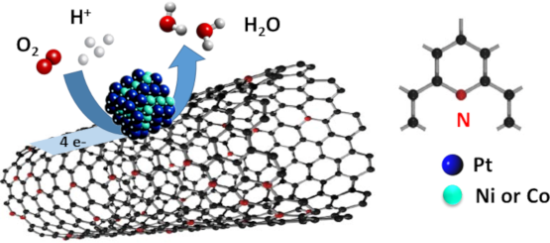
- doping. Elemental and X-ray photoelectron spectroscopy (XPS) analysis results are shown in Table 1. The elemental analysis confirmed the efficiency of the doping, and showed that S-CNT contains a significant amount of residual catalyst (iron, encapsulated in the structure of the tubes). An effect of heat
- treatment on the N-CNTs (besides the reduction of disorder) is to decrease the amount of nitrogen, which decreases from 2.9 to 1.6%. XPS analysis confirmed the bulk analyses and showed that the S-CNT sample also contains a significant amount of surface oxygen groups. The introduction of oxygen may
- deconvolution of the main N 1s peak: pyridinic nitrogen, pyrrolic nitrogen, quaternary nitrogen and nitrogen-oxidized species were identified (Table 2, and Supporting Information File 1, Figure S4). XPS analysis also showed the presence of sulfonic acid groups on the surface of N-doped CNTs (Supporting








Playing with covalent triazine framework tiles for improved CO2 adsorption properties and catalytic performance
Beilstein J. Nanotechnol. 2019, 10, 1217–1227, doi:10.3762/bjnano.10.121

- Information File 1, Figures S2D–E and D′–E′). The N 1s XPS spectra recorded for all new CTF samples are fitted with two main components and a minor shoulder at binding energies (BE) between 398.5 ± 0.2, and 402.5 ± 0.5 eV. (see Supporting Information File 1, Figure S3A–E and Figure S4). While the former
- within the furnace, ampules were charged to a maximum of half of their volume. Elemental analyses were performed using a Thermo FlashEA 1112 Series CHNS-O elemental analyzer and elemental average values for each sample were calculated over three independent runs. X-ray photoelectron spectroscopy (XPS
- the most representative CTF systems from the literature. Supporting Information Complementing material characterization, such as CHN elemental analysis, nitrogen adsorption−desorption isotherms, differential pore volume distributions, survey spectra and N 1s, O 1s core region XPS analyses, low


A highly efficient porous rod-like Ce-doped ZnO photocatalyst for the degradation of dye contaminants in water
Beilstein J. Nanotechnol. 2019, 10, 1157–1165, doi:10.3762/bjnano.10.115
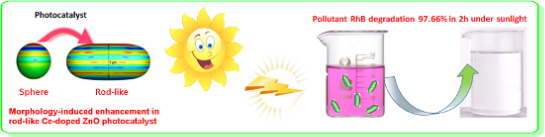
- spectroscopy (XPS), scanning electron microscope (SEM) and inductively coupled plasma emission spectroscopy (ICP), respectively. The newly developed, robust, field-only surface integral method was employed to explore the relationship between the remarkable catalytic effect and the catalyst shape and porous
- lattice and substituted into the Zn ion sites [9][11]. XPS spectra of Ce 3d were collected in order to determine the Ce state in CZO-4. All the elements were corrected with C 1s at 284.8 eV. Due to the low percentage of Ce in this catalyst, its signal to noise was low, too. The results are shown in Figure
- , XPS, SEM and ICP, respectively. Furthermore, to supply a helpful reference for large-scale dye degradation, the optimum photocatalytic conditions of undoped and doped catalysts were also screened. Sample preparation Materials and instruments In this study, zinc acetate dihydrate was purchased from


Porous N- and S-doped carbon–carbon composite electrodes by soft-templating for redox flow batteries
Beilstein J. Nanotechnol. 2019, 10, 1131–1139, doi:10.3762/bjnano.10.113
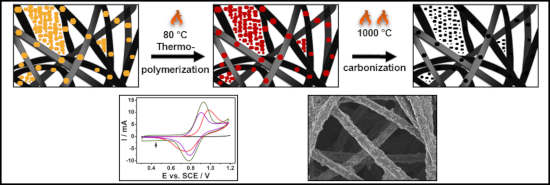
- obtained inside the macroporous carbon felt. For the investigation of electrode structure and porosity X-ray photoelectron spectroscopy (XPS), scanning electron microscopy (SEM), and nitrogen sorption (BET) were used. The electrochemical performance of the carbon felts was evaluated by cyclic voltammetry
- nitrogen content as well as the sulfur content become reduced. The composite electrodes, however, contain more nitrogen than the bulk material. Note that the additional nitrogen originates from the PAN fibers. XPS measurements were carried out to further examine the surface functional groups of the
- hydrogen content. The average of the measured values was determined and listed in Table 2. The elemental composition and the chemical state of the elements in the sample surfaces were determined by X-ray photoelectron spectroscopy (XPS) measurements (CLAM4 electron analyzer from Thermo VG scientific



Glucose-derived carbon materials with tailored properties as electrocatalysts for the oxygen reduction reaction
Beilstein J. Nanotechnol. 2019, 10, 1089–1102, doi:10.3762/bjnano.10.109
- which heteroatoms can be incorporated, and so materials with a lower degree of functionalization are obtained. Further understanding of the functionalities of the carbon materials was achieved by analyzing their surface composition by X-ray photoelectron spectroscopy (XPS). The XPS spectra in the C 1s
- elemental analysis (Table 1) was due to the formation of a large number of carboxylic acids, which further reinforces the possible reaction between the defects generated on the sample during the ball milling process and air moisture. The XPS spectra for the C 1s region of the doped samples exhibit the same
- XPS spectra in the O 1s region are shown in Supporting Information File 1, Figure S4. Three main oxygen peaks were identified, attributed to C=O bonds at 530.7 ± 0.3 eV (peak I), C–O groups at 532.0 ± 0.2 eV (peak II) and carboxylic acids at 533.3 ± 0.2 eV (peak III) [27]. Interesting differences are


Concurrent nanoscale surface etching and SnO2 loading of carbon fibers for vanadium ion redox enhancement
Beilstein J. Nanotechnol. 2019, 10, 985–992, doi:10.3762/bjnano.10.99
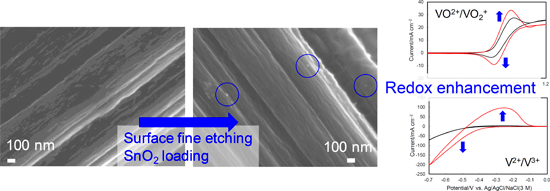
- photoelectron spectroscopy (XPS). The activity for the vanadium ion redox reactions was evaluated by cyclic voltammetry (CV) to demonstrate the enhancement of both the positive and negative electrode reactions. A full cell test of the vanadium redox flow battery (VRFB) showed a significant decrease of the
- TGP-CSnPc-650Air, which is in agreement with the FESEM image. Surface species The presence of tin oxide on the thermally oxidized surface of the CSnPc-coated carbon fibers was confirmed by XPS. It should be noted here that the Sn content was below the detection limit for the elemental mapping by
- energy-dispersive X-ray spectrometry because the SnO2 particles were of the order of nanometers and present only on the surface of the larger-scale carbon-fiber material. The XPS analysis area was 0.3 × 0.7 mm, yielding average values of the sample. Figure 3 shows the Sn 3d and O 1s XPS spectra of TGP



Structural and optical properties of penicillamine-protected gold nanocluster fractions separated by sequential size-selective fractionation
Beilstein J. Nanotechnol. 2019, 10, 955–966, doi:10.3762/bjnano.10.96
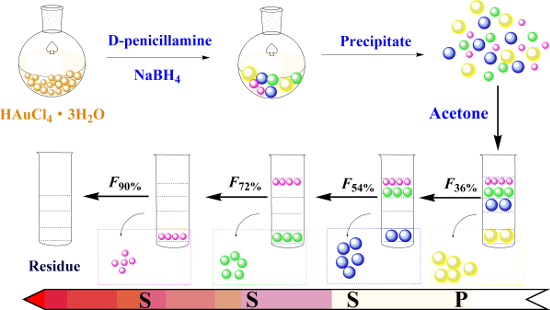
- size and the ratio of Au atoms to ligands of AuNCs. X-ray photoelectron spectroscopy (XPS) has also been applied to observe the molecular dependence on the gold and sulfur chemical state of organosulfur monolayers of the fractions. The photoluminescence spectra of these AuNCs in the range of 900–790 nm
- fractionation, the crude AuNCs and fractions obtained from SSSP have been investigated by transmission electron microscopy (TEM), X-ray photoelectron spectroscopy (XPS), nuclear magnetic resonance (NMR), and UV–vis absorption together with photoluminescence (PL) spectroscopy. Experimental Chemicals and
- -flight mass spectrometer (MALDI-TOF MS) (Autoflex, Bruker, Germany). X-ray photoelectron spectroscopy (XPS) measurements were conducted with a Leybold Heraeus SKL-12 X-ray photoelectron spectrometer (Shenyang, China) modified with a VG CLAM 4 multichannel hemispherical analyzer using a Mg Kα excitation



Synthesis of novel C-doped g-C3N4 nanosheets coupled with CdIn2S4 for enhanced photocatalytic hydrogen evolution
Beilstein J. Nanotechnol. 2019, 10, 912–921, doi:10.3762/bjnano.10.92
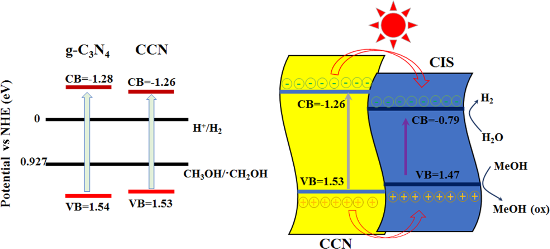
- the CCN surface, resulting in close contact (Figure 4c,d). X-ray photoelectron spectroscopy (XPS) was utilized to study the surface elemental composition of the representative composite photocatalyst CISCCN3. The survey XPS spectrum of Figure 5a shows that the CISCCN3 composite is mostly composed of C
- photoelectron peak for In 3d (Figure 5e) exhibits two peaks, corresponding to In 3d5/2 and In 3d3/2 [40]. Moreover, the S 2p peak splitting of 161.4 eV and 162.6 eV, a split energy with 1.2 eV, represents the S2− in the nanocomposite sample [28]. Consequently, from the XPS results, it can be concluded that the
- CdIn2S4 has been successfully deposited on CCN nanosheets through the heterojunction formation, promoting the transfer of photo-induced charge between these two materials. No other peaks appeared in the XPS spectrum of CISCCN, inferring that impurities have not been introduced during the composite


Fabrication of silver nanoisland films by pulsed laser deposition for surface-enhanced Raman spectroscopy
Beilstein J. Nanotechnol. 2019, 10, 882–893, doi:10.3762/bjnano.10.89
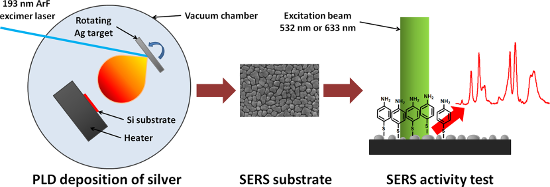
- measurements of the chemical composition of the fabricated SNIFs by using X-ray photoelectron spectroscopy (XPS) and their optical properties by using UV–vis spectroscopy. Finally, we describe the SERS performance of SNIFs in the measurements of para-mercaptoaniline (pMA) molecules. Results and Discussion
- . Chemical composition of the silver nanoisland films The chemical composition of the PLD-deposited silver nanoisland films was investigated by using XPS spectroscopy. The results of XPS measurements are shown in Figure 4. The XPS spectrum registered over a wide range of binding energy indicates that in
- – 368.16 eV, FWHM 0.96 eV. This is also confirmed by the spectra of the Auger band, which is typical for metallic silver [27]. The metallic form of silver has also been confirmed by comparing the recorded spectra of the sample with the spectra recorded for Ag foil with 99.95% purity. XPS studies therefore




Synthesis of MnO2–CuO–Fe2O3/CNTs catalysts: low-temperature SCR activity and formation mechanism
Beilstein J. Nanotechnol. 2019, 10, 848–855, doi:10.3762/bjnano.10.85
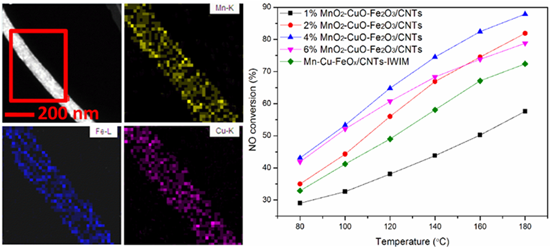
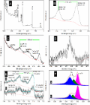
- results of XRD (Figure 2). X-ray photoelectron spectroscopy The XPS spectra of the as-prepared catalysts are given in Figure 4. The elements Mn, Cu, Fe, C, and O were detected in the XPS full-scan spectrum of Figure 4A. For the Mn 2p spectrum of 4% MnO2–CuO–Fe2O3/CNTs (Figure 4B), the binding energies at
- preparation process, which leads to an inactivation of the metal equipment. The generation mechanism for the MnO2–CuO–Fe2O3/CNTs catalyst A reaction mechanism of the synthesis of the MnO2–CuO–Fe2O3/CNTs catalystis proposed. Based on the results of XRD and XPS, active components of MnO2, CuO, and Fe2O3 are
- -programmed reduction by H2 (H2-TPR) was assessed by using a custom-built TCD apparatus. Before the H2-TPR test, 50 mg catalyst was firstly purged in N2 at 200 °C for 1.5 h. The test was carried out in N2 (containing 6% H2) with a heating rate of 10 °C/min. X-ray photoelectron spectroscopy (XPS) was carried




On the transformation of “zincone”-like into porous ZnO thin films from sub-saturated plasma enhanced atomic layer deposition
Beilstein J. Nanotechnol. 2019, 10, 746–759, doi:10.3762/bjnano.10.74
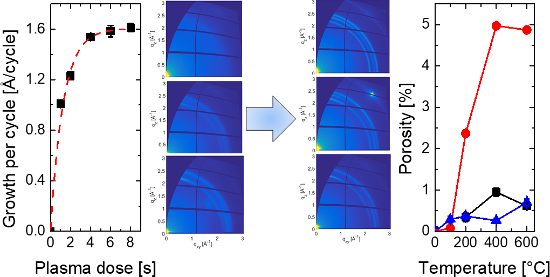
- reported using the same color scales [55]. For chemical analysis of the obtained thin films, Fourier-transform infrared (FTIR) and X-ray photoelectron spectroscopy (XPS) were performed. For the FTIR analysis, a Bruker IFS 66v/S was adopted. For each spectrum, 1000 scans were recorded in transmission mode
- with a resolution of 4 cm−1 between 400 cm−1 and 4000 cm−1. All spectra were baseline corrected and normalized to the film thickness. Surface chemical composition was investigated by X-ray photoelectron spectroscopy (XPS). Analyses were performed with a Scanning XPS Microprobe (PHI 5000 Versa Probe II
- gather information about the chemical composition and bonding of the Zn-alkoxide layers, FTIR and XPS measurements were performed. The oxidative environment of the oxygen plasma during the deposition causes the formation of CO2 and water eventually leading to the removal of all the carbon functionalities


Hydrophilicity and carbon chain length effects on the gas sensing properties of chemoresistive, self-assembled monolayer carbon nanotube sensors
Beilstein J. Nanotechnol. 2019, 10, 565–577, doi:10.3762/bjnano.10.58
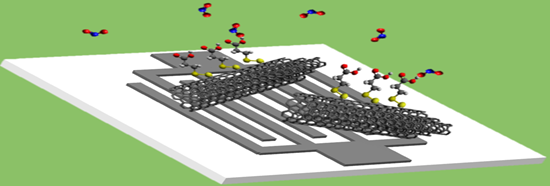
- quantitative XPS results indicating that the Au content was 5.7 wt % in these samples). A monomodal distribution of Au nanoparticles is obtained with average diameter of about 4 nm. The gold nanoparticles appear very close one to another (typically 10 nm apart), which will affect the gas sensing mechanism, as
- nucleation centers for the anchoring the Au NPs) was conducted using XPS. The chemical modification caused by the plasma treatment results in the presence of hydroxy, carbonyl and carboxyl groups [36]. Furthermore, Au nucleation centers occur mainly in the proximity of oxygenated defects created during the
- plasma treatment [37]. These results are summarized in Supporting Information File 1, Figure S4 and Table S1. The presence of thiols attached to Au NPs was further confirmed by XPS analysis. Figure 4a shows the comparison of the XPS survey spectra recorded on the samples and a reference (gold on CNTs


A porous 3D-RGO@MWCNT hybrid material as Li–S battery cathode
Beilstein J. Nanotechnol. 2019, 10, 514–521, doi:10.3762/bjnano.10.52
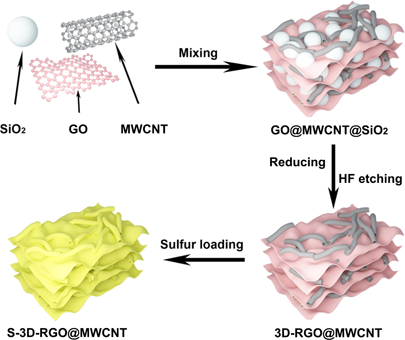
- -RGO@MWCNT to 1.04 in S-3D-RGO@MWCNT (Figure 4b), implying that the defects in 3D-RGO@MWCNT were filled or occupied by sulfur [3]. This is also supported by the C 1s XPS pattern of 3D-RGO@MWCNT, in which a C–S bonding state (285.4 eV) is observed (Figure 4d). The O–C=O (288.8 eV), C=O (287.2 eV) and C
- (SmartLab, Rigaku Corporation) with Cu Ka radiation. X-ray photoelectron spectroscopy (XPS, Shimadzy Axis Ultra) was applied to investigate the chemical valence states and compositions of the sample. Scanning electron microscopy (SEM, Hitachi S4800) and high-resolution transmission electron microscopy
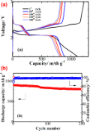
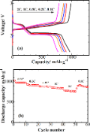
- @MWCNT; (c) TGA of S-3D-RGO@MWCNT; (d) The XPS survey spectrum of S-3D-RGO@MWCNT composite; high-resolution XPS spectra of (e) C 1s, (f) S 2p. CV curves of the S-3D-RGO@MWCNT cathode at 0.1 mV·s−1 in the first four cycles. (a) CV measurement of the S-3D-RGO@MWCNT cathode (1st, 50th, 100th, 150th and



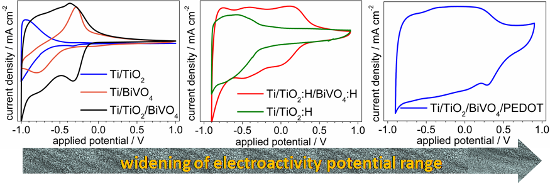
Widening of the electroactivity potential range by composite formation – capacitive properties of TiO2/BiVO4/PEDOT:PSS electrodes in contact with an aqueous electrolyte
Beilstein J. Nanotechnol. 2019, 10, 483–493, doi:10.3762/bjnano.10.49
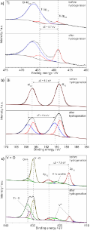
- after the hydrogenation process were performed by using X-ray photoemission spectroscopy (XPS). The XPS measurements were performed using an Argus (Omicron NanoTechnology) X-ray photoelectron spectrometer. The photoelectrons were excited by a Mg Kα X-ray source. The X-ray anode was operated at 15 keV
- and 300 W. XPS measurements were performed at room temperature under ultrahigh-vacuum conditions, with pressures below 1.1 × 10⁻⁸ mbar. Data analysis was performed with the CASA XPS software package using Shirley background subtraction and a least-squares Gaussian–Lorentzian curve fitting algorithm
- is in its highly oxidized form [42]. Bands characteristic for BiVO4 were not detected for the samples covered by the polymer, probably due to the small amount of material and structure distortions. However, the presence of Bi and V was confirmed through XPS. The morphology of the electrodes was




Temperature-dependent Raman spectroscopy and sensor applications of PtSe2 nanosheets synthesized by wet chemistry
Beilstein J. Nanotechnol. 2019, 10, 467–474, doi:10.3762/bjnano.10.46
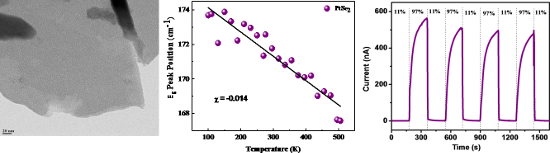
- method used to grow PtSe2 nanosheets followed by thermal annealing. The SEM and TEM analysis confirms the formation of PtSe2 nanosheets. Furthermore, XRD, Raman, XPS and SAED patterns were used to analyze the crystal structure and to confirm the formation of the PtSe2 phase. The temperature-dependent
- -synthesized PtSe2 sample. The X-ray photoelectron spectroscopy (XPS) spectra of the Pt 4f and Se 3d regions acquired on a PtSe2 nanosheet sample were carried out on a film deposited on the Si substrate. The Figure 4a represents the fitted spectrum for Pt 4f7/2 and Pt 4f5/2 with binding energy 72.55 eV and
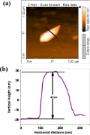
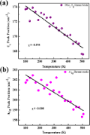
- diffraction (SAED) pattern for the as-synthesized PtSe2 nanosheets. (a) Deconvoluted XPS spectra for Pt and (b) Se elements. (a) AFM image and (b) AFM height profile plot for a PtSe2 nanosheet. Temperature-dependent Raman spectra analysis for PtSe2 nanosheets for the (a) Eg mode and the (b) A1g mode as a



Reduced graphene oxide supported C3N4 nanoflakes and quantum dots as metal-free catalysts for visible light assisted CO2 reduction
Beilstein J. Nanotechnol. 2019, 10, 448–458, doi:10.3762/bjnano.10.44
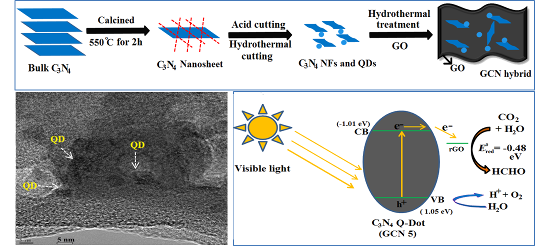
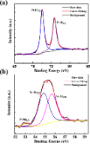
- by X-ray photoelectron spectroscopy (XPS) analysis, which is carried out to study the surface composition and the interactions and valence states of the elements present in the hybrid materials. The full XPS survey spectrum of the GCN-5 hybrid material reveals the presence of C, N and O, while no
- the breaking of most C–N bonds due to formation of NFs and QDs. Figure 3d shows a high-resolution XPS spectrum of O 1s present in the GCN-5 hybrid. The peaks at binding energies of 531.7 and 532.8 eV are attributed to carbonyl and epoxy C–O groups of rGO, respectively, which are still present in the
- rGO [34]. The XPS peaks of g-C3N4 and rGO are shifted slightly to higher and lower binding energies in the GCN-5 hybrid, respectively, indicating possible charge transfer between g-C3N4 and rGO in the heterostructure. Hence, the XPS results confirm the successful preparation of the composite and the





Biocompatible organic–inorganic hybrid materials based on nucleobases and titanium developed by molecular layer deposition
Beilstein J. Nanotechnol. 2019, 10, 399–411, doi:10.3762/bjnano.10.39
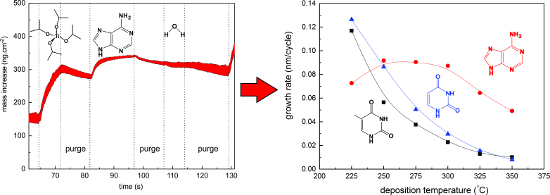
- containing thymine or titanium oxide. Overall, a more in-depth investigation of the structure of the Ti-thymine films should be performed. No sign of crystallinity was observed for Ti-adenine and Ti-uracil by AFM or XRD. We used XPS as a qualitative investigation of the chemical state in the thin films prior
- to and after water exposure. The carbon peak of the as-deposited films was used to confirm that the structure of the bases was maintained during deposition. Carbon peak splitting in all three bases is similar to the previously reported XPS results on pure bases in powder form (Figure 11) [25][26
- energies of O–Ti–N-type bonding [28]. Upon water exposure, titanium in the as-deposited films is observed only as TiO2. This is evident from the 458.5 eV binding energy for the 2p3/2 peak, in addition to the 5.7 eV spin-orbit splitting. Furthermore, the characteristic TiO2 XPS satellite peak is observed at