


Search results
Search for "carbon" in Full Text gives 1261 result(s) in Beilstein Journal of Nanotechnology. Showing first 200.
Electron-induced ligand loss from iron tetracarbonyl methyl acrylate
Beilstein J. Nanotechnol. 2024, 15, 797–807, doi:10.3762/bjnano.15.66
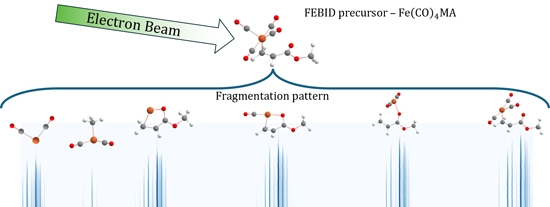
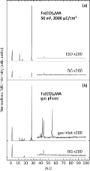
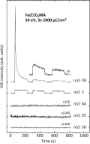
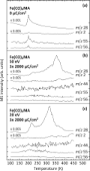
- ultrahigh-vacuum conditions [8]. The deposits had an Fe/C/O composition similar to those obtained from Fe(CO)5, which was surprising since the methyl acrylate ligand has a high carbon content. This opens a fundamental question of how much can a change in one ligand change the outcome of electron-induced



Exploring surface charge dynamics: implications for AFM height measurements in 2D materials
Beilstein J. Nanotechnol. 2024, 15, 767–780, doi:10.3762/bjnano.15.64
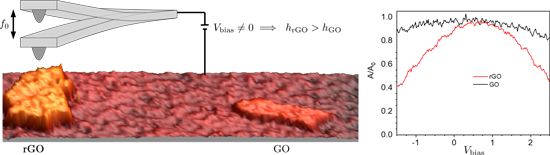
- function of the applied bias voltage (Vbias) for different tip–sample distances (z). This way, interaction images I(Vbias, z) are obtained and later processed to obtain the relevant information from each channel. Results and Discussion GO and rGO belong to the graphene family. In GO, the carbon basal plane


Green synthesis of biomass-derived carbon quantum dots for photocatalytic degradation of methylene blue
Beilstein J. Nanotechnol. 2024, 15, 755–766, doi:10.3762/bjnano.15.63
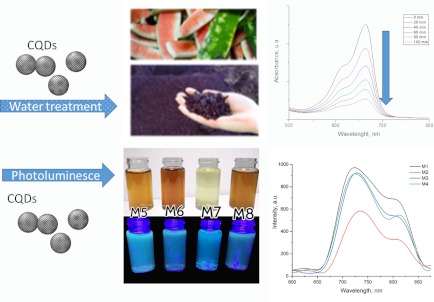
- . This study introduces an innovative approach to mitigate water pollution through the synthesis of nanomaterials using biomass-derived carbon quantum dots (CQDs) from grape pomace and watermelon peel. Utilizing the hydrothermal method at temperatures between 80 and 160 °C over periods ranging from 1 to
- -conversion luminescence. The results revealed effective photocatalytic degradation of methylene blue under sunlight, highlighting the potential for scalable production of these cost-effective catalytic nanomaterials for synthetic dye degradation. Keywords: biomass; carbon dots; catalysis; methylene blue
- ][12][13][14]. Researchers are exploring innovative approaches, such as advanced oxidation processes, nanotechnology-based methods, and biological treatment systems, which show promise in effectively removing pollutants from wastewater [14][15][16]. In this research, we focus on the synthesis of carbon


Effect of repeating hydrothermal growth processes and rapid thermal annealing on CuO thin film properties
Beilstein J. Nanotechnol. 2024, 15, 743–754, doi:10.3762/bjnano.15.62
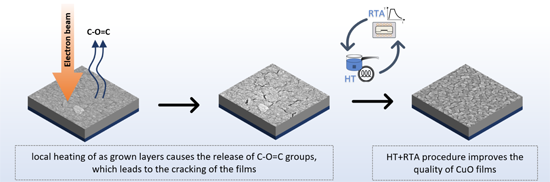
- cracking. This phenomenon was manifested, for example, during SEM measurements, when the sample was locally heated by an electron beam, as shown in Figure 1. Simultaneously, exposing the samples to thermal processing results in a reduction of the content of carbon atoms. On this basis, it is postulated
- that, under the influence of temperature, organic compounds are released from the material, leading to the formation of discontinuities within the layers. Therefore, the HT+RTA sequencing procedure was developed. The modification aimed to obtain continuous layers with minimal carbon compound content
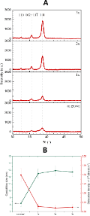
- reduced carbon content, were achieved by annealing samples at 450 °C for 5 min in O2/N2 (1:1) atmosphere. Table 1 provides a summary of the average thicknesses and elemental content of the CuO films. Notably, EDX results demonstrate that the newly developed HT+RTA approach significantly reduces the carbon




Level set simulation of focused ion beam sputtering of a multilayer substrate
Beilstein J. Nanotechnol. 2024, 15, 733–742, doi:10.3762/bjnano.15.61
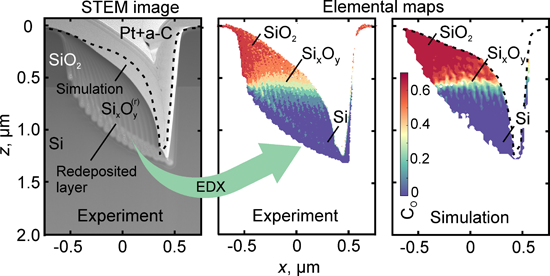
- beam workstation Helios Nanolab 650. Both types of test structures were fabricated using 30 kV accelerating voltage and an ion beam current of I = 900 pA. The chamber pressure was not higher then 10−6 mbar. A layer of platinum and amorphous carbon (Pt + a-C) was deposited onto the manufactured
- krypton–carbon interaction potential [41] and the default surface binding model. For silicon atoms, both in chemically pure silicon and in silicon dioxide, the surface binding energy was set equal to 4.72 eV, while an oxygen surface binding energy of 2.58 eV was chosen according to [40]. The number of

![[Graphic 55]](/bjnano/content/inline/2190-4286-15-61-i68.svg?max-width=637&scale=1.18182)


Simultaneous electrochemical determination of uric acid and hypoxanthine at a TiO2/graphene quantum dot-modified electrode
Beilstein J. Nanotechnol. 2024, 15, 719–732, doi:10.3762/bjnano.15.60
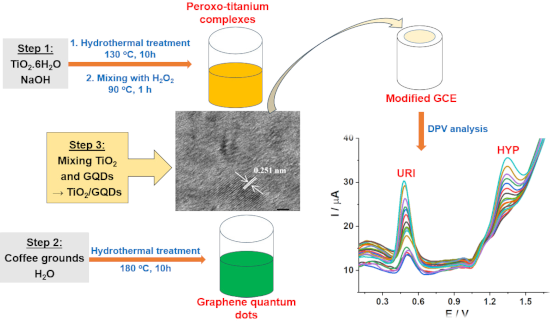
- , cost-effectiveness, and reliability. The use of modified electrodes has shown to improve significantly electrocatalytic activity and electrical conductivity of electrodes. Graphene, with sp2-hybridized carbon atoms in a single layer, has gained much attention because of its unique physicochemical
- and food waste) is a renewable resource for the preparation of high-value carbon materials. Among food wastes, coffee grounds are a promising precursor to prepare GQDs with new functionalities regarding a more sustainable materials industry [16]. Considering the fields of catalysis and
- numbers in parentheses stand for the volume ratio of peroxo titanium complex to GQDs solutions. Electrochemical studies Voltammetric measurements were performed at room temperature using a CPA-HH5 electrochemical workstation, Vietnam. A conventional three-electrode cell with a glassy carbon working


Gold nanomakura: nanoarchitectonics and their photothermal response in association with carrageenan hydrogels
Beilstein J. Nanotechnol. 2024, 15, 678–693, doi:10.3762/bjnano.15.56

- hydrogels is not well reported. In this study, nanomakura-shaped anisotropic gold nanoparticles (AuNMs) were synthesized via a surfactant-assisted seed-mediated protocol. Quaternary cationic surfactants having variable carbon tail length (n = 16, 14, 12) were used as capping for tuning the plasmon peak of
- gold nanomakura within a 600–700 nm wavelength. The aspect ratio as well as anisotropy of synthesized gold nanomakura can influence photothermal response upon near-infrared irradiation. The role of carbon tail length was evident via absorption peaks obtained from longitudinal surface plasmon resonance
- bromide (MTAB, C14) and dodecyltrimethylammonium bromide (DTAB, C12) with carbon tails containing 14 and 12 carbon atoms, respectively, other than hexadecyltrimethylammonium bromide (CTAB, C16), which has 16 carbon atoms in the carbon tail via seed-mediated growth method described elsewhere [24]. We






Functional fibrillar interfaces: Biological hair as inspiration across scales
Beilstein J. Nanotechnol. 2024, 15, 664–677, doi:10.3762/bjnano.15.55
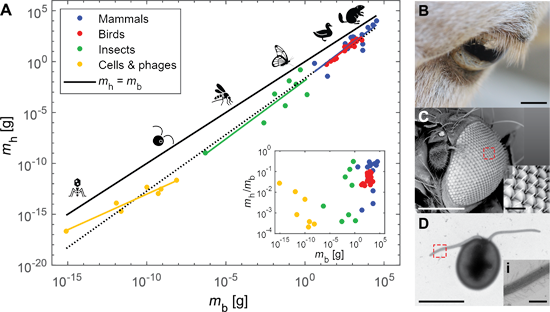
- [148]. Based on this knowledge, bio-inspired, fibrillar chemical sensors have been developed [149][150]. Furthermore, insects can utilize hairs to sense atmospheric carbon dioxide [151][152]. The human scalp follicles also possess an olfactory perception and can even stimulate hair growth upon exposure


Laser synthesis of nanoparticles in organic solvents – products, reactions, and perspectives
Beilstein J. Nanotechnol. 2024, 15, 638–663, doi:10.3762/bjnano.15.54
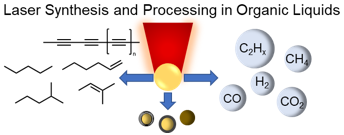
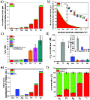
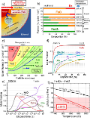
- , the corresponding reactions in organic liquids remain elusive, particularly because of the much greater complexity of carbon chemistry. To this end, this article first reviews the knowledge base of chemical reactions during LSPC and then deduces identifiable reaction pathways and mechanisms. This
- mechanisms of organic liquid decomposition and carbon shell formation are highlighted and discussed regarding current challenges and future perspectives of LSPC using organic liquids instead of water. Keywords: alloy; photochemistry; pyrolysis; radicals; surface chemistry; Introduction Since the first
- accessibility and, thereby, slowing down oxidation, providing conductivity via carbon shells, or providing steric stability against aggregation. Regardless of the liquid medium, the LSPC variants have process-specific characteristics, mainly classified by the product but also by the starting material. LAL, LFL





Exfoliation of titanium nitride using a non-thermal plasma process
Beilstein J. Nanotechnol. 2024, 15, 631–637, doi:10.3762/bjnano.15.53
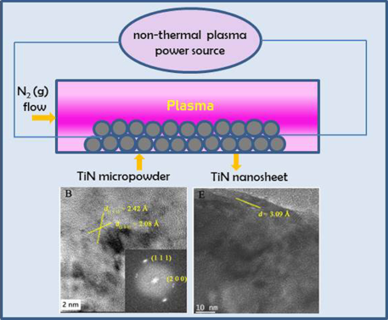
- is an indication of no carbon contamination, which would be observed around 1300–1400 cm−1 and 1550–1600 cm−1 [26]. The relaxation in the vibrational modes, as evidenced by the Raman spectra, serves as a compelling indicator of the successful exfoliation. It is in good agreement with XRD and TEM



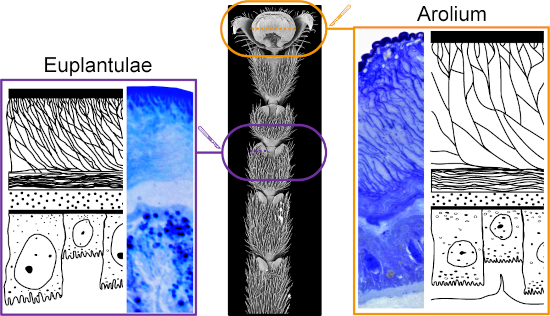
Comparative analysis of the ultrastructure and adhesive secretion pathways of different smooth attachment pads of the stick insect Medauroidea extradentata (Phasmatodea)
Beilstein J. Nanotechnol. 2024, 15, 612–630, doi:10.3762/bjnano.15.52
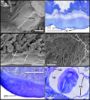
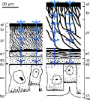
- euplantulae, the attachment pads were cut with a carbon blade and individually transferred onto a glass slide and mounted with a coverslip (specifications as above). For analysis, a confocal laser scanning microscope (Zeiss LSM 700, Carl Zeiss Microscopy GmbH, Jena, Germany) and four stable solid-state lasers




AFM-IR investigation of thin PECVD SiOx films on a polypropylene substrate in the surface-sensitive mode
Beilstein J. Nanotechnol. 2024, 15, 603–611, doi:10.3762/bjnano.15.51
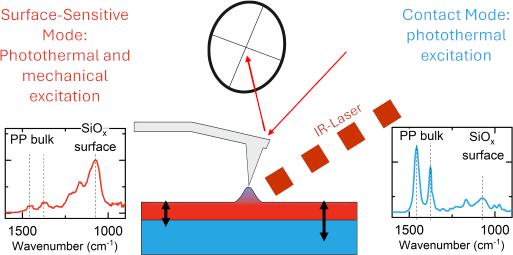
- spectra, the peaks of oxygen, nitrogen, carbon, and silicon are visible. The N 1s peak originates from the nitrogen atmosphere which was used for the environmental charge compensation [18]. The C 1s peak can be assigned to adventitious carbon for the sample with a 50 nm SiOx layer. For the sample with a 5
- nm SiOx layer, the C 1s is a mixture of adventitious carbon and the signal from the underlying polypropylene substrate. The core levels of O 1s, C 1s, and Si 2p are shown in Figure 2 and Figure 3. In the figures, the spectra are arbitrarily charge corrected by fixing the binding energy of the Si 2p
- work of Rosenberger et al. [27], where a polymeric substrate supports the sensitivity of AFM-IR detecting thin carbon nanotubes. Nevertheless, the system shown here is not completely transferable, as samples with a continuous coating were examined in this study. These results highlight the potential of


Directed growth of quinacridone chains on the vicinal Ag(35 1 1) surface
Beilstein J. Nanotechnol. 2024, 15, 556–568, doi:10.3762/bjnano.15.48
- , one-dimensional aggregates are also used for gas sensing and carbon-capturing materials [8][9]. A group of surfaces that is very appealing for the growth of 1D structures are vicinal surfaces [10] because the step edges break the rotational symmetry of the surface further and add a periodic 1D grating
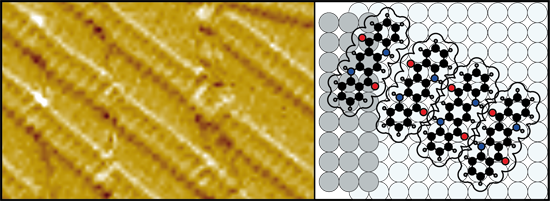
- cannot bend in the plane of the π systems because of the annulated carbon rings. In contrast, H-bonds are mainly of electrostatic nature and, thus, have a pronounced flexibility in bond lengths and angles, which supports intermolecular bonds across step edges. Similar molecular chains that are connected
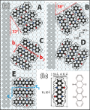
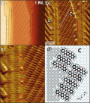
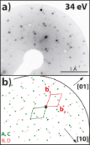
- ). For the chain orientation E there exists the energetically equivalent chain with molecules of the opposite chirality. The color code of the atoms is: black = carbon, gray = hydrogen, blue = nitrogen, and red = oxygen. (b) Structural formula and hard-sphere model with dimensions of QA. The nominal van


Electron-induced deposition using Fe(CO)4MA and Fe(CO)5 – effect of MA ligand and process conditions
Beilstein J. Nanotechnol. 2024, 15, 500–516, doi:10.3762/bjnano.15.45
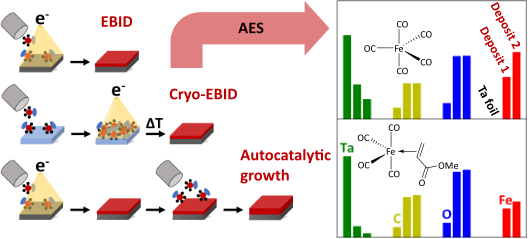
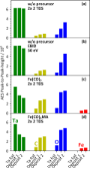
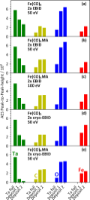
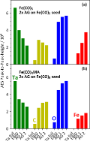
- deposits obtained from Fe(CO)4MA and Fe(CO)5 were surprisingly similar, and the relative amount of carbon in deposits prepared from Fe(CO)4MA was considerably less than the amount of carbon in the MA ligand. This demonstrates that electron irradiation efficiently cleaves the neutral MA ligand from the
- irradiation removes on average 2.5 CO ligands from Fe(CO)5. This is followed by a second phase during which continued irradiation produces graphitic carbon and oxide material corresponding to about 20% of the initial CO ligands. However, these latter reactions do not further reduce the carbon and oxygen
- such larger species can still lead to the release of H2 and possibly also of CO [53]. However, such polymerization reactions would be expected to lead to retention of a considerable amount of carbon in a deposit produced by electron irradiation of Fe(CO)4MA, which is not supported by the AES results



Aero-ZnS prepared by physical vapor transport on three-dimensional networks of sacrificial ZnO microtetrapods
Beilstein J. Nanotechnol. 2024, 15, 490–499, doi:10.3762/bjnano.15.44
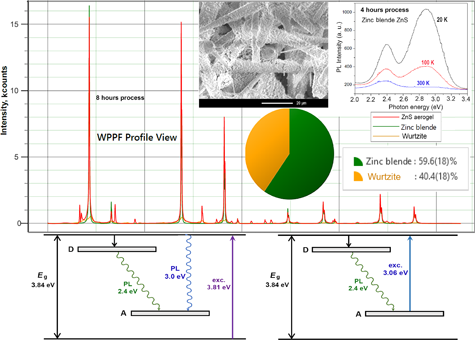
- micrometer-thick ZnO rods with the shape of tetrapods [28]. This aerographite material is a tubular graphitic carbon mimicry of a sacrificial ZnO template architecture in which ZnO has been replaced by carbon from the toluene precursor. Sacrificial porous ZnO networks of microtetrapods have also been used



Photocatalytic degradation of methylene blue under visible light by cobalt ferrite nanoparticles/graphene quantum dots
Beilstein J. Nanotechnol. 2024, 15, 475–489, doi:10.3762/bjnano.15.43
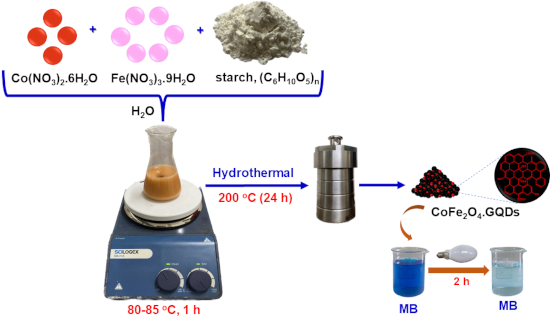
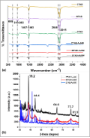
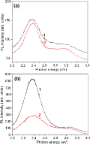
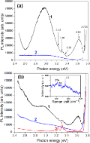
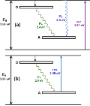
- vibrations at 1200–2000 cm−1 with two characteristic peaks of graphitic carbon (G band) and disordered carbon (D band), appearing at 1590 and 1298 cm−1, respectively. The ID/IG ratio is 1.03, which is higher than that of graphene oxide (GO), which is 0.93. The strong band in the Raman spectra at 690 cm−1 is
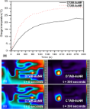
- curves of CF/GQDs-200. SEM images of (a) CF/GQD-140, (b) CF/GQD-180, and (c) CF/GQD-200; TEM observations and corresponding particle size distribution of (d) CF and (e) CF/GQDs-200. EDX-mapping of CF/GQDs-200. (a) Electron microscopy image, (b) EDX spectrum, (c) carbon mapping, (d) oxygen mapping, (e




Fabrication of nanocrystal forms of ᴅ-cycloserine and their application for transdermal and enteric drug delivery systems
Beilstein J. Nanotechnol. 2024, 15, 465–474, doi:10.3762/bjnano.15.42
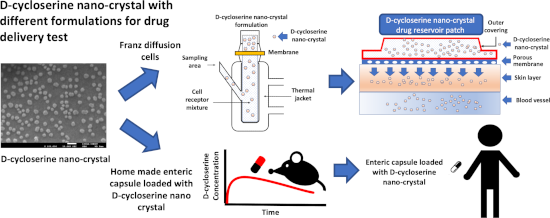
- double-coated carbon conductive tape and DCS nanocrystals were suspended in ethanol (Merck KGaA) at 10 mg/mL, put on the double-coated carbon conductive tape, and coated with platinum using an auto-fine coater for better electrical conduction. For the XRPD analysis, commercial DCS powder and DCS


Sidewall angle tuning in focused electron beam-induced processing
Beilstein J. Nanotechnol. 2024, 15, 447–456, doi:10.3762/bjnano.15.40
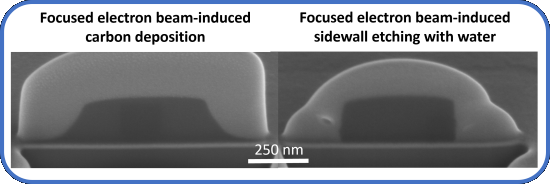
- applications this is highly undesirable, especially when neighboring structures are interconnected. A new technique combining FEBID and focused electron beam-induced etching (FEBIE) has been developed to fabricate structures with vertical sidewalls. The sidewalls of carbon FEBID structures have been modified
- ) and from the BSE (SE2) [6][7][8]. An example of a line deposited from a carbon precursor on a silicon substrate, coated with a 20 nm Au–Pd layer and a 5 nm Ti adhesion layer, is shown in Figure 1a, clearly showing the broad (black) tails on both sides of the line. The cross section of the line, made
- qualitative agreement with the experimental observations. As a demonstration, the proposed method is applied to a carbon FEBID structure whose sidewall is etched using FEBIE with water in an SEM, using SE signal monitoring to determine when a vertical sidewall has been achieved. Results Sidewall slope




Heat-induced morphological changes in silver nanowires deposited on a patterned silicon substrate
Beilstein J. Nanotechnol. 2024, 15, 435–446, doi:10.3762/bjnano.15.39
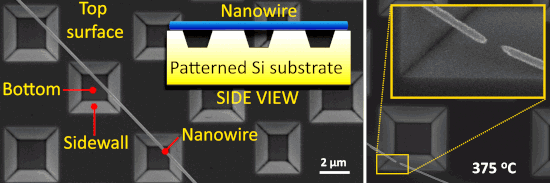
- pentagonal structure is preserved even for small fragments of NWs that were split as a result of heat treatment as shown in Figure 7 (note that the fragments are kept in place due to contact with the thin carbon membrane of the TEM grid). These findings suggests that heat-induced morphological changes in Ag


Unveiling the nature of atomic defects in graphene on a metal surface
Beilstein J. Nanotechnol. 2024, 15, 416–425, doi:10.3762/bjnano.15.37
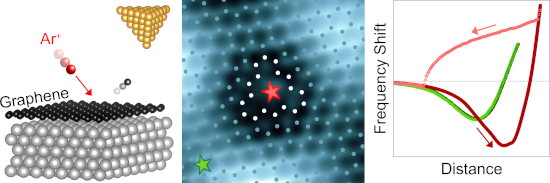
- smallest defects appear as a depression without discernible interior structure suggesting the presence of vacancy sites in the graphene lattice. With an atomic force microscope, however, only one kind can be identified as a vacancy defect with four missing carbon atoms, while the other kind reveals an


Classification and application of metal-based nanoantioxidants in medicine and healthcare
Beilstein J. Nanotechnol. 2024, 15, 396–415, doi:10.3762/bjnano.15.36
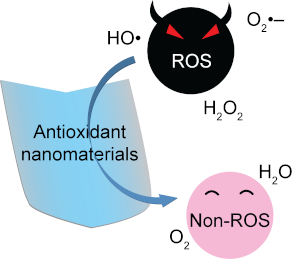
- ]. Antioxidant nanomaterials can be synthesized from carbon-based compounds, polymeric compounds, and metal-based compounds. Metal-based nanoantioxidants exhibit strong reactivity because there are atoms with unpaired electrons on the surface. Therefore, metal-based nanoantioxidants have a significant advantage
- Gao’s group [37]. The Michaelis–Menten constant (Km) and maximum initial velocity (Vmax) values showed that copper-doped hollow carbon spheres had an eightfold higher CAT-like activity than pure carbon nanozymes. The oxidation state of copper may play a more important role regarding CAT-like activity
- et al. constructed carbon dot-SOD nanozymes and CD98 CRISPR/Cas9 plasmids encapsulated in a metal-organic framework (MOF), and then camouflaged it with macrophage membrane [102]. In this system, the macrophage membrane guided the encapsulated nanozymes and CD98 CRISPR/Cas9 plasmids to accumulate at


On the mechanism of piezoresistance in nanocrystalline graphite
Beilstein J. Nanotechnol. 2024, 15, 376–384, doi:10.3762/bjnano.15.34
- strain or piezoresistivity in graphene is expected to be small because the displacement of the Dirac point occurs in continuous k space, and strain-induced lattice distortions do not change the local band structure up to 20% strain [4]. In contrast, because of the quantized k space in carbon nanotubes
- observed the plateau-like region as reported here, where the gauge factor is similar to the gauge factor at very low strain [24][33]. A plateau-like region has neither been observed in nanocrystalline graphite [33], amorphous carbon films [34], nor in metallic films [35]. The mechanism that leads to an
- increase of resistance in amorphous carbon and gold films at large strain is crack formation. Also, in NCG, which is full of GBs and defects, crack formation and propagation have to be considered [36]. Assuming nanocrack formation at the GBs, we could understand the entire piezoresistance curve in the


Comparative electron microscopy particle sizing of TiO2 pigments: sample preparation and measurement
Beilstein J. Nanotechnol. 2024, 15, 317–332, doi:10.3762/bjnano.15.29
- and carbon black pigment in an oily matrix [22]. (This procedure is very close to ISO 787-24). The L* value represents the ability of a titanium dioxide pigment to efficiently scatter light, whereas the b* value indicates whether the scattered light has longer or shorter wavelength, that is, whether
- the scattered light is more yellow or more blue tinted. While the titanium dioxide particles scatter the light out of the mixture, the carbon black absorbs the light. The better the light scattering ability of the white pigment, the shorter the path length of the light in the paste. Thus, fewer
- photons are absorbed by the carbon black pigment resulting in greater brightness. The TiO2 sample was mixed with carbon black, linseed oil, and filler (BaSO4) in defined proportions using a spatula, transferred to an automatic muller and mulled (2 × 50 revolutions). A drawdown (240 μm) of the mixture was


Determining by Raman spectroscopy the average thickness and N-layer-specific surface coverages of MoS2 thin films with domains much smaller than the laser spot size
Beilstein J. Nanotechnol. 2024, 15, 279–296, doi:10.3762/bjnano.15.26
- generally, this point is critical for the characterization of samples synthesized using new methods or new precursors that can lead to the co-deposition of several by-products (such as carbon, oxides, and metals), which can significantly change the measured Raman intensities. Based on the results presented


Ultrasensitive and ultrastretchable metal crack strain sensor based on helical polydimethylsiloxane
Beilstein J. Nanotechnol. 2024, 15, 270–278, doi:10.3762/bjnano.15.25
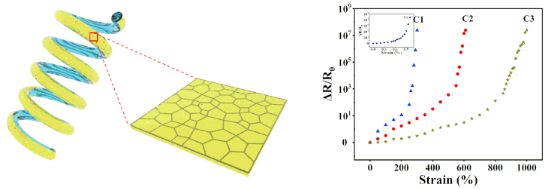
- -dimensional Ti3C2Tx MXene nanostacks [23]. The sensor exhibited a high GF of 772.6 when subjected to a strain range of 40–70%, owing to the presence of cracks induced in the MXene layer and carbon nanotubes (CNTs) acting as bridges. In a separate study, Xin et al. reported the fabrication of highly sensitive
- %. Similarly, Kim et al. propose an approach incorporating a superaligned carbon nanotube sheet between a sensory metal film and an elastomer substrate, resulting in excellent and well-balanced strain sensing performance [26]. This characteristic imparts significant stretchability (ε = 100%) to the Pt crack





