Search results
Search for "catalyst" in Full Text gives 384 result(s) in Beilstein Journal of Nanotechnology. Showing first 200.
Glucose-derived carbon materials with tailored properties as electrocatalysts for the oxygen reduction reaction
Beilstein J. Nanotechnol. 2019, 10, 1089–1102, doi:10.3762/bjnano.10.109
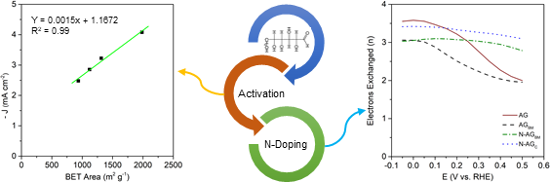
- beneficial for the electrochemical activity of the prepared electrocatalysts [12]. This is not observed for carbonized samples as they do not present superior textural properties, compromising some of the effects that nitrogen could have on the carbon as a catalyst. Information about the limiting current


Concurrent nanoscale surface etching and SnO2 loading of carbon fibers for vanadium ion redox enhancement
Beilstein J. Nanotechnol. 2019, 10, 985–992, doi:10.3762/bjnano.10.99
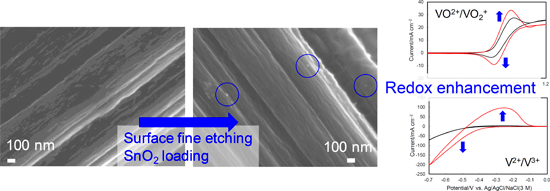
- -oxide nanoparticles to further enhance the activity and found that through the thermal oxidation of the carbonaceous thin film derived from SnPc both types of enhancement can be concurrently achieved. The formed metal oxide, SnO2, is one of the candidates for a durable catalyst support used in an acidic



Direct growth of few-layer graphene on AlN-based resonators for high-sensitivity gravimetric biosensors
Beilstein J. Nanotechnol. 2019, 10, 975–984, doi:10.3762/bjnano.10.98
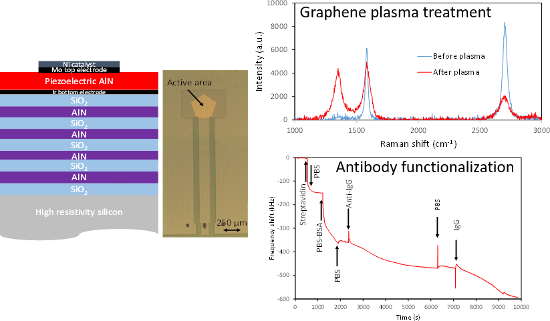
- nickel catalyst layers The thickness of the catalyst Ni layers was reduced to 100 nm, which was thin enough as not to compromise the resonator performance but sufficient to avoid the formation of Ni droplets on the surface of the SMRs during the heating processes due to dewetting [17]. However, the
- ) and low (SiO2) acoustic impedance of the fully insulating reflector, the Ir/AlN/Mo piezoelectric stack and the Ni catalyst that covers the active area of the device (Figure 8a). All these layers were adjusted to set the resonant frequency to the desired value and to achieve the best performance of the
- the films involved in the SMR structure were deposited by sputtering, except the Ir bottom electrode and the Ni catalyst that were e-beam evaporated. The deposition conditions of the AlN and SiO2 layers in the reflector were carefully adjusted to minimize residual stresses in each film. The final


Synthesis of novel C-doped g-C3N4 nanosheets coupled with CdIn2S4 for enhanced photocatalytic hydrogen evolution
Beilstein J. Nanotechnol. 2019, 10, 912–921, doi:10.3762/bjnano.10.92
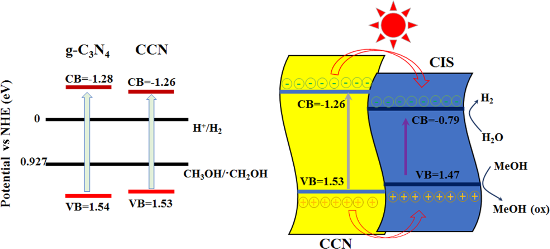
- transfer nanochannels [5]. The as-prepared g-C3N4 nanosheet@ZnIn2S4 nanoleaf structure displays an enhanced photocatalytic activity for H2 production without the addition of a Pt co-catalyst. As visible-light-active photocatalysts, ternary metal sulfide (e.g., ZnIn2S4 and CdIn2S4) have attracted great
- enhance photocatalytic activity. Accordingly, the two-step fabrication of CdIn2S4/CCN photocatalysts with different CdIn2S4 content is the target of this study. It is demonstrated that the CdIn2S4/CCN hybrid shows a superior H2 production activity without the addition of a Pt co-catalyst under visible
- use of the additive Pt co-catalyst. As shown in Figure 8, the pristine g-C3N4 presents a negligible H2 generation rate, but after introduction of the self-doped C by a simple supramolecular self-assembly method, the CCN nanosheets display a higher H2 generation rate due to the presence of the large


Synthesis of MnO2–CuO–Fe2O3/CNTs catalysts: low-temperature SCR activity and formation mechanism
Beilstein J. Nanotechnol. 2019, 10, 848–855, doi:10.3762/bjnano.10.85
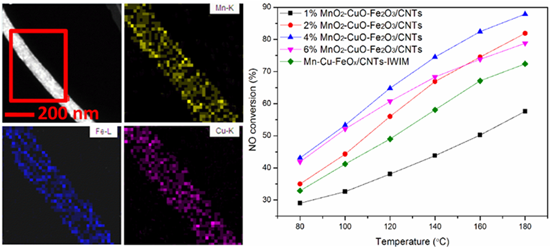
- conversions of 4% MnO2–CuO–Fe2O3/CNTs catalyst of 43.1–87.9% at 80–180 °C were achieved, which was ascribed to the generation of amorphous MnO2, CuO and Fe2O3, and a high surface-oxygen (Os) content. Keywords: amorphous materials; carbon nanotubes; low-dimensional materials; low-temperature catalysis; SCR
- , the catalyst of the SCR reaction, V2O5+WO3(MoO3)/TiO2, has some drawbacks, such as the toxic V-based material and the high operating temperature window (300–400 °C) [6][7][8]. Additionally, this kind of catalyst is easily influenced by ash and SO2, which makes it necessary to be installed downstream
- of electrostatic precipitator and desulfurizer, where the flue gas temperature is normally below 200 °C [9]. Therefore, it is of importance to develop a SCR catalyst with high catalytic activity below 200 °C. Carbon nanotubes (CNTs), a low-dimensional material, exhibit a one-dimensional tubular




Deposition of metal particles onto semiconductor nanorods using an ionic liquid
Beilstein J. Nanotechnol. 2019, 10, 718–724, doi:10.3762/bjnano.10.71
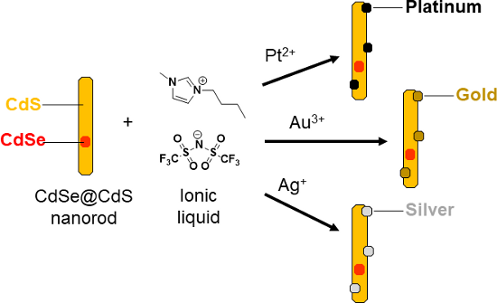
- using the methods reported here. Keywords: catalyst; ionic liquid; methylene blue; platinum; semiconductor nanorod; Introduction Core@shell semiconductor nanorods with attached noble metal particles have been widely studied as photocatalysts, and any improvement on the synthesis of these materials has
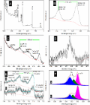
- heterostructured nanoparticles. With two nearly identical samples in hand, we were able to compare the performance of two catalysts where the only notable difference was the synthetic history of the sample (Figure 2). We used photocatalytic degradation of methylene blue to compare catalyst performance since this
- toluene/triethylamine. A known amount of the nanoparticle catalyst was combined with methylene blue and chloroform for photocatalytic dye degradation experiments (Figure 2a), based on the concentration of cadmium and platinum in the toluene dispersions obtained from ICP-AES. Control experiments were also


Mo-doped boron nitride monolayer as a promising single-atom electrocatalyst for CO2 conversion
Beilstein J. Nanotechnol. 2019, 10, 540–548, doi:10.3762/bjnano.10.55
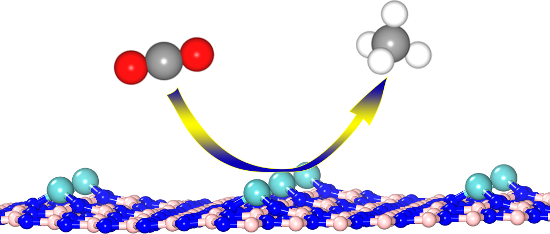
- CRR. This work not only provides insight into the mechanism of CRR on the single-atom catalyst (Mo-doped BN monolayer) at the atomic level, but also offers guidance in the search for appropriate earth-abundant TMs as electrochemical catalysts for the efficient conversion of CO2 to useful fuels under
- catalyst for further investigation of CO2 conversion due to its high selectivity and activation for CO2. The study shows that Mo-doped BN monolayers can be used as a promising catalyst for CO2 reduction to CH4 with a low limiting potential of −0.45 V. More importantly, Mo is an abundant element in the
- efficiency SACs for converting CO2 to useful hydrocarbon fuels. Results and Discussion Transition metal selection for CO2 reduction reaction For efficient CO2 reduction, the most critical requirement is that the CO2 molecule can selectively adsorb onto the catalyst and guarantee sufficient activation for CRR


Temperature-dependent Raman spectroscopy and sensor applications of PtSe2 nanosheets synthesized by wet chemistry
Beilstein J. Nanotechnol. 2019, 10, 467–474, doi:10.3762/bjnano.10.46
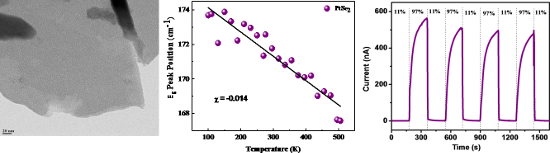
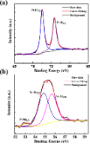
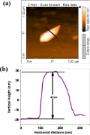
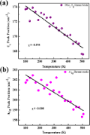
- , field emitters, battery materials, light harvesting and energy storage devices, catalyst for H2 generation, and drug delivery applications [7][8][9][10][11][12]. Most of the transition metal dichalcogenides (TMDCs) are semiconducting in nature with MX2 type – where M is a metal, M = W, Mo, Sn, Nb, V



Reduced graphene oxide supported C3N4 nanoflakes and quantum dots as metal-free catalysts for visible light assisted CO2 reduction
Beilstein J. Nanotechnol. 2019, 10, 448–458, doi:10.3762/bjnano.10.44
- of photo-induced electron–hole pairs and insufficient adsorption of CO2 at the catalyst surface are crucial problems preventing effective catalyst performance and CO2 reduction [11]. An ideal photocatalyst for CO2 conversion should possess a narrow bandgap and good light-harvesting properties, proper
- ). The stability of a catalyst is of paramount importance for practical applications. Hence, the prepared GCN-5 sample was recycled several times to check its reduction performance. It is observed that no significant loss in activity is observed even after the fourth cycle (Figure 12). Hence, the
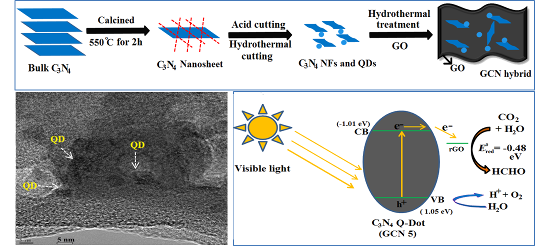
- 13CH3OH, respectively. The photoreduction mechanism of CO2 to HCHO in the presence of the GCN-5 catalyst under visible light illumination is shown in Figure 13. The CN QDs absorb visible wavelengths of sunlight due to their appropriate band edge potential value, thus exciting the electrons. These excited





Improving control of carbide-derived carbon microstructure by immobilization of a transition-metal catalyst within the shell of carbide/carbon core–shell structures
Beilstein J. Nanotechnol. 2019, 10, 419–427, doi:10.3762/bjnano.10.41
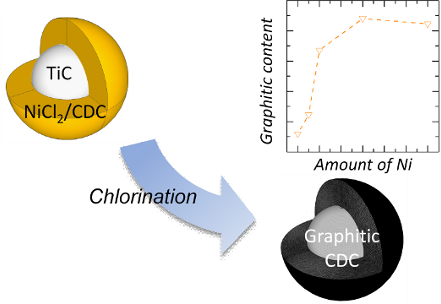
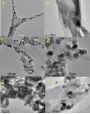
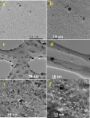
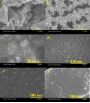
- synthesis remains a challenge. In this work, the controllability of the synthesis route is enhanced by immobilizing the transition-metal graphitization catalyst on a porous carbon shell covering the carbide precursor prior to conversion of the carbide core to carbon. The catalyst loading was varied and the
- graphitization; graphitic carbon; pore structure; transition metal; Introduction Carbon is a versatile material that has been widely utilized in many applications such as adsorption [1][2][3], catalysis [4][5], catalyst support [6][7][8], molecular sieves [9][10] and energy storage [11][12][13], owing to its
- types of carbides [19]). Commonly used graphitization catalysts are transitions metals such as Fe, Ni, and Co [18][21][22]. The conventional method for catalytic graphitization is to mix the non-porous carbide and metal catalyst precursor prior to the selective etching at high temperature. Indeed, the


Sub-wavelength waveguide properties of 1D and surface-functionalized SnO2 nanostructures of various morphologies
Beilstein J. Nanotechnol. 2019, 10, 379–388, doi:10.3762/bjnano.10.37
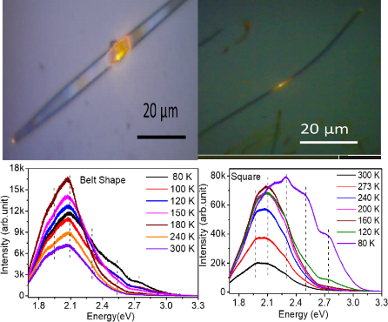
- commercial application as a gas sensor, transparent conducting electrodes, and catalyst [13][14][15]. SnO2 NSs have been used in several other areas such as sub-wavelength waveguide sensors [4], microelectronics [6], Li-ion batteries [16], and lubricants [17]. Oxygen vacancy related defects in SnO2
- thickness was coated on the Si (100) substrate by using the thermal evaporation (Hind Vacuum, India) technique under a base pressure of 5.0 × 10⁻⁶ mbar. The Si substrate coated with the Au film, used as a catalyst in the growth of SnO2 NWs, was placed 10 mm away from the precursor material in the Al2O3 boat
- crucible without any metal catalyst under atmospheric pressure at a temperature of 1000 °C in continuous Ar flow. The temperature profile is shown in Supporting Information File 1, Figure S1b. The growth time was kept for 2 h for all the NWs. Morphological studies of the NWs were revealed by field emission


Thermal control of the defunctionalization of supported Au25(glutathione)18 catalysts for benzyl alcohol oxidation
Beilstein J. Nanotechnol. 2019, 10, 228–237, doi:10.3762/bjnano.10.21
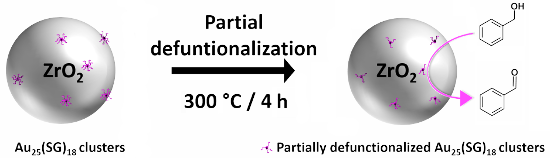
- des Multimatériaux et Interfaces (LMI), Villeurbanne, France 10.3762/bjnano.10.21 Abstract Au25(SG)18 (SG – glutathione) clusters deposited on ZrO2 nanoparticles have been used as a catalyst for benzyl alcohol oxidation. Calcination was performed at different temperatures to study the ligand and
- particle size effect on the catalytic activity. In contrast to most gold nanoclusters which have to be completely defunctionalized for maximum catalytic activity, the partially defunctionalized Au25(SG)18@ZrO2 catalyst, thermally treated at 300 °C, exhibits full conversion of benzyl alcohol within 15 h
- under atmospheric pressure with 94% selectivity towards benzaldehyde. Keywords: benzyl alcohol oxidation; glutathione; gold nanoclusters; partial defunctionalization; supported catalyst; zirconium oxide nanoparticles; Introduction Since Haruta’s discovery of the catalytic activity of gold




Nanoporous water oxidation electrodes with a low loading of laser-deposited Ru/C exhibit enhanced corrosion stability
Beilstein J. Nanotechnol. 2019, 10, 157–167, doi:10.3762/bjnano.10.15
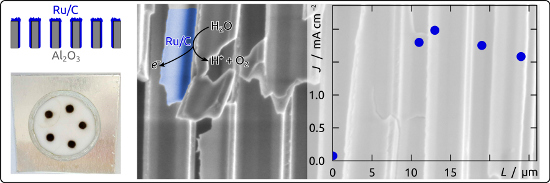
- , Institute of Chemistry, Universitetskii pr. 26, 198504 St. Petersburg, Russia 10.3762/bjnano.10.15 Abstract For the oxidation of water to dioxygen, oxide-covered ruthenium metal is known as the most efficient catalyst, however, with limited stability. Herein, we present a strategy for incorporating a Ru/C
- to planar samples at pH 4. Finally, their electrocatalytic performance depends on the geometric parameters and is optimized with 13 μm pore length, which yields 2.6 mA cm−2, or 49 A g−1, at η = 0.20 V. Keywords: electrochemistry; nanostructures; noble metals; ruthenium catalyst; water splitting
- artificial water splitting, catalysts are required for the rate-limiting half reaction, the dioxygen evolution, which must be driven at low overpotential (for maximizing conversion efficiency) [2]. The most active catalyst materials for this transformation are metallic iridium and ruthenium particles, the




Wet chemistry route for the decoration of carbon nanotubes with iron oxide nanoparticles for gas sensing
Beilstein J. Nanotechnol. 2019, 10, 105–118, doi:10.3762/bjnano.10.10
- (NO3)3·9H2O 99.95% trace metal basic) Acetic acid, Fluka Analytical (CH3COOH 99.8%) Decoration and characterization of carbon nanotubes Commercial CNTs from Nanocyl functionalized with (COOH) groups were further chemically purified by an acidic treatment to remove any traces of catalyst or amorphous




Amorphous NixCoyP-supported TiO2 nanotube arrays as an efficient hydrogen evolution reaction electrocatalyst in acidic solution
Beilstein J. Nanotechnol. 2019, 10, 62–70, doi:10.3762/bjnano.10.6
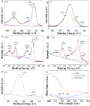
- active site density, and thus the electrocatalytic activity. The Nyquist and Bode plots are displayed in Figure 8. In the Nyquist plot, the arc radius of the high-frequency section corresponds to the impedance of charge transfer between electrolyte and the catalyst surface, and the ones of the low
- the high and low frequency sections of sample NixCoyP/TNAs are smaller than that of Ni–P/TNAs, suggesting that the NiCoP hybrid enhanced the charge transfer inside the electrode and between the electrolyte and catalyst surface. The Bode plots (Figure 8b) show that for the two samples, the total
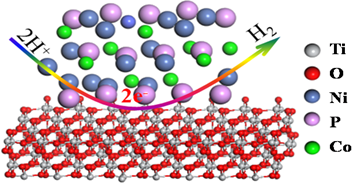
- NiCoP HER electrocatalyst. The catalyst showed a high electrochemically active center density that benefited the electron transfer within the electrode and between electrolyte and electrode surface. The electrocatalytic activity of the HER was thus improved. In the two-electrode system using NixCoyP




Characterization and influence of hydroxyapatite nanopowders on living cells
Beilstein J. Nanotechnol. 2018, 9, 3079–3094, doi:10.3762/bjnano.9.286
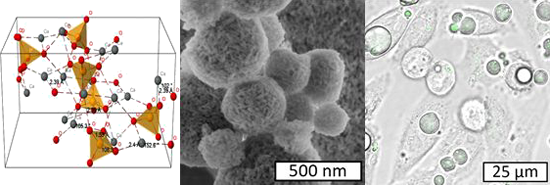
- chromatography, protein purification, cell-culture substrates, catalyst production and waste management. Lower crystallinity, high purity and high zeta potential of hydroxyapatite nanoparticles are desired in a material intended for long-term medical use in the body. Since calcium deficiency is a feature of

![[Graphic 1]](/bjnano/content/inline/2190-4286-9-286-i2.svg?max-width=637&scale=1.18182) .
.



Accurate control of the covalent functionalization of single-walled carbon nanotubes for the electro-enzymatically controlled oxidation of biomolecules
Beilstein J. Nanotechnol. 2018, 9, 2750–2762, doi:10.3762/bjnano.9.257
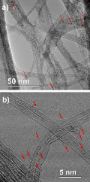
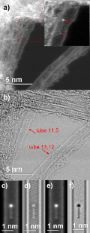
- /en/hipco, accessed August 2016). Figure 2a gives an example of the HRTEM image of this starting material. A small amount of residual iron catalyst is visible (dark particles pointed out by red arrows). Carbonaceous impurities are mainly present in the form of carbon remains of nanometric size
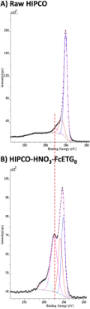
- fact that no iron or other metals are visible by XPS spectroscopy, while TEM micrographs have shown some residual catalyst particles embedded in carbonaceous remains or inside CNT bundles, as shown in Figure 2a. These carbon shells certainly hide the metallic species from the XPS analysis, which is
- , the zones that contain atoms heavier than carbon appear as white areas and the thickest area also appears brighter. One residual catalyst particle can be easily identified in Figure 9 as a bright spot with a diameter close to 2.5–3.0 nm. On the bundle some small white dots can also be seen. EELS






Improved catalytic combustion of methane using CuO nanobelts with predominantly (001) surfaces
Beilstein J. Nanotechnol. 2018, 9, 2526–2532, doi:10.3762/bjnano.9.235
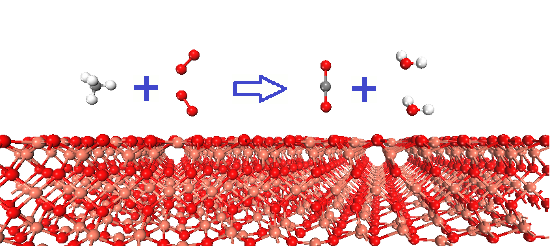
- , such as transition metal (TM) oxides and various complex structures (e.g., perovskite, spinel and hexaaluminate) have been tested as catalysts for CH4 oxidation. But so far their performance is still much lower than noble metals. An ideal catalyst for CH4 oxidation should have a high capacity to adsorb
- CH4 (particularly important for CH4 oxidation at low concentration, for example, VAM mitigation), activate the C–H bond and split the O2 molecule. However, exposed catalyst surfaces are often highly stable and thus can hardly satisfy all of the above criteria, which explains the poor performance of
- this strategy, this work explores the catalysis of copper oxide (CuO), a promising catalyst for CH4 oxidation as identified in the literature [8]. Different from these reports, we focus on the performance of the minority surface (001). Results and Discussion Starting with computational calculations


Nanocellulose: Recent advances and its prospects in environmental remediation
Beilstein J. Nanotechnol. 2018, 9, 2479–2498, doi:10.3762/bjnano.9.232
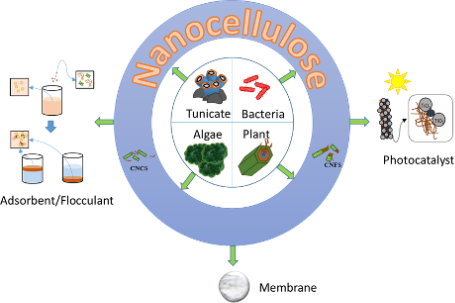
- investigated for their potential as adsorbent, catalyst, and membrane. BC-based adsorbent, catalyst, and aerogel membrane were applied for the removal of copper and lead [47], dye removal [44], and membrane distillation [48]. Ultimately, the current goal in BC production is linked to resolving the challenging
- addition, nanocomposites fabricated from another species known as the stalked sea squirt (Styela Clava) has also demonstrated its usefulness as a catalyst for water remediation [60]. In a separate investigation led by Yu et al. [61], stalked sea squirt nanocellulose were also used as an environmentally
- nanocellulose, which could be particularly useful for particle aggregation of negatively charged pollutants to coagulate and flocculate kaolin colloids as reported by Liimatainen et al. [79]. On the other hand, the utilization of green solvents (ionic liquids) as both solvent and catalyst for cellulose


Thickness-dependent photoelectrochemical properties of a semitransparent Co3O4 photocathode
Beilstein J. Nanotechnol. 2018, 9, 2432–2442, doi:10.3762/bjnano.9.228
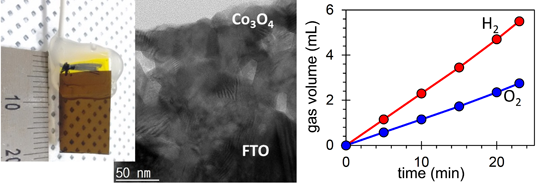
- University, 119 Academy Rd. Yeonsu, Incheon, 22012, Republic of Korea 10.3762/bjnano.9.228 Abstract Co3O4 has been widely studied as a catalyst when coupled with a photoactive material during hydrogen production using water splitting. Here, we demonstrate a photoactive spinel Co3O4 electrode grown by the
- 4.5 mA·cm−2 with Ag nanowires [24]. Interestingly, a high photocurrent density of 29 mA·cm−2 can be achieved from Co3O4 under one-sun illumination (AM1.5G) suggesting a high (solar-to-hydrogen) efficiency of 35.8% [3]. Studies using Co3O4 as a catalyst have explored the oxygen evolution reaction (OER
- ][43], and the third is the combination with a catalyst such as NiMo and transition-metal dichalcogenide 2D materials [43][44]. Conclusion We fabricated porous, semitransparent Co3O4 working electrodes of varying thickness using Kirkendall diffusion thermal oxidation in air. The thickness-dependent



Block copolymers for designing nanostructured porous coatings
Beilstein J. Nanotechnol. 2018, 9, 2332–2344, doi:10.3762/bjnano.9.218
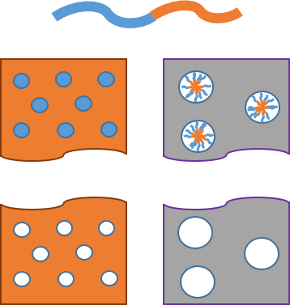
- are very simple, several parameters can influence the resulting architecture of the designed material, such as the type of catalyst (i.e., acid or base), temperature conditions and atmosphere, reaction medium (i.e., either water or other non-aqueous solvents), and so on. For a detailed discussion


Hierarchical heterostructures of Bi2MoO6 microflowers decorated with Ag2CO3 nanoparticles for efficient visible-light-driven photocatalytic removal of toxic pollutants
Beilstein J. Nanotechnol. 2018, 9, 2297–2305, doi:10.3762/bjnano.9.214
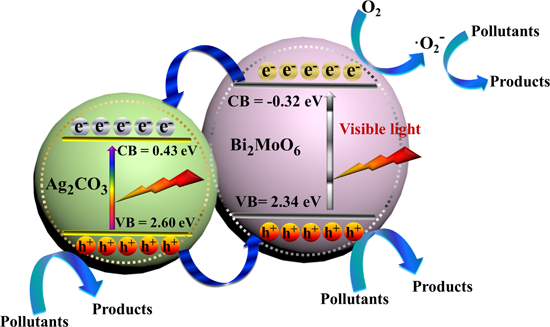
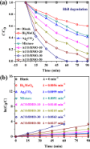
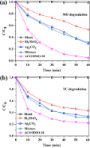
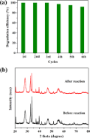
- (50 mg·L−1, 150 mL) solution with 300 mg of ACO/BMO-30 as the catalyst. XRD patterns of Ag2CO3/Bi2MoO6 heterojunctions, bare Bi2MoO6 and Ag2CO3. SEM images of (a, b) bare Bi2MoO6 and (c, d) ACO/BMO-30. (a–c) TEM images of ACO/BMO-30; (d) EDS pattern of ACO/BMO-30. UV–vis diffuse reflection spectra of




Electrospun one-dimensional nanostructures: a new horizon for gas sensing materials
Beilstein J. Nanotechnol. 2018, 9, 2128–2170, doi:10.3762/bjnano.9.202
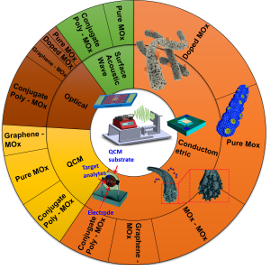
- produced by many different approaches. For example, by use of a molten-salt method, wet (or liquid) chemistry, nanocarving, self-catalyst growth, template-assisted (or sacrificial template) synthesis, chemical vapour deposition, thermal evaporation, spray pyrolysis or electrospinning [34][35][36]. Among
- NTs are synthesized using layer-by-layer (LBL) self-assembly of tungsten as well as catalyst precursor on PMMA electrospun nanofibers. Pristine WO3 NTs exhibit a high response (Rgas/Rair) of 63.59 to 5 ppm NO at 350 °C. On the other hand, a high response of 2.24 for the Pt-WO3 NTs and 2.35 for the Pd
- have also been sensitized by MOFs. A Zn-based zeolite imidazole framework (Pd@ZIF-8, ≈80 nm) embedded with Pd NPs (≈2 nm) was used as a catalyst-loading platform for the efficient functionalization of a PdO@ZnO complex catalyst onto SnO2 NTs. Dual sensitized PdO@ZnO hollow SnO2 NTs (PdO@ZnO–SnO2 NTs






Localized photodeposition of catalysts using nanophotonic resonances in silicon photocathodes
Beilstein J. Nanotechnol. 2018, 9, 2097–2105, doi:10.3762/bjnano.9.198
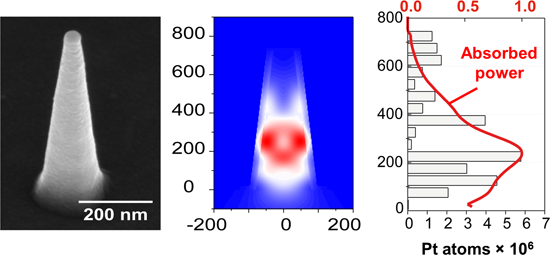
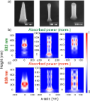
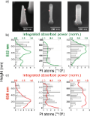
- -electrochemical system. The tapering angle of the silicon nanowires as well as the excitation wavelength are used to control the location of the hot spots together with the deposition sites of the platinum catalyst. A combination of finite difference time domain (FDTD) simulations with scanning electron
- photogenerated charge carriers that can be used to drive solar fuel reactions [16][17][18][19]. Additionally, photochemical fuel generators require a catalyst, such as platinum, to lower the overpotential to drive the chemical reaction [2][7][20][21][22][23][24]. The catalyst would be ideally located at the
- semiconductor–solution interface, directly at the location of the hot spots. Placing the catalyst exclusively at the hot spots would reduce both the catalyst loading (lowering the cost) and the average time between charge generation and chemical reaction (increasing the efficiency). However, current catalysts


Metal-free catalysis based on nitrogen-doped carbon nanomaterials: a photoelectron spectroscopy point of view
Beilstein J. Nanotechnol. 2018, 9, 2015–2031, doi:10.3762/bjnano.9.191
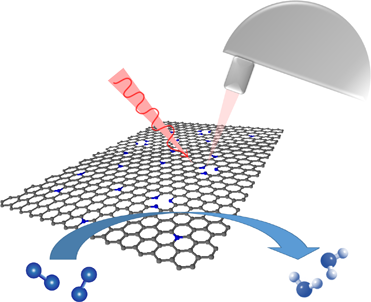
- absorption of H2 on the catalyst lowering the cell performance [6]. In parallel, the research on the catalytic activity of low-cost and metal-free catalysts has proceeded for decades. The discovery of catalytic properties of carbon alloys with nitrogen dates back to 1926 when Rideal and Wright reported their
- -free catalyst for the ORR had not been considered feasible [9][10] until two fundamental milestones had risen the interest on carbon as an effective replacement of Pt for catalysis. The first one was the prediction of the remarkable electrical conducting properties of carbon nanotubes (CNTs) in 1993
- discovery of their catalytic performance in the ORR: beginning with nitrogen-doped carbon fibres (2006 [18]), followed by carbon nanotubes (2009 [19]) and finally graphene (2010 [20]). In 2006, Matter and Ozkan reported on a metal-free ORR catalyst containing nitrogen-doped carbon fibers. The authors