Search results
Search for "composites" in Full Text gives 356 result(s) in Beilstein Journal of Nanotechnology. Showing first 200.
A silver-nanoparticle/cellulose-nanofiber composite as a highly effective substrate for surface-enhanced Raman spectroscopy
Beilstein J. Nanotechnol. 2019, 10, 1270–1279, doi:10.3762/bjnano.10.126
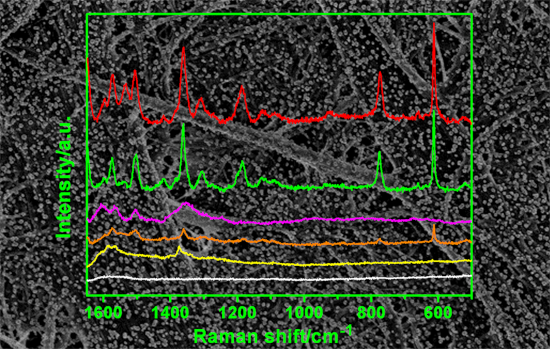
- . This low-cost, highly sensitive, and biocompatible paper-based SERS substrate holds considerable potentials for the detection and analyses of chemical and biomolecular species. Keywords: cellulose nanofiber; composites; nanoarchitectonics; silver nanoparticle; surface-enhanced Raman spectroscopy
- (XRD) patterns of the prepared Ag-NP/cellulose-NF composites. Two series of diffraction peaks were observed. The ones located at 2θ = 15.0°, 16.5°, 22.8°, and 34.1° are ascribed to the (), (101), (002), and (040) planes of crystalline cellulose, respectively [61]; and the other ones located at 2θ
- in all the experiments was purified by using a Milli-Q Advantage A10 system (Millipore, Bedford, MA, USA) with a resistivity higher than 18.2 MΩ·cm. Fabrication of the paper-based Ag-NP/cellulose-NF composites The silver nanoparticles (Ag-NPs) were deposited onto the surface of the cellulose


Green fabrication of lanthanide-doped hydroxide-based phosphors: Y(OH)3:Eu3+ nanoparticles for white light generation
Beilstein J. Nanotechnol. 2019, 10, 1200–1210, doi:10.3762/bjnano.10.119
- composites 1 g of PDMS (composed of a silicon elastomer and curing agent with 10:1 ratio) was prepared in a glass vial. Then, a fixed amount (70.0 mg) of yellow YAG:Ce3+ phosphor was added into the glass vial. In order to investigate the effect of the red phosphor amount on the resulting white light
- nanowires. The level of doping for Y(OH)3:7.5% Eu3+ phosphors produced at 5 min was captured through an annular dark field (ADF) STEM micrograph and the STEM-EELS analysis of the indicated area is presented in Figure 3. Elemental composition maps of Y (red) and Eu (green) along with their composites are
- Figure 4a indicated that this sample had the highest emission intensity. The optical properties (CRI, CCT, luminous efficiency (LER), and lumen) of the PDMS composites are presented in Figure 6. Figure 6a shows the CRI and CCT of the PDMS composites as a function of the amount of red phosphor. While the



Photoactive nanoarchitectures based on clays incorporating TiO2 and ZnO nanoparticles
Beilstein J. Nanotechnol. 2019, 10, 1140–1156, doi:10.3762/bjnano.10.114
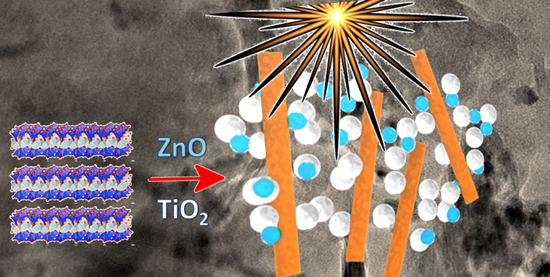
- solids such as zeolites and mesoporous silicas have been used as templates in the growth of NPs with precisely controlled particle size and shape replicating size and shape of the pores. Thus, a novel class of nonlinear optical materials based on host–guest composites has been prepared using zeolites as



Synthesis of novel C-doped g-C3N4 nanosheets coupled with CdIn2S4 for enhanced photocatalytic hydrogen evolution
Beilstein J. Nanotechnol. 2019, 10, 912–921, doi:10.3762/bjnano.10.92
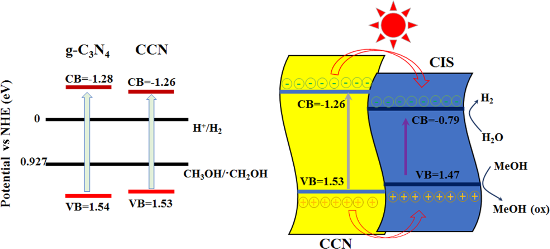
- -C3N4 crystal lattice [37]. The CISCCN samples exhibit similar characteristic XRD patterns as that of CCN due to the low content of CdIn2S4. With regard to the XRD patterns of the CISCCN3 and CISCCN5 composites, the peaks are in good agreement with (220), (311), (400), (422), (511), (440) and (533
- ) crystallographic planes of the cubic CdIn2S4 (JCPDS no. 27-0060), revealing the presence of CdIn2S4 in the composites. Figure 3 presents the Fourier transform infrared (FTIR) spectra of CCN and the CISCCN photocatalyts. In the case of CCN nanosheets, a series of peaks at 1240, 1320, 1410, 1530 and 1640 cm−1
- preparation process. UV–vis diffuse reflectance spectroscopy (DRS) was used to investigate the optical absorption properties of g-C3N4, CCN and the series of CISCCN composites. As shown in Figure 6a, g-C3N4 exhibits an absorption edge at approximately 426 nm. For the CCN sample, however, the light absorption


The systemic effect of PEG-nGO-induced oxidative stress in vivo in a rodent model
Beilstein J. Nanotechnol. 2019, 10, 901–911, doi:10.3762/bjnano.10.91
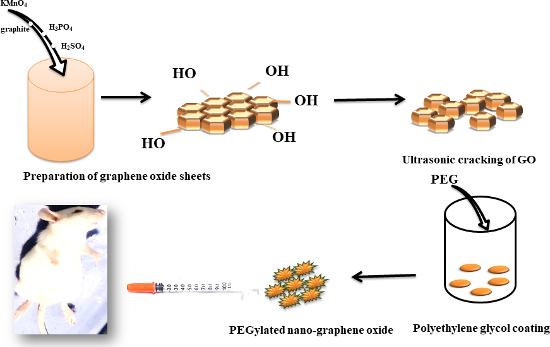
- , Kingdom of Saudi Arabia 10.3762/bjnano.10.91 Abstract Oxidative stress (OS) plays an important role in the pathology of certain human diseases. Scientists have developed great interest regarding the determination of oxidative stress caused after the administration of nano-graphene composites (PEG-nGO


Fabrication of silver nanoisland films by pulsed laser deposition for surface-enhanced Raman spectroscopy
Beilstein J. Nanotechnol. 2019, 10, 882–893, doi:10.3762/bjnano.10.89
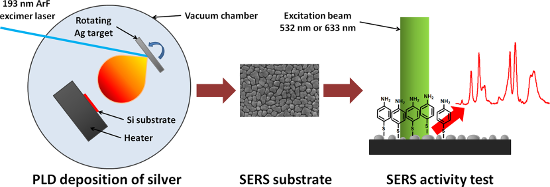
- the size, shape, and arrangements of nanostructures, the material they are made of and the surrounding medium [6]. One of the easiest nanostructures to produce are metallic nanoparticles (NPs). Alone or in composites with other materials, they find numerous applications in plasmonic photocatalysis [7




Tungsten disulfide-based nanocomposites for photothermal therapy
Beilstein J. Nanotechnol. 2019, 10, 811–822, doi:10.3762/bjnano.10.81
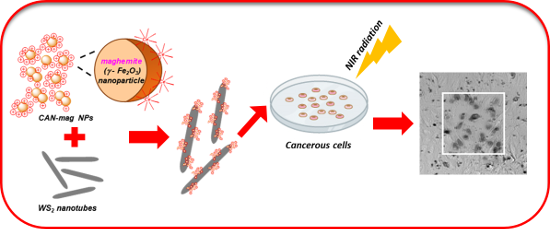
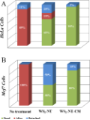
- (1:1 v/v) was added to all wells after the laser irradiation. After 5 min, the cells were washed with PBS buffer and the same frames were imaged. Results and Discussion This section will include all the chemical and biological results. The preparation procedures of the composites included sonication
- composites. This means that there was almost no detachment of CAN during the composite preparation, which is a possibility when using probe sonication. The numbers show a small quantity of cerium in CAN-mag, which is even smaller within the composite, yet the presence of cerium still allows coordinative
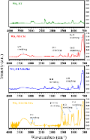
- attachment of polymers to the composite. Figure 3 shows the FTIR absorbance spectra of WS2-NT and its composites. The absorption of the WS2-NTs was so weak that we are not sure that anything can be learned from such absorption. In the spectrum of WS2-NT-CM (and of its two composites), the strong peak at 570






Polydopamine-coated Au nanorods for targeted fluorescent cell imaging and photothermal therapy
Beilstein J. Nanotechnol. 2019, 10, 794–803, doi:10.3762/bjnano.10.79
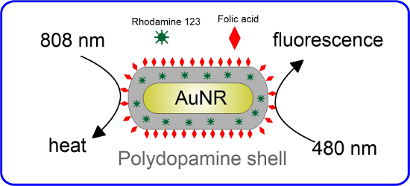
- with functional groups still remains challenging. Here, we coated AuNRs with a polydopamine (PDA) shell and functionalized AuNR-PDA particles with folic acid and rhodamine 123 (R123) to fabricate AuNR-PDA-R123-folate nanocomposites. To the best of our knowledge, such AuNR-PDA-based composites combining
- taken together give the opportunity to use AuNR/PDA composites as promising agents for theranostics. The published examples of fabrication and biomedical applications of PDA-coated nanorods include the following nanoconstructs: (1) AuNR-PDA-Ab for targeted PPT of cells in vitro [28]; AuNR-CuPDA for non
- AuNRs, PDA-coated AuNRs and AuNRs-PDA-R123-folate nanocomposite particles. The inclusion of the rhodamine dye into the composite nanoparticles can be confirmed by the increased extinction in the wavelength region around 500 nm. The differential spectrum peak of AuNR-PDA composites before and after


An efficient electrode material for high performance solid-state hybrid supercapacitors based on a Cu/CuO/porous carbon nanofiber/TiO2 hybrid composite
Beilstein J. Nanotechnol. 2019, 10, 781–793, doi:10.3762/bjnano.10.78
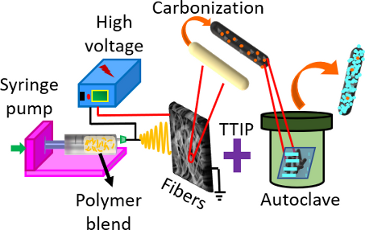
- given in Figure 2. Cyclic voltammetry (CV) and galvanostatic charge–discharge (GCD) tests for the synthesized samples and its composites were performed over a voltage range from 0 to 0.8 V. The electrochemical impedance spectra (EIS) were recorded employing the same instrument over a frequency range of
- composites in the range of 1000–2000 cm−1. The amorphous degree of the sample was calculated from the relative intensity ratio of the D- and G-bands (ID/IG) as 2.38, 2.93, 3.16 and 3.35 for CNF, PCNF, Cu/PCNF and Cu/CuO/PCNF/TiO2, respectively. The morphology and microstructure of the as-prepared CNF, PCNF
- , to study the porous structures and surface area, N2 adsorption–desorption isotherms and the pore size distribution were analyzed for the Cu/CuO/PCNF/TiO2 composites. To determine the performance of the supercapacitors, the surface area and pore size distribution are two important factors to provide


Trapping polysulfide on two-dimensional molybdenum disulfide for Li–S batteries through phase selection with optimized binding
Beilstein J. Nanotechnol. 2019, 10, 774–780, doi:10.3762/bjnano.10.77
- specific capacity. Nanoflower MoS2/reduced graphene oxides composites exhibited a high specific capacity (1225 mAh/g) and an excellent cycling performance (680 mAh/g) after 250 cycles [19]. MoS2 nanoparticles have been used as a starting material for the synthesis of Li–S battery cathodes, since Li2S and
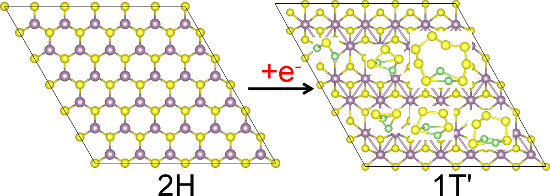
- composed of 1T'-phases and 2H-phases [33]. The composites of 1T'-MoS2 with other active materials, such as graphene [34], carbon nanotubes [35], Mxene [36], and SnO2 [37], have received much attention regarding the use as cathodes for Li–S batteries. The electrochemical performance including the capacity


Outstanding chain-extension effect and high UV resistance of polybutylene succinate containing amino-acid-modified layered double hydroxides
Beilstein J. Nanotechnol. 2019, 10, 684–695, doi:10.3762/bjnano.10.68
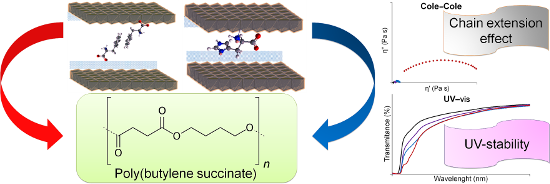
- spectroscopy (FTIR) and thermogravimetric analysis (TGA). As expected, the UV–vis spectra showed absorbance in the UVC and UVB regions and the potential role as UV stabilizers. In a second part, PBS composites were prepared with 5 wt % of LDH filler by melt blending and once again fully characterized (XRD, TGA
- , DSC, DMTA and melt rheology). Impressively a pronounced chain-extension effect for PBS was observed with both organo-modified LDHs, especially in the case of PBS–LDH/PHE, for which the apparent molecular weight was almost 400 times higher than the pristine PBS. Finally, PBS composites were subjected
- endow the polymer composites with significantly improved properties as well as to envision a master-batch considering the observed state of dispersion. PBS–LDH nanocomposite films with thickness of about 90–100 µm were prepared by compression moulding between two Teflon sheets under 100 bar at 120 °C


Topochemical engineering of composite hybrid fibers using layered double hydroxides and abietic acid
Beilstein J. Nanotechnol. 2019, 10, 589–605, doi:10.3762/bjnano.10.60
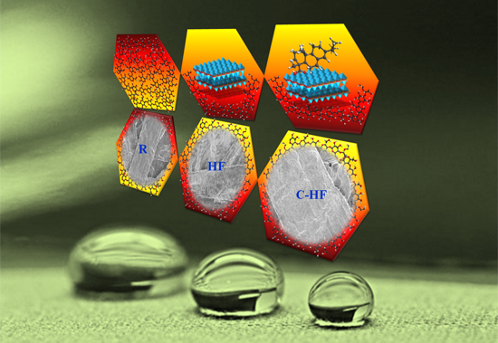
- composites by utilizing the intermolecular hydrogen bonds in natural materials. These materials include wood pulp fibers, abietic acid (resin acid) and inexpensive metal salts. In this work, a hybrid composite was created using bleached and unbleached kraft pulp fibers as cellulose platform. In situ co
- increase the surface roughness of the fibers and yield good adhesion properties. Bleached and unbleached fibers, refined and unrefined, were used as starting materials to synthesize direct composites (AA + fiber), hybrid fibers (LDH + fiber) and composite hybrid fibers (AA + LDH + fiber). We expect that
- intensity, which confirm the AA-modification of HF. Structure and bonding The infrared absorption measurements were studied for the control samples (REF, C-F, HF) and the final material, hybrid fiber composites (C-HF0.15M, C-HF0.30M, and C-HF0.45M, Figure 3. The control samples and composite hybrid fibers




Biomimetic synthesis of Ag-coated glasswing butterfly arrays as ultra-sensitive SERS substrates for efficient trace detection of pesticides
Beilstein J. Nanotechnol. 2019, 10, 578–588, doi:10.3762/bjnano.10.59
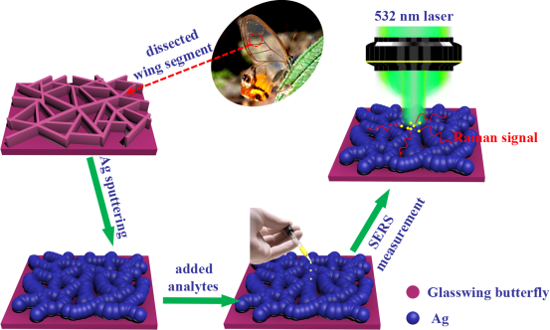
- nanogaps can be easily controlled by adjusting the sputtering time. In addition, they reveal that our physical fabrication method could yield large-scale Ag nanofilms, unlike the synchronous reduction process reported in the previous report [28]. SERS sensitivity of 3D Ag-G.b. hybrid composites The Ag


Widening of the electroactivity potential range by composite formation – capacitive properties of TiO2/BiVO4/PEDOT:PSS electrodes in contact with an aqueous electrolyte
Beilstein J. Nanotechnol. 2019, 10, 483–493, doi:10.3762/bjnano.10.49
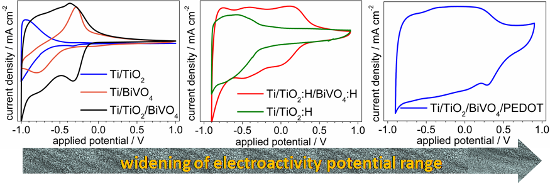
- , Poland 10.3762/bjnano.10.49 Abstract Composites based on the titania nanotubes were tested in aqueous electrolyte as a potential electrode material for energy storage devices. The nanotubular morphology of TiO2 was obtained by Ti anodization. TiO2 nanotubes were covered by a thin layer of bismuth
- –inorganic composites with TiO2 [18][19], organic–inorganic hybrids consisting of a conducting polymer and Prussian blue analogues [20], or composites with carbon nanomaterials [21]. Tuning of the electrochemical activity of supercapacitors can also be achieved via electrolyte modification. The addition of
- work (not exceeding 1 V) [74][75][76]. Recently, it was reported that titania nanotubes/polyaniline composites in contact with aqueous electrolyte can be polarized in a range between −0.2 to 1.8 V vs SCE with very good capacitance retention [77], but the achieved areal capacitance (ca. 6 mF·cm−2) seems




Biological and biomimetic surfaces: adhesion, friction and wetting phenomena
Beilstein J. Nanotechnol. 2019, 10, 481–482, doi:10.3762/bjnano.10.48

- collected articles are devoted to surface-related effects in engineered surfaces, such as multilayered composites, carbon nanofibers, textured steel surfaces, and micropatterned elastomer surfaces. Three articles present recent work on the development of a novel fabrication technique for biomaterials and of
A Ni(OH)2 nanopetals network for high-performance supercapacitors synthesized by immersing Ni nanofoam in water
Beilstein J. Nanotechnol. 2019, 10, 281–293, doi:10.3762/bjnano.10.27
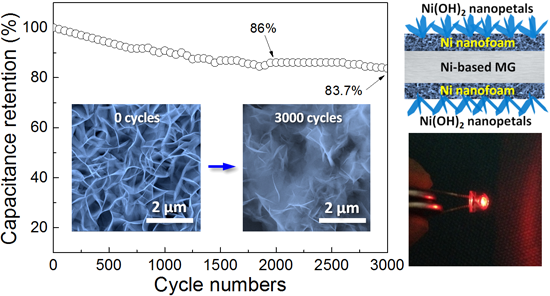
- mm wide and ca. 25 µm thick) were successfully obtained and were denoted as Ni(OH)2/Ni-NF/MG-2, Ni(OH)2/Ni-NF/MG-5, Ni(OH)2/Ni-NF/MG-7, respectively, according to the number of days immersed. Instrumental methods The phase structure of the as-obtained composites was measured by X-ray diffraction (XRD
- . Finally, the dispersed materials were dripped on copper mesh supported carbon film. Electrochemical measurements The electrochemical tests of the Ni(OH)2/Ni-NF/MG electrodes were carried out in a standard three-electrode cell. The Ni(OH)2/Ni-NF/MG composites, a Pt net, and a Ag/AgCl electrode were
- typical XRD patterns of the as-spun ribbon, the as-dealloyed ribbon and the as-synthesized Ni(OH)2/Ni-NF/MG composites immersed in deionized water for different days. The original ribbon presents a characteristic broad halo peak of metallic glass without appreciable sharp crystalline peaks, indicating the




Thermal control of the defunctionalization of supported Au25(glutathione)18 catalysts for benzyl alcohol oxidation
Beilstein J. Nanotechnol. 2019, 10, 228–237, doi:10.3762/bjnano.10.21
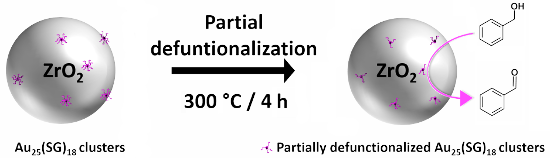
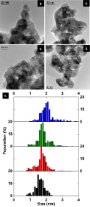
- ) calcined at 400 °C for 12 hours under air, sample (A400), and (e) the size distribution of the composites – (A) in black, (A200) in red, (A300) in green and (A400) in blue. Monitoring over time of benzyl alcohol oxidative dehydrogenation conversion with Au25(SG)18@ZrO2 before calcination (black), after




Mechanism of silica–lysozyme composite formation unravelled by in situ fast SAXS
Beilstein J. Nanotechnol. 2019, 10, 182–197, doi:10.3762/bjnano.10.17
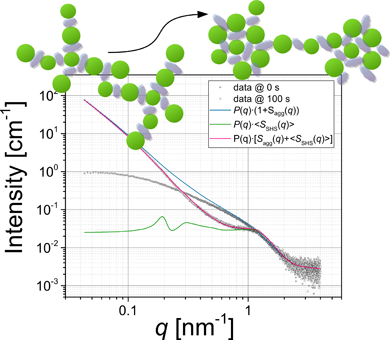
- Copenhagen, Universitetsparken 5, 2100, Copenhagen, Denmark Department of Earth Sciences, Free University of Berlin, Malteserstr. 74–100 / Building A, 12249, Berlin, Germany 10.3762/bjnano.10.17 Abstract A quantitative understanding of aggregation mechanisms leading to the formation of composites of
- enzymatic activity. The inherent nature of the aggregation processes leading to NP–LZM composites involves structural changes at length scales from few to at least hundreds of nanometres but also time scales much smaller than one second. To unravel these we used in situ synchrotron-based small-angle X-ray
- : composite; lysozyme; scattering; silica; small-angle X-ray scattering (SAXS); Introduction A mechanistic understanding of aggregation in aqueous media leading to the formation of composites of inorganic nanoparticles and proteins is of paramount interest for colloid chemistry, Earth sciences, or the design



Nanoporous water oxidation electrodes with a low loading of laser-deposited Ru/C exhibit enhanced corrosion stability
Beilstein J. Nanotechnol. 2019, 10, 157–167, doi:10.3762/bjnano.10.15
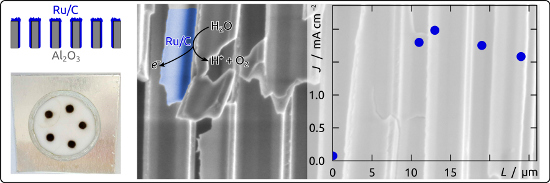
- address this goal with the synthesis of metal/carbon composites via the laser-induced deposition method already described for carbon-encapsulated Ag/Au nanoparticles (AgAu/C) [31][32][33]. This practically appealing one-step technique bases on the photo-induced decomposition of a dissolved organometallic
- composites (M/C) can be generated in a straightforward manner onto the surface of any substrate with 2D or 3D architecture [34]. We first establish a novel laser-induced deposition method for Ru/C on planar substrates from commercially available triruthenium dodecacarbonyl (Ru3(CO)12). We then transfer the




Scanning probe microscopy for energy-related materials
Beilstein J. Nanotechnol. 2019, 10, 132–134, doi:10.3762/bjnano.10.12
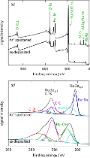
- major topic in our daily life. Jonathan Op de Beeck and co-workers identify the ionic processes occurring inside Li-ion composites in order to understand the impact on the entire battery cell [9]. In particular, the authors combine cAFM and secondary-ion mass spectrometry to correlate the presence of
New micro/mesoporous nanocomposite material from low-cost sources for the efficient removal of aromatic and pathogenic pollutants from water
Beilstein J. Nanotechnol. 2019, 10, 119–131, doi:10.3762/bjnano.10.11
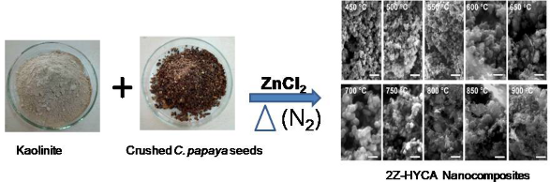
- present in the organic fraction in the 2Z-HYCA composites. There appears to be a doublet peak at 2352 and 2356 cm−1 which signifies the presence of the –C–N stretching mode [34]. The Al–O absorption peak at 917 cm−1 decreases in intensity as the temperature increases. As a result, IR spectroscopy




Wet chemistry route for the decoration of carbon nanotubes with iron oxide nanoparticles for gas sensing
Beilstein J. Nanotechnol. 2019, 10, 105–118, doi:10.3762/bjnano.10.10
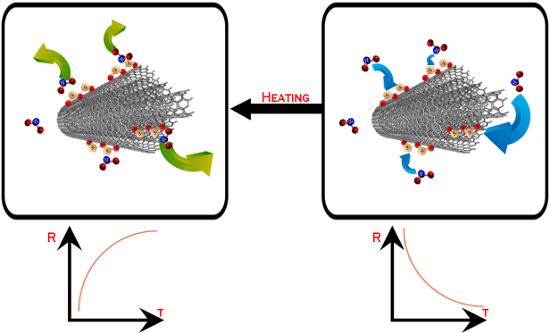
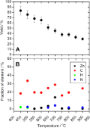
- composites with other materials such as graphene oxide or polyaniline has been reported to detect NO2 [17][18]. The decoration of CNTs with iron oxide has been reported for sensing different species in air such as acetone, CO2 and some volatile organic compounds [19][20][21]. Moreover, composites made of




Graphene–graphite hybrid epoxy composites with controllable workability for thermal management
Beilstein J. Nanotechnol. 2019, 10, 95–104, doi:10.3762/bjnano.10.9
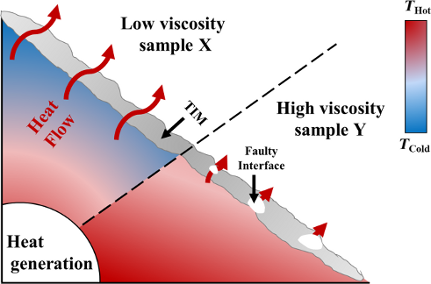
- demonstrate the utility of this approach by fabricating a thermal interface material with tunable workability and testing it in a model electronic device. Keywords: hybrid composites; nanocomposites; rheology; thermal interface material; thermal properties; Introduction Modern-day miniaturization of
- ]. Suitable fillers for such polymer-based TIM composites, whether metallic, ceramic or graphitic, should exhibit excellent thermal conductivity (TC), exceeding 100 W/(m∙K). In recent years, boron nitride (BN) (TC = 360 W/(m∙K) [13]) has been employed as a filler in polymer-based composites, displaying high
- , solder TIM may reach thermal conductivities at least one order-of-magnitude higher than those of carbon-based composites [6]. However, modern trends for minimization and the production of ultra-lightweight electronic devices reject the use of high-density metallic composites, preferring lower-density



Threshold voltage decrease in a thermotropic nematic liquid crystal doped with graphene oxide flakes
Beilstein J. Nanotechnol. 2019, 10, 71–78, doi:10.3762/bjnano.10.7
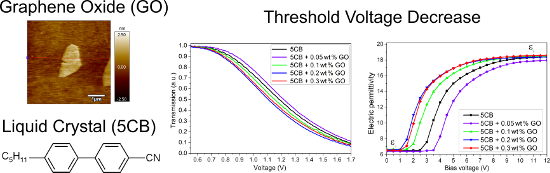
- composites [11][12][13][14]. NLCs doped with graphene or carbon nanotubes show a faster response in electro-optical switching than pure liquid crystal compounds. This effect is caused by trapping of some free ion concentrations [15][16] or reduction in the rotational viscosity [17]. Furthermore, due to
- optical microscope (POM) technique. In the all liquid crystal composites, the GO flakes were well dispersed. The liquid crystal cells exhibited uniform color, indicating that the rod-like molecules were uniformly aligned. However, Figure 3b–e, illustrates some GO aggregation. The size and quantity of the
- slight decrease in birefringence of GO composites compared with the pure 5CB nematic liquid crystal (Figure 3a). For concentrations higher than 0.3 wt %, we can expect the creation of a lyotropic nematic phase in the isotropic phase of the 5CB-GO suspension, as was previously reported [39][40]. We used



Amorphous NixCoyP-supported TiO2 nanotube arrays as an efficient hydrogen evolution reaction electrocatalyst in acidic solution
Beilstein J. Nanotechnol. 2019, 10, 62–70, doi:10.3762/bjnano.10.6
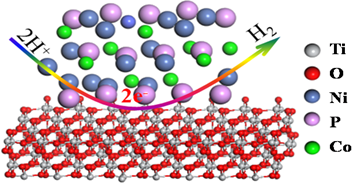
- Yong Li Peng Yang Bin Wang Zhongqing Liu School of Chemical Engineering, Sichuan University, Chengdu 610065, Sichuan, P. R. China Engineered Multifunctional Composites (EMC), Knoxville, Tennessee 37934, USA 10.3762/bjnano.10.6 Abstract Bimetallic phosphides have been attracting increasing