


Search results
Search for "crystallinity" in Full Text gives 347 result(s) in Beilstein Journal of Nanotechnology. Showing first 200.
On the transformation of “zincone”-like into porous ZnO thin films from sub-saturated plasma enhanced atomic layer deposition
Beilstein J. Nanotechnol. 2019, 10, 746–759, doi:10.3762/bjnano.10.74
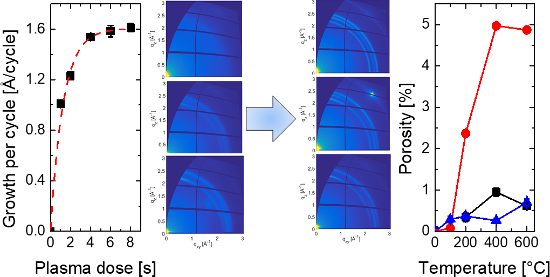
- . Moreover, the crystallinity and crystallite orientation could be tuned, ranging from a powder-like to a (100) preferential growth in the out-of-plane direction, as measured by synchrotron-radiation grazing incidence XRD. Calcination temperature ranges were identified in which pore formation and subsequent
- 400 °C, showing significant loss of material starting from 200 °C. However, the crystallinity and crystal growth of the resulting porous ZnO structure were not investigated. In different systems, studying the evolution of Ti alkoxide upon pyrolysis in inert atmosphere, Abdulagatov et al. [11] showed
- an inhibition of the crystal formation in the resulting TiO2 layers, and the authors attributed this to the amorphous titania being constrained in the organic matrix. As a consequence, an investigation of the crystallinity of Zn-alkoxide layers would shed a light on the evolution of the ZnO crystals


Outstanding chain-extension effect and high UV resistance of polybutylene succinate containing amino-acid-modified layered double hydroxides
Beilstein J. Nanotechnol. 2019, 10, 684–695, doi:10.3762/bjnano.10.68
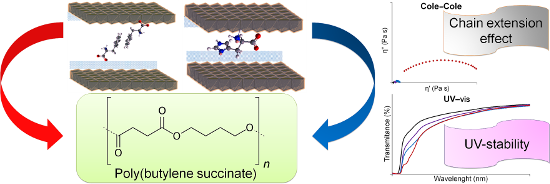
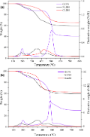
- -acid-modified Mg2Al LDHs and Mg2Al LDH nitrate were prepared by melt extrusion. The XRD patterns are presented in Figure 6 together with PBS without filler as a reference. The diffraction peaks located at 2θ = 18–30°, which are characteristic for the crystallinity of PBS, seem to not be affected by the
- filler structure can be explained by their lower crystallinity or by a partial exfoliation occurring during thermal processing. For PBS–LDH/HIS, there is an additional peak at 2θ = 18° that is difficult to assign. Its associated small full width at half maximum (FWHM) may be attributed to rather


Ultrathin hydrophobic films based on the metal organic framework UiO-66-COOH(Zr)
Beilstein J. Nanotechnol. 2019, 10, 654–665, doi:10.3762/bjnano.10.65
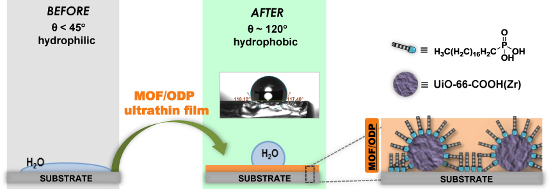
- position and cover MOF particles. Moreover, the presence of MOF particles significantly enhances the surface roughness and allows ultrathin, hydrophobic coverage to be obtained. Finally, it has been shown that the crystallinity and the porosity of the MOF remains almost unaltered in MOF/ODP films
- similar to that of mixed film UiO-66-COOH(Zr) + 10 wt % ODP, which is in good agreement with the results reported for other Zr-based MOFs that do not result in significantly reduced adsorption capacity after modification with ODP [34]. To confirm that the addition of ODP does not alter the crystallinity
- particles without significantly affecting the porosity or crystallinity since both properties are intimately linked in a MOF. Finally, it should also be mentioned that the CO2 adsorption capacity at 1 bar for an LB film is similar to that of drop-cast samples but the relative deviations in the measurements


Hydrophilicity and carbon chain length effects on the gas sensing properties of chemoresistive, self-assembled monolayer carbon nanotube sensors
Beilstein J. Nanotechnol. 2019, 10, 565–577, doi:10.3762/bjnano.10.58
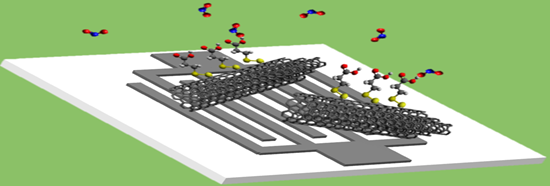
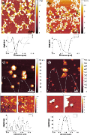
- will be discussed in detail below. The crystallinity of oxygen-plasma-treated MWCNTs decorated with gold nanoparticles was characterized by Raman spectroscopy. Taking the intensity ratio of the D/G bands into consideration, the material presents a low level of crystallinity with defects caused by the


Nanocomposite–parylene C thin films with high dielectric constant and low losses for future organic electronic devices
Beilstein J. Nanotechnol. 2019, 10, 428–441, doi:10.3762/bjnano.10.42
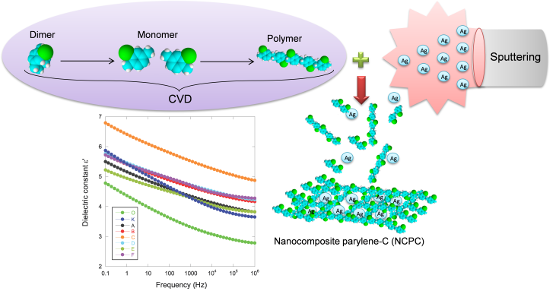
- modifies the film density as well as the degree of crystallinity and the size of parylene C crystallites. Moreover, silver is incorporated in the parylene matrix as an oxide phase. The average size of the Ag oxide nanoparticles is lower than 20 nm and influences the roughness of the NCPC films. Samples
- crystallinity than sample O, as highlighted by the shift of the (020) peak to a larger 2θ angle (Figure 3, left) and by the larger nanocrystallite size (reduction in the FWHM, see Table 2). Typically, when comparing two similar polymers with just a change in the degree of crystallinity, the most important
- number of dipoles participating in the β-relaxation process: the higher the degree of crystallinity for a given polymer, the lower the number of dipoles involved in the relaxation mechanism (as these dipoles are ‘frozen’ in the semi-crystalline state). Consequently, Δε decreases at increasing degrees of




Improving control of carbide-derived carbon microstructure by immobilization of a transition-metal catalyst within the shell of carbide/carbon core–shell structures
Beilstein J. Nanotechnol. 2019, 10, 419–427, doi:10.3762/bjnano.10.41
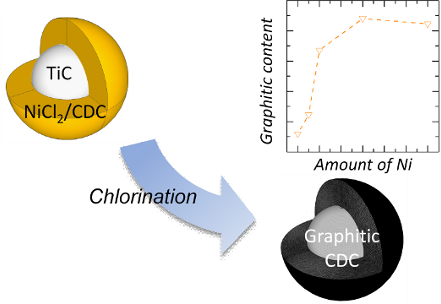
- crystallinity and pore structure of the resulting carbide-derived carbon materials. In this sense, the content of graphitic carbon could be varied from 10–90 wt % as estimated from TPO measurements and resulting in a specific surface area ranging from 1500 to 300 m2·g−1. Keywords: carbon shell; catalytic
- structure. The reason is that graphitic carbon consists of crystalline sp2-hybridized fractions that induce high electron conductivity. Moreover, an enhanced crystallinity is favorable in terms of chemical stability, which is required especially when working under harsh conditions. Many synthetic approaches
- contrast to TPO, XRD and TEM, no strong differences in crystallinity of the samples can be observed by using Raman spectroscopy. All spectra are characterized by the presence of two more or less overlapping D- and G-bands centered at ca. 1325 and 1583 cm−1. CDC-Ni0 shows a slightly higher level of disorder


Biocompatible organic–inorganic hybrid materials based on nucleobases and titanium developed by molecular layer deposition
Beilstein J. Nanotechnol. 2019, 10, 399–411, doi:10.3762/bjnano.10.39
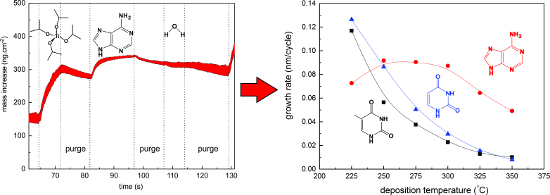
- thickness and refractive index indicates that the films are restructured to a less dense structure. However, XRD analysis did not show any sign of crystallinity for both types of as-deposited films (deposited at 225 °C). The thickness and index of refraction for the Ti-adenine system was virtually
- investigated by XRD. While the Ti-thymine film deposited at 225 °C did not show any sign of crystallinity by XRD, the Ti-thymine film deposited at 250 °C showed two distinct XRD reflections at 2θ below 15 degrees (with d values of 12.44 Å and 6.22 Å). These are clear multiples of each other and possibly
- containing thymine or titanium oxide. Overall, a more in-depth investigation of the structure of the Ti-thymine films should be performed. No sign of crystallinity was observed for Ti-adenine and Ti-uracil by AFM or XRD. We used XPS as a qualitative investigation of the chemical state in the thin films prior




Integration of LaMnO3+δ films on platinized silicon substrates for resistive switching applications by PI-MOCVD
Beilstein J. Nanotechnol. 2019, 10, 389–398, doi:10.3762/bjnano.10.38
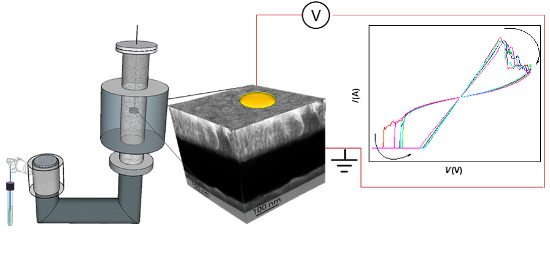
- crystallinity whereas above 700 °C, diffusion of Pt across the film occurred, which may lead to short circuits in the final LMO-based device. The samples corresponding to this strategy are depicted as red squares in Figure 2. The points inside the shadowed green region correspond to deposition conditions for




One-step nonhydrolytic sol–gel synthesis of mesoporous TiO2 phosphonate hybrid materials
Beilstein J. Nanotechnol. 2019, 10, 356–362, doi:10.3762/bjnano.10.35
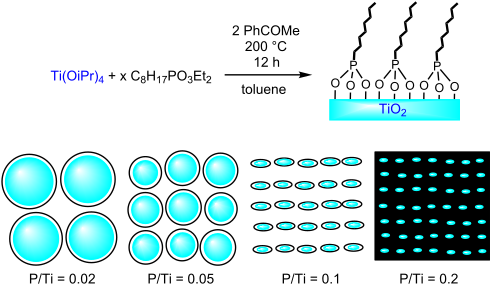
- –octylphosphonate hybrid materials in one step (Scheme 1). The different characterization methods allow us to better understand the structure of these hybrid materials. The presence of even a relatively small amount of phosphonate units strongly influences the size and crystallinity of the TiO2 domains. For P/Ti


Site-specific growth of oriented ZnO nanocrystal arrays
Beilstein J. Nanotechnol. 2019, 10, 274–280, doi:10.3762/bjnano.10.26
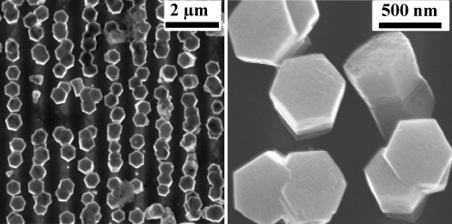
- detector in scanning line mode. The surface morphology of the prepared samples was investigated by using a field emission scanning electron microscopy (FESEM) using a Zeiss Supra 40 device. A JEOL 2200FS transmission electron microscope (TEM) was used to investigate the crystallinity of the NCs. Results
- ,e. The corresponding high-resolution TEM (HRTEM) image is recorded to further investigate the morphological characteristics of ZnO NCs. The observed sharp lattice fringes in the HRTEM image reveal the good crystallinity of twinned ZnO NCs. This is possibly due to the low ion flux arriving at the
- of the wurtzite phase of ZnO (JCPDS 05-0664), which is well in agreement with the XRD results (Figure 3). Moreover, the selected area electron diffraction (SAED) pattern (Figure 4d) reveals the excellent crystallinity of ZnO NCs and confirms the growth of the c-axis normal to the substrate in these


Interaction of Te and Se interlayers with Ag or Au nanofilms in sandwich structures
Beilstein J. Nanotechnol. 2019, 10, 238–246, doi:10.3762/bjnano.10.22
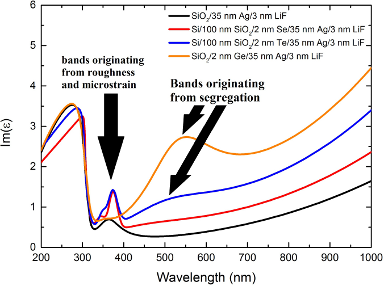
- the crystallinity, atomic concentration profile and optical parameters of ≈35 nm-thick silver and gold layers deposited on glass substrates with 2 nm-thick tellurium or selenium interlayers. Our study, based on X-ray reflectometry (XRR), X-ray diffraction (XRD), X-ray photoelectron spectroscopy (XPS
- migrate only in silver. The Te concentration curve clearly suggests that this migration is an effect of the segregation of Te atoms in the silver structure. The differences in crystallinity, as well as the migration process, strongly influence the optical parameters of Ag and Au. In the permittivity of Ag
- of developed voids, which is linked with the density profile, may strongly influence the segregation characteristics. Here, we report on XRD and XRR measurements to investigate the crystallinity of Ag and Au nanolayers deposited on SiO2 substrates with 2 nm-thick Te or Se interlayers. XPS allowed us


Raman study of flash-lamp annealed aqueous Cu2ZnSnS4 nanocrystals
Beilstein J. Nanotechnol. 2019, 10, 222–227, doi:10.3762/bjnano.10.20
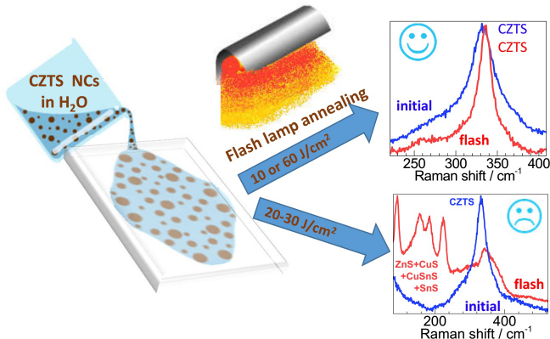
- as stabilizers. We establish the range of FLA conditions providing an efficient re-crystallization in the thin film of NCs, while preserving their kesterite structure and improving their crystallinity remarkably. The formation of secondary phases at higher FLA power densities, as well as the
- , up to 60 J/cm2, on NC films deposited on a glass substrate by drop-casting. The influence of film thickness and crystallinity of the initial NCs (before FLA) was also studied. Raman scattering was chosen as a main characterization method in this work, because it has already proved to be very
- sample area. From the same FWHM of Raman bands of both inks we can conclude that the degree of crystallinity is not significantly affected by the post-synthesis heating of the NC solution. The spatial inhomogeneity of the films formed of pristine NCs (ink0) can be considered as an indication to a more


Uniform Sb2S3 optical coatings by chemical spray method
Beilstein J. Nanotechnol. 2019, 10, 198–210, doi:10.3762/bjnano.10.18
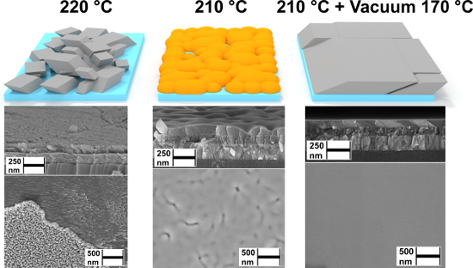
- imposed by the use of the spray pyrolysis method as well. Based on the above observations, the morphology and crystallinity of as-deposited layers seems to determine the nature of Sb2S3 layer morphology as formed during vacuum thermal treatment. Our proposed growth mechanism of Sb2S3 by ultrasonic




Wet chemistry route for the decoration of carbon nanotubes with iron oxide nanoparticles for gas sensing
Beilstein J. Nanotechnol. 2019, 10, 105–118, doi:10.3762/bjnano.10.10
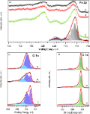
- size distribution for all samples. In addition, HRTEM imaging for the anchored iron oxide nanoparticles on the MWCNTs surface was performed and the selected area electron diffraction (SAED) pattern for was identified, as shown in Figure 4. The image shows the high crystallinity of the prepared iron
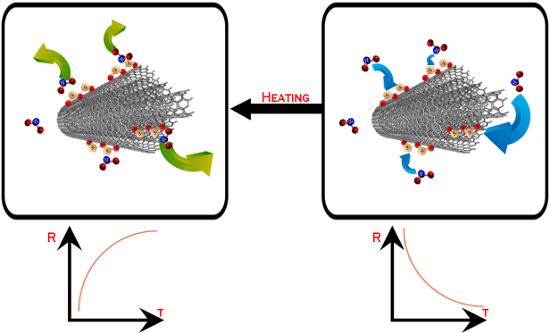
- functionalized, so it is logical that a relatively high D/G ratio is obtained before performing any treatment or decoration. This low crystallinity means that a high concentration of disordered sp2 carbon in relation to the presence of stretching C–C bonds is already present in as-purchased CNT samples. This




Characterization and influence of hydroxyapatite nanopowders on living cells
Beilstein J. Nanotechnol. 2018, 9, 3079–3094, doi:10.3762/bjnano.9.286
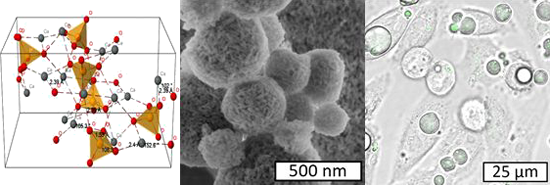
- in the application of novel NPs in medicine and biology. Adverse effect of NOAA on living organisms may be influenced by many factors such as size, shape, solubility, exposure time, surface charge, surface area, crystallinity, agglomeration or chemical composition [7][8][9]. Since the properties of
- , specific surface area, crystallinity, phase purity, stoichiometry, zeta potential and pH value were chosen for correlating the parameters with biological activity. Density measurements Density (ρ) measurements were performed using a helium pycnometer (AccuPyc II, model 1340; Micromeritics, Australia) using
- both identified foreign phases and unidentified reflexes in the range of 10 to 60° (2θ). Crystallinity (Xc) refers to the degree of structural order in a solid. It is a concept that integrates diffraction domain size, crystal strain and crystal defects. The crystallinity percentage of the samples was

![[Graphic 1]](/bjnano/content/inline/2190-4286-9-286-i2.svg?max-width=637&scale=1.18182) .
.



A novel polyhedral oligomeric silsesquioxane-modified layered double hydroxide: preparation, characterization and properties
Beilstein J. Nanotechnol. 2018, 9, 3053–3068, doi:10.3762/bjnano.9.284
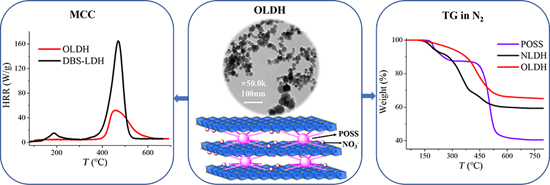
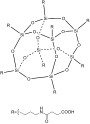
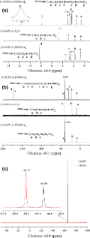
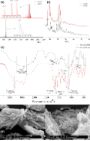
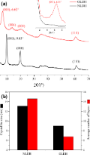
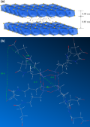
- enlargement of the interlayer spacing could be attributed to the relatively large intercalator molecules, and the decrease in peak pattern sharpness suggests a decline in crystallinity. The absence of any distinguishable reflection of OCPS or NLDH in the OLDH pattern indicates that unbonded excess OCPS was







Charged particle single nanometre manufacturing
Beilstein J. Nanotechnol. 2018, 9, 2855–2882, doi:10.3762/bjnano.9.266
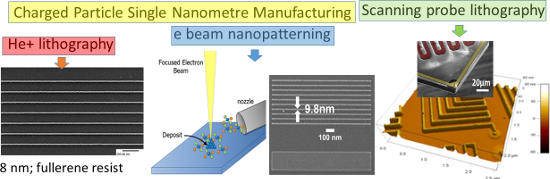
- the resist through sputtering and loss of substrate crystallinity. The situation for Ga+ ions is further complicated by the property of Ga+ as a p-type dopant of silicon. Scattering and range can be calculated using Monte Carlo simulation codes with typical results as shown in Figure 3 [30]. The


Oriented zinc oxide nanorods: A novel saturable absorber for lasers in the near-infrared
Beilstein J. Nanotechnol. 2018, 9, 2730–2740, doi:10.3762/bjnano.9.255
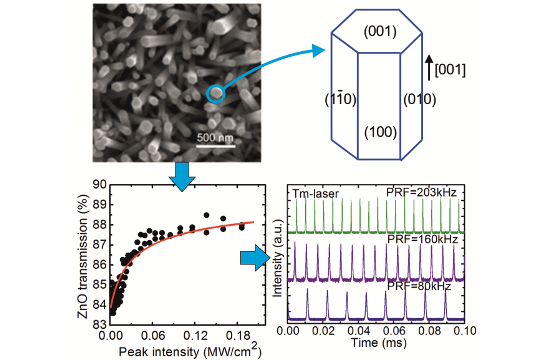
- , increases from 0.25 to 0.42. This effect is assigned to the increased diameter of the NRs and their crystallinity and weaker boundary effects. The non-saturable losses of the ZnO NRs can be partially attributed to the scattering losses. It should be noted that the observed values of Isat for the ZnO NRs are



Optimization of Mo/Cr bilayer back contacts for thin-film solar cells
Beilstein J. Nanotechnol. 2018, 9, 2700–2707, doi:10.3762/bjnano.9.252
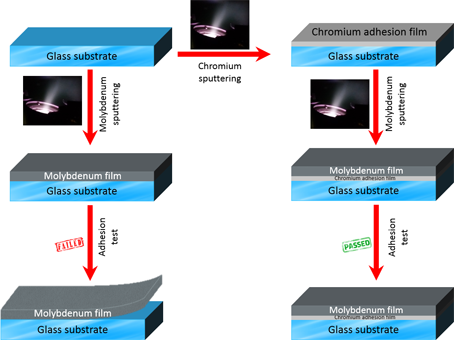
- crystallinity The XRD spectra of Mo films grown on Cr-coated glass using different values of sputtering power and pressure are shown in Figure 5. All samples exhibit three main peaks that match with the (110), (200) and (211) plane orientations of the standard difractogram ICDD-96-901-1606 for Mo. A comparison
- of XRD peak intensities shows a higher peak intensity for samples deposited at 3 mTorr. This is another evidence for increased crystallinity at lower deposition pressure. A similar trend can also be seen in Figure 5 when the sputtering power increases from 100 to 200 W. XRD patterns of all samples


Size-selected Fe3O4–Au hybrid nanoparticles for improved magnetism-based theranostics
Beilstein J. Nanotechnol. 2018, 9, 2684–2699, doi:10.3762/bjnano.9.251
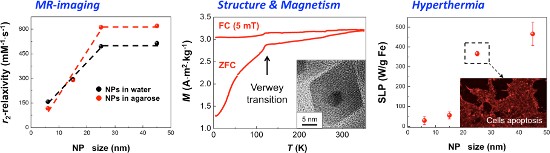
- properties in biocompatible Fe3O4 NPs is of utmost importance for improved performance in MPH, MRI, or MPI [16][17]. It is essential to obtain Fe3O4 NPs of high crystallinity with bulk-like magnetic properties, which change with the NP size, shape and iron oxidation state [18][19][20]. These parameters can
- commercial contrast agents due to the high crystallinity and large bulk-like saturation magnetization leading to larger field gradients in MRI. The MPH measurements reveal that the specific loss power (SLP) increases from 10 to 617 W·gFe−1 in water and from 12 to 327 W·gFe−1 in agarose with increasing NP
- with improved crystallinity in this case is likely due to the longer reflux time. To the best of our knowledge, only a few examples of Fe3O4–Au NPs with octahedral-like morphology have been reported in the literature [29][30]. We find that our hybrid NPs outperform previous reports in terms of size


Impact of the anodization time on the photocatalytic activity of TiO2 nanotubes
Beilstein J. Nanotechnol. 2018, 9, 2628–2643, doi:10.3762/bjnano.9.244
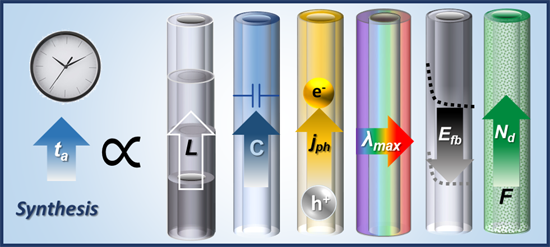
- sections. XRD The structure and crystallinity of the samples were studied by means of XRD and the diffractograms are presented in Figure 3. The Bragg–Brentano geometry was preferred for our work with thin films. After being thermally treated, all the samples exhibited the typical Bragg positions of anatase
- data obtained by the PEC technique. In the literature, a wide range of values for Efb have been reported and it has been found that this parameter can be affected by several properties of the material (crystallinity, doping level or synthesis conditions) as well as the chemical environment (ionic force
- room temperature under air and stored. Structural characterization Surface composition and morphology of the samples were investigated by SEM (JEOL, model JSM-6510LV) equipped with energy-dispersive spectroscopy detector (EDS, Bruker XFlash 6I10). Crystallinity information was obtained from X-ray


Enhanced antineoplastic/therapeutic efficacy using 5-fluorouracil-loaded calcium phosphate nanoparticles
Beilstein J. Nanotechnol. 2018, 9, 2499–2515, doi:10.3762/bjnano.9.233
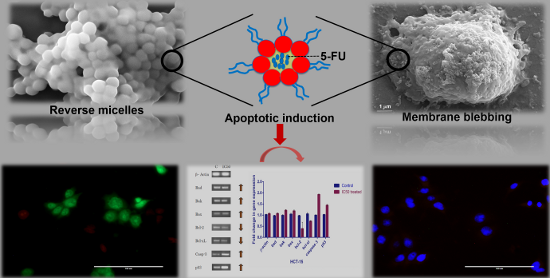
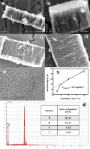
- 2D. X-ray diffraction pattern X-ray diffraction (XRD) analysis was performed to assess the crystallinity of both CaP@5-FU NPs and CaP NPs, as shown in Figure 3B and Figure 3A, respectively. A diffraction pattern with a 2θ value of 31.8 (d value 2.804) confirms the hydroxyapatite (HAP) formation [33


Nanocellulose: Recent advances and its prospects in environmental remediation
Beilstein J. Nanotechnol. 2018, 9, 2479–2498, doi:10.3762/bjnano.9.232
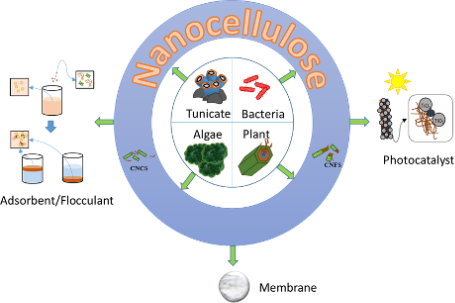
- for its high-purity in CNF form as well as high water-retaining capacity and crystallinity (80–90%) among the various types of CNFs [11]. Cellulose nanocrystal (CNC) CNC goes by a few other terms: nanocrystalline cellulose (NCC) and cellulose nanowhisker (CNW). In contrast to CNF, CNC is less flexible
- due to its higher crystallinity (Figure 2b). This is because CNCs have an elongated rod-like shape made up of crystalline regions isolated from CNFs [24]. Its assembly occurs through a series of alterations, beginning with the excision of amorphous regions in CNFs to isolate the crystalline regions
- from other polymers and functional groups except alcohol [32][44]. According to Gatenholm and Klemm [45], a typical BC production process can take up to two weeks to produce cellulose. Furthermore, nanocellulose produced from BC possesses higher crystallinity than plant-derived nanocellulose [46]. Over


ZnO-nanostructure-based electrochemical sensor: Effect of nanostructure morphology on the sensing of heavy metal ions
Beilstein J. Nanotechnol. 2018, 9, 2421–2431, doi:10.3762/bjnano.9.227
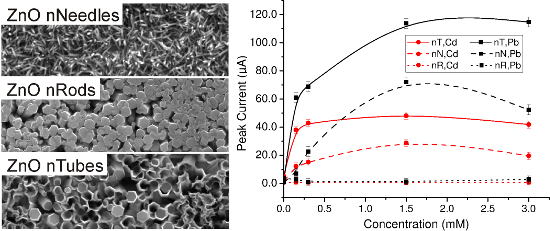
- a high degree of crystallinity. In the case of the nanotubes, the intensity of the peak corresponding to the (002) plane is about four times lower than in the case of nanorods, indicating good efficiency of metastable plane etching. The EDS spectrum confirms that the as-synthesized samples are


Block copolymers for designing nanostructured porous coatings
Beilstein J. Nanotechnol. 2018, 9, 2332–2344, doi:10.3762/bjnano.9.218
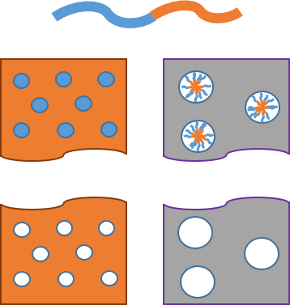
- of the thermal expansion coefficients and/or directional enthalpy (or entropy) changes, as shown in [83]. Furthermore, crystallinity is also an important parameter that can influence the domain orientation. As reported by Register and co-workers [84], there are three different levels of orientation





