


Search results
Search for "films" in Full Text gives 1003 result(s) in Beilstein Journal of Nanotechnology. Showing first 200.
Photoelectrochemical water oxidation over TiO2 nanotubes modified with MoS2 and g-C3N4
Beilstein J. Nanotechnol. 2022, 13, 1541–1550, doi:10.3762/bjnano.13.127
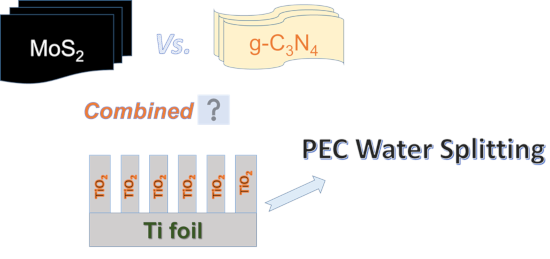
- diffraction results show the simultaneous appearance of diffraction peaks at 2θ = 25.45°, typical for the (101) planes of TNAs, and at 33.56° for the (001) planes of MoS2. Besides, the diffraction peak at 2θ = 16.45° characterizes the semi-crystalline structure of perfluorocarbon chains from nafion films [45


In search of cytotoxic selectivity on cancer cells with biogenically synthesized Ag/AgCl nanoparticles
Beilstein J. Nanotechnol. 2022, 13, 1505–1519, doi:10.3762/bjnano.13.124
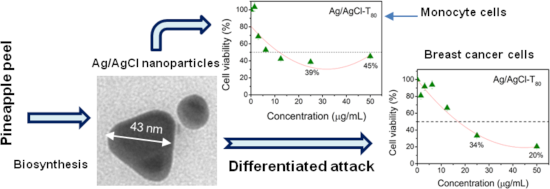
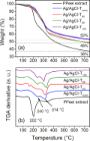
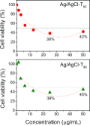
- proposal is consistent with Rhim et al. [42], who stated that the increased thermal stability of the agar/AgNPs composite films is due to metallic silver being more thermally stable. On the other hand, throughout the thermal test, no evidence of decomposition of the AgNO3 precursor salt (decomposition





Structural studies and selected physical investigations of LiCoO2 obtained by combustion synthesis
Beilstein J. Nanotechnol. 2022, 13, 1473–1482, doi:10.3762/bjnano.13.121
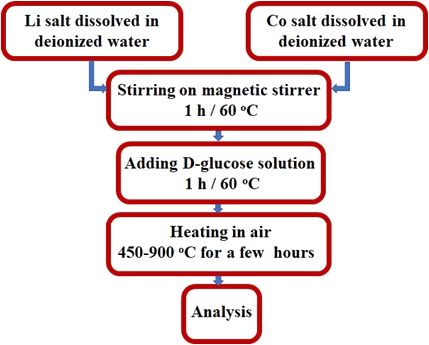
- produced in the form of powders, fibers, and films by using various processing techniques including wet chemical synthesis, such as the sol–gel method [33][34][35], precipitation [36], hydrothermal [37][38][39] and spray pyrolysis [40][41]. Also, solid-state synthesis methods, such as mechanical synthesis




Dry under water: air retaining properties of large-scale elastomer foils covered with mushroom-shaped surface microstructures
Beilstein J. Nanotechnol. 2022, 13, 1370–1379, doi:10.3762/bjnano.13.113
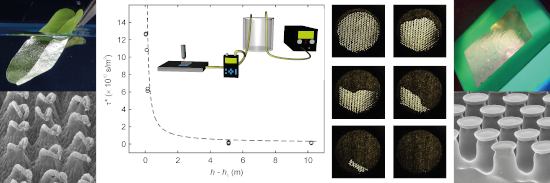
- effective large scale production. Meanwhile, a novel biomimetic surface is commercially available and produced on a large scale: an adhesive elastomeric film with mushroom-shaped surface microstructures that mimic the adhesion system of animals. In this study, we show that these films, which have been


Straight roads into nowhere – obvious and not-so-obvious biological models for ferrophobic surfaces
Beilstein J. Nanotechnol. 2022, 13, 1345–1360, doi:10.3762/bjnano.13.111
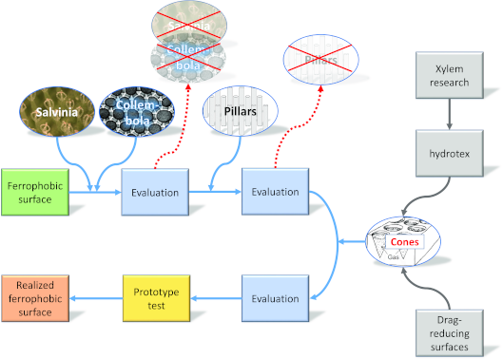
- on a variety of food sources and contribute substantially to the recycling of organic matter [32][33]. Collembola breathe through their body surface via skin breathing as well as with trachea [34]. Therefore, water films that may form as continuous layers on their body pose the risk of reducing


Studies of probe tip materials by atomic force microscopy: a review
Beilstein J. Nanotechnol. 2022, 13, 1256–1267, doi:10.3762/bjnano.13.104
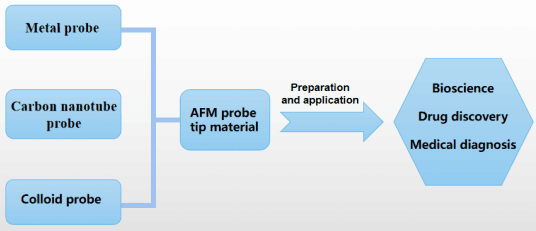
- bias-assisted electroreduced gold ions in mesoporous silica films on a conductive substrate. It works in the air with high relative humidity (RH) at room temperature and leads to the growth of fine wires attached to the tip with tens to hundreds of nanometers. Under room temperature conditions with
- process resulted in the growth of coaxial palladium nanowires/carbon nanotube composite structures (PdNWCNTs) using catalyzed palladium films deposited only near the tip of AFM suspensions in commercial tapping mode. The experimental results show that the PdNWCNT probe is sufficient for standard
- fibers. Many factors influence particle self-assembly and crack extension. Therefore, the controllability of colloidal fiber morphology can be achieved by changing the experimental conditions. When the colloidal particles are self-assembled into colloidal films, regular parallel-like crack patterns are
Role of titanium and organic precursors in molecular layer deposition of “titanicone” hybrid materials
Beilstein J. Nanotechnol. 2022, 13, 1240–1255, doi:10.3762/bjnano.13.103
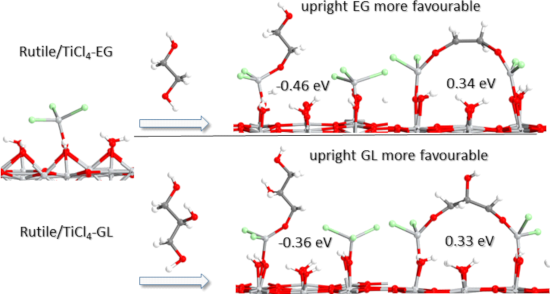
- Arbresha Muriqi Michael Nolan Tyndall National Institute, University College Cork, Lee Maltings, T12 R5CP Cork, Ireland 10.3762/bjnano.13.103 Abstract The development of hybrid inorganic–organic films with well-controlled properties is important for many applications. Molecular layer deposition
- (MLD) allows the deposition of these hybrid films using sequential, self-limiting reactions, similar to atomic layer deposition (ALD). In this paper, we use first principles density functional theory (DFT) to investigate the growth mechanism of titanium-containing hybrid organic–inorganic MLD films
- the origin of the different thicknesses of EG–titanicone and GL–titanicone films observed in experimental work. We find that EG and GL coupled with TiCl4 can orient in a flat lying configuration on anatase while on rutile, the preferred orientation is upright. When combined with Ti(DMA)4, EG and GL


Roll-to-roll fabrication of superhydrophobic pads covered with nanofur for the efficient clean-up of oil spills
Beilstein J. Nanotechnol. 2022, 13, 1228–1239, doi:10.3762/bjnano.13.102
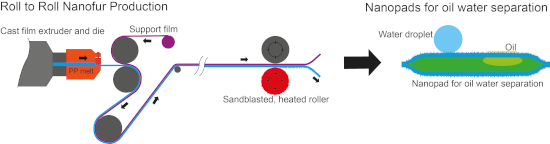
- , widely used method for obtaining superhydrophobic surfaces is the use of silica-based films, which can be applied by dipping the object in gel or via aerosol spray [15]. While providing excellent superhyrophobicity and an easy application even on very large surfaces, these films are not particularly
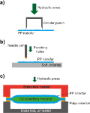
- sacrificial film is needed to provide the suitable process stability during the hot-pulling step. For comparably thick and stable polymer films (thicker than 1 mm) it is also possible to omit this support layer. In the following, however, we focus on thin nanofur films fabricated with a sacrificial layer
- -suited to be laminated on films of cyclic olefin copolymer (COC). As shown by Kolew [29], these two polymer types adhere strongly but do not mix during the extrusion process. Hence, the combination of PP and COC is a good match for the fabrication of nanofur with the R2R process sketched in Figure 1. For




Design of surface nanostructures for chirality sensing based on quartz crystal microbalance
Beilstein J. Nanotechnol. 2022, 13, 1201–1219, doi:10.3762/bjnano.13.100
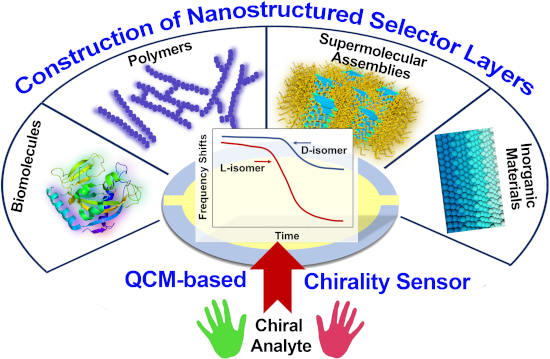
- blocking layer between R-Nap and BSA. This suggested that this stronger interaction with R-Nap rather than with S-Nap should arise from different steric hindrance effects between BSA and R/S-Nap. The result was consistent with the QCM measurements. Polymer-based films for chirality sensing Polymers have
- oriented H-bonding between the chiral –OH groups of serine and –NH2 of PEA was the binding force for enantioselective recognition. Yu et al. designed new template-free polymer films based on the electropolymerization of 3,4-ethylenedioxythiophene monomers (EDOT) with an –OH functional group for chiral
- recognition of biomolecules (Figure 2) [38]. The sensing films of poly(EDOT-OH) with either R or S chirality were directly synthesized on the surface of the QCM electrode and engineered with different morphologies of nanotubular arrays and smooth membranes. The binding effects of fetal bovine serum, RGD


Application of nanoarchitectonics in moist-electric generation
Beilstein J. Nanotechnol. 2022, 13, 1185–1200, doi:10.3762/bjnano.13.99
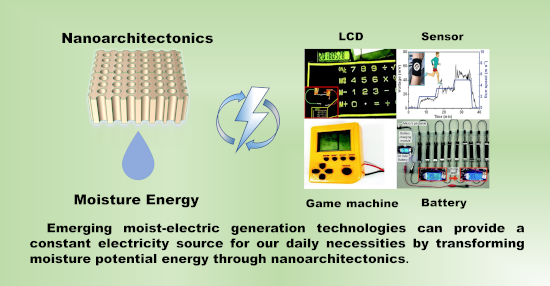
- materials have been developed rapidly in many fields, including optoelectronic devices, actuators, sensors, and water purification films [18][27][29][31][68][69][70][71][72][73][74]. The electrical output of MEG devices with different nanomaterials is listed below in Table 1. A wide range of materials is


Nonlinear features of the superconductor–ferromagnet–superconductor φ0 Josephson junction in the ferromagnetic resonance region
Beilstein J. Nanotechnol. 2022, 13, 1155–1166, doi:10.3762/bjnano.13.97
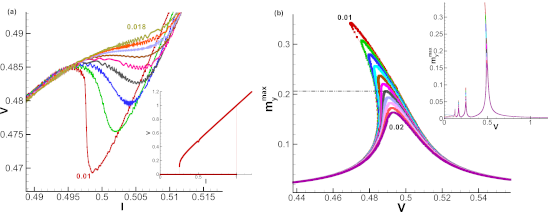
- that describes the magnetodynamics in thin films or heterostructures to form the Landau–Lifshitz–Gilbert–Josephson model (LLGJ) [14][15][16]. It is shown that, for a particular set of parameters, the coupled equations reduce to the dynamics of a Duffing oscillator [14]. The cubic nonlinearity in this


![[Graphic 14]](/bjnano/content/inline/2190-4286-13-97-i38.svg?max-width=637&scale=1.18182) at differ...
at differ...


![[Graphic 18]](/bjnano/content/inline/2190-4286-13-97-i42.svg?max-width=637&scale=1.18182) (V) on α in the damping parameter interval [0.001–0.12]....
(V) on α in the damping parameter interval [0.001–0.12]....

Biomimetic chitosan with biocomposite nanomaterials for bone tissue repair and regeneration
Beilstein J. Nanotechnol. 2022, 13, 1051–1067, doi:10.3762/bjnano.13.92
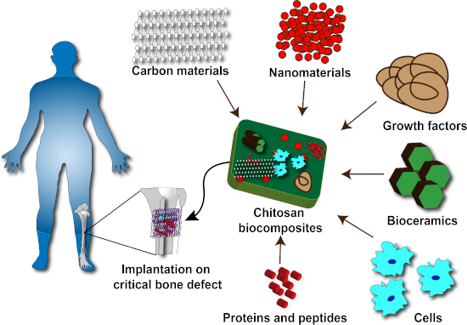
- antibacterial activity was observed against Staphylococcus aureus and Escherichia coli [95]. Melatonin-loaded TiO2 nanotubes were synthesized by Lai et al. (2017). Subsequently, using a spin-based layer-by-layer approach, chitosan and gelatin-based films were applied. Further, an in vitro cell interaction study
- surface area, antimicrobial activity, mechanical strength, osteoconductive and osteoinductive properties. In this particular study, the scaffolds of chitosan/polyvinyl alcohol/graphene oxide/hydroxyapatite/gold films were used in an orthopaedic application. The mechanical strength of the developed
- -63 cells, Saos-2 cells, and human osteoblasts, demonstrating its significance in bone tissue engineering [54]. Lemos and colleagues synthesized nanocomposite films comprising chitosan and bioactive glass, as well as a hybrid composition of chitosan and bioactive glass. The chitosan with 20% of
Influence of water contamination on the sputtering of silicon with low-energy argon ions investigated by molecular dynamics simulations
Beilstein J. Nanotechnol. 2022, 13, 986–1003, doi:10.3762/bjnano.13.86
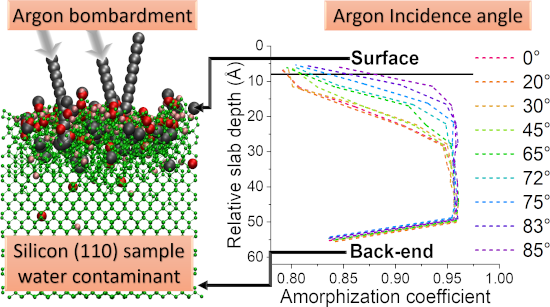
- profiling SIMS to resolve thin films in multilayered samples [14]. Another example is TEM sample preparation, where the achievement of the highest lateral resolutions in the subsequent TEM analysis requires lamellae thicknesses between 10 and 20 nm, but goes along with a typical amorphous layer of 2 to 4 nm




Theoretical investigations of oxygen vacancy effects in nickel-doped zirconia from ab initio XANES spectroscopy at the oxygen K-edge
Beilstein J. Nanotechnol. 2022, 13, 975–985, doi:10.3762/bjnano.13.85
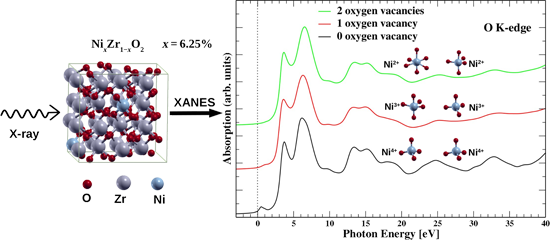
- semiconducting or insulating materials doped randomly or uniformly with magnetic impurities in the oxide matrix. A typical example are thin films of uniformly Fe-doped ZrO2 where dopant concentrations, x, from the diluted regime (i.e., x = 1–5 atom % [2]) to very high concentrations (up to x ≈ 25 atom %) have
- that of the monoclinic structure) [35]. Thus, our structural phase of reference in this work is cubic distorted fluorite zirconia since we are doping it and also due to the fact that actual experiments involving atomic layer deposition of TM-doped zirconia thin films revealed the cubic phase [26]. In


Bioselectivity of silk protein-based materials and their bio-inspired applications
Beilstein J. Nanotechnol. 2022, 13, 902–921, doi:10.3762/bjnano.13.81
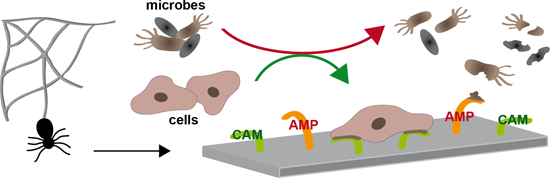
- coatings through fluorous media-assisted thermal treatment of stable, hydrophilic protein films [75]. One prominent natural route to prevent the colonization and infection with microbes on cells, tissues, and material surfaces is to block adhesion of bacteria and inhibit attachment to host cells. Microbial
- a residue substitution of aspartate with glutamate thus rendering an identical charge distribution, was applied as a control. Cell culture studies using Balb 3T3 fibroblasts revealed that the RGD peptide enhanced primary cell attachment with increased spread morphology and proliferation on films
- independently of chemical or genetic modification. The unmodified eADF4(C16) and eADF4(C16)-RGE control surfaces showed less or no cell interaction [148]. In addition, eADF4(C16)-RGD films allowed for adhesion and spreading of neonatal rat cardiomyocytes and hiPSC-derived cardiomyocytes, and further supported


Efficiency of electron cooling in cold-electron bolometers with traps
Beilstein J. Nanotechnol. 2022, 13, 896–901, doi:10.3762/bjnano.13.80
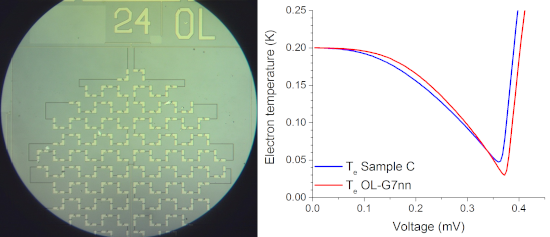
- superconductor/ferromagnet hybrid absorbers based on Al/Fe films, as the previous samples. However, there are different oxidation parameters. This work aims to improve our new fit methodology, which takes into account both leakage and Andreev currents and also uses the sixth power of phonon and electron


Self-assembly of C60 on a ZnTPP/Fe(001)–p(1 × 1)O substrate: observation of a quasi-freestanding C60 monolayer
Beilstein J. Nanotechnol. 2022, 13, 857–864, doi:10.3762/bjnano.13.76
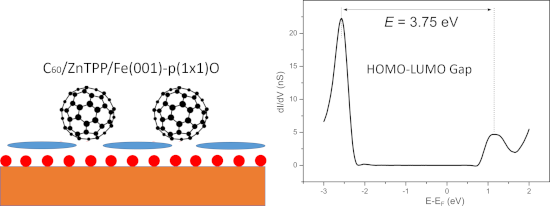
- fullerene films stabilized directly on metal surfaces. Our results unveil a model system that could be useful in applications in which a quasi-freestanding monolayer of C60 interfaced with a metallic electrode is required. Keywords: fullerene; scanning tunneling microscopy; ultraviolet photoemission
- measurements and for modeling by ab initio calculations. Periodic and compact films are generally obtained when the molecules possess enough surface mobility, that is, when the diffusion energy (Ed) is low compared to the thermal energy kBT, where T is the substrate temperature and kB is the Boltzmann constant
- 2b shows a blowup of one fullerene domain, where individual C60 molecules are visible inside a hexagonal lattice with a lattice parameter of about 1 nm, a value very similar to that measured in C60 films stabilized on either metallic [51] or oxide [25] substrates. Figure 2c shows the fast Fourier


Ultrafast signatures of magnetic inhomogeneity in Pd1−xFex (x ≤ 0.08) epitaxial thin films
Beilstein J. Nanotechnol. 2022, 13, 836–844, doi:10.3762/bjnano.13.74
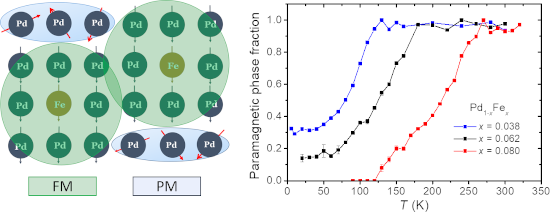
- Abstract A series of Pd1−xFex alloy epitaxial films (x = 0, 0.038, 0.062, and 0.080), a material promising for superconducting spintronics, was prepared and studied with ultrafast optical and magneto-optical laser spectroscopy in a wide temperature range of 4–300 K. It was found that the transition to the
- inhomogeneities. The low-temperature fraction of the residual paramagnetic phase can be deduced from the magnitude of the slow reflectivity relaxation component. It is estimated as ≈30% for x = 0.038 and ≈15% for x = 0.062 films. The minimal iron content ensuring the magnetic homogeneity of the ferromagnetic
- state in the Pd1−xFex alloy at low temperatures is about 7–8 atom %. Keywords: magnetic inhomogeneities; PdFe alloy; thin epitaxial films; time-resolved magneto-optical Kerr effect; time-resolved optical spectroscopy; Introduction Superconductor-based technologies are promising for exaflop-scale


Temperature and chemical effects on the interfacial energy between a Ga–In–Sn eutectic liquid alloy and nanoscopic asperities
Beilstein J. Nanotechnol. 2022, 13, 817–827, doi:10.3762/bjnano.13.72
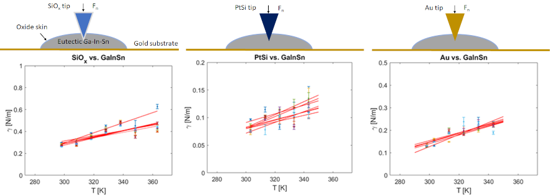
- oxide [10]. This effect has also been used to trigger the reaction of thin oxide films at the liquid–vapor interface with liquid gallium alloys [11]. While the liquid–vapor interface of liquid gallium-based alloys has been well investigated, the wetting of liquid gallium alloys on different substrates



Optimizing PMMA solutions to suppress contamination in the transfer of CVD graphene for batch production
Beilstein J. Nanotechnol. 2022, 13, 796–806, doi:10.3762/bjnano.13.70
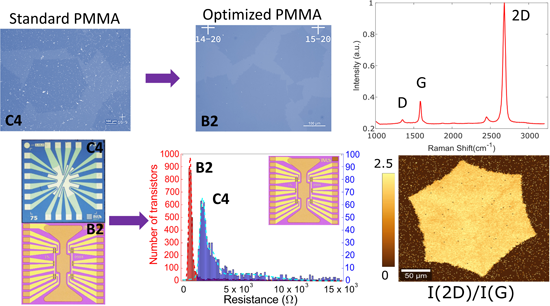
- B2 mixture yields more consistent electric properties of the graphene channel, thanks to a homogenous and reproducible process. Such characteristics ultimately translate into a consistent sensor performance, which is pivotal for industrial fabrication. Conclusion Monolayer graphene films and single
- 4.0 Torr was kept constant through the variable frequency-driven pumping system. The growth time for single graphene crystals (250–350 µm) and large-area graphene films (ca. 25 cm2) was 40 and 80 min, respectively. To finalize the process, an argon flush of 500 sccm was conducted to cool down samples
- synthesized graphene domains easy to be observed in an optical microscope equipped with a CCD camera (Supporting Information File 1, Figure S1a). Raman spectroscopy Large-area graphene films and single graphene crystals transferred onto SiO2/Si substrates were characterized by Raman microscopy (WITec GmbH




Recent advances in nanoarchitectures of monocrystalline coordination polymers through confined assembly
Beilstein J. Nanotechnol. 2022, 13, 763–777, doi:10.3762/bjnano.13.67
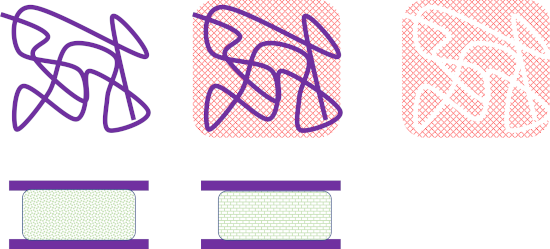
- –liquid or air–liquid interfaces. After evaporation of the solvent, the monocrystalline coordination polymers were packed by the condensed polymer, forming free-standing films. The coordination polymers could also be grown on 1D polyimide fibers first [140]. Then, the 1D fibers could self-assemble into
- nanosheets spontaneously and precisely organized into films at the interface laminarly. The films could be easily transferred to other substrates, and showed superprotonic conductivity, which may be promising for fuel cells. The assembly process of 2D coordination polymer nanosheets could be confined inside
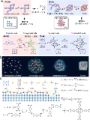
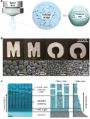
- MIL96−PDMS films on shaped aluminum foil. Figure 7b was reprinted with permission from [139], Copyright 2021, American Chemical Society. This content is not subject to CC BY 4.0. c) Optical micrograph and schematic illustration of the evaporation-directed with assembly with periodic cracks. Figure 7c




A nonenzymatic reduced graphene oxide-based nanosensor for parathion
Beilstein J. Nanotechnol. 2022, 13, 730–744, doi:10.3762/bjnano.13.65
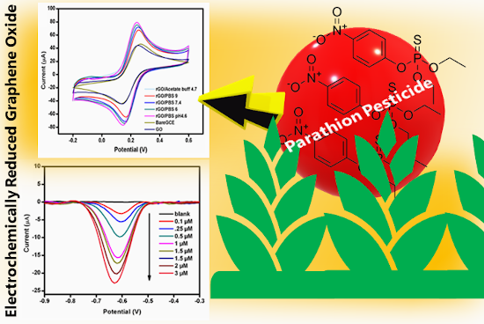
- ., hydrazine) as reductants or rapid heat treatment at high temperatures are required for the synthesis of electrochemically reduced GO (ERGO), controlled synthesis of ERGO films could be possible via optimization of electrochemical parameters. These parameters are the range of the applied voltage, numbers of
- bond disappeared in ERGO. The amount of residual oxygenated functional groups in ERGO films is likely to vary depending on the experimental conditions, such as applied potential, reduction times, and the electrolyte used [25]. The process parameters for electrochemical reduction were optimized to


Experimental and theoretical study of field-dependent spin splitting at ferromagnetic insulator–superconductor interfaces
Beilstein J. Nanotechnol. 2022, 13, 682–688, doi:10.3762/bjnano.13.60
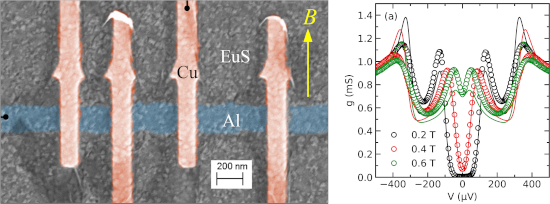
- the inner peak is broadened, and finally becomes a wide and flat band. Besides this, the self-consistency relation for thin films produces the typical step-like first-order phase transition at the critical δφ (here always plotted for the upper branch of Figure 2), while especially in the case ε’ = 1 a



Reliable fabrication of transparent conducting films by cascade centrifugation and Langmuir–Blodgett deposition of electrochemically exfoliated graphene
Beilstein J. Nanotechnol. 2022, 13, 666–674, doi:10.3762/bjnano.13.58
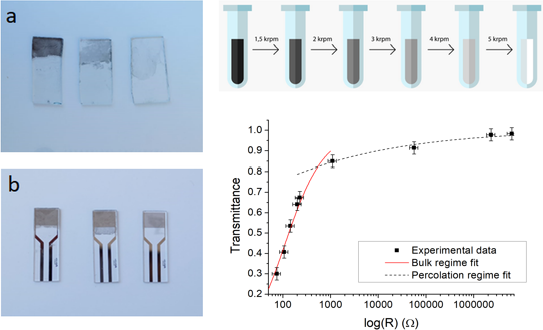
- typically polydisperse, containing particles of various sizes, which is not optimal for applications. We employed cascade centrifugation to select specific particle sizes in solution and prepared thin films from those graphene particles using the Langmuir–Blodgett assembly. Employing centrifugation speeds
- of 3, 4, and 5 krpm, further diluting the solutions in different volumes of solvent, we reliably and consistently obtained films of tunable thickness. We show that there is a limit to how thin these films can be, which is imposed by the percolation threshold. The percolation threshold is
- wavelength of 660 nm is obtained for these films, which is in agreement with earlier works on Langmuir–Blodgett assembled ultrasonic-assisted liquid-phase exfoliated graphene. Our work demonstrates that films that are in all respects on par with films of graphene obtained through other solution-based


Revealing local structural properties of an atomically thin MoSe2 surface using optical microscopy
Beilstein J. Nanotechnol. 2022, 13, 572–581, doi:10.3762/bjnano.13.49
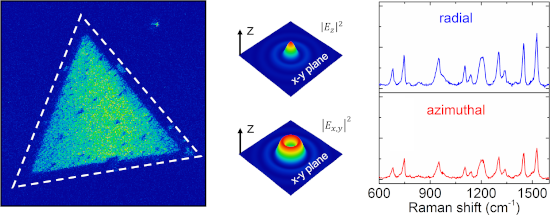
- deposited on a MoS2 crystal surface. Using near-edge X-ray absorption (NEXAFS), it was observed a strong dichroism in FePc thin films thicker than 4.5 nm. The strongest intensity of the N 1s→π* orbital transition at grazing incidence implies that the molecules are predominantly flat-lying with respect to





