


Search results
Search for "force microscopy" in Full Text gives 650 result(s) in Beilstein Journal of Nanotechnology. Showing first 200.
Fusion of purple membranes triggered by immobilization on carbon nanomembranes
Beilstein J. Nanotechnol. 2021, 12, 93–101, doi:10.3762/bjnano.12.8
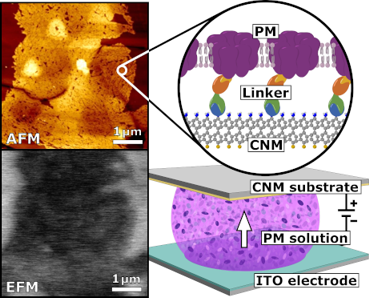
- histidine-tag at the extracellular side of a PM mutant (c-His PM). The functionalization and the resulting hybrid membrane were examined by atomic force microscopy (AFM), scanning electron microscopy (SEM), X-ray photoelectron spectroscopy (XPS), confocal laser scanning microscopy (CLSM), and infrared
- was used for topographical pictures with a smaller field of view as well as for electrostatic measurements. For PeakForce Kelvin probe force microscopy (PF-KPFM), a line is first scanned in PeakForce mode. In a second scan the same line is scanned with an adjustable height offset and using the


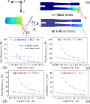
Numerical analysis of vibration modes of a qPlus sensor with a long tip
Beilstein J. Nanotechnol. 2021, 12, 82–92, doi:10.3762/bjnano.12.7
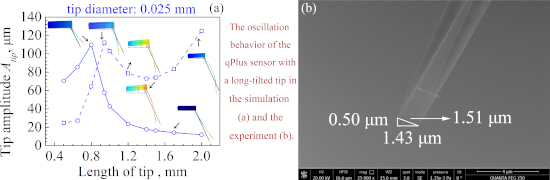
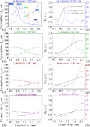
- the optimal diameter was found to be 0.1 mm. Keywords: finite element method; long tilted tip; noncontact atomic force microscopy; qPlus sensor; quartz tuning fork; simulations; Introduction Quartz tuning forks are widely used in the watch industry because of their low frequency offset over a wide
- and fq in the in-phase mode (Figure 3 and Figure 6). We found a 0.05 mm tip has the best performance when the tip length is 0.65 mm in the anti-phase mode. However, Ax/Az in the anti-phase mode is 2.36, that is, φ is 23°. In frequency modulation-atomic force microscopy (FM-AFM), the frequency shift Δf






Bulk chemical composition contrast from attractive forces in AFM force spectroscopy
Beilstein J. Nanotechnol. 2021, 12, 58–71, doi:10.3762/bjnano.12.5
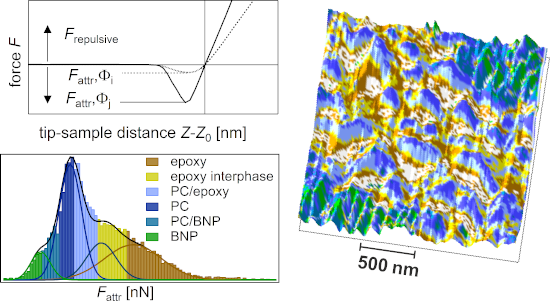
- of atomic force microscopy (AFM) is the measurement of physical properties at sub-micrometer resolution. Methods such as force–distance curves (FDCs) or dynamic variants (such as intermodulation AFM (ImAFM)) are able to measure mechanical properties (such as the local stiffness, kr) of nanoscopic
- determined. Keywords: AFM force spectroscopy; composites; principle component analysis; structure–property correlation; van der Waals forces; Introduction The mechanical properties of small volumes of materials can be measured using various atomic force microscopy (AFM) methods. The well-established force
- Kelvin probe force microscopy (KPM) [27] which were developed to identify local chemical or structural specificities in the samples. All the methods mentioned above are, to different degrees, advanced techniques which require additional equipment and expertise. TERS and AFM-IR are hybrid setups which


Atomic layer deposited films of Al2O3 on fluorine-doped tin oxide electrodes: stability and barrier properties
Beilstein J. Nanotechnol. 2021, 12, 24–34, doi:10.3762/bjnano.12.2
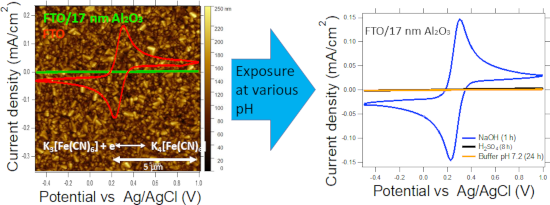
- 7.2). Chronoamperometric measurements were performed in buffered solution (pH 7.2) at −1.2 V (vs Ag/AgCl). The morphology of the films was characterized ex situ, under ambient conditions, by atomic force microscopy (AFM, Dimension Icon, Bruker, USA) in a semicontact (tapping) mode. A silicon


Nanomechanics of few-layer materials: do individual layers slide upon folding?
Beilstein J. Nanotechnol. 2020, 11, 1801–1808, doi:10.3762/bjnano.11.162
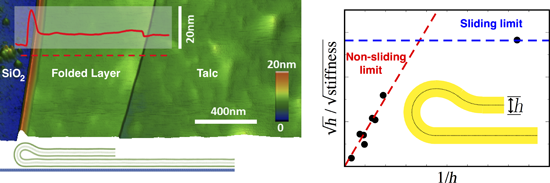
- methods; atomic force microscopy (AFM); molecular dynamics (MD); Raman spectroscopy; nanostructured materials; Introduction Layered materials such as graphite, talc, and transition metal dichalcogenides (TMDs), held together by strong covalent bonds within layers and relatively weak van der Waals
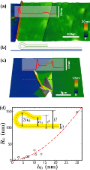
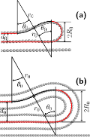

![[Graphic 5]](/bjnano/content/inline/2190-4286-11-162-i8.svg?max-width=637&scale=1.18182) =
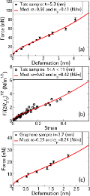
= ![[Graphic 6]](/bjnano/content/inline/2190-4286-11-162-i9.svg?max-width=637&scale=1.18182) as a function of 1/h for the nine measured talc samples. h is a directly measured ...
as a function of 1/h for the nine measured talc samples. h is a directly measured ...
Mapping of integrated PIN diodes with a 3D architecture by scanning microwave impedance microscopy and dynamic spectroscopy
Beilstein J. Nanotechnol. 2020, 11, 1764–1775, doi:10.3762/bjnano.11.159
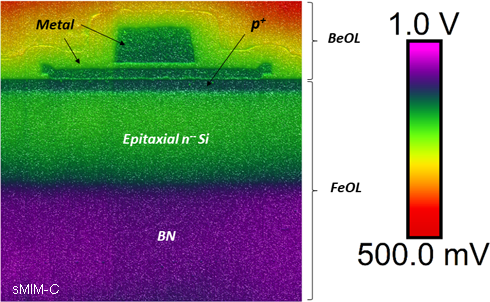
- ) (doped semiconducting layers) and “back end of line” (BEOL) layers (metallization, trench dielectric, and isolation) of highly integrated microelectronic devices. Based on atomic force microscopy, an electromagnetically shielded and electrically conductive tip is used in scanning microwave impedance
- complete parametric investigation, is performed with a dynamic spectroscopy method. The results emphasize the strong impact, in terms of distinction and location, of the applied bias on the local sMIM measurements for both FEOL and BEOL layers. Keywords: atomic force microscopy (AFM); DataCube; doping
- crucial to optimize and increase the device integration. In order to map the electrical properties of microelectronic materials with a high spatial resolution, scanning probe microscopy (SPM), based on atomic force microscopy (AFM), offers several modes based on the control of electrical conduction and on


Direct observation of the Si(110)-(16×2) surface reconstruction by atomic force microscopy
Beilstein J. Nanotechnol. 2020, 11, 1750–1756, doi:10.3762/bjnano.11.157
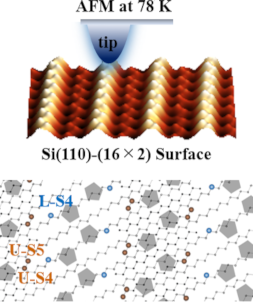
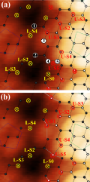
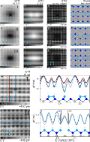
- , Himeji, Hyogo 671-2280, Japan Institute for Nanoscience Design, Osaka University, 1-2 Machikaneyama, Toyonaka, Osaka 560-0043, Japan 10.3762/bjnano.11.157 Abstract The atomic arrangement of the Si(110)-(16×2) reconstruction was directly observed using noncontact atomic force microscopy (NC-AFM) at 78 K
- between upper and lower terraces, which have not been reported using STM. These findings are key evidence for establishing an atomic model of the Si(110)-(16×2) reconstruction, which indeed has a complex structure. Keywords: atomic force microscopy (AFM); noncontact atomic force microscopy (NC-AFM); Si
- regarding the atomic structure of the reconstruction that includes both pentagons and step edges is insufficient. In this study, the Si(110)-(16×2) reconstruction will be investigated by atomic force microscopy (AFM) at 78 K to directly observe the atomic arrangement of the reconstruction. In this work, we



PEG/PEI-functionalized single-walled carbon nanotubes as delivery carriers for doxorubicin: synthesis, characterization, and in vitro evaluation
Beilstein J. Nanotechnol. 2020, 11, 1728–1741, doi:10.3762/bjnano.11.155
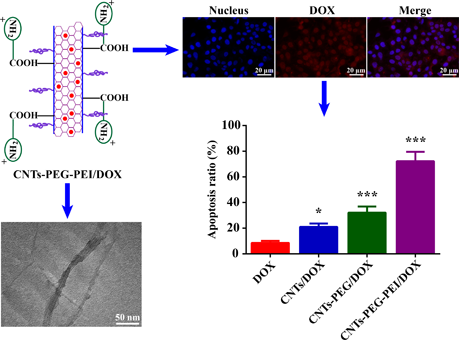
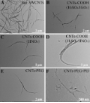
- ). Fourier-transform infrared (FTIR) spectra in the range from 500 to 4000 cm−1 were recorded with a FTIR spectrometer (Nicolet IS10). X-ray diffraction (XRD) analysis was conducted using a BRUKER D8 X-ray diffractometer in the 2θ range of 0–100° at a scanning rate of 5°·min−1. For atomic force microscopy




Application of contact-resonance AFM methods to polymer samples
Beilstein J. Nanotechnol. 2020, 11, 1714–1727, doi:10.3762/bjnano.11.154
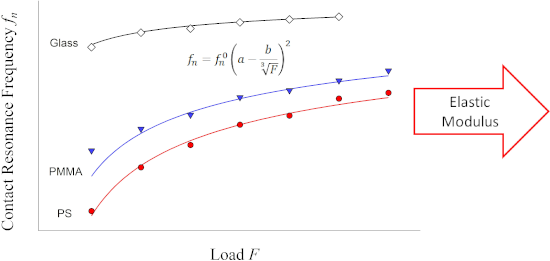
- . Keywords: atomic force microscopy; contact resonance; mechanical properties; polymers; wear; Introduction The development of new materials for applications on the nanoscale, such as thin polymer films, demands a reliable determination of their mechanical properties. Atomic force microscopy (AFM) is a very
- obtained sample thickness could be varied. Films with a thickness larger than 400 nm are considered as bulk, since the substrate does not influence the mechanical properties of the sample [31]. Contact-resonance mode AFM Contact-resonance atomic force microscopy (CR-AFM) measurements have been performed


Out-of-plane surface patterning by subsurface processing of polymer substrates with focused ion beams
Beilstein J. Nanotechnol. 2020, 11, 1693–1703, doi:10.3762/bjnano.11.151
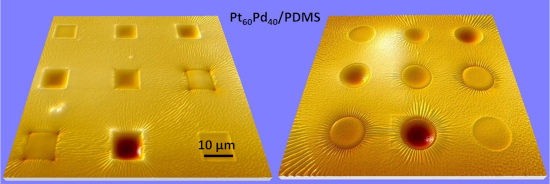
- [4], in which 15 nm Pt60Pd40 films were patterned. Also, for the same reason of a more direct comparison, 200 nm thick PMMA substrates were used in this work to study possible effects of changing ion masses. Results and Discussion Irradiation of PMMA Figure 1 shows an example of an atomic force
- microscopy (AFM) image and the corresponding depth profile for a surface region of the Pt60Pd40/PMMA sample irradiated with He+ FIB at a fluence of 1.0 × 1016 cm−2. It is evident that the irradiation homogeneously lowers the entire irradiated surface to a depth of approx. 80 nm. For convenience, we define


Detecting stable adsorbates of (1S)-camphor on Cu(111) with Bayesian optimization
Beilstein J. Nanotechnol. 2020, 11, 1577–1589, doi:10.3762/bjnano.11.140
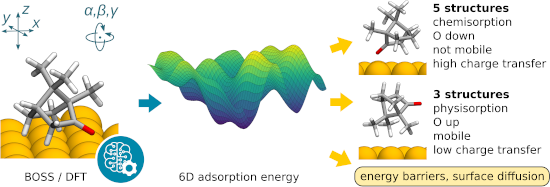
- electronic properties of the material. Assemblies of organic molecules on surfaces have been studied experimentally, for example with X-ray diffraction [4][5], scanning tunneling microscopy [6][7][8] and atomic force microscopy (AFM) [9][10][11]. These methods have a considerable resolution in imaging planar


Fabrication of nano/microstructures for SERS substrates using an electrochemical method
Beilstein J. Nanotechnol. 2020, 11, 1568–1576, doi:10.3762/bjnano.11.139
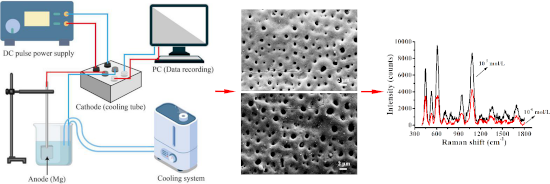
- over a 20 × 20 μm2 area. Before the tests, the Raman spectra were rectified using a standard Si substrate. A Raman intensity peak of 1362 cm−1 for R6G was chosen in the experiment. An atomic force microscopy (AFM) system (Dimension Icon, Bruker, Germany) was employed to detect the two-dimensional and


Design of V-shaped cantilevers for enhanced multifrequency AFM measurements
Beilstein J. Nanotechnol. 2020, 11, 1525–1541, doi:10.3762/bjnano.11.135
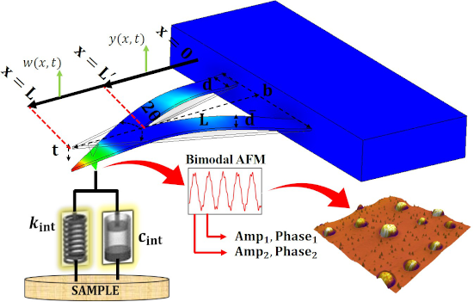
- ; Introduction Since the invention of atomic force microscopy (AFM), different techniques have been introduced into the field to enhance and improve this nanotechnology equipment. In 2004, multifrequency AFM was introduced as a technique that can capture both topographical and material composition in a single
- vibrational behavior of rectangular and V-shaped AFM cantilevers using FEM [27]. All abovementioned researchers focused on the accuracy and sensitivity of the microscope by interpreting and analyzing the dynamic and vibration behavior. One way to increase accuracy and sensitivity in atomic force microscopy is
- Mehrnoosh Damircheli Babak Eslami Department of Mechanical Engineering, Widener University, Chester, Pennsylvania, 19013, USA Department of Mechanical Engineering, Shahr-e-Qods Branch, Islamic Azad University, Tehran, Iran 10.3762/bjnano.11.135 Abstract As the application of atomic force


![[Graphic 4]](/bjnano/content/inline/2190-4286-11-135-i26.svg?max-width=637&scale=1.18182) = 15 µm, bref = 8...
= 15 µm, bref = 8...


![[Graphic 17]](/bjnano/content/inline/2190-4286-11-135-i39.svg?max-width=637&scale=1.18182) ) of V-shaped cantilevers for...
) of V-shaped cantilevers for...


Protruding hydrogen atoms as markers for the molecular orientation of a metallocene
Beilstein J. Nanotechnol. 2020, 11, 1432–1438, doi:10.3762/bjnano.11.127
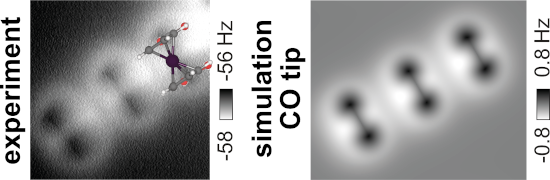
- acid (FDCA) molecules on bulk and thin film CaF2(111) surfaces with non-contact atomic force microscopy (NC-AFM). We use NC-AFM image calculations with the probe particle model to interpret this distinct shape by repulsive interactions between the NC-AFM tip and the top hydrogen atoms of the
- of the ferrocene moiety, herein on CaF2(111) surfaces, by using the protruding hydrogen atoms as markers. Keywords: calcium fluoride (CaF2); ferrocene; functionalised tips; high-resolution imaging; non-contact atomic force microscopy; Introduction It is still a challenge to determine the precise
- employed for the investigation of both ordered and unordered molecular systems as well as of individual and isolated species [4][5][6]. For example, two different non-planar isomers of dibenzo[a,h]thianthrene molecules could be identified by high-resolution non-contact atomic force microscopy (NC-AFM) [7
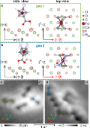


![[Graphic 10]](/bjnano/content/inline/2190-4286-11-127-i10.svg?max-width=637&scale=1.18182) row of FDCA molecules in geo 2. (a–c) Constant-height frequency-shi...
row of FDCA molecules in geo 2. (a–c) Constant-height frequency-shi...
On the frequency dependence of viscoelastic material characterization with intermittent-contact dynamic atomic force microscopy: avoiding mischaracterization across large frequency ranges
Beilstein J. Nanotechnol. 2020, 11, 1409–1418, doi:10.3762/bjnano.11.125
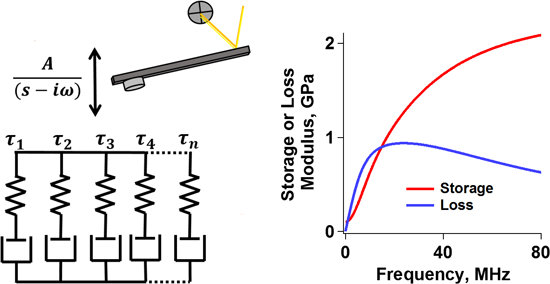
- Enrique A. Lopez-Guerra Santiago D. Solares The George Washington University, Department of Mechanical and Aerospace Engineering, Washington, DC 20052, USA Park Systems Inc., Santa Clara, CA, 95054, USA 10.3762/bjnano.11.125 Abstract Atomic force microscopy (AFM) is a widely use technique to
- help inform dynamic AFM characterization. Keywords: dynamic atomic force microscopy; Generalized Maxwell model; loss modulus; storage modulus; viscoelasticity; Introduction There have been significant methodology developments since the introduction of atomic force microscopy (AFM) in the mid-1980s [1


Atomic defect classification of the H–Si(100) surface through multi-mode scanning probe microscopy
Beilstein J. Nanotechnol. 2020, 11, 1346–1360, doi:10.3762/bjnano.11.119
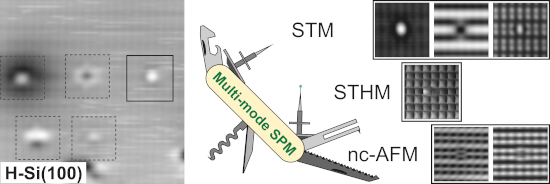
- Nanotechnology Research Centre, National Research Council Canada, Edmonton, Alberta, T6G 2M9, Canada 10.3762/bjnano.11.119 Abstract The combination of scanning tunnelling microscopy (STM) and non-contact atomic force microscopy (nc-AFM) allows enhanced extraction and correlation of properties not readily
- . With this, we take the first steps toward enabling the creation of superior H–Si surfaces through an improved understanding of surface defects, ultimately leading to more consistent and reliable fabrication of atom scale devices. Keywords: atomic force microscopy; hydrogen-terminated silicon; scanning
- same side of two neighbouring dimers. Subsequently, the latter had been reassigned as an H, OH pair originating from dissociative attachment of a residual water molecule in the vacuum system [15][16][17]. Further insights became available by non-contact atomic force microscopy (nc-AFM), separating the



An atomic force microscope integrated with a helium ion microscope for correlative nanoscale characterization
Beilstein J. Nanotechnol. 2020, 11, 1272–1279, doi:10.3762/bjnano.11.111
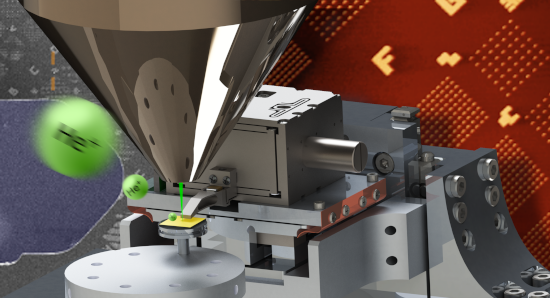
- integration. Keywords: atomic force microscopy (AFM); combined setup; correlative microscopy; helium ion microscopy (HIM); self-sensing cantilevers; Introduction Shortly after the invention of the atomic force microscope (AFM) in 1986 [1], efforts were made towards combining this scanning probe microscopy
- used, in situ, in between exposures to assess the shrinkage, stiffness change or sputtering of the resist. More applications such as conductive AFM, piezo-force microscopy or magnetic force microscopy are within reach of the presented technology and would make AFM–HIM appealing to the microelectronics
- [24] with very high resolution. Magnetic properties of nanostructures can be measured using magnetic force microscopy (MFM) [42], and a host of AFM techniques are available to measure electrical properties of samples (e.g., conductive AFM (cAFM) [43], scanning capacitance microscopy (SCM) [44], and


Ultrasensitive detection of cadmium ions using a microcantilever-based piezoresistive sensor for groundwater
Beilstein J. Nanotechnol. 2020, 11, 1242–1253, doi:10.3762/bjnano.11.108
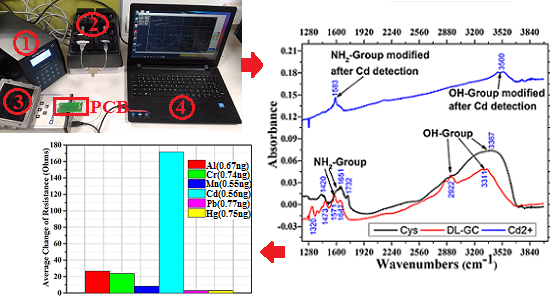
- . It was calibrated using atomic force microscopy (AFM) [40]. The process begins with thermal oxidation of Si at 1000 °C using an oxidation furnace to obtain a thermally grown SiO2 layer followed by masking and etching to get the desired pattern. The polysilicon is deposited in a low-pressure chemical
- . Comparison of different methods for cadmium detection. Funding The authors would like to thank Director of Indian Institute of Technology, Bombay for the support of atomic force microscopy under “Indian Nanoelectronics Users Program” and “Visvesvaraya Ph.D. Scheme for Electronics and IT” funded by the MeitY




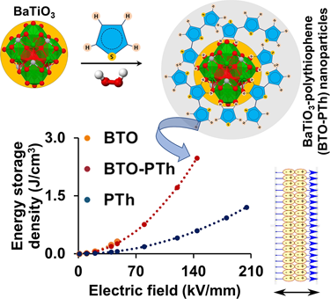
High permittivity, breakdown strength, and energy storage density of polythiophene-encapsulated BaTiO3 nanoparticles
Beilstein J. Nanotechnol. 2020, 11, 1190–1197, doi:10.3762/bjnano.11.103
- microscopy (JEOL JSM 6490LA SEM) and atomic force microscopy (JSPM-5200 scanning probe microscope). Electrical properties of the bulk materials are measured under ambient conditions with a Wayne Kerr 6505B precision impedance analyzer and a Hipotronics HD103 3kV DC Hipot Tester. Results and Discussion
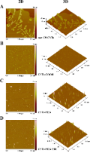
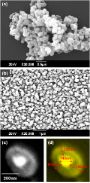
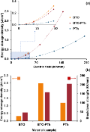
- studied using atomic force microscopy, after depositing the samples on quartz wafers. Figure 5 shows the 2D- and 3D-AFM images of BTO, BTO-PTh, and PTh samples along with their surface profiles. The micrographs of BTO nanoparticles show the presence of clusters on the surface. This is in agreement with




Extracting viscoelastic material parameters using an atomic force microscope and static force spectroscopy
Beilstein J. Nanotechnol. 2020, 11, 922–937, doi:10.3762/bjnano.11.77
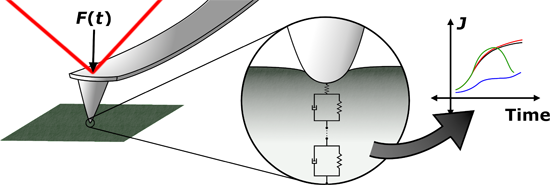
- Cameron H. Parvini M. A. S. R. Saadi Santiago D. Solares Department of Mechanical and Aerospace Engineering, The George Washington University School of Engineering and Applied Science, 800 22nd St. NW, Suite 3000, Washington, DC 20052, United States 10.3762/bjnano.11.77 Abstract Atomic force
- microscopy (AFM) techniques have provided and continue to provide increasingly important insights into surface morphology, mechanics, and other critical material characteristics at the nanoscale. One attractive implementation involves extracting meaningful material properties, which demands physically
- parameters such as storage modulus, loss modulus, loss angle, and compliance. These steps constitute a complete guide to leveraging AFM-SFS data to estimate key material parameters, with a series of detailed insights into both the methodology and supporting analytical choices. Keywords: atomic force


Measurement of electrostatic tip–sample interactions by time-domain Kelvin probe force microscopy
Beilstein J. Nanotechnol. 2020, 11, 911–921, doi:10.3762/bjnano.11.76
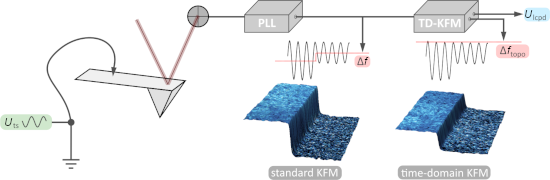
- Christian Ritz Tino Wagner Andreas Stemmer Nanotechnology Group, ETH Zürich, Säumerstrasse 4, 8803 Rüschlikon, Switzerland present address: Zurich Instruments AG, Technoparkstrasse 1, 8005 Zürich, Switzerland 10.3762/bjnano.11.76 Abstract Kelvin probe force microscopy is a scanning probe
- an alternative approach to find the surface potential without lock-in detection. Our method operates directly on the frequency-shift signal measured in frequency-modulated atomic force microscopy and continuously estimates the electrostatic influence due to the applied voltage modulation. This
- , including the component arising from the bias modulation. This constitutes an important improvement over conventional techniques and paves the way for more reliable and accurate measurements of electrostatics and topography. Keywords: atomic force microscopy (AFM); electrostatic height error; extended


Band tail state related photoluminescence and photoresponse of ZnMgO solid solution nanostructured films
Beilstein J. Nanotechnol. 2020, 11, 899–910, doi:10.3762/bjnano.11.75
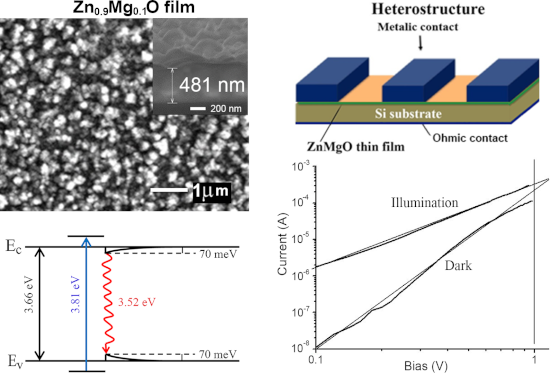
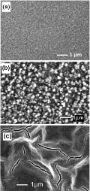
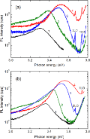
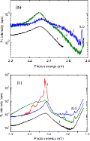
- the composition range x = 0.00–0.40 has been prepared by sol–gel spin coating on Si substrates with a post-deposition thermal treatment in the temperature range of 400–650 °C. The morphology of the films was investigated by scanning electron microscopy and atomic force microscopy while their light
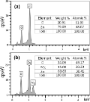
- , and the deposition process lasted for 15 min. The morphology and chemical composition microanalysis of the produced films were studied using a Zeiss Sigma SEM, Hitachi SU 8230, equipped with tools for energy dispersive X-ray analysis (EDAX). Atomic force microscopy (AFM) measurements were performed in
- unavoidable in the structure transformation process, in a certain interval of Mg concentrations. The phase segregation process was investigated in detail by means of X-ray diffraction, element-specific near-edge X-ray absorption fine structure (NEXAFS), electron dispersive spectroscopy (EDS), atomic force

Three-dimensional solvation structure of ethanol on carbonate minerals
Beilstein J. Nanotechnol. 2020, 11, 891–898, doi:10.3762/bjnano.11.74
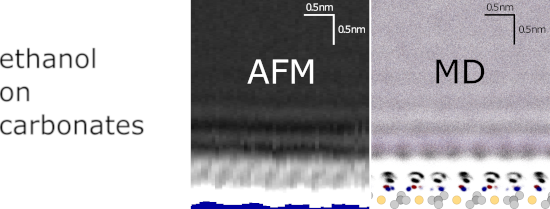
- surfaces interact with a large variety of organic molecules, which can result in surface restructuring. This process is decisive for the formation of biominerals. With the development of 3D atomic force microscopy (AFM) it is now possible to image solid–liquid interfaces with unprecedented molecular
- -resolution 3D atomic force microscopy (AFM) [1], the hydration structure of many interfaces has been studied, including the aqueous interface of mica [2] calcite [3][4] dolomite [5][6] and organic crystals [7]. However, while the majority of 3D AFM works have concentrated on water, comparatively fewer
- nature. Experimental and Theoretical Methods Atomic force microscopy For the AFM experiments we used a modified commercial atomic force microscope [22] with custom photothermal cantilever excitation [23] and a custom three-dimensional scanning and data acquisition mode [24] in the frequency-modulation

Templating effect of single-layer graphene supported by an insulating substrate on the molecular orientation of lead phthalocyanine
Beilstein J. Nanotechnol. 2020, 11, 814–820, doi:10.3762/bjnano.11.66
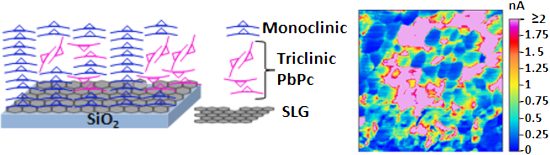
- specific device applications. Keywords: conducting atomic force microscopy (C-AFM); lead phthalocyanine (PbPc); molecular orientation; single-layer graphene; substrate effect; two-dimensional grazing incidence X-ray diffraction (2D-GIXRD); Introduction Organic semiconductors have been extensively used in
- molecules with monoclinic and triclinic fractions on the surface of SLG/SiO2/Si is inferred in Figure 4. The topography of the PbPc layer was studied using atomic force microscopy (AFM, Figure 5). Figure 5a and the inset show that the film consists of granular PbPc crystallites deposited uniformly on the
- the highly delocalized macrocycles. The competing interfacial van der Waals forces and molecule–molecule interactions lead to the formation of a small fraction of triclinic moieties. The nanoscale electrical characterization of the thin PbPc layer on graphene by means of conducting atomic force


Quantitative determination of the interaction potential between two surfaces using frequency-modulated atomic force microscopy
Beilstein J. Nanotechnol. 2020, 11, 729–739, doi:10.3762/bjnano.11.60
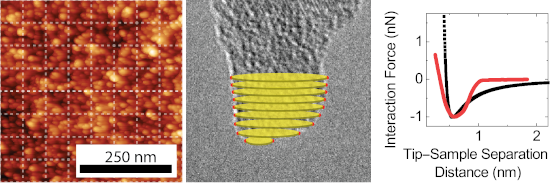
- frequency-modulated atomic force microscopy (AFM). Furthermore, this technique can be extended to the experimental verification of potential forms for any given material pair. Specifically, interaction forces are determined between an AFM tip apex and a nominally flat substrate using dynamic force
- separation distances. This methodology represents the first experimental technique in which material interaction potential parameters were verified over a range of tip–sample separation distances for a tip apex of arbitrary geometry. Keywords: adhesion; atomic force microscopy; diamond; frequency-modulated
- interactions necessitates characterization methods with angstrom-level precision. Therefore, techniques such as atomic force microscopy (AFM) are often used to evaluate the performance of these surface modification approaches. The interpretation of lubrication and surface modification behavior via AFM





